
[Abstract] The exhibition "Another Avant-garde: Photography 1970–2000" is grounded in the oscillation of the binary relationship of "indexicality–absorption." As a result, the exhibition itself swings between the critical force of artworks and the openness of their self-referentiality. Through the lens of photography, the exhibition seeks to uncover an "other avant-garde" within the history of the avant-garde. In doing so, by juxtaposing diverse objects, the exhibition not only touches on the unevenness and "belatedness" of the avant-garde's historical development but also undertakes a retrospective reconstruction of the "avant-garde."
[Keywords] avant-garde art; photography; indexicality; absorption; modernism
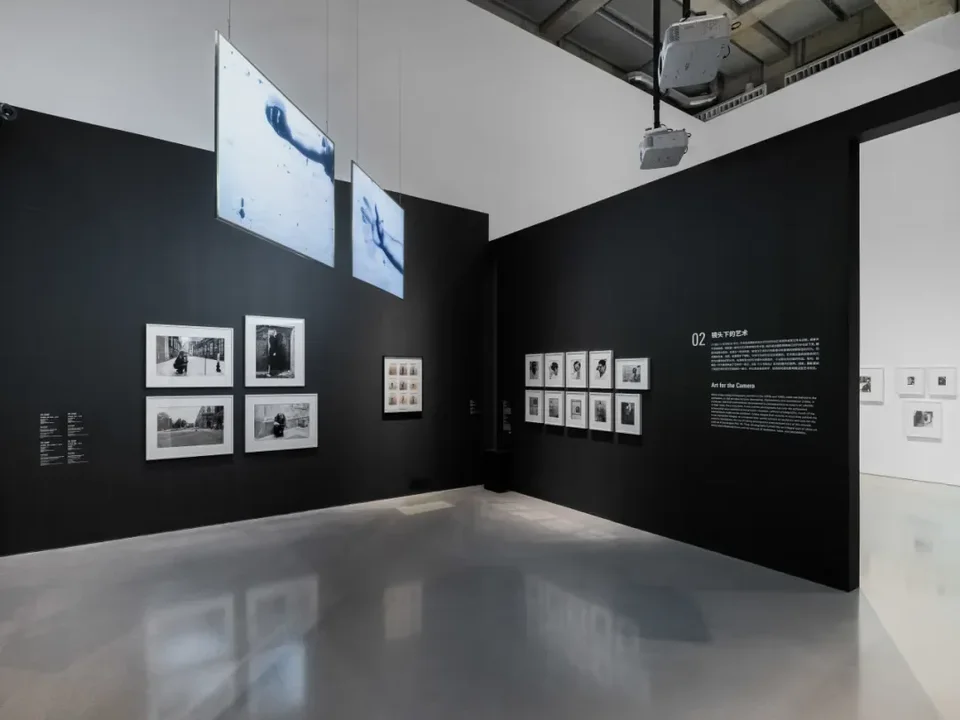
On November 8, 2024, "Another Avant-garde: Photography 1970–2000," part of the five-year exhibition collaboration between the West Bund Museum and the Centre Pompidou, officially opened; it runs until February 16, 2025. The exhibition presents the Centre Pompidou's photography collection in China on a large scale for the first time, bringing together nearly 200 groundbreaking works by almost 80 artists. Divided into 10 sections and beginning with "New Vision," the exhibition traces the many facets that emerged around the medium of photography after it was officially recognized as art by the art institution from the 1970s onward. Accordingly, the first sentence of the exhibition's introduction reads: "Although the Pictorialist and New Objectivity movements had championed photography as art, it was not until the 1970s that photography truly entered the realm of art and the museum." What, then, does it mean to question anew the artistic status of photography after modernism, and even to link it to the "avant-garde"?
The most classic account of the "avant-garde" was put forward by the German aesthetician Peter Bürger. In his Theory of the Avant-Garde (Theorie der Avantgarde), he drew a line between the "historical avant-garde" and the "neo-avant-garde" and declared the ultimate failure of the latter, as a cultural force, in the critique of institutions. On the one hand, by defining the avant-garde as a movement based on the shared intention of reconciling art with the praxis of life, Bürger provided a coherent and politicized framework for understanding the avant-garde. On the other hand, by insisting that the "neo"-avant-garde was a clumsy repetition of the historical avant-garde, and through his analysis of certain paradigmatic movements and artists' practices, Bürger portrayed the avant-garde as an exclusionary utopian myth. Today, the historical avant-garde is mainly understood as a term referring to a series of art movements between 1915 and 1925, including Dada and Surrealism, while the "neo-avant-garde" is mainly used to describe the postwar waves of art—particularly in the 1960s and 1970s—represented by Conceptual Art, Pop Art, and the like. In this context, the exhibition "Another Avant-garde: Photography 1970–2000" appears to offer a "third avant-garde" following the "neo-avant-garde," which we might call the "other avant-garde" (Another Avant-garde). It may seem as though the curators Florian Ebner and Matthias Pfaller intend to establish a historical category that extends the "historical avant-garde–neo-avant-garde" continuum, "opening up" another avant-garde. But this is not in fact the case. The exhibition is not a diachronic continuation of the avant-garde by means of "photography"; rather, it uses photography in its multiplicity as a lens that leads viewers to reconsider the following: after photography was officially incorporated into the modernist paradigm in the 1970s—marked by its systematic entry into the museum—how does this new situation shape the way we think about the revolutionary promise the avant-garde made at its birth and the space it set out to open? In this sense, the so-called "Another Avant-garde" is better understood as using photography as a probe inserted into multiple historical strata, discovering, amid the sediment of the avant-garde's many layers of discourse, the overlooked face of an "other" avant-garde. This "other avant-garde" is a "discovery" rather than an "invention." It does not stand in a relationship of succession to the historical avant-garde and neo-avant-garde with which it enters into dialogue (although in some respects the exhibition inherits the "neo-avant-garde"); rather, it has always been an internal part of them. In this sense, this other avant-garde can only be discovered through a retrospective reconstruction formed by tracing back from today's situation to the past.
This "other avant-garde" is brought to the fore largely through the tension between photography's "heteronomy" (embodied above all in "indexicality") and its "autonomy." "Indexicality" derives from the practice of defining the photograph as an "index" (also rendered as "trace" or "sign"), a positioning that has now become a consensus in international photography studies. As an index, the photograph arises from contact, encounter, and a mechanical causal relationship between the camera and the photographed object. This causal relationship of representation is logically independent of human control: it is a physical trace left by the mechanical reaction that occurs when light reflected from a real object reaches a photosensitive medium. Because the result of this process is largely free from the control of the operator's intentions, it is also regarded as mechanical and automatic. Beyond this, the crux of indexicality lies in emphasizing the continuity between the real world and the photographic image, as well as the two-way communication and mutual influence between them. Photography (the photograph) in this sense is actually more "heteronomous"—that is, its nature is shaped mainly by external factors or social functions (rather than determined by its medium specificity). This is precisely how the historical avant-garde positioned photography: as a tool of action participating in social transformation rather than as a victim of formalist aesthetics. By contrast, "autonomy" is closely tied to modernism in the sense of the American art critic Clement Greenberg, which holds that the properties of photography are determined by the demand for self-validation internal to its medium. It pursues the aesthetic principles of the medium's own content and form and emphasizes photography's aesthetic self-sufficiency in terms of meaning; the highly codified claim for modernist "autonomy" appears in Greenberg. For him, every artistic medium must necessarily find its irreplaceable medium specificity—that is, the foundation that distinguishes it from other media.
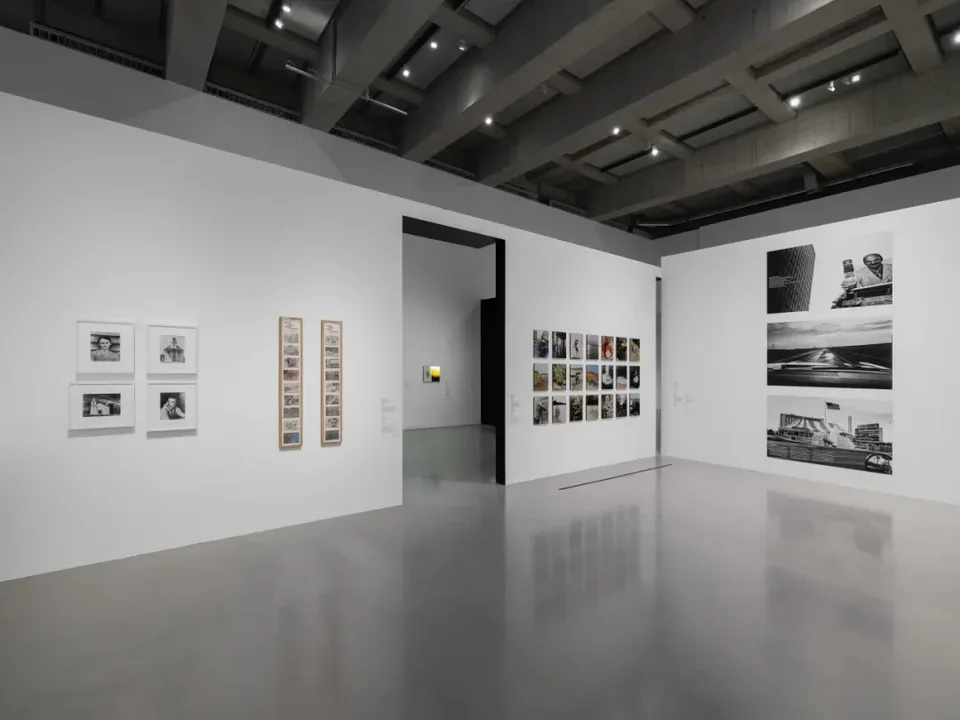
Section 3 of the exhibition, "Questioning Social Images," and Section 5, "Transformations of the Portrait," both embody "heteronomous" characteristics: portrait photography can produce effects of self-identification—especially when a "mirror" element is added—precisely because of the continuous relationship between the photographic image and the real world. The "autonomy" of photography that the exhibition seeks to highlight, however, is achieved mainly by severing the continuity between the real world and the world of the image; this is the subject of Section 8, "A World unto Itself." More specifically, this position actually derives from the modernist conception of the medium held by the American art historian Michael Fried, centered on "theatricality versus anti-theatricality" and set out most fully in his major work Why Photography Matters as Art as Never Before. "Theatricality" refers to the quality whereby the work, as an object, places itself in the same space as the viewer, thereby turning "viewer–artwork" into a "theater" of mutual interaction, which makes the meaning of the artwork depend on the presence of the viewer rather than on the work itself. It was for this reason that Fried pejoratively called Minimalism "literalism." The anti-theatrical tradition (that is, the tradition of absorption), by contrast, has been a powerful force in French painting since the eighteenth century: the picture surface serves as a "severing" interface, so that the figures within the picture are absorbed in their own activities and world, wholly oblivious to the presence of the viewer outside the picture. This means that such absorptive painting is unaware of its own "to-be-seenness"; the painting does not exist as an object to be looked at but as a window onto a second world. Through an examination of photographs by Jeff Wall, Andreas Gursky, and others, Fried argues that the photography they have produced since the 1970s for display in museums, by employing the "tableau" form, revived the absorptive tradition of French painting since the eighteenth century while also addressing the relationship between the work and its beholder. This art photography, epitomized by the "tableau," runs from Jeff Wall's Picture for Women at the beginning of the exhibition all the way to Andreas Gursky's 99 Cent at the end. Yet interspersed throughout are socially documentary images by artists such as the Chinese artist Hai Zhang'er and the South African artist David Goldblatt. The exhibition thus in effect constructs a tension between indexicality and absorption—that is, between photography's heteronomy and its autonomy—and swings back and forth between the two. The exhibition neither accepts Fried's judgments wholesale nor attempts to place itself entirely on the side of emphasizing photography's heteronomy. One obvious example is that Jeff Wall's Picture for Women is placed in Section 1 rather than Section 8, and the same holds for the work of the Chinese artist Liuming Ma. This interchangeability is not a sign of curatorial carelessness; on the contrary, it is meant to show that "photography," as a discursive practice, is itself a composite with multiple identities rather than a homogeneous category developing linearly. Any photographic work can be placed in different contexts and generate new meanings. In this sense, the exhibition's oscillation between "indexicality" and "absorption" is necessary, because even Jeff Wall, whom Michael Fried treats as an exemplary case, cannot be fully explained by Fried's modernist approach.
Through an almost absolute openness, the exhibition seeks, within the limits permitted by the art institution and the museum, to present the plural dialogues that photography has brought about. This is what the visual culture scholar Ariella Aïsha Azoulay argues: the spread of photography has in fact opened up a plural space of meaning in which photographers, viewers, art institutions, employers, mass media, and other parties all try to anchor the meaning of a photograph, yet no single party can fix it permanently. For example, the British artist Hannah Collins's Thin Protective Coverings is juxtaposed with work by the South African artist David Goldblatt, though the two would not ordinarily appear in the same exhibition. Such repositioning is itself flexible and open. The juxtapositions made in "Another Avant-garde" also call into question previous ways of shaping the image of the avant-garde. Fundamentally, what is at stake here is the problem of geographical unevenness and belatedness in the development of the avant-garde—namely, that the avant-garde cannot be regarded as a passive, homogeneous process of global diffusion. Historical distance and political isolation lend all local avant-garde intentions a dynamic of critical resistance, and this dynamic gives the avant-garde's development an asynchronous character even in some Western core countries. In this sense, the exhibition's placement of works by Chinese artists such as RongRong, Liuming Ma, Hong Hao, and Weng Fen merely gives them a synchronous appearance for the viewer in spatial terms. At that time, however, the Chinese avant-garde was not yet self-conscious about the art institution or global circulation; its artistic practice, as an avant-garde, acted directly on the artists' bodies and lives. The nature of the Chinese avant-garde art that began to emerge in the 1980s is placed in a dialogical context in "Another Avant-garde" and thereby brought into relief. Rather than being a compliant or defensive reaction to the West, it is better understood as a reflexive endeavor rooted in the continuities and ruptures of the country's own history. The isolation or disjunction one becomes aware of through its juxtaposition with Western avant-garde photography is precisely a manifestation of the uneven development of avant-garde art.
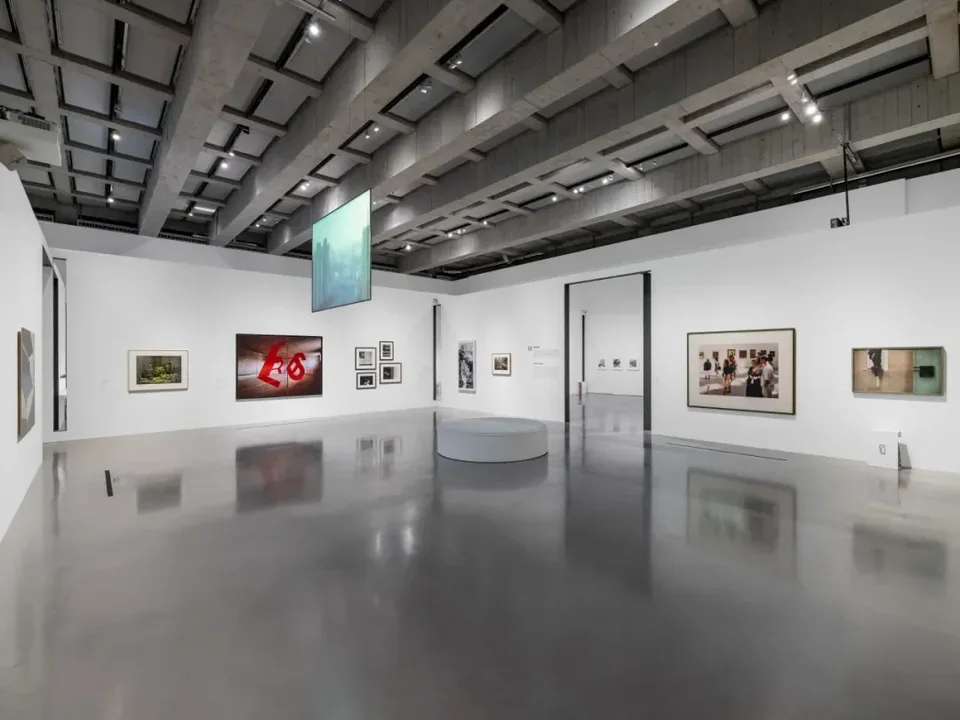
Nevertheless, the problem remains and cannot be avoided: when Chinese photographic works share a room with Western works, and the exhibition itself tends to let the images speak for themselves rather than supplementing their original contexts with documentary materials, does the absence of historical context produce an equal dialogue between Western and Chinese practices, or a narrative violence that, in the name of dialogue, assimilates the heterogeneity of historical backgrounds into a unified narrative? Did the artistic autonomy that Chinese photographers began pursuing in the 1920s return in the 1990s in the same way (as the exhibition's thesis suggests), or was it pushed, under the impact of globalization, toward a broader heteronomy? More importantly, when we consider Chinese "photographic art" (especially photography from the 1940s to the 1990s), the normative meaning of "art" within it likely differs fundamentally from the understanding of "art" within the Western (modernist) framework, and this difference is most evident precisely in photography—how is this problem to be addressed? None of these questions receives an adequate answer in the exhibition.
On the whole, "Another Avant-garde" does not attempt to fix a linear, progressive narrative of the history of photography. By focusing on photography, a fundamentally heterogeneous and plural medium, what it evokes is a "deferred" consciousness of the avant-garde and, with it, a reexamination of the avant-garde's meaning—namely, the judgment the art historian Hal Foster drew from Freud in his discussion of the avant-garde: "We become who we are only in deferred action (Nachträglichkeit)." There is no real ending of success or failure for the avant-garde, because such an ending either stands opposed to the myth of art or inverts it; in both cases the root lies in placing the myth of art at the center. Photography itself—owing to the plural space that its indexicality has only now brought to the fore (partly because photography has become a universal practice of everyday life, and partly because the experience of looking at photographs has come to mediate the experience of life)—reveals all the more clearly its incompatibility with the formalist myth of art. Through the historical reconstruction of the avant-garde, photography's own heterogeneity can be aptly mapped onto an awareness of the avant-garde's uneven development. At the same time, because photography has always resisted formalist interpretation, the surface of the photograph, as a kind of screen, perpetually oscillates between protecting and assailing the viewer. In this sense, the "other avant-garde" that the exhibition discovers through photography is not itself an autonomous category. What the exhibition actually constructs is a plural space of meaning that has persisted from the very inception of the historical avant-garde to the present day, and this plurality is established on the basis of photography's continuity with the real world in the sense of indexicality/theatricality. This plural space of photography is like a specter lurking behind the historical identity of the avant-garde, ever ready to shatter the autonomy the avant-garde seeks to establish for itself.
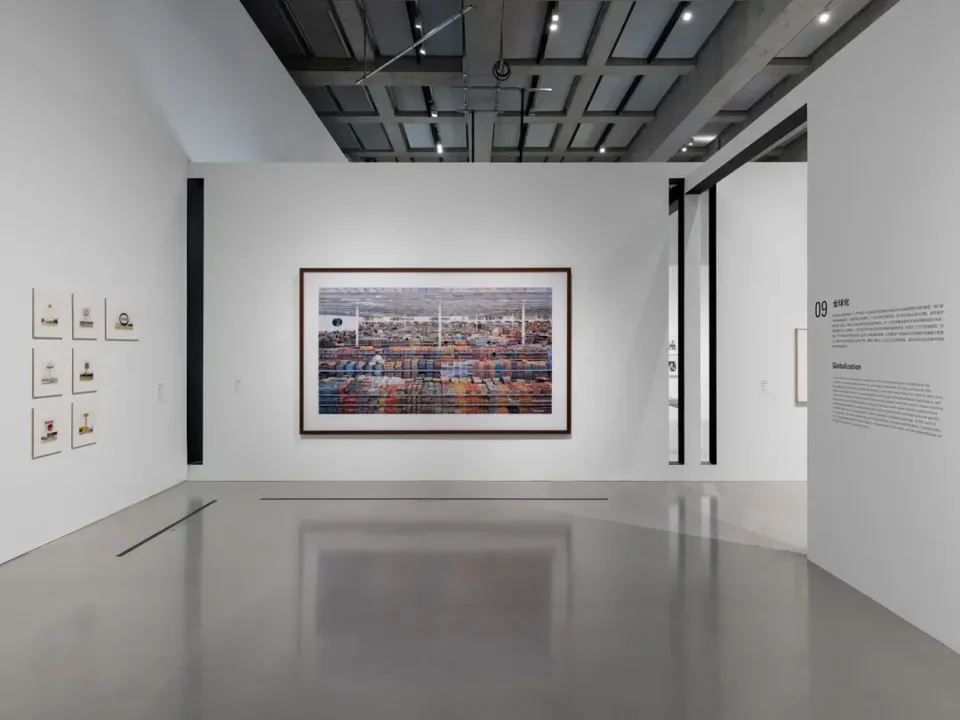
In an interview conducted for this article, I spoke at the West Bund Museum with the curators of "Another Avant-garde," Florian Ebner and Matthias Pfaller of the Centre Pompidou in France, about Chinese art and avant-garde art. The conversation addressed both the curatorial approach of the exhibition and the position of Chinese artists, and its content complements the discussion above.
Clearly, the concept of the "other avant-garde" in this exhibition differs from the historical avant-garde. But how do you use photography to address the relationship between "another avant-garde" and the "neo-avant-garde"? How does "another avant-garde" differ from the "neo-avant-garde" (rather than from the historical avant-garde)?
The period our exhibition covers comes after the neo-avant-garde, and it presents works from many fields, such as Performance Art, Conceptual Art, and the Pictures Generation. We do not want to detach the artworks in the exhibition from their historical circumstances; rather, we hope to offer new perspectives and new juxtapositions through the filter of the photographic medium, producing some surprising comparisons—for example, between the works of Sherrie Levine and Andreas Gursky. This also highlights the fundamental question we are asking: how does art become art, and how have artists used photography—whether its technical processes, its role in society, or the expressive possibilities of the image—to create art and show the world as they see it? The exhibition is therefore not an entirely new theoretical and historical project, but a precise observation of how art made with the camera developed over these decades. We do not wish to establish a new artistic genealogy, but to bring together multiple genealogies that developed in parallel during this period.
As for the neo-avant-garde, although the artists in the exhibition paid close attention to analyzing social, political, economic, and art-world conditions, they expressed their critique and creativity mainly through the aesthetic means of photographic language. We want to show this aesthetic effect and give viewers the opportunity to experience these artworks. Through the materiality of photography (and video) and the potential of the image, we can sense both the artists' critique of society at large and their personal stories—something some theorists of the neo-avant-garde often overlook. In this sense, the overall position of the exhibition oscillates between two art historians, Benjamin Buchloh and Michael Fried: between a rigorous critique of the artwork and the openness of its self-referentiality, between seriousness and pleasure.
In this exhibition, works by many artists, including Jeff Wall and Thomas Ruff, are presented in the "tableau" form, as the art historian Jean-François Chevrier called it. Michael Fried offered a further interpretation of this in his own writings, which evidently also influenced the organization of this exhibition. Does the notion, like Fried's, that art photography "creates an autonomous world" represent a kind of structural refusal—that is, no longer regarding the image as a product rooted in the conflicting determinants of its production, as though, in being viewed, the image finally frees itself from these determinants?
In the sequence of the exhibition, these "tableaux" appear just before the final third of the route. Before that, we show works that critically explore the language and meaning of images, such as Martha Rosler's or Hong Hao's subversions of advertising photography, Cindy Sherman's and Tseng Kwong Chi's questioning of stereotypes, and the technically grounded analytical works of Ugo Mulas or Shuxia Chen. We did not take chronology as the main thread, but instead emphasized the trajectories of these similar art movements within their respective contexts. From the grand perspective of history, differences of ten or twenty years seem insignificant, especially when we consider the far-reaching influence these artworks have had on contemporary artists.
When including RongRong's photographs in the exhibition, how did you understand the relationship between the presence of a photographer like RongRong and the performances of performance artists such as Huan Zhang (especially when these performances are presented visually)? When a performance takes place at a specific site, what is the relationship between the bodily presence of the artist and that of the photographer? How do they influence each other?
For Liuming Ma's work, we chose a series of self-portraits, which show that he not only carefully planned his performances but also meticulously arranged how they were documented and presented through photography. The camera was an integral part of his performance practice; even on occasions when he let audience members photograph him, he determined the photographic setup and the rules for shooting. Photography is therefore inseparable from his performance art. RongRong's works, meanwhile, document performances by Huan Zhang, Ming Zhu, and Cang Xin. In photographing Cang Xin's Trampling on the Face, RongRong captured a distinct sense of copresence, at times even with a playful participation and interaction. In one photograph, for example, Liuming Ma holds a mask up to his face and poses for RongRong. These images hover between documentation and the photographer's own creative work. Like Harry Shunk and János Kender's participatory documentation of the "Pier 18" project, these photographs are not merely supplements to the performances but part of the performances themselves. This is exactly what we wanted to present in the exhibition: the camera and the photographer are not onlookers but active participants. At the same time, we do not wish to diminish the autonomy of performance art itself on this account. Without these performances, the photographs would not exist. These photographs possess independent value by virtue of their distinctive photographic language and enter into dialogue with other art forms.
The exhibition's introduction states that the exhibition traces photography's evolution from a record of artistic processes to an autonomous artwork. What does it mean to retrace photography's autonomy at the juncture of the 1970s? Might this approach conflict with the revolutionary and critical promise of avant-garde art?
Photography has always been regarded as an art form, but for a long time it was confined to its own circles—something that can indeed be called a modernist pursuit of medium specificity. From Pictorialism, New Objectivity, the "decisive moment," and straight photography to New Color Photography, these stages of development established photography's status as an autonomous art, but our focus is on photography's relevance to the other broad fields of the art world. In these fields, from French academic painting to performance art, photography long served merely as an auxiliary tool. We present artists from diverse backgrounds who, as Zheng Gu explains in the exhibition catalogue, turned to photography not for the sake of photography itself but for their own projects—whether postmodern art, sculpture, performance, or Conceptual Art. Our aim is to show how these artists made photography the core of their work, rather than relying merely on other discourses or on modernist understandings of photography. Proceeding from a variety of strategies and artistic ideas, photography gradually became an autonomous medium capable of addressing the same questions and themes as painting, sculpture, or other forms. In this sense, the photography we present here is a principal medium of avant-garde art, because it helped artists expand their pursuits in technique and pictorial expression. Its widespread use in vernacular, commercial, cultural, and political applications embodies the spirit of avant-garde art—continually extending the boundaries of art into new contexts.