
I. Atrocity Photography and the "Representation" of Disaster
In 1904, the Faroese missionary Daniel J. Danielsen published the first photograph of the atrocities committed by King Leopold II of Belgium and his regime[1]. At the Bonginda mission station, the photographer captured a child from the village of Mpelengi named Lokoto (or Lokota). He stands there with his mutilated arm bent, his face blank. By the time Lokoto was photographed, five years had passed since militiamen of the Anglo-Belgian India Rubber Company (ABIR) had cut off his hand.
During the "Scramble for Africa" in the late nineteenth century, Leopold II seized vast tracts of the Congo Basin as his private domain and established the so-called "Congo Free State." Under the pretext of humanitarianism, his regime frantically plundered the region's rubber and ivory through forced labor, torture, mutilation, and massacre. The most famous record of these atrocities comes from John and Alice Harris, British missionaries affiliated with the Congo-Balolo Mission. In a photograph Alice Seeley Harris took in 1904, the man in the foreground, named Nsala, rests his arm on his knee. He is barefoot and naked, and he gazes at some small, stone-like objects on the floor in front of him. In the background, two Congolese men stand at the edge of the frame. The harsh sunlight has bleached the grass and dirt road white through overexposure, and it makes their already solemn expressions look even stiffer. We may not grasp at once what Nsala is looking at, or why his contemplation seems so sorrowful and anguished, until we turn to the photograph's caption. He is looking at the hand and foot that remained of his five-year-old daughter after ABIR militiamen killed her. He brought his daughter's remains to the mission station, and so this photograph came to exist[2]. These photographs documenting the atrocities of Leopold's regime were later shown again and again as lantern slides during European lecture tours led by Harris, accompanied by explanatory text. The aim was to let audiences in Britain and America, who came from Christian backgrounds, know what was happening in the Congo and that the atrocities would continue.
What does the visual representation of victims, in photographs, mean? What emotions does it evoke, and what ethical effects does it produce? The answers to these questions often form the core of both the theory and the practice of atrocity photography[3]. I use "ethics" here in its most general sense: a set of beliefs about how actions ought to be conducted, which serves as the foundation of communal life. Ethical norms guide us toward the rules and thresholds within which we should participate and act, but they do not compel action itself. Ethics differs from law. What I desire and what I am able to do are two different things, and ethics guides the former.
Contemporaries described the images of Congolese victims as "images that would scorch the eyes, which should under no circumstances be viewed or displayed"[4], and said they "delivered an almost pornographic visual experience"[5]. The view that equates atrocity photographs with pornography spread rapidly after the 1960s. Cultural critics, represented most prominently by the American critic Susan Sontag, used "pornography" to characterize both atrocity photography and the experience of viewing such photographs. She wrote: "Only war photography combines voyeurism with danger"[6], and "all images that display the violation of an attractive body are pornographic"[7]. After the 2010 Haiti earthquake, concern spread that the disaster images flooding the news media might degenerate into "disaster porn"[8]. After the 2017 terrorist attack on Westminster Bridge in London, The Sun was accused of using "disaster porn" for its own gain because it published many photographs of the dead and wounded[9]. The attitude behind these claims has developed to the point that atrocity photography is now almost equated with spectacle. Whenever a similar humanitarian disaster occurs, accusations of pornographizing the victims are everywhere. Yet this rhetoric against "disaster porn" often amounts to a wholesale rejection of the act of "representation" itself, and it ignores the many levels and possibilities of representation. Of course, citing Sontag in this way also looks specious and crude, since it displays an indiscriminate, blanket opposition to the "representation of disaster."
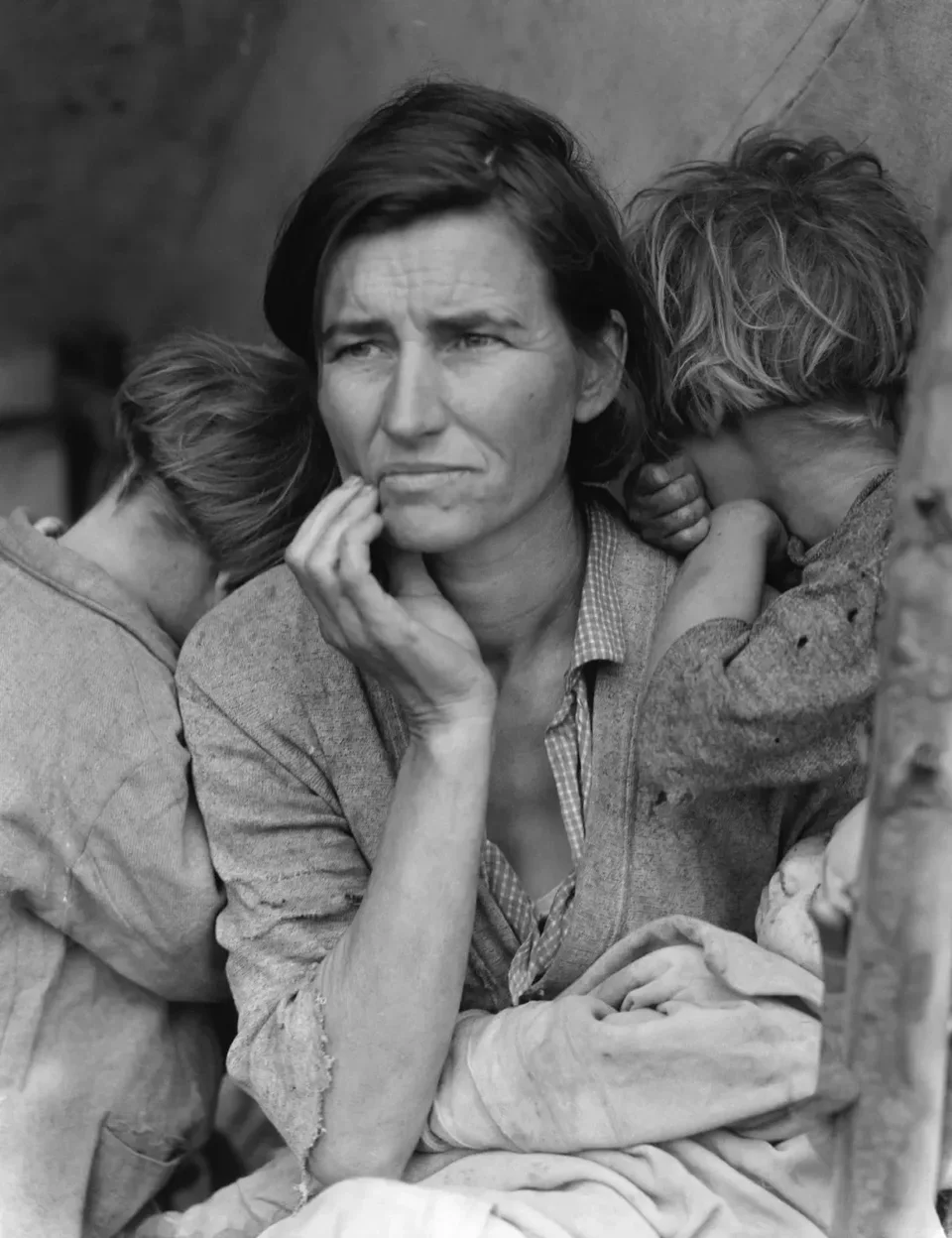
This simplistic and fashionable accusation of "disaster porn" is ineffective and ought to be abandoned. One reason is that ways of seeing and representing cannot be settled by verbal argument alone. Another is that the ethical demand placed on representation is in fact an ethical demand placed on the viewing subject: it requires viewers to be fully aware that they themselves may be guilty. The "disaster porn" argument, however, is to some extent an attempt to purify viewers in an ethical sense. Through slogans like "one should not look" and "one should not photograph," it tries to reconstruct the identity of an innocent viewer. In this sense, refusing to look is actually a kind of weakness. This does not mean that representing suffering and atrocity cannot become a form of violence. When representation instrumentalizes its object, it already contains some degree of violence, and in that respect there is probably no perfect, ethically flawless image of atrocity anywhere in the world. Nor does it mean that discussing the ethical problems involved is pointless, because injustice toward victims really does exist. Even with the Congo atrocity photographs taken by the Harrises, who would dare claim there was no missionary need or motive behind them? Consider also the famous American documentary photographer Dorothea Lange's Migrant Mother (1936). It has become one of the twentieth century's defining hymns to human resilience in the face of suffering, but how many people know the mother's name? Florence Thompson, the mother in the photograph, not only had no authority over how the picture was interpreted but also became a symbol of suffering during the Great Depression in America. She protested: "I wish she [Lange] hadn't taken my picture... She said she'd send me a copy, but she never did." Yet it would probably be unfair to conclude from this alone that the photographer was simply oppressing her subject. In another interview, Thompson said: "I'm tired of being a symbol of human poverty, and besides, my life has improved."[10] This is not simply a complaint. The improvement of her life and the violence of representation really were happening at the same time.
How, then, can we get out of the impasse of violence and pornography in atrocity photography? How can we avoid passing moral and ethical judgment on viewers while still ensuring that representations of atrocity are distorted as little as possible and converted as fully as possible into action on the viewer's part? I believe that the need to resolve or evade this impasse (though this is not the whole reason) has led to growing attention toward a kind of photography devoted to representing the "traces" of disaster and atrocity. This particular type of atrocity photography also holds an opportunity for us to return to the ethical problem of representation and understand it better. The "aesthetics of traces" that develops from it represents the indirect consequences of atrocity and their effects. These trace-centered methods of representation shift away from emphasizing the image and actions of the represented subject, which is usually the practice of photojournalism. Instead, they turn to motionless ruins, objects, and other elements that do not appear in human form. For example, a photograph will show the ruins of a house but not the looting or bombing; it will show bloodstains and the objects and living spaces of its subjects, but not the bodies of the victims.
II. The "Aesthetics of Traces" in Tillim's Photography
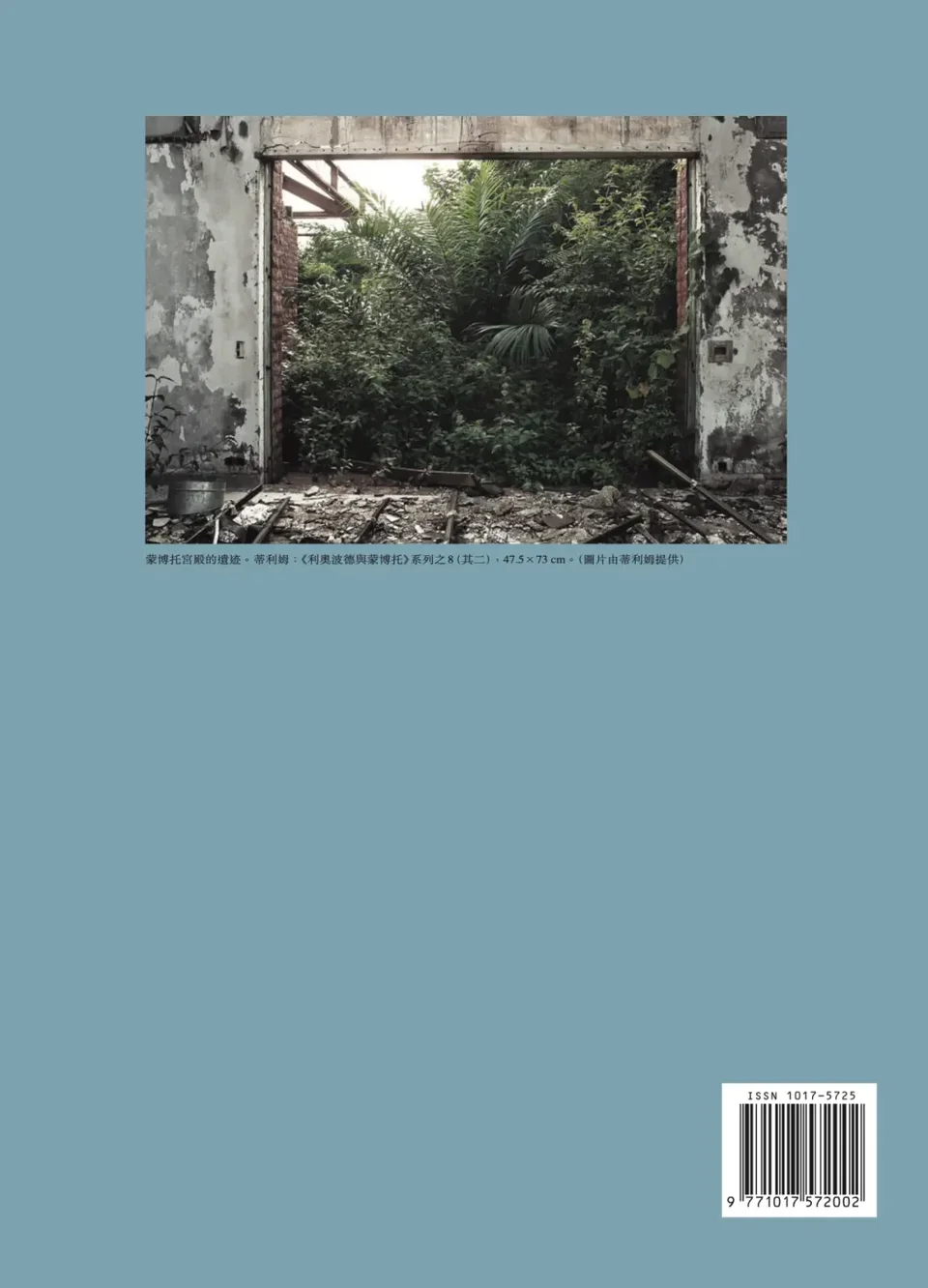
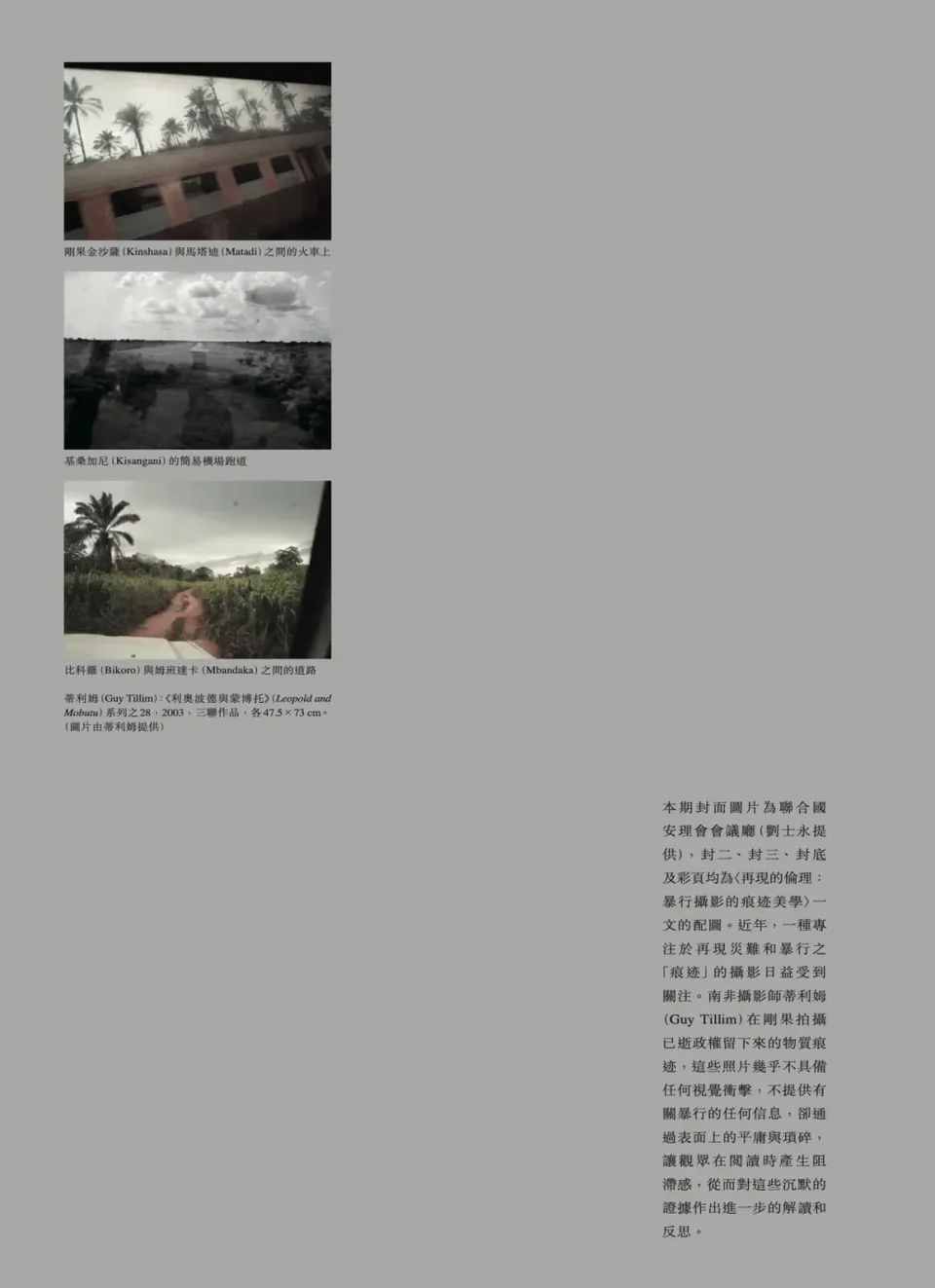
Let us return to the Congo. In 2004, the South African photographer Guy Tillim published the photobook Leopold and Mobutu[11]. He walked across the land of the Congo, photographing the material traces left by defunct regimes and exploring the visual connections between past and present. Compared with the direct presentation of conventional atrocity photography, Tillim's photographs are more contemplative than active. In the exhibition that shares the photobook's title, half of the works represent ruins in the Congo from the eras of Leopold II and of Mobutu Sese Seko (1965–1997), while the other half show scenes of everyday life in the Congo. Tillim exhibited the two side by side[12]. These photographs also seem, on the surface, to make no sense, but Tillim gave every one of them a long caption explaining how the image relates to Mobutu, Leopold II, or the explorer Henry M. Stanley.
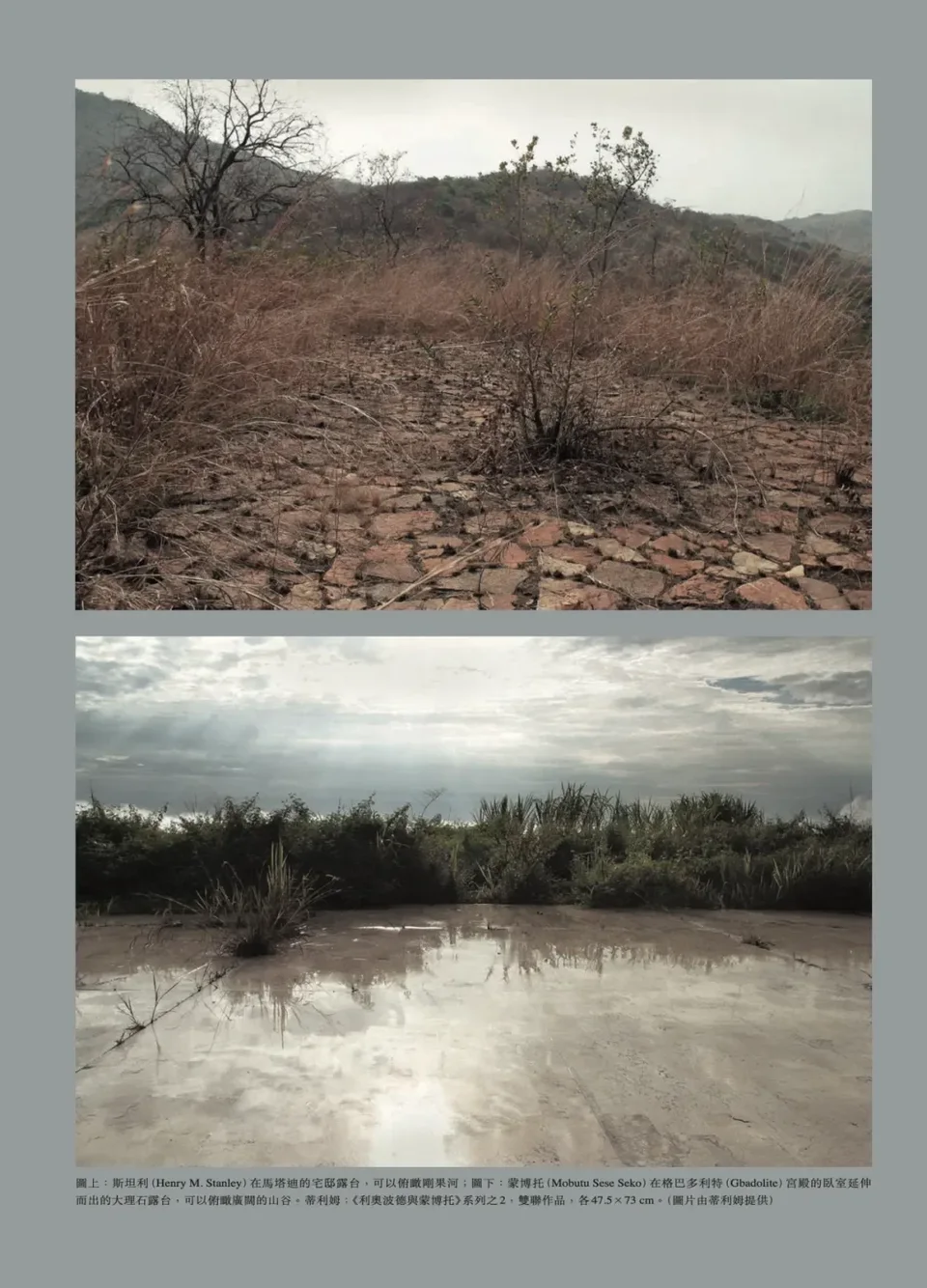
In one pair of photographs (no. 2), for instance, without the text viewers would see only two desolate landscapes with almost no visual impact. One shows cracked brown earth and weeds; the other shows a waterlogged concrete floor reflecting the sunlight. In themselves they offer no information about atrocity; atrocity is completely absent here. Yet once we read the captions, the historical dimension opens up. One is "the terrace of Stanley's residence in Matadi, overlooking the Congo River," and the other is "the marble terrace extending from Mobutu's bedroom in his palace at Gbadolite, overlooking a broad valley." Tillim juxtaposes the perspectives of two holders of power. One is Stanley, who blazed the trail for Leopold II's colonial enterprise. The other is Mobutu, the postcolonial dictator who inherited the power structure Stanley helped build. As an heir to Leopold II's exploitative policies, Mobutu subjected the country, which he renamed Zaire, to thirty-two years of dictatorship. He amassed a personal fortune of hundreds of millions of dollars by plundering the nation's resources. Mobutu's atrocities were not as brutal as Leopold II's, but his kleptocratic dictatorship ultimately led to the complete collapse of the country's infrastructure, economy, and health system. This collapse directly triggered the two Congo Wars (1996–2003), in which millions died of easily preventable and treatable diseases, famine, and ongoing violence. Tillim does not show us what the two men looked at. He presents instead the physical traces left by the act of looking: two terraces that are now utterly dilapidated.
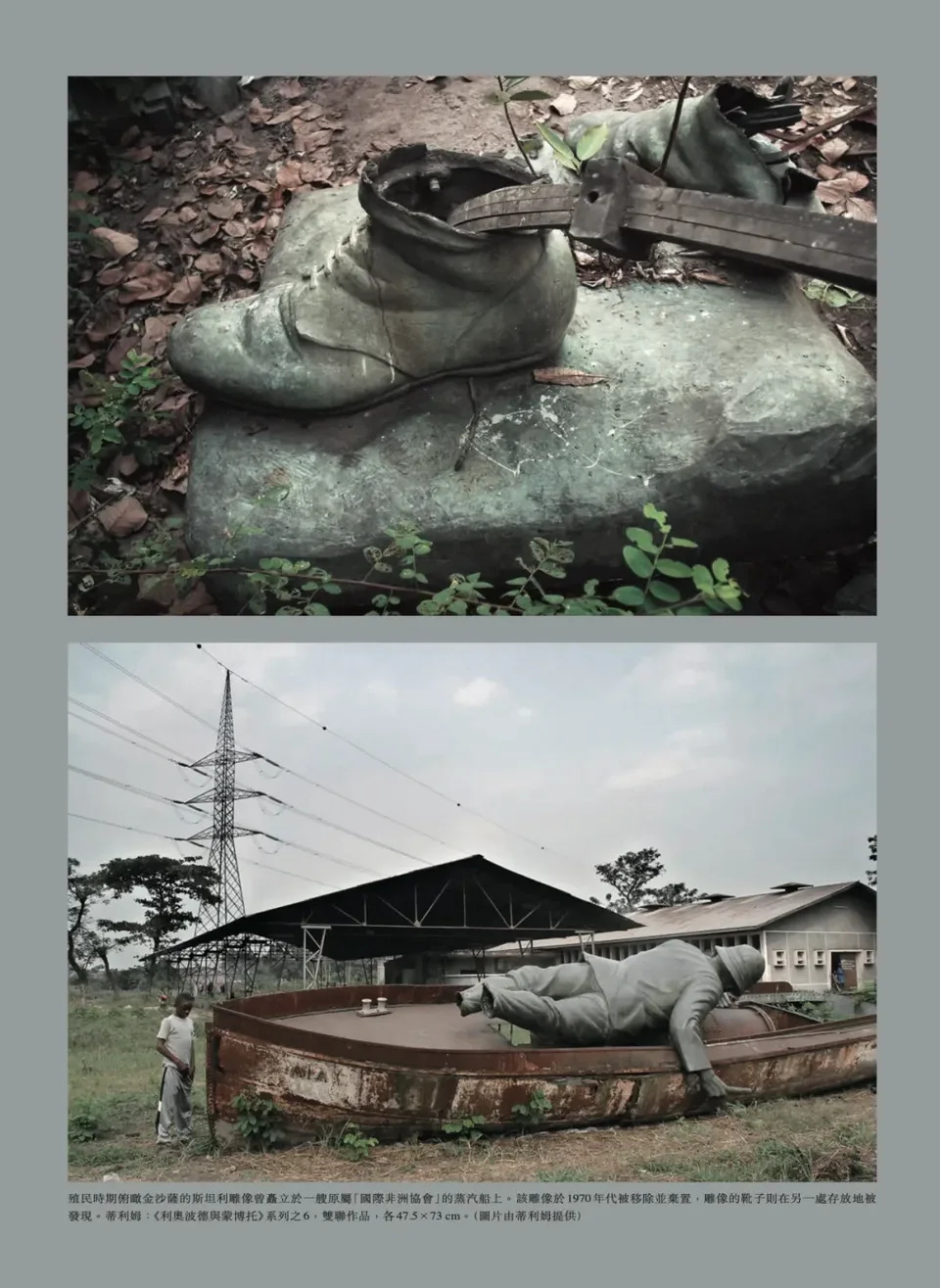
In another pair (no. 6), one image shows a huge, verdigris-covered statue's boot abandoned on an overgrown vacant lot, with rough marks of violent cutting at the ankle. The other image explains the mystery. The severed ankle belongs to a statue lying toppled on the wreck of an abandoned steamboat, and a boy is urinating on it. The caption tells us that this is the statue of Stanley, which overlooked Kinshasa during the colonial era but was pulled down in 1970 when Mobutu launched his "Authenticity" campaign. The boy's seemingly careless act invites reflection. Does he know whose statue it is? Does he know this land's past? After all, the International African Association (Association internationale africaine), founded by Leopold II, used this very steamboat in the course of building his empire. During his rule, ten million people died because of his tyranny.
What I want to ask is this: what is the significance of a mode of representation that focuses on "traces" rather than "events," that is, one that shows the historical remains of dictatorship in the Congo and the minutiae of contemporary life in the places where it unfolded, in such a broad and indirect way? We need to recognize that before atrocity, or even war, becomes a destruction of democratic consensus or a destruction of justice, it is first a destruction of the order of people's everyday lives. Admittedly, the perpetration and exposure of atrocity are often accompanied by a redistribution of visibility and invisibility. But most atrocities cannot be directly felt in the visible form that Leopold II's took. Compared with atrocities that take lives, more numerous and more pervasive atrocities are often difficult to show directly. They seep into everyday life in microscopic ways and can be understood only through everyday life. Likewise, examining the representation of atrocity should not focus only on victims and perpetrators; it should also attend to the trauma that atrocity produces. This means that the substance of atrocity consists not only of its factual components but also of the lasting effects it has on human experience and the ways those effects appear.
On the trauma experienced in war or atrocity, the American scholar Cathy Caruth writes that "the traumatic experience is not simply a repression or a defense, but a temporal delay that carries the individual beyond the shock of the first moment. Trauma is a repeated suffering of the event, but it is also a continual leaving of its site"[13]. We are compelled once again to confront the paradox posed by the Belgian art historian Thierry de Duve: "The photograph is traumatic not because of its content, but because of the intrinsic features of a particular time and space."[14] In other words, the key to trauma, and to representing trauma, is to refuse to treat history chronologically as a set of past facts. History should be treated instead as a collection of moments that are continually generated and constructed in the present, each reflecting the subject's present feelings. Such memory is sensation, not image[15].
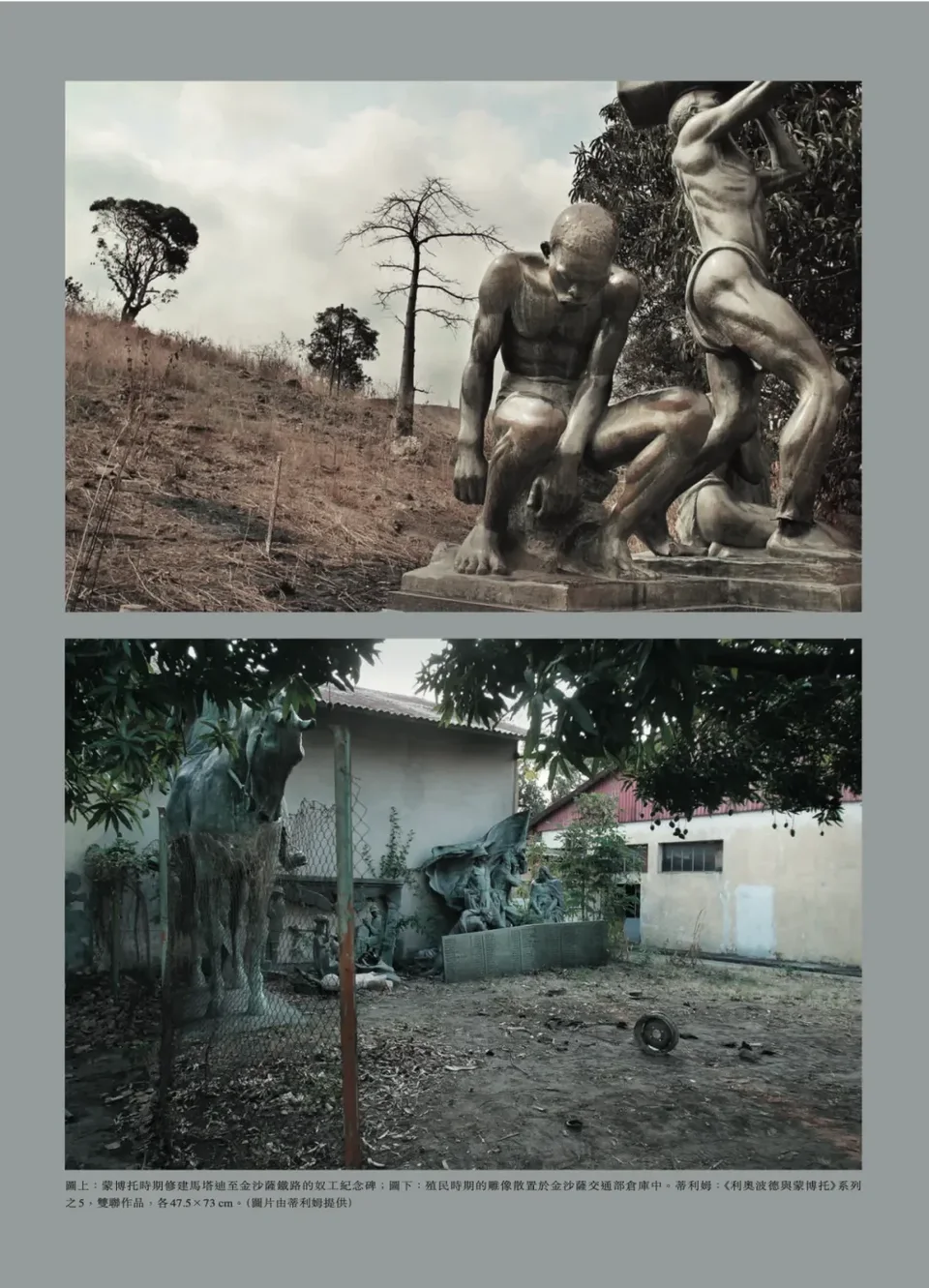
Returning to no. 2 in Tillim's exhibition: although we now know something about the atrocities of Leopold II and Mobutu, the visual traces remain there after all, and the parched ground once trodden by the killers' feet still resists any fixed interpretation. Here, as one scholar puts it: "'Witness' is the preservation and carrying forward (in its various ways) of a trace. In its most familiar form, the living witness is the bearer of this witness. But... places too can be traces."[16] The absence of a direct object clears a space for the flash of a historical moment, so that we can seize it as it flashes. As the scholar Laurent Olivier says, the land preserves a sense of the past in its contours, and time and space merge here precisely because "the past" has not been buried beneath "the present" like a souvenir[17]. Only then can looking back on history become an act through which the dead may speak again. Otherwise, such retrospection degenerates into forced generalization. It assimilates a historical existence of infinite richness into the viewer's fixed present perspective and ultimately erases its real complexity.
III. The Forensic Attitude and "Representational Intolerance"
Pairing these images of the traces of atrocity with their captions gives rise to a tendency that may be called a "forensic attitude." Producing and interpreting images thereby both become a form of investigation, a search for and reconstruction of testimony and evidence. Tillim invites viewers to become detectives alongside him. Standing in the present, they collect evidence left behind from former days in order to form a "past." As Robert Hariman writes: "Traces communicate absence, loss, and the failure of communication itself. Viewers are drawn into contemplation of the unknown, and so discover more."[18] With the kind of subject matter Tillim handles, the suffering individuals or ruins in a photograph without explanation may well be assimilated into the viewer's existing understanding. On the other hand, unreserved representation of victims that lacks a forensic attitude can easily exceed what the art historian John Roberts calls "the limits of representation," and thereby "lose the effect that this transgression was supposed to achieve"[19]. When the representation of disaster is so direct that it is unbearable to look at, "our desire and need to look—to pursue truth by revealing the truth of violence—is countered by the need to look away, because the truth of violence is presented to us so nakedly that it is uncomfortable, even painful... 'Showing everything' causes the viewer to lose focus, forcing them on the one hand to stare and on the other to look away in shock or displeasure"[20]. In this sense, the opposition of Sontag and others to the direct representation of violence cannot simply be seen as a quest for an innocent gaze. It is precisely a search for a mode of representation that preserves the cruelty of war and disaster without turning it into something that, like pornography, "makes people want to look away." Forensic photography that seeks to represent the traces of events, which is also aftermath photography, emerged precisely to avoid this.
In my view, the seemingly banal, dull, and trivial details that Tillim and others represent serve two purposes. On the one hand, like Roberts and Sontag, they are indeed searching for another mode of representation, one that does not yield to dissolving the cruelty of disaster. On the other hand, they reveal the ways in which disaster, specifically disaster produced by regimes, invades our lives. Simply put, before photographers like Tillim act as secondary witnesses to disaster, they serve first as "pointers." As John Szarkowski, curator at the Museum of Modern Art (MoMA), said: "As a way of beginning, one might compare the art of photography to the act of pointing."[21] This seemingly simple metaphor actually has epistemological implications. For Roberts, "the photographer 'points' at things, and in pointing 'picks out' things, and in the process of picking out, the photographer is himself or herself 'picked out' and inscribed into a signifying chain. 'Pointing' and 'picking out' are therefore essentially active and cognitive categories"[22].
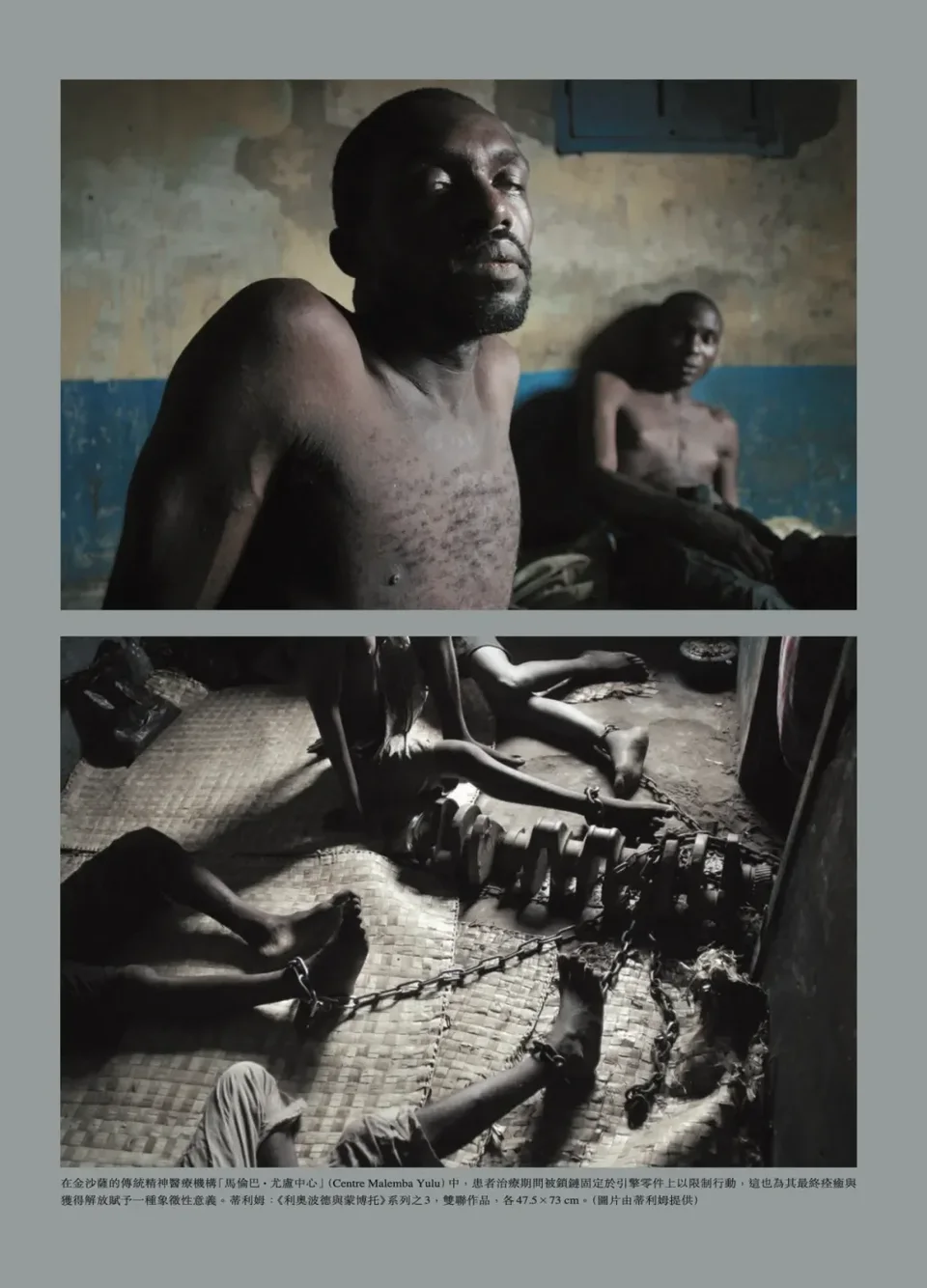
In a sense, the work of Tillim and others is precisely this kind of critical "pointing." Through it, they "pick out" from their backgrounds the "traces" that are overlooked and forgotten in the everyday flow of vision: a bullet-riddled wall, a desolate empty lot, an abandoned piece of clothing. As the title of Roberts's book Photography and Its Violations suggests, this act of "picking out" can itself be seen as a "violation"[23]. When photojournalism reveals conditions of poverty or disaster and their consequences, the act of "revealing" is already an offense. To break open a status quo that has, for some reason, been hidden or gone unnoticed, and to reveal what lies beneath the surface, is to offend against the status quo and to assault existing boundaries. This feature is latent in any medium that takes revelation as its task. Such acts by the photographer interrupt the visual continuity we take for granted, and they also interrupt our inertia in treating the surrounding world as a given. It is precisely through this "violation" of everyday appearances that new knowledge can be produced, because knowledge cannot arise from a self-identical loop. The production of knowledge always means expanding one's own boundaries through what is not oneself. This is the epistemological meaning of "violation." The photographer goes somewhere uninvited, arrives unbidden, perhaps even unwelcome. Through such an act, the photographer questions and even alters the cognitive order of that time and place, and lets us see what someone does not want us to see. This is a form of knowledge production.
By representing everyday details, Tillim and others tell us "what is there." Without their pointing, the realities connected with these details would remain completely invisible to viewers, and the narratives of violence and loss they contain would be silenced forever.
This act of pointing, and the new visibility it presents, is precisely what the invention of photography brought about. As the Arab-Jewish visual culture scholar Ariella Azoulay puts it: "The invention of photography added a new way of looking at the visible, one that did not exist before or at least existed differently. This gaze is based on a new attitude toward vision. It constitutes an attitude toward objects, situations, customs, images, or places that, before photography, were not in themselves worthy of thought."[24] Azoulay's insight indeed reveals the contribution that atrocity photography represented by the aesthetics of traces (and photography in the broad sense) makes to the redistribution of visibility.
More importantly, when photography becomes entangled with matters such as "someone is suffering" or "someone has died," it inevitably faces an ethical choice: the contradiction, mentioned above, between "fixing one's gaze" and "looking away." Roberts uses the term "representational intolerance" to describe one form this contradiction takes in its most extreme cases[25]. "Representational intolerance" does not mean a rejection of the act of representation itself. It refers instead to a rigorous choice among modes of representation: whether to show the victims' bodies directly, to erase their images entirely and show "traces" instead, or to strive for some middle ground. The German pacifist Ernst Friedrich chose one extreme of this spectrum in Krieg dem Kriege (War Against War), published in 1924. He showed without reservation the faces of First World War soldiers disfigured by shells, shrapnel, and poison gas[26]. These images are almost impossible to look at for even a moment. They are "intolerant" of any empathy or heroic fantasy on the viewer's part, and they refuse to become part of any story about humanity. What they present is war as the product of an industrial process: flesh torn, perforated, and burned by chemicals. Viewing such photographs, we obtain no consolation or sublimation of any kind. We are simply forced to acknowledge a brutal fact: this is war, pure and absolute destruction. This unbearable quality is also the source of such works' ethical force; it even blocks thought.
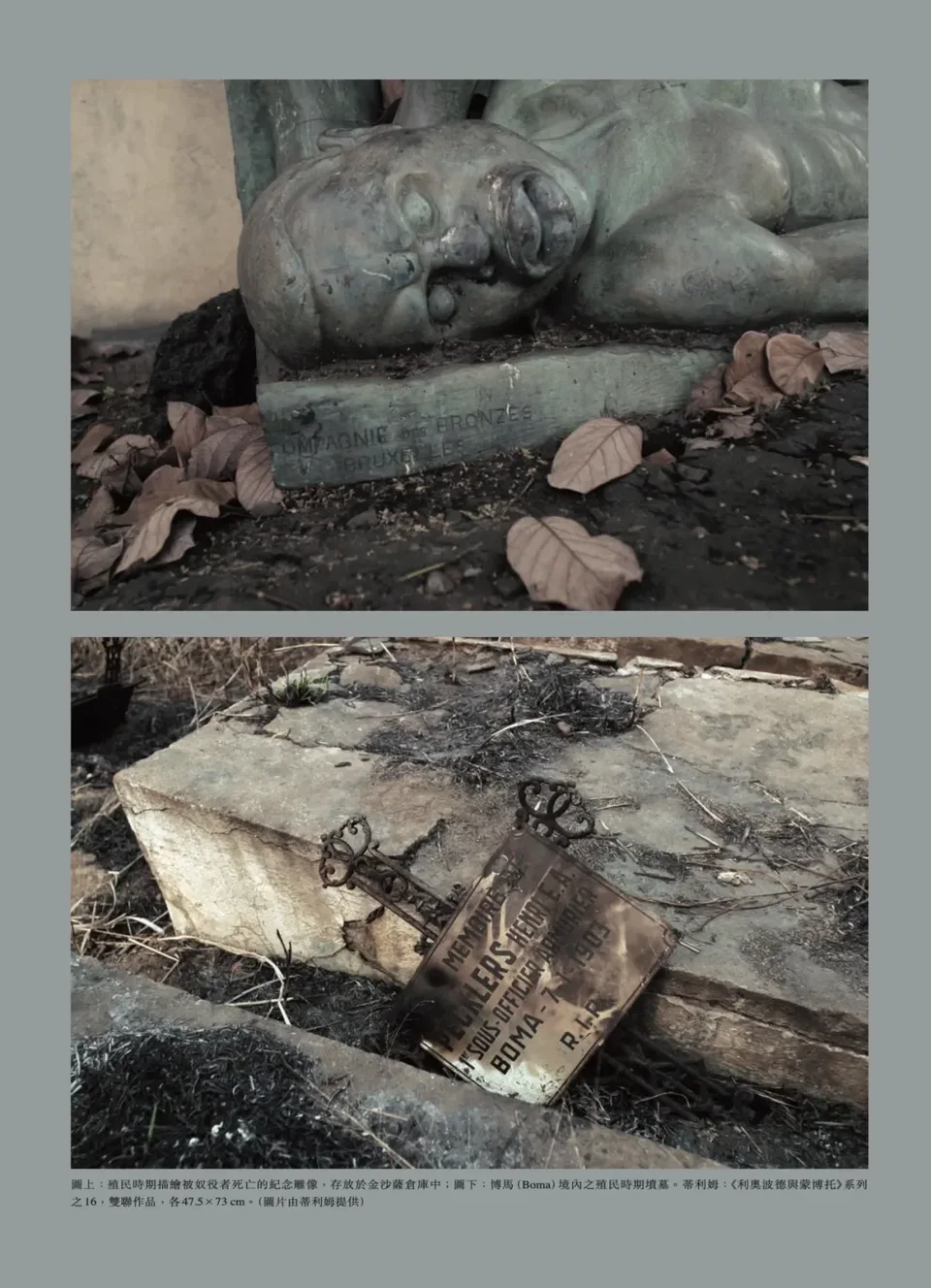
Friedrich's attitude seems to be the opposite of the "forensic attitude" discussed here, yet the two arrive at the same destination by different routes in the ethical rigor that "representational intolerance" demands. Tillim does not directly show bodily wounds (constrained by time and place, he could not have done so). He does, however, "intolerantly" present the desolate ruins and institutional debts that violence has left behind. The French photographer Sophie Ristelhueber's WB (West Bank, 2004) adopts the same strategy. The work photographs the roadblocks Israel set up on Palestinian roads, many of them shot from above to produce an aerial effect. For Jane Tormey, Ristelhueber's aerial photographs almost transform these traces of violence into a circumvention of political commentary, which in turn forces viewers to reflect actively[27]. Yet it is precisely in this way that Ristelhueber presents the violence of what she represents. The perspective is itself inhuman. It refuses to offer any grand narrative or heroic figures of oppression or violence, and it does not locate the victims of war simply in human bodies. Instead it chooses to present the fact that a broader world has been damaged. As viewers, we are asked to retrace and reimagine the real course of a disaster obscured by media interrogation. In this disaster, Palestinians live just below the threshold that would constitute a massive humanitarian catastrophe, and precisely because this threshold is so finely managed, the enormity of their suffering never receives concentrated attention.
At this point we can return to Azoulay's view cited above, especially her best-known concept, the "civil contract"[28]. In her original formulation, the "civil contract" refers to a partnership and set of mutual obligations, prior to state sovereignty, established through the medium of photography among photographer, photographed subject, and viewer. When we move beyond mere strategies of representation, however, and attend to the ethical boundaries behind different modes of representation, something new happens. When "someone is suffering," the idealized partnership of the "civil contract" becomes radicalized, and the "intolerant image" proposes a new contract to the viewer.
Through the "violating" act of "pointing/picking out" and the ethical choice of "representational intolerance," the photographer presents us with forensic evidence of violence, whether direct bodily wounds or indirect material traces. In response, our civic responsibility is by no means merely to extend sympathy, nor to look away out of discomfort or guilt toward those photographed. Our responsibility lies precisely in actively participating, through looking, in the understanding of the image. This means that viewers must actively take on the intellectual and moral burden of decoding and interrogating the silent evidence before them. Faced with Ristelhueber's desert scars or Tillim's terrace photographs, we must ask: What is this? Why is it here? Who caused all this? And who should be held responsible? The English word "responsibility" can be read in exactly this sense as "response-ability." Our capacity to respond is what makes it possible to be responsible to history.
Faced with photographs of suffering, however fully they represent the victims, we always feel relieved that we ourselves have not suffered such a fate. This relief arises from our distance from the scene of disaster, and so it may produce an aesthetic pleasure in suffering. At the same time, our conscience is troubled by it. What is needed here is not to deny our own pleasure or pain. Speaking of Arnold Schoenberg's A Survivor from Warsaw (1947), Theodor W. Adorno made a thunderous remark:
The victims are turned into works of art, tossed out to be gobbled up by the world that did them in. The so-called artistic rendering of the naked bodily pain of those who have been knocked down with rifle butts contains, however remotely, the potential for wringing pleasure out of it. The unthinkable... is transfigured, and something of its horror is removed. This alone does an injustice to the victims; yet no art that evaded the victims could withstand the demands of justice. Even the voice of despair pays its tribute to a hideous affirmation.[29]
Any artistic representation or viewing that stands at a distance from the scene of disaster is in itself a kind of injustice. But choosing not to look or not to photograph for that reason would only bring about an even greater negation of the disaster. Put differently, treating the accusations of Sontag and others simplistically, and then getting entangled in the question of whether representation is legitimate, often shifts the crux from "they died" to "they were photographed inappropriately." Accusations like "compassion fatigue" and "disaster porn" can thus become pretexts that obstruct civic action.
What is required here is to transform the act of viewing itself from passive consumption into active civic action that entails responsibility. In a civic space mediated by "intolerant images," the division between citizens and non-citizens set up by the sovereign (that is, the state) ceases to function. What we face is not an other who needs to be saved but a series of pieces of evidence that urgently need to be interpreted. For, as Emmanuel Levinas says: "Pain cannot be redeemed. Just as the happiness of all humanity cannot justify the mystery of the individual, so future rewards cannot erase present pain."[30] This evidence directly interrogates our conscience and reason as members of the human community, and by challenging the boundaries of our existing knowledge it produces new civic knowledge. We are no longer mere spectators. We become participants in an investigation, temporarily linked through the act of looking at photographs. For Azoulay, the community that participates in photography differs from communities formed by the divisions of national politics. The community formed through photography is borderless and open. Its members, as "the citizenry of photography," exercise a citizenship that consists in the partnership of the governed, and they bear civic responsibility toward one another rather than toward sovereignty[31].
More important still, the representation of traces, which turns to banal and trivial things of everyday life rather than to the victims themselves and which depicts the environment, is especially well suited to evoking viewers' emotions. This fragmentation makes us realize that war and atrocity do not necessarily lead to the justice, well-being, dignity, and law described in sovereign narratives. They are first of all the destruction of countless small things. Like the "petty sovereign" of whom Hariman speaks, they destroy civil society[32]. The forensic attitude is fundamentally not just a photographic technique. What it demands is an attitude on the part of the viewer: treating the artwork as a kind of evidence of violence. By viewing these traces of destruction forensically, we are able to recognize "how violence degrades everyone"[33], and on this basis to build a more resilient and more critical civic bond.
IV. Conclusion
Starting from the representation of atrocity and proceeding through an analysis of the "forensic attitude," this essay has ultimately sought to reconstruct an ethics of photographic representation. Along the way, it has assembled a conceptual constellation around atrocity photography: traces, the forensic, the lifeworld, violence, the civil contract, ethics. A truly effective ethics of representing atrocity must go beyond a simple appeal to the viewer's compassion and instead place more rigorous demands on the viewer's capacity for intellectual and moral responsibility. From Tillim and Ristelhueber, we see how a forensic photography focused on "traces" retrieves the material evidence of violence from its everyday background through the "violating" act of "pointing/picking out." The core of this act is "representational intolerance." It refuses to turn trauma into easily consumable sentimental stories, and it is "intolerant" of any empathetic fantasy on the viewer's part. Whether in Friedrich's direct presentation or in the indirect presentation of Tillim's aesthetics of traces, this "intolerance" does not aim to cause viewers psychological discomfort. It seeks instead to open a more cognitive mode of viewing through the sense of obstruction felt while looking.
In this sense, Azoulay's "civil contract" is no longer merely a pre-existing membership in a community. A contract mediated by "representational intolerance" requires viewers to recognize both their pleasure and their guilt, to give up the safe position of the spectator, and to participate actively in the critical reconstruction of the image. Viewing is thereby transformed into civic action endowed with the ability to respond, and thus burdened with responsibility. This contract presupposes the acknowledgment of a pessimistic fact: in the visual culture of late capitalism, any effort that appeals to direct emotion is extremely easy to co-opt and assimilate. This new ethics advocates "rupture" rather than "continuity." It does not accept that a single photograph can magically bridge the gulf between viewer and victim. On the contrary, by presenting silent, stubborn traces that cannot easily be integrated into any sentimental story, it reminds us that these gulfs cannot be crossed. Through its formal banality and triviality, the aesthetics of traces that adopts a forensic attitude gives viewers the possibility of producing meaning. In the new meanings that arise from viewing traces, and in the interruption of our existing world's referential connections that viewing brings about, photography's egalitarian potential is fully revealed. Reading such images is undoubtedly difficult. But it is precisely this difficulty that provides a crucial intellectual space for imagining a more just way of living together, one different from our present reality.
Notes
[1] The photographer is generally believed to have been the missionary W. D. Armstrong, but Jacobsen attributes the photograph to Danielsen. See Oli Jacobsen, Daniel J. Danielsen and the Congo: Missionary Campaigns and Atrocity Photographs (Troon, Ayrshire: Brethren Archivists & Historians Network, 2014), 113.
[2] Kevin Grant, "The Limits of Exposure: Atrocity Photographs in the Congo Reform Campaign", in Humanitarian Photography: A History, ed. Heide Fehrenbach and Davide Rodogno (New York: Cambridge University Press, 2015), 64–88.
[3] Susie Linfield, "Preface: The Black Book", in The Cruel Radiance: Photography and Political Violence (Chicago, IL: University of Chicago Press, 2012), xvi.
[4] Louis J. Budd, Mark Twain: The Contemporary Reviews (Cambridge: Cambridge University Press, 1999), 549.
[5] Bruce Michelson, Printer's Devil: Mark Twain and the American Publishing Revolution (Berkeley, CA: University of California Press, 2006), 207.
[6] Susan Sontag, "America, Seen through Photographs, Darkly", in On Photography (New York: Farrar, Straus and Giroux, 1977), 35.
[7] Susan Sontag, Regarding the Pain of Others (New York: Farrar, Straus and Giroux, 2003), 95.
[8] "Haiti: Was the Coverage 'Disaster Porn'?" (9 January 2015), https://theweek.com/articles/497167/haiti-coverage-disaster-porn.
[9] Nic Newman and Antonis Kalogeropoulos, "Mapping Online News Discovery for Computer Users in the UK", https://reutersinstitute.politics.ox.ac.uk/sites/default/files/2017-09/Mapping%20Online%20News%20Discovery_0.pdf, 16.
[10] Lennard J. Davis, "Migrant Mother: Dorothea Lange and the Truth of Photography", Los Angeles Review of Books, 4 March 2020, https://lareviewofbooks.org/article/migrant-mother-dorothea-lange-truth-photography.
[11] Guy Tillim, Leopold and Mobutu (Trézélan: Filigranes, 2004).
[12] For images from the exhibition, see https://archive.stevenson.info/exhibitions/congo/congo1.htm.
[13] Cathy Caruth, ed., Trauma: Explorations in Memory (Baltimore, MD: Johns Hopkins University Press, 1995), 10.
[14] Thierry de Duve, "Time Exposure and Snapshot: The Photograph as Paradox", October, vol. 5 (Summer 1978): 119.
[15] Geoffrey Batchen, Forget Me Not: Photography and Remembrance (New York: Princeton Architectural Press, 2004), 15.
[16] William J. Booth, Communities of Memory: On Witness, Identity, and Justice (Ithaca, NY: Cornell University Press, 2006), 103–104.
[17] Quoted in Paul Lowe, "The Forensic Turn: Bearing Witness and the 'Thingness' of the Photograph", in The Violence of the Image: Photography and International Conflict, ed. Liam Kennedy and Caitlin Patrick (New York: Routledge, 2020), 217.
[18] Robert Hariman, "Watching War Evolve: Photojournalism and New Forms of Violence", in The Violence of the Image, 157–58.
[19] John Roberts, Photography and Its Violations (New York: Columbia University Press, 2014), 150.
[20] John Roberts, Photography and Its Violations, 149.
[21] Stephen Shore, Modern Instances: The Craft of Photography: A Memoir (London: MACK, 2022), 91–92.
[22] John Roberts, Photography and Its Violations, 151.
[23] John Roberts, Photography and Its Violations, 160–62.
[24] Ariella Azoulay, The Civil Contract of Photography, trans. Rela Mazali and Ruvik Danieli (New York: Zone Books, 2008), 92.
[25] John Roberts, Photography and Its Violations.
[26] Ernst Friedrich, Krieg dem Kriege (München: Deutsche Verlags-Anstalt, 2004).
[27] Jane Tormey, "Presenting the Unrepresentable: Confrontation and Circumvention", in The Routledge Companion to Photography Theory, ed. Mark Durden and Jane Tormey (London: Routledge, 2020), 244–45.
[28] Ariella Azoulay, The Civil Contract of Photography.
[29] Theodor W. Adorno, "Commitment", in Can One Live after Auschwitz?: A Philosophical Reader, trans. Rodney Livingstone et al., ed. Rolf Tiedemann (Stanford, CA: Stanford University Press, 2003), 252.
[30] Emmanuel Lévinas, Existence and Existents, trans. Alphonso Lingis (The Hague: Martinus Nijhoff, 1978), 91.
[31] Ariella Azoulay, The Civil Contract of Photography, 99; "What Is a Photograph? What Is Photography?", Philosophy of Photography 1, no. 1 (2010): 13.
[32] Robert Hariman, "Watching War Evolve", 150.
[33] Robert Hariman, "Watching War Evolve", 158.