
Opening
Opening announcement
Good evening, friends! Welcome to the thirteenth online forum of Server Art's series "Contemporary Images: Paths and Possibilities." We are deeply honored to have with us Fred Ritchin, Dean Emeritus of the International Center of Photography and photography theorist; Rong Jiang, photography critic, photographer, and curator; Ce Zang, art theorist; and Guosen Chen, young scholar, who will share their views and discuss "Photography Transformed in the Age of AI." Interpretation for this online forum is provided by Vera Xia, a former student of Stephen Shore, and we extend our thanks to her. And now, please welcome our moderator, art theorist Ce Zang.
Ce Zang
I'm Ce Zang, today's moderator. Welcome to the thirteenth session of Server Art's "Contemporary Images: Paths and Possibilities." Today we are very honored to have Mr. Fred Ritchin—Dean Emeritus of the International Center of Photography, photography theorist, and curator—give a keynote presentation titled "Photography Transformed in the Age of AI." We have also invited the renowned photography critic, photographer, and curator Rong Jiang, as well as Guosen Chen, a doctoral candidate in the Department of Philosophy of Art at the School of Philosophy, Fudan University, to join the discussion.
We have also invited Vera Xia, a graduate of the photography program at Bard College in New York State. She was Shore's student, and during our last conversation with Shore she did an excellent job as interpreter. Thank you to all our guests—please say hello to our audience.
Today's topic is a very important one, and I believe everyone cares about it: what problems will photography face in today's age of AI? As it happens, Mr. Ritchin has just published a new book, The Synthetic Eye: Photography Transformed in the Age of AI, a very recent monograph. A Chinese translation may still take some time, so we are fortunate today to have Mr. Ritchin share the main ideas of the book with us in person, giving Chinese readers an early look. Myself included, we are all very much looking forward to it. Without further ado, Mr. Ritchin, please begin today's lecture.
Photography Transformed in the Age of AI
Fred Ritchin
Thank you for the invitation. I'm happy to share some ideas with everybody.
I've been writing since 1984 about the impact of digital imaging on photography: how it works, how we think about it, and what it can do in the world. My newest book is called The Synthetic Eye: Photography Transformed in the Age of AI.
The first book I did, in the upper left, is In Our Own Image: The Coming Revolution in Photography, published in 1990. It was the first book on the impact of the digital revolution on photography. The intent was to let people know what was coming. It came out before Photoshop was released, and it addressed issues I knew we would have to grapple with in the years to come. The cover image is from the first computer-generated film to win an Academy Award.
After that I did After Photography, published in 2009. The sense was that what we thought of as photography was largely over, and we had to reinvent it. Bending the Frame, in 2013, was about that reinvention: what can we do differently? How do we bend the frame of photography so it can still function in the world and have an impact?
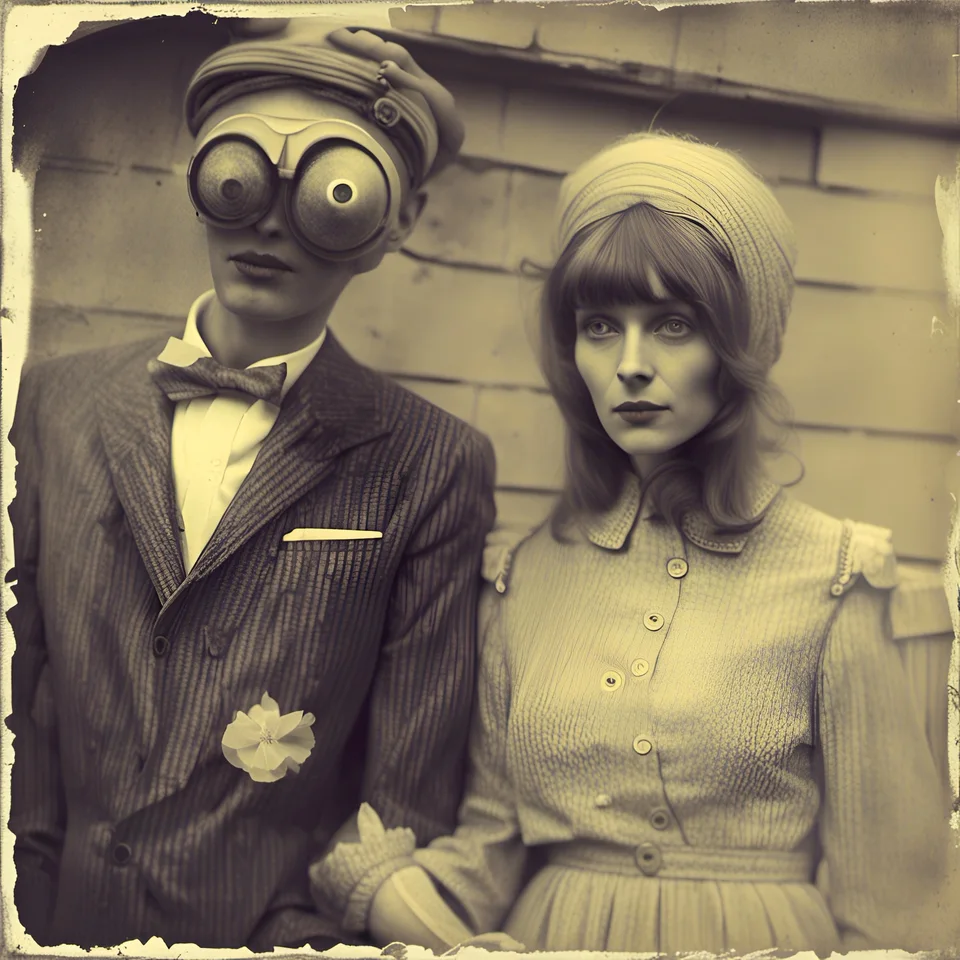
The most recent book is The Synthetic Eye. The cover is an AI image that I generated with a prompt asking for romantic Martians as if seen by H. G. Wells, the writer who wrote about the invasion of the Martians. Part of what I've been doing is seeing what kinds of images non-photographers might make. If we're able to simulate the photograph, what would it look like if a musician made photographs? If a writer did? Obviously these are not photographs, but they simulate the photorealistic.
I'll just add that After Photography was also published in Chinese by Nanjing University Press.
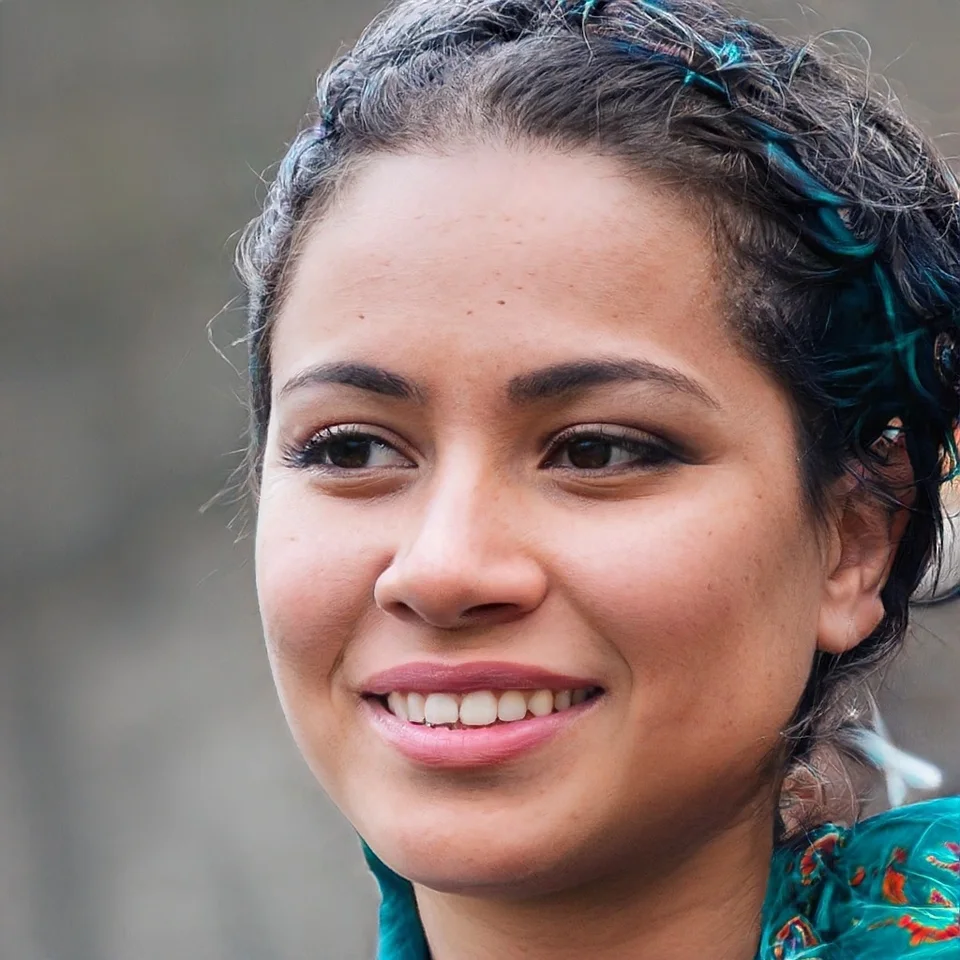
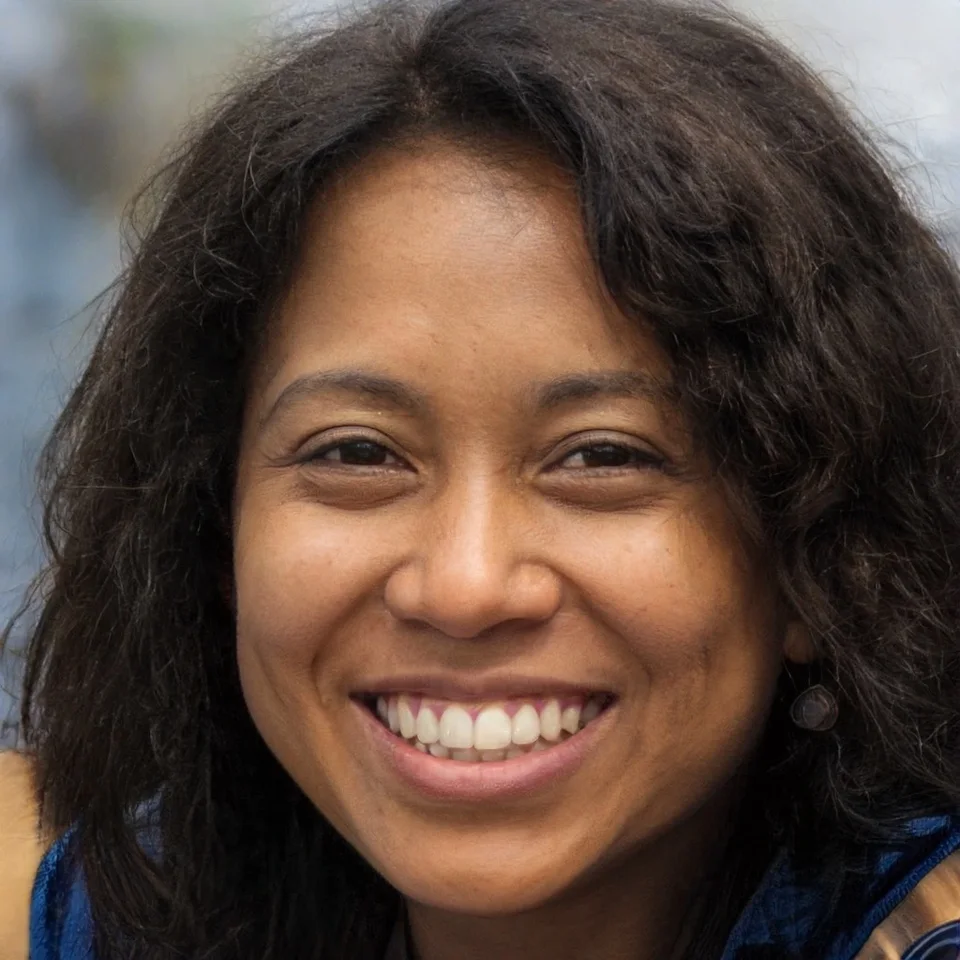
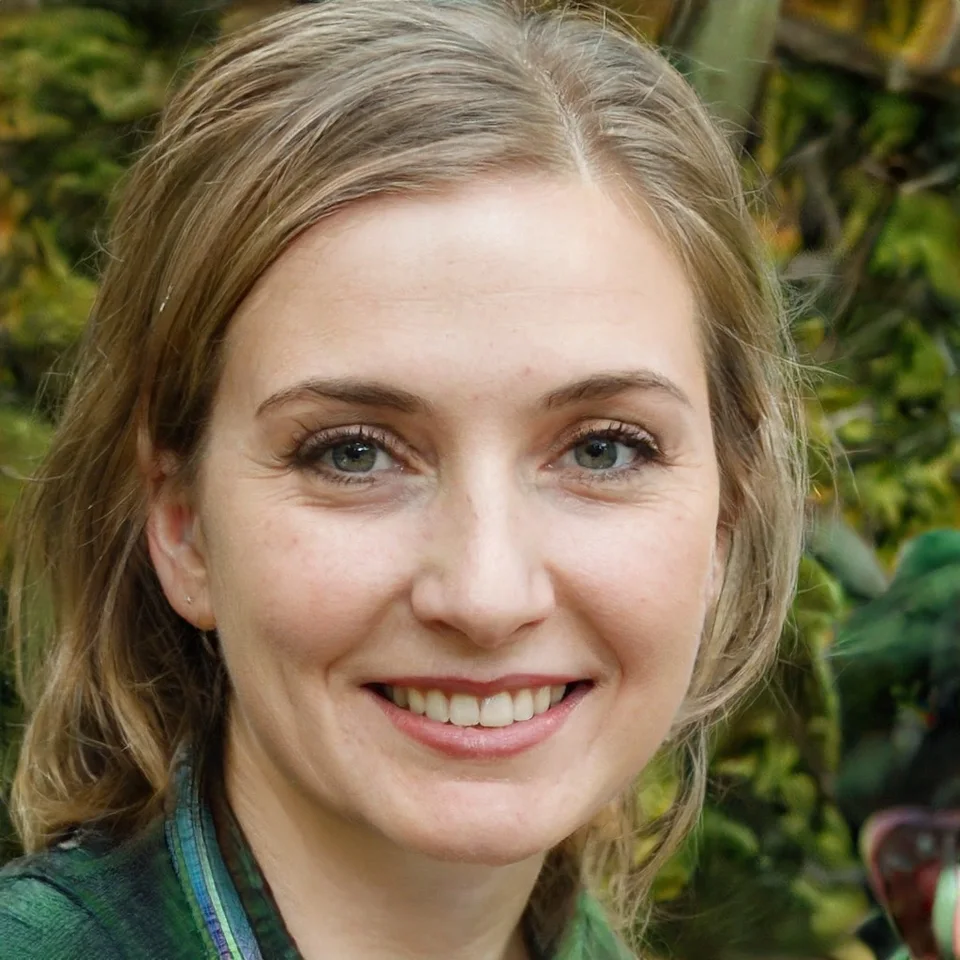
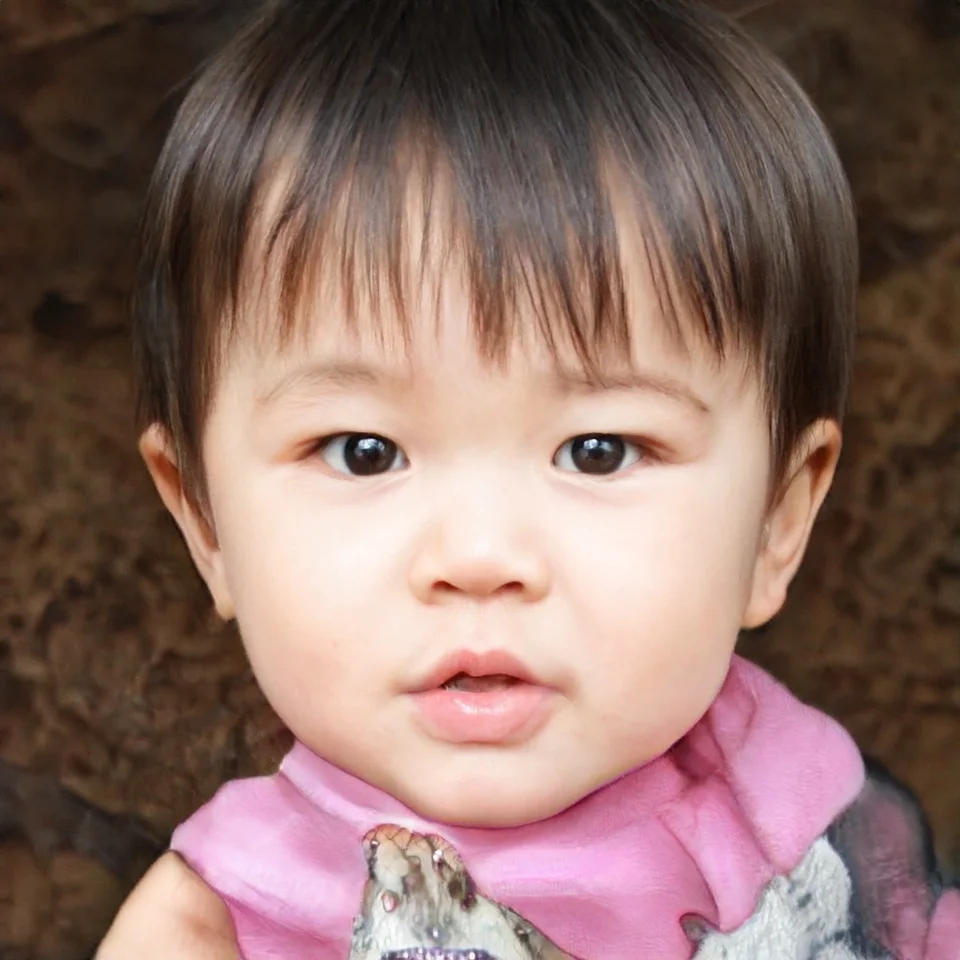
The use of artificial intelligence to simulate photographic images began in a popular way with a website called This Person Does Not Exist in 2019. On your cellphone, you could keep refreshing and get different images of what looked like people, but they had never existed. This was done to warn us about what was coming with artificial intelligence, and how difficult it would be to tell the difference between photographs and images that simulate photographs.
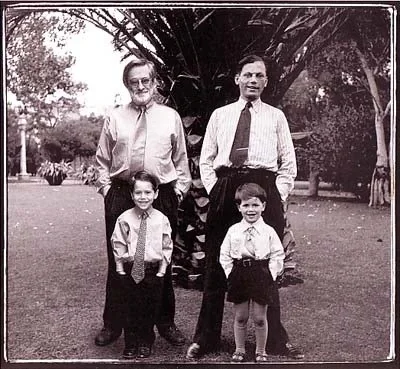
All of this began before artificial intelligence, with the ability to easily manipulate a photograph. This is an early use of Photoshop. On the left is Pedro Meyer, the Mexican photographer, with his son; on the right is Pedro Meyer with his father. It's the same person twice, as the father and the son. Several decades ago, this indicated what family albums might turn into: you could take out a spouse after a divorce, or add people from different generations. The photograph itself becomes malleable.
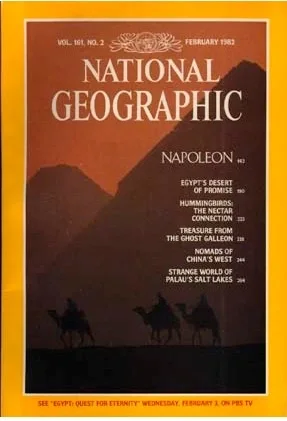
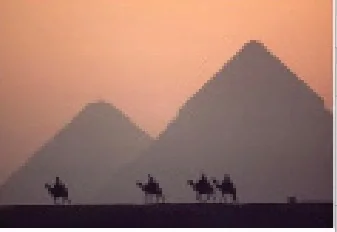
A landmark case of manipulation in magazines and newspapers is this one from 1982, eight years before Photoshop. In those days you used a Scitex machine or its equivalent, which cost between about half a million and one and a half million dollars. National Geographic had a photograph of the pyramids of Giza in Egypt, and they needed to fit it on a vertical cover. When I interviewed the editor two years later, in 1984, he told me it was really no big deal: all they had done was go back in time and move the photographer a few feet to one side to get a different point of view. In other words, they moved the left pyramid behind the right pyramid so it would fit.
To him it was no big deal, but to me it was science fiction. In 1984 I wrote an article for The New York Times Magazine, the first major article on this published in the world, as far as I know. I introduced the idea of pixels, picture elements, because people did not know what they were at the time. I wrote that, in the not-too-distant future, realistic-looking images would probably have to be labeled, like words, as either fiction or nonfiction, because it might be impossible to tell them apart. We might have to rely on the image-maker, rather than the image, to tell us which category a picture falls into: is it fiction or nonfiction?
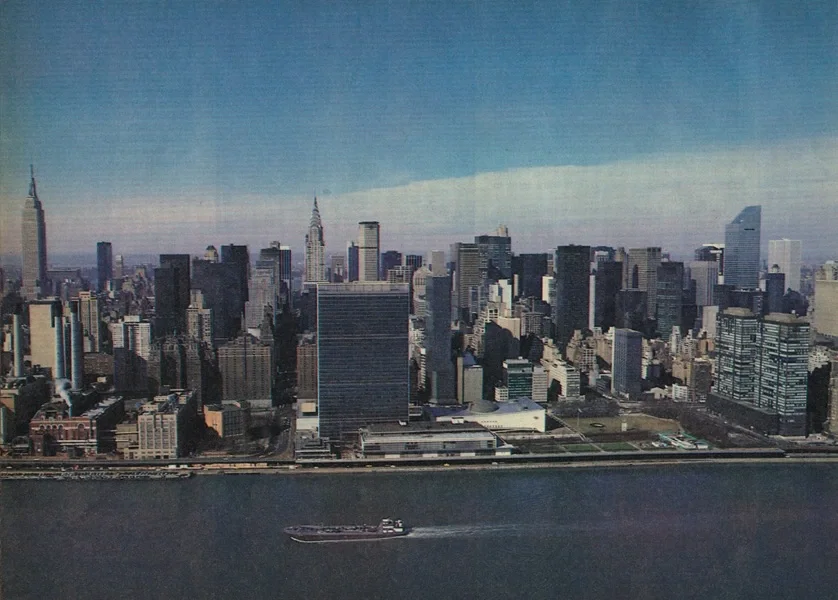
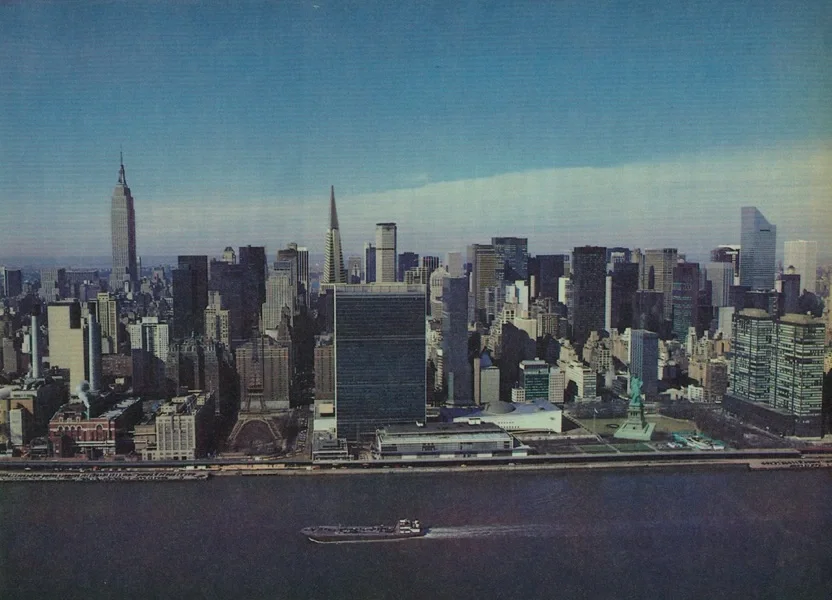
This is a photograph of New York City that I published in The New York Times Magazine in 1984. I worked with a technician on a Scitex machine. In those days you needed three screens, and you had to study for two weeks to be able to do it. It wasn't simple in the way Photoshop began to be in the 1990s.
I made many changes: I brought the Transamerica Pyramid from San Francisco into New York, and the Eiffel Tower from Paris. I created a traffic jam around the Eiffel Tower. On the right, I turned the top of the Citicorp tower around. I moved the Empire State Building a few blocks uptown and made it taller. There were also very small things: if you look at the water on the right, I added a pier. The idea was to show how easy it would be to change a photograph, making major changes that people would recognize, but also minor ones, so you could compare them. Again, it was meant as a warning. At the time, 1.6 million copies of the magazine were printed, but I got only three letters to the editor from people interested in this.
This is 1994, as magazines in the United States started to use this more. O. J. Simpson, a celebrity and sports star, was arrested on suspicion of two murders. The same police mug shot from Los Angeles appeared on the covers of Newsweek, on the left, and Time, on the right. Time manipulated it: they made it darker and out of focus, and added a spotlight effect.
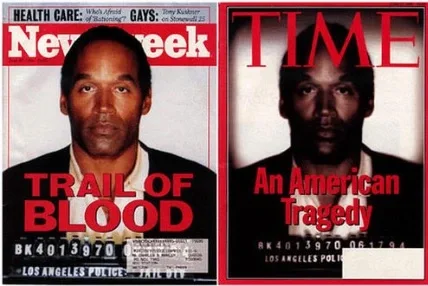
There was a lot of protest. One week later, the editor-in-chief explained that all they had done was take a common police mug shot and raise it to the level of art, with no sacrifice to truth. So he was arguing that the picture on the right was somehow art, without sacrificing truth. This was perhaps the height of the moment when people understood how easy it was to change a photograph. It had often been done for magazine covers and advertising before Photoshop became more popular. It changes the idea of the photograph as a recording of the visible, as testimony to what was visible and what happened. As I remember, there were 800 letters to the editor, and 790 accused Time of being racist: when Simpson was a celebrity, he was lighter-skinned; when he was accused of two murders, they made him darker-skinned.
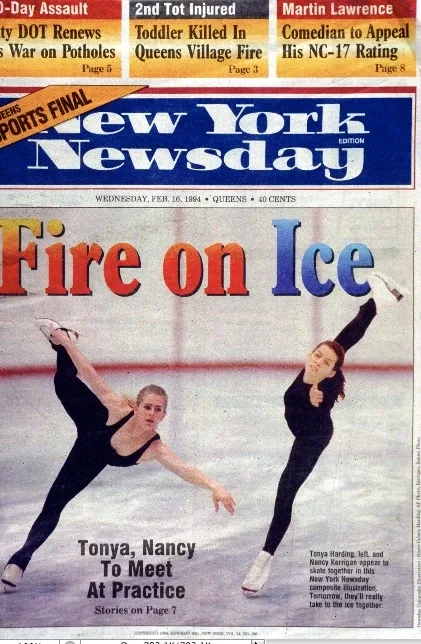
This next image is, as far as I know, the first future news photograph. Photography is normally of the present, seen as the past. These were two ice skaters competing in the Olympics who were having a feud, and this is a picture of them meeting the next day. Photography cannot normally photograph the next day. It explains at the bottom right that it is a composite illustration, but this was the beginning of using photography to depict the future. This is also from 1994.
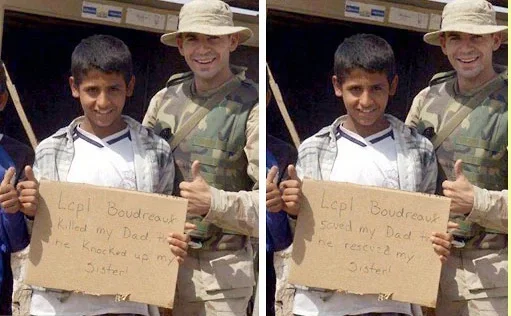
Here is a soldier in Iraq, Lance Corporal Boudreaux, with a boy on each side. The sign on the right says he saved my dad and rescued my sister; on the left, it says he killed my dad and knocked up my sister, made her pregnant. I asked the US military which version was correct, because both were online. At the time they said that, after a year of study, they did not know. People online were making up signs that said whatever they wanted. This indicates how difficult it is to know what's going on in the world when it's so easy to manipulate a photograph. That's very different from film photography, which Susan Sontag compared to a footprint; it isn't normally manipulated to this extent. I assume the one on the right is correct.
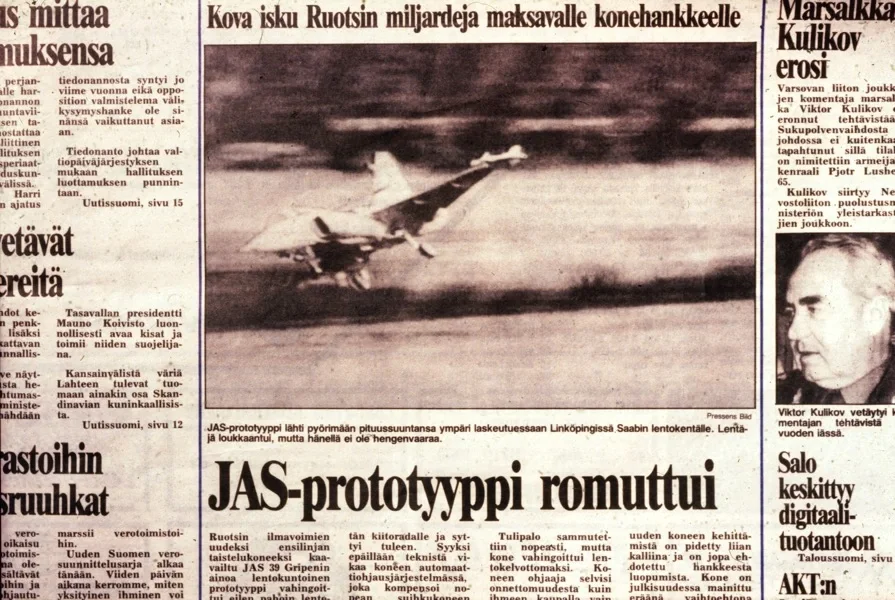
This image of a Swedish airplane crash was published, I believe, in eight newspapers in Finland as a news photograph. But no photographer was present. They asked eyewitnesses what it had looked like, composited an image, and published it in the 1990s as a news photograph, with no photographer and no camera. Later, I was told, they found a video that was very similar to the composite. The idea is that you don't need a photographer or a camera; you can make it up. That is, in fact, what happens with artificial intelligence.
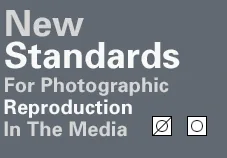
In 1994 I proposed a new standard for photographic reproduction in the media. When a photograph was heavily manipulated, you would put a symbol on it: a lens inside a square, with a diagonal line through it. The reader would know it had been heavily manipulated. Conceivably, you could click on the symbol and find out how. The idea was to be honest and open with readers, so they knew whether the photograph had been manipulated. This was several decades before AI.
None of these arguments mean that a photograph is the truth. Photography is always subjective, always interpretive. But conventionally, particularly in journalism or documentary work, we think of it as a recording of the visible, or what John Berger called “a quotation from appearances.” I'm not arguing that it has ever been the truth. I am arguing that it has conventionally been thought of as a recording of the visible.
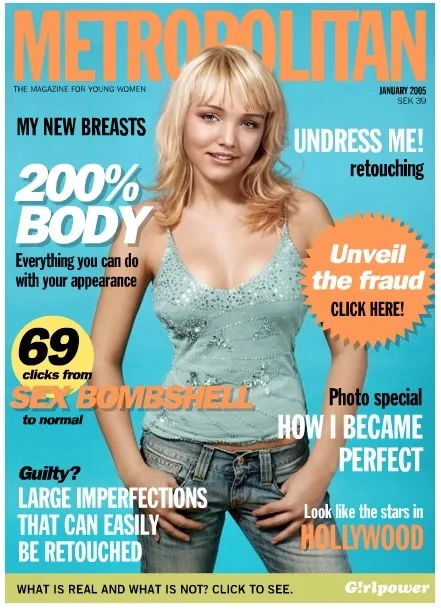
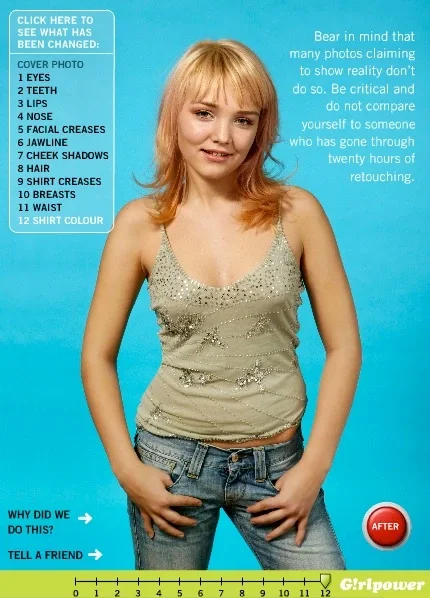
This was an initiative by the Swedish government that I thought was positive. They made a fake magazine cover of a glamorous young woman, then showed the manipulation, I think largely because they didn't want other young women trying to look like her when she didn't actually exist in that form. You could click on her mouth, nose, eyes, hair, any part of her, and find out what she actually looked like. It was educational: much of what we see in the media is manipulated and does not exist as shown. Again, this was before artificial intelligence.
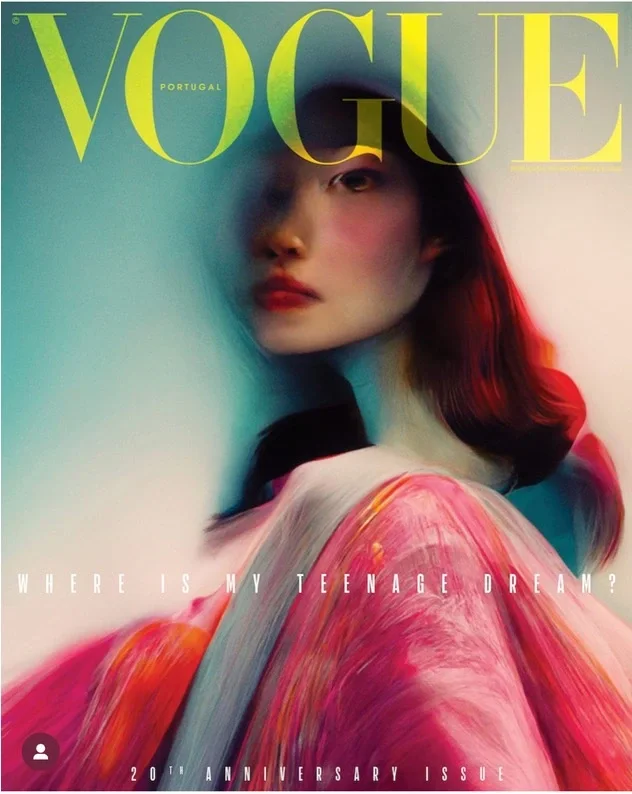
This is one of the early AI covers of Vogue, the first AI cover for Vogue Portugal. It began a sense that fashion photography might no longer need photographers, models or makeup artists. Some companies argue that this allows more diversity: different body types, heavy people, thin people, tall people, short people, different ethnic groups, which they couldn't afford if they had to hire models, photographers and makeup artists. It's an interesting moment: fashion studios are beginning to operate without photographers or models. It can all become artificial intelligence.
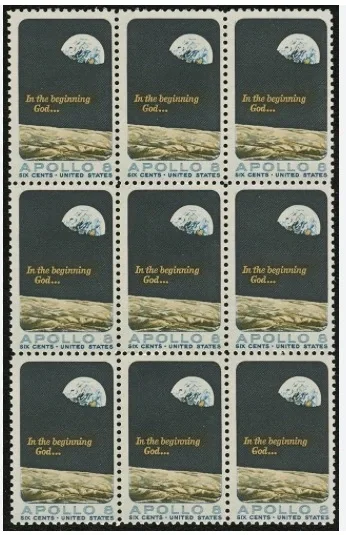
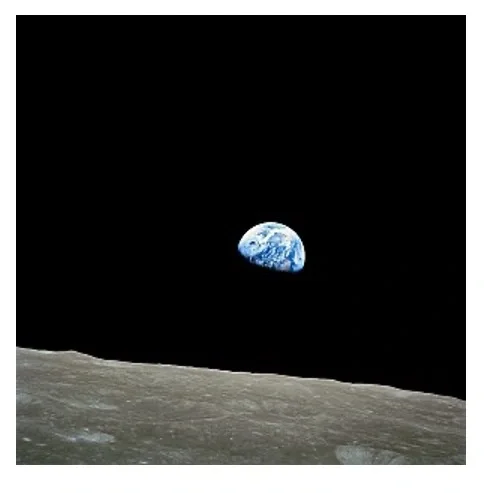
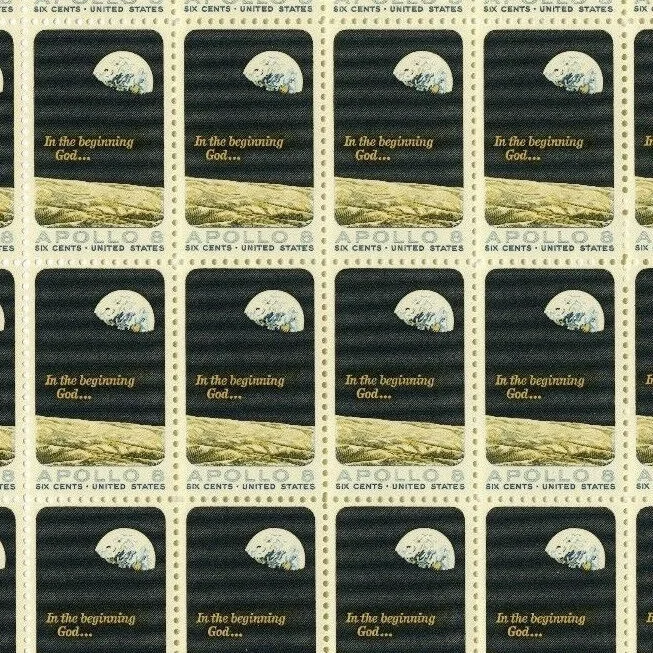
Going back, this is the first photograph of the Earth from outer space, on Christmas Eve, 1968. Sixteen months later, Earth Day began, in April 1970. Postage stamps were made around the world based on this photograph, expressing the idea that we have to take care of our planet. If people don't believe that a photograph represents an actuality, something that exists, it cannot provoke change, because people don't believe it happened. Sometimes photographs have been very, very important in provoking positive change. One of the problems now is whether that can continue.
This is another example, from 1972, when a photograph helped bring an end to the war in Vietnam. The following year, in 1973, the United States pulled all its soldiers out of the war. With all the violence in the world, photographs have at times helped provoke change for the better, helping end a war earlier, and so on. Unfortunately, this happens less and less, as we see in current conflicts, for example in Ukraine and Gaza.
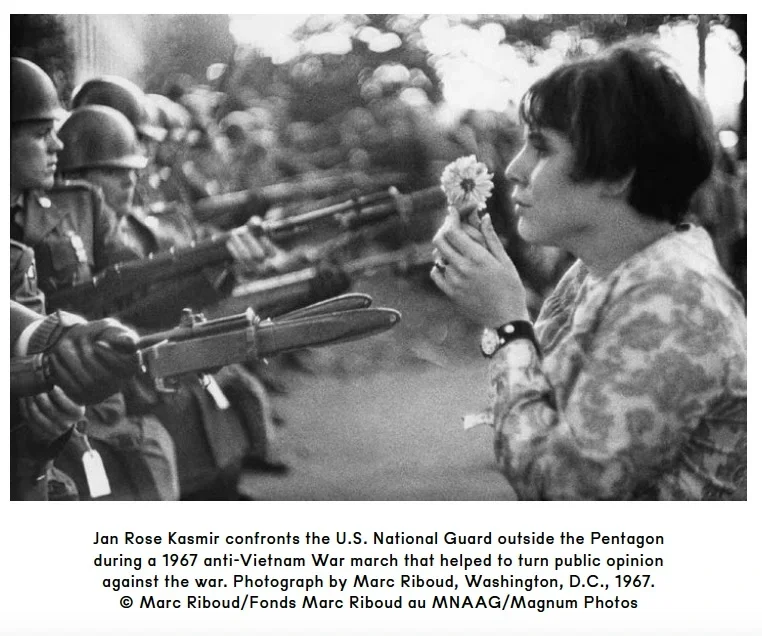
This image, also from the Vietnam War, shows a protester putting a flower in front of the soldiers. It was influential in helping the antiwar movement in the United States. At that point we had a printed press, not just online media, and we had the front pages of newspapers and magazines. The photograph was also more believable. It could be useful in society, making things change, sometimes for the better.
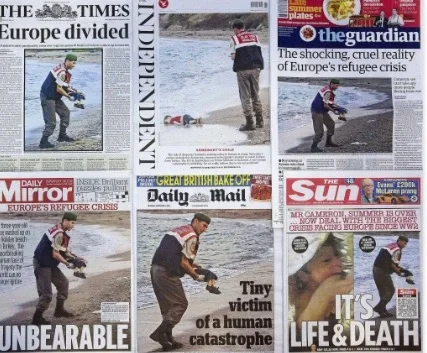
Similarly, in 2015, ten years ago, when a two-year-old boy drowned with members of his family while trying to escape Syria, the photograph caused change in the world. More money was collected for refugees, and some countries let more refugees in. To me, this may be the last iconic photograph to change the world for the better, because we no longer have the systems of the press and of credible, believable photography that we had before. These are some examples of the impact of different versions of that photograph around the world.
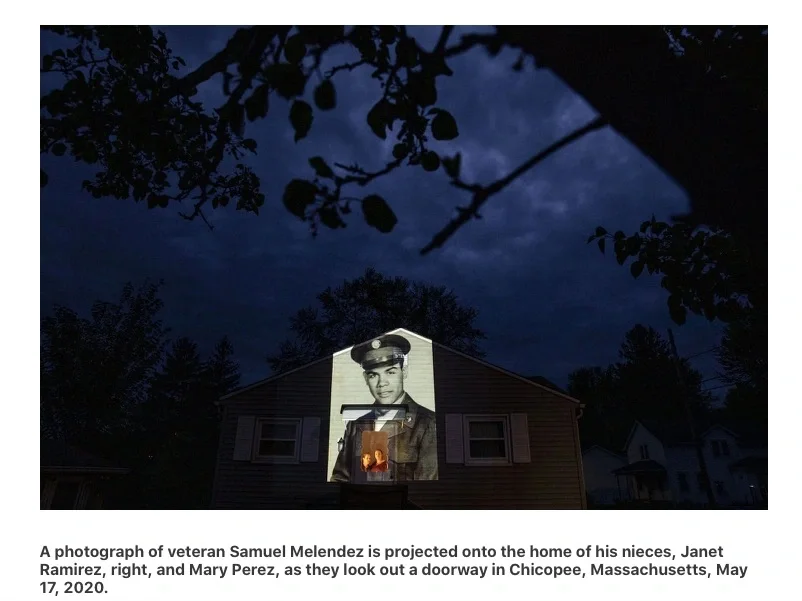
Photographers are now inventing new ways to have an impact. These were older men and women, former soldiers in Massachusetts, about sixty of whom died of COVID in a nursing home. To celebrate and remember their lives, Associated Press photographer David Goldman projected photographs of them when they were young onto the homes of their family members. Instead of a newspaper's front page, he used the sides of houses. This is part of how photographers around the world are reinventing the medium to have an impact in a different era.
Experiments and Possibilities of Synthetic Images
For several years I've been experimenting with text prompts to generate images using different AI systems. A lot of this work isn't about competing with photography by simulating photorealistic images. For example, this is an attempt to depict romantic Martians. Nobody has photographed or met Martians. It's more of a fantasy than an attempt to compete with the real, and it's from the point of view of a writer who is no longer alive, who wrote The War of the Worlds about a Martian invasion.
In digital media, once something is in code, you can output it in any medium you want. A painting can become music; music can become a photograph or writing. We call this transmedia, not multimedia. Here I'm using a writer's work to depict something as an image.
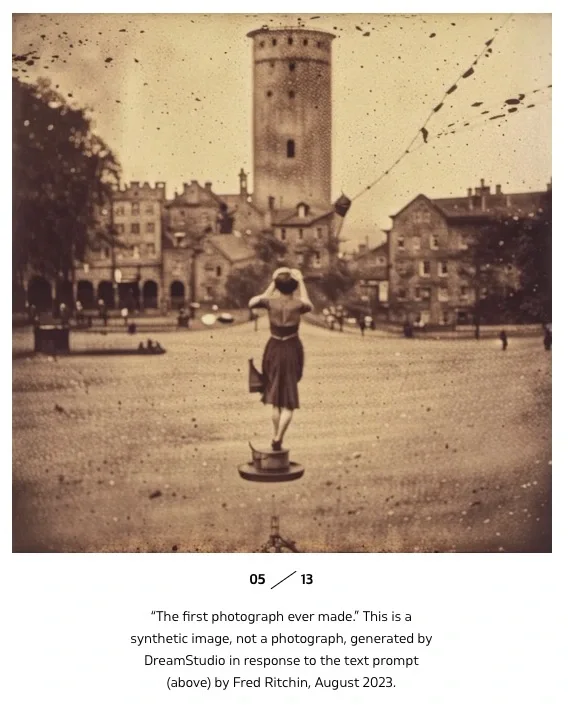
This is one of the AI images I made with the prompt “the first photograph ever made.” I always try to write underneath or beside it that this is a synthetic image, not a photograph. In this case it was generated by DreamStudio in response to my text prompt in August 2023. This is another version generated at the same time. It reminds me of Roland Barthes writing about looking at the eyes of the brother who had looked at Napoleon. As we know, AI systems scrape billions of images online, along with keywords and captions, learn how they are constructed, and construct new images.
To make one important point: we went from what I consider optical photography in the nineteenth and twentieth centuries, where light goes through a lens and is recorded on film, to computational photography, where algorithms in the camera or post-production software such as Photoshop modify that light. They change it, manipulate it, enhance it, whatever term you use: make people thinner, change flesh tones or backgrounds.
With artificial intelligence, we don't even need a lens or a camera. We simulate photorealistic imagery. So there is a sequence from optical photography to computational photography, and now to AI. One question is whether computational photography is still photography, or another form of imaging. Certainly, with AI I use the term “synthetic image.” I never use “photograph,” because these are not photographs.
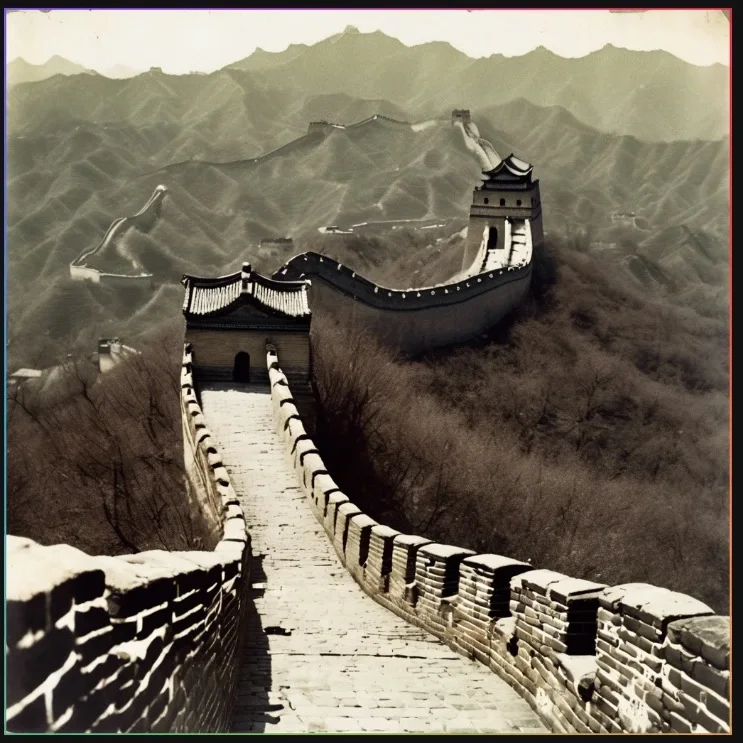
I'll show you about a dozen AI images. Increasingly, search engines offer to make an image rather than find one. One can then reconfigure history any way one wants. This month I asked for the Great Wall of China during the Ming dynasty. This is one image it came up with. Obviously, we had no photography during the Ming dynasty, so it is difficult to confirm whether this is what it might have looked like. These become potential histories, possible histories, rather than actual recordings of the visible.
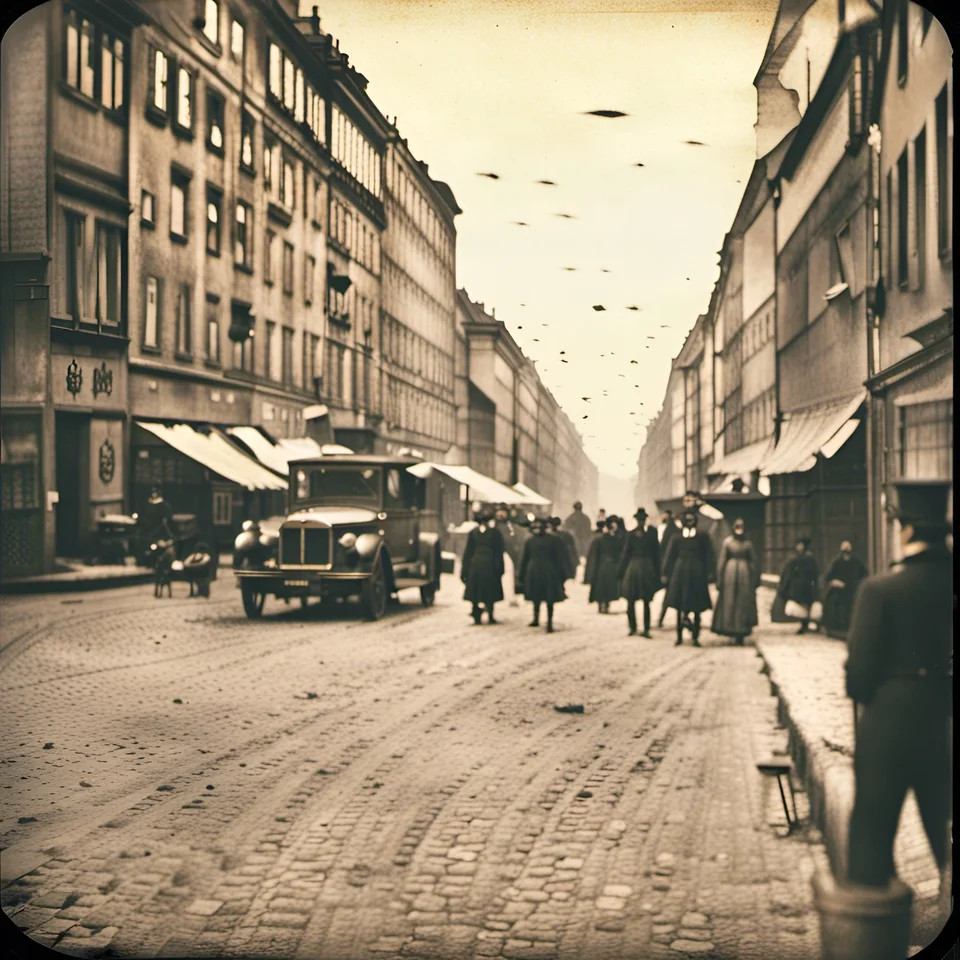
Similarly, I asked for a photograph of a street scene in Berlin in 1815. There were no automobiles or photographs in 1815, but that's not a problem for the AI system. History can be fabricated without guidelines as to what actually happened. That affects our reference points for both the present and the past, and it affects the future.
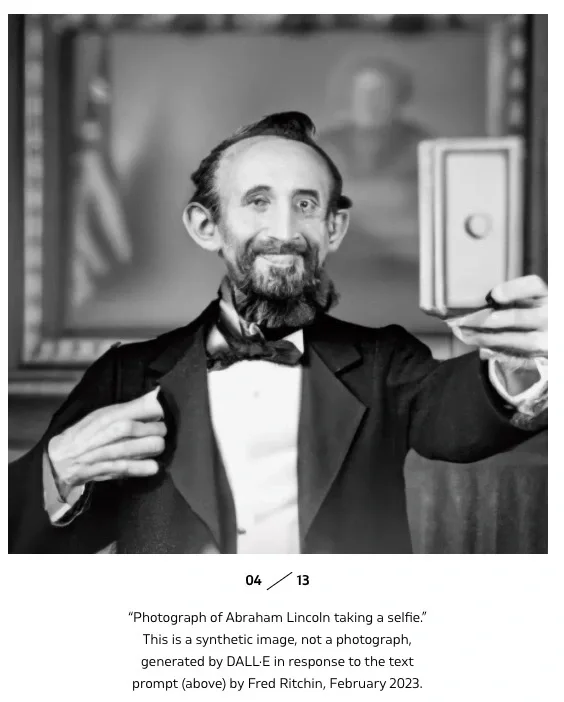
Here is Abraham Lincoln taking a selfie. Obviously there were no cellphones in the 1860s, but for this AI system, DALL·E, it was possible to make it up. A young person doing a school research paper might not know that. History becomes what one wants it to be, as opposed to what might actually have happened. We know nonfiction isn't always nonfiction, but here it's completely made up.
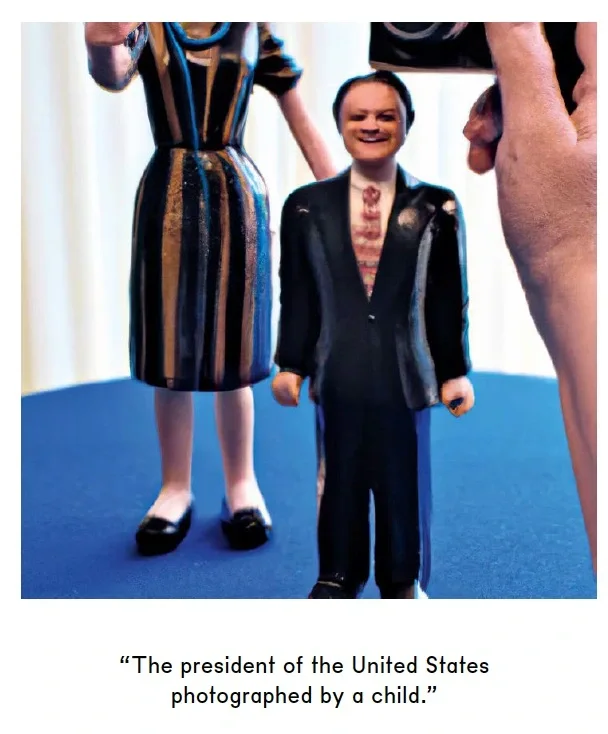
This is the president of the United States as if photographed by a child. I want to see how AI interprets what a child might see, or what an animal might see. AI can do things differently from photography and give us ideas about what different points of view might look like.
Most of these images are in The Synthetic Eye. Here again are romantic Martians in love, this time inspired by the work of the novelist Virginia Woolf. She wasn't a photographer, but I wanted to see how AI would interpret, based on her writing, the way she might construct an image. This raises the idea that all photographs are constructs. Photography is one way society represents the real; it isn't truth or absolute reality. By comparison, working with AI can be a commentary on, and a way of understanding, what photography actually does.
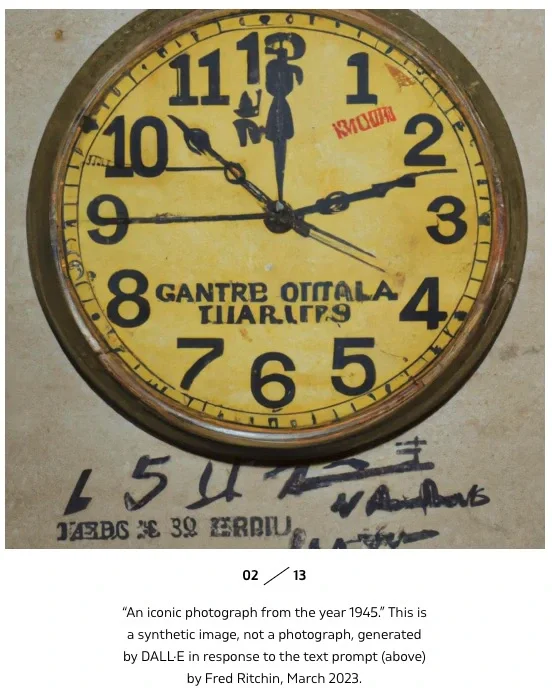
Here I asked for “an iconic photograph from the year 1945.” Sometimes these AI systems seem to have a sense of the surreal rather than the real, even a sense of humor, one might say. I'm sometimes astonished by what they come up with. When I was picture editor of The New York Times Magazine and other publications, I often had a good sense of what a photographer would bring back from an assignment. For a writer, they would often show the person behind a desk with books and, at that time, a typewriter. But this was a surprise. I had no idea this would be its iconic photograph of 1945.
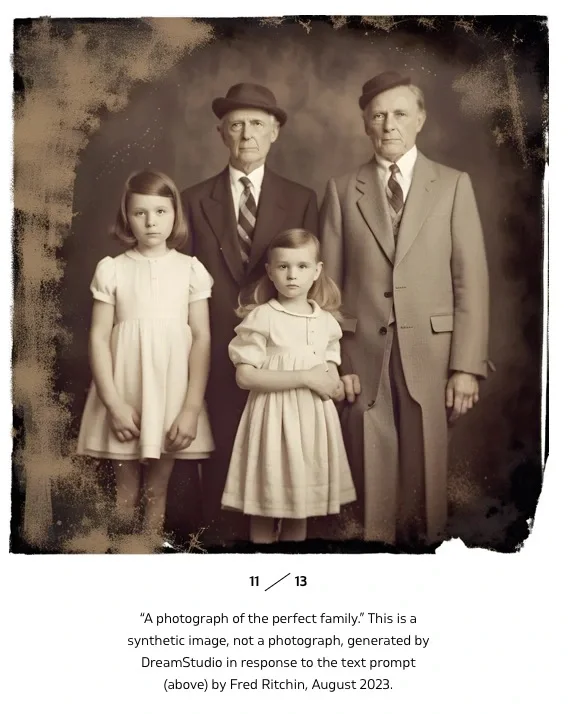
I asked for “a photograph of the perfect family.” Again, I was surprised: no woman as the mother. AI systems are often criticized for being racist or misogynistic, largely because the images they learn from online are often racist or misogynistic. Sometimes, though, the system seems liberated, with ideas different from conventional ones. This wasn't what I expected, but I was very happy to see it.
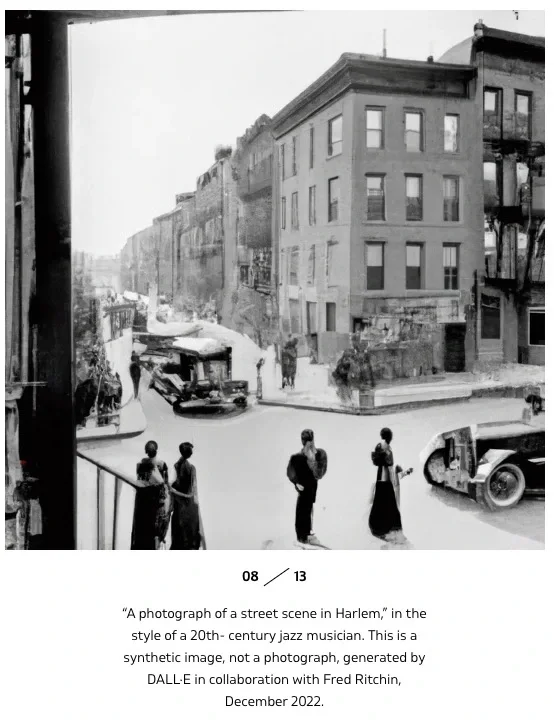
This is a street scene in Harlem, New York City, in the style of a twentieth-century jazz musician. Many great jazz musicians come from Harlem. I wanted to see how AI would interpret a jazz musician's point of view. I find the distortion, the rhythm and the sense of possibility interesting. It seems alive in certain ways, a little like a visual interpretation of jazz. Some of the most interesting AI images are not photorealistic, but somewhat distorted.
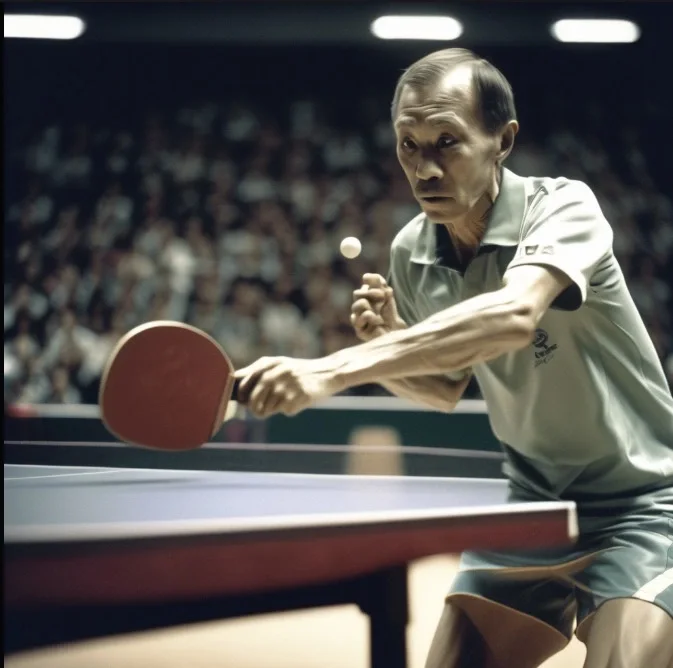
I asked for a photograph of the Olympic table tennis champion in 2045. I often experiment with how AI sees the future: who will win twenty years from now? This is one response. Photography cannot photograph the future, but AI can depict a possible future. For example, if it shows what Beijing, New York or Paris might look like in twenty years if we do nothing about climate change, that could be good. Maybe we will do something to protect ourselves because AI is showing us a possible future.
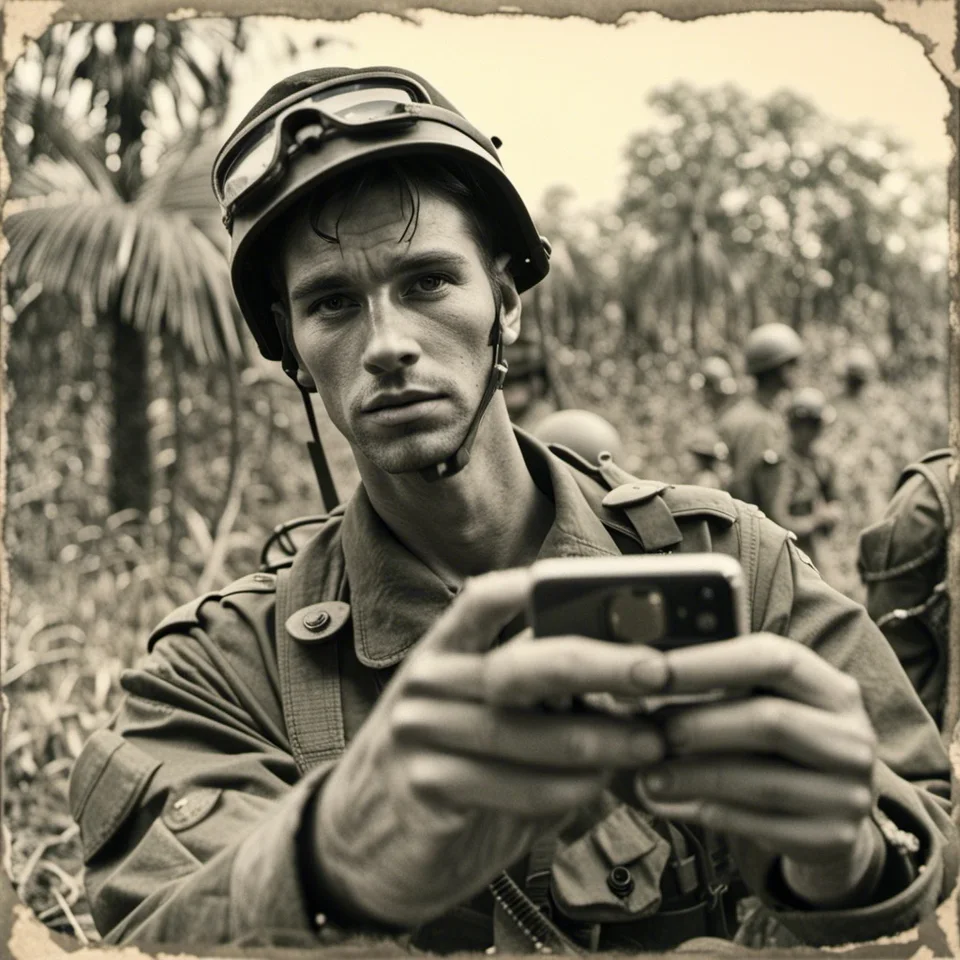
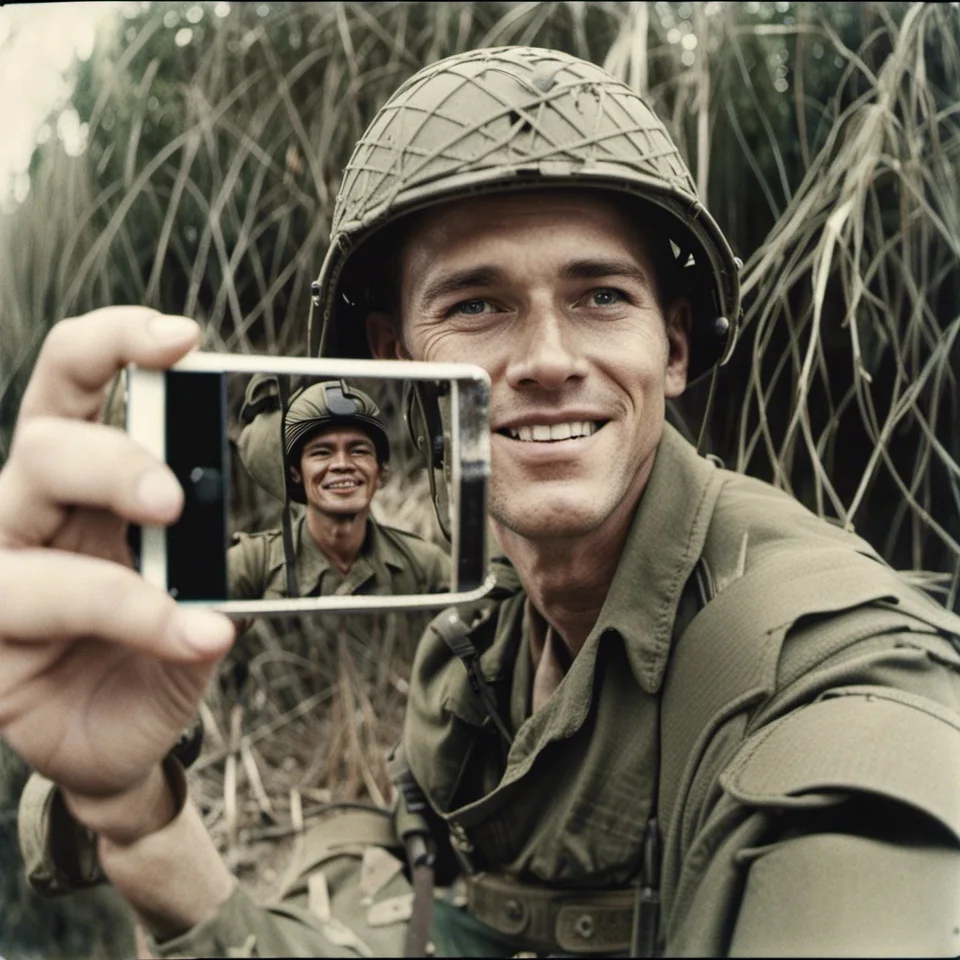
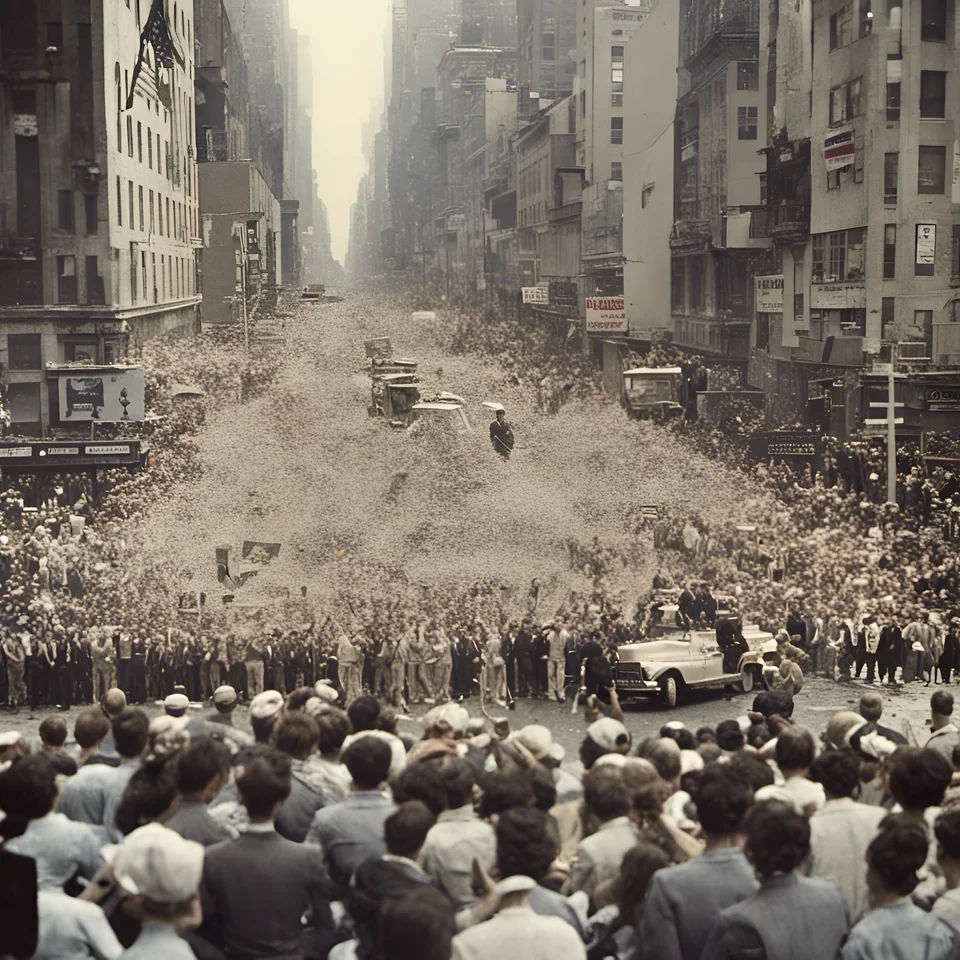
Here the prompt was “a photograph of a soldier in the Vietnam War taking a selfie.” The image on the right is the back cover of my new book. There were no cellphone selfies during the Vietnam War, but the AI system had no problem making one for me. This is a victory parade in New York after the Vietnam War ended. There was no victory parade. Soldiers came back, and people often weren't very nice to them because they opposed the war. But you can make these images. Even after fifty years in the field, I increasingly have trouble knowing whether something is an actual photograph or an AI photorealistic image. It is more and more difficult to tell them apart.
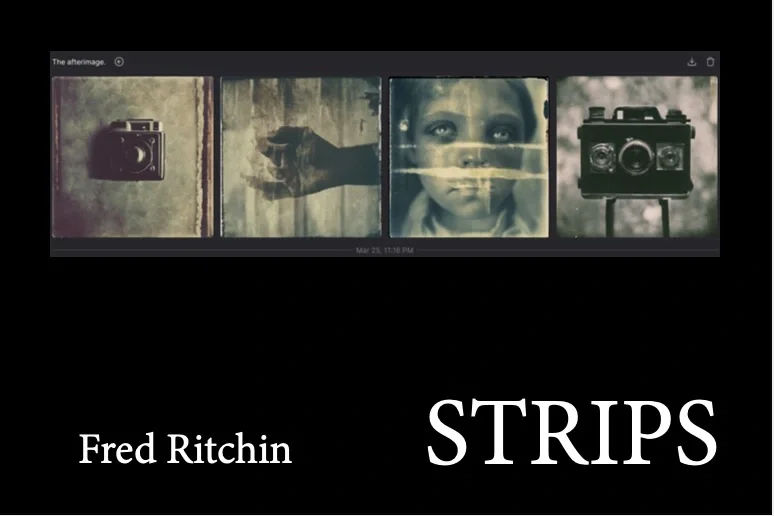
With some systems, you put in a prompt and get four possible images. Here the prompt was “the afterimage”: what do you see after the image? These were four possibilities, which I found very poetic, an eloquent interpretation of the afterimage. I've been working on a project called Strips, like an old-fashioned contact sheet in photography, where you choose which images to enlarge and use.
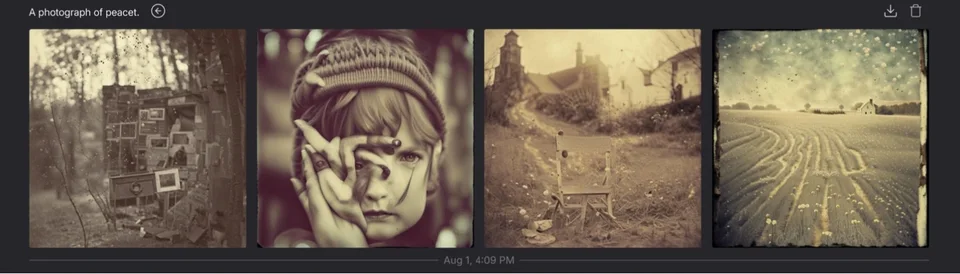
An important point is that, if I put in the same prompt the next day, I normally get very different images. It's like photography: if you don't make a picture at a certain time, you cannot make it in the future. Here the prompt was “a photograph of peace.” This is what I got, but I wouldn't get it again with the same prompt. There's a spelling mistake, an “at” at the end that isn't supposed to be there. It makes you ask questions: why are the girl on the left's fingers like that? What does that have to do with peace? Why did it choose the other images? What does it mean? Much of the time I'm asking what AI is telling me, or us, through the images it chooses. Sometimes I'm not sure I understand what it's getting at.
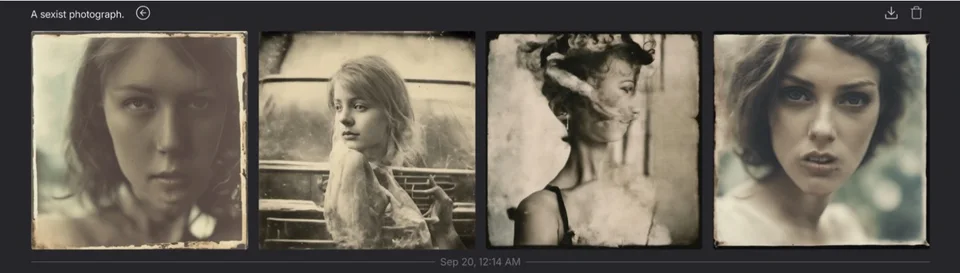
Here the prompt was “a sexist photograph,” presumably one against women. Again, I find it interesting to figure out what these images mean. Can they be taken seriously, and how does one interpret them?
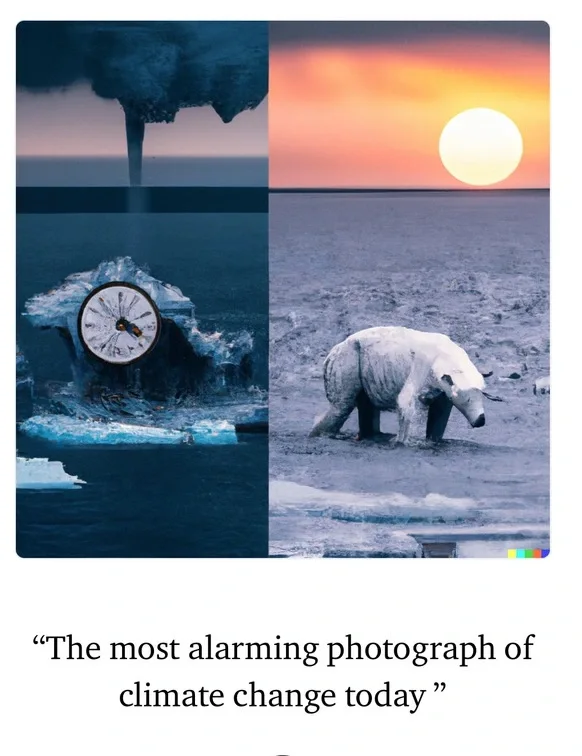
Several years ago, I asked for “the most alarming photograph of climate change today.” Within seconds it produced a diptych. I hadn't asked for two images. You have a clock saying it's urgent, an oil geyser, a polar bear, melting ice and the sun. A single photograph cannot do this. I found it interesting that AI created a complex image suggesting that climate change is multiple issues at the same time.
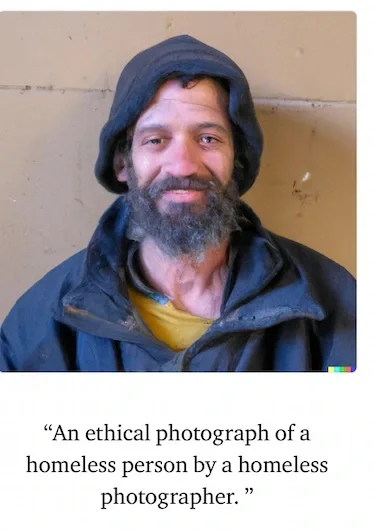
Here I asked for “an ethical photograph of a homeless person by a homeless photographer.” I wanted to see whether it would differ from an image made by a photographer who isn't homeless. The man seems happier, more alert, more alive, looking the photographer in the eyes. He isn't a sad stereotype of a victim. He seems like a regular human being who can be happy, warm, alert and intelligent, who can have ideas, but who doesn't have a home. That is different from many stereotypes of homeless people.
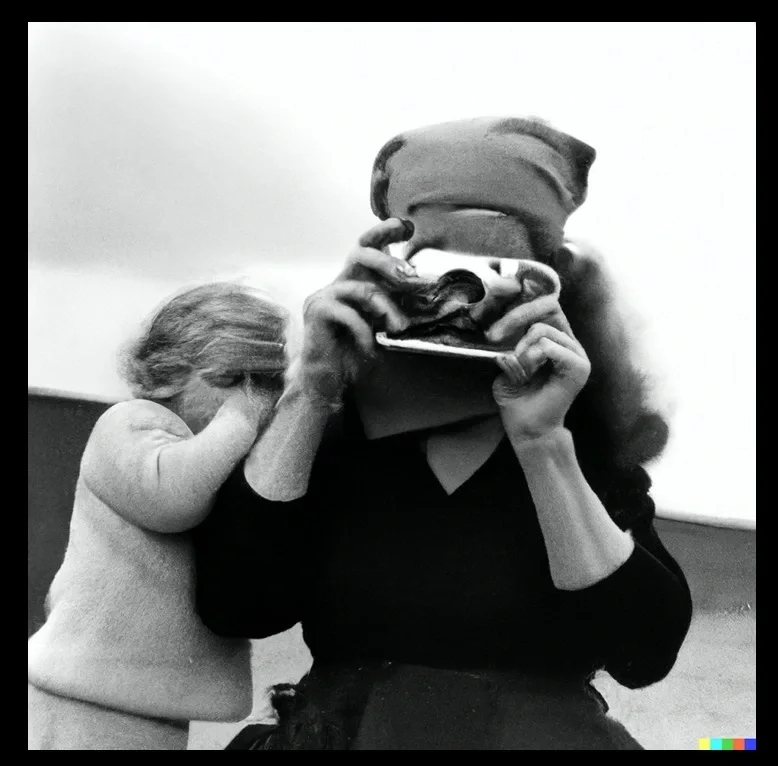
This is a question I've had forever: is there a photograph of war's horror that would stop all wars? That's the dream of many photographers working in war: can I make a photograph that will stop all wars? The AI image doesn't show the spectacle of violence. It shows its impact on the spectator, the observer. The little girl is presumably the photographer's daughter, and somehow the war is so horrible that it crushes the camera. We have to imagine the violence, destruction, hurt and pain. We aren't voyeurs looking at it; we are responsible as spectators. I hadn't expected AI to show its impact on us and, by implication, our responsibility as citizens of the world to make sure there are no wars.
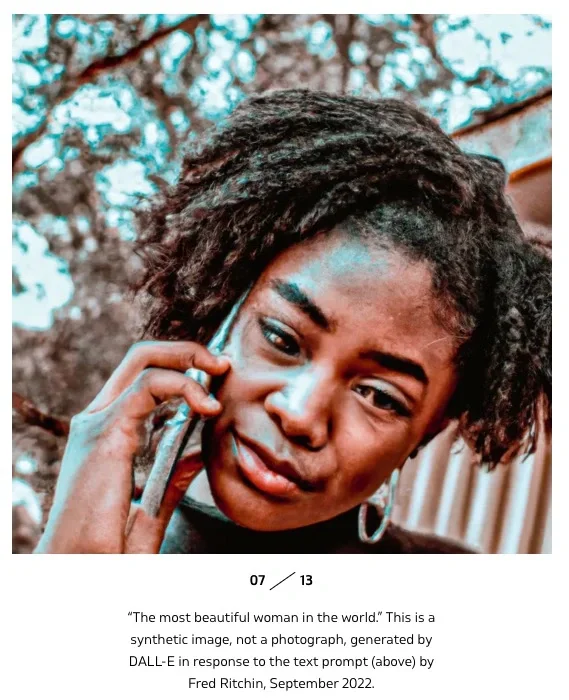
Here is “the most beautiful woman in the world.” I didn't expect this. She doesn't look like a fashion-magazine cover or someone super-elegant. She's more ordinary-looking, and I was happily surprised. This image was made almost three years ago. More recently, the images these systems create often seem more conventional, less exceptional, more like what you would expect, as if they were trying to please you in a mainstream way. Not always, but often.
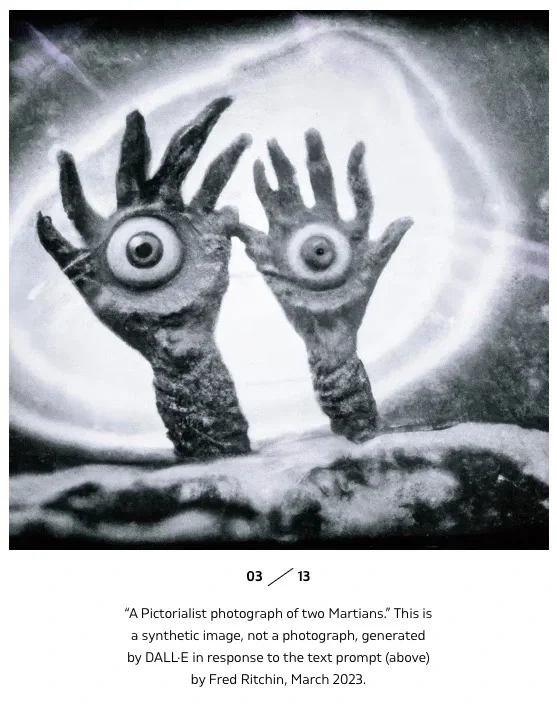
The prompt here was “a pictorialist photograph of two Martians.” Pictorialism was photography, particularly in the nineteenth century, imitating the look of painting. I wanted to see how AI would interpret it. I found the result very surrealistic. I have made many images with prompts about Martians because there are no photographs of them. I wanted to see how AI would interpret things that haven't been photographed.
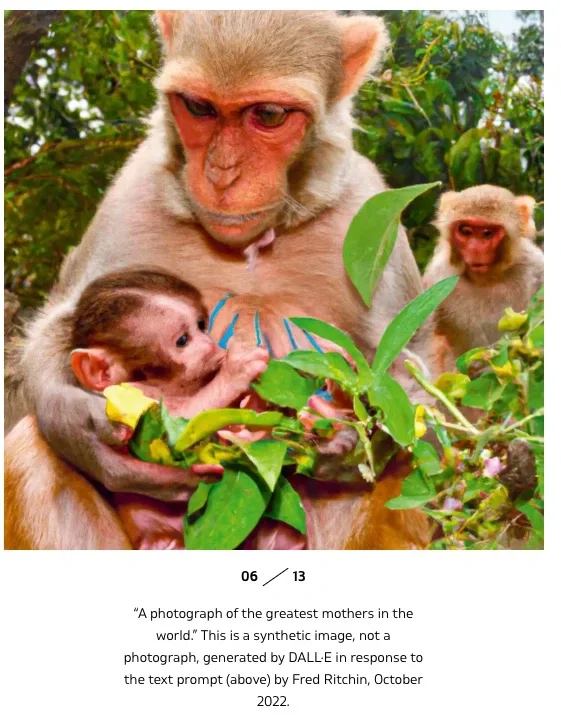
I asked for “a photograph of the greatest mothers in the world.” I expected human beings, women, but it gave me animals. I realized how narrow my thinking was in expecting that the greatest mothers would inevitably be human beings, when all kinds of animals may be great mothers.
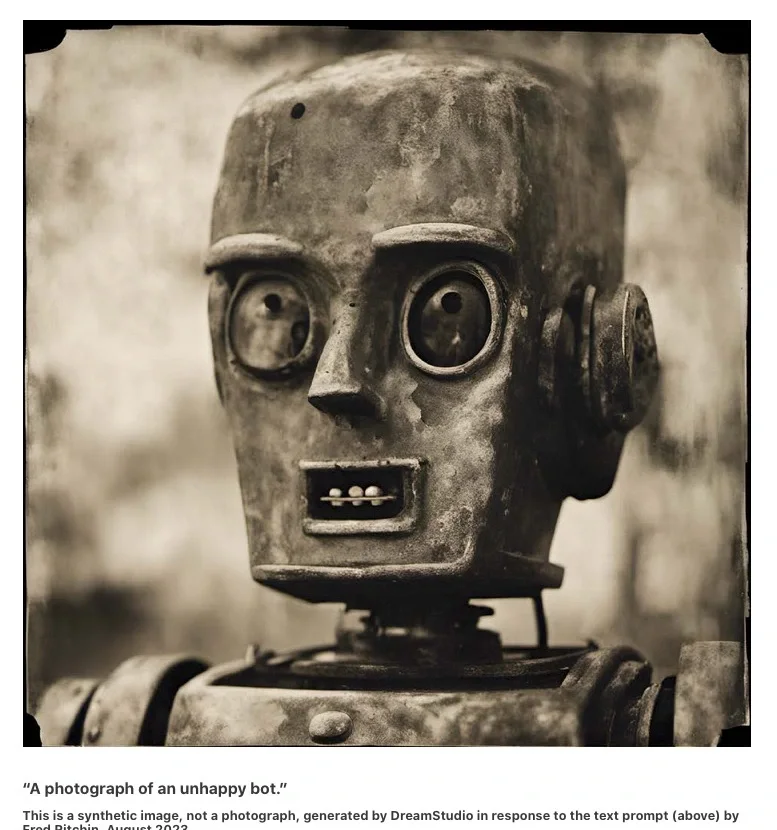
This is “a photograph of an unhappy bot,” a software program that performs repetitive tasks. I thought a machine might understand machines better. I have a series about how AI depicts bots and algorithms, to see its insight into what an unhappy software program might look like.
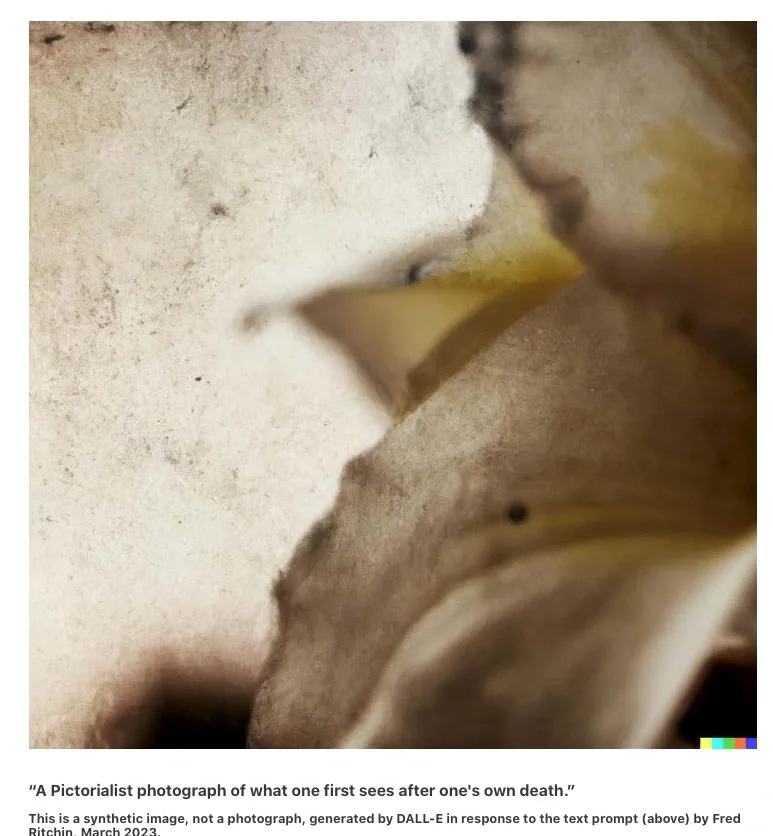
Obviously, one cannot photograph what one sees after death, so I asked AI to show it. I have a series of these images. I found them comforting, because I began to think of all biological organisms, plants, animals, people and insects, dying. One doesn't die alone; one dies as part of the universe of life that eventually dies. That's another experiment in seeing how AI shows what cannot be photographed: in this case, what one first sees after one's death. That's the end of part one.
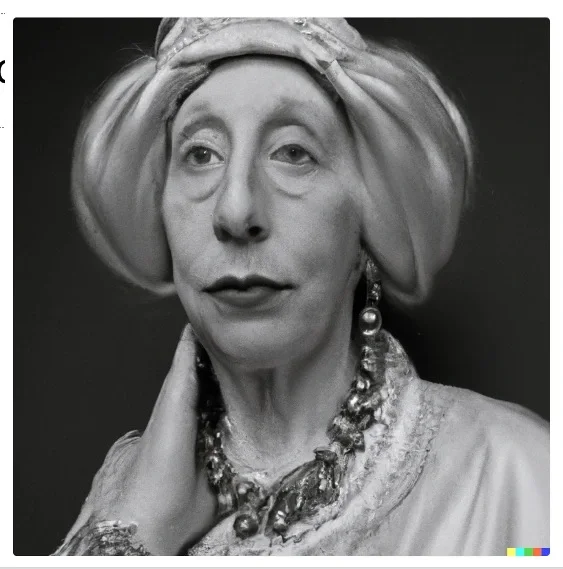
These are images I generated to provoke discussion: women presidents in countries that have never had one, or the second Black president of the United States. A friend at Vogue asked me to use the prompt “self-portrait as an older woman in the style of Cindy Sherman.” There's an ethical question here. Sherman is famous for her self-portraits. Is it correct to do this? Is it ethical to use somebody's style? Some artists say no. I've also encountered the view that you're acknowledging, respecting and celebrating the artist you follow.
Similarly, Stephen Shore asked AI to generate an image like his own photograph and put it on Instagram. I interviewed him and asked whether he was happy with it. He said it had his own wry sense of humor, except that he would have done it with a large-format camera or with more detail. This raises the possibility that, after an artist's death, if they have approved the algorithm, it could keep making images, or their estate could do so.
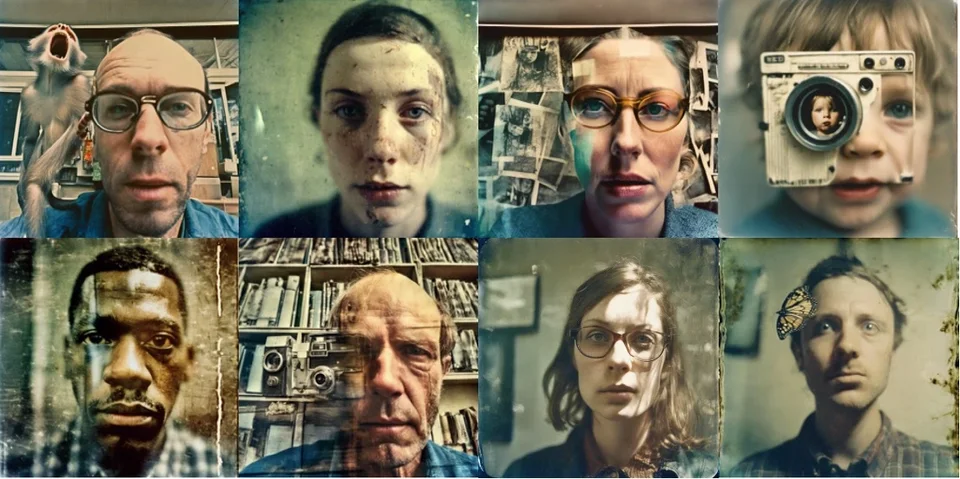
A week or two ago, I made a series of self-portraits using AI. The second image from the right at the top is me as a Chinese diplomat; the second from the left at the bottom is me from the point of view of a fly, an insect. They are all based on this photograph of me, which I entered into the system to see how it would interpret it with different prompts. These are some of those interpretations.
Social Problems of AI Images
Now I'll talk about some of the big issues. Samsung recently argued that, with AI, there is no such thing as a real picture. Adobe says AI is the new digital camera. Google says that, if your memory of the past differs from what a photograph shows, you should be able to change it. In The Washington Post, Geoffrey Fowler wrote that we should think of the camera less as a reflection of reality and more as AI trying to make us happy. These are big issues. This is how tech companies are viewing it.
Studies have found that people cannot distinguish AI-synthesized faces from real ones. Not only that: they find AI images of people who don't exist more trustworthy and believable than photographs of actual people.
One issue receiving more attention is deepfakes, putting somebody's image into a video that is often pornographic. The victims are almost always women, often celebrities, but this is also happening in schools. There have been cases where boys use what is called “nudify” software, taking the face of a girl, perhaps a twelve-year-old classmate, and using AI to make her body look nude. It causes enormous trauma. Particularly in Europe and the United States, this is attracting attention and efforts to do something about it, although it continues.
Perhaps worst of all is the enormous number of child-pornography images being made with AI, sometimes using an actual photograph of a child's face. It's horrible. I know China has different regulations from some other countries, but the problem is global: imagery fabricated in one country can be seen in others. My sense is that the United Nations, other global organizations and countries have to work together to limit the damage and increase constructive, positive uses of AI.
Adobe, which created Photoshop, also sells stock images for reproduction. Here they feature an “AI-generated photo” of a Palestinian refugee. It is not a photo. If it's AI-generated, it's an image, but not a photo. You can sit in your living room or office anywhere in the world and make images about other people without going there. With photography, you had to go there with your camera; now you don't.
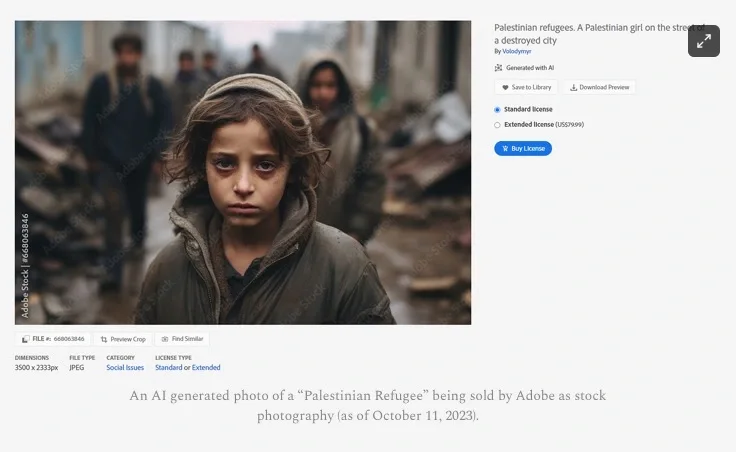
The irony is that Adobe is leading the Content Authenticity Initiative, which tracks changes made to an image, including modifications with Photoshop. At the same time, it is selling these AI-generated images. These images are of Ukraine. The people don't exist; they were made by AI and are sold by the same company leading the effort for credibility.
There are also efforts, here from Chicago, to create software to protect artists' images from being scraped, scanned and used, generally without permission. Some software is even designed to distort the AI and make it less effective. These are small efforts to protect artists' work from being used by very, very wealthy companies to train their systems. One of them, shown here, is called Nightshade.
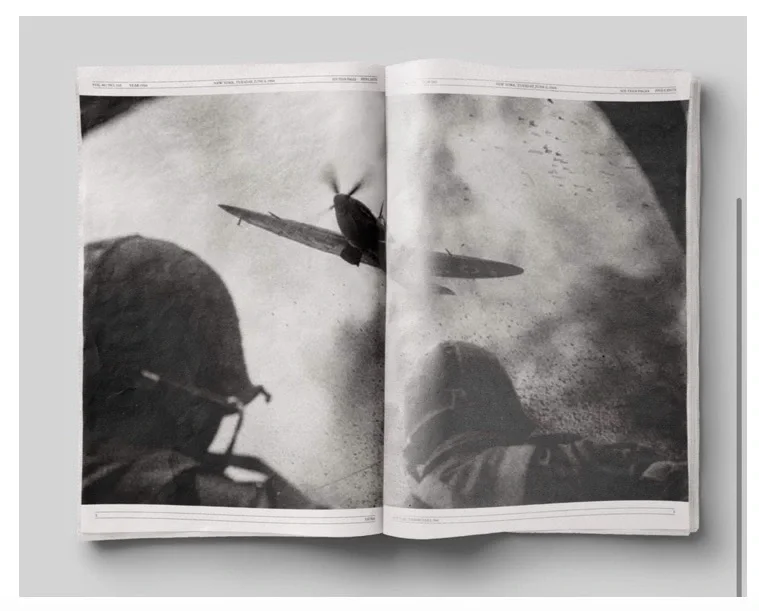
These are Robert Capa's famous photographs of the D-Day invasion in World War II. They are iconic. Phillip Toledano has now made AI images of what Capa might have photographed on other rolls of film, if he had used them. This was in the last couple of months. He is taking Capa's actual photographs, which are important history, and making AI images that look like photographs Capa might have made. He's playing with history. These are all AI images.
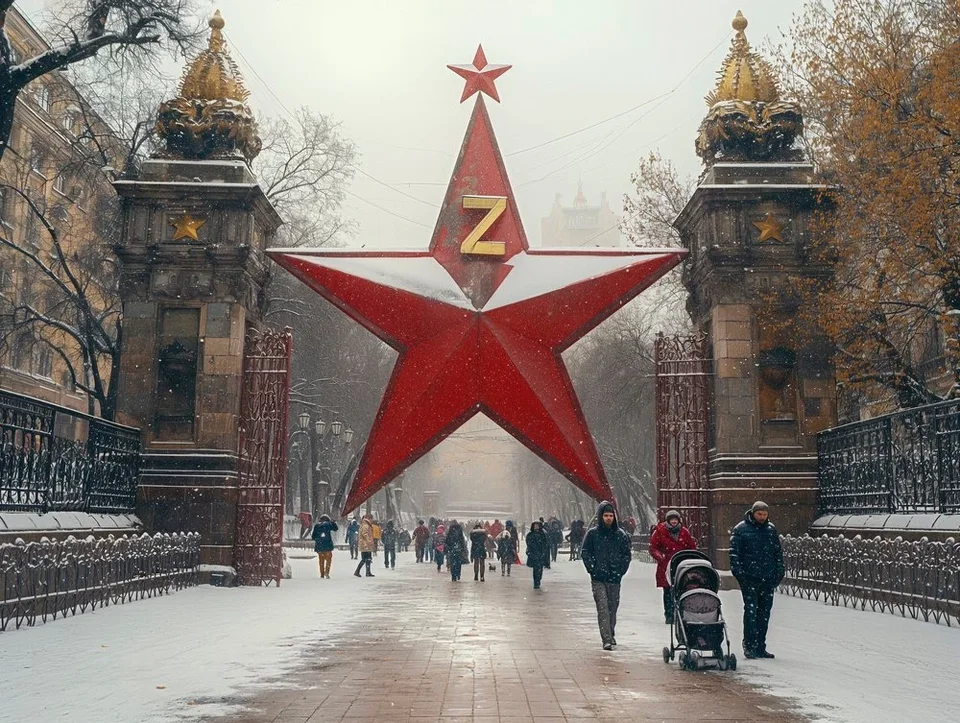
This is Carl De Keyzer, a member of Magnum Photos for many years. Instead of going to Russia, he recently self-published Putin's Dream, I think in December, a few months ago. These are AI-generated images of Russia today, made without going there. Magnum Photos has existed since 1947, witnessing and depicting history, so it had a big decision to make. He is a member; what do they do? They decided that members can do what they want, but these images will not go into the archive because they are not photographs. It's not history; it's AI.
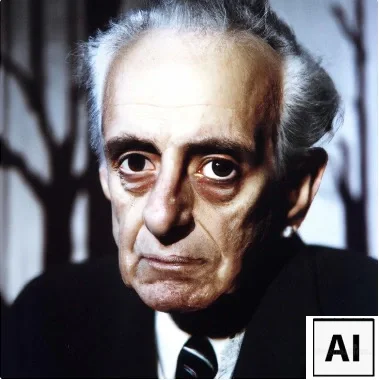
AI is now used in many newspapers and magazines, sometimes labeled as photographs and sometimes as AI. If we had time, I could show you many more uses, for good and for bad. In one case in Australia, refugees who had been abused had no photographs of that abuse. With AI, they were able to generate images to show it. That was a better use. There are many more issues, but I'll move to part three.
How to Establish the Credibility of Photography
Part three is about three ideas for ensuring photographic credibility. What do we do about it? One idea I've had for a long time is to think of a journalistic photograph as “a quotation from appearances,” John Berger's idea. In writing, if you quote someone's speech or writing, you can't change the words without telling the reader. Think of what's inside the frame as being inside quotation marks: you can't change it without telling the reader. That's a simple idea. If we say it's a journalistic photograph, everyone knows that nothing in it has been changed, that it is a recording of the visible, unless we tell them otherwise.
The only things you can do are slightly change the contrast, crop the image, or clean up digital noise. Anything beyond those changes must be disclosed. You can also use labels: on the left is a heavily manipulated photograph with the crossed-out lens icon, and on the right is an AI image I generated. Labels can indicate that too.
I helped found the Writing with Light movement. “Photo” means light, and “graphy” is writing or drawing, so photography is writing with light. The website is wwlight.org. There you'll find much of what I'm saying in a manifesto we published last week. We treat the photographer as the author of the image, just as a writer is the author of words. You can't necessarily trust the camera to record the visible anymore, but you can trust the image's author, the photographer, to be a person of integrity. You don't trust words just because they're words; you trust the writer. The idea is to trust the photographer, not the camera.
We also define nonfiction photography as a recording of the visible in which the photographer strives to represent actuality, events, people and so on, fairly and accurately, with appropriate context.
When I was creating an exhibition of Magnum photographs, there were 400 photographs covering forty years. I realized that, with a shutter speed of about one hundredth of a second, those 400 photographs amounted to only four seconds of history: one second for every ten years. That's so little. Captions and other kinds of context are crucial for a photograph representing only a fraction of a second.
You can find the Statement of Principles on the website, which we created a couple of years ago. This is meant to be an international movement to increase the credibility of journalistic and documentary photography. The assumption is that artists can do anything they want with photographs, but when representing actual events and people in journalistic and documentary work, we need to be transparent, clear, honest and authentic.
The third idea is the Four Corners Project, an idea I presented in 2004, twenty-one years ago, in a keynote speech at World Press Photo in Amsterdam. Every corner of a photograph online can contain a particular kind of information. It's a project to increase authorship and credibility in visual media.
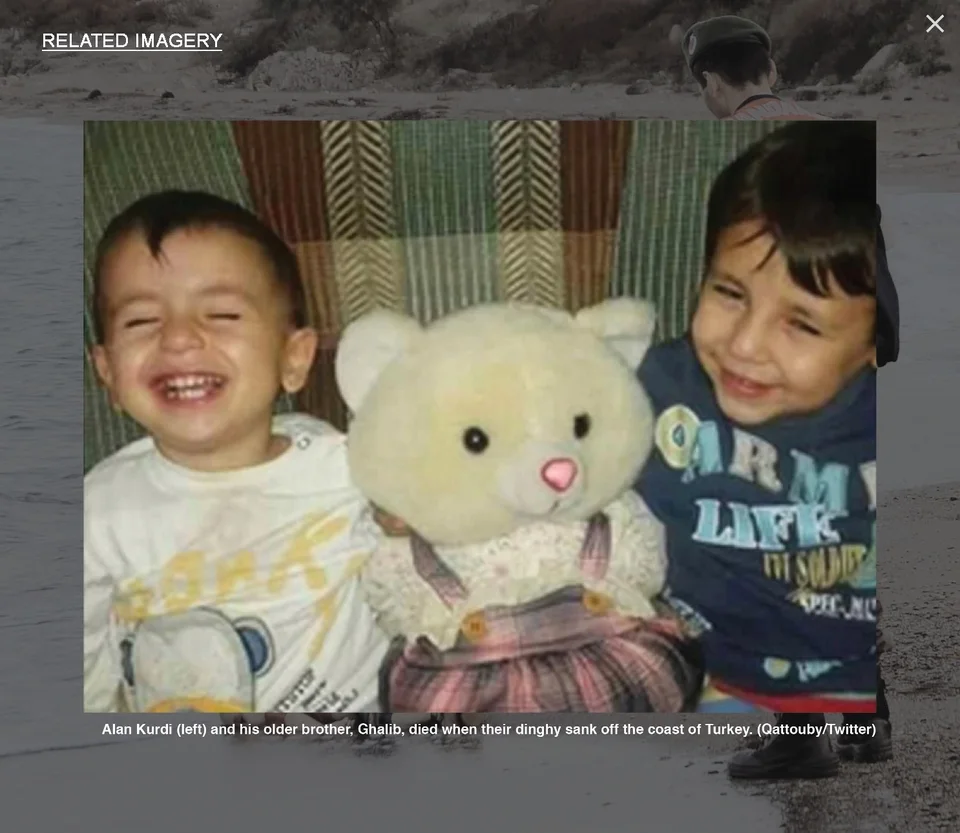
The bottom right records authorship: the caption, credit, copyright or Creative Commons license, the photographer's code of ethics, and a link to an agency or website. The bottom left gives the backstory: what was going on while the photograph was being made. The upper left has related imagery, video or photographs, perhaps the same event from different perspectives. The upper right links to websites with more information.
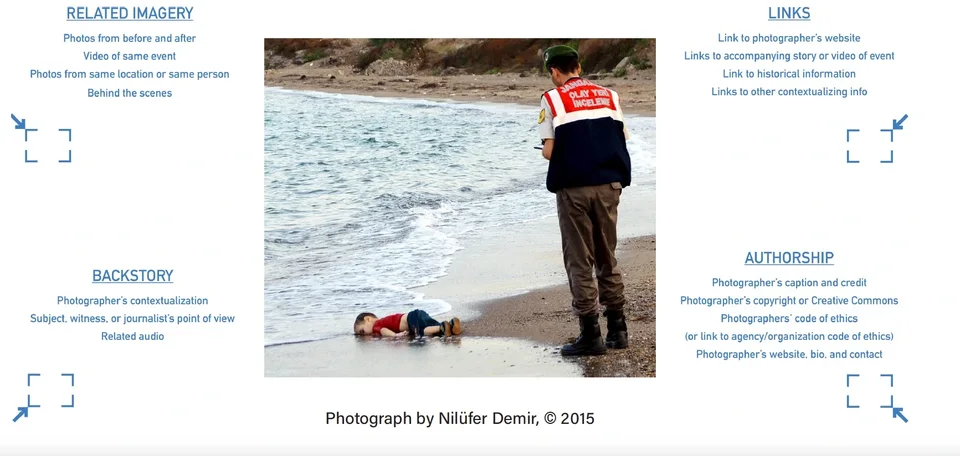
Here, in the bottom right, are the photographer's name, caption and copyright. I wrote a sample code of ethics to demonstrate the idea: while photography is interpretive, as a photojournalist my photographs are meant to respect the visible facts of the situation I depict. I do not add elements to, or subtract them from, my photographs.
For the backstory, I quoted the photographer saying that, unfortunately, she had seen many dead bodies, but seeing this boy, Alan Kurdi, gave her nightmares and made her feel horrible. She was happy, though, to have helped change how we look at immigration in Europe, so that no more people would have to die escaping a war.
The upper left shows Alan Kurdi and his brother when they were alive. Unfortunately, both died. Related imagery provides more context. The upper right links to further discussion, including why Human Rights Watch felt it was appropriate to publish a photograph of a dead child when it doesn't usually do so.
You can see these different corners at fourcornersproject.org and make your own. I wrote example codes of ethics, such as “I'm a fashion photographer; I don't work with underweight models,” or “I'm an artist; I can do anything I want.” I encourage everyone to write their own code of ethics in one or two sentences on their website, so people know their approach as a photographer. The website is in about eight or ten languages, including Chinese.
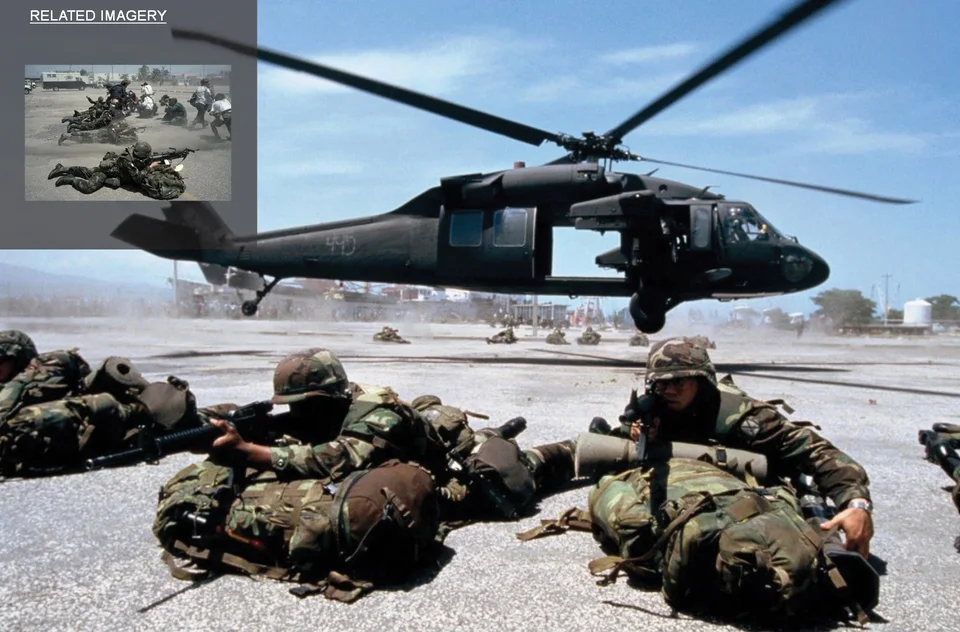
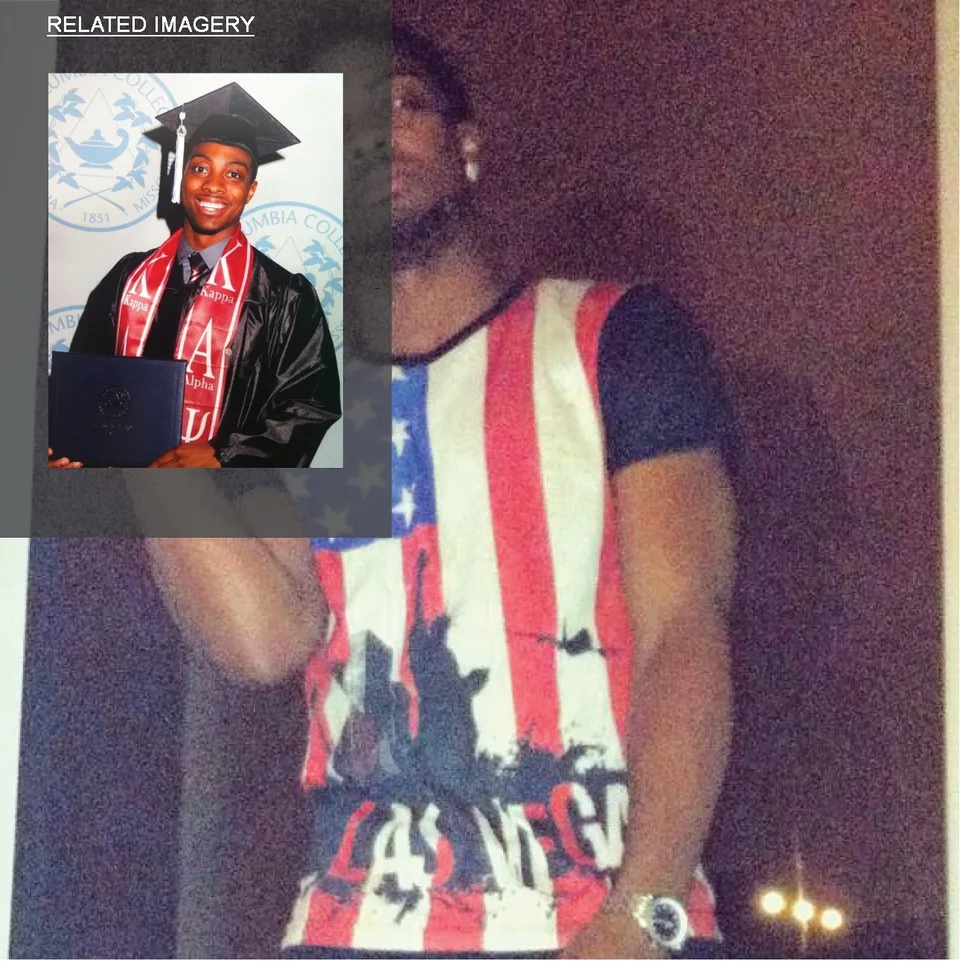
This image is from the US invasion of Haiti. With Four Corners, you can see what the scene looked like from the side, which is very different from looking at just this photograph. Another example concerns young African American men and women who were afraid that, if they were killed by police, a “gangster” image of them would be shown. The project allows another image of the same person to be shown. People can be depicted in many different ways. Four Corners allows multiple perspectives on the same person.
Finally, if you're interested, my website, thefifthcorner.org, has many of these ideas. I also write about them on Substack once or twice a week.
Discussion: Truth, Fiction, and Perception
Ce Zang
Thank you very much, Mr. Ritchin, for that wonderful lecture—I found it very rewarding. You began by reviewing fabricated photographs from before Photoshop and AI, which reminded me of an exhibition I once saw that used entirely traditional techniques—collage, painting over, and darkroom methods—to create all kinds of fake news photographs. I also found that very interesting.
Now that we have entered the age of AI, all we can say is that the means of fakery have undergone an enormous change, from a change in quantity to a change in quality, but the drive to fake has in fact existed for a very long time.
I have also been thinking deeply about AI images for a long time. Among the many examples you gave later, one point is especially interesting: the relationship between the prompt and the image it summons reproduces the tension—at once complementary and ruptured—that used to exist between traditional photographs and language. That is, you issue a prompt, but you cannot fully anticipate how the AI will respond, or what the image it generates will look like. This is precisely a very important entry point in my own thinking about AI images, which I will come to shortly.
Another particularly interesting question has just occurred to me. I read an essay by Michael Fried analyzing Roland Barthes's Camera Lucida. He discusses the photographic "punctum," and says that AI synthetic images will no longer have a punctum, because their indexicality has disappeared—they no longer point to real objects.
I think there is something to this, but I wouldn't draw that conclusion, because the problem may be more complicated. Synthetic images no longer point to a particular thing, detail, or situation in reality, but I believe they point to dreams. Do our dreams have a punctum? Is there one in fictional things too?
In Mr. Ritchin's images just now, I saw in the AI's responses to prompts some things that genuinely surprised us, and in some of the images one could even see a so-called punctum: the Symbolic ruptures, a black hole opens up. AI synthetic images indeed cannot point to an actually existing thing in reality, but they can still point to the punctum of the dream. I'll go into this in detail later.
Fred Ritchin
Completely. But I would also go back and say that a photograph is not reality. It's a representation, an interpretation of the real, not reality itself. A photograph is often partly fantasy as well. Sometimes a novel is more real than a newspaper article; fiction is more real than nonfiction. In some ways AI can be more real than the photograph itself, even though it isn't a recording of the visible.
I take your point. People misunderstand AI images. They see the lowest common denominator. I'd say ninety or ninety-five percent of what you see online is trivial, not interesting. I've been trying to push the boundaries with AI. You're absolutely right about scale. It's something Marshall McLuhan also referred to: a difference in scale. There have always been manipulations and distortions, intentional or unintentional, but now the scale is so large that I think the fake has become more important than the real, to use that as shorthand.
The AI-generated image, the video, the simulated photograph, the fabrication, has more social currency than the depiction of the visible. The visible seems too ordinary or trivial to people; they don't believe it. It doesn't have credibility. Increasingly, what dominates the media is AI, fabrication, the intentional fake. It's like Umberto Eco's Travels in Hyperreality: the fake becomes more real than the real. But I agree with your points.
Ce Zang
Let's first invite Dr. Guosen Chen to respond to Ritchin's lecture. Please, Guosen.
Guosen Chen
Thank you, Professor Ce Zang, for moderating, and many thanks to Mr. Fred Ritchin for his talk. It was very thorough and gave me a great deal to think about. I'll take about eight to ten minutes to respond and end with a question. In truth, what I would like to discuss goes far beyond what I can say now.
I'd like to approach the question of the truthfulness of AIGC images from a different angle. You showed, with ample and convincing evidence, that in the history of photography's relationship to truth—in the history of photography's truth claim—there is much more continuity than we usually assume. The process was not a clean cut from analog to digital, followed by another clean cut from digital to AIGC. Photographs have never automatically possessed evidentiary force.
Even when the content of an image does not come directly from reality, as in traditional documentary photography, the effect it produces can still feel extremely real—as you just mentioned, sometimes even more real. That makes things more complicated. Simply calling AIGC images fake doesn't get us very far. As we have seen with deepfakes and similar cases, even when we know an image is fake and AI-generated, it can still cause very real harm and consequences to the people involved, because our visual experience has been shaped by a long tradition.
As Bourdieu might have pointed out, nothing is more shaped by norms and conventions than photography. But these conventions do not come solely from art history, the history of photography, or iconographic interpretation. They are rooted in a broader social reality—in your terms, the shared reality in which all of us live together. Even if we can recognize the traces of AI generation, we cannot simply deny the political, personal, or emotional projections these images invite. The reality of those projections cannot be written off.
This is why the truth effect of AIGC images deserves to be taken seriously and analyzed. A recent case illustrates this. During the papal election, Trump posted an AI-generated image on X dressing himself up as the Pope. Everyone knew it was fake, but that did not cancel out its political and religious effects.
There is also a related phenomenon, perhaps not directly political. On Chinese social media there is a popular game in which prompts specifically ask the AI to produce low-quality, imperfect, or blurry photographs. Ironically, the results look extremely realistic. We see all sorts of impossible images: Hitler and Stalin posing together in front of the Oriental Pearl Tower in Shanghai, a fictional selfie of someone getting ready before a concert, or "historical photos" like Stalin and Roosevelt posing together on the Bund in Shanghai. These are obviously fake, yet people still enjoy making and sharing them.
This leads to my question: how should we understand the relationship between AIGC images and the workings of politics today? The image of Trump as the Pope seems like a typical example, though I'm not especially familiar with the details of American politics. Likewise, China's official news media sometimes use AIGC images to shape the identity of a certain group. There is no doubt they are AI-generated, yet they still perform real political functions. How should we regard images of this kind, which anyone can recognize at a glance as AI-generated? That is my question. Thank you.
Fred Ritchin
Thank you for your comments. You're absolutely right. My 1990 book was called In Our Own Image: The Coming Revolution in Photography because digital software would allow us to remake the world the way we want it to be, rather than the way it is. In part, I see this as consumer capitalism. As a consumer, you want to get what you want. You're almost a minor deity, a minor god: the economic and social structures are set up at least to pretend to give you what you want. AI allows you to remake the world in your own image.
With all the difficulties of life and society, this becomes a kind of minor victory: “I get it my way. The world is my way.” With all the challenges and complexities, people like Trump bypass photography and say that the fake is more important than the real. The fake is where the power is. He no longer has to conform to the real; he can make up his own reality. In that sense he becomes a demagogue. We're seeing the growth of demagogues in many societies, and AI expedites, supports and gives visual form to their vision.
In my Substack column on Friday, I asked AI which photographs would best question the wisdom of the Trump administration, which would best show that it wasn't doing a good job. ChatGPT responded with three images. Two were AI: the pope image you mentioned and one of him as a king. The third was his official portrait imitating his mug shot.
What struck me was that AI didn't suggest a photograph of Gaza, Ukraine, hunger or disease. Nothing was a photograph of the world. Everything was about the fake, which has more power than the real. That's the enormous fear. You're raising really important issues that we could spend another hour discussing. How do we deal with this? The media ecosystem has changed remarkably. It isn't just AI versus photography; it's the real and authentic versus the fabricated and fake. That's the worldwide danger and challenge. The entire media ecosystem is changing rapidly, with AI replacing the photograph.
If I want to see China in 1830 or Paris in 1920, it will make images the way I want them. It's like a fast-food restaurant: what do you want? Extra pickles? Extra ketchup? You get it. AI gives you the world the way you want it to be, and demagogues use that to increase their power. It's a massive set of issues. You're right, but we need another hour or two to discuss it.
Guosen Chen
I see. Thank you.
Fred Ritchin
Just one sentence: an easy way to say it is that we go from self-portrait to selfie to avatar.
Rong Jiang
Fred, if I may, could I ask two short questions before you go? Very short—you can even just answer "yes" or "no."
Fred Ritchin
Go ahead.
Rong Jiang
My first question is about whether AI is photography. When I interviewed you more than ten years ago, you said digital photography was a paradigm shift. You called it "after photography," or "super-photography," or, as many people say, "Photography 2.0." Now we have AI-generated images. We know they are not entirely photography, but since photography is so malleable, could we call it "Photography 3.0"? Does it count as a kind of photography too?
Fred Ritchin
I think it's a different medium. It's not photography; it's a paradigm shift. The full answer is longer, but with computational photography we can argue about whether it's photography or just imaging. Certainly, though, AI-generated imagery isn't photography. Sometimes it looks like photography, sometimes like painting, and sometimes it sounds like music. But it isn't photography.
Rong Jiang
My second question is this: you showed AI-generated images of the past and the future, but I think it is very difficult for AI to generate humans' direct experience of the present. So I believe that, at least so far, what AI can generate will not really be as truthful as documentary photography created by human photographers. Do you agree?
Fred Ritchin
No, because I think you're being idealistic and hopeful. I made the self-portraits I showed you last week. You can do whatever you want. You can simulate photographs; I've done images of the war in Ukraine and of Gaza. The realism of AI is now so high that, if you show me ten images and ask which are AI and which are photographs, I'll usually get about seven right, after fifty years in the field. It does the present, the future and the past.
But I don't think that's what it's going to do. I think it will do much more important things than simulate photographs: investigate planets we don't know about, things at a microscopic level, or history thousands of years ago. It will be interesting as an investigative tool outside photography's parameters. We're only at the beginning. In many ways, photography began by repeating painting, and AI is beginning by repeating photography.
In the years to come it will become a much larger, more complex and nuanced medium, helping us understand ourselves differently. For example, with AI you can depict dreams or nightmares, which you can't do with photography. You can enter “I dreamt about...” as a prompt. Somebody who has been traumatized, a child, could do the same. AI could be very interesting in relation to the unconscious.
There's much more to discuss. I'd be happy to come back for another two hours. Today was about laying the groundwork for some ideas. Thank you very much. I was very happy to speak with you all, and I hope it was useful. You can reach me by email, and I'd be happy to come back. Ideally, one day I'll come to China and we'll do it in person.
Rong Jiang
Yes, that's exactly what I was thinking too—bringing you to China for a face-to-face exchange. Thank you so much for your time and your talk, Fred.
Fred Ritchin
Thank you. And thank you for your interpretation.
Ce Zang
Actually, the discussion is only now entering the more brain-racking stage, isn't it? Next, let's first have Professor Rong Jiang share his slides, and then I'll share some ideas I've been thinking about over the years, responding to Mr. Ritchin's lecture and today's discussion from more diverse perspectives and at a deeper level. Professor Rong Jiang, please.
Rong Jiang: Flusser and Technical Images
Rong Jiang
All right, I'd like to share some thoughts in response to Ritchin's talk. As early as the 1980s, the philosopher Vilém Flusser—born in Czechoslovakia and later emigrated to Brazil—published two books. One is Towards a Philosophy of Photography from 1983, which I believe already has a Chinese translation. This book takes photography as its starting point and regards the camera as an "apparatus"—in effect, the equipment—using the apparatus as the logical starting point for his philosophical reflections on photography.
The more important monograph is Into the Universe of Technical Images, published in German in 1985 and only in English in 2011. Fudan University Press has also published a Chinese translation. I think a more accurate Chinese rendering would use "toward," or "into the universe of technical images." In this book, he discusses the concept of "technical images" more systematically.
What are technical images? According to Flusser's definition, they are distinct from traditional images. Note that he uses "image," not "picture." He regards painting as the traditional image, saying that more than five thousand years ago humans began painting in caves; later language gradually emerged and became the main medium of communication; then came photography, and after photography, digital photography.
Ritchin also said just now that first there was optical photography, the second step was computational photography—that is, synthesizing images digitally—and now we can synthesize images with AI software without a lens or a camera at all. When Flusser was writing in the 1980s, computer-synthesized images already existed. Digital cameras had not yet gone into commercial production—I recall that was 1989—but before that there were already digitally synthesized images, including computer-generated images. He called all of these "technical images"—"影像" rather than "图像" in Chinese—in English, technical images.
Technical images are images abstracted through computation by apparatuses such as cameras and computers and their software, often resembling mosaics made of grains—pixels, for example. They model reality rather than directly representing it. Optical images, shot with film and lenses, directly represent reality; digital images are already images abstracted by computers, distinct both from traditional images such as painting and from texts. Flusser believed that humans would increasingly communicate through technical images.
What characteristics does this produce? Technical images are not, like traditional images, the result of observing things in the external world; they are the result of computing different concepts, producing images through internal programs and algorithms. They have no direct connection to the external world, even though they appear to come from it.
From this point of view, it may confirm Ritchin's answer just now: AI-generated images cannot be counted as photography. Why? Because the most important characteristic of photography is its direct connection to the real world, which is also the greatest difference between the photographic medium and other media such as painting. AI images lack this direct connection; they are not direct representation. Although they may imitate very convincingly and seem to come directly from the real world, they are already a new medium. So Flusser was in fact a prophet. Philosophers often not only summarize the laws of the real world but can also make predictions—that is their greatness.
Relative to traditional images and to texts as linear symbols, Flusser regarded technical images as the fifth level of abstraction. In Appendix Four of the English edition of Into the Universe of Technical Images, he divides the human process of abstraction into five levels, from early cave paintings of animals all the way to today's technical images. He believed technical images derive from scientific texts and conceal the nature of symbols.
Flusser believed technical images bring about a historic shift. We once lived in the universe of texts, communicating linearly through writing and letters; now we are entering a world of communication through images—a multidimensional, even dimensionless world. He considered technical images to have no dimensions, which gives one pause.
If traditional images are images about history, then technical images dominate the post-historical era. In the past, history was narrated through linear written description; now we can describe the future, the past, and the present from all angles, and we can describe dreams too. We have entered a post-historical era in which technical images can mediate reality.
This produces a crisis: the flood of technical images may lead humans into image fetishism, confusing symbols with reality. People see vast numbers of images all day long and may not only worship the images of internet celebrities but also idolize images like the one just mentioned of Trump transforming himself into the Pope. Of course, many people criticize it as well. We begin to be unable to tell what is real and what is fake—that is the more pessimistic side.
It may even produce totalitarian homogenization, for instance monitoring society through surveillance images. Flusser foresaw this possibility already at the time. But he also mentioned an optimistic side: if humans can actively decode programs, technical images can also become a dialogical medium, stimulating creative participation—for example, digital art, images made with open-source code, and so on.
So technical images are a double-edged sword, like a knife that can cut vegetables or kill a person. They can lead to image fetishism, totalitarian homogenization, and the passing off of fakes as real; used properly, artists can also treat them as a new creative medium.
The more important philosophical task today is to establish a phenomenology of images. Personally, I think that when Erwin Panofsky proposed iconology, he could not yet foresee technical images like today's. Many friends in China still use the word "图像" (picture/image), and I think it should be changed to "影像" (image).
What AI generates is absolutely an image—"影像"—please don't call it "图像," even though it may look like a painting. A painted image, in English a picture, is usually painted by hand; technical images are generated. Unless you print it as a photograph and hold it in your hand, while it is in a digital camera's sensor, in a computer, or in AI software, it is really just data, code, or tokens. It is not like traditional analog images or paintings, so it should be called an image. Please remember this.
We need to establish a new phenomenology of images that reveals the constructedness of technical images while resisting their hallucinatory power—a term Flusser already used in his book long ago. His theory both warns people against passively consuming images and stresses that humans should once again take on the role of the "visionary," turning AI into a tool and using it actively.
If we can do this, technical images still have liberating potential and can free our thinking and imagination. So Flusser's writings on technical images from the 1980s remain very important today for media studies, digital culture, and the critique of AI-generated images.
That's all I'll share. Thank you to the moderator, thank you to Fred Ritchin for his wonderful talk today, thanks to Guosen for taking part, and thanks to everyone behind the scenes for their support. I'll now hand the microphone back to our moderator, Ce Zang.
Ce Zang: AI Images and Human Perception
Ce Zang
All right, thank you, Professor Rong Jiang. I'll also try to be brief in sharing my thoughts on AI images over these years.
When we think about AI synthetic images, the first thing we encounter is the question of truth and fiction. But before discussing it, there is a major premise: from the standpoint of neuroscience, human consciousness itself is fictional. We cannot actually see the true physical world, and our relationship to the world is not a binary opposition of subject and object, because we are situated within the world. The world we see is a model—or more simply, an interface—through which humans, living in the world, communicate with it, and this interface is built on the human perceptual system.
We used to say that language is the boundary of the human world, but in light of new research in neuroscience today, that claim seems somewhat one-sided. Strictly speaking, language is only part of the model—an important component of the interface, not the whole of it. What we call truth is first of all a truth grounded in human perception. As for the truth of the physical world, we can only feel one side of it, one kind of appearance, through our own mode of perception. The more we look, the more it keeps receding—in philosophical terms, the thing keeps withdrawing.
How is the human perceptual model of the world built? The human brain is itself a mapping system, above all so that people can survive effectively in their environment and maintain homeostasis and the continuity of consciousness. The brain first generates a cognitive map, then adds behavioral goals, concepts, and even semantics, producing what is called a "schema." This concept used to belong to psychology, and today it has also entered neuroscience.
For example, if Guosen goes to the airport to pick someone up, a schema immediately forms in his mind: first go downstairs, which car to take, what the purpose is, what to do on arriving at the airport. He has a set of ways of acting—that is a schema. These things continually refine the models of human behavior and thought. When we talk about images or other pictures, including the paintings Professor Jiang just mentioned, this is a necessary premise.
Having stressed this premise, to be more concrete: do images obtained through straight photography in the past have truthfulness? More specifically, do the documentary images we once emphasized have truthfulness? If so, where does it lie? After long reflection, I personally believe there are two things in traditional photographic images that can be regarded as true.
The first is light waves. Between the light reflected from the surface of the photographed object and the photosensitive material of the film, a transmission of physical signals takes place from thing to thing, and this transmission is real—as real as sunlight falling on plants and producing photosynthesis. This physical process is not governed by human will.
The second concerns the photographer: where his body was positioned in space when he took the picture, and above all his gaze. I've given this a concept: the "registration of the gaze." Where does your gaze, your intentionality, look? What did you pay attention to? Your attention and visual focus land on some thing or place in real space. Your point of view is your standpoint, your viewpoint, and also where your intentionality lies; the place you look at is the correlate of intention, and this too is real. Even if you take a fake photograph, with your gaze directed at the site of fabrication, it reveals the falseness of that gaze, and this revelation itself remains real.
The truth I speak of lies in these two points. The truth that documentary photography used to speak of—the meaning that images carry and transmit, and that viewers read from them—is precisely fictional. Why? Because the image has only indexicality; it is not the thing itself and has not been adequately fulfilled.
Take news photography specifically, using the example from Ritchin's lecture just now: the photograph taken by Nick Ut. Now even whether he took it is disputed; World Press Photo has provisionally suspended the attribution, and who the author is remains to be confirmed. Think about it: if even this is not certain, how can the photograph restore the truth of the event on the scene? It provides one "registration of the gaze"—how could it restore the truth of the event itself? So the truth we once believed documentary images expressed is, in my view, precisely fictional.
Then why was this photograph so influential, and why did everyone consider it true? It is like a flashback to a moment of trauma, implanted in the memories of the media audience who saw it, like a wedge, awakening each person's different traumatic memories. The little girl's naked body is like a tear ripped open in the Symbolic at that moment, bringing a sting, a flashback to a traumatic moment—that's why it made such a deep impression on everyone.
Ritchin mentioned just now—and I believe brother Rong Jiang has spoken about this before too—why news photographs like this have become rarer and rarer, eventually disappearing. It is precisely because such traumatic moments are being submerged by other things.
Turning specifically to AI synthetic images, I have many thoughts, but there isn't enough time today, so I'll just touch on a few key points. This kind of technical image is not naturally produced; it relies on statistical algorithms and is generated probabilistically. As with the punctum mentioned earlier, it no longer has an indexicality pointing to some place or thing in reality; instead it enters into an algorithmic relationship. Between the prompt and the synthetic image, the former relationship between language and image is presented in another way.
Interestingly, language forks here, becoming data language and perceptual language. Including literature, what can be felt by and act on the human perceptual system is perceptual language, just like traditional language. But don't forget that behind what generates it there is also data language. As Professor Rong Jiang also mentioned, Flusser said that if you want to master it, you too must become someone who can create in data language in order to take the initiative effectively.
So what is the relationship between perceptual language and data language? I believe data language is the code of perceptual language, and what is perceptual language to data language? In phenomenological terms, it is "founding." Just as the scientific world is founded on the lifeworld, perceptual language founds data language.
Rong Jiang
Founding, yes.
Ce Zang
Compared with traditional images, synthetic images originate from massive image databases and are generated by algorithms, and the algorithms themselves are not transparent. So the photographer's "registration of the gaze" no longer lands on some place in reality here—what does it point to? It points to an ocean of images made of data. That is the basis for why I mentioned dreams.
Our eyes see an enormous number of things every day, but the vast majority never enter consciousness at all. As momentary consciousness, they are pruned away by the brain to maintain homeostasis. Only those that leave an impression are reported to consciousness—what is called reportable consciousness; the great mass of things not reported to consciousness become fragments stored in neurons. These things don't disappear, and that's where dreams come from: in dreams, driven by so-called self-reference, they recombine into all kinds of strange dreamscapes.
This brings to mind a very interesting question: the snapshot. Why do especially casual snapshots strike us as marvelous? Shore, for example, is very good at using the snapshot. It corresponds precisely to momentary consciousness: things we normally don't notice, that never enter the reports of consciousness, are reported to consciousness through the photograph once they become one. And it is no longer a fleeting, negligible impression; it is retained by technology and can be looked at and savored again and again over a long time, with all those inadvertent details unfolding. This produces a marvelous effect on our perception.
Synthetic images summoned from the ocean of images by prompts can also occasionally produce such things. Prompts cannot fully control synthetic images; ruptures and tensions arise between the generated image and the prompt, and things appear that you never expected. This is a very interesting phenomenon.
This is the other kind of punctum I mentioned earlier. In the synthetic images Mr. Ritchin showed, there were also things that astonished us. What is a punctum? It is something not captured by the symbolic order, a rupture—suddenly a break appears that astonishes us; or it triggers a flash of some momentary consciousness, activating those momentary consciousnesses in the brain.
So are dreams real or not? Dreams are certainly illusory. But why have so many psychoanalysts, and people from ancient times to today, valued dreams so highly? Dreams contain no reality, yet they can generate truth. Carl Gustav Jung, Sigmund Freud, and Jacques Lacan all valued dreams; interpreting dreams is precisely about discovering truth within fictional dreams.
So, to highlight the key points of my thinking about images in the age of AI: one is that AI not only changes reality—or, in Lacan's terms, not only changes the Symbolic—but, even more, changes the way humans perceive. For photography, it replaces indexicality with statistics. The philosopher Jiaying Chen once said that he doesn't think AI will become more and more like humans; rather, humans will become more and more like AI. AI changes the human perceptual system, and people are led along by AI.
Another major insight large language models have given me concerns metonymy. In artistic creation and literary writing, metonymy is actually more important than metaphor. It does not follow the vertical, what Deleuze called arborescent, structure descending from concepts. The metonymic chain—that is, the sliding along the signifying chain—brings all kinds of novel things, and this combination itself generates meaning. Meaning doesn't fall directly from above; it arises from the marvelous combination of different things.
AI has given us the best proof: it has no understanding of what it's saying, yet it can still generate texts that seem very good to us, even better than what people write, and it can completely fool you. This shows how important horizontal metonymic combination is.
There is another question: will traditional straight photography—specifically the use of straight photographic methods in contemporary photography—lose its effectiveness in the age of AI? This is a big question, and I won't expand on it. Because in the age of AI, we face not only objects but also hyperobjects. Hyperobjects are invisible, or things we cannot see in their entirety; they are no longer objects we can see directly by standing here and then point to through indexicality or metaphor. There will be more and more hyperobjects, and AI itself is a hyperobject.
There is one more very important point: in the age of AI, rather than defending truth, it is more important to defend human perception—perception proper to humans. Our corporeality, our embodiment, is precisely what AI cannot replace. As humans, we should defend perception today. If even perception changes, how can we speak of truth? All truth is built on the human perceptual system; it is the truth of perception. If we cannot defend perception, truth is out of the question.
One brief word more about truth: what counts as truth is actually confirmed by a "truth mechanism." We used to say "seeing is believing" and "a picture is proof," believing photography must be truer than painting because one is drawn by hand and the other produced automatically by a machine. What is a truth mechanism? It is the mechanism by which we recognize truth as truth—this, too, is a question worth thinking about.
Finally, Ritchin repeatedly mentioned that photography does not equal truth. So, in AI synthetic images, can we still find new possibilities? I think we should be both vigilant and somewhat optimistic. This optimism cannot simply mean lying flat and waiting happily for things to work out; we need to engage actively and think about how to continue generating subjectivity in the age of AI.
Will AI become a big Other? It will become a new big Other. We need to be aware of its existence and cannot lie flat. Including what Flusser said about mastering technology and data language; and, for example, glitch art today, which targets AI and makes it implode—that too is an active approach. I won't go into detail.
That's roughly all for today. Professor Rong Jiang, any brief feedback?
Rong Jiang
I think today's discussion was excellent. It relates to Ritchin's talk, to Flusser's theory of technical images that I just introduced, and to the impressions and questions Guosen raised. Today was a great opportunity to share these ideas together.
Ce Zang
Thank you. Today the photography world holds all sorts of views on the age of AI; most people are still relatively confused, and many keep thinking about the question. So I think today's lecture was very important, and we will continue discussing topics like this in the future. It's already very late—thank you to all our guests, and thank you to the audience for watching. That concludes today's session.
Closing announcement
Thank you to all our speakers for their wonderful contributions, and thank you all for listening so attentively. The thirteenth online forum of Server Art's "Contemporary Images: Paths and Possibilities," "Photography Transformed in the Age of AI," has come to a successful close. We thank all the universities, institutions, and media for their generous support and participation, and we look forward to seeing you next time. Thank you!