Entering Philosophy through Artificial Intelligence
Guosen Chen
You studied computer engineering as an undergraduate and later turned to philosophy, developing your research along the lines of Heidegger, Simondon, and Stiegler. What made you feel that you had to enter philosophy?
Yuk Hui
I have always been interested in artificial intelligence, and in science as well. As I studied, I gradually realized that many of the problems computing and artificial intelligence try to address actually belong to the same kind of question. Suppose a robot walks into this room and sees us talking. How should it understand what is happening in front of it? Does it know whether we are chatting, quarreling, or arguing? Ultimately, these questions all concern perception.
For people who study computer science or computer engineering, or who work in artificial intelligence, the task is usually to find a better algorithm. They do not necessarily ask the fundamental questions: What is cognition? What is perception? What is relevance? Our judgment of what is happening often depends on context, but context is not the same as data. Once the robot enters the room, it can acquire vast amounts of data. The question is how it contextualizes that data. People working in AI are often reluctant to go into these questions, because they believe it is enough to find a better algorithm or model.
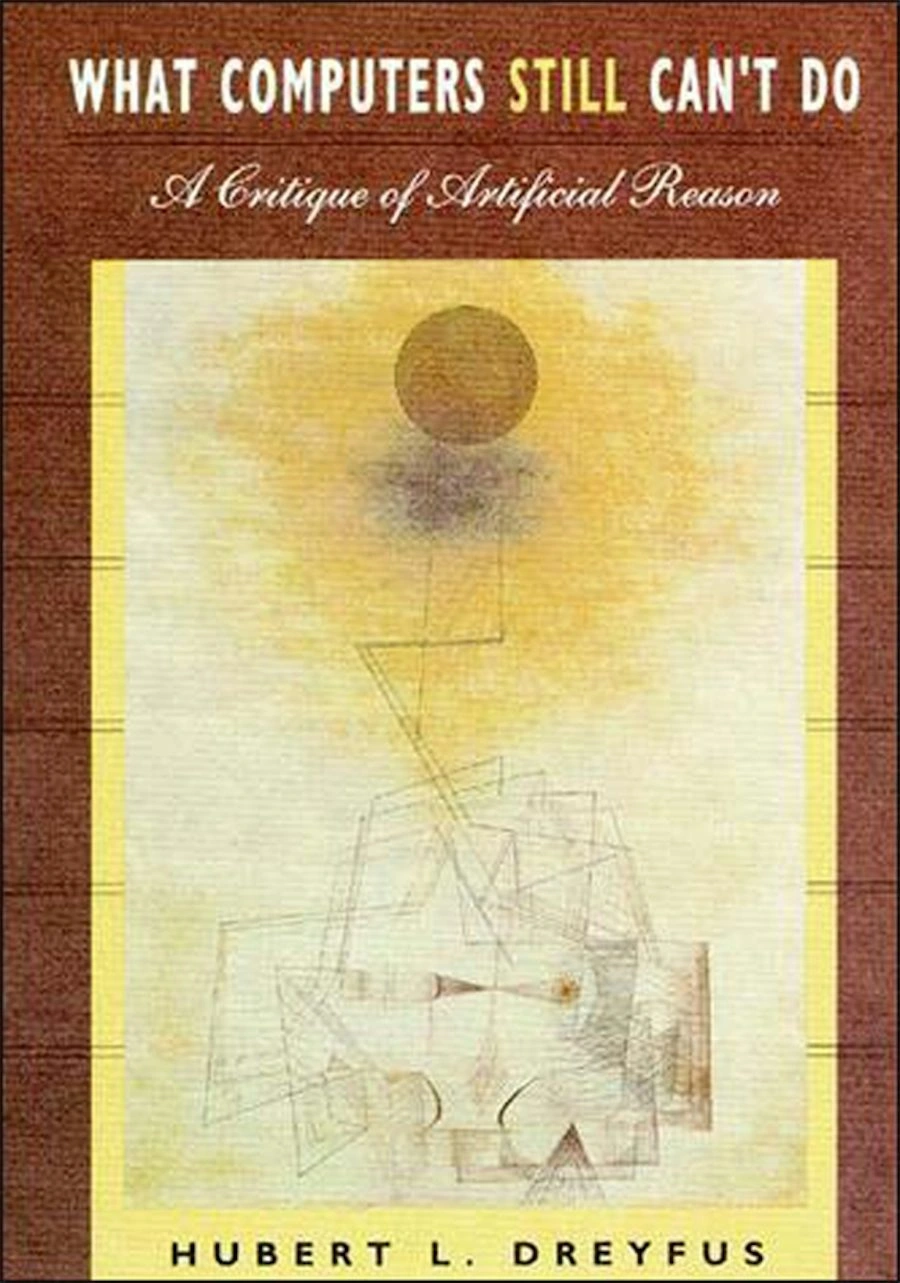
It was here that I began to feel that if I wanted to study artificial intelligence, I had to enter philosophy and understand these more fundamental questions. As early as the 1960s and 1970s, philosophers had already begun to criticize artificial intelligence. Hubert Dreyfus is one example. At the time he was still at MIT, where he criticized Marvin Minsky, and he later wrote What Computers Can't Do. The book's basic argument was that Minsky's understanding of artificial intelligence still belonged to the seventeenth- and eighteenth-century model of cognition, that is, the Cartesian model. Since this understanding had long been criticized in philosophy, why should artificial intelligence repeat it two or three hundred years later? Dreyfus therefore concluded that artificial intelligence built on this model of cognition had no future.
Dreyfus's basic understanding came from phenomenology, especially Edmund Husserl and Maurice Merleau-Ponty. I was very interested in this, so I felt I first had to go into phenomenology. Some time later, I met Bernard Stiegler, who would become my teacher. Under his influence, I turned in another direction: the question of technology in philosophy, or more precisely, the relationship between technology and philosophy.
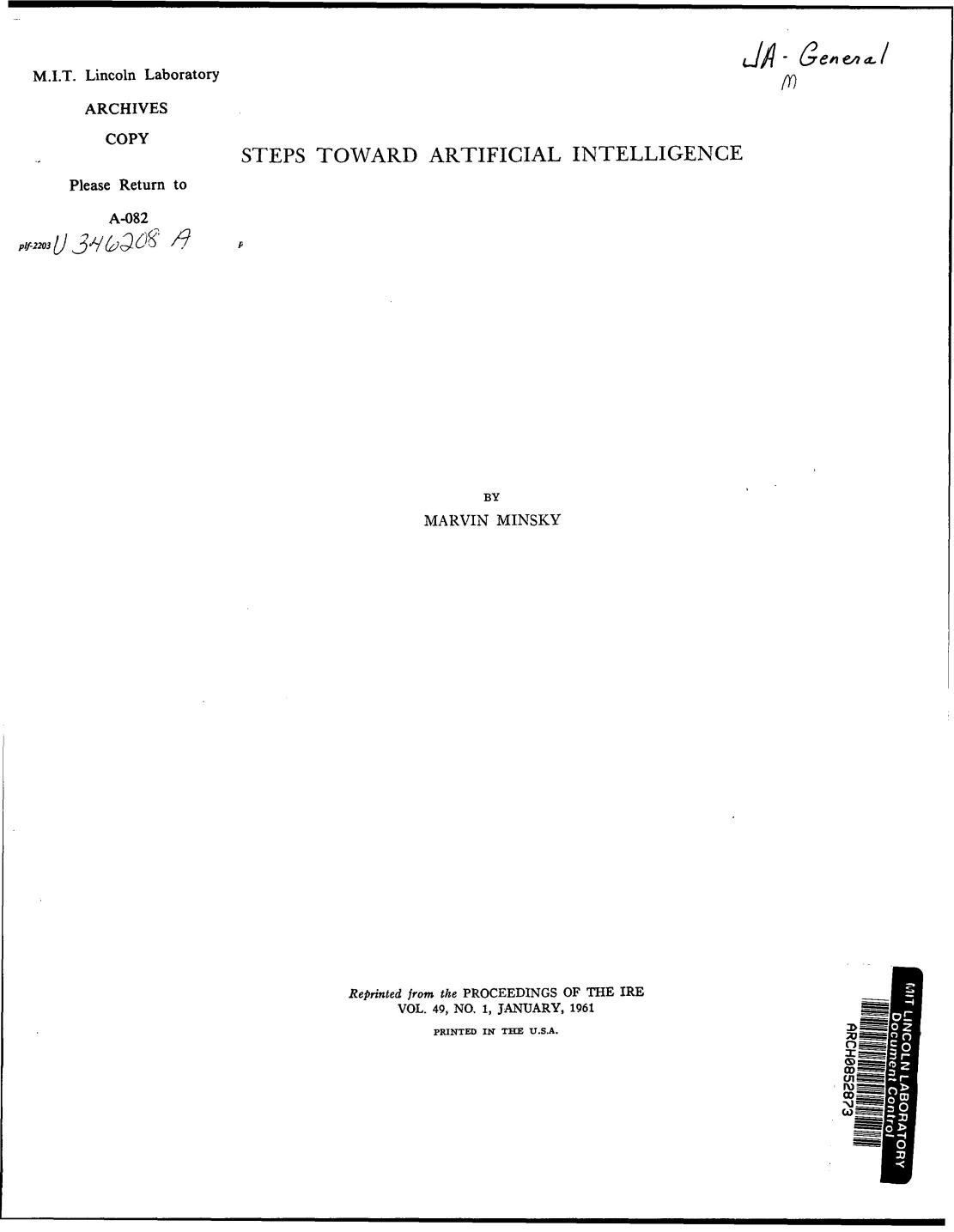
Research in artificial intelligence, even today's research, has not really addressed these fundamental questions. If they are not dealt with at the level of ontology and epistemology, and one pursues only more efficient algorithms, the problems will remain unsolved. As the Dreyfus example shows, Minsky's understanding of artificial intelligence already contained certain ontological and epistemological presuppositions, and those presuppositions are precisely what would hinder its development. Still, Minsky himself was quite honest. In his 1961 paper Steps Toward Artificial Intelligence, he already wrote that we have no clear understanding of how intelligence actually works, and that remains true today. When developing neural networks, we simply discovered by chance that they performed better than other models. But whether the brain really works this way, and what other differences there are between intelligence and the model, we do not know.
Guosen Chen
So designing the optimization target of an algorithm is itself an epistemological decision. Why optimize in this direction rather than another? Why choose this problem rather than another? These judgments have already been made before any concrete design begins, but engineers easily take them for granted without noticing them.
Yuk Hui
Yes. Very often, no one realizes that ideas which seem universally accepted are in fact only presuppositions. Many people now believe that large language models may achieve true intelligence, that is, artificial general intelligence, or AGI, but that is only a hypothesis. From an epistemological point of view, large language models cannot possibly get there. They are still a form of empiricism, a more sophisticated empiricism, but human intelligence is not merely empiricism.
Guosen Chen
Yann LeCun proposed JEPA and world models precisely because he believes machines cannot attain true intelligence through language alone. As you just said, how a robot understands a conversation in a room already involves a philosophical choice.
Yuk Hui
But whether world models really solve the problem of intelligence is another question that needs discussion.
Individuation and Philosophical Education
Guosen Chen
Stiegler's life was quite legendary. After spending time with him, did your understanding of "what it means to be a philosopher" change because of him? And how did that change enter your own experience?
Yuk Hui
Of course, he had a great influence on me. That influence did not come only from his personal history, although his history was itself part of his philosophical thinking. His whole life can be understood as a process of individuation, as an expression of the theory of individuation. He spent five years in prison and became a philosopher there. Many people have been to prison, but very few have become philosophers as a result. His imprisonment also had to do with a chain of contingent events. After his first successful bank robbery, he was playing in a park with his wife at the time and their two children when a police officer and a bank employee walked by. The employee suspected he was the robber, but the officer thought it impossible, because a man playing in the park with his wife and children did not look like someone who had just robbed a bank. So he was not arrested. Later, during his fourth bank robbery, he was caught in the act by a patrol officer. It was precisely this chain of contingencies that later allowed him to realize the possibility of individuation in prison.
I met him around 2008. I remember that the first time I went to his class, he began by saying: "If I succeed, then after this course we will be able to individuate together." He did not mean only that the students would individuate; as the teacher, he too would individuate along with us. That sentence struck me deeply at the time, because I had taken many courses and no teacher had ever said anything like that.
Guosen Chen
What was that course about? Do you remember what it was called?
Yuk Hui
I have forgotten the exact title. It was probably philosophy of technology or something similar, but its content actually revolved around individuation. What we now call philosophical education is often just the transmission of knowledge about the history of philosophy: what Plato said, what Socrates said, what Kant said. A good teacher may be able to identify precisely the source of every footnote and annotation in Hegel's Philosophy of Right, but the fundamental question of teaching philosophy is individuation. When Socrates met so many young people in the streets of Athens, what did he do? He never aimed to transmit knowledge. If you asked him what justice was, he said he didn't know. If you asked him what virtue was, he also said he didn't know. What he did was enable those young people to individuate together with him. That is the case in both the Meno and the Phaedrus.
So Stiegler's influence on me mainly concerned two questions: how to do philosophy, and how to teach philosophy. This differs greatly from the academic philosophy of today's universities. More importantly, it constituted an existential relationship.
Guosen Chen
What exactly does "individuation" mean here?
Yuk Hui
The concept comes from Gilbert Simondon. In his theory, we can first imagine a system, for example the two of us talking in this room. Within this system certain incompatibilities will arise: you disagree with some of what I say, and I disagree with some of what you say. These incompatibilities keep developing until the tension reaches a critical point, and then the structure of the system changes. The original structure first breaks down, a new structure emerges, and the incompatibilities and tensions are preserved in another form. Your entire structure has changed, and so you become a new individual.
Guosen Chen
Is this process inexhaustible? It makes me think of Nietzsche. When Nietzsche talks about individuation in The Birth of Tragedy, he also seems to be saying that one must always crystallize oneself out of chaos or potentiality. How is Simondon's individuation different from this?
Yuk Hui
I think you are conflating Simondon and Nietzsche. Nietzsche's formulation in The Birth of Tragedy comes from Schopenhauer; he was discussing the Dionysian and the Apollonian. Simondon's view is very different. For him, all beings, whether stones, plants, animals, or humans, have the possibility of individuation. When we see many grains of sand on a beach, each grain is an individual, but before that individual appeared, a process of individuation had already taken place.
We tend to understand individuation starting from the individual. When we see a cup, we imagine that first there was a mold, then clay was put into it and fired, as if the individuation of the cup were merely the realization of a given form in matter. Simondon argues that we must understand the individual from individuation, rather than inferring individuation backward from the individual. He therefore rejects Aristotle's hylomorphism on the one hand and atomism on the other. Individuation is a systemic process driven by tension and incompatibility. On this point he insists that his theory is not Hegelian dialectics. Countless dialectical movements may take place within the process, but individuation also involves a sudden structural change, like a quantum leap: a seemingly stable system is suddenly twisted and breaks down, and a new system is born.
We may have a similar experience when reading Kant or Nietzsche. After reading once, you recognize every word and know the general meaning, yet nothing has really acted upon you. Then, on the tenth reading, some event suddenly occurs: the incompatibilities and tensions accumulated over a long time change the original structure. You seem to understand Kant, and through understanding Kant you come to understand the questions of religion and morality. What used to be vague and impossible to define suddenly becomes clear. This is not the sudden enlightenment of Chan Buddhism but a structural transformation.
Reading is of course a long process. Whether a good book or a good work of art can enable us to individuate together with its author or artist depends on whether the right occasion arises. It is in this sense that what Simondon calls pre-individual reality is inexhaustible. We always carry some pre-individual reality with us, but it needs an occasion or an event to appear. The event brings what has not yet taken shape to the surface and generates sufficient force and tension within the system. For me, meeting Stiegler was such an event. Through him, I reread Simondon, Heidegger, and Husserl, and my earlier ways of reading and structures of understanding all changed.
We are easily influenced by textbook understandings, for instance summarizing Heidegger as publishing Being and Time in 1927 and then undergoing a turn in the 1930s. That is understanding at the level of knowledge or information; it is not yet philosophical understanding. Philosophical understanding is closer to an initiation, like entering the mystery rites of ancient Greece, entering a kind of mystery.
Guosen Chen
So the result of individuation cannot exist merely as knowledge. It must also change, within our existential activity, the way we relate to knowledge?
Yuk Hui
That's not entirely right either. For me, a philosopher is not a transmitter of knowledge, because the transmission of knowledge can now be done entirely by artificial intelligence. If you ask a teacher to explain Hegel, the chance of error might be 30%. If an AI is well trained, the chance of error might be only 5 to 10%. When it comes to transmitting knowledge systematically, artificial intelligence may even be more effective than a teacher. It not only has command of Heidegger's texts but can also quickly sort through a large body of secondary literature and tell you how A understands Heidegger, why B objects, and what view C proposes. Many teachers can't do that.
But that is still not a philosopher. At best it is an information provider, like the old telephone hotlines where you pressed a few numbers to get some explanation. If you go to a philosophy department only to obtain this kind of knowledge, you might as well study on your own. What studying philosophy demands is developing a systematic understanding of one's own. This does not mean building another system in the manner of Kant, Schelling, or Hegel. It means grasping the development of thought from one's own starting point, and through that understanding grasping reality, so that it becomes part of one's own thinking.
Newer AI systems can even explain etymologies and trace how a concept changed from the sixteenth century to the last century, making the whole lineage of knowledge clear at a glance. But this gain in knowledge is still different from philosophical understanding, because it has not yet changed the way a person grasps the present.
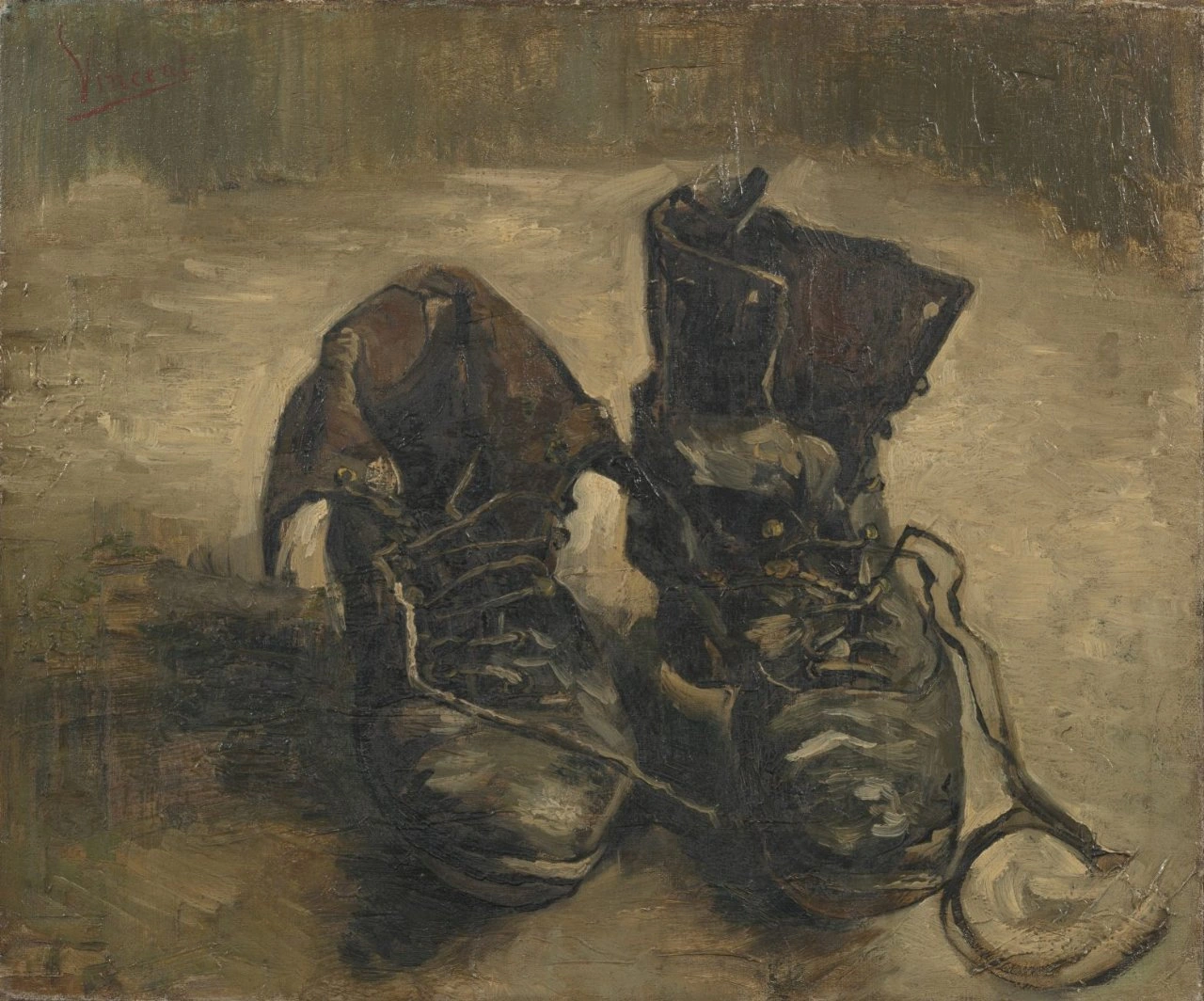
When Heidegger wrote "The Origin of the Work of Art" in 1935–36, he described the shoes in Van Gogh's painting as the shoes of an old peasant woman working in the fields. We know they were actually Van Gogh's own shoes. Yet this error does not directly invalidate his understanding of the origin of the work of art. What we see in Heidegger is how he reinterprets the history of philosophy through the question of being, and how, through that reinterpretation, he understands the present. Simondon's reinterpretation of the history of philosophy through individuation has a similar significance.
Guosen Chen
Do you use AI yourself? What do you mainly use it for?
Yuk Hui
My use is fairly limited. I used to use it almost every day, but always for narrow purposes, mainly dealing with writing problems. For instance, when I was writing about Kant and machines, I reread Kant's posthumous manuscripts. In his later years Kant was already suffering cognitive decline, dementia, and some of the manuscripts have no punctuation. Quite early on I tried having AI determine where the punctuation should go. Now I mostly use it for translation, because it does translation very well. Compared with Google Translate or DeepL in the past, the progress is remarkable.
Guosen Chen
I use it very frequently. Besides questions of knowledge, I also use it to analyze my own values and judgments, to argue with it, and in this way to work out which beliefs I should hold on to and which I need to let go of.
Yuk Hui
That can certainly be a bit dangerous sometimes.
Guosen Chen
I'm wary of that too. In this sense, if AI is treated as a technology of the self and a person's judgment is already deficient, AI may amplify their distorted view of reality and push their judgment further off course. For someone already caught in fantasy or delusion, it could even be poison.
Yuk Hui
Mainstream AI today is, in the end, still probability; what most influences its output is the average. So I confine it to translation and some basic questions, such as how to operate equipment. In the past you might have had to call a repair technician; now AI can often explain it clearly. For questions that don't involve value judgments, it might be wrong 10% of the time, but the remaining 90% is still usable.
Cosmotechnics and the Relation between Dao and Qi
Guosen Chen
Regarding "cosmotechnics," what is the aim of your whole analysis? Does it point toward the future or toward the past? That is, is the point that we may still have another way of understanding ourselves in relation to the order of the world and its sources? Or does the concept mainly serve a critical function, showing that the technology regarded as universal today is actually the product of a particular metaphysics?
Yuk Hui
You're asking whether it faces the past or the future. It concerns both the past and the present. I proposed this concept because I have always been working on the relationship between technology and philosophy. I rarely say that I do "philosophy of technology," because philosophy of technology often treats technology merely as one branch within philosophy, like philosophy of nature or philosophy of art. Derrida, Stiegler, and I all believe that technology is a central question of philosophy, and could even be called first philosophy. Aristotle called ontology first philosophy, but technology should also be placed in that position.
From Derrida to Stiegler and on to my generation, the task has been to put technology back at the center of philosophy and, from there, to reread Plato, Kant, and Hegel. When I write about Kant, I read him after placing technology at the center of his thought. With Hegel, too, I try to trace the question of technology from the Phenomenology of Spirit all the way to the Philosophy of Right. Only in this way can we reassess what these philosophers mean for the present.
But once technology is placed at the center of philosophy, another problem immediately arises: the so-called philosophy of technology we have been reading is actually built on a rather narrow concept of technology. When I began reading this literature ten or twenty years ago, I was surprised, because most of the material came from Europe, a little from the United States, and very little from outside the West. If technology really is a central question of philosophy, then what position does it occupy in Chinese philosophy? When we read Confucianism, the first things we encounter may be qi and li; when we read the Laozi, we talk about wuwei. Has technology never entered the core of Chinese philosophy?
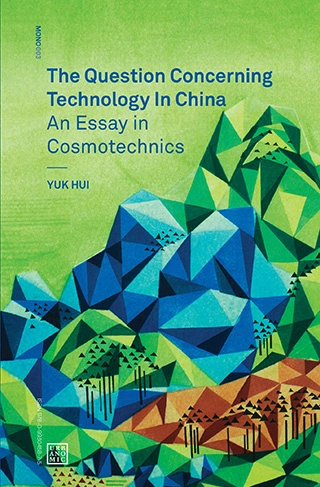
That is why I proposed cosmotechnics, and ten years ago published The Question Concerning Technology in China, in an attempt to broaden the concept of technology. On the one hand, like Derrida, I want to place technology at the center of philosophy; on the other, I want to open up the concept. For Derrida and Stiegler, technology is mainly exteriorized memory, but I think exteriorized memory is not enough for a full understanding of technology, so I brought cosmology and locality into the understanding of technology. What I want to address is how technology is situated in different histories of philosophy, whether Western, Chinese, or African, and at the same time how we can thereby understand other possibilities for future technological development.
Guosen Chen
You once gave a concise definition of cosmotechnics: "It means the unification of the cosmic order and the moral order through technical activities." Two things about this concern me. First, "moral" is not a settled concept within Western philosophy either. Using it to cover the Chinese de, might it narrow a concept with ontological significance into an ethical one? Second, the syntax of the definition seems to presuppose that the cosmic order and the moral order were originally separate and only later unified through technical activity. But in Chinese thought, might they never have been separate in the first place? If unity is the original state rather than a later achievement, does "unification through technical activity" stand in tension with that state?
Yuk Hui
In Western philosophy, what morals are and what morality is have never been settled questions. If you read the history of Western philosophy carefully, it is hard to give a single definition of moral order or morality. Bergson proposed two moralities, and Nietzsche's morality is not just one either. What is the most basic question of morality? Self-preservation. Only from this angle can we see the diversity within morality. For Bergson, one morality is built on mechanical obligation, while the other comes from "the call of the hero." For Nietzsche, morality also concerns preservation; it can make people stronger, but it can also make them weaker. One might even say that the whole history of Western morality developed in a direction opposite to evolutionary theory.
So when I speak of moral order, I am not presupposing a completed Western moral framework. My starting point is this: on one side there is a demand grounded in preservation, on the other there is knowledge of the external world, that is, our understanding of the cosmos; the two are unified in everyday life through technology. This unification is not the reassembly of two things that had long been separate. When humans develop technology, they must attend at once to self-preservation and to the external world: when it will rain, when the sun will set, when wolves or bears will attack. Different civilizations occupy different geographical locations, and their ways of knowing and their development as peoples differ as well, so they formed different understandings. Only through a long process did these understandings become what we now call culture.
Guosen Chen
You also write in the book that China had only a philosophy of nature and an accompanying moral philosophy, which regulated the acquisition and application of technical knowledge. Might the most powerful form of the unity between technology and cosmology in China lie not in texts, but closer to a practice without conceptual mediation, that is, a bodily activity?
Yuk Hui
That question requires fairly systematic analysis. The method I adopted in the book was to reinterpret the relationship between dao and qi. If a people considers itself to have five thousand years of history, it must acknowledge that many enormous changes took place over that history. It is not only dynasties that change; the entire structure of thought changes too. So I tried to start from the historical transformations of the relation between dao and qi.
Guosen Chen
But isn't that still just a proposition of intellectual history? To what extent does the Chinese cosmological understanding of technology exist in intellectual history and its propositions, and to what extent does it exist in master–disciple relations, apprenticeship, techniques of practice, and bodily practice? For example, pulse diagnosis in Chinese medicine and the Tibetan medical understanding of the cosmos do not share the same orientation toward the "good"; they also have different presuppositions about what a healthy body is and what effective treatment is. Yet modern regimes of administration often reduce these medicines to chemical substances, strip away ritual and cosmology, and then use modern science to judge whether they work. Might the parts that cannot be reduced to texts and intellectual history be precisely what preserve a more powerful form of the relation between technology and cosmology?
Yuk Hui
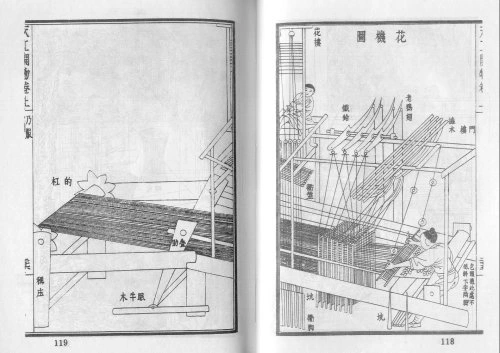
Not everyone in every era was literate, and the thoughts of many people were never recorded. But thinkers were not detached from the material development and sensory expression of their times either; they did not develop their thought facing only texts. The Tiangong Kaiwu is a good example. Yingxing Song understood the creative workings of heaven and earth, and at the same time studied highly complex technical processes in depth. So what he expressed was not only how concrete knowledge was passed from master to disciple, but also how the intellectuals of his time built discourses about the cosmos and morality. His reflections on these questions run throughout the Tiangong Kaiwu. He not only recorded technical procedures but also tried to understand the technical process itself. So there is no pure history of philosophy, nor any technical process that is wholly esoteric and unrelated to thought.
Your mention of Tibetan medicine also reminds us of the same process that the modernization of Chinese medicine went through. People took prescriptions for chemical analysis, looked for substances identical or similar to those in modern drugs, and on that basis declared one prescription effective and another ineffective. In the process, the original cosmological presuppositions and understandings of the body disappeared, and the body was left as nothing more than a set of chemical and biological structures.
This so-called scientization of Chinese medicine has been going on in Japan for many years. On the surface it merely proves whether a therapy works, but in fact it simultaneously changes the meaning of "works": only prescriptions for which a counterpart can be found in chemical analysis are recognized. The different understandings of the body, health, and healing that existed before are thereby excluded in advance through the very process of proof.
What cosmotechnics addresses is precisely how to understand the diversity of technology in history, and how that diversity is bound up with the diversity of intellectual history. Today's question is how we think about technodiversity in the future. This is also something one must confront when discussing decolonization. If our standpoint is still one of homogeneity, then we merely acknowledge diversity from the standpoint of homogeneity rather than taking diversity itself as the starting point; such pluralism remains founded on monism. I think this is a core problem of modernity.
Guosen Chen
Our present extreme emphasis on efficiency, practicality, and management at scale: could it be an augmentation of the tradition represented by Yingxing Song? That tradition was highly attentive to qi, to instruments and practical effects, and technology always had to be embedded in concrete productive practice. Could today's situation be a continuation of the Chinese cosmotechnical tradition, rather than simply the result of being forced to plug into the Western technological tradition?
Yuk Hui
That's a difficult question. Technological development naturally has to take into account output, manufacturing methods, and specific procedures. But whether the efficiency and scale pursued today belong to the same lineage as technical thought across Chinese dynasties, or are its natural continuation, is hard to say, though they are not entirely unrelated. I once talked briefly with Professor Xiangchen Sun, who said that Chinese people are not very resistant to new technologies: when a new technology arrives, they usually accept it first, try it out, and then see what happens. There is a very down-to-earth pragmatism here. In the Chinese context, the first question is often not how to regulate it but to try it first.
However, understanding today's situation directly as an augmentation of the Tiangong Kaiwu is probably far too simple, because nineteenth-century modernization happened in between. At that time, dao and qi, ti and yong, re-entered the discussions of intellectuals. The American sinologist Joseph Levenson wrote three books on Confucianism and modernization, which deal precisely with the questions of dao and qi and of ti and yong. We are familiar with "Chinese learning as substance, Western learning as function," but this was not unique to China; it was a phenomenon across East Asia. Japan proposed wakon yōsai, "Japanese spirit, Western techniques," and Korea had "Eastern Dao, Western instruments." These movements took place in the same period and were all built on a new understanding of ti and yong and of dao and qi: as long as the Eastern dao was solid enough, whatever instruments the West brought could seemingly be mastered.
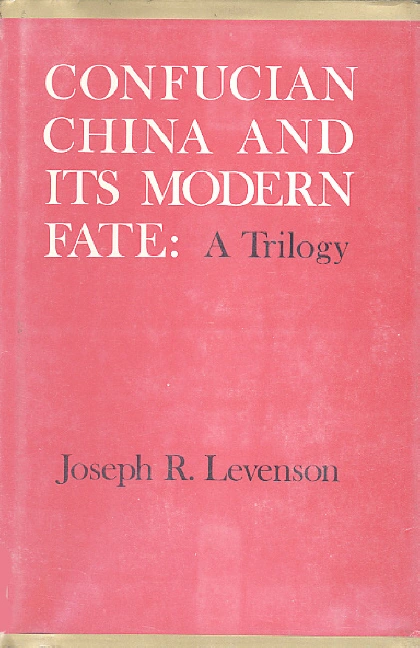
So I cannot be sure that today's technological practice is an augmentation of Yingxing Song's tradition. If I had to make a judgment, it is closer to an augmentation of the "Chinese substance, Western function" discourse. There are still people today who advocate developing a Chinese version of modernization, or using Eastern thinking to gain the upper hand in AI competition, or even setting up research institutes specifically devoted to what Eastern civilization or Eastern wisdom can offer AI governance. That is precisely a continuation of the same kind of discourse.
Technodiversity and the Collision of Thought
Guosen Chen
How can your claim for technodiversity ensure that it will not be absorbed into the narrative of technological competition? That competition appears to uphold plurality, but in fact still seeks to establish a single dominance, so that in the end it is still about my prevailing over you.
Yuk Hui
Global technological competition is in fact the perfect expression of homogeneity, because all the competitors are fighting over the same technology. In 2025 I went to the Chilean National Congress to take part in a discussion. They said: we don't want to follow Silicon Valley; we want to develop our own data centers and artificial intelligence in Chile. I asked: isn't what you're describing still the same technology? Does Chile have the financial and technical resources to compete with Silicon Valley? Most of Chile's lithium mines have even been sold to BYD. Such competition is indeed a competition within homogeneity.
The current geopolitical situation seems to force every country into this competition, and we know it will not end well. So how do we think about diversity under this pressure? Let me give an example. Since 2023, tribes in the Amazon rainforest have been able to get online via Starlink. I mean the Amazon rainforest, not Amazon.com.
At the time, a Brazilian lawyer called to ask me what should be done. I joked that the Amazon tribes could now shop on Amazon.com, and maybe drones would deliver goods into the forest. But of course the problem is not so simple. Nine months later, The New York Times published an article describing young people in one tribe as addicted to online pornography. The tribe was very unhappy about this and later sued The New York Times. Whether they were really addicted is not actually the point I want to discuss. What matters is that if we do not actively think about diversity and merely passively accept new technological conditions, diversity will sooner or later disappear. Everyone watches Douyin, everyone shops on the same platform, and difference gradually dissolves in this acceptance.
Guosen Chen
That is exactly my worry. Insisting on diversity, including recognizing different cosmologies, seems to presuppose a vantage point from which they can be observed, as if we could stand outside homogeneity, transcend its rule, and then see the differences between different forms of knowledge. But perhaps we have no such external perspective, because everyone lives inside some cosmology. Any claim for diversity may also be absorbed by homogeneity and end up as material the system uses to transform and expand itself.
Yuk Hui
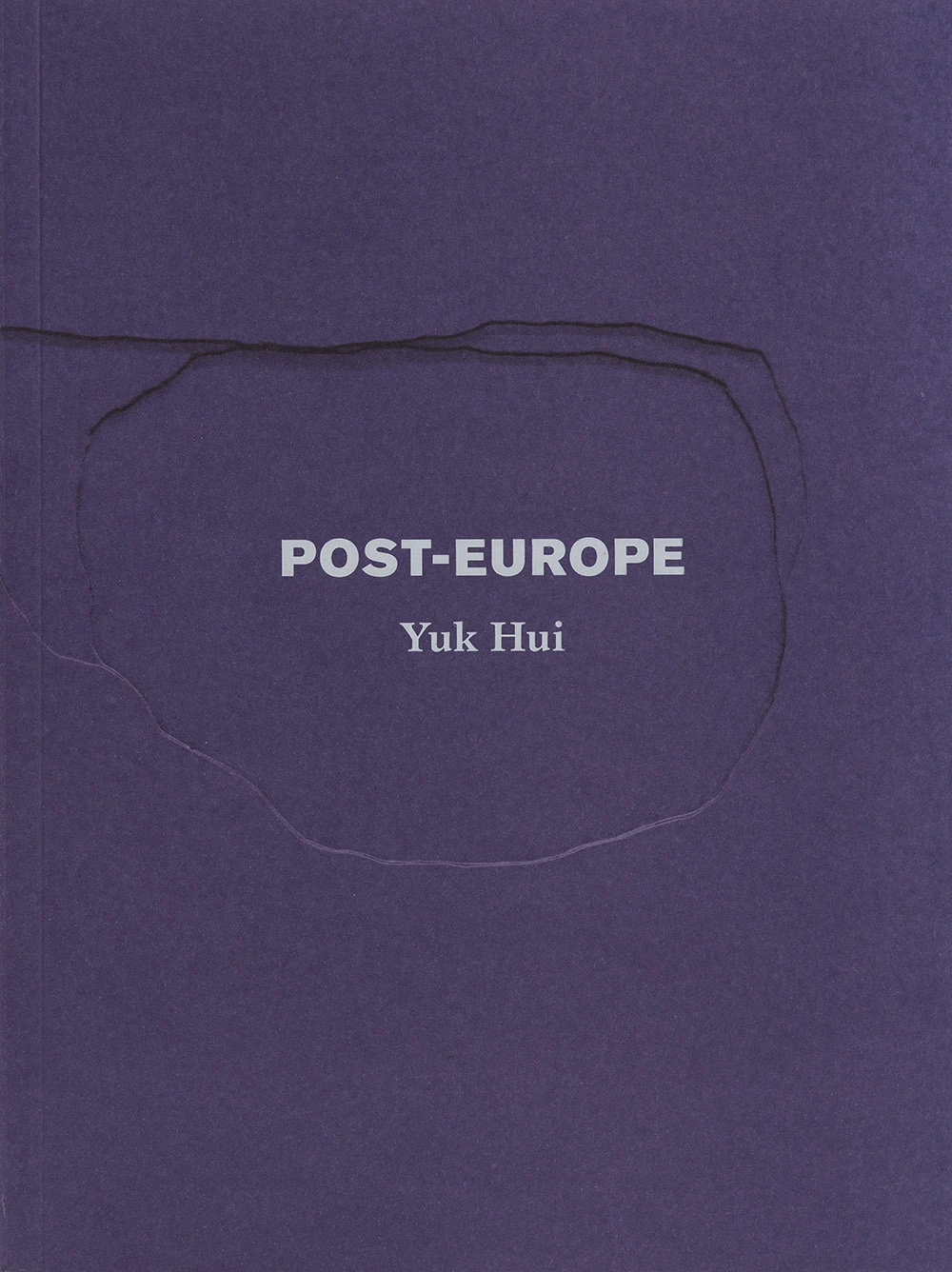
I don't know if you have read another book of mine, Post-Europe. In that book I proposed the "collision of thought." We cannot understand these questions from a purely local perspective, because a purely local perspective is often dangerous and can even lead to fascism. What the collision of thought addresses is how, by means of technology, mutually incompatible ways of thinking can arrive at a new mode, what Ludwig Wittgenstein would call a form of life.
This is also one of my attempts to overcome the ti–yong framework. It is impossible to start from a purely local perspective and believe that one can master everything that comes from outside. If we compare what happened more than a hundred years ago with today and still believe in the ti–yong framework, we have understood neither history nor reality. We cannot understand the present from a purely local or a purely external perspective. We need to let the impact and collision of thought genuinely take place, so that incompatible things enter a new process, rather than letting A control B, designating one as ti and the other as yong.
This brings us back to the questions of dao and qi and of ti and yong. I began trying to reinterpret them more than ten years ago, but it will be a long process and requires the participation of many people. Philosophical education today deals mainly with texts and the history of philosophy and usually does not train people to confront these questions. Yet everyone is experiencing the challenges brought by artificial intelligence, and we don't even know what universities will look like in ten years. Over the next ten or twenty years, the education system will inevitably undergo great changes, and what those changes demand may be a rethinking of the university itself.
The Kant Machine and the Limits of Critique
Guosen Chen
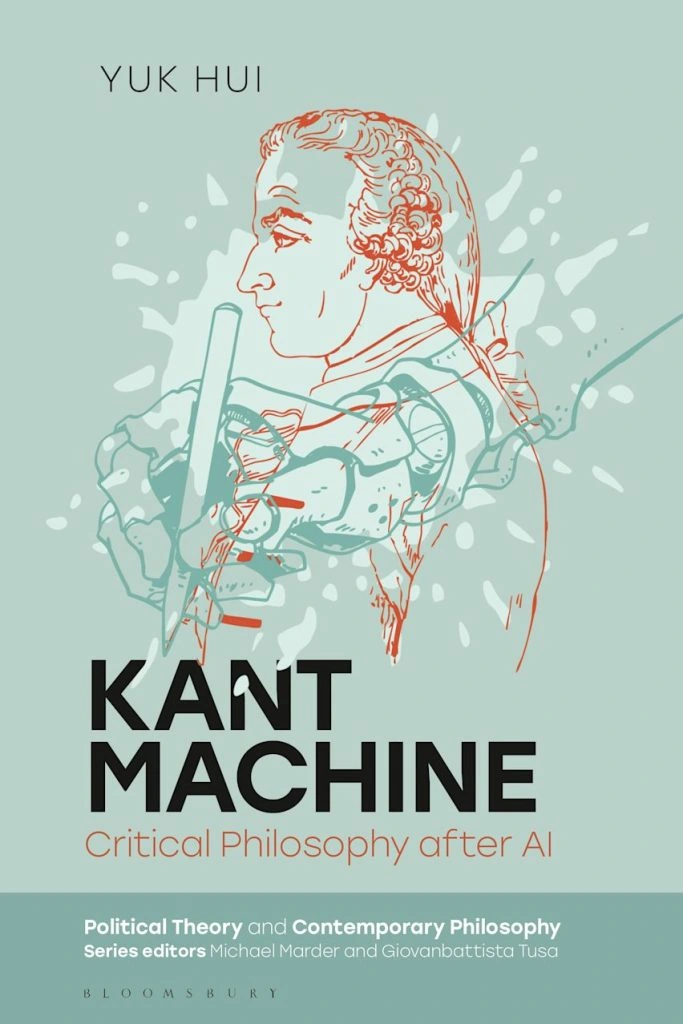
Regarding your new book, Kant Machine: we can use Kant's framework to look for a path beyond symbolism and connectionism. But when it comes to artificial intelligence, is there anything you now think Kant's framework cannot handle?
Yuk Hui
My lecture next week will also address this methodological question. We think questions like "alignment" are very new, even treating them as problems that will only arise in the future, but if you read the history of philosophy carefully, you find they have been discussed many times. In this sense, some of today's questions are actually very weak, too weak even to be taken seriously. What Kant Machine does is offer a demonstration of how to respond to the present by reading the history of philosophy.
Guosen Chen
My impression of many philosophers discussing AI is somewhat different, though. They seem too familiar with the history of philosophy as knowledge, and so tend to absorb new objects into existing frameworks. When they discuss AI consciousness and subjectivity, their approach may have nothing to do with AI itself; the argument remains valid within the discipline, but the starting point is merely a desire to say something about AI.
Yuk Hui
The problem is not that they are too familiar with the history of philosophy, because if the history of philosophy is only data and knowledge, AI knows it better than humans do. We need to return to the question raised at the beginning when we talked about Stiegler: how to read the history of philosophy, and how to understand technology. I want to make two interrelated demands. For engineers: without understanding the history of philosophy, they cannot understand the significance of artificial intelligence. For philosophers: without seriously engaging with artificial intelligence, the history of philosophy loses its meaning in the present.
Of course, you can explain in class when Kant wrote the first Critique, when he received criticism, why he published a new edition six years later, or point out a footnote no one has ever noticed. That is perfectly fine, and it constitutes another kind of contemporaneity in understanding the development of Kant's thought. But the significance of the history of philosophy for the present cannot stop at who influenced whom; it should also help us understand the development of artificial intelligence and indeed of society as a whole.
Many AI companies today want to hire philosophers, but what they are really interested in is usually just ethics. They hope philosophers will use rigorous arguments to prove that their models and applications are ethical, thereby endorsing their products. Philosophy entering AI companies in this way still does not touch the problem itself.
Guosen Chen
In our AI ethics class, the instructor once presented a so-called solution: an AI ethics and safety review model developed in collaboration with another university. I was astonished at the time. If every model has ethical problems, then who reviews the model responsible for reviewing ethics?
I didn't have this feeling when reading Kant Machine, though. This semester I reread the Critique of Judgment and also went back to the A-edition introduction of the Critique of Pure Reason, where Kant says that we would rather risk error than give up inquiring into God, freedom, and immortality, and calls this a sublime task. Later, in the First Introduction to the Critique of Judgment, I came across the "technique of nature" (Technik der Natur). This concept was originally the mediating link to purposiveness but was ultimately removed from the published introduction, and in your book you give it an important place again.
This makes me feel that Kant was fundamentally a thinker driven by moral questions. If AI develops only along an empiricist or Humean path, it cannot acquire moral capacity in the Kantian sense. The penetrating power of Kant Machine lies precisely in how it lets contemporary AI and cybernetic machines reactivate the "technique of nature." My worry is that more people will simplify this method into another kind of template: first prepare the framework of Kant, Hegel, or Confucian ethics, then put AI into it, and the problem seems solved. Could emphasizing the value of the history of philosophy, in the actual workings of academia, further reinforce the authority of philosophy?
Yuk Hui
I don't think so, at least not for me.
Guosen Chen
Certainly not for you.
Yuk Hui
This requires us to ask once again what critical philosophy is. The core question of critical philosophy is the limit, that is, the boundary. Kant wanted to know where the boundaries of scientific knowledge lie. Some things cannot be reached, such as the thing in itself (Ding an sich). If we have no idea where the limit is and yet pretend we can talk about the existence of God, such a discussion cannot hold. But as you mentioned, in the A-edition introduction to the first Critique, Kant also says that we must run the risk of error. Why? Because only if we know where the boundary is can we cross it with great care.
Guosen Chen
So in the A and B introductions, Kant carefully adjusted the position of moral philosophy relative to transcendental philosophy. His exclusion of moral philosophy from theoretical argument may have been precisely to protect God, freedom, and immortality, so that they would not be cancelled in advance by a boundary-transgressing epistemological argument.
Yuk Hui
Moral philosophy, that is, practical philosophy, deals precisely with what theoretical philosophy cannot advance any further. For theoretical reason, immortality, God, and freedom are illegitimate, because theoretical reason cannot prove that God exists, cannot prove that the soul is immortal, and cannot tell us what freedom is. What practical reason supplies is precisely how to cross the limit once Kant has set it. This crossing is not blind, arbitrary speech, because it also involves a teleological question, which is why the third Critique is needed to connect these parts.
Rather than treating Kant's framework as an absolute framework for understanding AI, we should return to the subtitle of Kant Machine: "Critical Philosophy after AI." In the age of artificial intelligence, we need to renew critical philosophy. When the epistemological foundations of critical philosophy regarding the organic, the inorganic, and mechanism are hard to sustain today, we must re-understand where the limits lie and how, like Kant, to cross them with care, continuing to ask what a better life is for humans, what a good body and a healthy body are.
Of course, many people call themselves some kind of "-ist," a Deleuzian or a Kantian. But Kant himself was certainly not a Kantian, and Marx was certainly not a Marxist.
Art, Technology, and Philosophy
Guosen Chen
Our Department of Philosophy of Art is preparing a part-time professional master's program called "Philosophy of Art and Technology & Humanities," aimed at museum professionals, graduates of art schools, and technology companies. The program presupposes that philosophy of art and technology & humanities need some shared framework of thought. But when art, philosophy, and technology are put into the same degree program, it easily becomes a matter of each taking what it needs: philosophy endorses technology and provides packaging for art; art aestheticizes technology; and technology makes the program look cutting-edge. Is there a real point of convergence among the three? Are there questions that can only be addressed through art, technology, and philosophy together?
Yuk Hui
As we said earlier, I want to argue that technology is first philosophy. If we leave the Chinese context for a moment and go back to ancient Greece, technology and art were originally the same word: technē. So technology, art, and philosophy were not separate at the beginning. Today's problem is methodological: after more than two thousand years of evolution, how do we find a method that brings the three back into relation? The development of industrial society produced many bifurcations, setting technology and art against each other; in Alfred North Whitehead's terms, this bifurcation has today even become a binary logic. Things that were once naturally joined in history now need new methods of reading and research in order to understand each other again. On the one hand, this requires historical analysis; on the other, it requires forming a forward-looking understanding of the development of technology and art.
Guosen Chen
But the fact that the three were unified two thousand years ago does not automatically guarantee that they can be reunified today. The technological conditions we live in have completely changed. Under these conditions, can we still find a basis on which art, technology, and philosophy can be rejoined?
Yuk Hui
We are already in a new era, and today's theories of technology, art, and philosophy all differ from those of two thousand years ago. For a new discipline, the most important question is how to arrange the curriculum, and how to work out a methodology as the curriculum develops. This is also a challenge for art education. Art academies often teach specific skills. Someone learns lighting, and after four years graduates able to light things extremely well, but three years later may suddenly not know what they are actually doing.
If technical education, art education, and philosophical education are brought together, developing a new curriculum will be a great challenge. Some art programs gave programming its proper place more than ten years ago, because people working in media art had to learn to code. But under today's new conditions, whether one should still learn programming, and to what extent, needs to be reassessed.
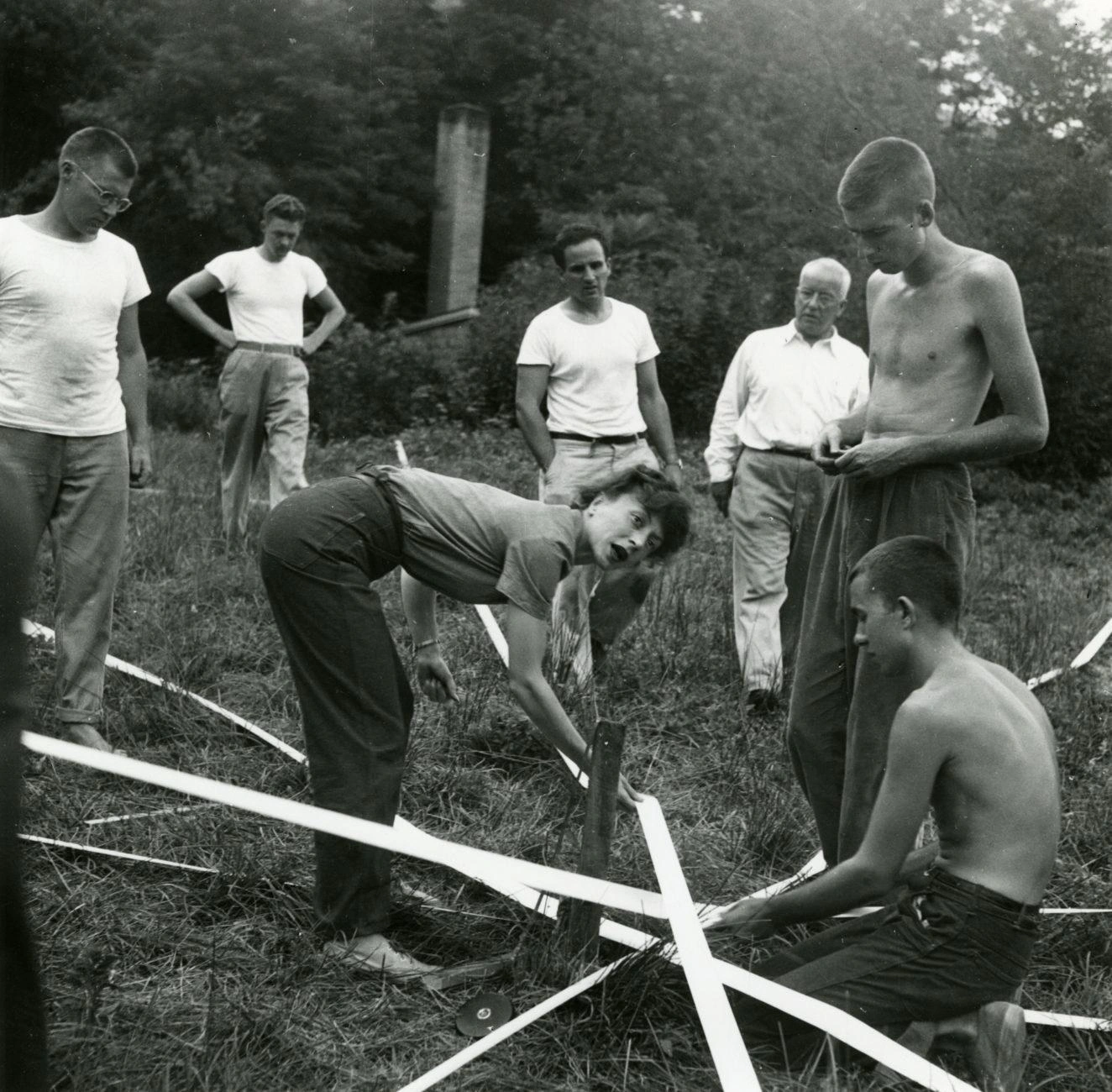
Recently a former colleague sent me a survey showing that among recent graduates in the United States, computer science majors had the highest unemployment rate and the lowest employment rate, while philosophy majors actually had a lower unemployment rate than computer science majors. We are facing a new development, and also a good challenge: how to design a curriculum that attends to aesthetics, technology, and thought at the same time. This can easily fail; one careless step and it becomes nothing at all. History offers many examples of failure, but also legendary attempts like Black Mountain College, which once brought thought, aesthetics, and technology together.
Guosen Chen
Professor Shen's vision is to build our Department of Philosophy of Art into something like Black Mountain College, though it's unclear whether he can achieve it in his lifetime.
Yuk Hui
Black Mountain College is of course a legend, and in the end it is hard to say it truly succeeded, because it was still constrained by funding and other problems. But it was indeed a remarkable experiment, involving not only the visual arts but also poetry, dance, literature, and architecture. I am very glad Professor Shen has such a vision.