
Synopsis
Since the 1990s, the question of how to narrate Chinese contemporary art has perplexed many art historians and critics, yet they have had no choice but to confront it. This reflects the identity anxiety of the age of globalization. It is also a response to forceful "interrogation" from the Western art world. For a long time, therefore, Chinese art historians and theorists worked hard to find or construct a narrative of Chinese contemporary art distinct from the West's, and this effort even became a creative driving force for many artists. In recent years, however, globalization has receded, and the Western art world has shown "isolation" and "indifference" in particular. As a result, Chinese art historians and theorists seem to have gradually lost their enthusiasm for autonomous narration, and artists' creativity has been shrinking across the board.
It was precisely this situation that prompted me to shift the focus of my research and practice toward the radical roots and historical dynamics of Chinese contemporary art. To trace this back to its origins, of course, I must return to my doctoral dissertation, Principles and Scholarly Spirit: Ideas and Historical Change in Binhong Huang's Painting Theory (1907–1954). Choosing Binhong Huang as my topic certainly carried some risk, since there was already a vast body of research on him at the time. Yet no one seemed more representative of the transition from tradition to modernity, or to offer more room for interpretation. In the dissertation, I mainly explored how Binhong Huang, a traditional literati painter of the early twentieth century, took part in the tumultuous art revolution and social revolution of his time. I also examined how the logic of his "brush-and-ink practice of the Way," or "art-action," extended into contemporary art practice. Later, I expanded the question to the whole twentieth century. Continuing along a "history-contemporary" perspective and path, I reexamined the relationships between art and the state, and between ideas and action. These reflections and arguments became Revolution of Art and Modern China: The Radical Roots of Chinese Contemporary Art, published at the end of 2020. That book took an unconventional approach. Starting from the "art revolution" and the May Fourth New Culture Movement, it proceeded through four historical perspectives and paths: "Realism and Going to the People," "Literati Art and the Chinese Revolution," "Frontier Sketching and the Nation-State," and "The Theory of Great Harmony (Datong) and Utopianism." It systematically examined the radical art reforms and avant-garde art actions in China since the early twentieth century, along with their intrinsic relationship to the complex and tortuous historical process of modern China's rise.
Revolution of Art and Modern China did make some attempts to cross media, and especially to cross time and space. The book also mentioned the "cosmopolitanism" of China's "art revolution," noting that, together with Italian Futurism, Swiss Dada, and Soviet Russian Suprematism and Constructivism, it seemed to form a picture of transnational avant-garde interaction. Still, it is not hard to see that the book's basic premise remained centered on modern China. Its entire argument unfolded around the history and art practices of China itself, at the local level. It therefore overlooked the deep interconnections between Chinese art and the art and thought of neighboring countries such as Japan and Korea, and especially of Europe and America. It also overlooked the elements and forces that sustained these deep interconnections. Over the past five years, I have therefore tried to broaden my view to the global art history of the twentieth century. Around this subject, I have undertaken a series of new reflections and writing experiments, with the aim of opening up further dimensions of the circulation of ideas and radical practices in Chinese contemporary art.
A century ago, in his Introduction to Chinese History, Qichao Liang proposed a "three-stage theory of Chinese history": "China of China" (ancient history), "China of Asia" (medieval history), and "China of the World" (modern history). "Modern history" referred to the period from the end of the Qianlong reign in the Qing dynasty up to the twentieth century in which he lived. In other words, China had already entered the world before the twentieth century. The "twentieth century" here is therefore a century of a China of the world. This means it is neither a mere container of time nor a static geographic space. It is better understood as a world cultural-political field full of tension, a "force field of globalization and localization." It is worth mentioning that this broadening of perspective owes a great deal to my study of the American journal October and the "October school."
In 2018, during a residency at the Asian Cultural Council (ACC) in New York, I completed a series of interviews and research on October. My original plan was to write a monograph on the "October school." In 2023, I published an interim result, The Promise of the Avant-Garde: Interviews with October, with Orient Publishing Center. After that, my interest gradually shifted away from the theoretical establishment of the "October school" toward the relationship between the historical avant-garde and the neo-avant-garde, and in particular toward the relationship between the avant-garde and Chinese contemporary art. This brought me back to my earlier line of inquiry, and from it I arrived at the pair of concepts "Century Avant‑Garde and Global Contemporary," which neatly corresponds to "Revolution of Art and Modern China." As the central theme and framework of this book, "Century Avant-Garde and Global Contemporary" embodies a new view of history and a new contemporaneity. It is also an exploration of art-historical methodology. So although this book's perspective and approach differ from those of Revolution of Art and Modern China, the two share the same underlying questions and point of departure.
As always, the aim of this book is not to write a new history of Chinese contemporary art. For me, opening up new dimensions of the problem and exploring paths of narration are more important, more urgent, and more feasible than writing a new art history. The choice of subjects in this book therefore depends mainly on specific questions and the concerns that accompany them, not on the established historical standing of artists and their works. The same artist or the same work may even reappear in different chapters. This is not because it is especially important, nor, of course, because it is unimportant. It simply "happens" to touch on the relevant topic.
............
Similar perspectives remain relatively rare in research on twentieth-century Chinese art history, but the discipline of history has already produced a number of fairly mature studies, although most of them, like Cohen's book, tend to emphasize synchronic frameworks. One example is Joseph Levenson's unfinished posthumous manuscript, Revolution and Cosmopolitanism: The Western Stage and the Chinese Stages. Using Chinese translations of European and American drama as examples, and working from both communist and bourgeois perspectives, Levenson explored Chinese provincialism and cosmopolitanism and the tension between them. Although he emphasized "cosmopolitanism" and "worldliness," his overall framework did not escape the binary of China and the West, or China and the foreign. His narrative logic was also basically one-directional, even though he did mention the worldwide spread of Mao Zedong Thought. By comparison, the American scholar Rebecca E. Karl's study of Chinese nationalism at the turn of the nineteenth and twentieth centuries comes closer to a global-historical perspective. She chose world history, what she calls the great world stage, as her perspective and framework. This allowed her not only to break out of linear narrative but also to move beyond the China–West binary, or the somewhat more complex China–West–Japan triangle. In her view, one consequence of global diachronic narration and practice was the West's denial of the simultaneity of the non-West. She also subjected dogmatic universality and narrow locality to profound critique and reflection. She described this as "an incoherent world striving to reconstitute itself," and argued that "it was precisely this incoherence with which Chinese intellectuals of the time often identified." The concept of "nationalism" is therefore like many of the avant-garde ideas discussed in this book, such as "qi and li," "nothingness and revolution," and "zero and purification." It is both an important driving force of modern Chinese history, or art history, and a constitutive element of global art history.
In both perspective and approach, this book comes fairly close to John D. Peters's theory of media ecology. According to Peters, every idea is permeated by a "deep ecological consciousness." Peters places particular emphasis on the concept of "communication." He argues that this idea "transcends the metaphysical barriers of the past, which held humankind to be uniquely supreme, the soul of all things, and thereby links together 'the great chain of being.' This chain encompasses everything, from DNA at the micro level to diplomacy at the macro level."
Peters's "great chain of being" comes from the book of the same name by the American philosopher Arthur O. Lovejoy, published in the 1960s. Although it is a work of the history of ideas, Lovejoy keenly perceived the cosmological, or planetary, and ecological theories in the history of Western thought. In the book, building on his critique of the "geocentric theory" of Aristotle and Ptolemy and the "heliocentric theory" of Copernicus and Kepler, he proposed a "new cosmology." In this cosmology, "other planets of the solar system are inhabited by living, sentient and rational creatures; ... the physical universe is infinite in spatial extent, and solar systems are infinite in number." He argued that "the change from the geocentric to the heliocentric system was far less important than the change from the heliocentric system to a system with no center at all." Lovejoy dismantled all "centrisms" and proposed that the universe is one vast "chain of being." Within it, "man's duty is to 'keep his station,' not to attempt to transcend it." Any "coveting or imitating of the attributes and distinctive activities of a being higher in the cosmic order is as 'immoral' as descending to a lower rank in the scale of being." As one link in the chain of being, or of ecology, humans, in Lovejoy's view, possess no superiority, much less occupy the center. Here Lovejoy had already touched on the tendencies of "animism" and "object-oriented ontology." This book, however, does not go that far. Although it too advocates decentering, it does not reach the point of "dehumanization." I firmly believe that human beings have always been the principal agents of twentieth-century avant-garde practice and the source of its energy.
Here we might borrow Dan Perjovschi's illustration for Claire Bishop's Radical Museology. It seems to show more vividly the two different views of history described above. The "New Museum" stands for the radical, novelty-seeking "century avant-garde," while "History" stands for the rotating, synchronic "global contemporary." In my view, however, the two are no longer separate. They form an active overlapping and mixing, and I do not avoid their contradictions and conflicts. I even deliberately expose them.
Needless to say, in an age like ours, with its extremely low tolerance for error, writing in this way amounts to an "adventure." What is certain, though, is that at a moment when art history, art theory, and the humanities as a whole are mired in crisis, systematic reflection and self-examination matter greatly. Recent European and American art history has shown the same tendency. Taking a courageous step forward on that basis seems especially important and urgent. The aim of this book, therefore, is not to fill gaps in knowledge. Rather, it hopes to achieve breakthroughs in its view of history, its understanding of contemporaneity, and its methodology, which were one and the same to begin with. This book seeks to construct a global art network and an ecology of interaction, in order to reveal in depth the complex relationships of interconnection, rupture, conflict, and mutual overcoming between Chinese contemporary art and the contemporary art of different countries and regions such as Europe and America, Soviet Russia, Japan, and Korea. What it ultimately presents is not a static, objective analysis or a historicizing description. It is an open process of change, one that even "sweeps up" this act of writing itself: a "matrix." Of course, I am well aware that, given the limits of my current scholarship, I cannot yet reach this ideal goal.
—Excerpted from the Introduction, "'The Twentieth Century' as a Horizon: Retelling Chinese Contemporary Art"
Table of Contents
001 Introduction
"The Twentieth Century" as a Horizon: Retelling Chinese Contemporary Art
005 I. After "Revolution of Art and Modern China"
010 II. "Century Avant-Garde" and "Global Contemporary"
015 III. The Recurrence of the "Avant-Garde" and the Resetting of the "Contemporary"
Part One: Idea · Action · Politics
025 Chapter One
"Qi" and "Li": The Spiritual-Political Potential Energy of the Historical Avant-Garde
028 I. "Rhythm," "Empathy," and the Potential Energy of the Historical Avant-Garde
036 II. From "the Spirit of Metal and Stone" to "the Beauty of Force": Stele Studies, Woodcuts, and Revolution
043 III. The Fusion of "Qi" and "Li": Constructing an "Avant-Garde Ontology"
049 IV. After the Avant-Garde: The Rise and Fall of "Li" and the Media Ecology of "Qi"
054 Concluding Remarks
063 Chapter Two
The Revolution of "Nothingness": The Transnational Interaction of the "Monochrome" Avant-Garde
065 I. Monochrome Painting: (Anti-)Abstraction and (Anti-)Dadaism
081 II. The "Monochrome Body": From the Material to the Immaterial
090 III. The Substrate of "Nothingness": Freedom, "Overcoming," and Revolution
102 Concluding Remarks
107 Chapter Three
The Expedition of "Zero": "Purification" and Its "Via Negativa"
110 I. "Purification," Negation, and the Revolutionary Politics of the Historical Avant-Garde
120 II. "Nothing" Is "Everything": The "Purification" of the Neo-Avant-Garde
132 III. "Everything" and "Transparency": The "Purification" of the Pond Society
140 Concluding Remarks
Part Two: Institution · Audience · Ecology
147 Chapter Four
Critique and Beyond: Positivism, Poetic Deconstruction, and Cosmology
149 I. Institutional Critique Based on Positivism
156 II. "Reified Tautology" and Poetic Deconstruction
163 III. Materialist Reduction and Cosmology
170 IV. The Body, Media-Politics, and Cybernetics
184 Concluding Remarks
195 Chapter Five
From "Offense" to "Care": The Politics of Performance and the Power of the Audience
201 I. Futurism: Avant-Garde Performance That Offends the Audience
204 II. Neo-Avant-Garde Performance and the Revolution of Everyday Life
210 III. The "Care Turn" in Contemporary Performance Art
218 IV. From "Rebellion" to "Sitting and Forgetting": Performance and Symbiosis
229 Concluding Remarks
235 Chapter Six
"Nature" as Medium: How Does Art Imagine and Intervene in Ecology?
242 I. Expanding "Ecology": From "Water Protectors" to "Water Bodies"
254 II. "Dream" and "Shamanism": The Matrix of "Spirit-Medium Possession" and Surrealism
267 III. The Politics of "Nature": Ecological Warning and Artistic Intervention
275 IV. The Return of the "Primitive": From "Magiciens de la terre" to "Animism"
286 Concluding Remarks
291 Epilogue
Exception, Frontier, and the South: From "Avant-Garde Guerrilla Warfare" to "Radical Ecology"
294 I. From "Guerrilla Warfare" to the "State of Exception": Schmitt, Agamben, and Huang Yong Ping
303 II. The Topology of "Territory": From Geopolitics to "Radical Ecology"
312 III. The "Care Turn," "Weak Universalism," and the "New Southern Narrative"
318 IV. The "South" as Matrix: From "Infrastructure" to "the Great Chain of Being"
323 Concluding Remarks
326 Bibliography
343 Afterword
Book Information
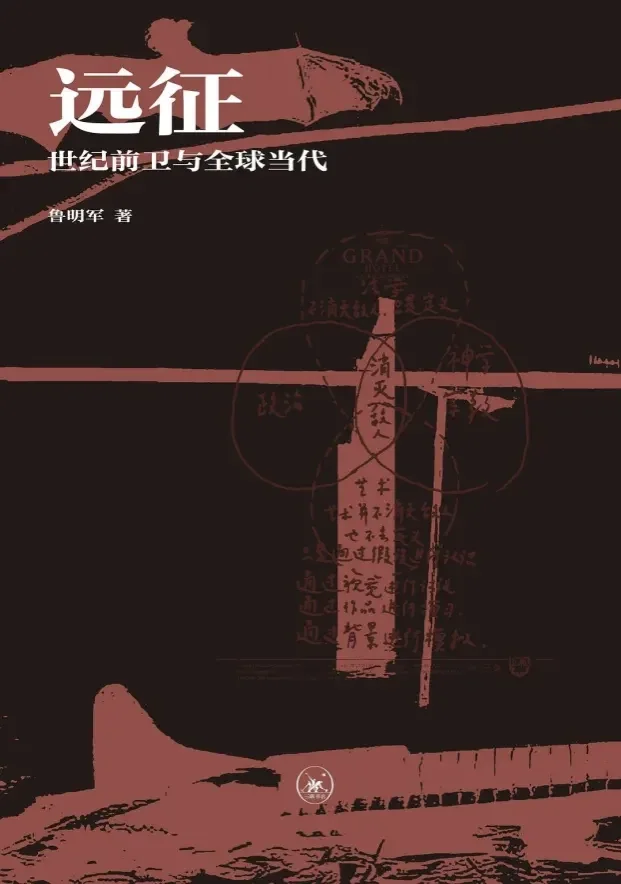
Excerpt
One day in 1953, the twenty-eight-year-old Robert Rauschenberg summoned his courage and knocked on the door of the studio of the older artist Willem de Kooning. He made an unreasonable request: he hoped de Kooning would give him a drawing, which he planned to erase with a rubber eraser, destroying it. De Kooning looked at the nervous, anxious Rauschenberg and was somewhat puzzled, but in the end he agreed. Rauschenberg received a small work on paper drawn in crayon, pencil, and charcoal, with a few traces of oil paint. As they parted, de Kooning warned him that erasing the image might not be so easy. And so it proved: it took Rauschenberg nearly two months to barely erase the contents of the drawing. When the erasure was finished, he titled it Erased de Kooning Drawing (1953).
In fact, if we think back to Rauschenberg's earlier "White Paintings" series (1951)¹, it is not hard to see that this act was never simply a Dadaist act of destruction. The "White Paintings" can be regarded as a "precursor" of "Minimalism," although Rauschenberg did not go on to become a Minimalist. We could, of course, see them as a summoning of, and a response to, the monochrome tradition of the historical avant-garde, as in Malevich's Black Square, Red Square, and White on White. Fundamentally, however, they stemmed more from a negation of, and departure from, Abstract Expressionism and Greenberg's formalism. Here, "the white matrix of the picture's surface, like a wasteland, becomes an all-encompassing repository, proclaiming its supremacy over those bombastic and ultimately arbitrary brushstrokes."
In fact, the real challenge to Abstract Expressionism came not from Rauschenberg, nor from Johns. It came, rather, from Greenberg's own theory of "the blank canvas," which he derived from formalism. As the name suggests, the "blank canvas" is itself a form of "erasing" or "purifying." In 1962, Greenberg published "After Abstract Expressionism." In it he wrote: "The irreducible essence of pictorial art consists in but two constitutive conventions or norms: flatness and the delimitation of flatness; ... Thus a stretched or tacked-up canvas already exists as a picture—though not necessarily as a successful one." Greenberg had assumed that the "blank canvas" represented formalism's ultimate reduction. What he did not foresee was that once it became a blank canvas, it was no longer a pure medium. It had become an object of everyday experience. In other words, once painting is "purified" to the extreme, it is no longer painting.
Two months later, in another essay, "How Art Writing Earns Its Bad Name," he offered a further defense of formalism, but was also forced into a new retreat: "For anyone who deals with flat surfaces, it has now been shown that art is practically inescapable, even if it is mostly bad art." It is no coincidence that this was also the year in which Donald Judd, a leading figure of Minimalism, began making three-dimensional works. Greenberg had meant the essay as a defense of formalism, but together with Judd he ended up opening the way to Minimalism. Here he not only put forward the important notion of the "blank canvas," which to some extent marks the self-dissolution of the formalist theoretical model, but also drew a distinction between painting and art. This distinction also fits the difference between de Kooning and Rauschenberg: if de Kooning was making paintings, then Rauschenberg was practicing art.
Although Greenberg was the implicit target of Rauschenberg's "erasure," the two ultimately arrived at the same destination by different routes. Both used art to achieve the "erasure" and "purification" of painting. From then on, art replaced (flat) painting and expanded into sound, video, installation, performance, the conceptual, and all kinds of other media, launching a new art movement: the Neo-Avant-garde. Nor did "purification" end there. It even became one of the important ideas of the neo-avant-garde movement, and it still appears frequently in artists' practices today.
"Purification" was not Rauschenberg's invention, nor Greenberg's. It is an ancient theory of art and aesthetics. As early as ancient Greece, people spoke of art purifying the mind and purifying the soul. After the twentieth century began, however, "purification" gradually shifted from a functional theory rooted in religion, ethics, and aesthetics toward the revolution and evolution of art itself. Moreover, in different historical periods and different religious, cultural, and linguistic contexts, thinkers and artists did not use "purification" in the same way. The terms include "catharsis," "Reinigung," "Purificazione," "Épuratio," "depurazion," and "clean." In view of the distinctive revolutionary-political context of the twentieth-century avant-garde, this chapter does not distinguish among them in detail. Instead, it treats "erasing," "destroying," "negating," "disintegrating," "disappearing," and "cleansing" as, broadly speaking, artistic methods and political strategies. For this reason, "purification" may look like a revolution internal to art or art history. In reality, the revolution is not confined to art; it carries different political implications. The "purification" of the historical avant-garde, for example, was itself a revolutionary politics.
I. "Purification," Negation, and the Revolutionary Politics of the Historical Avant-Garde
In 1909, Marinetti wrote in "The Founding and Manifesto of Futurism":
We will glorify war—the only means of cleansing the world—militarism, patriotism, the destructive acts of anarchists... We will destroy all museums, libraries, and academies... Our aim is to cut out the stinking gangrene of professors, archaeologists, tour guides, and antiquarians growing on the body of this nation...
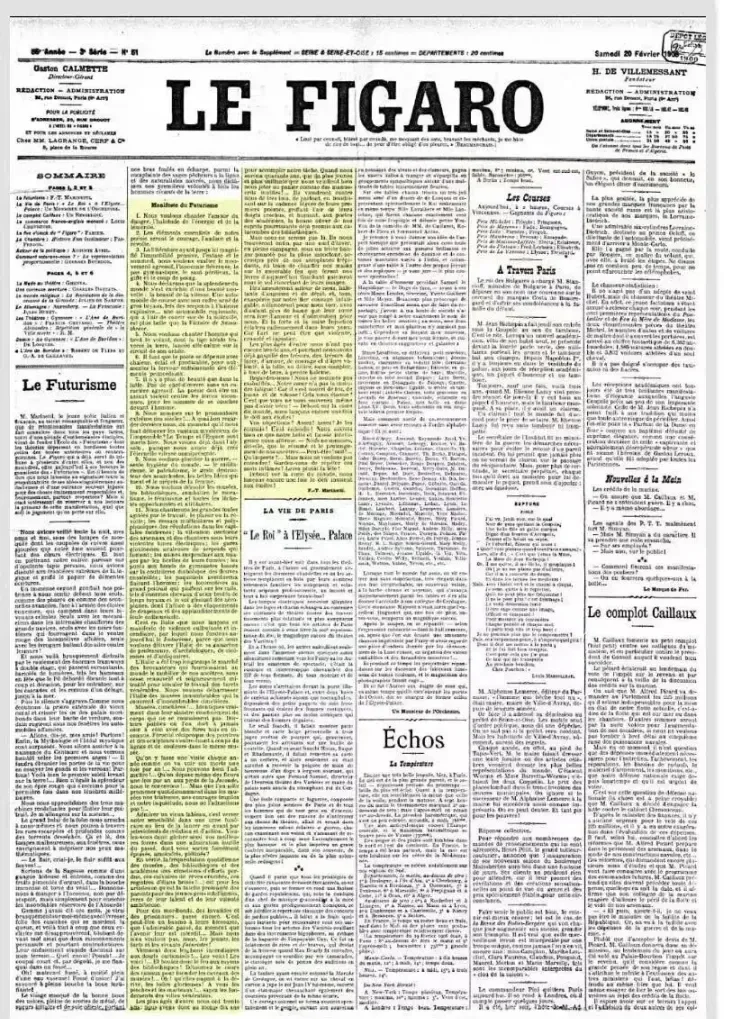
"Cleansing," "destroying," "cutting out": these radical words of "purification," which today seem extremely politically incorrect or even heretical, recur throughout Marinetti's manifesto. Their target was clearly not art alone. They reached into the broad fields of culture, society, and politics, and indeed into everything. The Futurists openly proclaimed a program of renewing everything. For them, everything in the past was rotten, decadent, and urgently in need of change. As artists, however, when it came to actual works, they still used three traditional media: painting, sculpture, and theatrical performance. Their real breakthroughs and innovations lay mainly in subject matter and form.
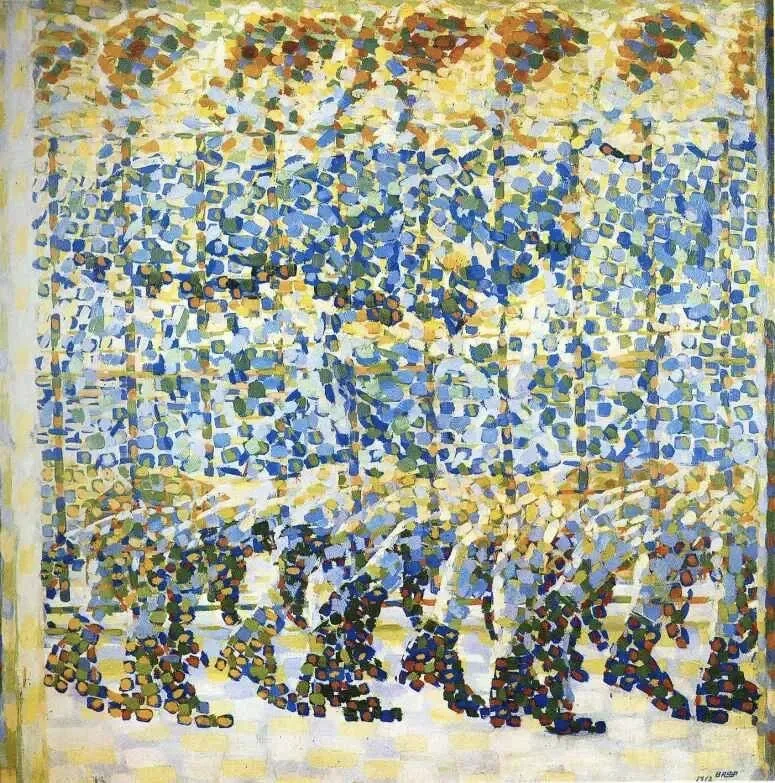
The "machine-human" was the Futurists' principal subject. This stemmed from their absolute faith in machines and technology: they firmly believed technology could lead them out of the old world and into a new one. Technology here was both a means of change and a symbol of the new world. A typical example is Giacomo Balla's painting Girl Running on a Balcony (1912). The work depicts a girl in the act of running. Balla adopted the pointillist technique of Neo-Impressionism, arranging colors in an orderly way with block-like brushstrokes of nearly equal size to shape the image of the girl in motion. What he depicts here is less the image of a running girl than the process and duration of running. The girl's body, along with the entire scene, is broken down into atom-like dots of color. At the same time, the faintly discernible form of the body and the process of motion are abstracted into an orderly, evenly distributed matrix. This is a double motion: the surging of atom-like dots and the movement of the girl's body remain unified while also pulling against each other. One could therefore say that this is the artist's Futurist transformation of Pointillism.
At its root, the painting's composition derives from the motion-photography experiments of the late nineteenth-century French scientist and photographer Étienne-Jules Marey. Marey was initially inspired by Eadweard Muybridge's sequential, frame-by-frame motion photography. In Marey's hands the technology became more mature and truly achieved continuous capture, and he formally named it "chronophotography." Balla borrowed Marey's composition. More precisely, he saw in it the possibilities opened up by technology, such as "aerodynamics." Pointillism, of course, was originally also a scientific technique, a technique of light and color that sought objectivity and neutrality. Balla seems rather to have used the collision and fusion of these two techniques to distance himself completely from traditional painting. The picture thus contains multiple layers of "purification." Pointillism's dissolution of the human figure and pictorial composition is one layer of "purification." The "sequential image" is another "purification," this time of the aesthetic structure and spatiotemporal order of classical painting. If there is a further layer, it is undoubtedly the "purification" of bourgeois culture and politics. Perhaps for this reason, "they enthusiastically affirmed the necessity of combining art with advanced technology (even the technology of war), and thereby paved the way for fascism." As is well known, one of fascism's core tenets was "purification," that is, the elimination of all dissidents and outsiders, as in the massacre of Jews. It is said that a fascist organization in the Netherlands at the time designed its emblem as a broom, representing its ideal of "purifying" society.
Needless to say, this is also why Futurism has always been criticized. Comparatively speaking, though, it was not Futurist painting and sculpture that truly took part in the fascist movement, but the even more radical theatrical performances. These performances broke every theatrical convention and were intensely subversive. Of all theatrical genres, Marinetti especially favored the variety theater, because it was primitive and naive, often marked by a sense of the unexpected and by simplicity. The Futurists thereby "utterly destroyed the sacred, the solemn, the serious, and the sublime in Art with a capital A," aiming to liberate intellectuals from stale, decadent, pacifist ways. If painting and sculpture still retained, to some extent, traditional media and formal languages, then in these theatrical performances their aim was a more thoroughgoing revolution and "purification."
Claire Bishop regards this as a "via negativa." The widespread despair over capitalism during the "Great Depression" was a driving cause of Futurism's emergence. For that very reason, it also became for a time a foundation for Mussolini's political program and for fascist ideology. As Benjamin put it: "Fascism is a political form that allows the masses to participate in, and take pleasure in watching, their own destruction." Both Futurism and Dada resorted to destruction. Unlike Dada, however, Futurism did not treat "negation" or "purification" itself as its ultimate goal, because it also promised a better future. In a purely revolutionary sense, of course, this promise was not important. This is also what distinguishes it from Russian Suprematism, which likewise appealed to "purification" and revolution.
Shortly after Marinetti's manifesto was published, it was translated into Russian. At that time, however, Cubo-Futurism had already appeared in Russia. Some say that Marinetti visited Russia between 1909 and 1910, when he was touring European countries to promote his newly formed Futurist ideas. This claim has not been confirmed, but it is certain that he went to Moscow in 1914, where he was attacked by the Russian Futurists. Marinetti was unimpressed and replied: "The Russians are false Futurists. Through Futurism the world was to be made new, but the Russians have misunderstood this devout belief." The Russian Futurists were equally dismissive. They never acknowledged that Russian Futurism originated in Italy or Western Europe, insisting instead that it sprang from their own history. The most important factor was a series of small exhibitions, mainly of "Cubo-Futurism," led and organized by Mikhail Larionov between 1907 and 1913. These exhibitions profoundly influenced the later "Suprematism" and "Constructivism."
The art historian Camilla Gray noted that without the "Cubo-Futurism" pioneered by Larionov, it is hard to imagine Malevich and Tatlin achieving their historic results. It was under this influence that, between 1911 and 1913, Malevich produced a series of paintings in the "Cubo-Futurist" style. The Woodcutter (1911) and Haymaking (1911), for example, are his earliest works in a Futurist style. They look no different from Fernand Léger's Cubo-Futurism. In fact, Malevich's style took shape two years earlier than Léger's. The logic by which he constructed abstract images, however, had already moved beyond Analytic Cubism.
From the standpoint of "purification," of course, the real response to Italian Futurism came not from Russian "Cubo-Futurism" but from "Suprematism." "Suprematism" advocated an anti-material, anti-utilitarian philosophy. From then on, art no longer served religion or politics, no longer depicted truth, and was even completely separated from objective materiality. Art believed it could exist apart from things: art for art's sake, or the supremacy of art. In form, "Suprematism" clearly went further than Futurism and was more uncompromising. Malevich sought to purge art of all objects and recover "pure art." What he called the "non-objective world," or "dehumanization," was the ultimate goal of "Suprematism." He said: "The philosophy of Suprematism is skeptical of both, whether the mask or the 'true face,' because it fundamentally doubts the reality of the human face (as constructed by humans)." As Black Square, Red Square, and White on White show, Malevich set out to doubt and "purify" everything that existed, everything to do with human beings and human nature.
In December 1915, "0,10: The Last Futurist Exhibition of Paintings" was held in Petrograd. At this exhibition, Malevich formally announced his "Suprematist system." He showed thirty-five abstract paintings. Although none was titled "Suprematism," together they constituted "Suprematism." The most important position in the exhibition went to a painting called Black Square. It hung at the top of the corner, replacing the religious icon traditionally displayed there in Russian homes. Whether or not the surrounding works with their Cubist overtones were meant to present a gradual process of "purification" and "purification into purity," the arrangement is enough to show that the ultimate goal of "Suprematism" was "nothingness" or "everything." Gray believed that this method of painting as "pure sensation," which is how Malevich himself defined "Suprematism," reached its end in his famous "White on White" series. By then all color had been eliminated and form had been reduced to its purest state. In fact, however, the most thoroughgoing "purification" was not White on White but Black Square. The true "revolutionary" was Black Square, not White on White or anything else. Without Black Square, there could have been no Red Square, no White on White, and nothing else.
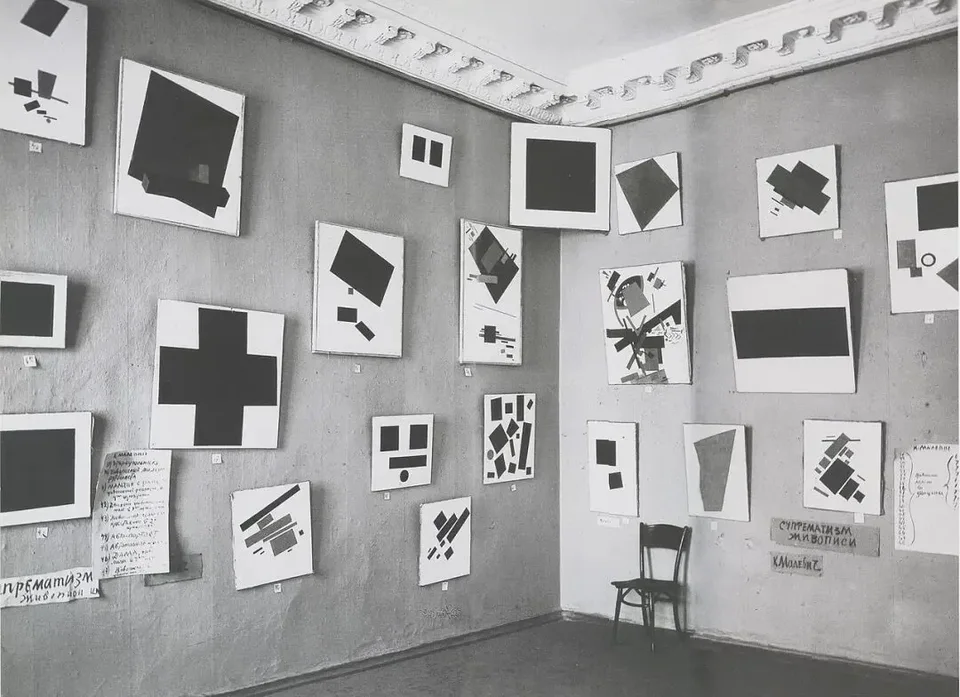
This may be why he named the exhibition "0,10." As for what the title meant, some researchers have pointed out that "0" was the title of a journal Malevich planned to publish, and it also stood for his ideal. In a 1915 letter to Mikhail Matiushin, he mentioned this journal and explained that the "10" following the "0" represented ten artists closely associated with him. Clearly, the "0" here means "returning to zero," the "erasure" of everything and total "purification." By contrast, the "10" symbolizes everything, the whole, and the infinite. This polar tension and revolutionary consciousness found full expression in Malevich's Black Square. In his book On New Systems in Art (1919), Malevich wrote:
Abolish the old world of art bring its depiction under one's own control Solution A: by adopting my position on the concise image of the Suprematist square—the most perfect expression of the present age—I have given the square a life of its own, making it the foundation for the effective development of its own vitality.
Malevich's revolution was almost simultaneous with the Russian Revolution, but he was not a communist. For precisely this reason, from the day Bolshevik Russia was born in 1917, Malevich and his "Suprematist" movement were smeared and accused. From 1919 to 1921, he was accused of taking part in subversive anti-state activities and was subjected to oppressive and humiliating scrutiny by local authorities. El Lissitzky, once Malevich's comrade-in-arms, understood this deeply. In a 1920 manifesto, Lissitzky even argued that "Suprematism" was a higher stage of human collectivism.
This also shows that what stood closer to "Suprematism" was not so much communism as "Cosmism." It is no coincidence that for Nikolai Fedorov, the goal of "Cosmism" was to rewrite the Book of Revelation and to re-establish humanity's origins and its future of immortality. Likewise, "Suprematism" was closer to a divine revelation, a mysticism akin to icon worship. Scholars have long noted that Russian Cosmism's visions of a future utopia had a far-reaching influence on both the Russian proletarian revolution and the avant-garde art movement. "After 1915, the monochrome geometric forms in the works of Suprematist artists were precisely a symbolic metaphor for Cosmist thought. These forms sought to convey the continuity of space and time and to create a 'world without objects,' in resonance with the vast spatial scale of the cosmos."
As Boris Groys put it: "Malevich's Black Square is the most radical gesture of accepting revolutionary destruction. It announced the death of all cultural nostalgia; every emotional attachment to past culture vanished into thin air." In this sense, Black Square is also like "an open window through which the revolutionary spirit of radical destruction could enter cultural space and reduce it to ashes." Without doubt, this is an absolute "purification," a thoroughgoing revolution. It appears to cover over the icon, and over every tradition and convention of painting. In essence, though, it is both a covering and a destruction: he smelted every icon and every painterly tradition into countless particles of black matter. In this sense, one could say that materialism formed the bedrock of Malevich's thought and art. He keenly perceived a "destructive force": "The fate of art is no different from the fate of anything else. The common reality they face is transformation, disintegration, and disappearance amid the flow of material forces and uncontrollable material processes." In the end, the image is reduced to the "black square," or to black matter. Like the Futurists, then, Malevich also appealed to motion. The difference is that the Futurists' motion moved from the inside out, while his moved from the outside in.
Futurism's "purification" used machines and technology to promise a beautiful new world. In Suprematism, by contrast, "purification" was itself the goal: "Radical, revolutionary art abandons all goals and enters a non-teleological, infinite process whose end the artist cannot and does not wish to reach." Malevich even at one point described this as "nothingness," a transcendental "nothingness" and "purification." Benjamin also mentioned "purification" in "On the Program of the Coming Philosophy." He wrote: "In the purification of epistemology, not only must a new concept of knowledge be established on the basis of the relation between knowledge and experience discovered by Kant, but a new concept of experience as well." Then "the task of the coming philosophy can be conceived as the discovery or creation of that concept of knowledge which, by relating experience exclusively to transcendental consciousness, makes not only mechanical but also religious experience logically possible," that is, "knowledge makes possible the experience and doctrine of God." Benjamin was discussing epistemology rather than painting or art, but his underlying logic is the same as that of Malevich's "Suprematism." For Malevich, the "nothingness" of Black Square made everything possible. It is in precisely this sense that Suprematism and Dada reached the same destination by different routes. For Dada, too, revolution was an end in itself. Duchamp's readymades, for instance, both destroyed the tradition of painting and opened up infinite possibilities that could not yet be named.
From Marinetti's publication of the Futurist manifesto in 1909 to, at the latest, the end of World War II in 1945, the historical avant-garde lasted only a brief thirty-odd years. Some movements survived for less than twenty years, and some were essentially over within a few years; Suprematism, for example, was soon replaced by Constructivism. It should be remembered that they lived through the two world wars, the most turbulent, most violent, and most brutal of periods, along with the Russian Revolution. It is thus easy to understand that their ideas and actions were both art's response to revolution and war and, one could say, products of revolution and war. Facing moments of despair, they did not flee. Instead, they chose to respond in the most violent way possible. In the entire history of twentieth-century art, they were undoubtedly the most political and partisan of art movements, and their artistic practices were consequently highly revolutionary, political, and ideological. To bid farewell to the old order, they resorted to total "purification." The outbreak of war and suppression by hostile forces put an end to their later actions. In reality, however, their revolution had already been accomplished before the war and before the suppression. In other words, when Marinetti issued the Futurist manifesto, when Malevich completed Black Square, and when Duchamp's Fountain (1917) was successfully exhibited, "purification" and revolution had in fact already been realized. The new world had already arrived.
—Excerpted from Chapter Three, "The Expedition of 'Zero': 'Purification' and Its 'Via Negativa'"