
Abstract
Photography’s identity is defined as Hermes due to their shared mediatory nature, aligning photography with relational aesthetics. As a provisional product of the photographic process, the photograph, through its indexicality, bears witness to the past. This indexical quality signals a causal relationship between the photograph and its referent and establishes relational ties between the user, the photograph, and its referent. However, the openness of meaning introduced by multiple actants—human and non-human alike—complicates this dynamic. Lévinasian diachronicity further destabilizes this relationship, emphasizing the temporal dimension of deferred understanding. Photographic archives, designed as mnemonic tools to counter fragile memory, paradoxically document failure, absence, and loss. Thus, they often invert their function, shifting from preservation to documenting irretrievable gaps. The validity of these archives depends on the authority of at least one actant, without which they cannot shape collective memory. This dependency makes “reading archives from below” not merely interpretative but an act of seizing power. Such a reading echoes Hermes’ mythological role as a figure of cunning and usurpation, further cementing photography’s mediatory identity.
Keywords: Hermes, archive, memory, photography theory

Da plötzlich war der Bote unter ihnen,
hineingeworfen in das Überkochen
des Hochzeitsmahles wie ein neuer Zusatz.
Sie fühlten nicht, die Trinkenden, des Gottes
heimlichen Eintritt, welcher seine Gottheit
so an sich hielt wie einen nassen Mantel
und ihrer einer schien, der oder jener,
wie er so durchging.
Alkestis, Rainer Maria Rilke
(Can you ever really know someone from a photograph?) Think back to childhood. Can you remember it? Or do the images that come to mind resemble the photographs you have been shown of your childhood? Has photography quietly replaced your memories with its own?
Forget Me Not: Photography and Remembrance, Geoffrey Batchen
Death Archives
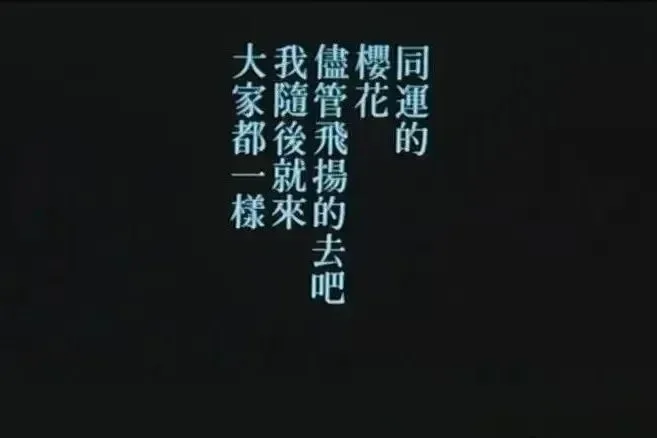
In the history of Taiwanese cinema, Hou Hsiao-hsien’s A City of Sadness unfolds a narrative about a “lost history.” The film speaks through a cold, literary quietness. Each time I revisit it, I sense, in Hou’s detached and contemplative long shots, a cruel historical progression reflected with extreme restraint. A cruelty conveyed silently. Quietly. Twice in the film appear these lines of poetry: “Cherry blossoms of the same fate,/scatter if you must./I shall follow soon./We are all the same” (同運的櫻花儘管飛揚地去吧/我隨後就來/大家都一樣。). This pain, like Wen-ching’s voicelessness, remains unspoken. A City of Sadness portrays the February 28 Incident of 1947. It’s a mass uprising in which Taiwanese society openly rebelled against the Kuomintang regime and was subsequently bloodily suppressed. In 1949, the Republic of China government relocated to Taiwan, imposing martial law across the island. Then, from the 1950s onward, Taiwan entered the period known as the White Terror. Authorities began systematically persecuting dissidents, leftists, intellectuals, students, and ordinary citizens.
During the White Terror era of the 1950s and ‘60s in Taiwan, countless political prisoners opposing the Kuomintang regime were executed in prison. Farewell letters penned by these prisoners were seized and retained by the archives bureau, withheld even from their families. The authoritarian government not only deprived them of the right to life but also of the right to bid farewell to loved ones. Not until the establishment of Taiwan’s nongovernmental Truth and Reconciliation Promotion Association (TRPA) in 2007, and through a series of arduous efforts, did Taiwanese authorities begin in 2011 to review and gradually return these victims’ final letters. These letters, with their multitude of written and photographic records, arrive as failed messages, reaching their recipients belatedly, transformed at the moment of arrival into symptoms without remedy. Each time they are opened, they testify anew to the existence of trauma, an experience pushing us to the limits of understanding. For the bereaved, the traumatic event—the act of killing itself—does not suffice to define or wholly explain the symptoms of the traumatized; rather, “the event is not assimilated or experienced fully at the time, but only belatedly, in its repeated possession of the one who experiences it. To be traumatized is precisely to be possessed by an image or event.” (Caruth 1995, 4) This suggests that memory of the past reinforces the traumatic experience, which is not only evoked by the image of the victim’s face but also encapsulates specific temporal and spatial features fixed upon the photograph. The act of witnessing, however, occurs within the relational spaces of survivors, listeners, and the public. Thus, the process of bearing witness to the past is one of transferring private, internal trauma into the collective memory of the external world—an endless loss that cannot be undone. Through TRPA’s efforts in the first decade of the 21st century, the archives of these political prisoners finally resurfaced. “The letters have finally been delivered,” said the TRPA chairman, “and Taiwanese society is only now beginning to remember them.” (Cangyi et al. 2015, 15)
Some photographs from the archives have drawn my attention. One set consists of images taken before and after executions, captured by photographers from the military justice department; another set comprises family albums that these disheartened souls in prison created based on photographs sent by their loved ones. The very existence of these images opens up a space of intersubjectivity, allowing those who could not directly witness or participate in these events to nonetheless bear witness to the suffering of those photographed—even if only from a considerable distance. But the messenger arrived too late; what might have been a moment of solace has now transformed into an echo of loss. Meanwhile, the restoration and reconstruction of these repressed personal memories offer us the possibility of understanding a particular version of collective memory.
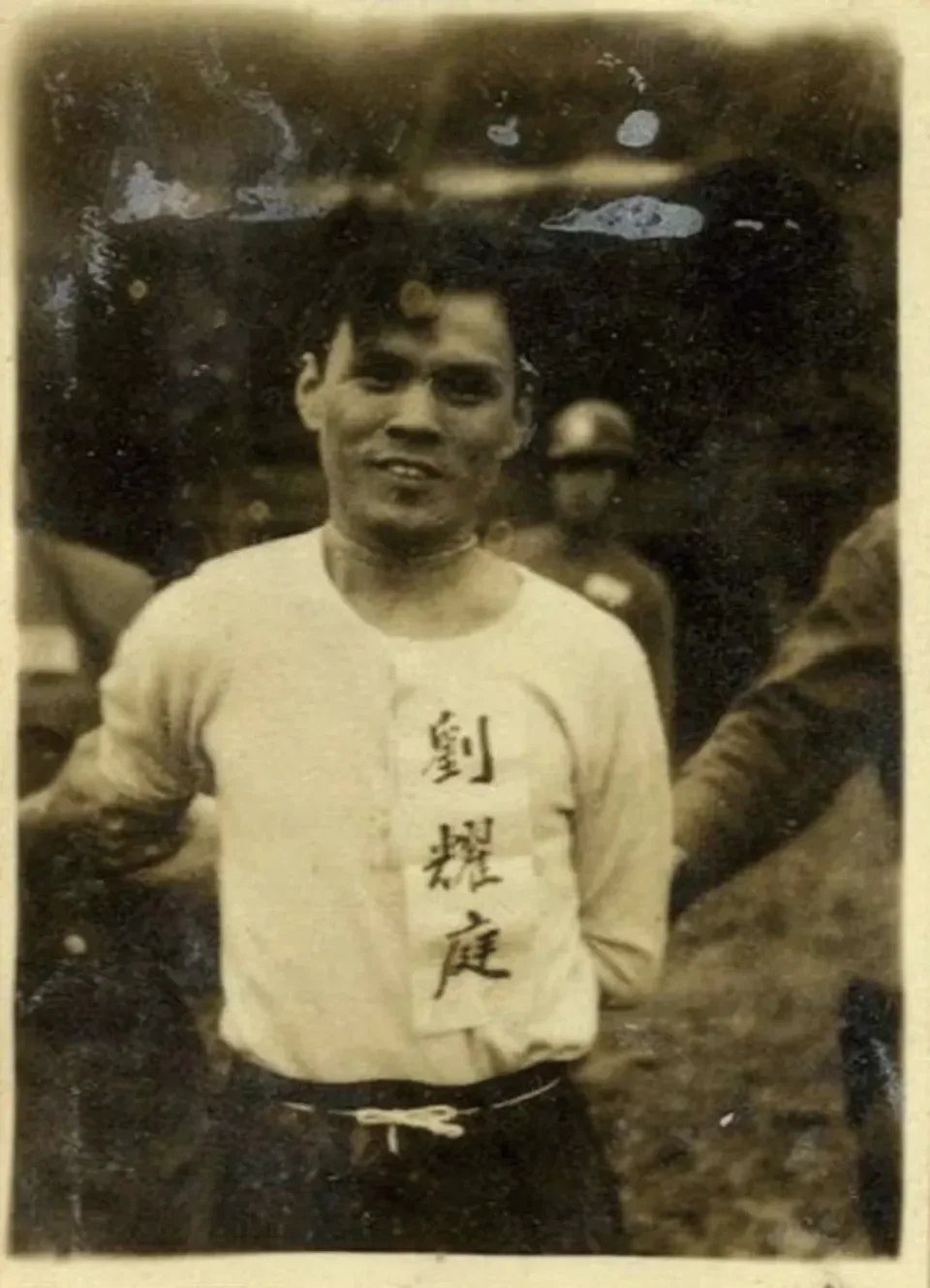
Among the archives provided by the TRPA, the photos of those sentenced to death, taken by their executioners, are of the most morally troubling type. In the case file of “The case of the Da’an Printing Factory Branch of the Taipei City Workers' Labour Committee of the Provincial Labour Committee,” Liu Yaoting was secretly executed on January 29, 1954—one day after his wedding anniversary with his wife, Shi Yuexia—for joining an underground Communist Party organization in Taiwan, printing the “March of the Volunteers (National Anthem of the Republic of China),” and circulating other Chinese Communist Party (CCP) documents. During the 15 months and 12 days from his covert arrest until his death, Liu was denied any contact with his wife. All arrests and trials in those years were conducted in secrecy, with all communications strictly controlled. For his relatives, the only official correspondence they could expect—apart from routine package receipt notifications—was the final “corpse claim notice.” Liu wrote several letters to his wife from prison, the first requesting her photograph, with the aim of assembling his own family album. Authorities took a photograph of Liu before his execution (Fig. 1) and sealed it in the archives. In this photo, intended as a conclusive record of the execution, Liu wears a white crew-neck shirt, his trousers tied at the waist with a cotton band. He appears completely relaxed, even smiling despite being bound by soldiers as if heading not toward death but rather toward some promised future. Roland Barthes once relied on “identification” to uncover the “punctum” of a photograph. (Barthes 1981) Apparently, Camera Lucida seems to draw a distinction of punctum between two aspects: detail and temporality. They roughly correspond to the book’s two parts. It is the latter, of course, that provides the ground for mourning. And yet, as Margaret Olin (2012, 51–70) rightly observes, the true punctum is defined precisely by what “never any scrutiny.” It escapes inspection. It eludes sight. In fact, the so-called punctum—for Barthes, the braided gold necklace of his aunt Alice—does not even exist within the VanDerZee photograph he shows us. This is deliberate. The punctum is not in the photograph as detail. It lies outside it. Only this logic can explain why, on the opening page of Camera Lucida, Barthes dedicates the book “In homage to L’Imaginaire by Jean-Paul Sartre” (Barthes 1981). And only this explains Barthes’s own remark that the book adopts a phenomenological method. Following this approach reveals that the “punctum” in this photograph is not in Liu Yaoting’s seemingly incongruous expression but in the identification tag clearly visible on his chest: the character “廷” in his name was mistakenly rendered as “庭.” Yet, from the indictment to the official confession, judgment, property inventory, and seizure certificate, every document connected to his case preserved this error. The absent character “庭“ is the punctum of this photograph. Here, the function of a name as a basis of self-identity breaks down, and the image, to those in power, becomes what Harun Farocki (2004) called an “operative image”—one that does not attempt to represent reality but rather operates as part of a bureaucratic procedural system. In this context, the only pertinent question is that of “identification.” This is what Allan Sekula puts it: “the act of interpretation demanded that the photograph be treated as an ensemble of ‘univalent,’ or indexical, signs, signs that could only carry one meaning, that could point to only one object.” (Sekula 1984, 35) In this case, the meaning of the image is subordinated to its function, reducing Liu Yaoting’s name to a sequence as arbitrary as any string of numbers to those in power. Although these photographs were produced and used by those in authority—as proof in the bureaucratic protocol requiring photographs taken both before and after execution to confirm the event—yet, as I have previously stated, the photographic system within which these images exist is, in essence, a public space perpetually open to interpretation, one that remains oriented toward the future in its openness to diverse perspectives on the past. Holocaust photographs were almost exclusively taken by perpetrators, yet they now speak on behalf of the victims, standing firmly on the victims’ side. In this sense, any future retrieval and interpretation of such images becomes a rupture in the continuum of official history, a temporal oscillation between past, present, and future. Capturing these photographs is thus a means of seizing the potential rupture within homogeneous history, i.e. what Walter Benjamin called a “dialectical image.” (Benjamin 2002) At the same time, it is equally essential to remember that no true redemption exists here: past suffering can neither be redeemed nor rationalized by future justice. If there is any possibility of “redemption” in the future, it can only unfold within the dimension of collective memory—a form of memory that, by its very nature, signifies both an impossibility and an essential diachronicity.
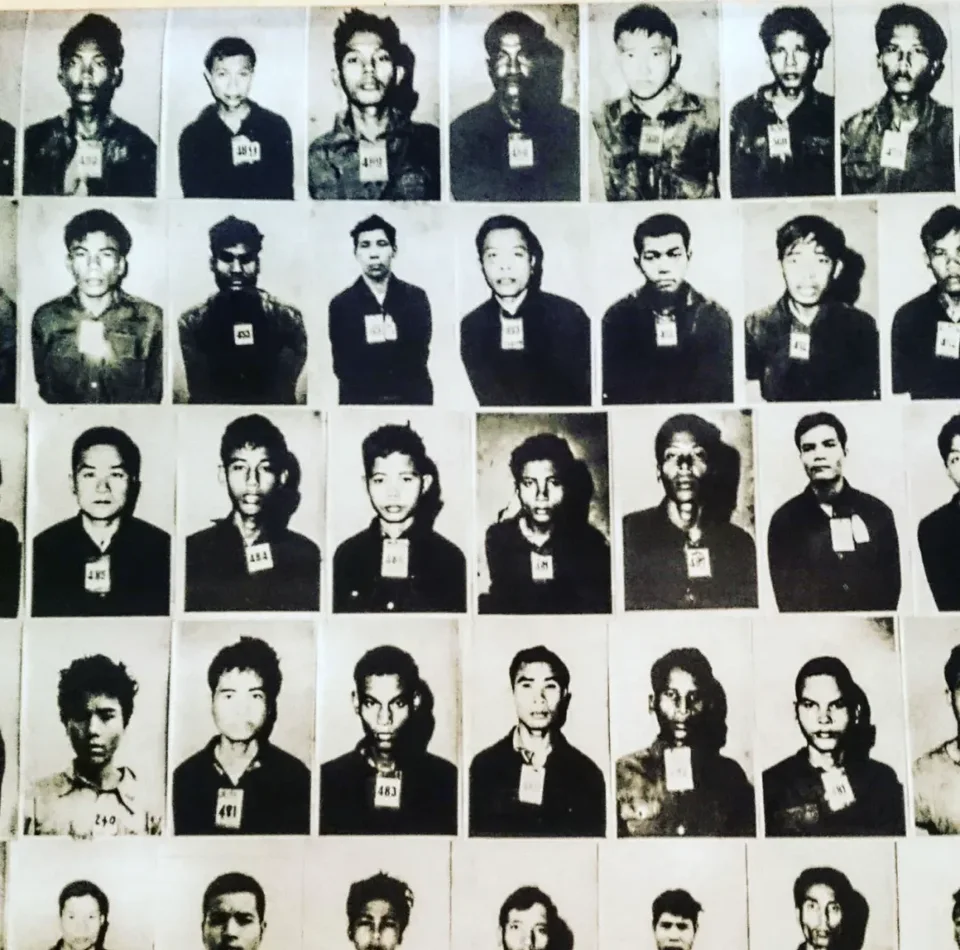
In the photograph, Liu Yaoting’s name has been reduced to a string of codes, serving only as an index of identity—a phenomenon far from singular. For certain dictators whose regimes were technically crude and morally abhorrent, they did not shy away from reducing identity directly to numbers: prisoners in Tuol Sleng Prison (Security Prison 21, or S-21), the Khmer Rouge’s most notorious torture center, were also photographed before execution (Fig. 2). Between 1975 and 1979, over 14,000 individuals were brought here, and only 7 individuals survived. Most prisoners bore numbered tags on their chests, marking the order in which they were photographed on the execution day. The Pol Pot regime left no identifying information for them: no names, addresses, professions, “crimes,” or dates of death. Besides the bare faces staring back at us, almost nothing remains to tell us who they were. This absence renders the archive all the more brutal, like the emptiness that dominates the background of each portrait—some of which (for example, photos labeled with numbers 573, 195, and 23, as well as an image of an individual without a numbered tag) reveal that the photographer erected a plain white backdrop behind each prisoner to obscure any contextual details. By contrast, Liu Yaoting’s photograph includes a clearly identifiable soldier in a military helmet, and the arm visible at the image’s edge makes clear what is taking place. Within the S-21 archive, there is no standard terminology to describe the prisoners: each person is unique, yet utterly blank. The referents of those photographs were erased to such a degree that even their sequential images failed to serve as substitutive objects of mourning. These images disavow functioning as substitutions for commemoration. For Roland Barthes, a photograph does not only attest to “that-has-been” but also attests to an absence in the present. Citing Barthes, Michael Sheringham argues that memory is an “encounter” with the pastness of a person, an awareness in the present of the distance between what was and what is. (Hallam & Hockey 2020, 104) In this process, personal identity appears precarious: “Memory breaks up the habitual routines of self-awareness and, rather than fostering unity, threatens everyday self-consistency. The unassimilable past lodges in the present like a foreign body,” (Hallam & Hockey, 2020, 105) and the continuity of history inevitably awaits a rupture. Sheringham contends that the residuals of the past reveal their power through their relation to oblivion: the harder one strives to fill in the past, the more its gaps and voids become apparent. This disruption of continuity and identity is not merely emotional or social; it constitutes, fundamentally, a philosophical revelation. Drawing from Lévinas, death is inherently incomprehensible, resisting the assimilation of the light of consciousness, thus remaining the strange Other, an infinite Other. As an incomprehensible infinity, death establishes an ethical relation to the Other: death and the Other, both as infinite, remain beyond the reach of one’s own identity. One cannot comprehend oneself through one’s own death, because one cannot subsume it entirely; rather, one is vicariously confronted with one’s finitude through the death of another. In this sense, death does not lie at the arrow of time’s endpoint; it resembles the emptiness in the Tuol Sleng images, a void understandable only in ethical terms. That is to say, death as an experience cannot be subsumed by one’s identity, thus its declaration of irrevocable loss and suffering disavows rational reconstruction and linear time, summoning a responsibility toward the Other that calls for witness and expression. Theodor Adorno, writing after Auschwitz, stated, “The need to lend a voice to suffering is a condition of all truth,” (Adorno 1973, 17) while Lévinas likewise emphasized that expression (l’Expression) itself is truth—though this expression does not emerge from the soliloquy of self-identity, only through the “teaching” of the other. (Lévinas 1979, 295) The archives of Tuol Sleng and TRPA reveal the necessity of all these voices; here lies the epiphany (épiphanie) of Hermes as the god of voice: photographs, in their silent silence, summon viewers to respond with expression and voice.
The Foundation of Photography as Witness: Indexicality
At the end of the last century, a “memory boom” emerged within photography studies, a movement responsive to cultural studies and closely tied to the widespread rise of human rights movements in the 1960s and 1970s. This shift also reflects an evolving interest in photography’s role as “witness,” moving from collective history to individual memory, and from the visual to the tactile, aiming to recover voices obscured within top-down authoritarian narratives and to reconstruct a sense of collective memory.
The theoretical foundation for photography’s role as a witness lies in the attempt to define photographs as an “index”, a position that has now become a foundational consensus within photography studies. This concept originates from Charles Peirce’s semiotic triad; unlike “icon,” which is defined by resemblance, the index is formed through contact, encounter, and mechanical causality. Within this framework, photographs are understood as physical traces produced through the mechanical reaction to reflected light from real objects upon light-sensitive material—a process largely free from the intentional control of the operator and thus considered mechanical and automatic. Consequently, as the index, photographs are not initially self-contained, formalistic images but are primarily contingent on their referents—those entities external to the photograph’s form, whether physically visible (like the photographed object) or invisible (such as power). By extending the concept of indexicality, theorists have advanced beyond Greenbergian canonized modernism, developing a form of anti-aesthetic photography theory that Susie Linfield describes as a “hate of photography” (Linfield 2012, 3): a theory that renounces engagement with the photograph’s sensory surface and its affect, as well as any Romantic concepts of talent, humanity, and originality, in favor of socio-political critique. The indexical nature of the photograph underpins a belief in a realist status, though this indexicality is inherently part of the interpretive process of truth. However, defining photographs within a semiotic framework of indexicality also confronts the inherent issues within the semiotic paradigm themselves: as Lévinas critiques, this approach neglects the sender of the sign: “The given refers to the giver, but this reference is not casuality, as it is not the relation of a sign to its signification.” (Lévinas 1979, 92) John Roberts addresses these deficiencies by proposing the “social ontology of photography”, which builds on the concept of indexicality by adding that,“the photographer in principle is able to arrive unannounced, and thereby is able to disclose what prefers not to be disclosed, producing what I call an existential imperative on the part of the photographer to get in the way of the world; […] Indeed, to arrive unannounced is what, in many instances, makes photography the affective and empathic thing it is, and as such there can be no claims to truth in photography without this.” (Roberts 2014, 4) At the same time, indexicality itself does not fulfill realism’s promise of truth, as the historical evolution of the camera as a technical apparatus—moving toward greater portability and increased dependence on chance—has also influenced photography’s capacity for truth-claim. Ironically, the evidentiary credibility of a photograph derives precisely from its excessive detail and from the photographer’s inability to control every pixel within the frame. For Roland Barthes, this trait endows photography with the power to naturalize culture, conferring upon it an inherent evidentiary force. (Barthes 1977, 44-45) In other words, photographic indexicality is generally understood as a causal link between the image as trace and the referent as reality, with the causal relation manifesting in formal details that consistently exceed the photographer’s subjectivity, thereby positioning the photograph in a seemingly neutral stance. This causative relation endows indexicality with evidentiary promise. Yet, as Allan Sekula points out, indexicality itself gives rise to an ambiguity in meaning, awaiting interpretation. Because a photograph is merely the trace of fact, rather than fact itself, the possibility of interpretation emerges. That is to say, evidence does not illuminate itself, and interpretation is thus always a process susceptible to political manipulation, as “Vision, itself unimplicated in the world it encounters, is subjected to a mechanical idealization. Paradoxically, the camera serves to ideologically naturalize the eye of the observer. Photography, according to this belief, reproduces the visible world: the camera is an engine of fact, the generator of a duplicate world of fetishized appearances, independently of human practice.” (Sekula 1984, 56) Sekula’s point is not that the “truth” of photographs is entirely constructed, as a photograph’s inclination is often implicit, and simply inverting the myth of photographic realism is meaningless. Sekula instead asks: what precisely renders these photographs expressive of a particular meaning? Or, in other words, under what conditions do photographs serve as evidence? It is precisely the historical variability of photographic meaning within its usage that reveals how photographs, as spaces of variegated encounters, are critical spaces for the contestation of interpretive rights. That is, the indexical nature of photographs and the photographer’s “existential imperative” as witnesses allow photography to construct a discursive space in which collective memory may arise or be reconstructed. As Ariella Azoulay argues, this space belongs to the “citizenry of photography,” within which every member can act as a witness, offering testimonies that interrogate or corroborate each other (Azoulay 2008, 100-120). In this way, truth becomes an unending process of revelation. In this sense, the act of reading a photograph must be understood as an instance of what Azoulay calls the “civil gaze”: reading photographs is not a mere aesthetic reception but a viewing in the political sense, also a continuation of “the event of photography,” and a reconstruction of the photographed event. Such viewing constitutes a civil skill entitled by photography and entails a contractual responsibility born out of a mutual obligation. For Foucault, truth is inseparable from the power systems that produce and sustain it. Yet for theorists like Ariella Azoulay and Allan Sekula, who defend photography’s social engagement and truth-revealing functions, Foucault’s notion of the production of truth also offers the potential for a counter to the truths constructed by regimes. In this sense, the circulation of photographs as testimony into the public space itself embodies a choice to either collude with or oppose total history.
In other words, we should not approach the evidentiary promise of photographs by examining the relationship between the photograph and the reality it signifies, as though the evidence provided by the photograph inherently possesses the (presumed) referential univocality of legal imagery or scientific illustration. Rather, I argue that photographic evidence and archives must be considered from the perspective of the public space in which their testimonies exist: what determines whether a photograph’s referent is univocal or multiple, and what allows for certain specific interpretations of a photograph to emerge? Thus, I intend to define Hermes as the ‘identity’ of photography precisely on the basis of an awareness of this perpetual flexibility.
Invoking Duchamp, De Duve calls for us to “don’t shoot the messenger,” with Duchamp, as the messenger, proclaiming in his syllogism the collapse of the Beaux-Arts system—a message first sent in 1917 when he exhibited the urinal, though it was not received by the art world until the 1960s.(de Duve, 2013) Duchamp’s release of authorship and interpretive authority introduced a system of meaning-construction involving multiple agents, much like Hermes wresting the sphere of high art and refinement from his brother Apollo, disrupting Apollo’s monopoly on the domain of cultivated expression. Through this kind of bottom-up resistance, the messenger is perpetually poised to offer new interpretations of collective memory, even if certain messages have yet to find their intended addressee, even if some farewell letters from the deceased will never arrive at the time they were meant to be received.
Forget Me Not: Doubled Indexicality
Let us return to the archive. While imprisoned, Liu Yaoting requested photos of his family from his wife, Shi Yuexia (pictured on the left). In response, Shi made a special trip to a photography studio with their twin daughters (Mei Ni, front left, and Mei Hong, front right) and Liu’s mother to take a family portrait, which she then sent to Liu in prison. By that time, Liu had already been imprisoned for more than a year, meaning he never once saw his daughters in person and could only imagine them by tracing their features in the photograph. The indexicality of the photo inspires a belief that, under these circumstances, the viewer might regard it as a substitute for its referent, saying, “This is so-and-so,” intentionally suspending the fact that “this is a photograph of so-and-so.” Liu himself wrote in a letter, “For the first time, I dreamed I was holding my child, but I couldn’t tell whether I was holding Hong or Ni.” (Cangyi et al. 2015, 133) Liu collected all the photographs in prison and arranged them into two albums. Using coarse fabric and paper as the medium, he illustrated scenes of mountains, flowers, and animals with pen, and pasted colored candy wrappers in them; these albums, along with clothing Shi knitted and the photos she sent, were returned to her before his execution. In this context, the photographs seem to help Liu create memories that otherwise do not exist. As De Duve rightly puts it, “a portrait (as typified by the funerary image) does not limit its reference to the particular time when the photograph was taken, but allows the imaginary reconstruction of any moment of the life of the portrayed person. (That is the charm of a photo-album; each photograph is a landmark in a lifetime. But memory shuffles in between landmarks, and can erect on any of them the totality of this life.)” (de Duve 1978, 123) The photograph serves as a substitute for the referent, yet it does not enable Liu to “remember” his two daughters actually; the photograph replaces them with its own image. From this perspective, a photograph can become an effective vehicle for memory only if its form is somehow supplemented. It’s necessary to notice that a family album is first and foremost a tangible object. Then, what does it mean to ‘touch’ the image of a loved one who has never met? To address this issue, Margaret Olin developed a theory of “Touching Photographs,” positing that when photographs are passed hand to hand—one might imagine, as though touched by the spirit of Hermes—they at least attempt, if not succeed, to establish and sustain relationships between people(Olin 2012, 1). For example, as early as 1859, Jane Welsh Carlyle expressed her faith in the potential of such portrait photographs. (Sekula 1986, 8) In this sense, to take a photograph is to establish a relationship, and photography is, in its origins, a tactile medium in which touch itself is implicitly embedded within the concept of indexicality through the shared mediation of language. For Olin, portrait photographs and those in albums, as a kind of “performative index,” ‘it performs a relation that may not depend on resemblance. Its ability to behave in this relational sense gives a photograph its power to stand in for a person.’(Olin 2012, 6) They operate as a form of agency. For her, the most potent aspect of photographs as index lies not in the relationship between the photograph and its subject but rather in the relationship between the photograph and its viewers—the index can only realize its full affective potential when it is interpreted, as we see in Liu’s case. For Shi Yuexia and Liu Yaoting, the daughters in the family portrait served as the index of their real referents, yet their generative capacities were altogether distinct.
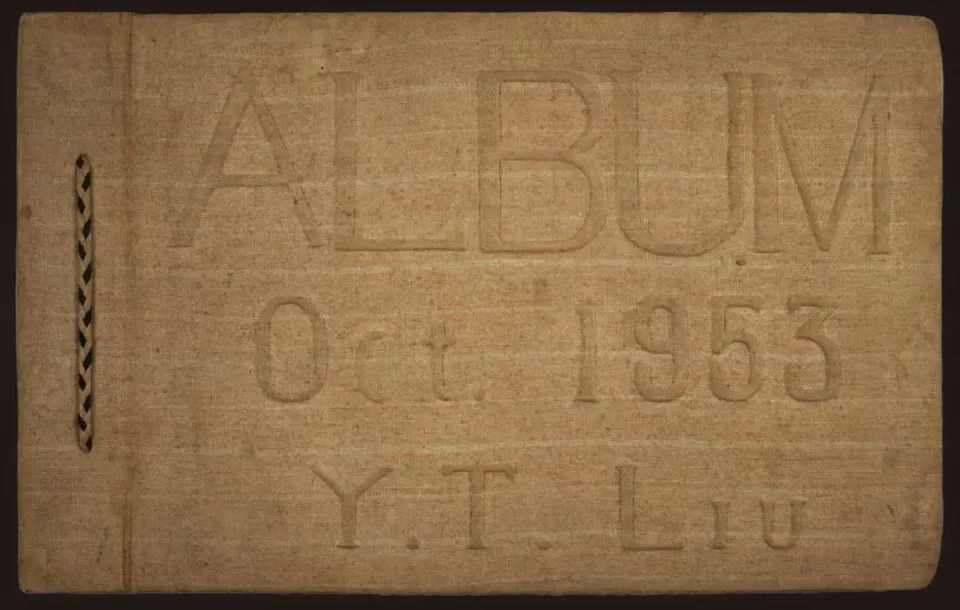
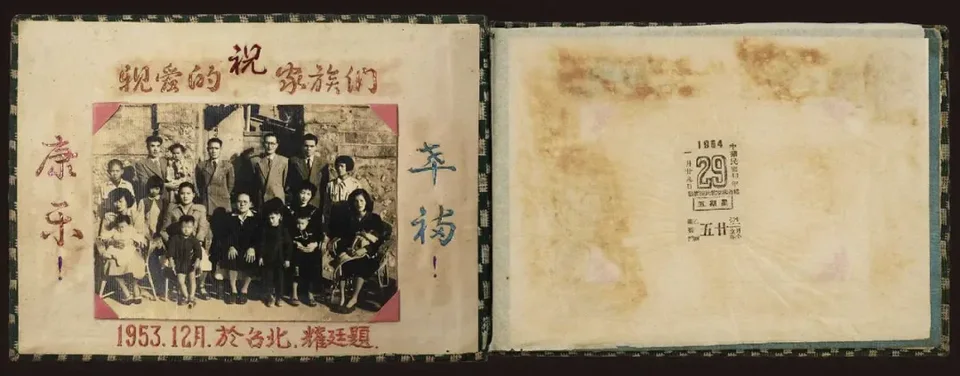
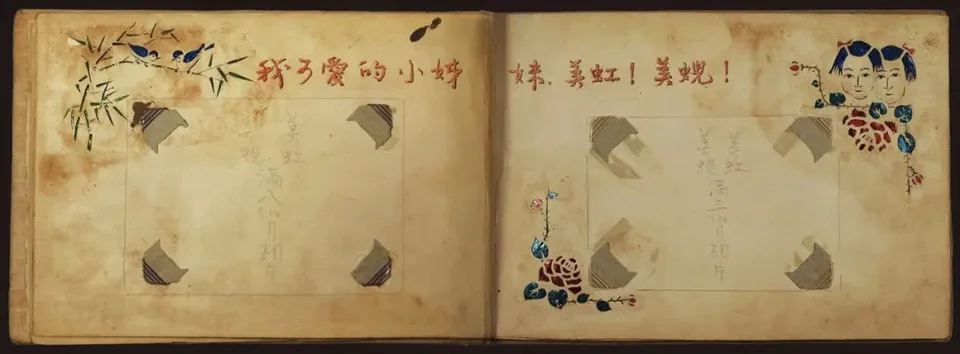
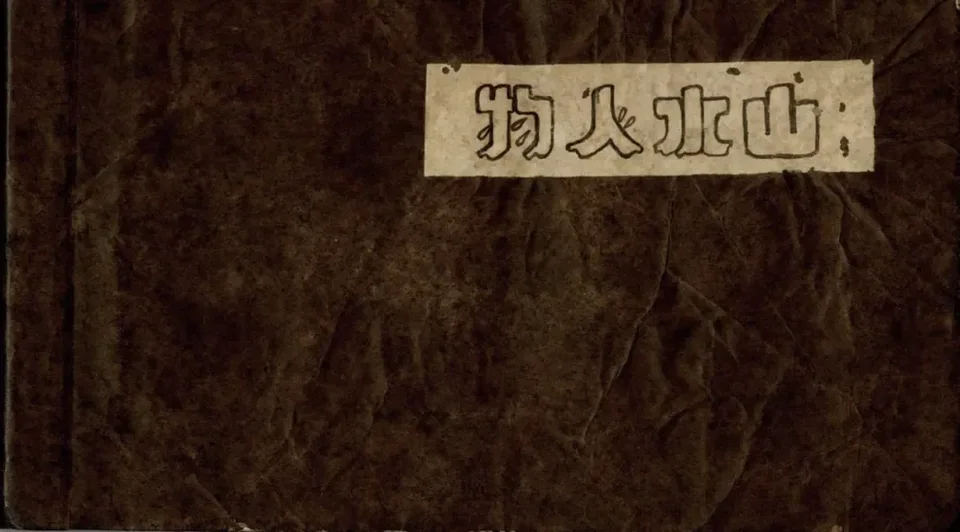
Again, let us return to Liu Yaoting’s album (Figs. 3–8). The cover (Fig. 3) appears to be made of coarse fabric, with his name inscribed, “Y.T. Liu,” and the date, “Oct. 1953,” engraved in an embossed style. Opening the first page, Liu has inscribed in decorative script around the album border: “Wishing my beloved family happiness and well-being” (Fig. 4). On other pages (Fig. 8), Liu left blank spaces, prepared in advance to commemorate his daughters’ third and eighth months. On other pages, Liu pasted photos of Shi Yuexia and their two daughters at different angles, embellishing the pages with hand-drawn roses and other stickers. But why could the photographs themselves not fulfill these functions of commemoration and remembrance? After all, the people in the photos have represented themselves through the process of index functioning. For Liu, this archival impulse arises from his need to send a message: upon receiving such a message, he would become a new addresser, forwarding the letter onward with his own death. This is precisely the affective potential of photography as a relational medium; the expressions engraved upon the album are not simply personal emotional expressions, but also carry a call to remembrance: forget me not, nor my doom. After receiving the album, Shi Yuexia tore off the page of the calendar for the day of the execution, cut it square, and pasted it onto the album’s first page, to inscribe it upon the table of her memory. Later, she added numerous photos, allowing those taken of Liu during his lifetime to coexist in the same archive as her family. Together with Liu’s own handwriting, these photos form a final album, embodying what Geoffrey Batchen calls “doubled indexicality” (Batchen 2004, 75): the acts of writing and making refer to the physical presence of the creator, while the photograph refers to the identity of its subject. Without one, the other cannot, in this context, act as a fully effective representational act. By the time Shi received this album, Liu was already dead. In other words, this album is a letter sent from the undiscovered country into the bright world of mortal men, and the river before the gates of Hades is beyond all return — messages now can be mediated only by the existence of photography. What those photographs mark are not so much the people represented in the images as the relationships between them. The continued addition of new items to the album shows that the photographs themselves are insufficient as objects of remembrance. As Batchen puts it, “To induce the full, sensorial experience of involuntary memory, a photograph must be transformed. Something must be done to the photograph to pull it (and us) out of the past and into the present. The subject of the photograph must be similarly transformed, from somebody merely seen to someone really felt, from an image viewed at a distance on the wall into an emotional exchange transacted in the heart.”(Batchen 2004, 75) Batchen further analyzes that objects created in this way work to intensify the mnemonic power of photography, demanding that we remember the represented subject; yet, at the same time, these objects render memory a complex interaction, where nature and culture become indistinguishable. Memory here is both authentic and fabricated, both perceived and projected. In the “Provincial Work Committee Tainan City Committee Case,” Zeng Lixiang likewise kept adding notes on slips of paper to the album “Landscapes and Portraits” created in prison by Zeng Jintang (Figs. 9–10). In this way, the act of remembering someone also becomes an act of self-positioning, an affirmation of one’s own place within spatial, temporal, and socio-historical relations.
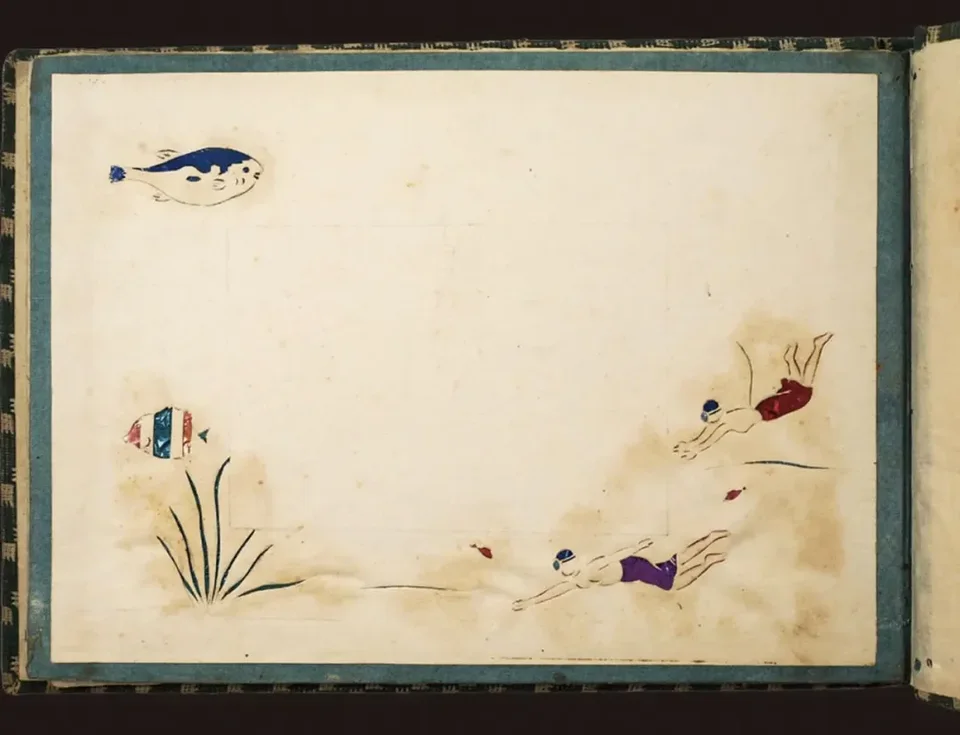
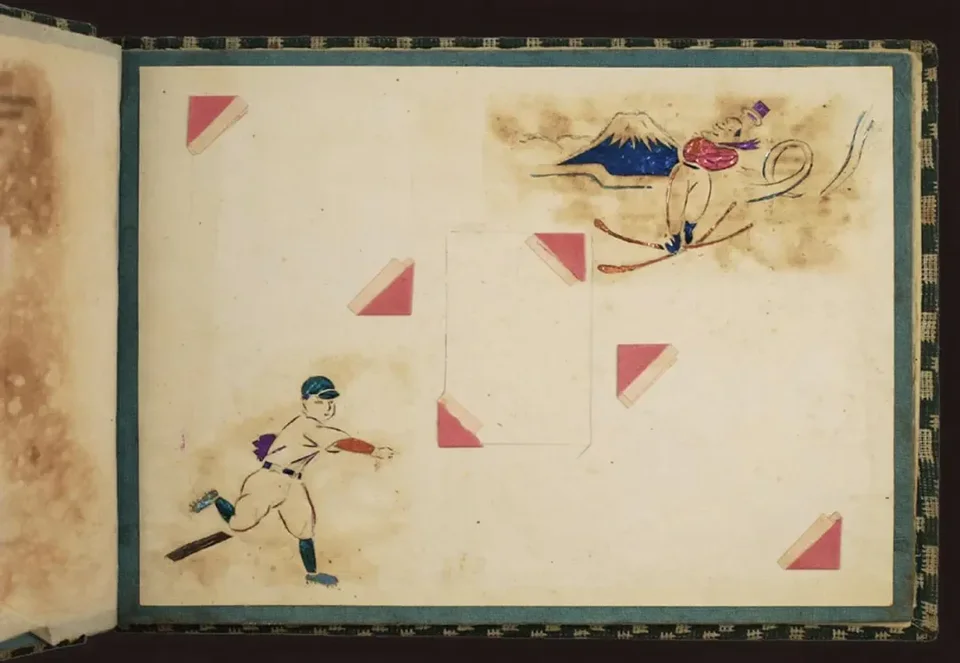
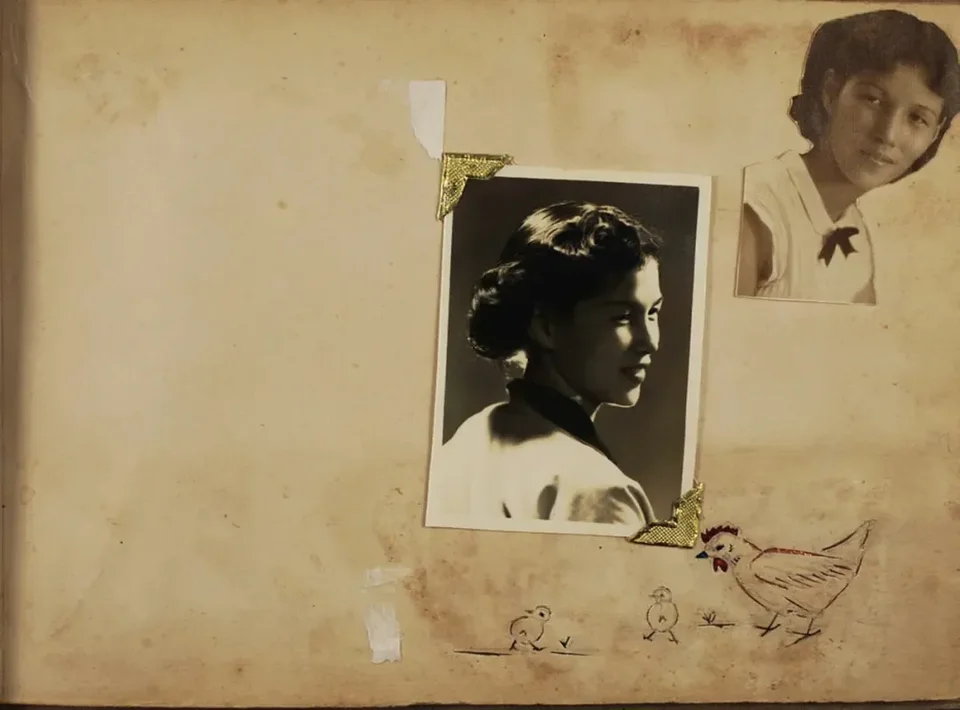
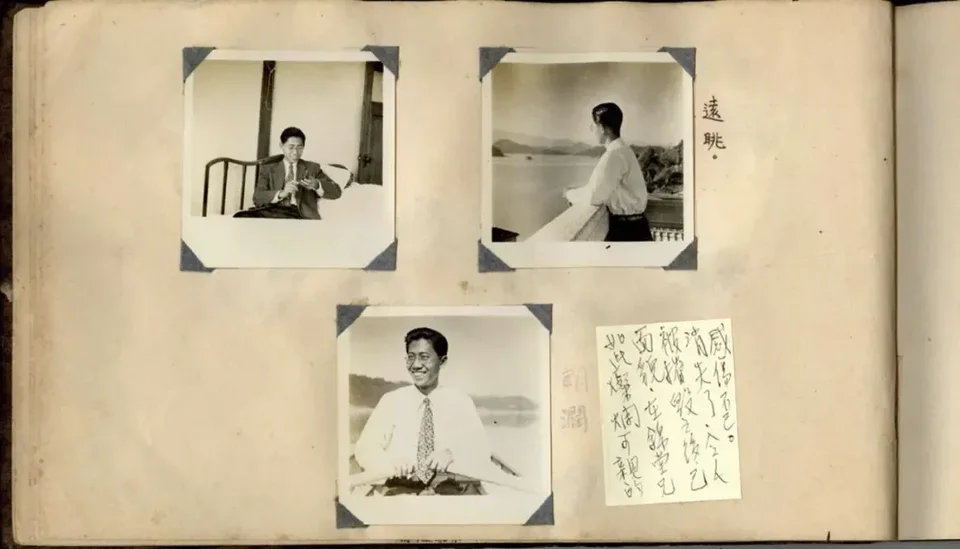
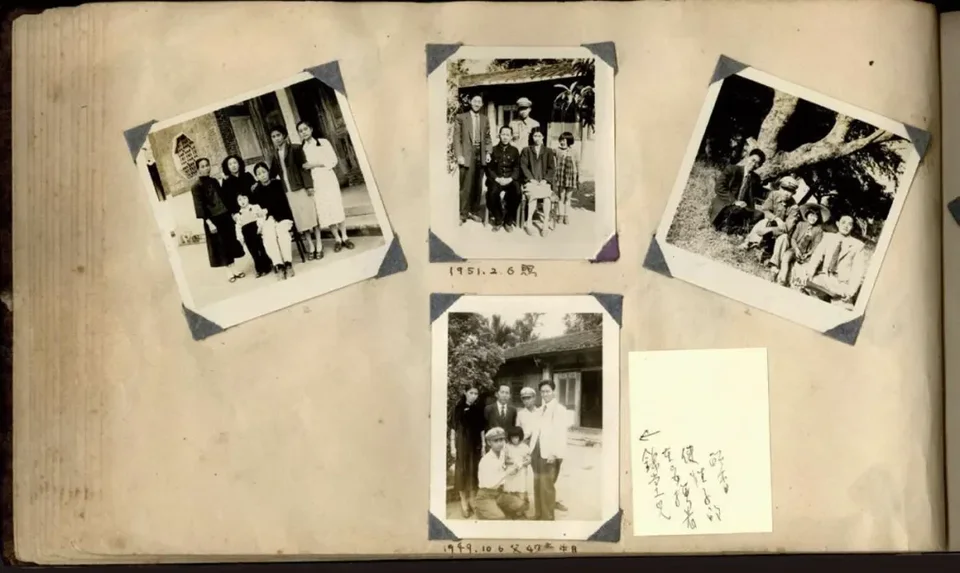
The album now entered into the public sphere, has become what Pierre Nora defines as “archival memory.” Nora characterizes this as a materialized form of memory: “Modern memory is, above all, archival. It relies entirely on the materiality of the trace, the immediacy of the recording, the visibility of the image.” (Nora 1989, 13) serving as a mnemonic tool, an “external scaffolding” for memory. During the White Terror period, Liu Yaoting was not alone in creating an album from within prison. To us, viewing these albums is, first and foremost, an affective experience rather than the correction to historical propositions in terms of the reconstruction of collective memory. These archives do not primarily function first and foremost at the level of ‘whether a massacre or an unjust political killing took place.’ Even when used by the authoritarian or ideological apparatus of the state; rather, they address an audience through an affective channel: “the machine establishes its truth, not by logical argument, but by providing an experience. This experience characteristically veers between nostalgia, horror, and an overriding sense of the exoticism of the past, of its irretrievable otherness for the viewer in the present.”(Sekula 2003, 448) Reading such archives does not involve seeing them as objects for aesthetic contemplation; rather, one must recognize that the essence of photography’s indexicality resides precisely in its social relationality. This implies that different ways of looking at the same subject carry variegated emotional, economic, and political investments. It requires all viewers to engage in interpretive participation with these archival photographs, adding new layers of memory. This interpretive engagement is precisely what Ariella Azoulay’s notion of a “civil gaze” entails.
Michael Fried’s attitude toward these issues is entirely contrary to what I have described. Through his investigation of photographs by Jeff Wall, Andreas Gursky, and others, Fried argues that the photography exhibited in galleries since the 1970s revives the tradition of ‘absorption’ from French painting since the 18th century. This, he believes, matters because “the new art photography seeks to come to grips with the issue of beholding in ways that do not succumb to theatricality but which at the same time register the epochality of minimalism/literalism’s intervention by an acknowledgment of to-be-seenness, just as ambitious French painting after Manet acknowledged painting’s facingness (not flatness, as is usually said) while nevertheless reserving an imaginative space for itself that was not wholly given over to soliciting the applause of the Salon-going public.”(Fried 2012, 43) In other words, for Fried, why photography as art matters as never before lies in its recognition as fine art, which, by severing photography’s indexical relation to reality, avoids the clichés of photojournalism and simultaneously creates a second, absorptive world fundamentally discontinuous from that of the viewer. This breaks away from the functional constraints of theatricality, enabling photography to pursue its “inner purpose.” (Fried 2012, 165) For John Roberts, this amounts to calling forth a spectator with equanimity, a spectator who is privileged aesthetically and intellectually, and thereby severed from photography’s history and its social relations. As he notes, “the cost of this is twofold: it pursues the meaning of the photograph outside of the struggles that produced it and are inscribed in its production, and it makes photographic realism a condition of the spectator and not of the represented, of the referent.” (Roberts 2014, 51) Thus, if the pivotal concern lies in contemplating the viewer’s position outside the photograph, the interpretive engagement of the viewer—as well as Benjamin’s ever-cherished historical materialist interpretation of history—is never realized.
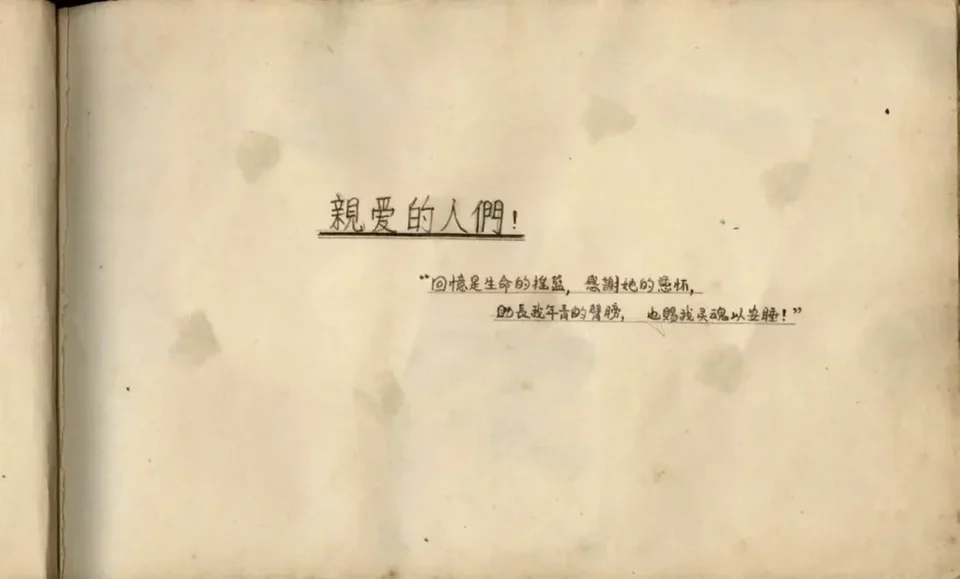
Viewed from another perspective, this doubled indexicality—if not invoking, then at least reinforcing, what Margaret Olin describes as the inherent haptic quality of photography. The index itself arises from physical contact with its referent, and doubled indexicality, through signatures, inscriptions, the addition of fabric, and other gestures, transforms the act of viewing a photograph into an experience that is both optical and tactile, a membrane that concatenates the past with the present, the living with the dead. In the TRPA archives for the “Provincial Work Committee Huwei-Douliou Cizong Branch Case,” Guo Qing left five farewell letters at the Military Law Office, yet not one reached his family. In all of these records, the handwriting in the farewell notes, along with the photographs left behind, becomes what Geoffrey Batchen describes as the doubled indexical — letters alone are insufficient, as Guo Qing inscribed on the back of a photograph of his children: “素貞、志遠,要孝順媽媽 (Suzhen, Zhiyuan, be filial to your mother).” In the “Provincial Work Committee Tainan City Committee Case,” Zeng Jintang’s album, “Landscapes and Figures,” produced in prison (Fig. 11), is divided into three parts, with the title page of the third section, “Beloved People,” inscribed with the words: “回憶是生命的搖籃,感謝她的慈懷,助長我年輕的臂膀,也賜我靈魂以安睡! (Memory is the cradle of life, it blesses me with nurturing arms, strengthens my youthful limbs, and grants my soul its rest!)” (Fig. 12) These handwritten inscriptions (themselves a haptic activity) reaffirm the indexical presence of the photographs; the similarity in the formal composition of these portraits (precisely what Barthes describes as “studium”) is thus “ transformed into the punctum of the subject-as-ghost,” (Batchen 2012, 76) a person both present and absent, one whose presence can only exist photographically. For Joanna Zylinska, photographic realism itself is haptic-centric, as it merges vision with perception and cognition, objectifying the body in the process (Kuc & Zylinska 2016, 274). From a phenomenological perspective as proposed by Maurice Merleau-Ponty (Merleau-Ponty, 1974), the haptic nature of photography becomes even clearer: to touch is always to be touched in return; touching is defined by strangeness—selfhood itself becomes strange within this objectification. This is the ambiguity within photographic “haptic realism”: it equates the ways of distinguishing self from other with the ways of distinguishing sameness from otherness. (Kuc & Zylinska 2016, 275) That is to say, as an image arising from the encounter between camera and world, photography, in the name of visibility, reduces tangible physical contact as tactility—“real” as if touchable. Yet a possibility remains to assess the distinction between image and reality standing outside this photographic convergence of visibility and tactility. For the phenomenological body, touching as exposure within the world, always involves a sense of the untouchable, an awareness of the totality and depth of existence, where no third party can mediate. Yet in the haptic realism of photography, due to the co-presence of indexicality and iconicity, phenomenological and physical bodies are conflated: physical touch is reduced to the sense of touch in the phenomenological body. Consequently, the photograph, unlike a self-reflexive meta-image such as the “duck-rabbit” or Las Meninas. It is always indexical (also iconic), pointing beyond itself as a formal image and representing something external to itself, continually reminding us of the ethics of “the other.” Moreover, from the perspective of photography as an act, everyday photography is not primarily born from a desire to “preserve” memory; its attributes of affirming presence, establishing relationships, and facilitating communication are equally important. In extending their arms to hold the camera, people are also “touching” the world. In such cases, photography functions more as a performative practice.
Mnemonic Archives: Archiving Loss
Doubled indexicality intensifies the photographic documents’ role as an interface. These documentary records function not only as an interface between the visual and the tactile but also, as Hito Steyerl’s concept of “documentality” suggests, appear as an interface situated in the process of formation, between concealment and interpretation:
I call this interface between governmentality and documentary truth production “documentality”. Documentality describes the permeation of a specific documentary politics of truth with superordinated political, social and epistemological formations. Documentality is the pivotal point, where forms of documentary truth production turn into government – or vice versa. It describes the complicity with dominant forms of a politics of truth, just as it can describe a critical stance with regard to these forms. […] documentality can also mean an attempt to thwart and to problematize not only dominant forms of truth production, but also of government. (Steyerl 2003)
This interface is not Janus-like, for it holds within it an eternal potential for reconstructing its objects, an ultimate instability and an unceasing temporal oscillation. Hermes, unlike Janus, would never resign himself to becoming an equanimous gatekeeper or an immovable monument; rather, Hermes establishes his identity by traversing various realms and transmitting the messages of the divine. As previously discussed, a thisness provided by the indexical quality of photographs—or an intensified form of dual indexicality—renders photography’s contact with the world more immediate than any other medium. It is precisely this quality that enables photography to function as an open public space, one that allows for multiple testimonies to either corroborate or contest each other.
Roland Barthes’ perspective still warrants serious consideration; for him, photographs do not preserve the past but instead act as enemies of memory: “it actually blocks memory, quickly becomes a counter-memory.”(Barthes 1981, 91) As Geoffrey Batchen, in conformity with Barthes, suggests, it is possible that the more frequently we view photographs of the past, the more these images gradually replace the original images in our minds with their own likeness. (Batchen 2004, 15) Siegfried Kracauer held a similar view: for him, photographic images present a given space as continuous (in a way reminiscent of Barthes’ concept of photography’s naturalization of culture), arranging it in sequence; in contrast, memory images incorporate ‘spatial’ elements only according to whether those elements possess significance for the subject or not. Thus, the memory images remain spatially discontinuous. To the photograph, memory images appear as a cluster of non-continuous fragments: “the photograph does not preserve the transparent aspects of an object but instead captures it as a spatial continuum from any one of a number of positions.” (Kracauer 1995, 53) If Barthes and Kracauer’s views are not entirely accurate, they at least suggest a sort of danger—that mnemonic archives composed of photographs may indeed become enemies of memory. Finally, I’ll argue that the archived object of mnemonic archives is precisely “loss”—the more retention is emphasized within it, the more loss is pronounced. In this sense, the act of archiving is itself a “loss.” But it is precisely this moment that holds the potential to disrupt the narrative of official history, the moment as one that may lead to alienation or redemption.
Photographic Archives
Before clarifying what we mean by “archive,” we have been using the term “archive” without reflection. However, now is the time to elucidate precisely what this so-called “photographic archive” entails.
Imagine what occurs when communication is obstructed, when both memory and dialogue simultaneously falter—much like a speaker struck by a sudden forgetfulness, realizing they have forgotten the word they were about to utter and thus must interrupt the dialogue. Maurizio Bettini mentions a category of slaves in ancient Rome designated specifically to remind their forgetful masters of the names of people they encountered in their work: the “nomenclator.” This category of slaves later evolved into a kind of erudite reminder—" a kind of living instrument of memory, a figure whose duty and function was to combat forgetfulness—to remember and to make others remember.”(Bettini 2011, 31) Following this line of thought, Bettini examines a particular kind of mnemonic person, i.e., the mnēmōn (mindful). In numerous myths and heroic stories, “the mnēmōn acts as a kind of alter ego for the hero. Like an image reflected in a mirror, he is supposed to warn and remind the hero of something—even if in the event he deliberately does not do so or does not succeed in doing so. The mnēmōn thus functions as a kind of external memory bank for the hero—a walking monumentum, as it were.”(Bettini 2011, 35) In myths, although the mnēmōn is tasked with reminding his master (such as Achilles, Hector, and others) not to forget certain things, due to forgetfulness, love, or other causes, the mnēmōn frequently suffers failure. Thus they embody both the mission to “make one remember” and the effect of “making one forget.”
From its origin, mnēmōn originally meant “one who cares for goods”—someone responsible for recording the value of goods on ships, hence playing the role of archivist while also functioning as the archive itself. This, precisely, is where Okwui Enwezor and Jacques Derrida diverge in their interpretations of “archive.” Although Enwezor’s exhibition, titled “Archive Fever,” draws its name from Derrida, for Enwezor, the creators and interpreters of the archive are artists, while the archivists have nothing to do with them. For Derrida, however, “the archivist produces more archive, and that is why the archive is never closed. It opens out of the future.” (Derrida 1996, 68) Enwezor’s exhibition catalog begins with the connection between photography and the archive: “The camera is literally an archiving machine, every photograph, every film is a priori an archival object.” (Enwezor 2008, 12) For Enwezor, the relationship between temporality and the image, and the relationship between the object and its past, both underlies the archival impulse to “memorize” the monument into the document (Enwezor 2008, 23). This urgency heightens when we consider that the word “documentary” in “documentary photography” originates from “document.” In other words, it is a profound recognition of transience and liquidity that drives the archival impulse. Archiving is not merely to “preserve” the past but to “construct” a particular version of the past through selective inclusion and exclusion. As Foucault says, “the archive is first the law of what can be said, the system that governs the appearance of statements as unique events.”(Foucault 1972, 129) In a sense, it is toward the “future” that we must legitimize memory as history, and fix traces and testimonies as archives. Thus, archives lay the foundation of history for the future, and as Derrida posits, archives must always open from the future: whether conforming top-down to the archivist’s understanding or excavating new potential for truth from below. In this sense, the past is not merely to be understood through shadows cast onto the ruins of history by the present; the past exists, perhaps, even for the future. Thus, photography is far from a freezing of time past. Neither should the photographic archive be understood as a repository of the past, because liquidity has been embedded in photographic images and archives from the very beginning. That is to say, through identifying photography with Hermes, he delivers the message, but the message belongs neither to the messenger nor the addressee. Messages are temporarily held, as one holds cash—forever circulating, also awaiting the emergence of new moments of redemption. As Foucault states, history is the process by which documents become monuments. (Foucault 1972, 7) It is also a process unfolding through incorporation into the mnemonic instruments — the mnēmōn — the act of archiving itself. Such an archive is a mnemonic instrument, deeply rooted in liquidity and instability; its emergence occurs precisely when the message’s transmission is interrupted: at this interface, Hermes must intervene to reconnect the communication.
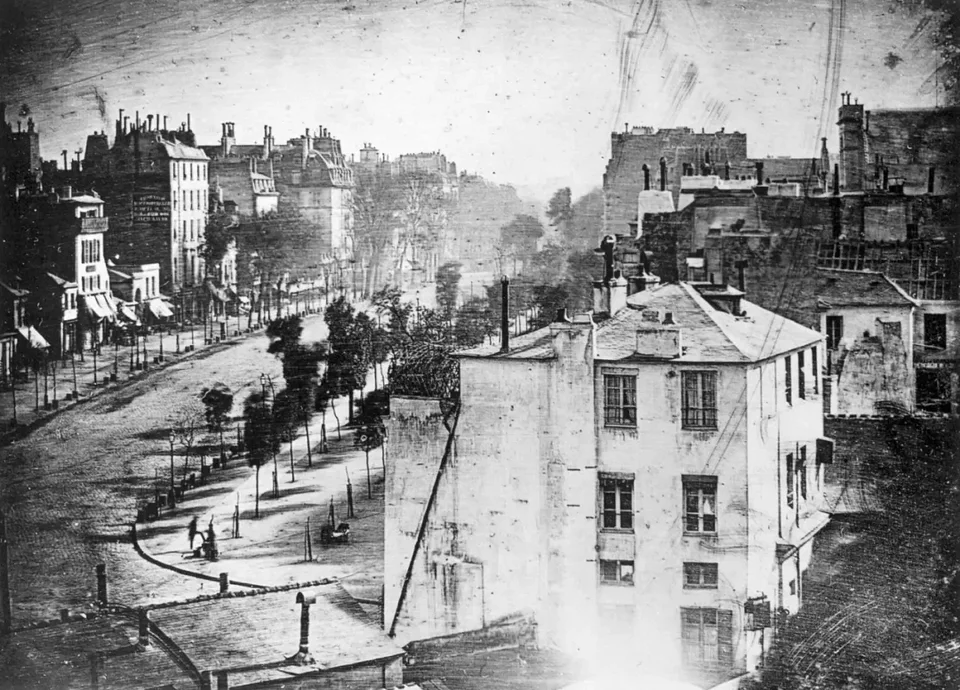
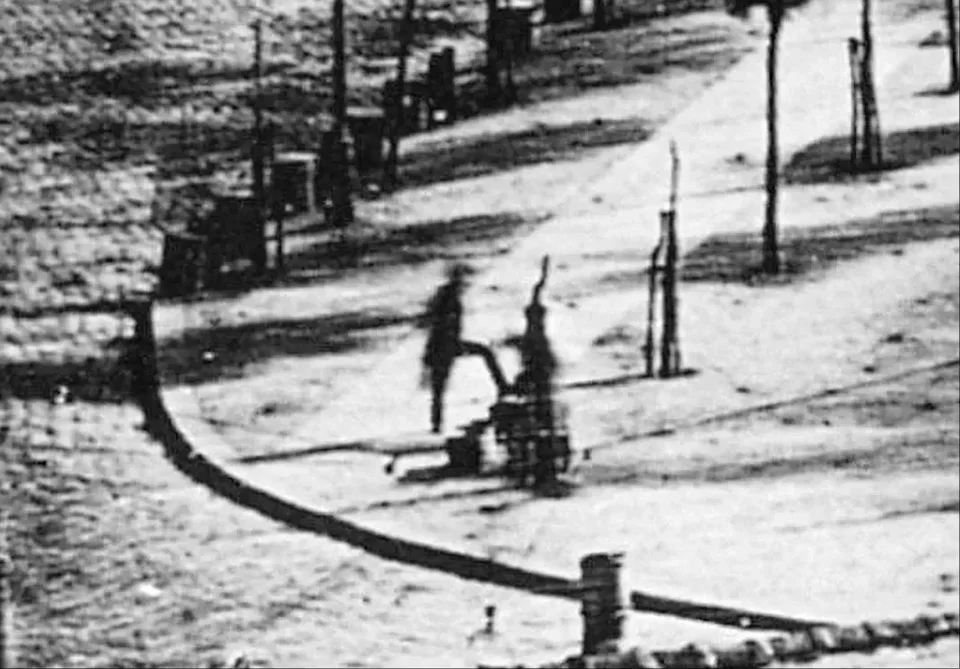
Thus, the convergence of photography and archive creates a vast array of substitutions: the photographic archive sustains a generalized equivalency among images. As Sekula states, “The capacity of the archive to reduce all possible sights to a single code of equivalence was grounded in the metrical accuracy of the camera.” (Sekula 1986, 17) Through examining police archives such as those created by Alphonse Bertillon, Sekula argues that the police archive stands as the objectified reverse of the “shadow archive” composed of all (portrait) photographs within society. In other words, each “innocent” individual in society can find in the police archive an objectified inversion—transformed into a criminal, and thus holding a relative position within the system. To investigate this “shadow archive,” Sekula returns to one of the earliest records within photographic archives—Daguerre’s photograph of the Boulevard du Temple (circa 1838). This work is typically regarded as the first photograph in history to include a human figure, but Sekula notes that it is also a scene of labor and economic exchange. This Daguerreotype photograph depicts not merely a man (unmistakably a bourgeois gentleman) enjoying a shoe shine. If we include the invisible shoe shiner as an obscured shadow, there are at least two people present in the image. Yet, due to the exposure time, the shoe shiner vanished from the frame; thus, in all interpretations of this image, he remains an anonymous figure, obscured and forgotten in every account. By highlighting this, Sekula recovers the historical distinctiveness of social relations and material conditions that made this photograph possible. (Sekula 2014)
In other words, if we wish to preserve the mnemonic space that photographic archives reveal, whether we aim to conform to the official interpretation or react against it, we must recognize that the very perspective advocated by someone like Michael Fried, is precisely one of the greatest threats to the function of the photographic archive. When photography’s significance is regarded as a result of its entrance into the pantheon of art, “Suddenly the hermeneutic pendulum careens from the objectivist end of its arc to the opposite, subjectivist end. Positivism yields to a subjective metaphysics, technologism gives way to auteurism. […] Documentary is thought to be art when it transcends its reference to the world, when the work can be regarded, first and foremost, as an act of self-expression on the part of the artist. To use Roman Jakobson’s categories, the referential function collapses into the expressive function.” (Sekula 1984, 58)
Remembering Death: The Failure of the Archive
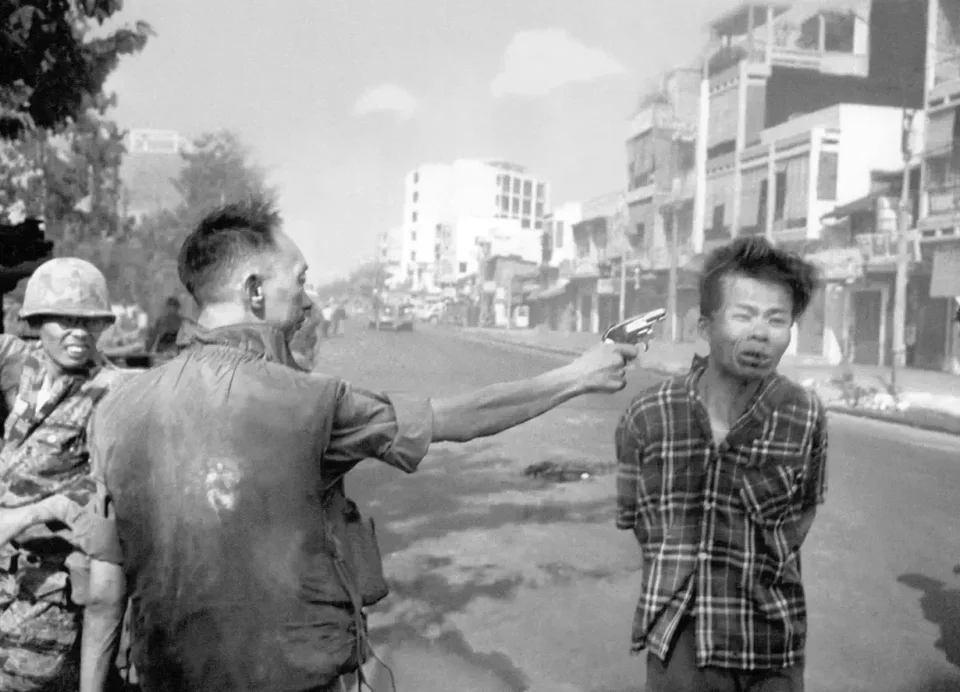
Let us return to the anonymous portrait archives like those at S-21 mentioned earlier. For de Duve, a snapshot—such as Eddie Adams’s Saigon Execution—embodies the flow of time, causing us to “always too early to see the vent occur at the surface; always too late to witness its happening in reality.” (de Duve 1978, 117) thus stealing away an irreplaceable slice of life. In contrast, a time exposure photograph—like the portraits at S-21—fossilizes the time of its subject, granting it a layer of remembered time, allowing viewers to reconstruct and imagine the possible lives within it, thereby expressing an alternate existence. This is the paradox, as de Duve describes, between the snapshot and time exposure (see Fig. 16). The paradox reveals to the spectators the temporal and phenomenological gulf between them and the photographed subject. Yet, what happens when the person in the photograph is completely anonymous, utterly foreign to the viewer? In other words, how do we react when the message we receive comes from an utterly alien source? The figures in the S-21 archives—nameless, faceless, unknown—embody what Christian Metz describes: “has no empirical knowledge of the contents of the off-frame, but at the same time cannot help imagining some off-frame, hallucinating it, dreaming of the shape of this emptiness.” (Metz 1985, 87) This reaction to the image is the consequence that spectators projecting the figure in the image as a substitute, and then evolving it in the light of their consciousness. In a phenomenological sense, the distance between the viewer and these anonymous subjects remains immense: they exist in a primal diachrony, within fundamentally different temporal orders that cannot be reconciled within the same temporal framework. Here, “diachrony” is employed in Lévinas’s sense: it does not indicate the historical changes of a single system’s development but rather the divergence between different orders of time. For Lévinas, diachrony resists ontology; though it also belongs to the “past,” it is an irretrievable, unrecallable past—because recollection is the act of placing the past in the present, which only occurs when “past” and “present” exist within a single temporal order (Lévinas’s “synchrony,” the ontological order of time). (Jiajun 2019, 86) Yet Kracauer sensed this long ago, and what is more, he was deeply concerned with the external reality signified by photographs and its “presence” relative to ourselves. He writes: “A shudder runs through the viewer of old photographs. For they make visible not the knowledge of the original but the spatial configuration of a moment; what appears in the photograph is not the person but the sum of what can be subtracted from him or her. The photograph annihilates the person by portraying from him or her, and were person and portrayal to converge, the person would cease to exist.” (Kracauer 1995, 56-57) As viewers, in a certain sense, we become agents of this engulfment.
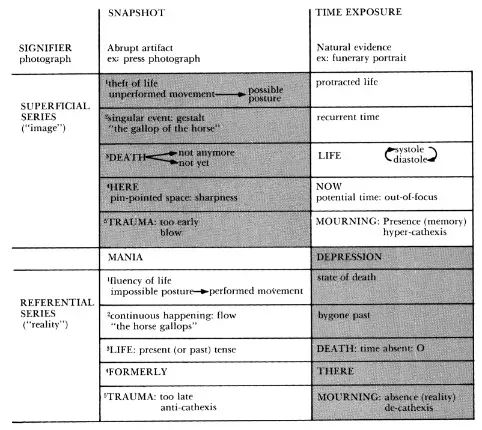
This is precisely the primal origin of the archive—consider the mnēmōn we mentioned at the beginning of this section. If the order already existed, what need would there be to collect, archive, and thereby “inscribe it upon the table of one’s memory”? Through provisional stabilization, the archive attempts to anchor the positions of its creator and viewer amidst the flow of messages. All that “flows” in today’s context bears a melancholic tone, as Marshall Berman, borrowing Marx’s famous words, says: “All that is solid melts into air.” Yet, for photography and mnemonic archives, emphasizing this question of liquidity allows us to escape the ontological anxieties that have haunted photography since its inception, shifting instead to examine the photograph’s performative indexical relationship, its effect, and the spaces opened by the act of photographing.
Hermes: Death, Memory, and Ethics
In this study, photography, acts as a mediator, while the photograph serves as the very message it conveys—a message originating from the Other in the sense of Lévinas, thereby also from a divine being. In this most straightforward sense, we define the identity of photography as “Hermes.” In this respect, the aesthetics of photography must, first and foremost, be an aesthetics of relation. However, past scholars, when addressing photography, have not only been inclined to equate it with death, but also to relish speaking of various “deaths” of photography. Here, however, we reasonably propose: the photographic image mediates death through its very living.
The need for a messenger implies that the message cannot be directly transmitted, as the orders of the two parties are primally distinctive. As the TRPA archive, the rest is silence, and the act of remembrance by the living ultimately transforms into an act of affirming one’s own existence through the construction of archives. In this sense, without an intermediary like Hermes, the meaning of such an action could not be fully realized. It must be noted that when I say “the messenger transmits the message,” message is the very term Barthes uses as a key concept to define the photograph (Barthes 1977). Hermes, who emanates the silence of a bygone world, traverses the boundary between life and death as the guide of souls (psychopompos). For this reason, Jules Cashford believes that “the myth of the messenger is primarily a myth of relationship, where two dimensions of being are brought into relation with each other and are united in a new whole.” (Cashford 2011, 3)
Death, memory, the Other, mediation—what is the nature of this relationship?
In 1948, under the shadow of Auschwitz, Emmanuel Lévinas remarked, “People forget the inhumanity of the silent world.” (Lévinas 2009, 69) For Lévinas, silence represents the camps and the crematoria, a stillness as absolute as death itself, signifying that “whenever silence murmurs softly, and the empty room fills to overflowing,” the il y a—a terror traceable to childhood memories—“reemerges in the sleepless hours.” (Lévinas 2006, 1) Lévinas reveals why silence is truly silence: it is the moment of identity’s fracture, the moment when the impersonal il y a lurking behind both parties to verbal exchange surfaces. Silence brings the danger of forgetting, as people in the postwar era have done in concealing crimes.
Rilke writes in Alcestis of a scene laden with revelation: Hermes, god of messengers and of communication, arrives at the wedding feast of Admetus to announce to the young groom that he must die. The fervent conversation suddenly halts at the precise moment Hermes’ presence is noticed. Not a word has yet been spoken. To the Romans, a sudden silence at a feast was an ominous sign. Silence interrupts communication, signaling the intrusion of heterogeneity, as well as the impossibility of dialogue. Hermes rules over both sound and speech, yet also holds sway over language and silence, as his nickname, “Dog Strangler,” suggests. Complete silence is death. Silence signifies that there is no one left to confide in; it signifies the absence of an object to receive the communication—the dead cannot be such an “object.” Death, to Lévinas, is the absolutely unencounterable Other, an infinite Other uncontainable by the light of the subject’s consciousness, a radical stranger that makes the subject aware of the fracture inner his identity. The Other transcends the limits of the subject’s intentionality. Death suspends all possibility, just as silence suspends all objects to confide in. The peril of silence is precisely that of death. Because this death, may be brought about by forgetting: upon his homeward journey, Theseus forgets his promise to change his ship’s black sail to white, leading his father Aegeus to believe he has perished; in his grief, Aegeus leaps into the sea and drowns. This is the failure of memory—forgetfulness resulting in death. “Lasciate ogne speranza, voi ch’intrate.”(Abandon all hope, ye who enter here.) (Alighieri 1991, 63) in Virgil, souls reborn must drink from the waters of Lethe to forget the sins of their past lives. In ancient Chinese myth, the potion of Meng Po serves a similar function. Anticlea, Odysseus’ mother and a descendant of Hermes, dies grieving her noble son, and in death forgets all things of the earth, able to recognize her son only after drinking the blood of a sacrificed ram. In such cases, if photography were present, how might it change things?
Joanna Zylinska, drawing on the hybridity of “photomedia” and the fluidity of “mediation,” introduces the concept of “photomediations.” (Zylinska & Kuc 2016, 11) By this, she implies that a photograph does not exist independently but rather as a multifaceted, ongoing mediative process; photography is thus an act of cutting within this process, a motion-based practice. In this sense, photography functions as a “technology of life,” rather than merely a means by which subjects produce a (potentially illusory) notion of originality. “it not only represents life but also shapes and regulates it—while also documenting or even envisioning its demise. ” (Zylinska 2017, 2) As noted earlier, Ariella Azoulay discussed the concept of the “the event of photography”: such an event need not yield photographs because the mere possibility of being photographed is enough to exert an influence upon us. (Azoulay 2015, 226) The presumed presence of a camera or photograph alone can produce a photographic event. Photography thus serves as a cunning messenger, revealing the operational logic of contemporary communicative capitalism—one that directs its users and receivers to focus merely on the surface of the photograph (its composition or the subject it portrays) while disregarding its biological reality or the production and circulation systems entwined within it. However, without the necessity of communication and message-bearing, this messenger would have no reason to exist. I do not seek to embrace the extreme reductionism of John Tagg’s assertion that “photography as such as no identity.”(Tagg 1988, 63) Instead, I aim to stress that the mode of presenting a message, the content of the message itself, the manner in which listeners receive the divine message (and then pass it along), and the fact of the message’s mediation—all these aspects resist reduction to one another. As art historian John Roberts suggests, each constitutes an “actant” within photography: every participant in the production and reception of the image (whether government, corporation, social platform, photographer, subject, or audience) is such an actant, and the roles of these actants are irreducible to one another. (Roberts 2014) The image’s meaning will never rest definitively with any one of these actants, for at each stage, the image remains engaged in a process of truth-revelation that is forever incomplete. It is within this framework that we must understand the issue of memory in photography: photography neither preserves nor fixes memory. Rather, owing to its social intervention and fluidity, photography’s mediation of memory becomes a reshaping, a summoning, a revival, or an addition to memory itself. Given the multiple actants within photography, future viewers can, through the excavation of archives and the retracing of photographs, reconstruct collective memory, anchoring their own position within historical and social relationships. This is reminiscent of Hermes seizing power from Apollo, effecting a kind of political emancipation to realize what Walter Benjamin so fervently cherished: “To articulate the past historically does not mean to recognize it ‘the way it really was’ (Ranke). It means to seize hold of a memory as it flashes up at a moment of danger.” (Benjamin 1968, 255).
As I have suggested, Hermes first took the message from the divine realm, interpreting it without possessing it, and instead bound to deliver and distribute it. Photograph emerges in the initial contact between the camera and the world, participating in the act of cutting and shaping life itself. Yet, as a mnemonic archive (or collection of photographs), a photograph remains reliant on a form of authorization—a condition, as Sekula referred to it—for its usability and credibility; even in the courtroom, a photograph requires corroborating testimony to be effective. Contrary to common assumptions, this authorization does not solely stem from those in power or from institutions. Quite the opposite, as John Roberts illustrates with his term “actant”: each party involved—the photographer, the subject, the viewer, the employer, the mass media—constitutes an actant whose unique stance, interests, and claims cannot be reduced to one another. Each actant plays a part in shaping the discourse of photographic truth-claim, without being able to wholly determine the identity of photography to suit its own purposes. Thus, photography’s emancipating potential is dependent on the social and historical conditions it encounters in the future. In this sense, each actant serves as an authorizing force behind the photograph, granting or withholding its testimonial efficacy. (Roberts 2014) Nevertheless, I must stress, as Roberts implicitly suggests, that the power dynamics among these actants are far from equal. Even a “social ontology” built upon the various actants is always defined within the boundaries of state-enforced authority, which imposes a downward pressure that restricts the permissible scope of truth and brings difficulties to the bottom-up approach to interpreting archives. Consequently, photography becomes entangled within the mechanisms of capitalist reproduction. Put differently, a purely phenomenological account of photographs proves weak, even futile, in explaining the relationship between their meanings and their functions. Merely invoking a humanitarian or romantic tone in an appeal for an egalitarian interpretation of photography is equally inadequate. For this reason, Roberts, in developing his social ontology, specifically supplements the modernist-left practices overlooked in Azoulay’s and Linfield’s work: Soviet revolutionary photojournalism, the workers’ photography of the 1930s in Europe and the United States, and the reportage photography of the 1960s. Allan Sekula’s investigation into photographic archives similarly presupposes an awareness of these issues, initiating inquiries that span from Alphonse Bertillon’s police records in Paris to Edward Steichen’s aerial images.(Sekula 1984) The question of “What does this photograph denote?” frequently remains unresolved and urgently in need of interpretation. As seen in examples such as the “Saigon Execution” photograph: a photograph constantly demands supplementation. As previously noted, although photography, in the name of visibility, reduces physical touch to mere tactility, the possibility of evaluating the difference between the two from a third-party perspective still exists. Crisis and redemption appear at just such a juncture—a moment that calls for “seizing power” to prevent the interpretive authority from being monopolized by authoritarian institutions. As Sekula concludes in his celebrated essay, The Body and the Archive:
If we are to listen to, and act in solidarity with, the polyphonic testimony of the oppressed and exploited, we should recognize that some of this testimony, like Cole's, will take the ambiguous form of visual documents, documents of the "microphysics" of barbarism. These documents can easily fall into the hands of the police or their intellectual apologists. Our problem, as artists and intellectuals living near but not at the center of a global system of power, will be to help prevent the cancellation of that testimony by more authoritative and official texts. (Sekula 1986, 64)
To wrest interpretive rights from the authority, or at the very least to contest it, as if Hermes’ initial defiance of Apollo. In this sense, the interpretation of mnemonic archives becomes an inquiry into relational aesthetics, grounded in affirming the affective and empathetic impact of photographs. This approach centers on the interaction between the meaning of photographs and their viewers, explored through the marking and archiving of loss and absence. Here, through acts of reading, viewers may achieve a sense of self-location—an impulse intrinsic to the archival origins of photography. Such demand for reading, such imperatives of self-location, rooted in fluidity and forgetfulness, perpetually covet stability. Once more, the shadow of Hermes emerges. Rilke narrates the tale of Alcestis, where Hermes, as a messenger, arrives bearing news of her husband Admetus’s imminent death. As a god of sound and communication. The unending peace of death, and the message from the divine (the Other in the sense of Lévinas’ usage), are both inherent in Hermes’ deity. Yet Hermes does not determine death; he is only the one to deliver Apollo’s message. Here, death and loss have become one and the same. His presence goes unnoticed until that ungraspable phrase is spoken, at which moment everything is irrevocably altered.
Notes
1. Rainer Maria Rilke, New Poems, trans. J. B. Leishman (New York: New Directions, 1964), 146–51. The journal article includes Leishman’s English translation of the opening passage from “Alkestis.”
2. Geoffrey Batchen, Forget Me Not: Photography and Remembrance (New York: Princeton Architectural Press, 2004), 15.
3. See Margaret Olin, Touching Photographs (Chicago: University of Chicago Press, 2012); Elspeth H. Brown and Thy Phu, eds., Feeling Photography (Duke University Press, 2014); and Melissa Miles, “The Eye-Witness of Humanity,” in The Handbook of Photography Studies, ed. Gil Pasternak (Routledge, 2020), 59–78.
4. Azoulay compares a photographic image to a deposit entrusted to a custodian who may possess it temporarily but never own it. See Ariella Azoulay, The Civil Contract of Photography (Zone Books, 2021), 98.
References
Adorno, Theodor W. Negative dialectics. Translated by E. B. Ashton. London: Routledge, 1973.
Alighieri, Dante. Commedia. Milano: Mondadori, 1991.
Azoulay, Ariella. Civil imagination: A Political Ontology of Photography. London: Verso, 2015.
Azoulay, Ariella. The Civil Contract of photography. Brooklyn: Zone Books, 2008.
Barthes, Roland. Camera lucida. Translated by Richard Howard. New York: The Noonday Press, Hill and Wang , 1981.
Barthes, Roland. “Rhetoric of the Image.” Essay. In Image, Music, Text, 32–51. New York: Hill and Wang, 1977.
Batchen, Geoffrey. “Ere the Substance Fade: Photography and Hair Jewelry.” Essay. In Museum Objects: Experiencing the Properties of Things, edited by Sandra H. Dudley, 72–89. Abingdon, Oxon: Routledge, 2012.
Batchen, Geoffrey. Forget me not: Photography and remembrance. New York: Princeton Architectural Press, 2004.
Benjamin, Walter. Illuminations: Essays and reflections. Edited by Hannah Arendt. Translated by Harry Zohn. New York: Schocken Books, 1968.
Benjamin, Walter. The arcades project. Translated by Howard Eiland and Kevin McLaughlin. Cambridge, Massachusetts: The Belknap Press of Harvard University Press, 2002.
Bettini, Maurizio. Ears of Hermes: Communication, images, and identity in the classical world. Columbus, Ohio: Ohio State University Press, 2011.
Cangyi, Lu, Hu Shuwen, Chen Zongyan, Yang Meihong, Luo YuJia, and Lin Yicheng. The Undeliverable Posthumous: Remembering Those Lost in the Age of Terror (無法送達的遺書: 記那些在恐怖年代失落的人). Xinbei City: ACRO POLIS, 2015.
Caruth, Cathy. Trauma: Explorations in memory. Baltimore: Johns Hopkins University Press, 1995.
Cashford, Jules. “The Myth of the Messenger.” ARAS Connections 3 (2011): 1–20.
Derrida, Jacques. Archive fever: A Freudian impression. Translated by Eric Prenowitz. Chicago: The University of Chicago Press Chicago, 1995.
Duve, Thierry de. “Don’t Shoot the Messenger.” Artforum, November 2013. https://www.artforum.com/features/thierry-de-duve-on-the-duchamp-syllogism-218227/.
Duve, Thierry de. “Time Exposure and Snapshot: The Photograph as Paradox.” October 5 (1978): 113–25. https://doi.org/10.2307/778649.
Enwezor, Okwui. Archive fever: Uses of the document in Contemporary Art. New York: International Center of Photography, 2008.
Farocki, Harun. “Phantom Images.” Monoskop, 2004. https://monoskop.org/images/f/f8/Farocki_Harun_2004_Phantom_Images.pdf.
Foucault, Michel. The archaeology of knowledge. Translated by A. M. Sheridan Smith. New York: Pantheon Books, 1972.
Fried, Michael. Why photography matters as art as never before. New Haven, CT: Yale University Press, 2012.
Hallam, Elizabeth, and Jennifer Lorna Hockey. Death, memory, and material culture. Abingdon, Oxon: Routledge, Taylor & Francis Group, 2020.
Jiajun, Wang. Being, Exoticism and the Other: Emmanuel Levinas and Contemporary French Literary Theory [存在、异在与他者:列维纳斯与法国当代文论]. Shanghai: Shanghai Academy of Social Sciences Press, 2019.
Kracauer, Siegfried. The Mass Ornament: Weimar essays. Translated by Thomas Y. Levin. Cambridge, Mass: Harvard University Press, 1995.
Lévinas, Emmanuel. Existence and existents. Translated by Alphonso Lingis. The Hague: Martinus Nijhoff, 1978.
Linfield, Susie. The cruel radiance: Photography and political violence. Chicago: The University of Chicago Press, 2012.
Lévinas, Emmanuel. Existence and Existents [从存在到存在者]. Translated by Huiyi Wu. Nanjing: Jiangsu Education Press, 2006.
Lévinas, Emmanuel. Parole et silence et autres conférences inédites au collège Philosophique. Paris: B. Grasset, 2009.
Lévinas, Emmanuel. Totality and Infinity: an essay on Exteriority. Translated by Alphonso Lingis. Dordrecht: MARTINUS NIJHOFF PUBLISHERS, 1979.
Merleau-Ponty, Maurice. Phenomenology of perception. London: Routledge & Kegan Paul, 1974.
Metz, Christian. “Photography and Fetish.” October 34 (1985): 81. https://doi.org/10.2307/778490.
Nora, Pierre. “Between Memory and History: Les Lieux de Mémoire.” Representations 26 (1989): 7–24. https://doi.org/10.2307/2928520.
Olin, Margaret Rose. Touching photographs. Chicago: University of Chicago Press, 2012.
Roberts, John. Photography and its violations. New York: Columbia University Press, 2014.
Sekula, Allan. “An Eternal Esthetics of Laborious Gestures.” Grey Room 55 (April 2014): 16–27. https://doi.org/10.1162/grey_a_00142.
Sekula, Allan. Photography against the grain: Essays and photo works, 1973-1983. Halifax, N.S, Canada: Press of the Nova Scotia College of Art and Design, 1984.
Sekula, Allan. “Reading an Archive: Photography between Labour and Capital.” Essay. In The Photography Reader, edited by Liz Wells, 443–52. Abingdon, Oxon: Routledge, 2003.
Sekula, Allan. “The Body and the Archive.” October 39 (1986): 3–64. https://doi.org/10.4324/9781003060338-27.
Steyerl, Hito. “Documentarism as Politics of Truth.” Translated by Aileen Derieg. transversal texts, May 2003. https://transversal.at/transversal/1003/steyerl/en.
Tagg, John. The burden of representation: Essays on photographies and histories. Minneapolis: University of Minnesota Press, 1988.
Wenjin, Liu. “Sound and Silence: Levinas’s Critique of Heidegger’s View of Language [声音与沉默:列维纳斯对海德格尔语言观的批评].” Literature and Art Studies [文艺研究] 5 (2022): 18–30.
Zylinska, Joanna, and Kamila Kuc, eds. Photomediations: A reader. London: Open Humanities Press, 2016.
Zylinska, Joanna. Nonhuman photography. Cambridge, Massachusetts: MIT PRESS, 2017.