
Friends in China who follow contemporary photography will already know Ms. Cotton well. Her book The Photograph as Contemporary Art has been enormously influential in Chinese photography circles. Her other book, Photography Is Magic, is also excellent, and today's discussion will center on it. Together, the two books offer a detailed account of how contemporary photography has developed around the world over the past several decades.
Today, however, the global image industry is going through another major upheaval, above all the arrival of AI-generated images. These images are made without cameras or lenses, yet they look very much like traditional photographs. We have already held several discussions on AI images, and I am eager to hear Cotton's view of the issue, as well as her thoughts on the new state of the image industry. Now, let's invite Ms. Cotton to begin her presentation.
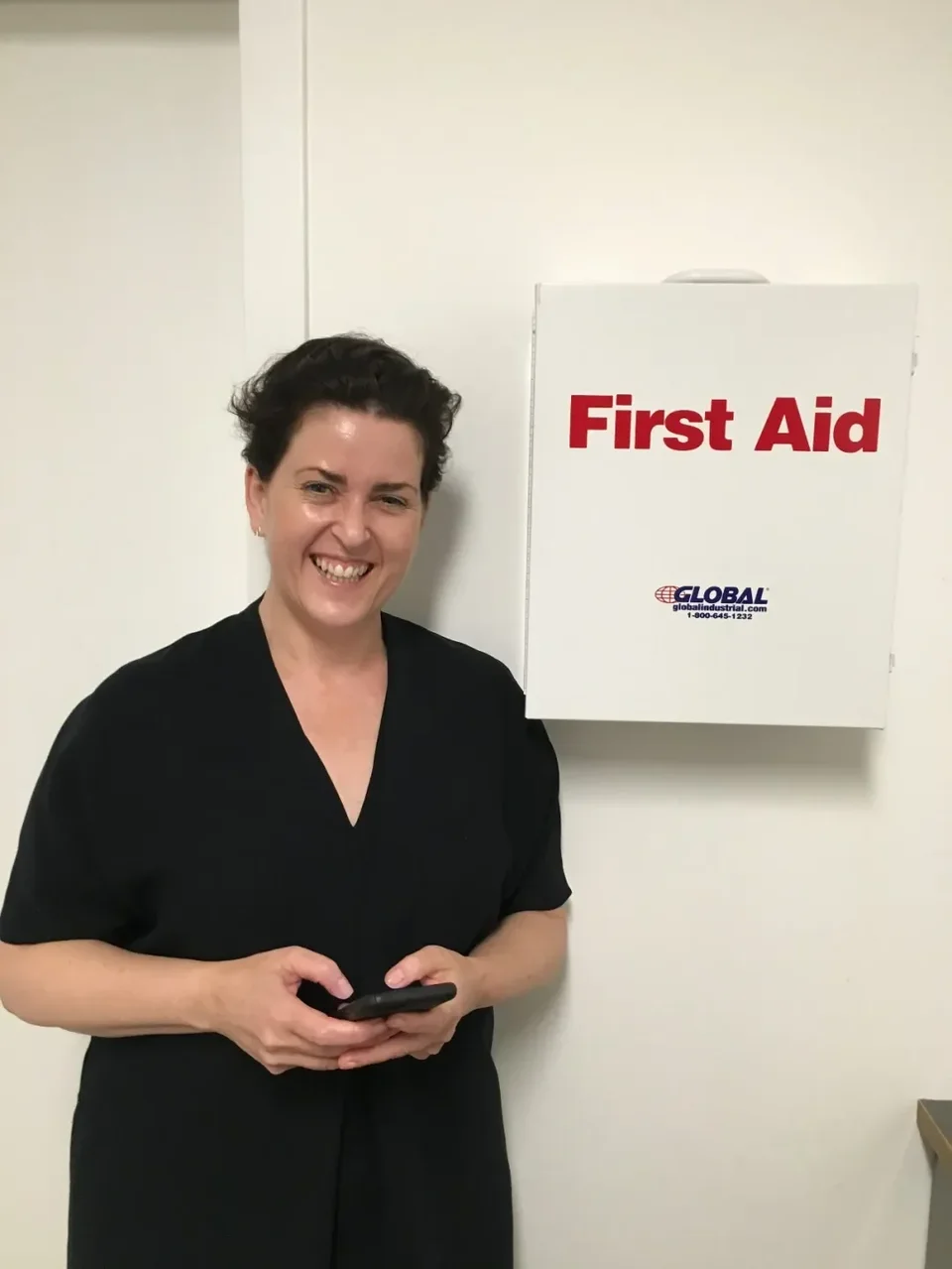
Charlotte Cotton
Thank you so much. It's wonderful to be here. I've prepared a few words, with no pictures, to set the context for joining you today: where I am creatively, intellectually, and emotionally. I've returned to some thoughts I shared when I spoke at the Society for Photographic Education, SPE.
At its annual conference in Atlanta, Georgia, this March, my remarks were called “What I Learned from You.” That has become a theme of my intellectual life: a reminder that we are all educators and students. We each have both capacities. I was there thanks to the recommendation of photographer and educator Jennings Sheffield, who introduced me to Brett Kallusky, a member of the organizing committee based in Minneapolis.
I mention this because our creative lives depend on the people we keep close and collaborate with. Brett and I spoke regularly during the year before the conference about its shape and the major conversations proposed for photographers and educators, as well as what was happening to him, his family, and his community in Minneapolis at this troubling time in American civil history.
I was also happy to meet SPE's executive director, Toni Roberts, an extraordinary woman and already a trusted member of the SPE community as the organization restructures and, frankly, finds a way to survive. And Rong, I think of you with the same gratitude, for teaching me and inviting me today. You remind me of the phrases I put on little Post-it notes: always remember the people you connect with, who bring you joy, and say yes when they ask you to do something. What I'm relearning from you and others is the togetherness of face-to-face, in-person participation, both online and offline.
I appreciate being in a place that quietly honors the fortitude it takes for all of us to juggle education, organizational and cultural projects, our individual lives, and ongoing research and creative growth. I learn from everyone, and with everyone, what it takes for each of us to hold our ground. At every turn in my life in photography now, I see photographers supporting photographers and showing up for each other, aware of the reality checks we all face in this mercurial world and mindful of one another's circumstances and starting points as we join the exchange.
I'm learning that we are in this together, as we are here now, and I won't turn away from the generous reality checks and exchanges you'll bring into this space today. I'm reminded of questions whispered through the photographic community for generations, a community for which I still have great affection. First, will we get the money to do what we want to do? Second, how do we bear witness to what is unfolding in our lives and communities? Third, how do we carry our histories forward and safeguard human agency? How do we learn not to be defeated, and claim what urgently needs to be carried forward? This is a time that could completely floor us. The best way to live through it is to participate in real exchange. Thank you for inviting me into your discussion.
Ce Zang
Thank you, Ms. Charlotte Cotton, for your account of Photography Is Magic. Next, I invite our guests to pose questions and discuss both her books and the new issues emerging in photography today. Let's begin with Mr. Rong Jiang.
Rong Jiang
Thank you, Mr. Ce Zang. Ms. Cotton's heartfelt opening remarks moved me deeply, and I am very grateful for them. For nearly thirty years, she has worked steadily on how contemporary photography has been brought into the system of contemporary art. Through her research and practice, she has consistently spoken up for artists around the world.
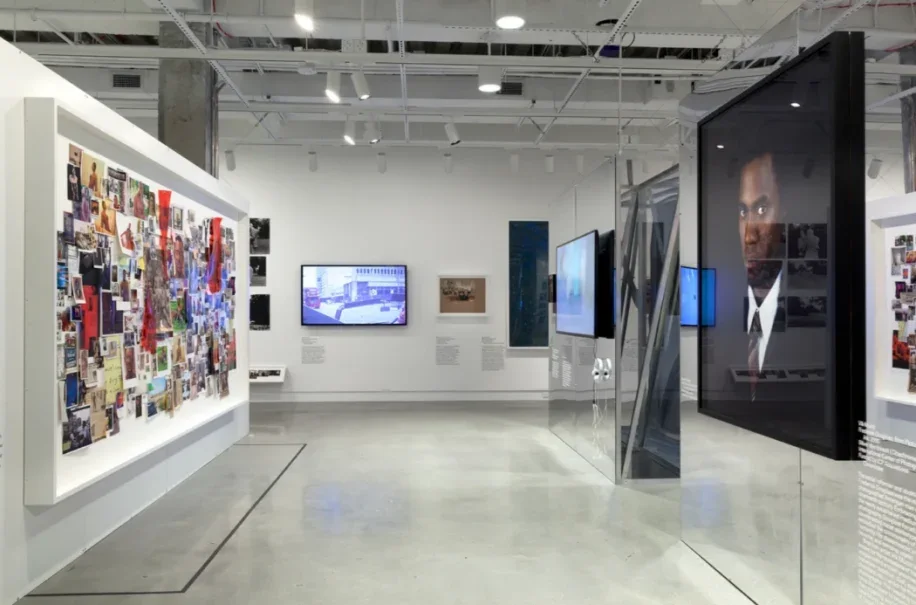
My contact with Ms. Cotton has been intermittent. We first met in 2016, when she was curator-in-residence at the International Center of Photography in New York and organized the exhibition Public, Private, Secret. The show looked at how personal privacy could be protected amid the rapid technological development of the time. After the exhibition, I took the liberty of asking her for an interview, and although her schedule was packed, she readily agreed. As she said just now, in the face of the difficulties she outlined, practitioners should support and sustain one another, and I find this spirit of mutual help very moving. The same was true this time: Ms. Cotton had just finished at Photo London, yet she accepted our invitation immediately. On behalf of the organizing team in China and all our online viewers, I would like to thank her.
Besides the two books Mr. Ce Zang mentioned, The Photograph as Contemporary Art and Photography Is Magic, she also co-edited another important book, Words Without Pictures, which is equally significant. Today we are discussing the difficulties photography faces at present and how practitioners should respond, which I believe is a topic of great concern to everyone watching.
I'd like to ask Ms. Cotton a question. When I interviewed you in 2016, you put forward the concept of "photographicness," saying it captured precisely the condition photography was in at that time. Ten years ago I found the concept hard to grasp fully. You later expanded the idea into the title of Chapter 9 of The Photograph as Contemporary Art, formally establishing "photographicness" as a core concept. Ten years ago, a group of practitioners such as Lucas Blalock were called post-internet artists, and their work was described as possessing "photographicness."
Now that we have entered an era of AI-generated culture, which artists have you seen whose work genuinely confronts the changes AI culture has brought?
Charlotte Cotton
Can you repeat the question? Forgive me.
Would you like to know the context in which I wrote Photography Is Magic?
Thank you for starting with Photography Is Magic. I appreciate that, because most people know me for The Photograph as Contemporary Art, as someone who reads photography as art in the twenty-first century. Photography Is Magic is, in many ways, a more personal project, and I'm always touched when someone wants to talk about it with me. It began for me around 2010, and the book was published in 2015. To give you a sense of where I was in my life then, I had just returned to the United Kingdom after my first period of living in America, where I've lived for most of the past twenty years. I returned to England to be creative director at the Science Museum in London. I was thinking about the optimistic possibilities for creative industries and image-making in the 2010s, and about a museum that could speak beyond art to image culture at a highly technological moment.
But on returning to the United Kingdom, I encountered the early effects of the 2008 financial crash, including its effects on education and creative labor. I was conscious, too, of the wholesale privatization of higher education in the UK. Things had been very different when I went to university. I'm so old that I received grants, and my fees were paid throughout higher education.
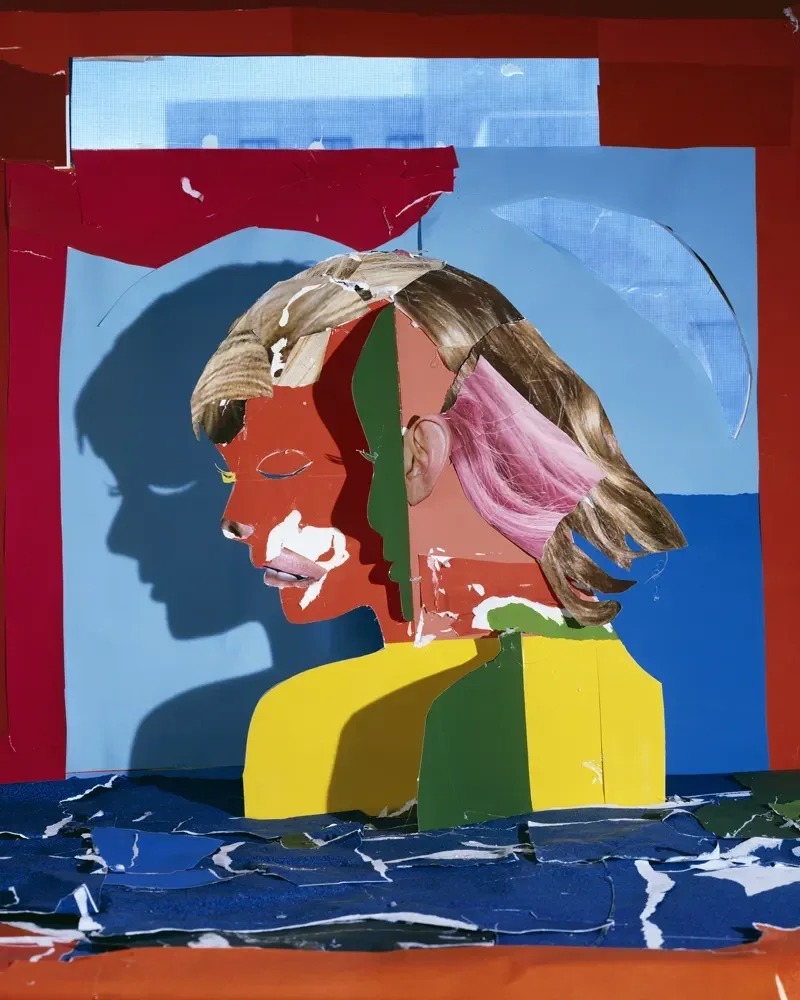
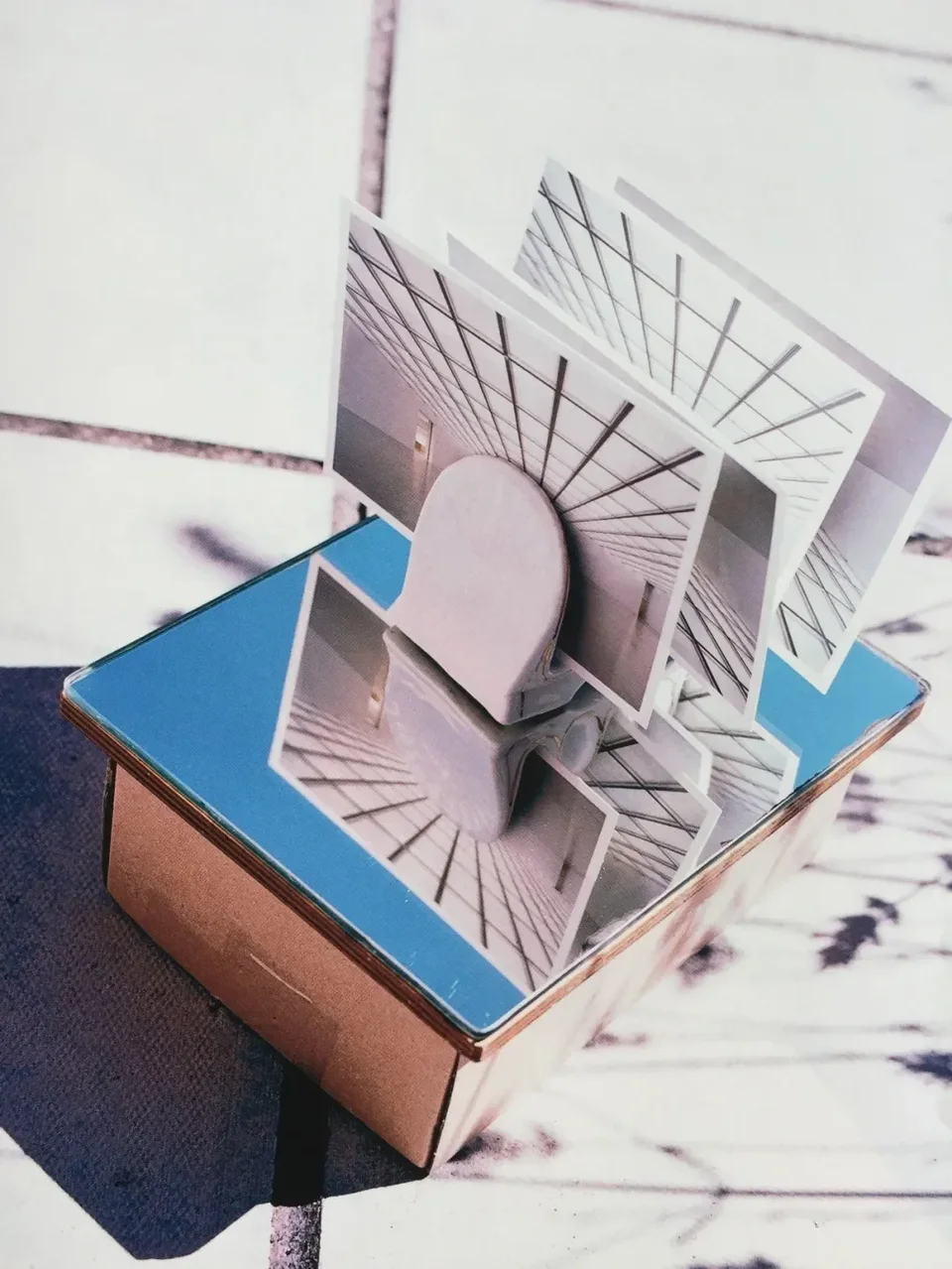
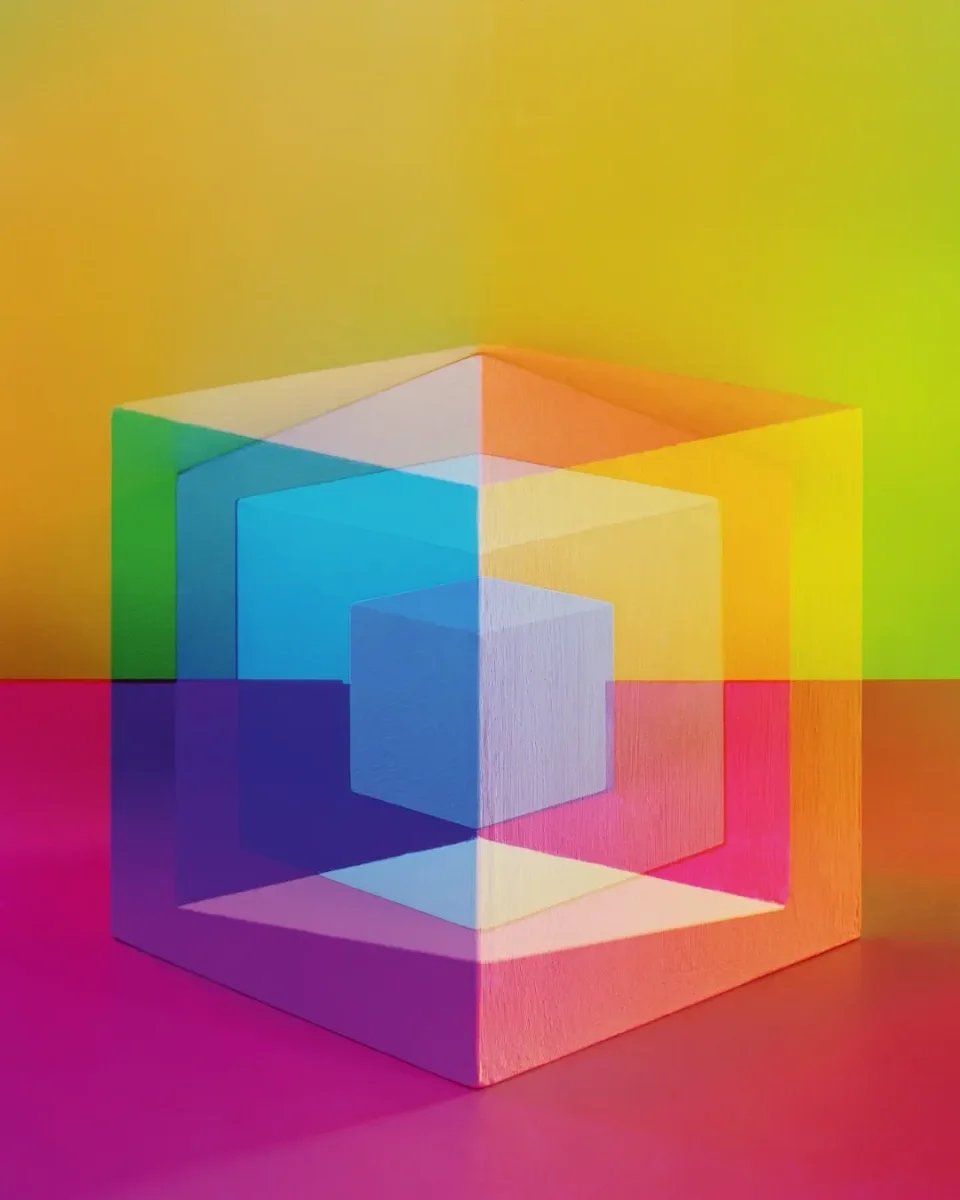
That was categorically coming to an end, and young creative people's choices in the UK were becoming very different from anything we had experienced. As someone wary of educational debt, I saw Photography Is Magic as a love letter to the future of image-making: what might be possible if you chose not to go into debt collecting qualifications, but went straight into making images. The idea was to create a beautiful, optimistic book that brought together more than eighty image-makers and artists from around the world. It was generous rather than selective, unlike institutions that might choose half a dozen artists to represent a moment. It said: this is happening here, there, everywhere. You could see a whole generation of artists leading the creative flow, without waiting for institutions or education to validate their work. There was creative energy all over the world. I wrote it for the person I would have been at eighteen in 2012: the future is yours; make what you want to make. Some of these artists you may know, and others you may never have heard of, but they show that a path to a creative life is already there. Whatever money or institutional endorsement you have, you can be creative now. The book received some criticism, but fortunately it came together quickly, along with a related biennial in Daegu, South Korea. They reached an audience at a moment when, I think, there was a real need for optimism about the future of being an image-maker.
Shall I start with your lovely thoughts about photographicness and what it might mean today? You're right that my writing about the photographic is connected to the 2010s and post-internet artists, including Lucas Blalock. Many artists in Photography Is Magic subsequently became part of an additional chapter in The Photograph as Contemporary Art. And you're right that post-internet can be understood as a period, just as art history speaks of modern and contemporary periods. In that art-historical sense, it marks a time from the mid-2000s to the end of the 2010s when all bets were off and everything else in life came into play.
Would I carry “the photographic” into the present, and into our relationship with AI? I'm cautious, because AI is a vastly larger proposition. Even as we've been talking about it, “AI” has become an overstretched term. “Post-internet” remained quite narrow and specific, essentially within culture and art history, partly because it was such a demanding term. AI, by contrast, touches everything in our lives.
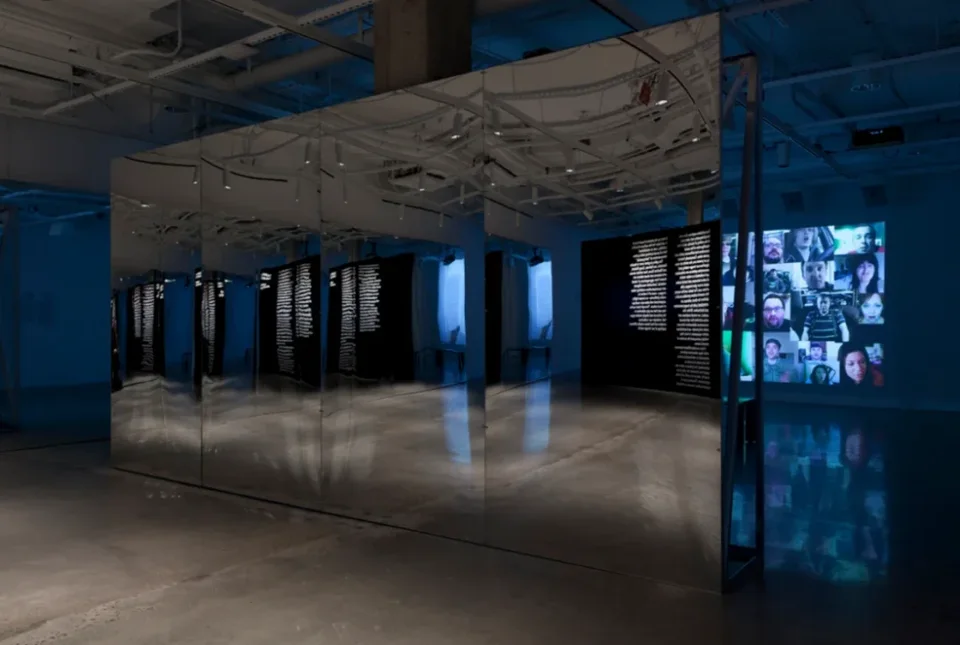
Image-making may be only a small part of AI's effects. I can tell you about my own relationship with it, which may clarify what interests me. You mentioned Public, Private, Secret, the exhibition at ICP when you and I met, Rong. You may remember a series of square screens in the exhibition, with live, nonlinear, curated selections from Twitter. Every fifteen minutes they would update around themes such as otherness, transformation, or morality tales.
Those screens changed how you read the history of photography and the boundaries, or the lack of boundaries, between our public and private selves. I worked with a technologist on that part of the exhibition, Mark Ghuneim, who lives in New York and has been my friend for the past ten years. When NFTs started taking off, I'd call him and ask, “Mark, are NFTs a Ponzi scheme?” He'd say, “Yes, correct. Don't put too much effort into them.” So when artists asked me whether they should make NFTs, I'd say, “You have to make them to understand them, but if you're still making them in six months, I'm not talking to you.” He was very good at cutting through the excitement around new toys and gadgets. AI is something entirely different.
Three years ago, Mark called and asked whether I'd join a study group on human agency in the age of AI. I said, “Please!” It brought together technologists, people from music and film, and Mark and me, taking the pro-artist position: artists determine the future. We read together, followed the news, and have continued to do so for three years. Then we began working on a product about storytelling with AI; I won't go into the details. What I've learned is that we're at a rudimentary stage. The challenge will be to use AI to enable human agency rather than remove it, and we're interested in how it can take you deeper into storytelling. The great difference between AI and earlier technologies is not its complexity, but that you, as an individual, can train it to do what you specifically want. If you're willing to put in the time, you can instruct AI to write code without being a coder, or to create an avatar, an assistant, or other support. Most people use off-the-shelf models now, but there is the possibility of a future in which AI gives individuals more agency and saves us time so that we can go deeper into our ideas.
Creatively, I think more of us will say, “I come from photography,” while what we do with that knowledge and discipline may look completely different from what you'd expect. The process of photography and image-making has been radically upended: you can make an image before you have an idea.
You can make an image before you've refined your personal aesthetic or signature. You can make it and then ask what it tells you, or what story lies behind it. You can turn it into a film or animation, or write the novel that goes with it. I see photography, the image, no longer necessarily as the end result, but perhaps as an early prompt for other kinds of storytelling. I'm excited that a musician can feed a line of music into AI and ask what its structure might be if it were a character or a play. Someone like me can bring together, can curate, a cast of images.
AI can then help turn that cast into music, a novel, a play, or a film. I'm oddly optimistic about AI because, in the safety of the study group, I've seen it create new ways of working. I would be sad to lose photography's sense of consequence, its sequence of steps. That is my discipline: I think about what follows when I do this, then this, then that, in this order. Something magical happens, something I call “the photographic.” I think that can apply to creative work with AI. It just isn't available off the shelf yet.
Rong Jiang
Thank you for your response. I'd like to follow up with another question. We previously invited the scholar Fred Ritchin to one of our lectures to discuss his book The Synthetic Eye: Photography Transformed in the Age of AI, focusing on the concept of the "photorealistic image." He argues that AI-generated images are not photography and can only be classified as "photorealistic images." I keep asking myself whether AI-generated images count as photography, and whether they have photographic qualities, and I suspect many in our audience share the same question. AI-generated images are trained on material from many sources. These include ordinary images, but also paintings, medical imaging, surveillance footage and more. They have none of the brushwork of painting, nor the native pixel characteristics of digital photography.
So my question for you is this: do you consider AI-generated images to be photography or to have photographic qualities, or are they an entirely new, independent medium?
Charlotte Cotton
Thank you. I'm embarrassed to say that I haven't read Fred's new book, but I like the term as you've described it. I'd be happy to say “photorealistic,” just as I was happy to say “photographic”; both seem useful. Emotionally, I share the desire to distinguish my beloved photography from image-making with generative AI. In the past six years, perhaps ten, I've fallen back in love, politically, with photography as a way of bearing witness to what happens in our world and communities. I'd actively fight to preserve the legitimacy of calling photography a medium of bearing witness.
That doesn't mean generative AI can't be used to bear witness, especially given the scale, reach, and immediacy with which it can tell a story. But I don't think the still image made with generative AI is where that happens. There is this little area where photography meets AI and visual storytelling: the still image, the Midjourney version of AI. You're right that it isn't photography, but I don't think it represents the full reach of generative AI either, in producing powerful stories that speak to and bear witness to where we are. An animated film can tell me more about what is happening in the world than a photograph in a newspaper or other media outlet. Stories can come from many angles. But right now I want to preserve within photography the right to bear witness: to see what I see, rather than what I hallucinate or imagine. That is worth preserving.
I've written very little about AI so far, though I'm about to publish more on image-makers and how I think AI changes things. There's a whole history of people who made images in the late twentieth and early twenty-first centuries without being photographers. As that material ages, it becomes fascinating to look at it in relation to AI and to the terrain of being an image-maker and storyteller in the 2020s and 2030s.
The value of photography's bearing witness, of telling the truth about our lives and maintaining a relationship to human vision, is worth protecting rather than surrendering to AI. At the same time, that history was largely the preserve of single authorship. It said one person took the picture, literally the white man behind the camera. Let's not pretend it was an open field with a diverse canon. It has taken the end of the twentieth century and much of the twenty-first to acknowledge that you don't have to be Robert Frank or Cartier-Bresson to make a picture that tells an important story to the world.
So, as photography people, we need some caution and humility. We didn't get everything right when we talked about photographers. Protect what we want to protect and claim what we want to claim, but don't imagine we come from an immaculate place while AI is the bad place. AI opens an arena for storytellers to work with reach and scale we've never seen before. It will be fascinating to see who makes films, television, and news media when they no longer depend on monolithic global media conglomerates.
Ce Zang
Thank you. Hearing Cotton speak about NFTs just now brought some particularly interesting questions to mind. A few years ago there was a wave of discussion about NFTs in China, followed by discussions of the metaverse, augmented reality, virtual reality and so on. I have also been thinking about AI for a long time. The questions Mr. Rong Jiang and Cotton raised are well worth reflecting on, and I have one further line of thought.
I believe AI is not merely a tool that changes how we use photography and images. It is something like an external extension of the human brain, a kind of plug-in, yet it operates in a way that is fundamentally different from the human brain. AI is like a mirror in which humans can look back at their own intelligence, a point of reference. By understanding AI, we can more clearly retrace and understand certain patterns in our own thinking. Without this reference, it would be hard for us to arrive at the clear self-understanding we have today, as seen, for example, in the rapid advances of neuroscience and consciousness science.
People often discuss what changes AI brings to photography and whether AI-generated images still fall within photography. But I think the more fundamental question is what changes our own "world model" will undergo as a result. In my view, AI brings not just a transformation at the level of the medium but a reconstruction of humanity's whole way of knowing. The logic and architecture of human thought will change fundamentally. Major changes will follow in how we see the physical world, the virtual world and the worlds we imagine, and even in how we understand our own consciousness. This point is especially crucial.
Next, I invite Mr. Guosen Chen to put his question to Ms. Cotton.
Guosen Chen
It is an honor to speak with Ms. Cotton, and I very much agree that you are not a technological pessimist. AI has become a topic everyone in photography discusses; we have asked almost every guest about it. My field is digital humanities, and my research began with image-makers on social media platforms. It now covers AI safety, AI ethics, photography and related fields.
At its core, photography, like art, is about forging connections between people, and how to build those connections has become an increasingly urgent question today. Communities have always been built on a shared sense of existential uncertainty. Their central concerns likewise include connection between people and the means of protecting a community's survival. I'd like to go back to one of your earlier books and ask a related question.
Words Without Pictures includes Christopher Bedford's 2007 essay "Qualifying Photography as Art, or, Is Photography All It Can Be?" The essay cites Lewis Baltz's view that photography produces an enduring psychological fascination. Baltz suggested that artistic enthusiasm for photography rises in a wave every thirty or forty years, and that with each new wave people almost entirely forget the thinking accumulated during the previous one. He also pointed out that photography's most essential qualities, namely ambiguity, contingency and randomness, are precisely what the discourse of contemporary art finds hardest to accept.
It is now 2026, twenty years after that discussion. Photography's position within contemporary art is more secure today than at any time before. My question is: has this security come at the cost of those core qualities of ambiguity, contingency and randomness? To put it another way, if photography is to be fully integrated into the system of contemporary art, must we give these qualities up? That is my question.
Charlotte Cotton
That's a gorgeous question. Forgive me; I haven't read that conversation with Christopher in a long time. I remember it because he is now director of SFMOMA, but at the time we were both curators at the Los Angeles County Museum of Art. I thought he was brave, as a contemporary art curator, to have that tussle with me. The wider world might not have seen much difference between Christopher Bedford and me, but we felt a profound difference in how we related to photography. That difference played out in big institutions. Contemporary art departments had larger budgets, so they bought Andreas Gursky and Wolfgang Tillmans, while the photography departments bought Doug DuBois and other work on that side of photography. We understood, personally, that photography meant something different within contemporary art. Those of us who came from photography saw a rather two-dimensional understanding of it there. You're right that something was secured in the past twenty years. In the 2000s and 2010s, works by photographers and artists using photography were collected by the contemporary art departments of major museums and became part of that canon. But they may not sell as much now. In this cyclical world, there's currently less interest in photography's market value, even when the artists are in the contemporary art canon. So photography did become established to some extent, but not all of it, and much has fallen away. Some of that reflects the political conservatism or hesitancy of institutions now, particularly in the artists they choose to engage with. In American museums especially, much collecting was done through committees of wealthy people who gave money and helped decide what it would buy.
There's a fashion to that collecting, and in this mercurial political moment I think less work by nonwhite or queer artists will be bought and added to the canon. So it isn't a wide terrain. The place for photography as art within contemporary art remains small and contained, and it is shrinking now, becoming more cautious, with less investment. Artists of my generation, now in their fifties, were among the first able to make a living selling prints. Very few remain in that position. So photography's place is, in one sense, uncontested, but it is also in decline and becoming a smaller platform.
Guosen
You mentioned just now the current conservatism and hesitancy of art institutions. This reminds me of the British documentary photography tradition that took shape around 1970, which differs greatly from the American documentary system. British documentary photography relied heavily on public funding from government programs. Where the money for making work comes from has always been a central issue. Thank you for sharing.
Ce Zang
Following on from Guosen's question, an interesting question has occurred to me as well. We all know that when photography as a medium entered the trajectory of contemporary art, not every photographer was accepted by that system. But I have a question. One of the core features of contemporary art is that it constantly absorbs things from outside the art system and turns them into art, thereby continually widening and challenging its own boundaries. Put simply, it turns what is not art into art. So could photographic work that was not historically part of contemporary art also be brought into contemporary art photography in the future?
For example, my good friend André Rouillé draws a very clear line here. On one side is the art of photographers, and on the other, the photography of artists. Photography oriented toward contemporary art necessarily belongs to the latter; it has developed along the lines of contemporary art. My question is whether the "art of photographers" might one day also be embraced by contemporary art. I think this is a very interesting question.
Charlotte Cotton
That's a good question. Let me tell you something from my early life as a curator at the Victoria and Albert Museum. In the 1990s, one of my jobs was to go into the vast photographic store, wearing a jumpsuit because it was so dirty, and search through boxes from the museum library. There were hundreds of thousands of photographs in the V&A's collection, and we were still opening boxes to see what was there. On a very good day, you'd find a photograph by Eugène Atget. He had sold the museum photographs of Parisian metalwork in the early twentieth century, and they had been mounted on card and filed in a library cabinet. Every time we found an Atget, we'd go to lunch to celebrate finding a work of art among those filing cabinets. So my immediate reaction is that anything might enter a retrospective rethinking of what counted as contemporary art photography. If you're asking how I defined contemporary art photography in the book, remember that I was in my early thirties when I wrote it. It was only my second book. I was growing up with the first generation of young people, mainly women, entering MFA programs in Europe determined to be artists. Whether they would be artists, or whether this was vocational training, was no longer the question. They were making pictures for galleries. I was interested in their motivations, and my own generation led me there. As you'll notice, The Photograph as Contemporary Art isn't arranged by traditional art-historical genres such as landscape, still life, and portraiture. I learned its categories from makers and their motivations. I don't think I was especially clever about it then, but, in hindsight, that gave the book longevity. It wasn't trying to define the terrain of contemporary art photography academically or semantically. It asked what I could learn from the people making the most interesting work at that moment. The hardest decision was how far back into photography's history I needed to go to ground what I said about young photographers. I decided partly from my politics, but also from my conversations with artists: who from photography's history did they talk about? Not Robert Frank or Cartier-Bresson, but Cindy Sherman, Louise Lawler, James Welling, and others. They determined where the history began for me. So I'd trust a source who brings into the idea of photography as contemporary art people we hadn't previously included.
That source might be artists saying, “I never had the chance to talk about how much my conversations with this other artist affected me,” or theorists thinking about the wider movements of images, environments, and culture. If a dealer told me someone should be included, I'd be suspicious; if a collector said it, I'd be very suspicious. That's a fault line of contemporary art photography. Work can look like art because of its production values, while what defines it as art for me is the maker's motivation.
Ce Zang
Thank you, Ms. Cotton. One point you just made is especially important: motivation. Motivation matters precisely because it marks the most fundamental difference between artists and AI. Everything AI creates is driven by instructions given by humans; it has no inner motivation of its own. I think this is crucial.
Rong Jiang
Charlotte, I listened closely to everything you said, especially the three challenges you raised, which you believe all researchers, artists and curators should reflect on. One of them is that, when facing AI-generated images, we should uphold human subjectivity rather than let it dissolve. This reminds me of an interview I did with you ten years ago. You spoke then about the rise of digital photography. Digital image art first appeared in the 1990s, and at the time the debate focused not only on whether photography would die but also on whether digital technology could be creative. You argued then that the motivation behind a work is the most important basis for deciding whether it counts as contemporary art. This also brings to mind the word "intentionality," and I think intentionality and motivation can be regarded as the same concept.
When Stephen Shore made his American Surfaces series, he shot with a simple camera, produced 5×7-inch prints, and displayed them directly on the gallery wall in three rows attached with transparent tape. At the time, most people could not make sense of the work, which looked like family snapshots. But it was precisely Shore's "intentionality" that made the series contemporary art of its time rather than family snapshots. Even today, we still recognize the value of this body of work.
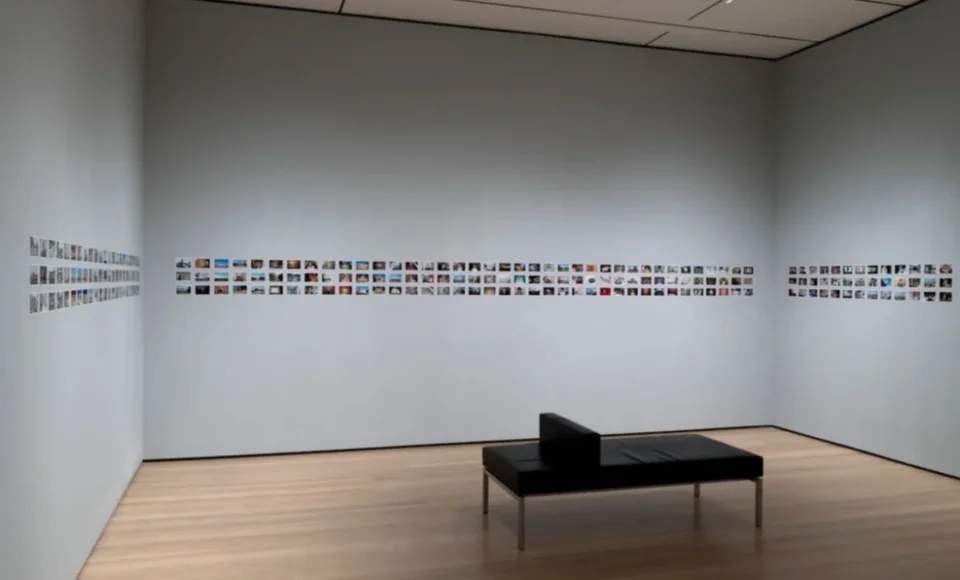
In this age of AI-generated images, I keep asking myself what kind of work has value and can be regarded as creative art, as contemporary art.
The work of Trevor Paglen and Hito Steyerl has inspired me; in my view, they are at the forefront of exploring AI imagery. Trevor Paglen has made a series of works around images generated by surveillance equipment and drones. I once saw one of his works that at first glance looked like a magnificent sunset. Only on closer inspection could you see tiny traces of a drone hidden among the clouds. These relate to the US military's methods of warfare, demonstrating how smart bombs are dropped to strike enemy targets with precision. The work made me rethink what the image meant.
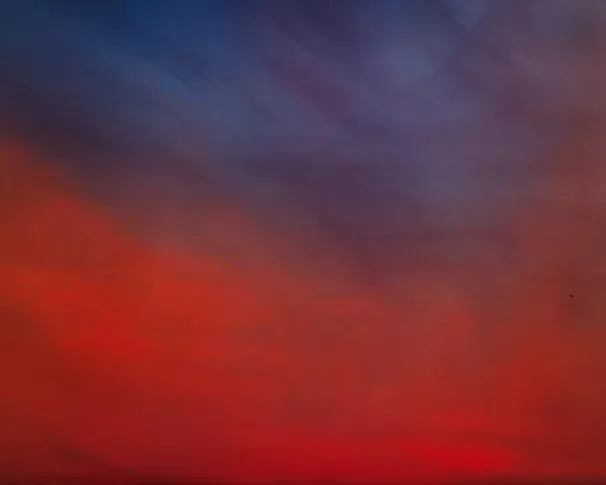
The work produced a second way of seeing it for me. Next to it was a silent moving-image piece showing the US military using smart bombs to kill targets on the ground without a sound. It made me reflect on the use of such technology in contemporary warfare, and similar scenes now frequently appear in news reports.
Artists like Paglen continue to make this kind of work, and their work is genuinely creative. Within the wave of AI-generated art, who else is producing interesting work? I understand what you said earlier about not wanting to rush to define different kinds of work, but I still hope you can share some examples from recent years that you feel deserve attention.
Charlotte Cotton
Yes, I'll answer, though somewhat sideways, so forgive me. I'll tell you what's interesting me now. First, as you can tell, I'm not an academic. I don't gather things together to make an argument that this is good, that is bad, or these are the consequences of AI. AI is part of a huge shift in how we create, communicate, and read. I live through it, and I think our personal experience, the anecdotal, is an important part of how we understand what's happening.
I'm hesitant partly because my experience is so personal right now. I'm dealing with my mother's death and spending a lot of time here in the Cotswolds, near Fairford, from where the American military is sending drones into Western Asia.
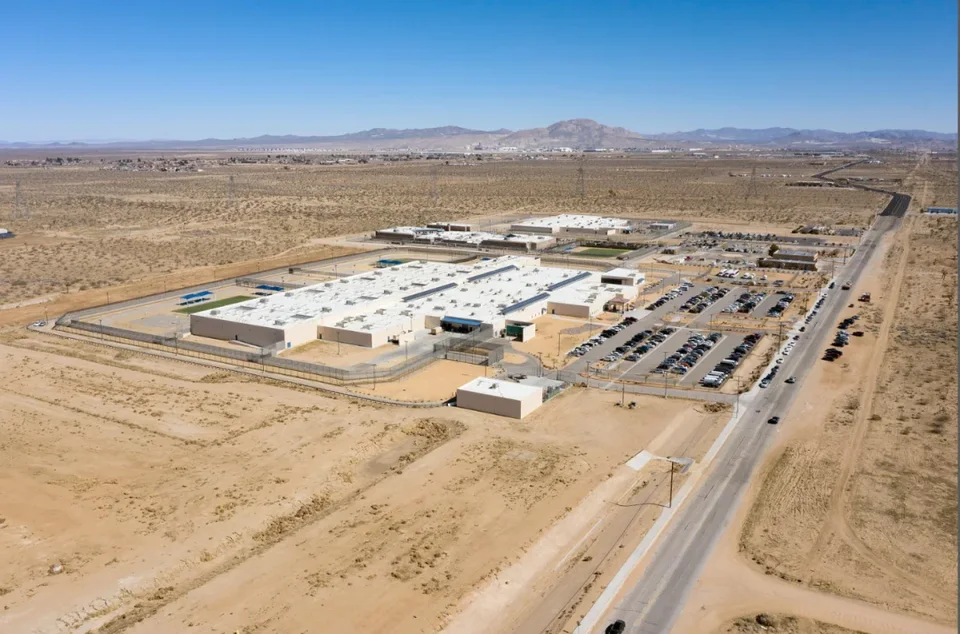
The protesters are often older people, Quakers, and people in their seventies and eighties are being arrested for protesting those drones leaving a peaceful place full of birdsong. I can summon Trevor Paglen into my own world right now. This historic place has beautiful sunsets and landscapes, yet warplanes overhead make the windows rattle. So I stay close to the anecdotal instead of naming artists from an art-historical distance. I'm also cautious about anointing artists with status in a market economy. But let me answer you. I want to return to the Society for Photographic Education and what I learned from presentations by students, educators, and people who are both. They had chosen collaboration as their theme, though during the conference's preparation it shifted toward bearing witness in a time of genocide. I saw work by a photographer in Texas documenting the construction of ICE detention centers. I heard about work documenting an AI generative-content center being built near Memphis, with implications for the environment, war-making, and deindustrialization.
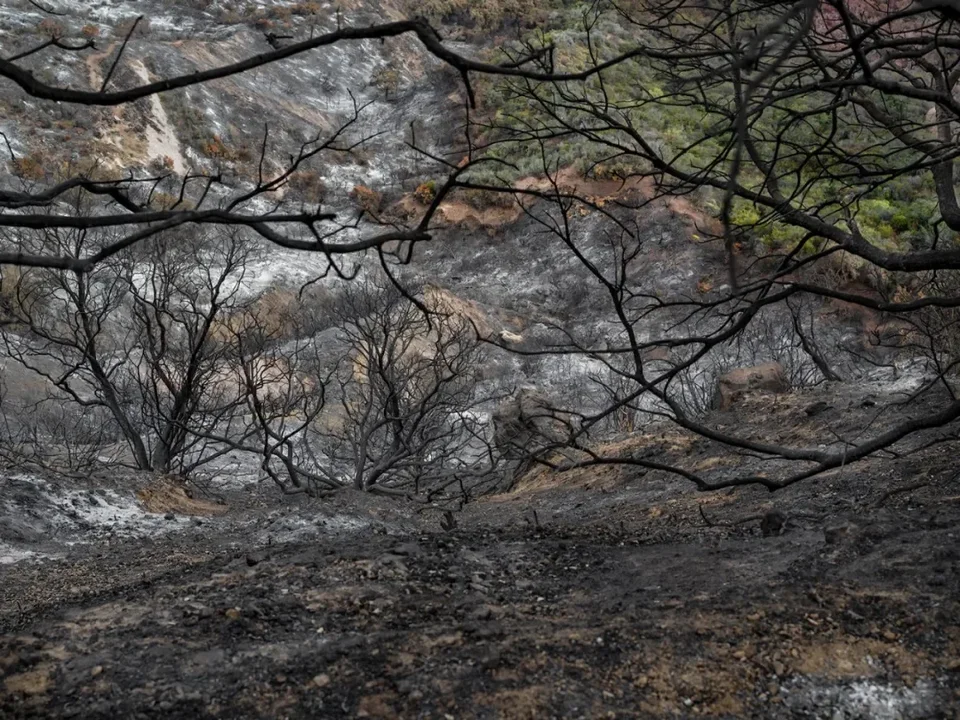
I saw a woman making extraordinary photographs of wildfires, reading her local landscape through the fires, their paths, and their aftermath.
I was seeing forms of bearing witness on a scale that is hard to take in. From 2020 to 2024 I was also artistic director of a photography biennial in Qatar, in the Gulf, and helped establish project grants for photographers in North Africa and Western Asia. We didn't approach this through a conventional art-historical or particularly Western search for artists. We asked, “What are you making?” I saw conservation projects in Iraq and, forgive my ignorance, discovered photographers bearing witness in a completely classical way. I learned what photography does. I was in a country with Al Jazeera and Euronews, meeting storytellers from across the region and hearing about their personal projects. In the 2020s, for many reasons, I've returned to photography as a way of bearing witness in terrible times: war, environmental destruction, and the persecution of particular groups. I worked with three young Rohingya photographers then living in Cox's Bazar, Bangladesh, in the world's largest refugee camps, documenting their lives on iPhones. The photographs were amazing. Everybody knows how to take a great picture. I'm wrestling with what criteria we use to judge the impact of images made by humans. AI is connected to that, yet it isn't the whole question. There's also something purely photographic at stake. This work may not matter to the Whitney Biennial or the Venice Biennale right now, but it's being made. I want to be ready to work collectively so it isn't forgotten amid dazzling AI prospects and hallucinations.
The second way I'd answer is to ask what storytelling and photography can do in an age when AI affects profound areas of life that have little to do with making images, or where images are only incidental to the larger change.
My second story is about my twin sister. She works in mental health, particularly on the conditions and labor of mental health workers, and this year published a book I recommend, Uber Therapy. It examines text-based and AI-based therapy and their effects on mental health, but also the nature of the work itself and the lack of labor organization in the field.
That field is especially vulnerable to large corporations offering text-based therapy, where you can swipe and “like” your therapist instead of doing the hard work of therapy.
So I read much more broadly about AI, as a social force affecting human agency rather than an art-historical project. I've never been very interested in images that simply illustrate a technological moment, or photographs about the online image environment that are brought into a gallery. I'm more interested in artists who really work out, conceptually, what this means and what we're looking at, like Trevor Paglen or Hito Steyerl.
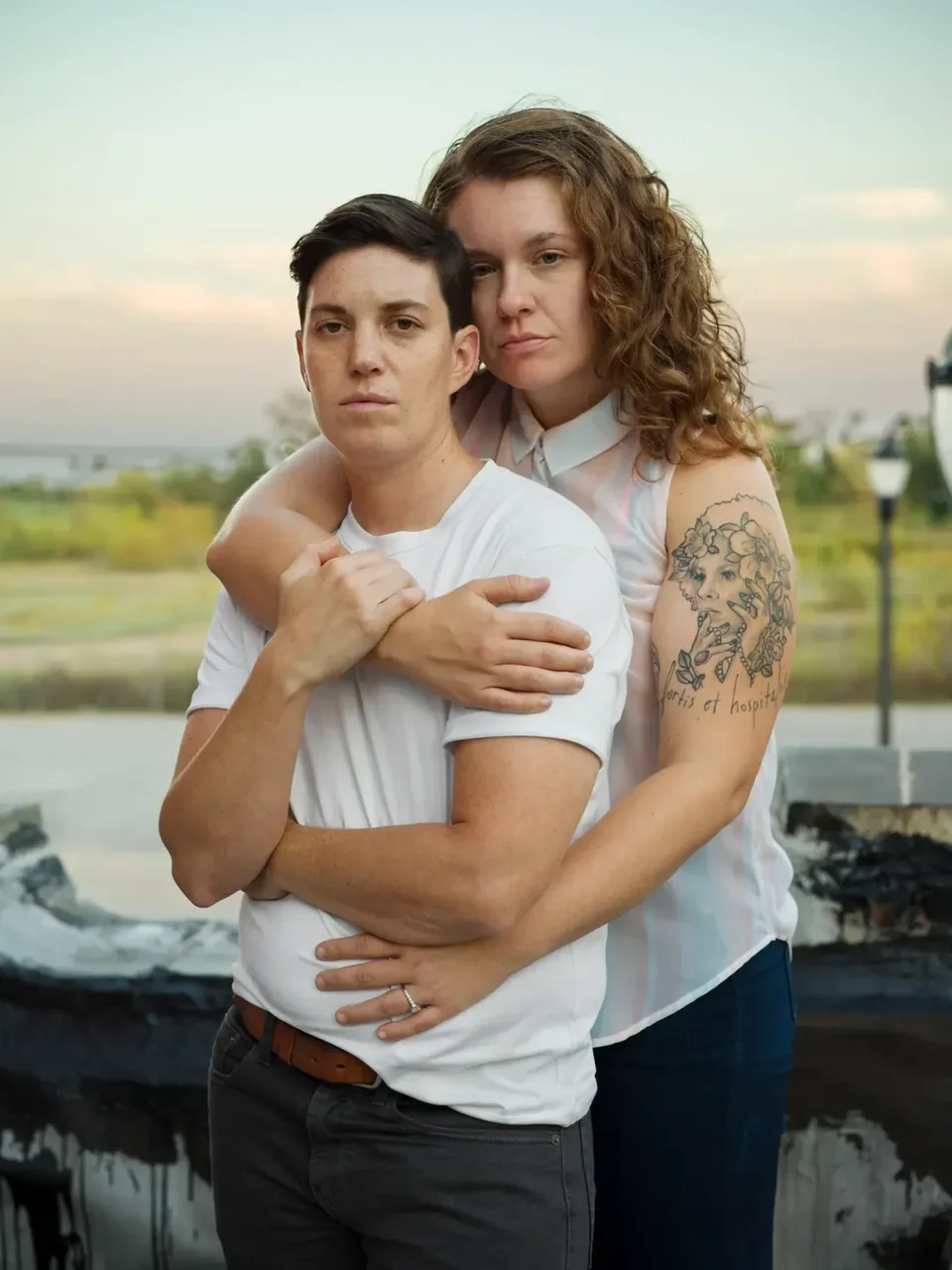
My third anecdote is about a two-volume book I've just published with photographer Jess T. Dugan, called Love Pictures. It's essentially a monograph of Jess, who is in their early forties and an exceptional, very classical portraitist of LGBTQ people, especially trans and gender-nonconforming communities.
So far Jess has worked across America, though I hope they'll work more broadly. The book grew from a five-day conversation we had in St. Louis, where Jess lives, about love, responsibility, family, photography, and cultural institutions. That conversation became the framework against which their photographs are arranged.
Rather than organize the book around the bodies of work Jess had made, we let its themes emerge from a conversation between two people who care deeply about photography's future and responsibilities in uncertain times. The second volume has fifteen conversations with people we brought, in a sense, into that room.
They range from Jess's mother and longtime collaborators who sit for portraits, to major influences such as Dawoud Bey, who taught Jess, and Catherine Opie, whom Jess is getting to know and with whom I've worked a lot over the past decade.
It's a series of interviews that grew much as a conversation today might. If I mentioned a photographer friend, I'd probably email them afterwards: “Were your ears burning? I was talking about you, and it made me think of a question I want to ask, based on that conversation.”
Anyway, I'm telling you this partly to confuse you about what your question to me was! But also to explain that I've been thinking about AI at a very broad level rather than compiling a list of artists. I'm living through it, as you are, and I'll reserve judgment on what art history and contemporary art institutions do with it. I hope they do better than they did with post-internet practices or NFTs. I hope they do better with AI.
Ce Zang
Thank you, Ms. Cotton. Cotton's example of psychological counseling just now reminded me of a very interesting work. An artist in China who works with AI once made a piece in which AI acted as a therapist, responding to all sorts of psychological troubles raised by the audience.
At the time, I had a different idea. If I were making it, I would reverse the setup: let AI play the client and have the audience play the therapist, helping AI with its psychological troubles. I used to work in psychological counseling, and I know that a therapist can offer support to a client only if he can empathize with what the client has been through and draw on his own life experience to understand others. In the process of sorting through and responding to a client's problems, the therapist is in fact also healing himself. So I think the work would be more interesting if the roles were swapped, with AI as the one confiding and the viewer as the therapist. In trying to help AI with its troubles, viewers would find that many of their own psychological problems were effectively being healed as well.
Another question also occurred to me. The relationship between artists and AI cannot simply be defined as that between a person and a tool, with humans issuing instructions and using AI to realize a predetermined creative idea. I think it is more like a game of strategy between the two. The core difference is that AI has no carbon-based body and none of the sensory experience humans have. The information the human body perceives is as vast as an ocean, yet the perceptual information the brain can recognize, sort and process is only a trickle; there is an enormous gap between the two. AI's situation is exactly the reverse: it has the capacity to process vast amounts of data but no native perception.
If we rely on AI merely to polish ideas already formed in our heads, endlessly refining details and producing standardized "correct answers," that kind of creation is not very interesting. The direction truly worth exploring is to draw on the embodied perception unique to humans and deliberately create ruptures in the symbolic system, forcing AI programs to expose their own limits and internal logic. Only then can we see more clearly the side of this machine that is closer to the real, a machine without human bodily perception and with a mode of thinking different from ours. If we let AI complete everything smoothly and automatically, creating the illusion that everything is seamlessly natural, then creation loses its point as a form of inquiry and only pulls us into a greater illusion. If we simply use AI to polish and process ideas humans already have, that is merely an everyday practical operation and has nothing to do with art.
These are some of my thoughts on AI creation, and I'd very much like to hear Ms. Cotton's view.
Charlotte Cotton
You are a brilliant mix of deep thinking and humor. Thank you for bringing all of yourself to that response. I think you're onto something with the idea that AI is a mechanism for avoiding conflict, the opposite of what therapy should be. It would make a terrible patient, and perhaps an even worse therapist. It would never get angry or upset; it would just stop computing or fail to understand. Human beings really are the point. The challenge is that I no longer use off-the-shelf AI very much. I work with tools oriented more toward my own agency, and I resent the idea of prompting and instructing. Most of us have to adapt who we are to get the AI to understand us. In political and gender terms, I find it deeply annoying to have to change myself and my context yet again to make a machine work for me.
It's transactional, isn't it? Transaction can be the death of deep human emotion. That game-like exchange, as you said, stands in for actual relationships. There are real challenges, because AI is also like candy: it seems magical in how much it understands you, and you forget how much work you've put into making yourself understood by an automated process. In therapy, it's a serious problem if success means that your online or AI therapist agrees with you, likes you, or makes you feel better. Therapy isn't really supposed to do those things, is it? It's a profound disconnection. It will be interesting to see what we forget and then need to remember about being human in a time of quick answers and summaries, when we can give an instruction and get something back without confrontation.
Ce Zang
Good, thank you, Ms. Cotton. Next, I invite Guosen to continue with his questions.
Guosen
Thank you for sharing both the role AI can play in psychological intervention and the harm it can conceal. This is a very complex matter, and on many levels it cuts both ways. I think the core issue is not what AI outputs but how it expresses it. The way AI interacts with users essentially reflects how those users are being treated. I had prepared another question about AI, but continuing to discuss AI tends to narrow the conversation, so I'd like to return to your books.
In the introduction to The Photograph as Contemporary Art, as I recall, you discuss democracy and resistance in photography. Your view, roughly, is that photographers consciously resist the appropriation of photography by mainstream uses while protecting its underlying democratic character.
Today, the most visible expression of photography's democratic nature is the snapshots people take casually with smartphones on social media, something countless ordinary people do every day. Yet this kind of mass image practice falls squarely within what you call "the mainstream uses of photography." However, I could not find this passage in the Chinese translation of the third edition, and I have not yet checked the English original.
So I have two questions. First, was this passage added in the fourth edition, and if so, why? Second, how should we understand the idea of "photography resisting mainstream uses"? What kind of democratic character can photography retain? Those are my questions.
Charlotte Cotton
Each of the four editions of The Photograph as Contemporary Art has a completely different introduction. The fourth edition is the most radical revision of the book since its first publication in the mid-2000s. For editions two and three, I couldn't change the original chapters; I could only add chapters. So what you probably see in the third edition is an additional chapter on post-internet work and a new introduction trying to account for it. I struggled with every introduction, partly because I become anxious at the thought of giving the official introduction to the official history of contemporary art photography.
It's interesting that you bring up social media to stop us following the AI track, because we were in a similar position with social media, weren't we? We had to talk about it as a force reshaping the image environment in which this thing called The Photograph as Contemporary Art exists.
Now we can ask whether AI is the new context that must enter the language we use for that field. With social media, though, much of the work in the book isn't directly about it. The work also belongs to longer histories of what photography does as a medium, histories that run through the twentieth century.
For example, you could argue that post-internet photographic art has as much to do with the image explosion experienced by the avant-garde in the 1910s, and how those artists responded, as it does with social media. Those are two moments in a history of image explosions. That was largely how I understood social media. We couldn't yet see how important gaming or interacting with images would become. Its most obvious feature was an explosion of images, and it wasn't the first such explosion art or photography had faced. So I focused on how contemporary art photographers responded to their own moment while referring back to art history from Cubism onward. Would I write it differently now? AI is much bigger than image-making or social media, bigger than Instagram. I'm glad I didn't tie the whole idea of contemporary art photography to Instagram as if it were a permanent pillar. I can already feel that it won't last forever. So I don't know whether I've answered you adequately. I was cautious about saying, “Look, it's on your phone,” because I didn't think that was the point of the work I was looking at.
Ce Zang
Thank you, Cotton. This is indeed a very interesting question, and one worth discussing today. In my view, social media does not inherently belong to contemporary art, but that does not mean material from social media cannot enter contemporary art practice. As long as artists uncover valuable issues worth exploring in it, social media can become part of contemporary art.
Guosen, do you have any further questions? @Guosen: Thank you very much, Ms. Cotton, for your detailed response, but I'd like to clarify a little, as my question may have been misunderstood. My question was not aimed solely at social media itself but at the series of consequences produced by the democratization of photography. What I'm asking is whether art is resisting the various outcomes of photography's democratization. I noticed that the word "democracy" appears almost only once in the main text of the book.
Charlotte Cotton
Interesting. I'm sorry, I didn't cotton on to that.
That's a very good question. I don't think art photography is a democracy. Is that what you're asking?
Guosen
What I want to explore is the relationship between art and democracy, with particular attention to the word "resistance" that you used in the original text.
Charlotte Cotton
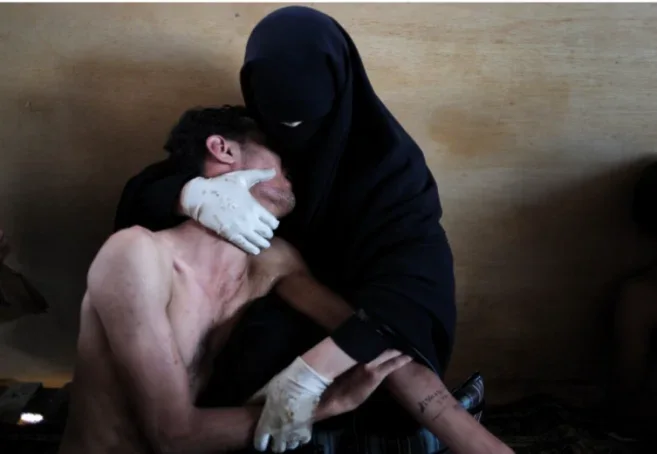
Yes. I would say that art isn't a democracy, and I don't think it can fulfill the idea of democracy. Around the time I wrote the third edition, biennials and triennials were beginning to include a more politicized photography. Beside a painting you might suddenly see photographs of the Arab Spring, bringing something happening in the real world into the exhibition. Photography can do that: carry a current event into a gallery. At moments of crisis it has helped us visualize, or brought us cultural attention to, what is taking place outside. You could say Trevor Paglen makes you pay attention to something real through a gallery experience. I don't want to dismiss what art can do there. But, a little like humor, it is rare for it to work well. I remember photography being used in cultural spaces to acknowledge real events, often informed by social media and by what we then called citizen journalism. That was before widespread surveillance and restrictions changed that landscape and citizen journalism seemed to disappear.
There was a moment of connection, which I think was reflected in the third edition. I'm fairly sure I didn't use the word “democracy” in the fourth.
Ce Zang
Thank you, Cotton. There is another question I'm very interested in. In the preface to Photography Is Magic, Cotton writes: "Photography is magic, but the real magic does not happen in the magician's hands; it happens in the minds of the audience, in the form of imagination." I strongly agree with this and am keen to discuss it further. For many years we have been thinking about this proposition in light of neuroscience, consciousness science and the philosophy of mind. In my view, art actually exists because of its viewers: without viewers, magic cannot happen.
On that basis, I'd like to pose a further question about "imagination." From the perspective of neuroscience, imagination and perception activate highly overlapping regions of the brain. In other words, seeing something and imagining it in the mind engage many of the same brain areas. People begin imagining before they actually see something; visual perception is essentially a response to the brain's predictions, and imagination takes part in this process. When external information is lacking, imagination automatically steps in to fill the gaps. In my view, there are also different kinds of imagination. The imagination that arises when we look at images is conscious, waking imagination. It draws on personal memory and past experience and unfolds a narrative as though following a preset script.
There is another kind of imagination that is also very important: the unconscious imagination Lacan speaks of. In dreams, for example, information from the outside is essentially shut off, so fragments of memory step in and fill the gaps by way of imagination. This kind of unconscious imagination may be even more crucial for art. It is no longer bound by a set script, that is, by the constraints of physical space and time. Even if it still follows the syntactic logic of language, the visual perceptions it generates spill beyond everyday experience and chains of cause and effect. These are some of my thoughts, and I'd like to invite Ms. Cotton to talk in more depth about "imagination."
Charlotte Cotton
That's very perceptive. I share your belief that two systems dance together in the magic of photography. I kept coming back to close-up magic as an analogy for the book: not theatrical illusion, but a magician's sleight of hand. There's a logical process to it. The magician takes an ace of diamonds, puts it in the deck, shuffles, and somehow the card reappears. The audience wonders how it happened and watches more intently the next time. The magician says, “I'll show you again.” He puts the card back, shuffles, asks someone to cut the deck, and there it is. We want to see a pattern; we want to understand the logic. That belongs to your daydream, too: the practical questions of how to get the money, make the image, or give form to an idea. Our imaginations have that wonderfully human power, but they also involve the logic of seeing and making. The magician keeps hiding and finding the card. By the third or fourth time, I have to give up and experience the wonder of it. That's your second form of imagination: the wonder of being human and having an imagination. When I lived in Los Angeles, I used to visit the Magic Castle, a magicians' club where magicians perform for other magicians. That's where the idea of Photography Is Magic really came to me. When a photographer or artist visited, my friend Mary and I would take them there. I remember taking Philip-Lorca diCorcia when we were working on his solo exhibition at the Los Angeles County Museum of Art. He's sophisticated, witty, controlled, extraordinary. I looked at him watching the performance and saw wonder come over him, as though I were meeting him at five years old. He gave himself over to that sleight of hand. That is my profound relationship with the simple, logical, pragmatic tool of photography. It carries wonder too: aren't humans amazing in what we can see, feel, and give form to? I think you and I share a sense of these layers and depths, of surrendering to a deeper, unconscious kind of wonder that photography embodies.
Ce Zang
Thank you, Ms. Cotton. This topic deserves in-depth discussion; imagination is indeed a vital part of how art comes into being. Next, let's invite Mr. Rong Jiang to ask his question.
Rong Jiang
Thank you, Mr. Ce Zang. I'd like to ask a question that is grounded in the present but looks to the future. We live in an extremely divided, polarized era, flooded with disinformation and misinformation, and AI has made the situation even more complicated. Among the many challenges you mentioned just now, one deserves careful thought: in such an environment, how should photography fulfill its role of bearing witness?
At the same time, I want to pay tribute to photojournalists working around the world. They risk their lives to record images, bringing back pictures from battlefields and documenting the famine suffered by people in places such as Sudan. It is because these photojournalists are on the front lines that those of us living in peace can know about the suffering on the other side of the world. Photojournalism and art photography are two different genres and should be considered separately, and long-term documentary projects are equally valuable. Walker Evans also argued that the documentary style itself is of great importance. Let us consider what distinguishes photography from other media; I believe we can reach a consensus. At the heart of the photographic medium is photography's connection to the real world, a property that sets it apart from painting. Photography's innate characteristics are rooted in the real world.
If photography is inevitably connected to the real world, then the photographic work of artists and image-makers can hardly avoid social and political issues. Cindy Sherman and Jeff Wall are now regarded as among the most important photographers of the last century, and both are still making work today. My question is: how should photographers and image-makers create work that retains its power without having to become a form of political argument?
Charlotte Cotton
None of us is an expert on what happens next, so this is my gut response. If I were starting a practice now, I'd embrace a term younger practitioners are increasingly comfortable with: “storyteller.” I wouldn't define myself too tightly as a photographer or filmmaker.
More specifically, I think the greatest potential lies in reclaiming documentary, without letting its detractors or institutions define it for us. Photography and documentary film have traditionally shared a process of telling stories at a human level, even when the wider context is vast. Those stories can draw on footage and archival material, and reinterpret it. The use of archives became a major part of contemporary art photography; I didn't anticipate quite how significant it would be for rewriting histories. Reenactment also matters, and AI could make that radically interesting in documentary filmmaking. Photography can engage with it as well. So claim what you want to claim: your present, your future, your history. Tell the story, and don't become too tied up in categories set by institutions. I've apparently been calling them “zombie institutions” for nearly fifteen years. I don't think they'll offer much guidance about what belongs in contemporary art or what the most meaningful works are. If I were starting now, I'd radically rethink documentary in light of the need to tell our stories better. Right now we need to do that without waiting for media empires, creative industries, or technology companies to give us permission or a platform.
Ce Zang
Thank you, Ms. Cotton. That was wonderful and very illuminating. I'd like to add a personal view. The truthfulness of photography essentially comes from the transmission of information between objects. Physical information is transmitted between the light waves reflected from an object's surface and the photosensitive material. At that level, a photograph does indeed carry truthful information about the physical properties of things. But the narratives we construct from images are fictions created by human consciousness, so image-based narrative is not truthful as such. Yet images also reveal the gaze the photographer brings to them, as well as their point of view and the process of taking the picture, and these, in my view, are also truthful.
In straight photography, the imaging process retains this physical truthfulness. AI-generated images, by contrast, no longer involve any transmission of physical information between image and world, nor do they manifest a gaze or bodily act. This is a dimension along which we can continue the discussion. Ms. Cotton put it very well: we should not place too much trust in art institutions of any kind.
Today we have discussed photographicness itself, photography's situation on social media platforms, and the relationship between photography and contemporary images. Around Photography Is Magic, we also discussed the crucial role of imagination in artistic creation, and we explored the possibilities of AI beyond image-making, in everyday settings such as psychological counseling. This conversation was both academically rich and a great deal of fun.
We cannot yet draw any conclusions about the future of image art, because nothing has settled, and contemporary art is itself an unfinished history; every development is still under way. But as Ms. Cotton reminded us, we must protect our own subjectivity and the perceptual capacities unique to humans. We cannot passively go along with technological development and be swept along by AI, ultimately losing our subjectivity and becoming completely homogenized. This is of the utmost importance.
Many thanks to Ms. Cotton, Mr. Rong Jiang and Mr. Guosen Chen, to Ms. Vera Xia for her work behind the scenes, and to Mr. Yangkun Shi for technical support! Thanks also to the viewers who have followed our livestreams over the long term! It is your enthusiasm that pushes us to maintain high academic standards and stay at the forefront of ideas in every session. That concludes today's livestream. Thank you all, and see you next time!