
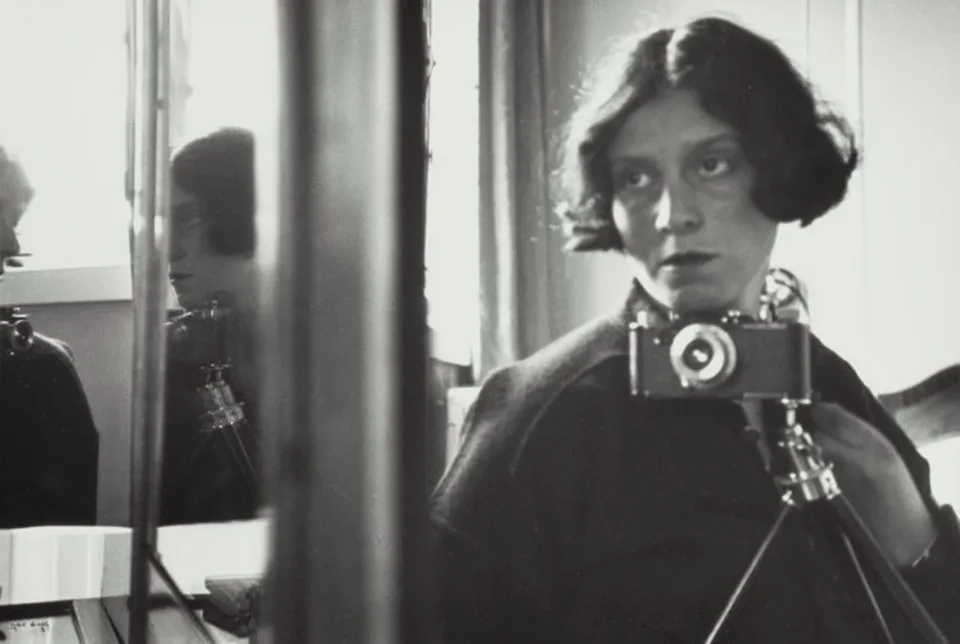
Photography and the Self
Hello everyone. Today I'd like to talk about something most of you have probably experienced to some degree. Sometimes someone takes a photo of you, sees nothing wrong with it, and hands you the phone to look. When you look, though, you feel that the photo has captured you in a very strange way. This "strangeness" isn't just a sense that it's a bad shot. It's that the person in the photo doesn't seem to be me at all.
This sense of "not looking like me" also triggers another reaction: I want to delete the photo right away. Of course, it's hard to say this out loud, because saying it would imply that the other person did something wrong. In fact, to other people, a photo we find strange may be perfectly ordinary. They feel that whatever your expression or posture, it still belongs to you. It just doesn't look good. But for us, this feeling can't be explained simply as "it doesn't look good." As I recall it, it is closer to something like shame.
So why does a photo in which we are clearly recognizable give us a feeling close to shame? One preliminary explanation holds that because we usually see ourselves in the mirror, seeing our image in a camera or photograph causes strong discomfort. But I think the mirror image can only explain difference. At most it makes us feel unfamiliar. Does something unfamiliar necessarily make us feel ashamed? I think the two are very different.
So there are two questions here. First, why do we feel, when looking at certain photos, that they don't look like me at all, even though physically it is unquestionably you? Second, why does this sense of mismatch when looking at our own image sometimes make us feel ashamed, even offended, when no one else is offending us?
How should we think about this? I can use myself, right here, as an example. You can see me speaking now, and Xiaoyu is beside me taking photos. This is conference photography. Conference photography places certain demands on a speaker's mouth: the eyes shouldn't be closed, the mouth shouldn't look odd in the picture, and ideally the head shouldn't be lowered. If these standards aren't met, other people looking at the photo will at most think it doesn't meet the norm or doesn't look good. But you can imagine that when I see such a photo, I'll swipe past it immediately. I couldn't possibly keep staring at it. There will almost certainly be an urge to "let me delete that."
When I speak, my mouth is constantly moving. A camera usually freezes one of our poses at a shutter speed of 1/125 of a second, 1/250, or even 1/60. In a physical and real sense, we did make that expression and hold that pose, and others may really have seen us in that state. So why do we still hate that photo?
My thought is this: in this process, what does the "speaking" I experience actually mean? For me, it means first of all that I am trying to express a meaning. In the process I am oriented toward a whole of meaning, toward an integral activity of experience. I don't experience the changing shape of my mouth. The changing shape of my mouth, as an image, never actually occurs in my experience. What I experience is how the activity in front of me and my consciousness continuously form a whole, along with all the sensations that come with speaking.
The shape of the mouth that the camera captures was originally just one part embedded in an uninterrupted stream of experience. Once it is fixed, it immediately drops out of speech as a whole activity and becomes an expression, one that has its own completeness. However strange the expression on my face may be, we can say it is complete. I'm not missing an arm or a leg, and I haven't suddenly lost an eye in the photo. As an expression, however strange, it is complete. But is it complete for me as well? Sometimes we look at a photo and think, "How could I look like that?" Physically, we have no grounds for saying this. In actual experience, though, we really do feel an extremely intense discomfort.
In this sense, to use Henri Bergson's terms, the time we live is a continuous duration. Duration means that states of consciousness interpenetrate one another, and we cannot cut a so-called single second out of this interpenetrating duration. In other words, for Bergson, speaking of "1/125 of a second" is meaningless. It is still the result of what he later, in Matter and Memory, called the spatialization of time. Once time is spatialized, movement itself disappears. We cannot cut any instant or fragment out of continuous duration without changing its nature, and a photograph, in a certain sense, performs precisely this kind of cut.
The next question is how we ordinarily understand our own image. How do we experience the self as an image? Say we're talking with someone, we say something funny, and we start laughing. The other person sees you laugh, sees the smile on your face, hears your voice, and realizes you're happy right now. But is that how we ourselves become aware of it?
In this situation, what we seem to experience first is the feeling that makes us laugh. I experience that feeling first. Only then do I suddenly become aware that maybe I'm laughing a bit too much, too unrestrainedly, and should rein in my expression a little. In other words, our experience of ourselves, our knowledge of "what kind of person I am," has a certain depth. Our experience of our own existence has depth.

What does this depth mean? Maurice Merleau-Ponty discussed this concept long ago, and I won't go into the literature here. Try this: close your eyes now and think of your own image. You'll find that even with your eyes closed and seeing nothing, you still know and understand, fully and completely, what kind of being you are. A person's knowledge of what they look like, their grasp of their own image, is very likely not achieved through vision. You don't need a mirror or any other medium. You simply know. We are always in unceasing contact with our own existence.
This is how we gain access to our own existence. Others, however, usually approach us through our expressions, our voice, and our outward presentation. That doesn't mean others' experience and understanding of us is shallow. On the contrary, we often feel that good friends and family understand us even better than we understand ourselves. I think it is precisely because others gain access to me differently from how I gain access to myself that this structural difference lets them, in certain cases, notice things that have not yet been thematized in my consciousness, such as my shortcomings or hidden motives. We sometimes feel that others understand some part of us better than we do. Either way, they can still only grasp us through outward presentation, demeanor, and other external things. In other words, the way others access us and the way we access ourselves are structurally different.
If I were to give this depth a further name, I would call it "the tactile feel of existence." This is a phrase I only came up with yesterday and haven't thought through much. I think the word "depth" pairs too easily with "surface," and that affects how we understand the problem. Put most simply, the tactile feel of existence is close to the body schema, but not quite the same, because on the whole it is more concerned with meaning. When I speak, my whole activity comes from a continuous and, importantly, non-visual contact between me and myself, and my activity is always oriented toward a whole. There isn't time to develop this concept, so let me return to the main point.

Why does the experience of a photo "not looking like me" give rise to shame? Here I'd like to introduce a sixty-odd-page essay by Max Scheler, "On Shame and Feelings of Modesty." When reading it, I think it helps to picture something like a "Great Chain of Being": the human being stretches from the lowest level of existence up to the highest, and can climb up the chain or sink down it. Of course, Scheler isn't simply saying that human spiritual existence is superior to the flesh. Put most simply, what he really wants to express is the absolute superiority of the whole over the part.
What, specifically, does Scheler mean by bodily shame? It arises when we don't regard our life as a whole. In certain situations we let the body indulge in the pleasure of one particular part, and we fail to realize quickly enough that we are meant to be a whole life, yet have fallen into these local stimulations. At that point, shame arises in the bodily sense.
For Scheler, the arising of bodily shame means that a person becomes aware again that their existence is a living whole. This whole is what Scheler is defending, namely the superiority of the whole over the part. In "On Shame and Feelings of Modesty" he puts it very concretely, originally with reference to the sexual act: "It resists the apperceptive isolation of the sexually sensitive parts of the body from the individual unity of body and spirit."

If we generalize this sentence beyond sexual shame, I think the point is this: when we treat something that is by nature a whole, with spiritual significance, as a purely local bodily act, the person's wholeness is destroyed. What follows from that destruction? I find myself replaced by a part, and I feel deeply unwilling to be replaced in this way. In other words, without a demand for wholeness, without the self's demand for its own wholeness, a person would not feel shame.
Back to the example of the photograph. A photo freezes the strange shape of my mouth. It is, of course, a surface without depth. But as I said earlier, it is also a complete expression. This means it has become independent of the whole and, as a part, stands in for my whole. Yet you yourself know that I am absolutely not just this surface, absolutely not just what this part can convey.
Once the photo exists, you can't say it has nothing to do with you, because it really did come from you. For some people, it may even be enough to become your image, because others experience your existence from exactly this external perspective. There will always be some photos that you cannot claim as your own in experience, yet that came from you all the same. Once you've been fixed by such a photo, it turns back and harasses your sense of your own wholeness, even replaces it, and so shame appears.
To others, this photo may not matter, because they haven't gone through your inner structure of self-access. They have never experienced your existence through inner experience. This is my preliminary explanation of the problem.

Of course, I've only made a start. Many questions remain. I've given a full version of this talk elsewhere, and it takes over two hours, so I can only raise the later parts as questions for you to think about.
First, even on the explanation I've just given, why do some photos make you feel ashamed while others you like very much, perhaps a photo others find unremarkable but you love? Second, many people greatly enjoy having their picture taken, like being photographed, and even pay people to photograph them. How do we explain this enjoyment? Third, if you're the one holding the shutter, photographing yourself, does the gap between part and whole disappear? Fourth, when we judge whether we like a photo of ourselves, or whether it looks like us, what exactly is the standard, and where does it come from? These are the directions I want to pursue next. That's all for my talk. Thank you.
Commentary and Discussion
Chang Liu
A few words on Guosen's talk. I feel that, in your talk, Scheler's work on shame hasn't actually carried the problem all the way through. As presented in the talk, shame arises because the photo localizes a person's outward image, and this partial image conflicts with our understanding of the whole self. But this conflict would seem to exist in all photos and all depictions of the self, because every photo captures a localized image, and each one opens a gap with my own sense of self. So I think Scheler hasn't finished the job here. You could go beyond him entirely, rather than following his line of thought all the way.
Tao Tao
I'm mainly here to learn. First, I sense something the talks by Guosen and Hongkai have in common: both deal with the problem of cutting. Guosen Chen talks about a photo being cut out of one's whole existence, producing estrangement. Hongkai Qiao talks about a butterfly's movement and the butterfly becoming a specimen put on display. There seems to be a common point: this cutting is, to some extent, a kind of deathification. When Professor Bin Zhang discussed this issue yesterday, he also touched on this structure of deathification. We might also think of how an artwork is extracted from its lifeworld, as Professor Liu said this morning. Once it's put in a museum, it is cut off from its whole context of meaning, or from the art world. The museum could be called the tomb of art. This is a basic claim of phenomenology.
Audience member
I have two questions about Guosen Chen's talk. First, you said that when a photo cuts up and localizes a complete self-understanding, a person feels shame, because we experience the self from within, while the outward presentation is only a slice that falls short of one's existence. But in my experience, a video presents me more completely than a photo, yet when I watch video of myself, the shame is sometimes stronger than when I look at a photo. It seems more whole, yet it still produces intense shame. How do you explain that? Second, you said one source of shame is that we access ourselves from within and rarely experience ourselves from others' external perspective, and photography offers a way of seeing ourselves from outside. But when I look at other people, I don't look evenly or neutrally the way photography does. Facing a teacher, a celebrity, or anyone else, the image I see will certainly differ, because it already carries presuppositions and emotional coloring, which photography seems to lack. So doesn't the comparison between photography and the gaze of the other break down to some extent?
Guosen Chen
Thank you very much for your questions. For the first, I think the key isn't duration versus slice. It is still the relationship in which part and whole replace each other. Even though video extends the time, it still encloses me within a certain range of time and space and turns me into an object. When this object takes over the ways others can access my existence, it can bring us shame. The same goes for audio recordings. To this day I can't listen to recordings of myself, and many people are the same. So the key isn't just how long the time span is. As for the second question, of course people don't look at one another the way a camera does, because human vision lacks the "optical unconscious" with which a camera seems to take in the world wholesale. When people look at a teacher, a celebrity, or someone close to them, their gaze certainly carries their own history, presuppositions, and emotions. What I'm saying is that the way others access me and the way I access myself are structurally different. This is a structural difference. It doesn't require others to actually look at someone the way a camera does for the corresponding change to occur.
Third, Professor Chang Liu's point just now is also important. Thank you for it; it gives me a chance to explain a little further. My talk is only a beginning. The truly difficult part isn't just identifying the gap in the photo and explaining it. The harder part is that, once we've explained why photos produce this feeling, we still have to answer this: if photos make people feel ashamed through surface, cutting, and the part replacing the whole, why do even more photos make us very happy? Why do some photos even make us feel something close to a spiritual existence, something both others and we ourselves can recognize in the photo? Shame is only the first step in complicating the problem. The real difficulty lies further on. That is also why I used "the tactile feel of existence" in my talk: the concept of "depth" isn't adequate. Merleau-Ponty already discussed depth, but I don't think it can answer this question. What I mean by "feel" is that when we access ourselves from within, we have a tactile relationship of continuous immersion. For us it may have only depth and no clear outline. What a photo seems able to do is give this outline-less, utterly familiar feeling, which we deal with every day, a recognizable outline. Something chaotic and boundless can't be distinguished or named; to thematize this feeling, you have to give it an outline. In this sense, a photo may come close to a process of giving an outline to the feeling of existence. This makes it a two-way change. Your self-understanding takes on a new shape through recognition, and you discover that you have this other side, and that it fits your feeling of your own existence. Once you have this feeling, the photo's meaning for you changes too. It is no longer merely a surface; it takes on more significance. For the photos people like, my preliminary explanation is that they bring into focus some aspect of the self that we sense vaguely but have never consciously established. It's like the body's many habits, which we don't notice ourselves. Only when some occasion arises, or someone points it out, does the previously vague part come to light. In many cases, a photo may be exactly the process by which such things become clear.