
Mr. Campany currently teaches at the University of Westminster in the UK and serves as Artistic Director of ICP. He has received the ICP Infinity Award for Writing on Photography, the Kraszna-Krausz Book Award and the Royal Photographic Society Award. In the preface to On Photographs he writes: "This book is less about what I think of photographs than about how we think about them; less about the photographer's intentions than about what happens when we look at photographs." And if there are no wrong or right interpretations of a photograph, then how should we read photographic works?
My view is that photography is a visual art, and vision opens onto different dimensions: there is the semantic dimension, and there is also the body, space and action. We interpret photographs with language, but language is really only one of those dimensions. Can it fully replace the photograph? On this point Mr. Campany and I agree: language is only one way of giving a photograph meaning. Photographs need to be looked at; language serves merely as a guide and cannot fully replace them. Otherwise we wouldn't need to look at photographs at all. Reading the text would be enough. I'll come back to this in more detail later.
Today we are also honored to have the translator of On Photographs, the noted curator, critic and photographer Rong Jiang, and Guosen Chen, a doctoral candidate in the Department of Philosophy of Art at Fudan University's School of Philosophy. They will question and engage with Mr. Campany from different angles and interact with our online audience. The aim is to help us, drawing on our own ways of seeing together with art history and photographic theory, reach a deeper understanding of how contemporary art images are looked at and understood.
To begin, let us welcome Mr. Campany to give his talk.
Thank you very much for the very kind introduction. Good morning, or evening, whatever time it is there. It was mentioned in the introduction that I teach at the University of Westminster. I was there for quite a long time, maybe around eighteen years, and I was very involved with introducing young students, undergraduates, to many different kinds of photography and different ways of thinking about it. I'm now the creative director at the International Center of Photography in New York, which has a very important exhibition program, but it also has a school of photography. The school was established in 1977 and ICP itself was established in 1974, so we're talking about an institution that's around fifty years old.
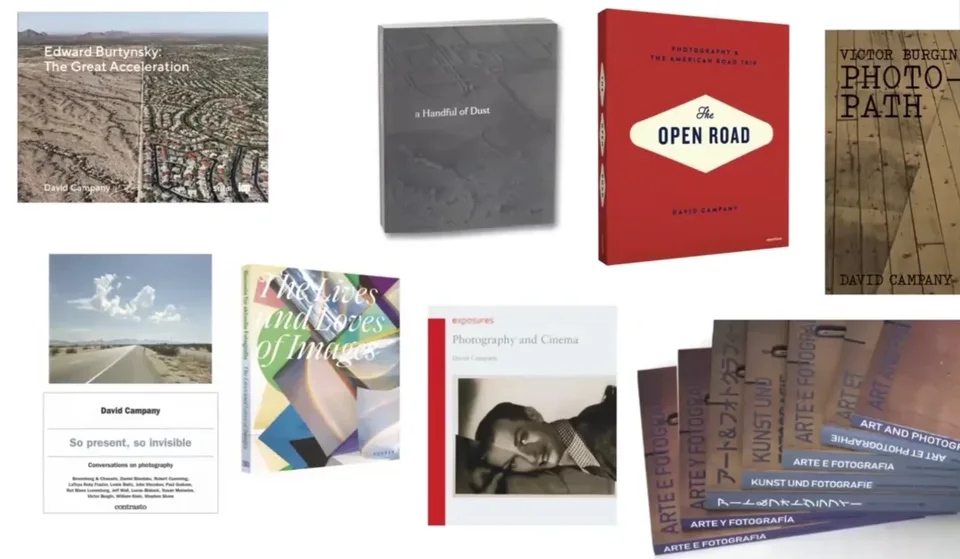
It's very unusual to have an exhibitions program and a school together, all in the same building. Part of the reason I joined ICP was that I have always been involved in education and exhibition making, as well as writing and publishing. I think I've just written book number thirty-seven. I try to do, if I can, two books a year, and I try to make them all different, just so I don't get bored. There are many different ways of making books about photography and many different ways of writing about it. And there are many different ways of actually making a book, just in terms of its graphic design or its visual approach.
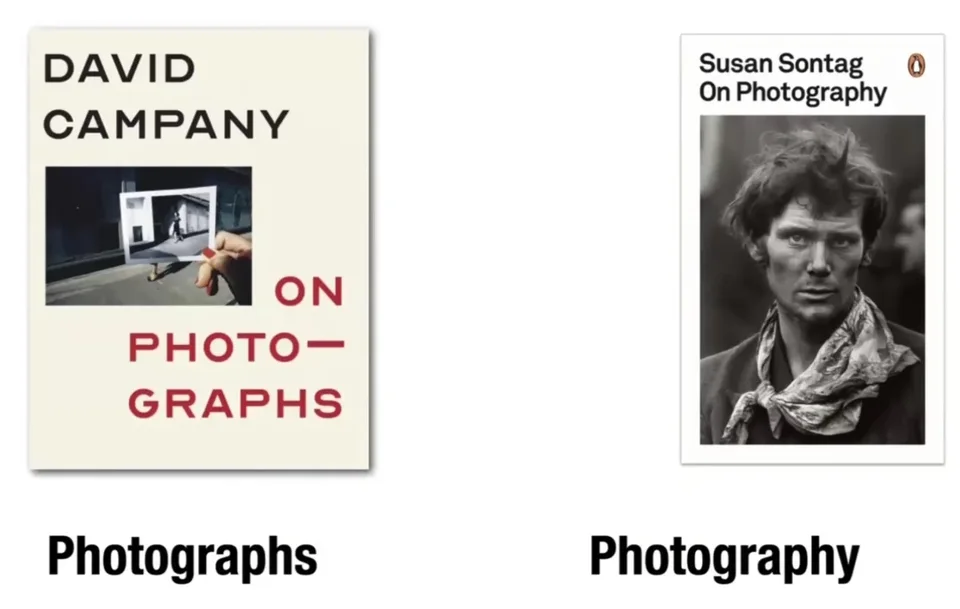
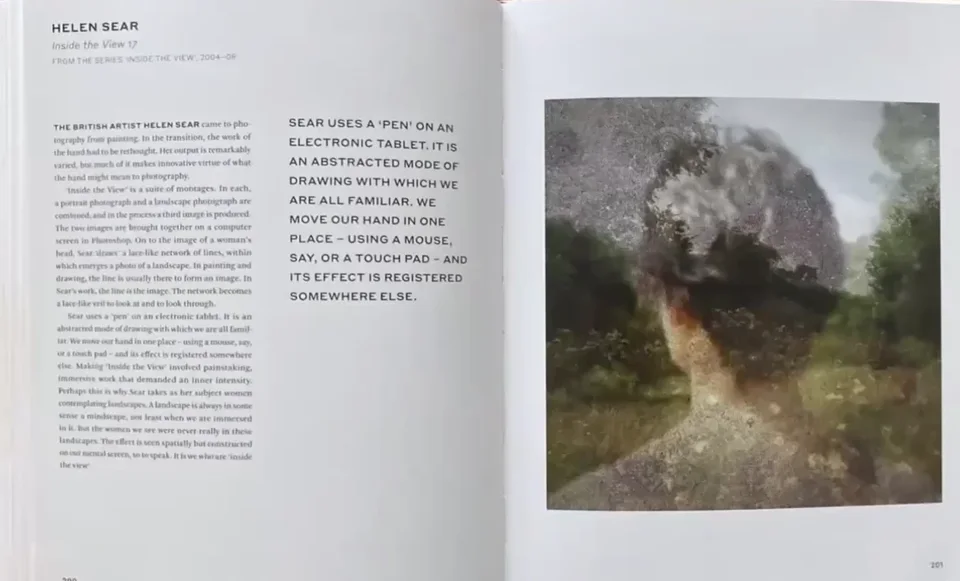
As was mentioned in the introduction, I made a book which Rong kindly translated, called On Photographs. I will concentrate on this book because it was a particular challenge around this idea of what it means to understand a photograph. That's the cover; you might be familiar with it. The starting point, really, was that the British publisher Thames & Hudson asked me for a quite classical-looking book about my favorite pictures. But I thought that was very indulgent; I didn't want to do that. I did like the very classical format of certain kinds of photography books, where you have an image on the right-hand side and a short text, maybe five hundred words, on the left. That format goes back almost to the beginnings of photography.
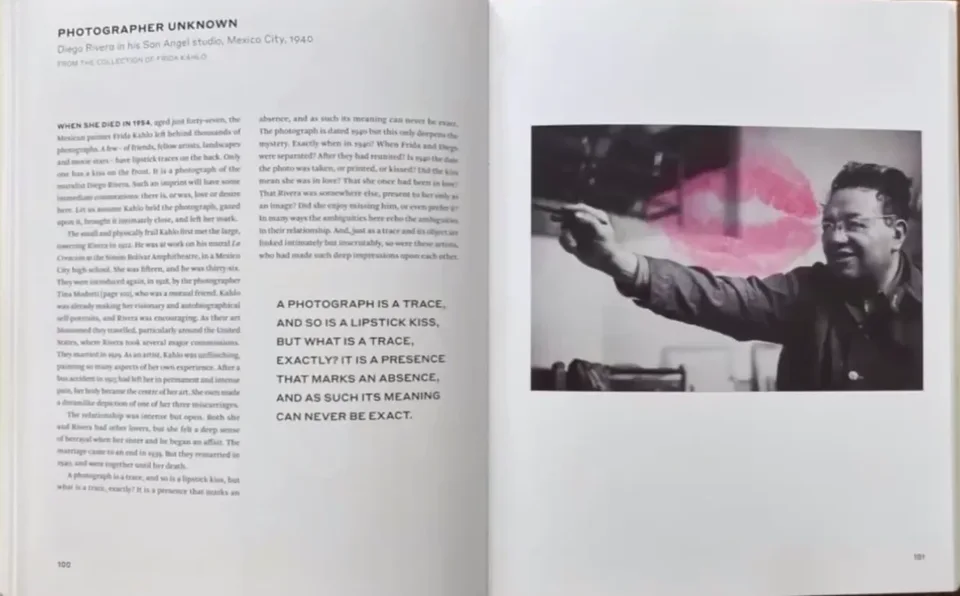
The British inventor William Henry Fox Talbot made a publication called The Pencil of Nature, which really took that form: twenty-four photographs, each with a text. I wanted to call the book On Photographs, not On Photography. Susan Sontag had famously written a book called On Photography, but I was trying to think about the specifics of very particular pictures, rather than photography as a more abstract or universal category. I think there is a difference between photography and photographs, just as a way of thinking. I'll briefly show you what the book looks like, and that might give you a sense of where I was coming from. They are not all art photographs by any means. Some are commercial pictures, some scientific pictures, some anonymous snapshots. There are famous things, but they're not always the most obvious examples.
One thing I was interested in was the fact that books about photography very often try to be authoritative. They try to tell the viewer what they should be thinking and which photographs are important. I'm quite resistant to that, partly because I'm an image maker myself, but also because I'm not very comfortable writing as an authority. I'd rather write and think as someone who is simply interested, the way I assume viewers are interested. So it was important to me that there was a range of different kinds of work, and that the writing proceeded in an anti-authoritative way. The book is more interested in asking questions than in instructing people.
I was certainly not interested in instructing people how to understand a photograph. I find that idea, “how to understand a photograph,” a little puzzling, a little nonsensical. If you think about it, we all look at photographs, and they mean whatever they mean to us; there's no secret way of understanding them. However, I do have a background in psychoanalysis, and what psychoanalysis tells us is that a lot of our understanding of the world is either a misunderstanding or very unconscious. We're not always aware of our own thinking. So the book is more interested in slowing down the reader. What happens when you slow down the looking at photographs is that they become strange.
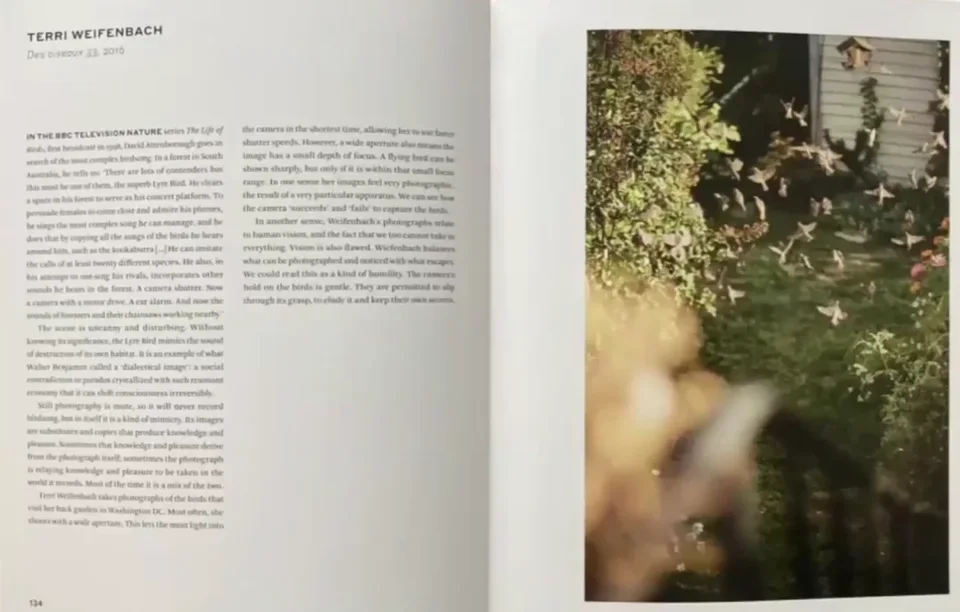
The reason they become strange has two parts to it. One is that most of our experience of photographs, here we are a quarter of the way through the twenty-first century, is very rapid. We're not expected to look at images for very long; we're supposed to look at them and move on quickly. Slowing things down introduces a certain kind of strangeness, and I'm interested in making the viewer comfortable with that, with their own feeling that if you look at one photograph seriously for a long time, it will become more ambiguous, less obvious perhaps. Secondly, most photographs are not really made as individual photographs. Most photography comes to us as a body of work, a project, a theme, a series, an album, an archive. There's always another photograph around, ready to take our attention. Certainly, very few art photographers make single photographs. Most of the time they're making a body of work. So there seems to be an understanding that we look at a photograph and then quickly look at another one. It's not a problem; it's just a fact of our visual culture that images generally are not looked at for very long, and they're made as bodies of work. Looking at individual photographs is very pleasurable and interesting, but it's slightly outside how most photographs are experienced. Nothing wrong with that; it's important that we do something else.
Something else interested me about this format of book. As I said, I'm not the first to make a book with this classical layout, a photograph on one side and a text on the other. But I wanted to sequence the pictures. You'll notice connections from one picture to the next and the next, sometimes thematic, sometimes formal. That's something I've always been interested in doing. In fact, I think for over a year before I did any writing, I wasn't just selecting the pictures for this book; I was arranging their sequence. That meant you could open the book anywhere and look at a picture or read about the photographer or its context, but you could also read the whole book from start to finish as a slightly winding, wandering, philosophical long essay on what it means to look at photographs. Here's another little sequence, just to give you an idea. Sometimes the connections are very obvious and sometimes less so.
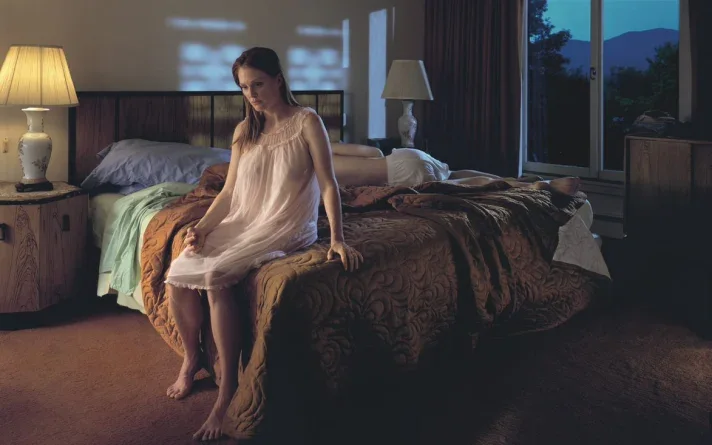
Gregory Crewdson was mentioned earlier. I came to photography from an interest in cinema. As a very young child, maybe nine, ten, eleven years old, I was really interested in movies. My family got a home video recorder around 1980, something like that, so I'm showing my age. I used to record lots of movies from the TV, and what really interested me was the pause button: the idea that you could stop a movie and it would be a single frame. When you turn a movie into a single frame, certain things become clear. Visually, the movie is made up of many, many photographs. When you pause it, sound and language drop away into silence. The narrative, the story, falls away too, and you're left with this completely silent fragment. That was my way into understanding something about photography. Its silence is a very distinctive part of it, and so is the fact that it doesn't really tell stories. It can suggest things, but it can't tell a story the way a novel, a movie or a play in a theater can.
If we like photography, let's say everybody here likes photography on some level, we must like the fact that it's silent and still, and that it's extracted from story, situation, narrative and, to some extent, context. Those things must be part of photography's appeal. But they're often regarded as problems with photography, as though we have to put back information and ideas in the form of writing, captions under the picture or sequences of pictures in order to overcome its limitations. That's understandable if you think about the history of photojournalism, for example. It was always a combination of photographs with each other and photographs with writing, and most photojournalistic images don't make much sense if you look at them on their own, with no other images or writing.
People often describe Gregory Crewdson's work as cinematic. It's true that this photograph features the Hollywood actress Julianne Moore. But I'm suspicious when people describe photographs as cinematic, because cinema can look like anything. It can look like a documentary photograph or wild science fiction or certain kinds of painting. So when we describe a photograph as cinematic, I'm a little nervous; I'm not sure it helps us much. What interested me about this photograph, as opposed to cinema, is that when an audience watches a film, the movements of the actors, the framing and the camera movements tell you where to look. If you imagine an audience in a movie theater with laser beams coming out of their eyes towards the screen, you can imagine that they're all looking at pretty much the same thing. If, for some reason, the movie was paused, everyone's eyes would start to explore the image in a very different way.
I was fascinated by this photograph by Gregory Crewdson, and by the fact that it had a Hollywood actress in it, but we weren't encouraged to look at it as we might look at a frame from a movie. We could look anywhere and spend a long time with it. I actually became interested in her feet. The funny thing about feet and hands is that they are always very important in photographs; you only have to speak to a portrait photographer. Maybe feet are less important in cinema. But it's an interesting question whether feet can act. When we think of an actor pretending or giving a performance, do the feet do things like that? It might sound strange, but what's the difference between looking at her face, with an expression on it, and at her feet, which you don't normally get to see or think about? Lots of different things are going on when we look at a photograph like this. We don't need secret training or knowledge; this is happening for everyone looking at it.
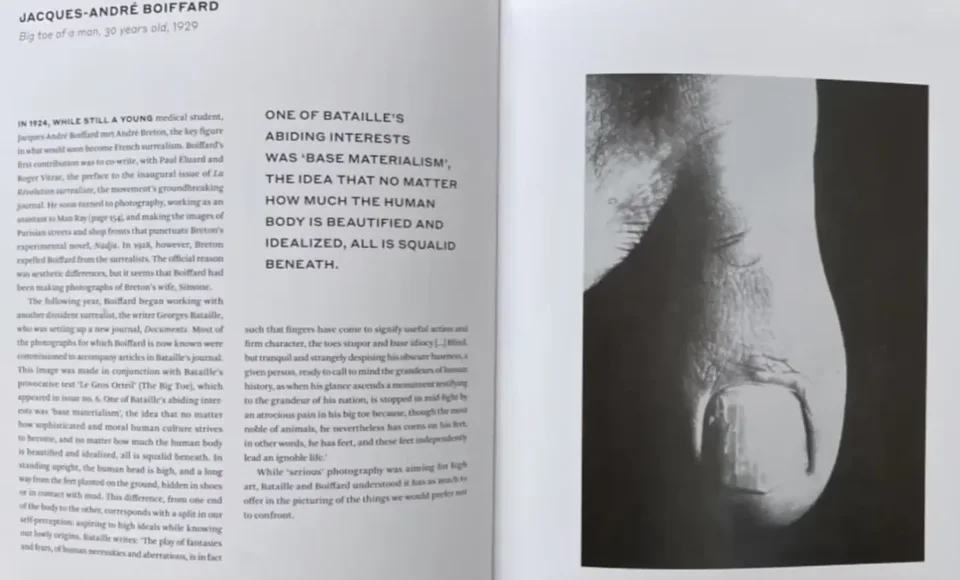
When you turn the page from the Gregory Crewdson picture, you see a picture made in the context of French Surrealism in 1929 by Jacques-André Boiffard. It's a photograph of somebody's big toe, commissioned by the Surrealist writer Georges Bataille for one of the Surrealist journals. He was very interested in feet and toes as something resistant to high culture. We might have great ideas, but our feet are always in the mud, and they're not the most attractive part of us, unless you're interested in them. I don't really mention the connection between this picture and the previous one, though I do mention feet when I'm discussing that picture. There are lots of little suggestions to the viewer in the book; they aren't telling you how to read anything.
It's a discussion of how we look at photographs. In the end, viewers make the meaning. It's not the photograph, and not really the photographer either, except in the sense that the photographer is the first viewer of their own image, let's say. I'm more interested in encouraging viewers to think about their own viewing than in telling them how to look or what something means. I think those are slightly ridiculous questions, in a way.
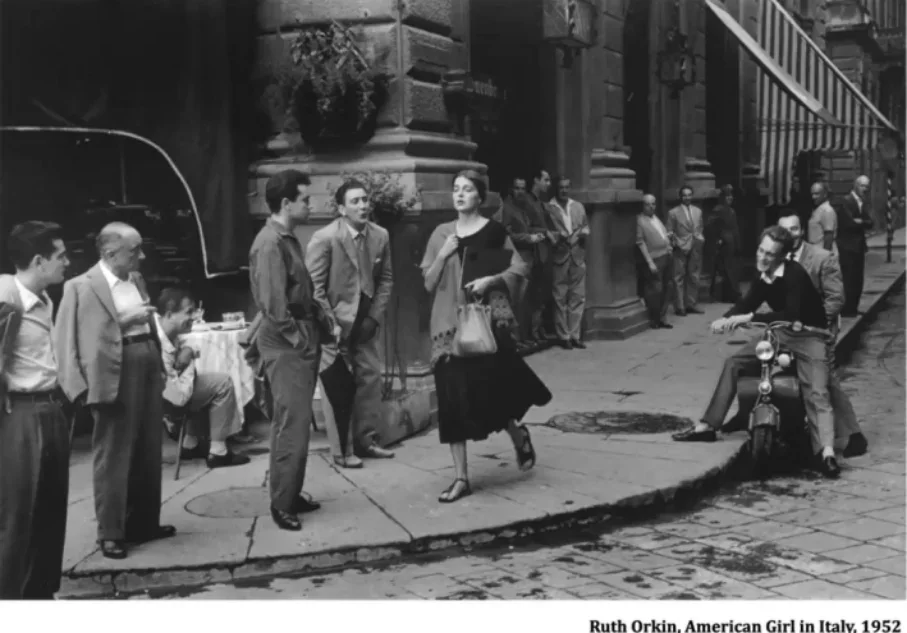
Some approaches I take in the book introduce an element of history, social history or cultural history. This is a photograph by Ruth Orkin, American Girl in Italy. It's quite a famous picture, certainly in America. We can all see a woman walking down the street and that everyone else on the street is a man. There's some kind of situation going on. Maybe they're looking at her, maybe she's uncomfortable; we don't really know. I became interested in this photograph because it has become famous, and I think it really became famous within the broad context of feminism and thinking about the social power of men, and how the way we look at the world and each other is often structured by power and gender.
When I went back to the source, I found that the photograph first appeared in a piece in the American magazine Cosmopolitan about traveling alone in Europe. It becomes clear that all the photographs were a kind of staged collaboration between Ruth Orkin and a woman she met who was staying in the same hotel. They went out together and made these photographs about exploring a European city on your own and enjoying it. There's nothing in Cosmopolitan about feminism or about being looked at by men on the street. It's more an encouragement to explore the city on your own. No photograph has a fixed meaning. Meaning is often dependent on cultural and historical context, and the meaning of this photograph has clearly changed over time, certainly for audiences in the US and Europe.
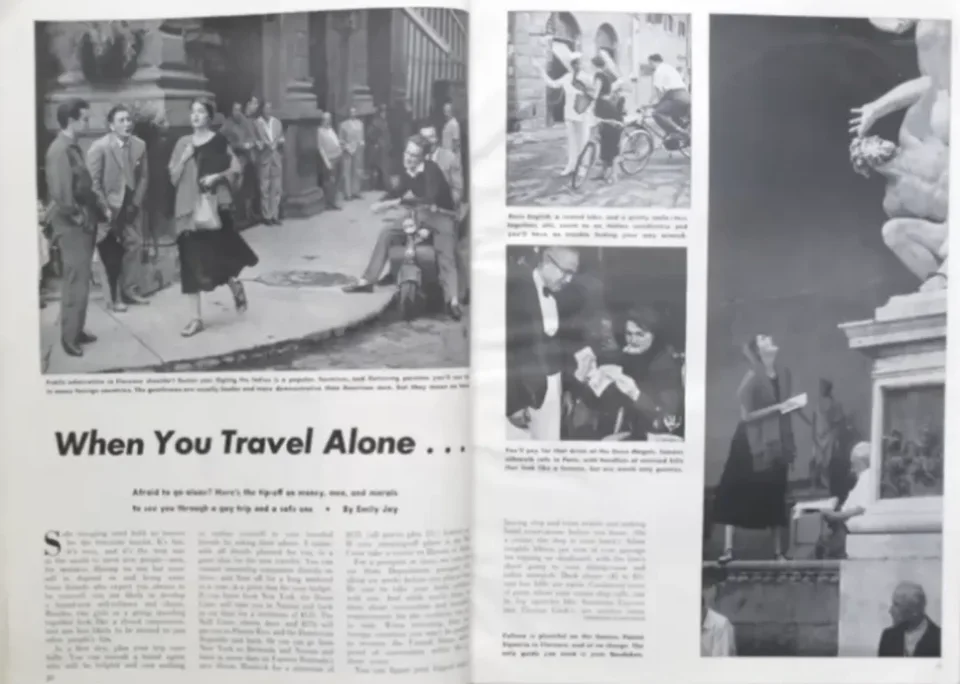
I think I first encountered it in a lecture about feminism and photography, so I was surprised to find, going back to Cosmopolitan, that it wasn't really a critique of the male gaze, let's call it. It was still about the empowerment of women, we can say that, but it certainly wasn't that kind of critique in 1952. We could ask ourselves what we would think of the picture if we were transported back to 1952. It's also nice to know that it was a staged photograph, in a way, and a documentary photograph. The photographer and the woman in the picture knew what they were doing; they weren't arranging everyone else. In fact, they took two different shots of it. Sometimes there's a lot to learn about a photograph by tracing its history. You saw this photograph earlier by Helena Almeida, Inhabited Painting, as if she were painting from behind the surface of the photograph onto the surface. The surface of a photograph is, in a way, an imaginary thing. A photograph doesn't really have a surface the way a painting does, with brushstrokes and marks. There's a kind of industrial smoothness to photography, so we have to think about its illusionism. It's not that we feel we can reach into the picture when we look at a photograph, but we don't think of it as completely flat either. It's a little bit of both. Almeida made a number of these works called Inhabited Painting. They interested me because of the attention she draws to surface, and to the different kinds of surface of a painting and a photograph. You're looking at this on a screen now, and in the book you're looking at it as a reproduction. If you were to look at Almeida's work itself, you would see, and if you were allowed to touch it, feel the paint on the surface.
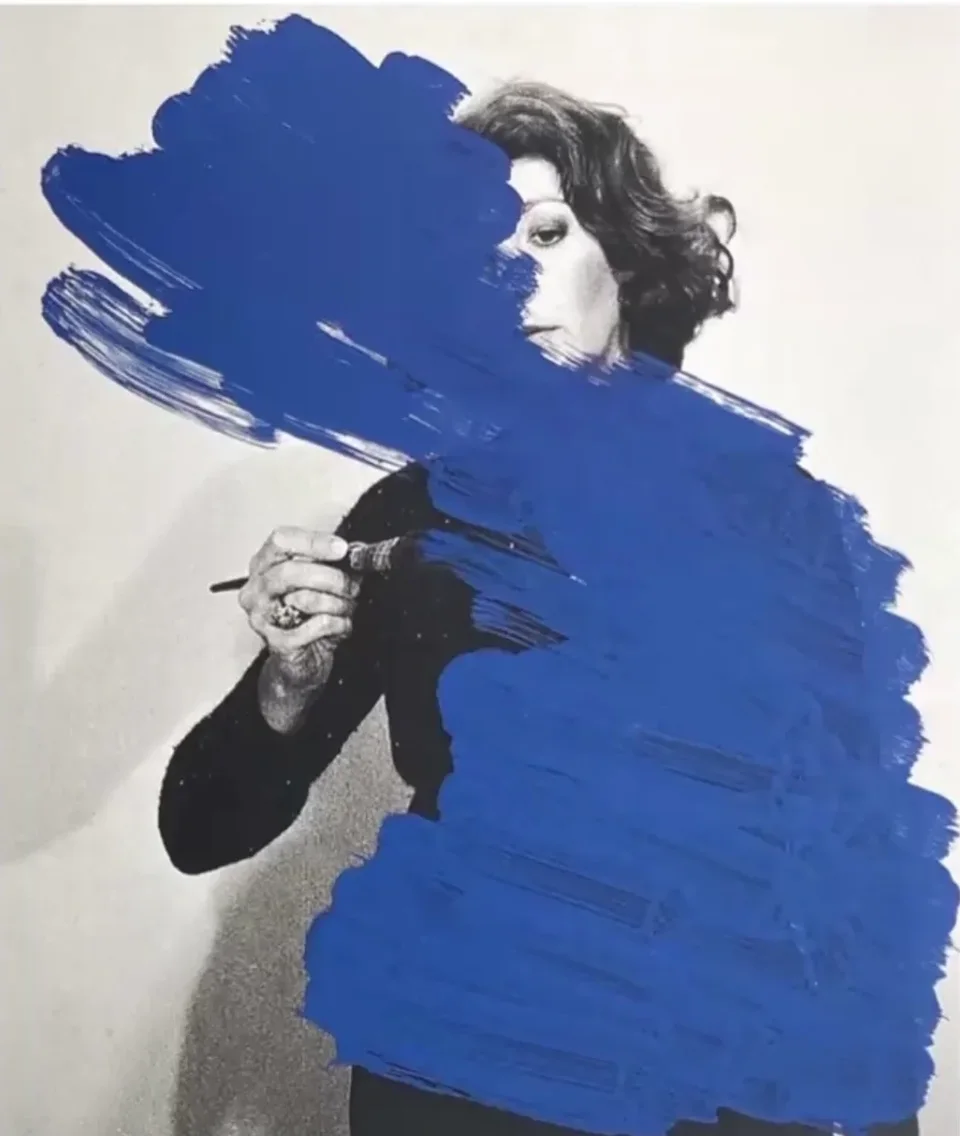
I say to the viewer in the book, “If you run your finger across the surface of this picture, it will feel no different from any of the others in the book.” I'm always trying to remind the viewer that they're looking at reproductions. That's a strange thing to ask a viewer to think about, because photographs seem to belong wherever we put them. When you look at a photographic image in a book, you don't think, “Where is the real thing? Where's the real object?” A photograph somehow is its reproduction. If you see a painting reproduced in a book, you know the painting is somewhere else, in a museum or someone's home or studio. You see a photograph on a billboard, a T-shirt, a gallery wall or the page of a book, and it seems to belong wherever you put it. It's a little like a chameleon, that reptile that changes color according to its background. Photographs just seem to fit into the world. That's an obvious point about the difference between painting and photography, but it's worth making. As a writer, sometimes you're making people aware of something they're already experiencing but haven't quite made conscious. Often I'm trying to say very obvious things that help people think about their own thinking, not tell them what to think.
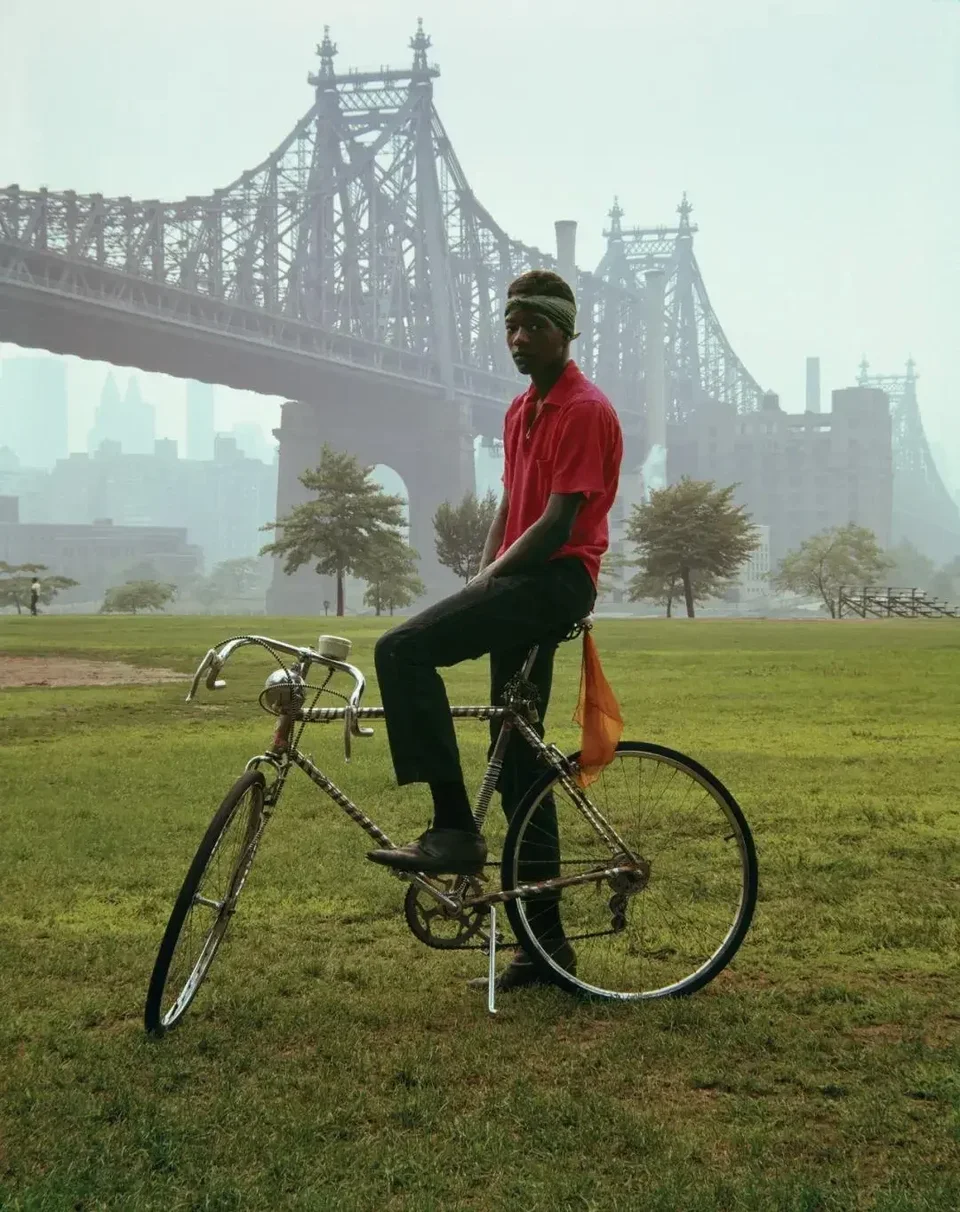
This image is by Evelyn Hofer, a German photographer who came to America. She's mainly known for her portraits, large-format, very slow photography made on a tripod. My text here is mainly biographical; it tells the career story of Evelyn Hofer. That's a very classical way to write in a book like this. But what was really on my mind was the last paragraph, just two or three sentences, which says: I've given you Evelyn the photographer's biography, but we don't know the name of the young man in the photograph. You could tell another biography, that of the man in the picture. Maybe we'll know that one day. I did quite a lot of research to find out who he was and whether he was still alive. We might discover this at some point. Photographs don't just belong to the photographer; somehow they also belong to the lives of the people in them. That raises an ethical question, but also questions about how we understand photographs. Do we understand them simply as the product of the photographer? Hofer couldn't have made this picture of this man without him. He's essential to it. It seemed important to end this little piece of writing in another direction: this is also about the life of the person in the picture.
I know Rong was very involved with the photographer Stephen Shore. We're not looking at a Stephen Shore picture, but I'll tell you an anecdote. I was preparing to record a conversation with Shore, and one morning I had all his books on my kitchen table. My sister's partner looked through one of the books of pictures Shore had made on the road in America in the 1970s. He got to the end and said, “I think there were a lot of MGB sports cars in America in the seventies.” The MGB was a cute little car. I said, “I don't know.” He said, “Well, there are quite a lot in this book, so either there were quite a lot of them in America or this photographer was very interested in them.” I said, “You can ask the photographer. He's coming for lunch, because I'm going to record a conversation with him.”
So at lunch he asked Stephen, “Why are there so many MGB cars in your photographs?” Stephen pointed at me and said, “Mr. Photography here would not ask me that question. He probably didn't notice that.” Then he said to Joe, my sister's partner, “Are you a mechanic, or are you involved with cars?” Joe said, “Yes, I used to be a mechanic.” Stephen said, “Yes, there are lots of MGB cars in my photographs. My wife had two MGB cars, and we were interested in them. They do recur in the photographs.” What does that tell us? Viewers bring their own set of interests to a picture. They might appreciate it as a composition, but most photographs also have social information in them, and we respond to that information slightly differently. I'm not saying completely differently; we have lots in common when we look at photographs. But somebody with specialized knowledge may get something else from one.
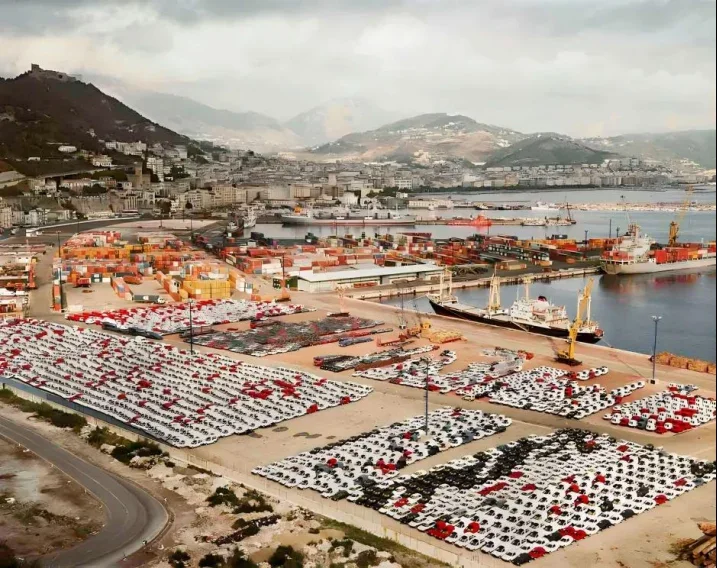
We're looking at a photograph by Andreas Gursky, Salerno, 1990. It's a classical kind of view, high up on a hillside looking down and across. You see patterns of human development, and if you look closely you see different ages or eras of modern development. Up in the hills, in the background, there's a very different kind of architecture and social organization from the cars arranged in the foreground or middle ground. You can see containers, those boxes that have standardized shipping around the world. Imagine taking a photograph like this into a classroom of very young children. I don't think they'll say, “Wow, that's a great photograph,” but they'll be interested in what it shows: “Look at all those cars. Why are they there? Where have they come from? That's not how we usually see cars.” You might start a conversation with them about international trade, global capitalism, oil, any number of things that might not be to do with “understanding a photograph.”
If you see it in an art gallery, framed on a wall as quite a large print, perhaps two meters across, though I think it's a little smaller than that, you might be encouraged to appreciate it as a photograph. But nothing stops a viewer engaging with the social information it describes. I'm not saying anything profound, but I think those of us interested in photography sometimes forget that most people's response to photographs is not a very conscious aesthetic response. Most of the time, they're responding to the visual information. You can do everything at once, of course, but I think it's worth stating. That's an indication of the approach I took in the book.
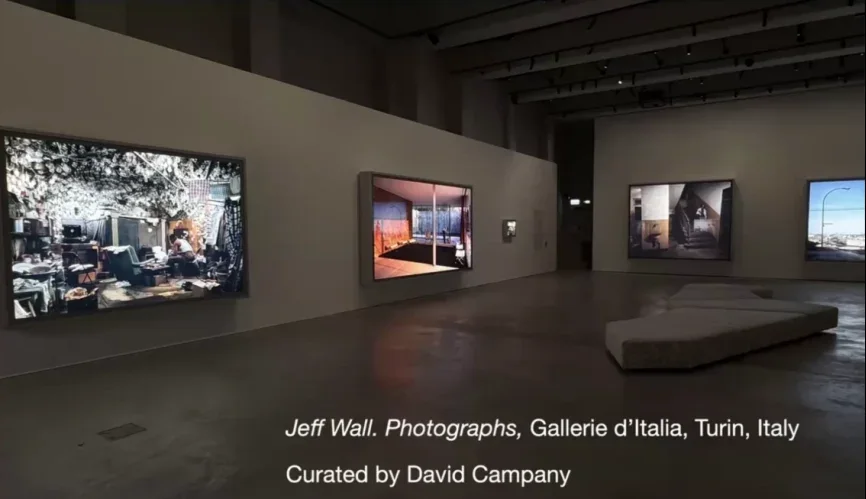
I've just come back, two days ago, from curating an exhibition of the work of Jeff Wall, a Canadian photographer who is unusual in making very single pictures. He doesn't make groups of pictures or projects. Each time he makes one photograph to stand and look at in the gallery for as long as you like. Then you turn away and look at another, and they don't have obvious connections with each other. You might see patterns or similarities, but they're not made as bodies of work. I've always been interested in Wall because that is unusual. As I said at the beginning, even artists most often think about their work as assemblies of pictures in one way or another. There aren't many photographers who are happy with just one.
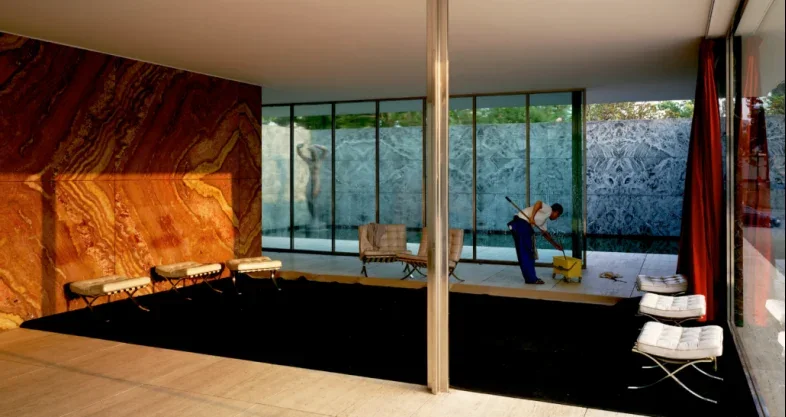
Here we are: Jeff Wall, Morning Cleaning, Mies van der Rohe Foundation, Barcelona, 1999. We can see modernist architecture photographed in a particular way, and a man cleaning the glass. Interestingly, Wall said the other day that the beginning of this was simply wanting to make a photograph of someone cleaning glass, maybe a large area of glass. He had that in his mind as a photograph he might take one day. Then there was an invitation to make a photograph at this building, originally built in 1929. He got to make a photograph of a man cleaning glass in this famous and influential pavilion. It isn't a house; it was built to show modern architectural spaces, materials and construction. That gives the idea of cleaning glass a larger cultural and historical context. Wall had to decide how to do it, and the building gets cleaned in the morning, before visitors come.
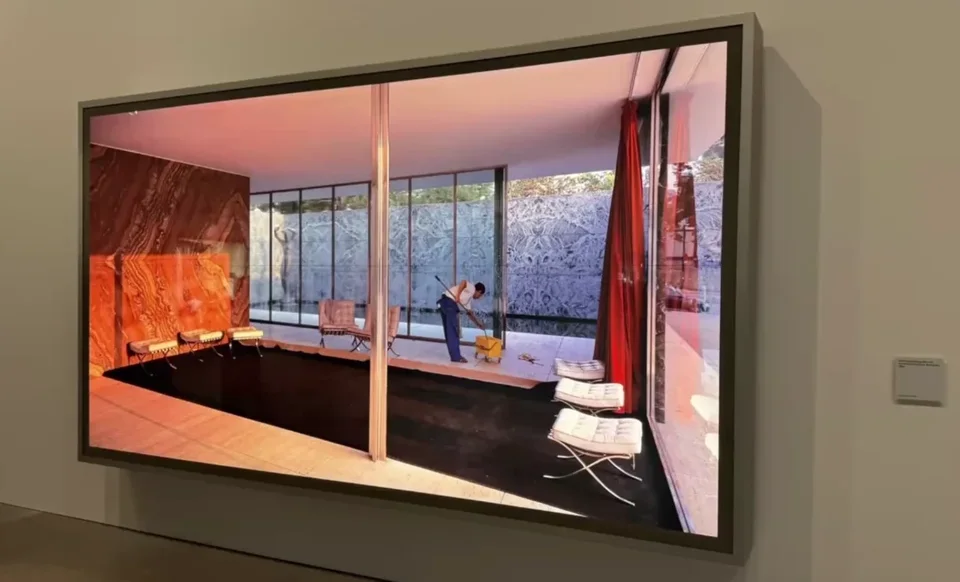
You might end up thinking about how modernism always has to look clean, as opposed to a Baroque building that lives with its own dirt and its changing patina over time. But I don't know that there's anything I can say that would instruct you how to understand this photograph. It's clear what's happening: a modernist building and a man cleaning it. That might be enough to hold your attention and let you explore and enjoy the picture. It might take you in other directions, towards the politics of cleaning and wages, and why cleaning is invisible to the public most of the time. Who knows? Wall is interested in what the viewer brings to the picture. There's no point being made, no argument, no correct way to understand it. If you see it in a gallery, it's a light box, perhaps two or two and a half meters wide, a transparency lit from behind.
One nice thing about single, large-scale photographs is that the response can be social, collective. Think about the difference between watching a movie in a theater and watching it on your laptop. The image is a different size, but the theater is also a social space. Interesting things happen there that are different from looking at something privately, on your own, in a book. When a number of people are in a gallery together, they respond on their own but also communally. That communal aspect is quite undefined, I think, but it matters. If you go back through the history of photographic art, before photographers began making work at a large scale, you often had to go right up to the wall to look at something small. That can be great and beautiful, but it doesn't have that social dimension of looking, which interests me as a curator. I like to spend time in exhibitions I've curated watching how people engage with images. It's fascinating. I'm not a wizard who knows exactly how viewers will respond; much of the time I've got very little idea. I'm interested in how it happens.
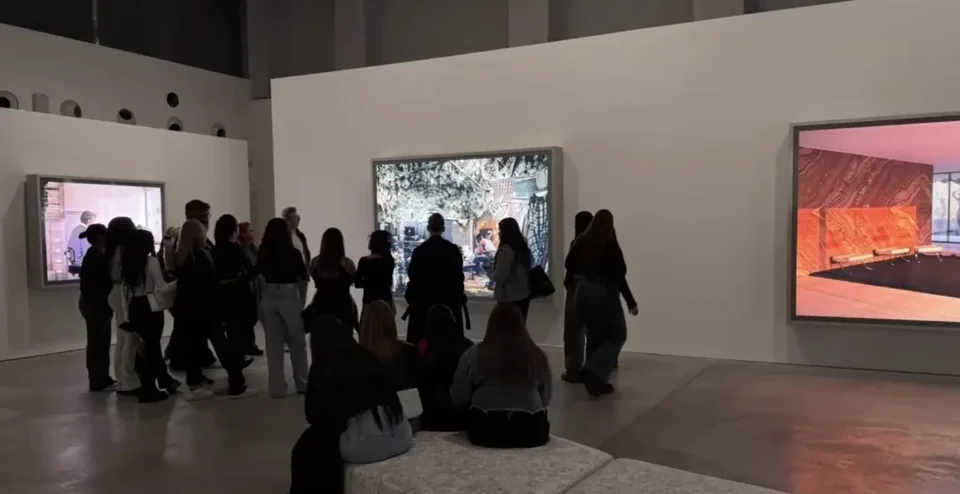
This group is looking at another of Wall's pictures, After “Invisible Man” by Ralph Ellison, the Prologue. Invisible Man is a novel by Ralph Ellison, published in 1952. In the prologue, Ellison describes the main character thinking about what it's like to be Black in postwar America. He finds himself in the basement of a building. He's going to live in this room, take electricity from the building above and write a novel about that experience. It's a very short description, but Wall got the idea to make a picture of it. When you're reading a novel there are no images, but you have images in your head. This was a situation he wanted to turn into a picture. It's probably his busiest composition; there's so much to look at, and you probably need that scale in the gallery to do it.
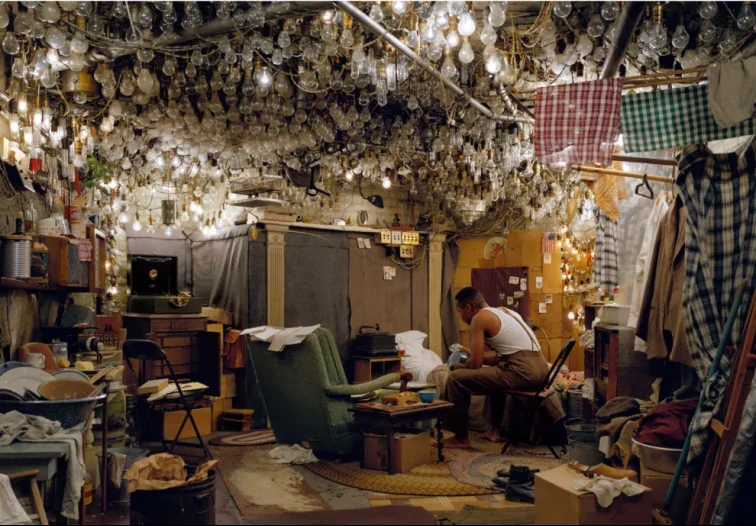
So what's the relation between this and story? I talked about a photograph suspending a story rather than really telling one. Photographs are good at situations but not very good at narrating. Viewers can make up their own version of the story, or simply enjoy looking at the picture. It's not a typical photograph; perhaps you'd be more likely to see something like it in cinema. I think people like it because there's so much to look at. It does have a connection to story: it's a picture of a man writing. He's actually drying his bowl. He's probably eaten dinner; you can see his little kitchen on the left. If you look closely, he's dripped water across the floor on his way to sit down and dry the bowl. He's looking at sheets of his writing, and more sheets hang on the back of the green chair. The more you look, the more it's like looking at a crime scene photograph, where you find details and put them together. But there's no great mystery to solve. If you're given the chance to look at a photograph like this, you will.
Your experience of it will differ if you're Black, if you're a man or a woman, if you know the novel or not, if you're American or not, or if you come from a city or not. There are all these variables. That doesn't mean there isn't also something common, I wouldn't say universal, but slightly common between us when we look.
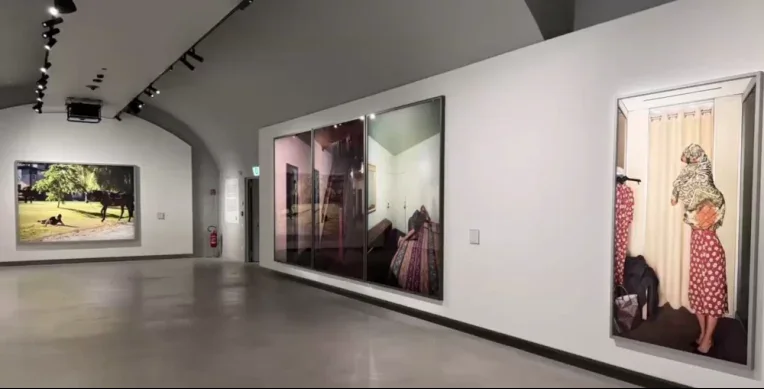
The picture on the right is called Changing Room, a slightly simpler example of what I've been talking about. It's a changing room like one you might find in a clothing store or department store. You don't often see photographs of changing rooms; they're usually private spaces, aren't they? Something strange is going on here. The longer you spend with the photograph, the more likely you are to put together some kind of story. There's a curtain: this woman has come in and closed it. She may have a dark overcoat, and there are two red-and-white dresses and two hangers on the left. Presumably she's taken off the dress she arrived in, put on a red dress and perhaps is now putting her original dress over it. There might be something mysterious going on. Maybe she's trying to steal a dress. Perhaps she managed to take two into the changing room, put one on under her original dress and take the second out, saying to the shop assistant, “It doesn't fit,” or “I don't want it,” before walking out with one. I don't know; you'd have to think about it. That's a narrative reading.
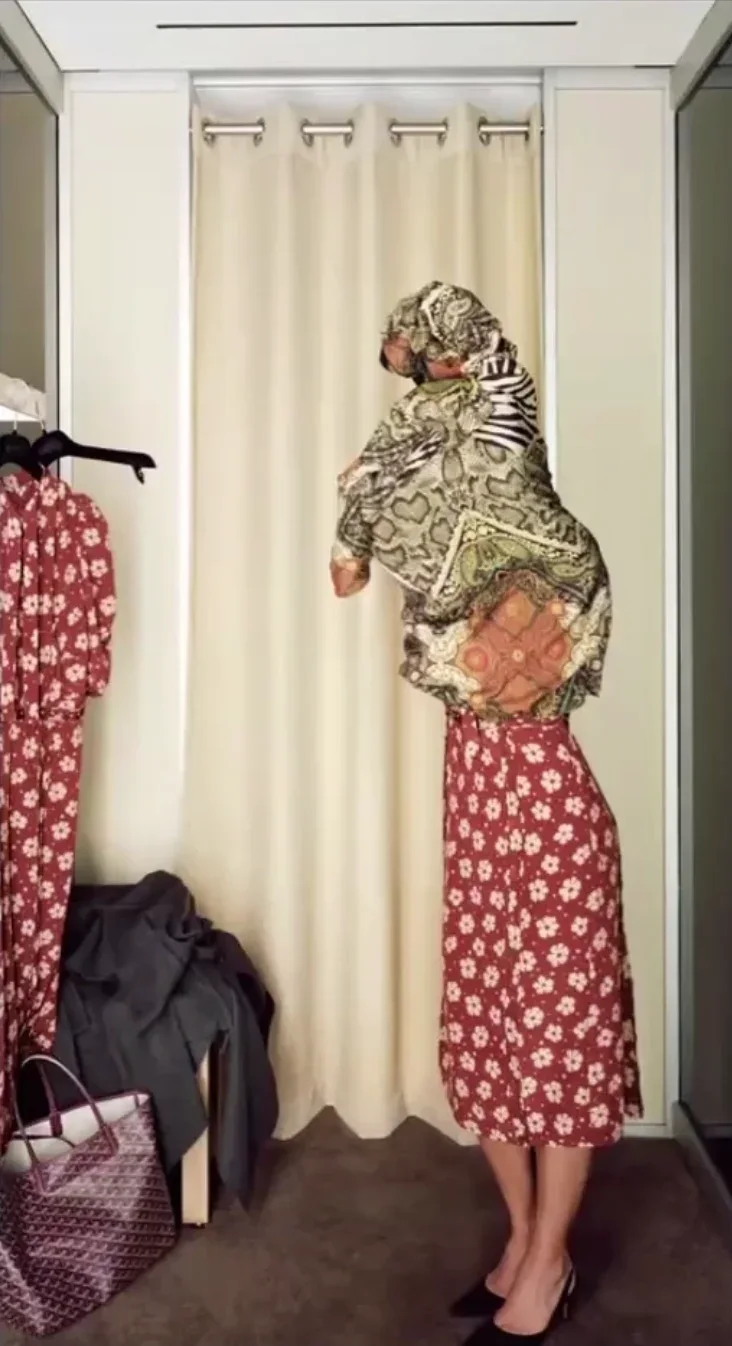
But something else is going on: where was this photograph taken from? A changing room presumably has a mirror; I've never seen one without a mirror. That's what they're for, so you can see how you look. Wall has taken the photograph from where the mirror would be in this little space. That might suggest surveillance, one of those two-way mirrors through which someone can look from one side while the other sees only a reflection. Or it could be an artificial situation Wall has set up. Mirrors are interesting in photography. People have thought a lot about the relation between photography and mirrors; the earliest writers on photography spoke of it as a mirror of nature or a mirror with a memory. Photographers are always taking pictures of mirrors. Every photographer does it sooner or later. So mirrors have a very interesting status within photography, and this is a simple but also complex exploration of that.
I've talked for a long time, but I hope you get the idea. I'm not so much interested in instructing people how to understand a photograph. I am interested in helping people think about how they understand photographs, which most of the time is very unconscious. Thank you very much.
Ce Zang
Many thanks to Mr. Campany for a wonderful talk. What resonated with me most was his mention of psychoanalysis, a field I'm very interested in and an important dimension of how I think about images and visual art. Mr. Campany mentioned the novel Invisible Man, which I actually read more than twenty years ago. It's a long novel by a Black writer. He also raised a key question: why does everyone feel differently when looking at the same photograph? In fact, photographs contain a great deal of unconscious content. When we observe things in real space, we don't dwell much on meaning. Action comes first: we need to choose the right route, check the traffic light, avoid getting hit by a car. The sense of space in reality puts the brain into a first-person narrative mode. Photographs are different. We cannot enter the world of the image; we can only look at it as an object. At that point, our bodily spatial perception and our awareness of action are switched off, which is precisely why we can gaze at a still image for a long time. In the course of careful looking, we notice details that we usually overlook in reality, and we try to analyze and interpret them. When photographers shoot, they have their own points of focus, but the photograph also contains unconscious content they didn't notice at the time. Everyone is quite free in how they look at a photograph. Our looking is based on our own desires and visual points of attention, which may coincide with the photographer's or may be entirely different. Even when the points of attention are the same, understandings will differ. Once we attach meaning to a photograph, that meaning must be constructed through the channel of language, through semantic thinking, so everyone's understanding will inevitably differ. When nineteenth-century realist writers described real scenes, they appeared to record them objectively, but in fact value judgments were implicit. Language itself has commendatory, neutral and derogatory registers. As soon as we restate a photograph in language, stances and preferences automatically appear. The same is true when critics interpret photographs. These interpretations are only interpretations from particular standpoints; they are not the photograph itself. Now let's invite our discussants, Rong Jiang and Guosen Chen, to talk with Mr. Campany.
Rong Jiang
Thank you, Ce Zang, our host, and many thanks to Mr. Campany for his excellent talk, which showed us from multiple dimensions how to look at a photograph. My understanding is this: how we look at a photographic work often depends on the viewer's background, including their education, life experience and ideology, all of which shape how they interpret the work. As Mr. Campany said, photographers cannot determine the ultimate meaning of their work. But I think a good photographer should have their own intentionality, an initial motivation and concept for the work. This concept is important and should be embodied in the work; the creative idea itself is also one way of giving a work meaning. Of course, whether that idea can be conveyed to viewers, and whether viewers resonate with it, depends in turn on the viewers' own agency and limitations. This reminds me of Roland Barthes's notion of "the death of the author": whether in a novel or a photographic work, much of the meaning is actually given by the viewer or reader.
This also brings to mind Jeff Wall's Picture for Women. It's a very interesting single image: at the center is a camera on a tripod, on the right is the photographer Jeff Wall himself, and in the left foreground is a woman. Her gaze is photographed through a mirror, and that gaze also looks toward the photographer, or, you might say, toward the viewer. When we look at this work we can read several layers of meaning, and it reflects precisely the logic of photographic looking and making, because it involves the triangular relationship among the photographic work, the camera, the photographer and the subject. Mr. Campany mentioned just now that the meaning of a photograph is often constituted by power: whoever has more power is more likely to define the meaning of the photograph. In the past, photographers had relatively more power. They could direct their subjects, as in a portrait studio where the subject is told how to pose. With this in mind, I'd like to ask Mr. Campany a few questions. First, can the photographer's subjective creative intention determine the best meaning of a work?
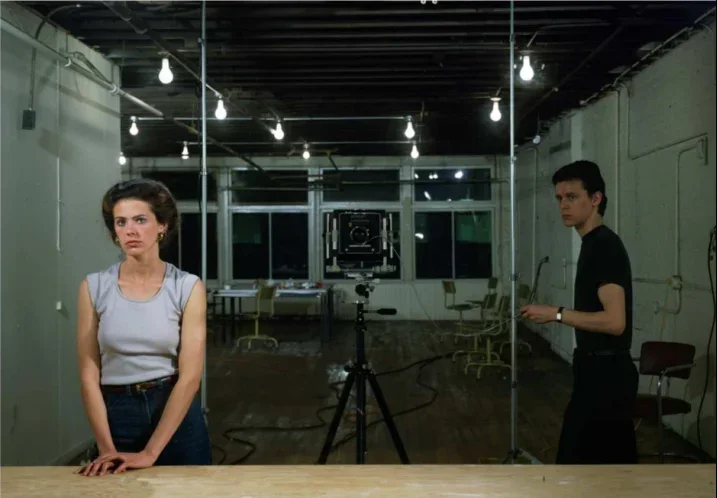
Second, the camera, as a machine, involves a process of mediation and filtering. For example, in Stephen Shore's view, the large-format camera can carry the photographer's agency and ideas very well, but not every camera can do this. What happens if the camera fails to reflect the photographer's intention? And in the triangular relationship I just mentioned, if the subject doesn't cooperate, how does that affect the meaning of the photograph? Thank you.
David Campany
That's a very good question, although it's about five questions. Let's take the first one, where you began, around intentionality. Photographs are made with different degrees of intentionality, from almost pure chance to something highly constructed. But a lot of intentionality doesn't necessarily mean that the photograph's meaning will be clear or intentional. We've just looked at some of Jeff Wall's pictures. There's clearly a lot of intentionality there, but it's about how to organize a picture, not necessarily how to organize meaning or dictate response. You can put all your intentionality into a picture in order to leave its meaning very open. Intentionality doesn't mean you're like a mechanic making a message, putting it out and having the audience receive it. I suppose it can be like that. Advertisers try to do it, although there's a famous expression in advertising that half the money spent on it is wasted, but nobody knows which half. Even when you're trying to make very intentional pictures, meaning is not guaranteed.
In culture generally, there are what we call conventions, clichés or stereotypes. That's when a photographer, writer or musician inhabits an existing ideology or set of attitudes to guarantee a quick message. If it's a stereotypical representation of a certain kind of man, it only works because there have been thousands of others doing exactly the same thing. You could argue that the photographs with the clearest meanings are the most clichéd, the most stereotypical. Any photograph that diverges from that is going to be ambiguous. That seems obvious. That's the first point.
The second point, about the camera itself, is really interesting. I think photographers, particularly artists, very rarely want to accept how much the camera is doing. Part of their art is using a machine, and they want to tell you that their intentionality is about how they use it. But the photographer's relation to the camera isn't the same as the novelist's relation to a pen. The camera does quite a lot. Coming back to intention, many early commentators on photography noticed how much work the camera does beyond intention. William Henry Fox Talbot says at one point in The Pencil of Nature that the camera will give you more detail than any artist, I think he meant painter, would bother to put there. You open the shutter, the world as light floods in, and you get things in the picture that you didn't even see yourself. Of course you do.
I'll give you an example that also brings us back to the unconscious. A long time ago, when I was young, in the 1990s, Nelson Mandela, the Black South African leader, or resistance fighter as he was then, was released from jail. One of the first places he came to outside South Africa was Brixton, the area of South London where I lived. It has a very large Black population, which is part of the reason he came. Thousands of us gathered to see him after twenty-seven or twenty-eight years in prison. Finally we saw him come up a staircase and stand there with other people, waving to the crowd. I've never seen such emotion and excitement; people were crying. It was a very hot day, and I remember a woman fainting. It was an incredible symbolic, political moment.
The next day, some friends I lived with and I bought seven or eight daily newspapers because we wanted to see how they covered the event. My friend laid them out on the breakfast table. Four or five of us had been there the day before, and a friend asked, “Did anyone see Prince Charles?” None of us had. But the photographs clearly showed him standing right next to Mandela. Why had none of us seen him? Our eyes had probably seen him, but we didn't like the idea of the British monarchy, and everything it represents about colonialism, next to Nelson Mandela. We had unconsciously blocked him out. The photographs showed he was there. My girlfriend at the time said, “This could be a day when we can all be proud of our unconscious,” that somehow we hadn't wanted to accept it. But the camera wasn't choosing. It would have been very difficult to photograph Mandela without Prince Charles standing next to him. Maybe many of the photographers were thinking only about Mandela, or maybe about Mandela and Charles together. We in the crowd never saw Charles, even though he was right there.
It's a little like a close-up magician distracting you with one hand while doing something else with the other. Sometimes our visual experience is like that. Walter Benjamin, one of the interesting German writers on photography from the twenties and thirties, talked about the “optical unconscious.” The way the camera offers us things beyond what we actually see is one of its most significant characteristics. Perhaps that optical unconscious goes beyond intention. In fact, I would say it always does. In photographs you get more than you wanted. The photographer gets more than they wanted; the viewer gets more than they want. There's almost too much going on for any stable meaning. Look at how photographs are used in children's books, where the aim is to communicate clearly. They have to be very careful, because a child might find something in the background more interesting than the intended subject. They often cut things out, cut shapes out. That tells you how wild and unstable photographic meaning can be, way beyond intention. Sorry, that's a long answer, but it's a good question. I think about it a lot.
@Ce Zang: The example Mr. Campany just gave is very interesting, and I'd like to join the discussion briefly. A few months ago, when I was rewriting "The Encounter Between Brain and Eyeball," I emphasized that what we "see" is not the raw information captured by the retina. What the camera captures corresponds precisely to the retina's point of view: visual information taken in wholesale. The visual information that people receive, by contrast, has to go through a series of complex operations by neurons in the brain and be processed through multiple visual pathways. What finally emerges, what we actually "see," is what our consciousness attends to. It is a "reality" generated by our brain, not the physical world as it actually is. The "top-down" effect is crucial: at the scene, we were focused only on Mandela, and even though other things were captured by our eyes, they were excluded by the brain's attention, the so-called "searchlight of consciousness."
What gets ignored is precisely the unconscious part. But the camera is essentially like our eyeball. It has no brain, and it makes no "top-down" selections; it takes in everything. So the lens can see what the human eye doesn't and records the details we overlook. Photography is fascinating in this respect: I think "looking" is essentially an encounter between the brain and the eyeball. What we didn't notice at the time is captured by the camera and then, in the photograph, serves as a reminder, calling that unconscious content back. All right, I'll leave it there. Guosen, please continue the conversation with Mr. Campany.
Guosen Chen
Thank you all, and thank you, Ce Zang and Rong Jiang. Hello, David Campany. Honestly, it's a real honor to have the chance to talk with you. Before asking my question, I'd like to share some thoughts about Jeff Wall's photographs. I completely agree with your assessment of him. If I had to sum up my feelings about Jeff Wall's work in one word, nothing would fit better than "opaque." I've always tried to interpret this opacity in some way, but it can never be fully decoded. His photographs are always full of these ineffable, subtle details. I'd like to take Dead Troops Talk as an example.
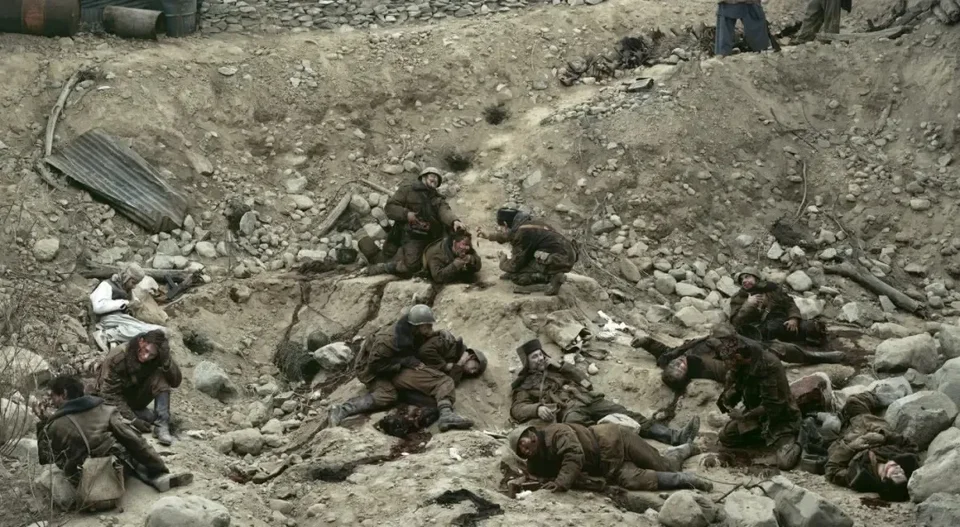
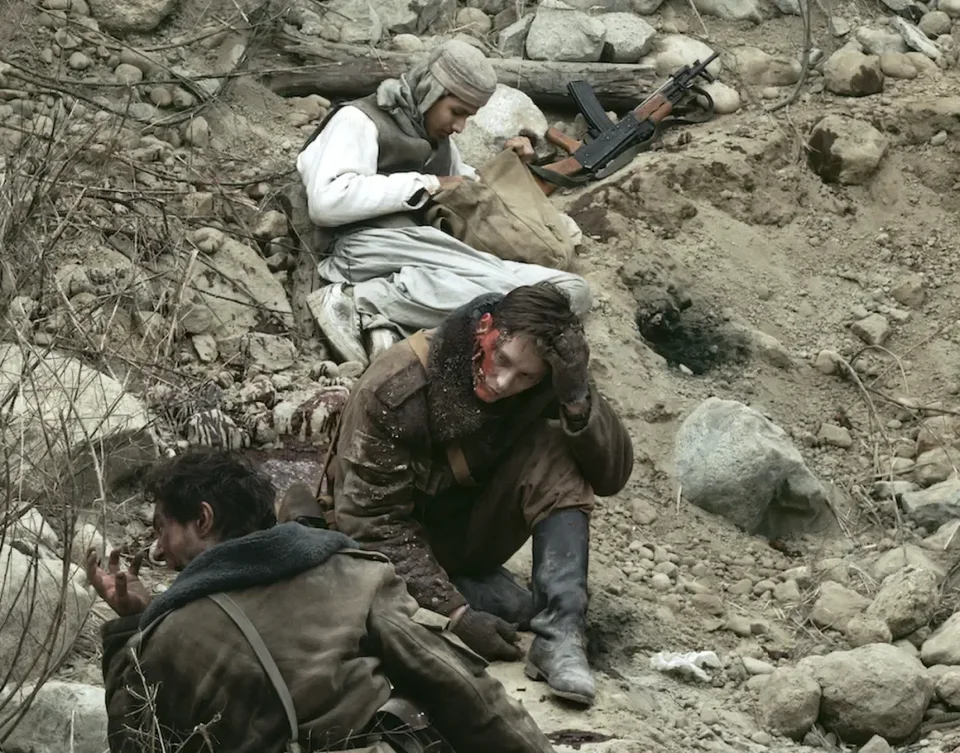
Put simply, Jeff Wall presents two worlds here: one is the dead Soviet soldiers, who are talking to each other, some even laughing, sleeping and so on; the other is the Afghans who are stealing their belongings, or
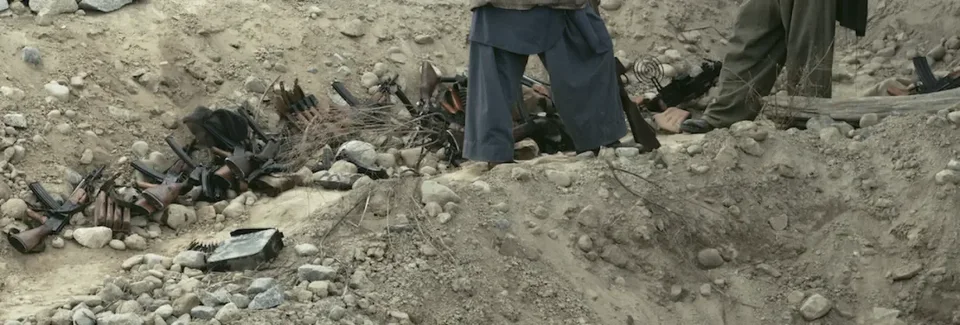
you could say rummaging through their bags, looking for something. This adds a highly ironic layer to the whole picture.
In the upper right corner you can see two pairs of feet, but you can't tell whether they belong to the living or the dead. So in that sense, as an exploration of modern life, and the title perhaps borrows from Manet, I actually think Jeff Wall is entirely commenting on contemporary life, right? He probably found an extraordinary way to do this. For me, one of Jeff Wall's greatest contributions is that he pioneered an entirely new way of representing contemporary life and at the same time created a new mode of labor. This concept of a "mode of labor" actually comes from a scholar I greatly admire, Professor John Roberts, who is now Professor of Art and Aesthetics at the University of Wolverhampton and discusses it at length in his book Photography and Its Violations. By constructing images in the studio, Jeff Wall succeeds in making work without losing the visual pleasure of the image itself. You can still say that his work deeply explores how we conceptualize, think about and see the world around us. On the one hand, through complex composition, he makes the image rich, with a richness comparable to painting; on the other hand, he achieves all this through a cinematic approach, and I think that's the key. This way of working transforms photography into a larger, more collaborative mode of labor, close to filmmaking: it requires a studio, casting, a long production cycle and so on. He freed photography from an individualized mode of creation like the "decisive moment" and rooted it directly in the social and economic relations of contemporary society. He doesn't just depict modern life from the outside; I think his artistic practice is itself part of the modern system of production. For him, issues like politics and race are by no means optional subjects or motifs to be adopted at will. This differs from Michael Fried's theoretical framework; it isn't as simple as choosing to focus on Black experience or queer identity. I think political and real-world issues are perhaps always entangled and constantly evolving, and they finally turn into that similar opacity in his work. They are a latent presence, woven into the work from the very beginning. Beyond that, I'd say the most brilliant thing about Jeff Wall's photographs doesn't really lie in the past. It's hard to explain clearly with theory; it's more like the feeling you just mentioned, such as the mirror in the photograph. Those are the thoughts I wanted to share. Thank you very much for your talk. It was wonderful.
Thank you very much. That's great; you touched on a lot of things. When it comes to Jeff Wall, I'd rather think about each individual image, because these questions come up differently in different ones. In the same way that I said there are photographs and there's photography, there are Jeff Wall's individual pictures and then there's the way people talk about Jeff Wall, as if it were all highly intentional, cinematic and labored. That varies from picture to picture. It's interesting that you mentioned Cartier-Bresson and the decisive moment, because that's a mode of photography that collapses the distance between noticing and picture making. Something happens, and you make a picture of it in the moment. In a way that leaves you outside of photography. What do I mean? If you're making a film, you have to climb inside things. You might find locations, make sets, do some lighting and find performers. But you'd still be waiting for a spontaneous chance, a spontaneous gift. Humans are amazing and unpredictable. If you tell them exactly what to do in a photograph, they look like mannequins, like zombies. Even when Wall arranges a situation, he has to take many photographs because he's waiting for the people in them to do something he wasn't expecting.
Within the intentionality, the control and the labor, there's still the gift of spontaneity in the way Cartier-Bresson would understand it. I can say this because I've talked with Wall a lot and have known him for a couple of decades. He's very interested in those twentieth-century street photographers. In a way, that's a perfect kind of photography, isn't it? It's something no other medium can do. You go out into the world with a light, flexible piece of equipment and make something extraordinary with very little labor and very little time. It's possible; we know it is. Wall once told me that, looking closely at those street photographers' books and contact sheets, he noticed they got a good picture roughly once in every three hundred to six hundred exposures. That's between ten and twenty rolls of 35 mm film. He said, “It's interesting. I have to take about that many pictures, between three hundred and six hundred, because I don't quite know what to expect. I'm still waiting for chance.”
What is chance? It's something beyond intentionality, but you still have to recognize it as it happens and respond in the moment. If we go back to Dead Troops Talk, I don't know what that picture means. It's an interesting picture and an interesting social and historical situation. It's an imagining of soldiers coming to life after they've died. But what does he call the picture? Dead Troops Talk. What did I say at the beginning? A photograph is silent. We'll never know what they're saying to each other. You'd think that making a photograph about talking would be self-defeating, but Wall has made many photographs about talking and conversation. It's often there in the titles: Dead Troops Talk, The Storyteller, The Listener, Diatribe, Outburst. You're looking at people verbalizing with each other, and you'll never know what they said. A photograph can be interesting on the basis of what it cannot do. In fact, I'd say all photographs are interesting for what they cannot do as much as for what they can. So it isn't crazy to make a picture about talking. It's going to be interesting because you're not going to know.
Ce Zang
Thank you, Mr. Campany. I agree with much of Mr. Campany's thinking, which is in fact my own view as well: the image itself is silent; it cannot speak. The reason we use language to describe images is that the visual image prompts us to reflect on things. But the two are actually not on the same channel.
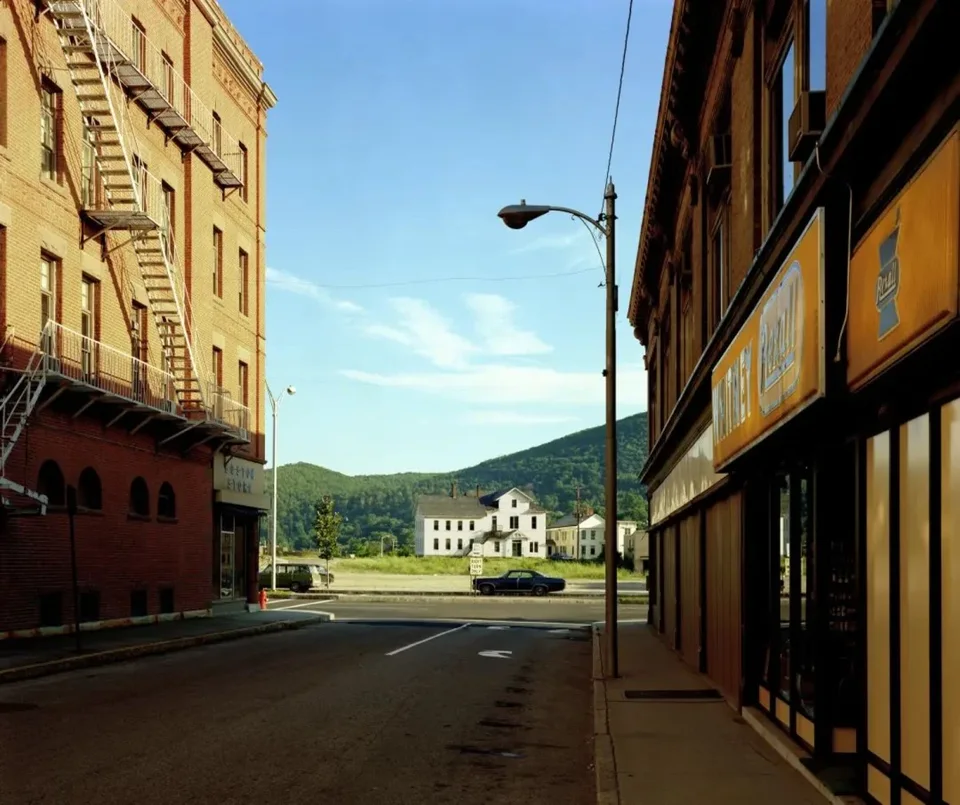
Let me explain my approach to interpreting photographs through two completely opposite readings of a photograph. Take this photograph by Shore. I remember that the artist Sternfeld, interpreting it in an article, pointed to the relationship between town and country in the image: the ugly modern commercial building in the foreground forms a kind of contrast with the white church behind it, which represents spiritual elevation.
This reminds me of those nineteenth-century naturalist and realist writers, such as Stendhal and Balzac. When they described the reality their eyes saw, as soon as they began to describe it, as soon as semantics intervened, the channel of language passed value judgments on what was seen, and praise, blame and standpoints appeared between the lines. This is a very important feature of language. A photograph is silent; it doesn't speak for itself. All the discourse is given to it by our thinking brains. So for this photograph by Shore, I could perfectly well offer the opposite reading: the front is modern, the back is nostalgic, and the times are progressing. That reading holds up just as well, because the photograph itself doesn't speak. All our value judgments are actually given to it in the minds of viewers and critics. Why do we give it different value judgments? This is precisely related to psychoanalysis. Because our objects of desire differ, different elements in the photograph summon our respective objects of desire. So we emphasize the parts we care about and ignore the rest.
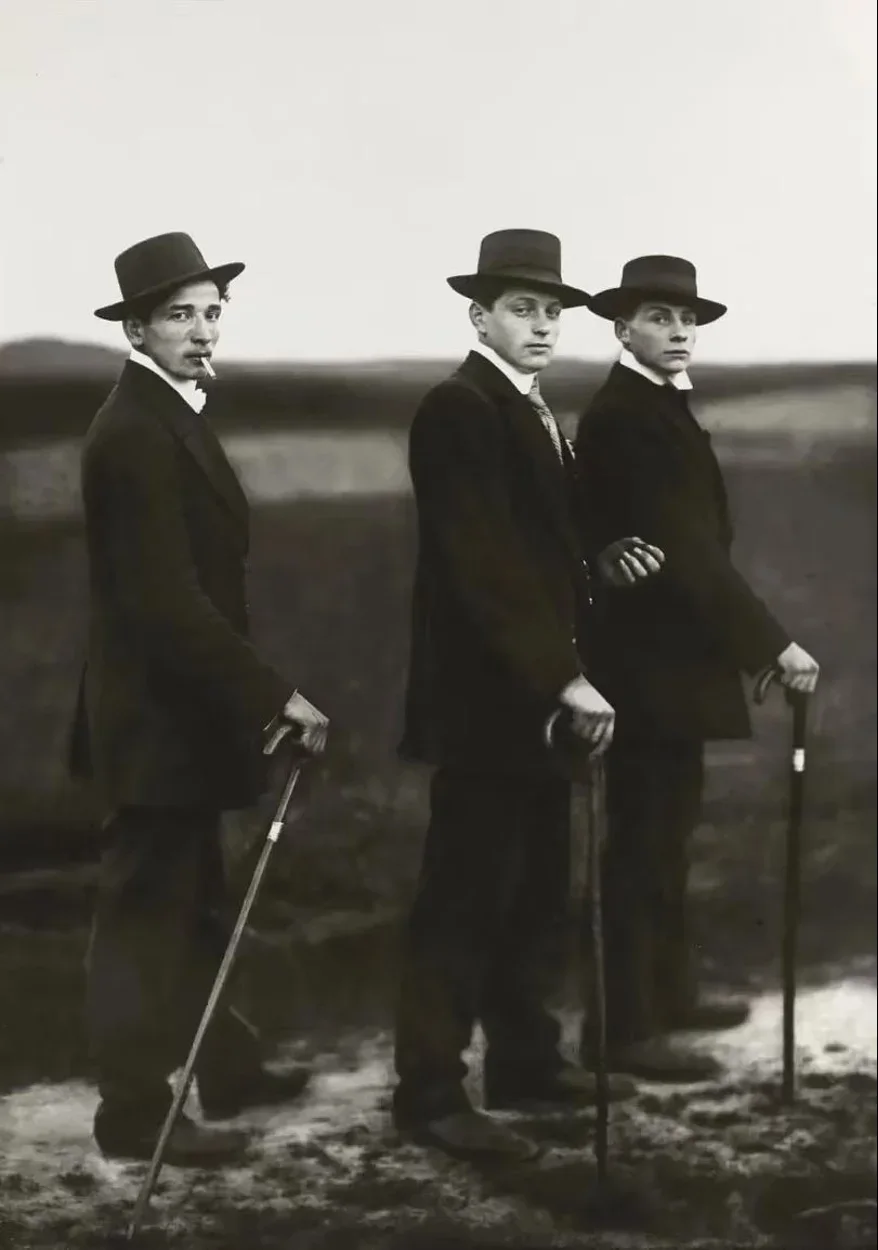
Now look at Young Farmers on Their Way to a Dance. This is a very famous photograph, and John Berger's reading of it is also famous: he discusses how these three farmers are wearing ill-fitting suits and so on. Everyone knows that reading, so I won't repeat it. But I can offer the opposite reading: do the suits worn by the upper classes necessarily fit? Are there no slovenly people in upper society? It's just that Sander didn't photograph them. Defining identity by outward appearance is precisely a kind of visual violence in portrait photography, and it's something we should question.
I can likewise reverse it and read it this way: it's because Sander didn't photograph those unkempt, sloppy members of the upper class that the photograph has this effect. Photography shouldn't really go along with such everyday stereotypes; it should resist them. This doesn't depend at all on the photograph itself (the photograph is silent); it depends only on our own intellectual background and the context we give it. A photograph is a fiction, so the interpretation of a photograph is, I think, a fiction of a fiction. When a photograph points to a scene, it is really the photographer's gaze pointing toward a field. What counts as background and what counts as subject in that field depends entirely on the position from which we direct our gaze at it. None of our interpretations is an instruction manual for the image; rather, we place our own subject in a certain discursive position. To put it plainly, the interpreter embeds their own subject position in that discursive position, which does not represent the meaning of the photograph itself. But such interpretation is a way of filling the photograph's silent field. So whether we're talking about photographic works or works of visual art, in my view what is truly remarkable is precisely the part that cannot be interpreted, what Roland Barthes called the "punctum": the part that cannot be filled by language or covered by meaning. Or, even if it is covered by meaning, it is not identical to that meaning. Whether in visual art or photographic works, what is conveyed is more a bodily experience, a perception, than the discursive transmission of meaning. That's all I'll say for now. I look forward to Mr. Campany's response.
David Campany
That's very interesting. Can we look at the first Stephen Shore picture again? A few years ago, perhaps seven or eight, a publisher asked me to write an essay for a book celebrating a collection of photographs put together by an American pharmaceutical company. The collection had pictures by many well-known photographers, but they had collected only pictures that included pharmacies. This picture was in it. I've known it since I was about twenty years old and had never noticed the pharmacy. Now I can't think of anything else when I look at it. Yes, we can talk about how the picture is organized, about the past and present and progress, but it also has a pharmacy in it. I only noticed that when a context made me think about it. In this collection there were photographs by Cartier-Bresson, Robert Frank, Helen Levitt, Weegee and many others. I had never noticed the pharmacies in their pictures until the context pointed them out to me.
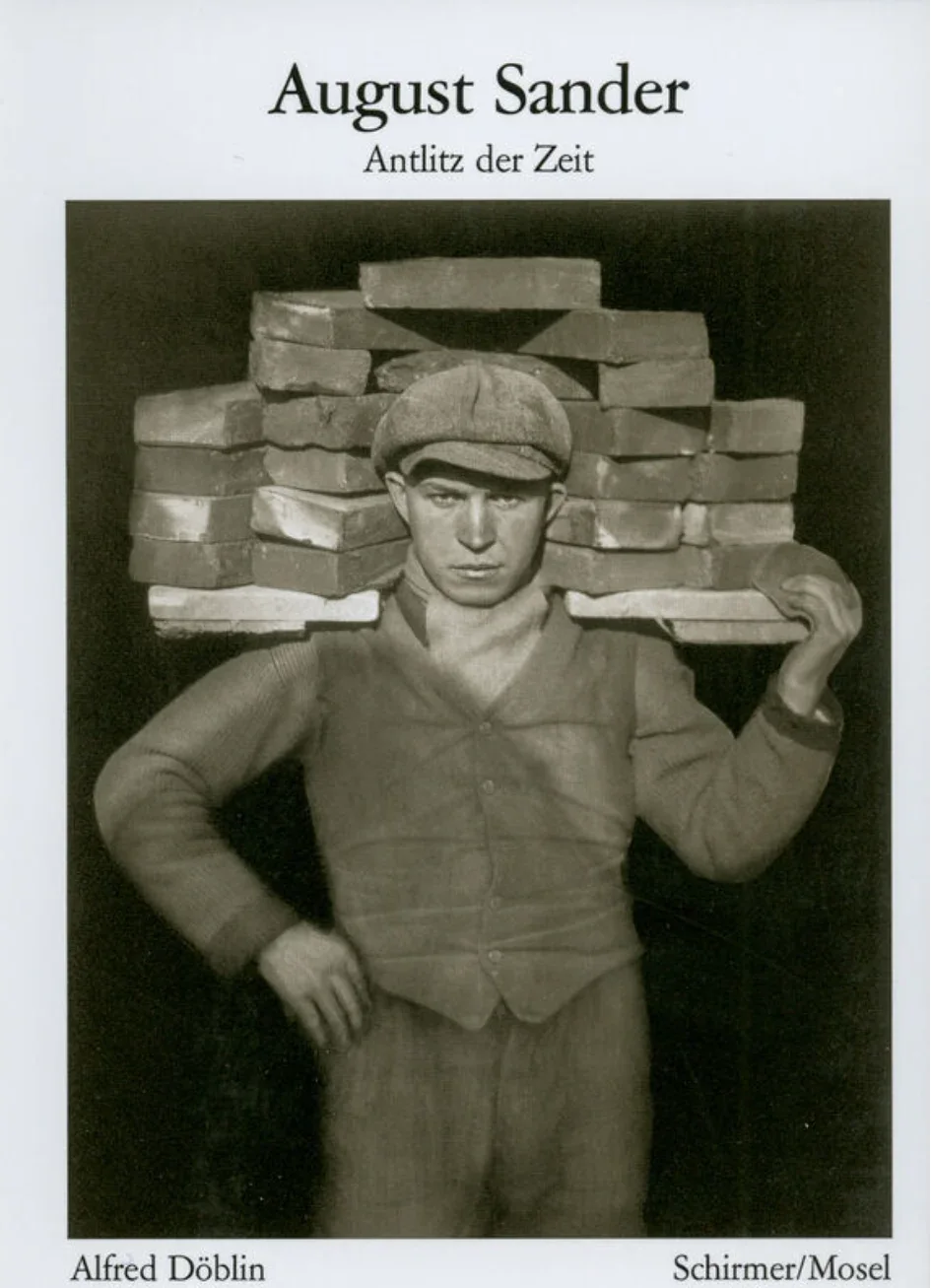
Then, if we go to the August Sander picture: as we know, Sander made a project to photograph a great survey of the German people. He published a book with sixty of these pictures in 1928 or 1929, a few years before the Nazi Party came to power in 1933. Imagine that it's 1929 and there's a bookshop in Berlin. In that bookshop is a pile of Sander's book, Antlitz der Zeit, Face of Our Time: sixty portraits. Who would buy it? People interested in photography as a serious art? People with a sociological or anthropological interest? People interested in fashion and dress, in how people were dressing? Would people read it as a commentary on German society, perhaps even a political commentary? We don't know. Photography can exist at the meeting point of so many frames of reference and ways of thinking. Now Sander is regarded as a great figure in photography's history, and almost all photography students learn about him. Back in the twenties nobody was really thinking like that. Of course Sander took his work and his project seriously. But the ways we can think about photographs are so layered and complex that the complexity itself must be part of our response. You can make an emphatic reading of any picture, of why it's important or significant, but that might not get us to this layered complexity.
I'll give you another example of these layers. The American publisher Aperture once asked me to put together a book of photography made on road trips in America: Robert Frank, Justine Kurland, William Eggleston, Garry Winogrand, Inge Morath, Stephen Shore. Lots of great photography in the US was made on the road, traveling by car. When the book, The Open Road, came out, I was asked to do a signing at the biggest bookstore in London. I went to the photography department on the third floor and said I was there for the signing. The woman said, “We don't have any book signings here today.” I checked my email; I had the time right. She looked at the schedule and said, “Ah, your signing is on the ground floor, in the travel section.” I said, “But we're on the third floor, and I can see my book here in photography.” She said, “Yes, we have it here and we've sold seven copies so far. But in travel we've sold about a hundred and twenty. So where do you want to sign your book, Mr. Campany?” I went to the ground floor.
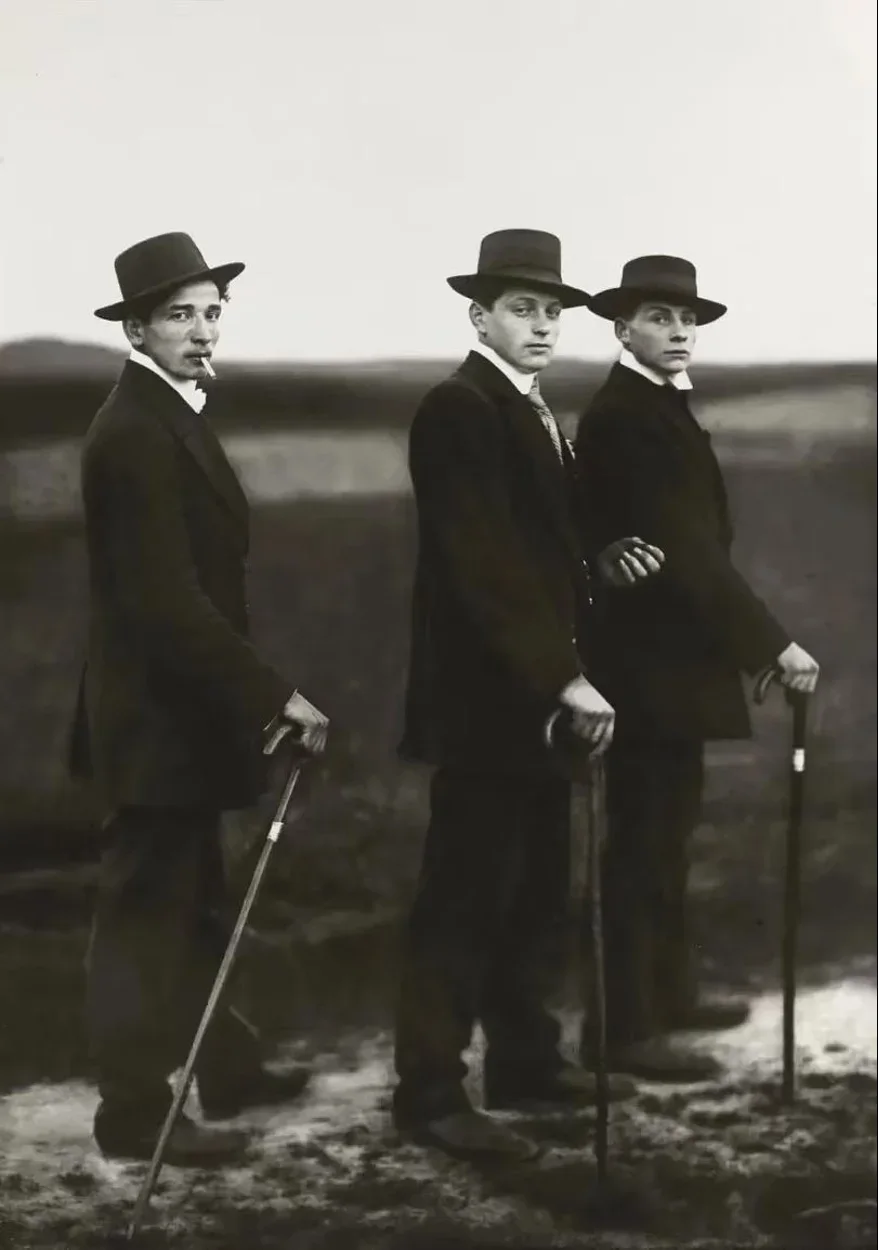
That tells you there are people buying the book who don't even know the photographers' names. Maybe they aren't thinking about photography the way we do because we like photography. Perhaps they want something else from the pictures: nostalgia, a sense of landscape or American culture. Those things are always there. I feel the same about Sander. We can't really answer what his photographs meant when he published that book in Germany at the end of the 1920s. It's mysterious to me. I like John Berger's response to this picture; it's great, but it isn't the end of it. There are so many ways of looking. This sounds crazy, but whenever I see this photograph, I think how much the man on the left with the cigarette looks like the Hollywood actor Richard Gere. That's a crazy, ridiculous reading, but it's there.
Ce Zang
Thank you, Mr. Campany! Language can never perfectly interpret a photographic work, because language is articulated into discrete units, and its "density" is completely different from the "density" of vision. A photograph or an image is extremely dense and continuous; it's a feeling we get from examining it whole with our eyes. Language, by contrast, is segmented and cannot fully translate that visual density. Take nineteenth-century realist writers: however they describe a scene, we can only use our minds to imagine a similar scene from our own experience. We can never see what the scene described in the novel actually looks like. Photography is different; it lets us see directly what it looks like. And what is the beauty of photography, the most interesting thing about it? It is that it breaks the fixed impressions stored in our memory and gives us a kind of visual astonishment. It actually breaks down the inherent rigidity of the order of language rather than reinforcing it. I think this is the most valuable thing photography gives us. Now let's invite Rong Jiang to continue with his questions.
Rong Jiang
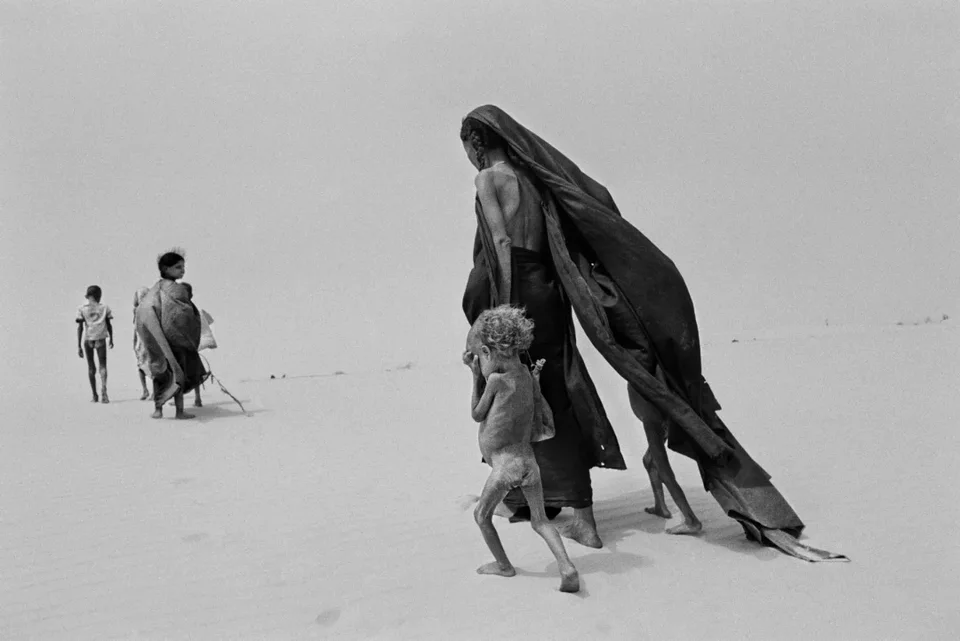
Thank you to our host. Mr. Campany, I have some thoughts related to this last question. For more than half a century, Sebastião Salgado recorded major events around the world with his camera, until his death earlier this year (2025). Many people hail him as one of the greatest photographers, and as a humanist photographer. But I think there is a point of controversy in his work: in my view, he is more a photojournalist than an art photographer, because most of his subjects relate to newsworthy events. However, I think he tried to transform himself into an art photographer by making photographs of people suffering from environmental destruction extremely beautiful. But the boundary between photojournalism and art photography is clear, and Salgado often blurs these two types of photography.
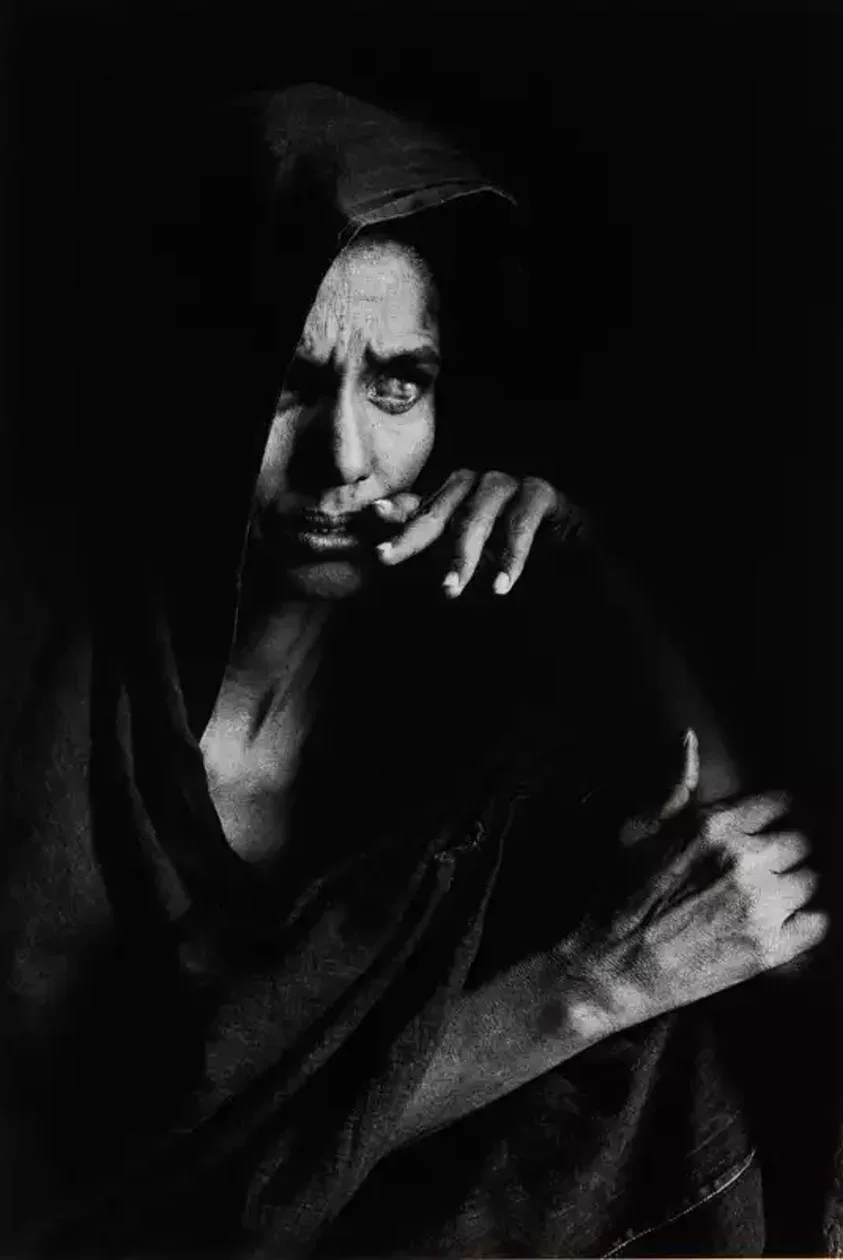
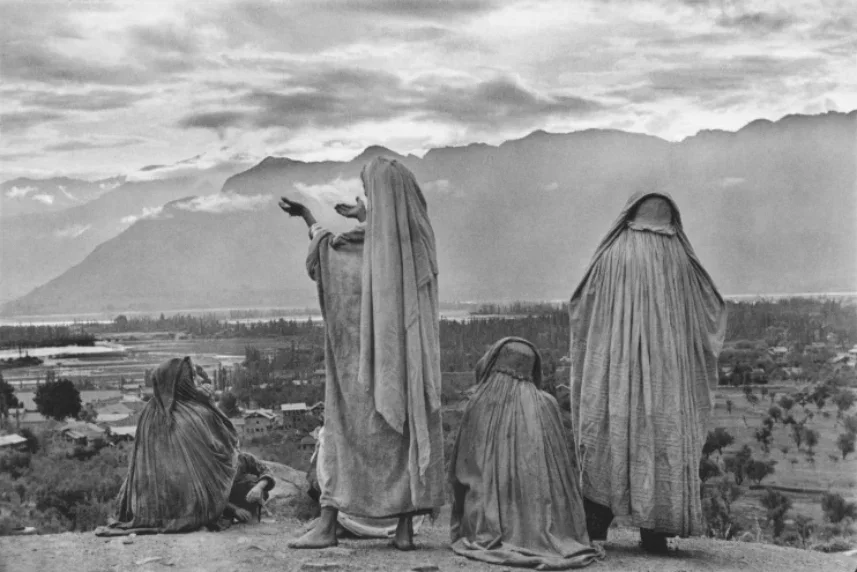
Take this photograph of a woman he took in Mali. At first glance she looks like the Virgin Mary, but the caption says that this woman had gone blind from sandstorms and eye disease and was waiting for a food distribution at the time. Salgado didn't even know her name.
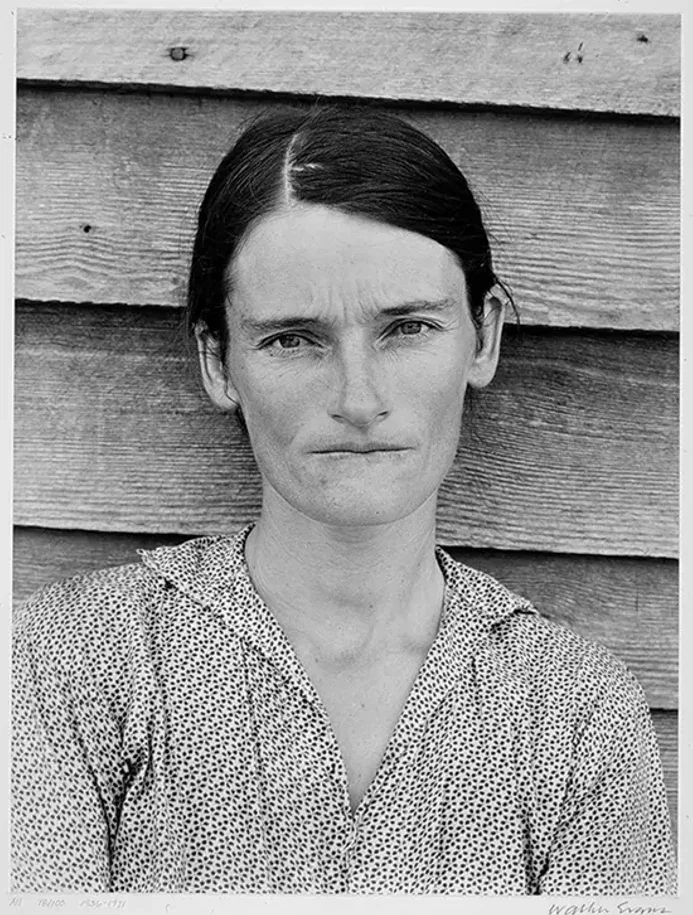
In sharp contrast is the work of Walker Evans. Traveling in the South, Evans photographed Allie Mae Burroughs, a sharecropper's wife, a 27-year-old mother of four. He shot at eye level, in a respectful and objective manner, neither judging nor deliberately beautifying.
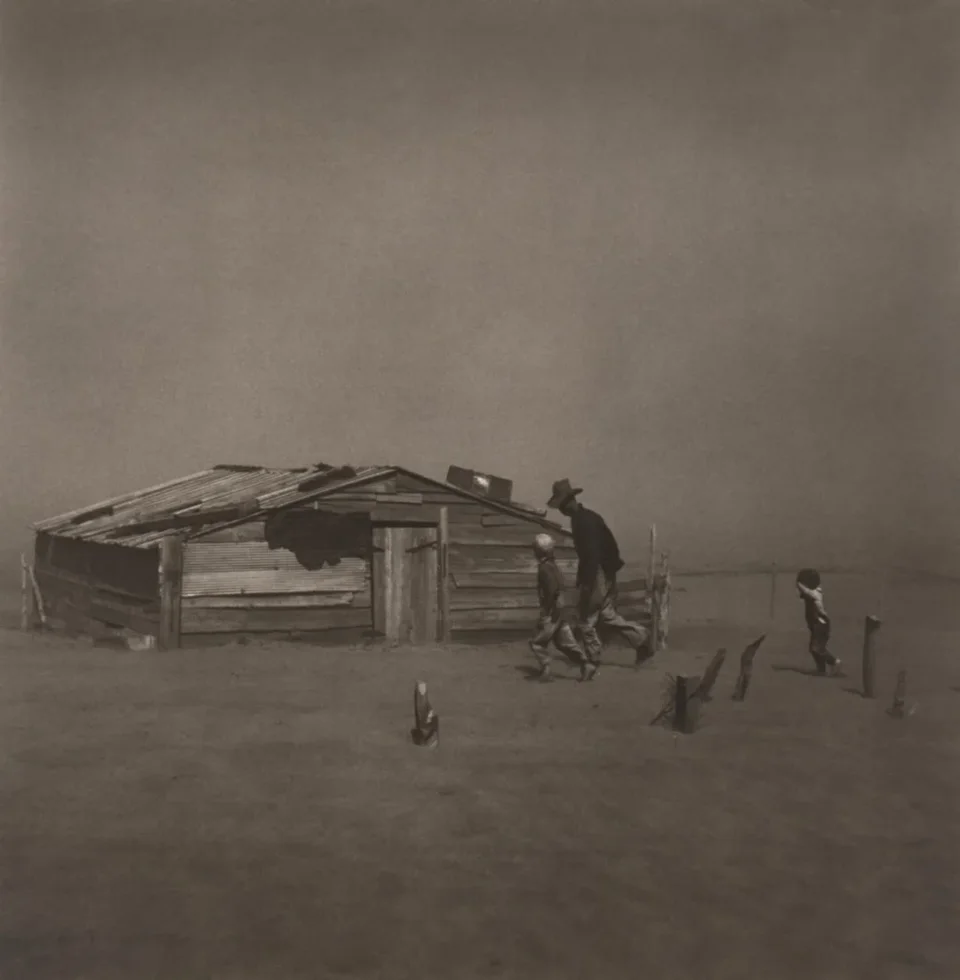
Another of Salgado's photographs from Mali looks at first like a grand history painting, but it actually records nomads crossing the desert to survive. He shot from a low angle to make the figures look imposing. By contrast, the Farm Security Administration (FSA) photographer Arthur Rothstein photographed the plight of American farmers during the Dust Bowl at eye level.
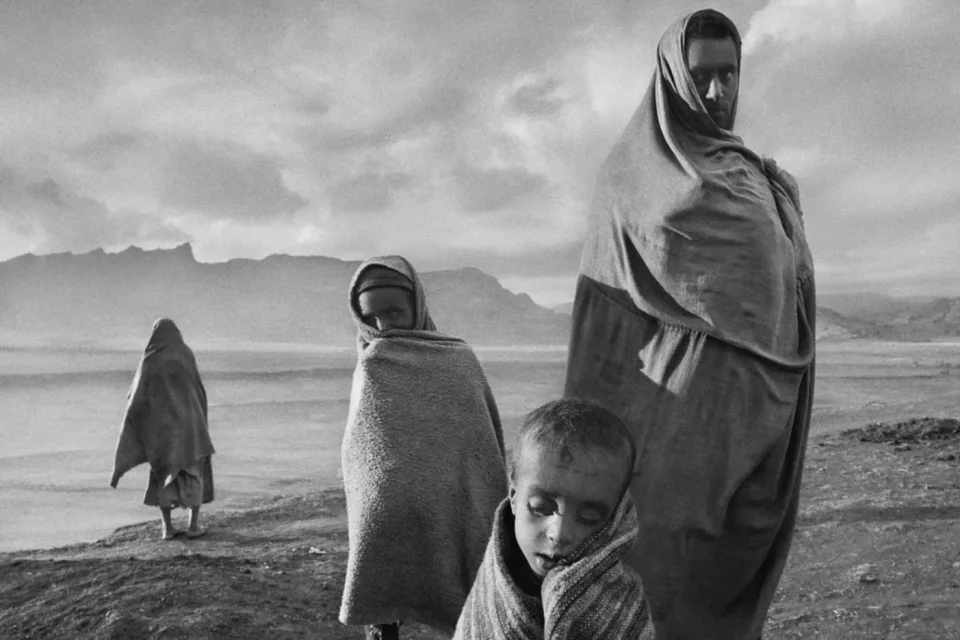
Salgado also has a photograph of refugees, shot from a low angle with a triangular composition. The image is stunningly beautiful, but the caption says these are refugees wrapped in blankets, waiting outside a refugee camp in the early morning.
This reminds me of Henri Cartier-Bresson's work in Kashmir. He also shot at eye level, and I consider that art photography rather than photojournalism.
In my view, Salgado cares more about formal beauty than about what the photograph expresses in terms of content.
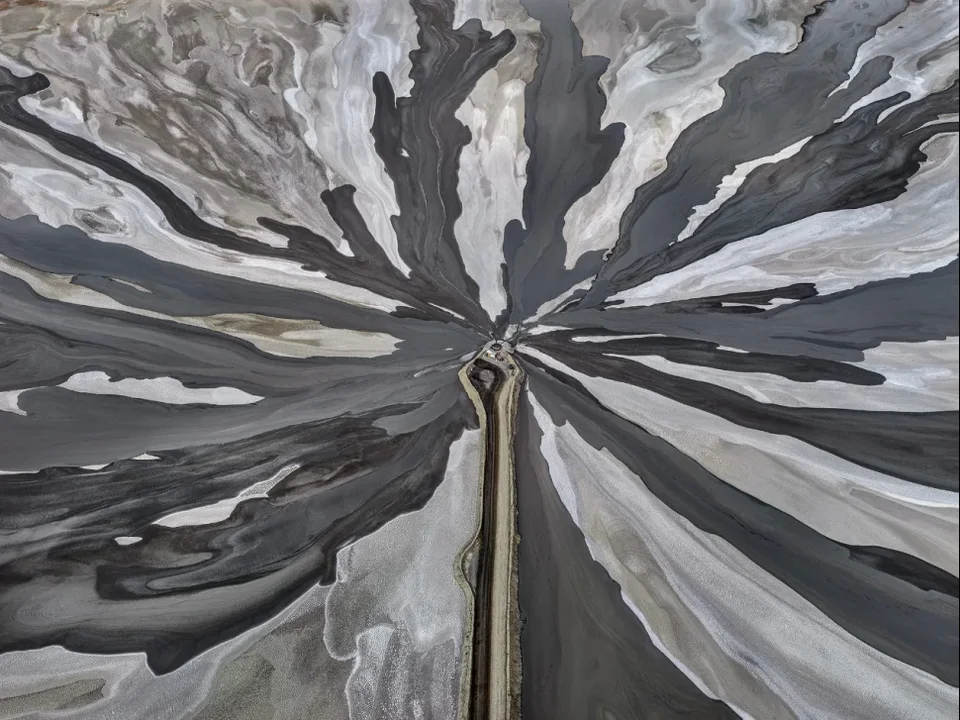
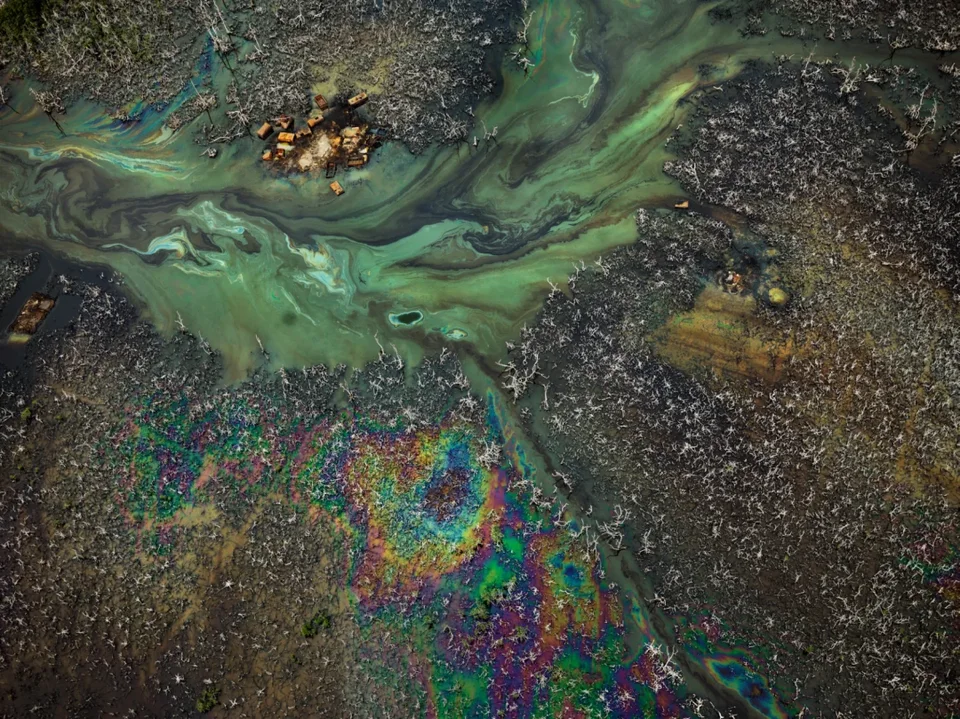
To some extent, the same is true of Burtynsky. Burtynsky often photographs rivers, mines and oil fields from an aerial perspective. He once said, "The higher you go, the more abstract the image becomes." So this image strikes me as an Abstract Expressionist painting. Enlarged, it has tremendous visual impact and artistic beauty, but it actually shows a polluted river. Later he switched to drones, and his work was also displayed at large scale, but there are hardly any people to be seen in the images.
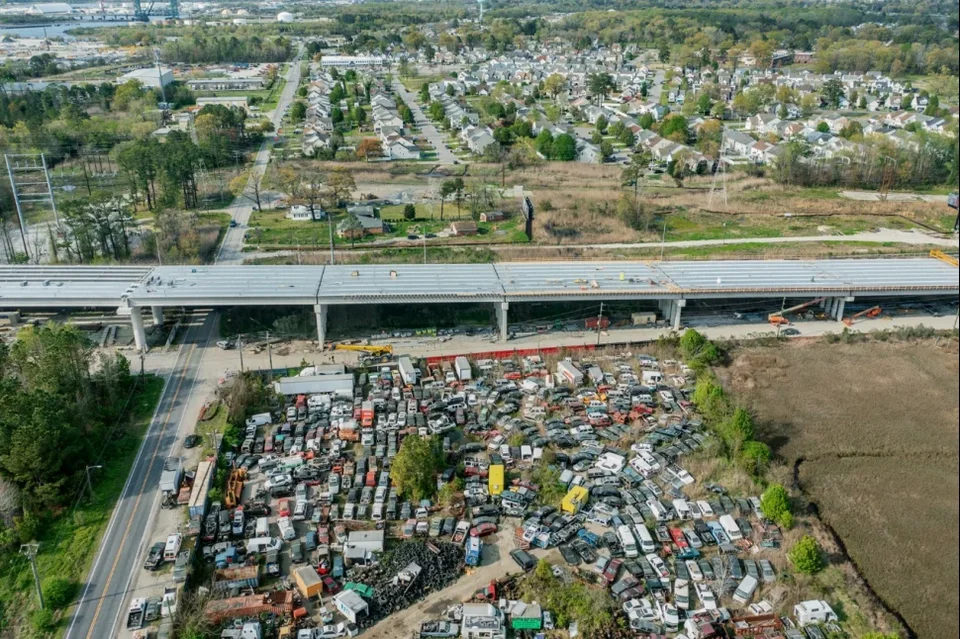
Stephen Shore's latest series also uses a drone, but mostly shoots downward at a 45-degree angle, as if he were holding up his usual large-format camera. Through it we can glimpse America's social landscape and cultural character, which has been his lifelong subject. He has also photographed many urban landscapes on the edges of cities: used-car junkyards, housing developments off the highway, abandoned houses in the wilderness. For Shore, these are art photographs, but I'm not sure Salgado's work can be regarded as art, even though his work is mostly black and white and rarely in color. Burtynsky can basically be regarded as art photography, even if it contains elements of photojournalism.
My question, Mr. Campany, is: do you agree with my claim that these two photographers, Salgado and Burtynsky, tend to prioritize form and beauty over the substantive content of the photograph? Thank you.
David Campany
I absolutely disagree with that, although I'm familiar with the argument. Let's have the images back on the screen, from the beginning. Your argument is that a documentary photographer or photojournalist must be careful not to, how did you put it, aestheticize their images. You moved from Salgado to the photograph of the sculpture of the Virgin Mary and then to Walker Evans. Let's go to Evans. Could you click on that? The argument about beautifying or aestheticizing depends on whether you find it beautiful, right? If I said I find the Evans picture really beautiful, and very painterly because it resembles Russian icon painting, rather than Renaissance extravagance or Caravaggio's chiaroscuro lighting, which you see in that first image, what then?
You see how quickly the argument starts to fall apart. Every photograph is potentially an artwork and a document; it largely depends on how it's used. You've shown us these images isolated on white backgrounds, a presentation with more of a relation to a gallery wall or a fine art book than to, say, the pages of a newspaper or a photojournalistic website. I can imagine, and I've seen, Salgado's pictures in photojournalistic contexts, in The New York Times or The Sunday Times or wherever, where the emphasis is on their documentary and journalistic value and content. Any photograph can be removed from that context and positioned somewhere else, and the response is likely to become more aesthetic.
Personally, I find the Evans picture more beautiful than the Salgado. The argument that certain photographers aestheticize things they shouldn't, all that tells me is that the people making the argument find those things beautiful and have a problem finding them beautiful. I understand that; it's built into photography. But I don't think Evans's picture is any more or less painterly than Salgado's. It depends what kind of painting you're looking at or thinking about. I've seen this Evans picture used in very journalistic contexts and in fine art contexts. Even in a fine art context it has complex documentary value. That's built into photography. All photographs are potentially artworks and potentially documents. We know this. I'm familiar with your argument, Rong, though the way you make it, I don't think even you are completely convinced by it.
Look at Stephen Shore's drone pictures. I can imagine them in a report by a social geographer or a real estate developer. That's fine, and Stephen knows that too. That's photography's ambiguity. No “fine art photographer” is completely that if they're using photography. There will always be some documentary dimension to what they're doing, even Jeff Wall. His picture of the man cleaning is also a fantastic document of the Barcelona Pavilion by Mies van der Rohe. Walker Evans was once asked what makes a great photograph, and his reply, only a little ironic, I think, was, “Thirty years. Wait thirty years.”
If we go to the Burtynsky pictures, numbers seventeen and eighteen, for example: I just curated a Burtynsky exhibition here at ICP in New York. It's just finished. I wanted to do it because the International Center of Photography has been committed from its beginnings to “concerned photography,” photography concerned with social and political matters. In the short captions I wrote for each image, I tried to stress the social, industrial, economic and political context of what we're looking at. It's true that Burtynsky has had other exhibitions emphasizing form and abstraction, how the pictures look like Jackson Pollock. I understand that, but they're also pictures of real things in the world that can be looked at and thought about. Returning to what I said about scale, Burtynsky prints his photographs large enough that you can walk up to them and see all the worldly detail. Looking closely at that detail is not the same as looking at brushstrokes in a Pollock painting. It clearly isn't. It's a description of the world, made in a certain way.
Again, any photograph is potentially an artwork and a document. I said to Burtynsky, “This show is going to be political. It's going to engage with what we're looking at, how it fits into the global economy and the ecological crisis.” I could have said, “Wow, doesn't this look like an Abstract Expressionist painting?” Of course it does, because a lot of the world looks abstract. If I stare down at the desk in front of me, it looks like an abstract painting. There are patterns in Burtynsky's work, but they're largely patterns of nature or industrialization. That doesn't mean he's using the world simply to make an aesthetic experience. Photographs are much more complicated than that. Sometimes there's an easy criticism that dismisses something for its aesthetic dimension or beauty. But, as I said, that tells me the critic finds it beautiful. I don't find this Burtynsky picture particularly beautiful at all. I just don't, so I don't think he's trying to trick me with its beauty.
I understand the argument you're making, Rong. But if people think about it for another two minutes, it starts to fall apart, and we're left with a much more complex and interesting set of challenges. Sorry to disagree on that point.
@Rong Jiang: David, I really appreciate your answer. It makes me want to re-examine Salgado and his photographs. After today's discussion, I really do need to look at these works again. Thank you. Now it's time to give someone else a turn. Guosen, please ask your final question.
Guosen Chen
Thanks to our host Ce Zang, and thanks to Rong Jiang for raising such a thought-provoking question, about the discussion of photographs of suffering or atrocity. My question is closely related to what Rong Jiang raised earlier, essentially because it concerns how the relationship between art and non-art, canonical and non-canonical, plays out in your writing and curatorial practice.
Mr. Campany, in the opening part of your talk, after introducing On Photographs, you mentioned the issue of colonization and said that you don't want to teach people how to understand photographs; you'd rather write and think simply as someone who is interested. I completely agree with that. But I'm curious how this attitude shows up in your work, for example in your writing and curating. And in your earlier exchange with Rong Jiang, you said clearly that the power of photographs and of photography lies in the fact that it can never be fully regarded as art; it always moves between the two realms of art and non-art, and this ambiguous position is the source of its vitality. That's a very elegant way to put it. But as a curator at ICP, one of your main jobs is to bring certain photographic works into the institution's view and, through exhibitions, collections or publications, canonize them, even aestheticize them. After all, hanging a photograph on a gallery wall and printing it in a magazine are completely different things in terms of how we understand it, and you mentioned this example yourself in responding to Rong Jiang. So if we still need the white cube to do this work, how can that be possible? Would it require broader change, even fundamental change in the museum system itself? I'm curious how you personally reconcile these two positions.
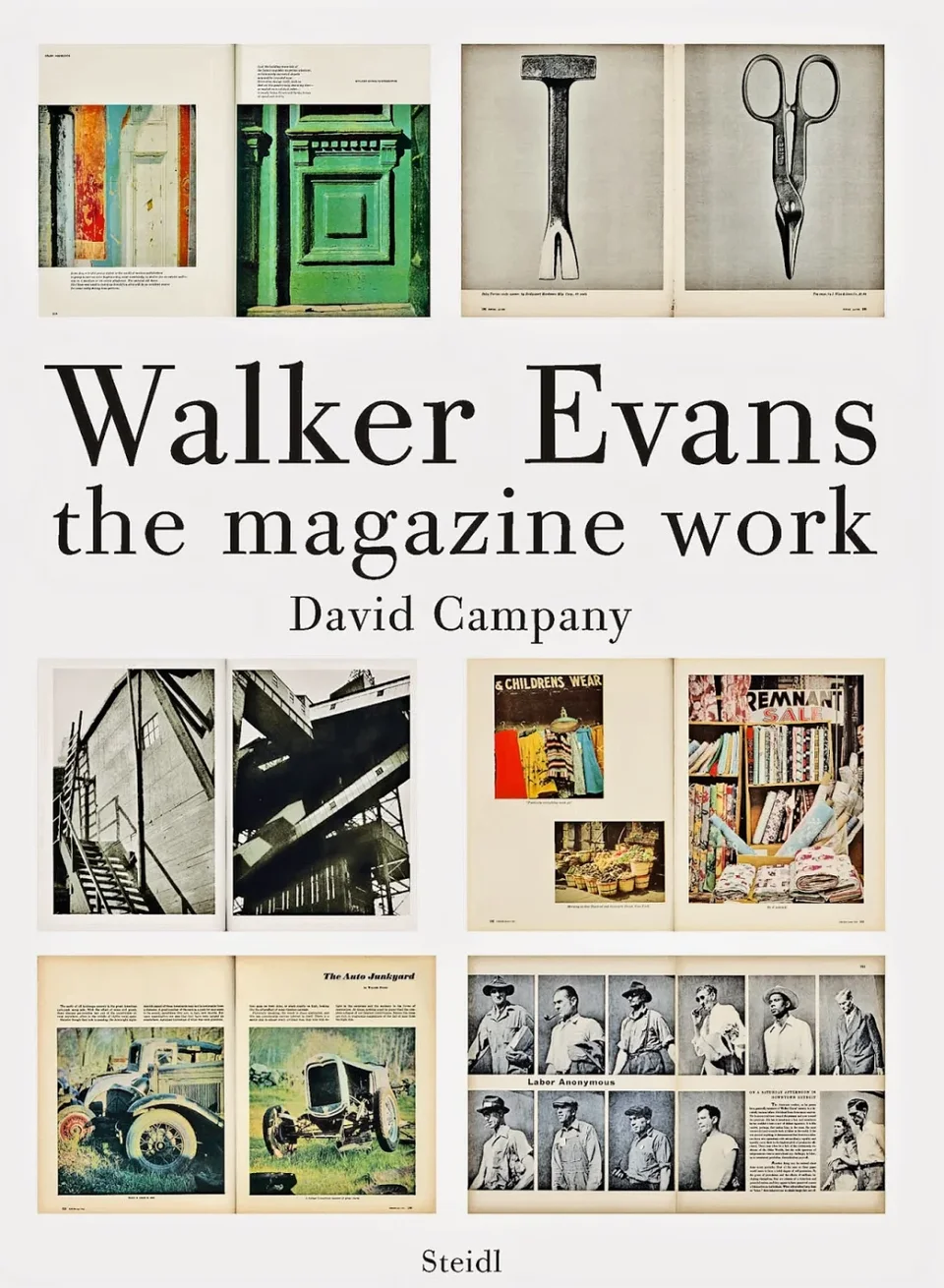
On the one hand, as a maker or writer, you firmly believe that photography, as a creative medium, is profoundly fluid and can staunchly resist being fully assimilated into art. On the other hand, you work within an institutional system, and that work inevitably confers a certain artistic status on photography. Perhaps we can explore this further. Let me give a more concrete example, Walker Evans, whom we've just been discussing. In 2014 you published a book about him, Walker Evans: The Magazine Work. Evans has long since become a classic in the history of photography and of art. Many photographers have entered art-history textbooks this way, such as Art Since 1900, edited by Rosalind Krauss and Hal Foster. I wonder whether we can make the question more concrete, perhaps by analyzing this case: in working on this project, how did you handle Evans's canonical status? How effective is this process of normalization when it takes place within the field of photography itself? My question, really, is this: is the root of the problem that we don't quite know how to look at these photographs properly and correctly, how to deal with the question of photography's status as art? Or does it have more to do with broader institutional conventions that go beyond photography yet encompass it? I'm curious how you personally deal with these questions. Thank you.
David Campany
Great. I face these questions all the time. My feeling is that institutions dedicated to photography, such as the International Center of Photography, where I'm creative director, or The Photographers' Gallery in London, are photography spaces. They're part of culture but also slightly set aside from it. Yes, sometimes they can be art spaces. You talked about the white cube and implied that anything entering a gallery would automatically become art and be canonized as art. I disagree. The excitement and value of these photography institutions is that they can also be spaces where we bring different kinds of photography for careful reconsideration. You can make an exhibition exploring books or scientific imagery. Bringing them into the gallery doesn't necessarily turn them into art. This isn't Tate Modern or the Museum of Modern Art; it's a photography space in all its complexity. I don't feel that everything coming through the doors is immediately canonized and given an elevated value.
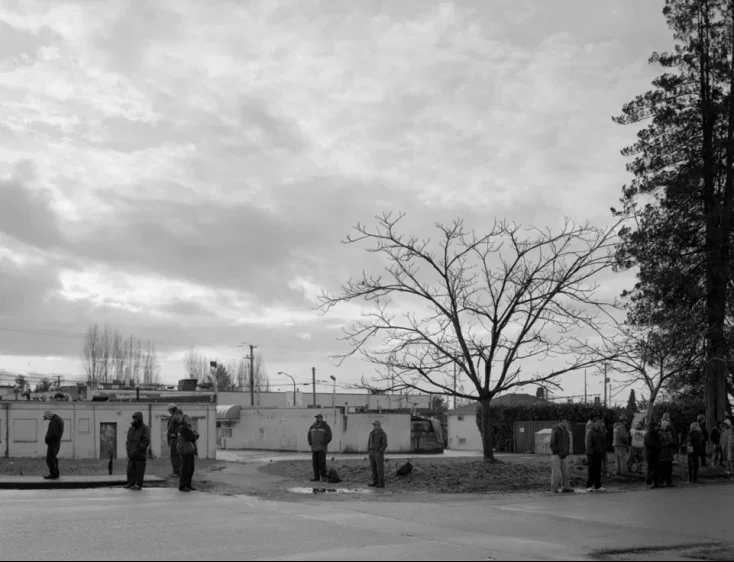
Let's bring together the things you talked about. There's an interesting institution in Paris called Le Bal, set up in 2010. Its original intention was to be a place to look at the photographic document in an expanded sense. I was co-curator of its first exhibition, Anonymous: Unnamed America in Photography and Film, about depictions of anonymous citizens, particularly in North American culture. For me and my co-curator, Diane Dufour, two works were central from the beginning. One was a feature Walker Evans made for Fortune magazine in 1946 called “Labor Anonymous.” He stood in one spot and photographed people passing his camera. The other was a very large framed black-and-white photograph by Jeff Wall, Men Waiting, of men waiting to be picked up for a day's work. It weighs 460 kilograms. They were very close to each other in the same space: a magazine I bought for twelve dollars and a piece of contemporary art.
They have similar subject matter from different historical moments. A photography space can bring them together. I wasn't trying to canonize the magazine pages or diminish the artistic significance of the Wall photograph. I was saying, “Let's think about these things together.” Yes, it was very expensive to ship the Wall picture from Los Angeles, while I brought the seventy-year-old magazine in my bag, having bought it on eBay. But our culture, and I'm sure you're finding this in China, has a hierarchy: museums up here, galleries here, books here, magazines here, websites down here, record covers somewhere else. Yet important photographic work is made in all these contexts. If you take the magazine page seriously, you do something and find an audience for it that can be as important as work made directly for a museum wall. That's photography. It's complicated. Photography institutions let us explore those questions, if we're intelligent and playful about it. I'm not interested in an institution simply giving an artistic stamp of approval to whatever it puts on the wall.
It's true that things do get canonized. I'm doing a show in January about how that happens. Why does one photographer's work become significant? Is it just the pictures? What else has to happen? My example is the French photographer Eugène Atget. He worked on his own, making pictures for many people and reasons, including the sheer pleasure of making them. He wasn't very well known when he died in 1927. After his death, the young photographer Berenice Abbott, with some help, bought a large body of his work: glass-plate negatives and prints, several thousand items. She set about promoting it and getting it published in journals and magazines where different writers asked, “Was he a documentarian? An artist? A Surrealist? A modernist?” In the two or three years after his death, Atget's reputation grew, particularly in the emerging world of modern photographic art. When the first book of his work appeared in 1930, the cover just said “Atget,” as if he were already a name, with a certain mystique. But it was Abbott who had dedicated herself to promoting his work.
The show is called Atget: The Making of a Reputation. We'll see the photographs, but I'll also include all the magazines that published his work between his death in 1927 and that first book in 1930. You can see his reputation forming in real time over a thousand days. It's fascinating. I'm aware that many photographers get completely overlooked; their work isn't seen. Every photographer needs a champion, someone to take up their cause. I don't like the word “promote”; perhaps “speak on its behalf.” I've done that for younger photographers who I thought might slip into obscurity. I try to do what I can. When I make shows about big canonical names, I try to make them as interesting as possible. But to come back to your original point, photography galleries are places to look again and think again at all the different kinds of photography.
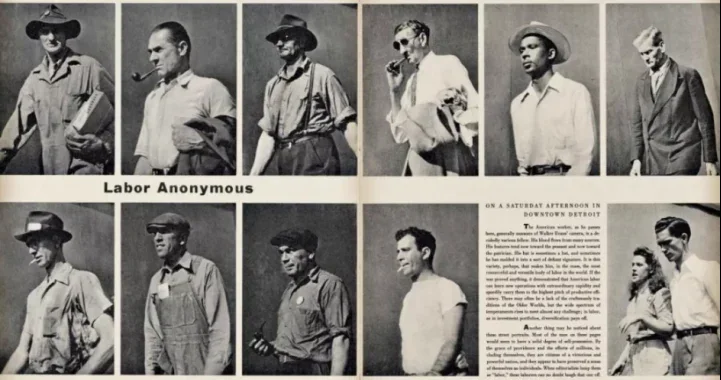
The Walker Evans magazine work was an interesting case. Let's see if I've got a copy of the book here. Yes. Evans had become a very famous name in photography's history, particularly since his death. But I never thought his magazine work was taken as seriously as he himself took it, and I became fascinated with it. Evans could have had many more exhibitions in his lifetime than he did. The ones he had were important, but there weren't that many. He took magazine pages very seriously. He would decide what to photograph, go and photograph it, edit, do the layout, write the text and consider the typography. They really were his pages, at least the good ones. I thought they hadn't been taken seriously because culture doesn't take magazines seriously. It thinks you throw them away at the end of the month when the next issue appears. But very good work gets made for magazines.
I'm interested in the difference between a book and a magazine. We think of books as important spaces of canonization. If you throw a book in the trash, people think you're destroying culture, that you're a fascist or something. But people throw away magazines all the time. What's the difference? The binding? The advertising pages? It's a crazy situation, and I'm fascinated by it. I wanted to draw attention to Evans's magazine work. That meant finding all those magazines, because he was active for fifty years, and taking them to a publisher. We reproduced his pages, not just the images, but the text and layout, everything. I thought they were worth looking at. I wasn't turning them into art; I was saying, “Let's look again. This is interesting.”
@Guosen Chen: Thank you for your response. I'm amazed at how precisely you grasp the historical details. I completely agree with you, because when I asked my question just now, I realized I had indeed fallen into a habitual way of thinking about how museums are defined; I had preconceptions about photographic spaces. It seems to me that what you do in practice is protect the diversity of photography and this sense of possibility, which to me is far more valuable than simply defending or embodying photography's status as art. I completely agree with what you just said. Thank you again.@Ce Zang: All right, I think the discussion we just had was very interesting. It touches on the question "What exactly is art?" I just wrote an article a few days ago that raises this question: it has no answer; it can't be solved. I think "When does something become art?" is a more important question and one worth thinking about. As Campany said, a photograph is presented differently in a magazine, in a book and in an exhibition hall. But the more crucial point is this: it becomes art only when it is situated in a particular field, context and historical moment; outside that moment, it is just a photograph with artistic potential. At the Jiaoling Land Art Festival in Guangdong, the artist Yaohua Liu made a work out of styrofoam titled "Hello Breeze, I Am a Ripple." Placed anywhere else, these words wouldn't count as art. At most they'd be poetic lettering. But set in the river at Jiaoling, the words floating on the water seem like the whole river talking to the breeze, and in an instant they become art. I remember the scientist Stephen Hawking said something to this effect: it is not humans looking at nature, but nature looking back at itself through human consciousness. This work turned the whole river into a flowing poem. But once you fish the words out and put them somewhere else, they are no longer art. In the terms of traditional Chinese culture, "when something becomes art" is a moment of zaohua, of nature's creative working. It is not entirely within human power: it involves human subjective intention, but even more a quality of chance. As far as I know, Mr. Campany lived in Xiamen in 2017 and held academic activities with Xiamen University. We very much hope he will come to China again in the future so that we can talk in depth face to face and discuss together the question of when photography becomes art. Today's discussion has been a great success and very rich in content. Thank you to Mr. Campany, to Rong Jiang, Guosen and Jingyi, to Yangkun Shi for technical support behind the scenes, and above all to everyone who watched the livestream. See you next time!