
Ce Zang
Hello everyone, I'm Ce Zang, today's moderator. Welcome to the 17th online session of Server Art's "Contemporary Image: Paths and Possibilities." We are deeply honored to have invited Mr. Thomas Ruff, the renowned German photographic artist and one of the leading figures of the Düsseldorf School, to discuss photography with us. During the 2025 Lishui Photography Festival, Thomas Ruff came to Lishui to hold a major exhibition, A Mind Map of Photography. Friends familiar with photography will know that Mr. Ruff brought a remarkable exhibition to this year's (2025) Lishui International Photography Festival, and we also held a stimulating academic discussion with him at the time. Because of time constraints, that discussion left us wanting more, so today we have specially invited Mr. Ruff back as a guest on the Server Art platform for a deeper discussion of his exhibition, touching on even more interesting and exciting topics.
Today's guests are all friends you know well. First is the well-known curator Rong Jiang, who also moderated the discussion at the Lishui Photography Festival. Dr. Guosen Chen is also an old friend; he has been an important guest in our previous livestreams. In addition, we have specially invited Tu Hu, who has done excellent work in photography education. I greatly admire the way he maps out the lineages of photography—it is exceptionally clear. We also want to thank Vera Xia, who is interpreting for us today. She has handled the interpretation for all our previous discussions with international guests, and her work has always been of very high quality. Special thanks as well to Yangkun Shi, who has provided solid behind-the-scenes support. For our first segment today, I'll invite Tu Hu to put the first question to Mr. Ruff.
Image Prototypes and Ways of Seeing
Tu Hu
Hello, Mr. Ruff. When the curator spoke about your work, she noted that your works are not presented as single images; rather, through a series of photographs you search for an image model based on similarity and commonality. To find this image model, you need to carry out a long series of tests and deductions, like a researcher, before generating the final image—starting from preliminary images and, through continual refinement and adjustment, ultimately creating a mature image prototype. My question is: do these image prototypes come from the structures of visual culture, or from your perception of the internal logic of the language of images? And how do you distinguish and confirm that the image model you have found has been perfectly distilled into an image prototype?
Thomas Ruff
When I entered the Art Academy in Düsseldorf in 1977, I was 19. Of course, at that time I had no concept of what kind of photography I was going to do. It was all a very slow development. When I entered Bernd Becher's class, he told us that we should choose a subject and then photograph it for the rest of our lives. He took himself as an example.
When I was working on my first series, the Interiors, they did not look conceptual at all. They were simply a kind of documentation of my apartment, my friends' apartments and my relatives' houses. I photographed the living rooms, bedrooms and other rooms in those houses and buildings. There was no such concept yet; it was an ongoing process.
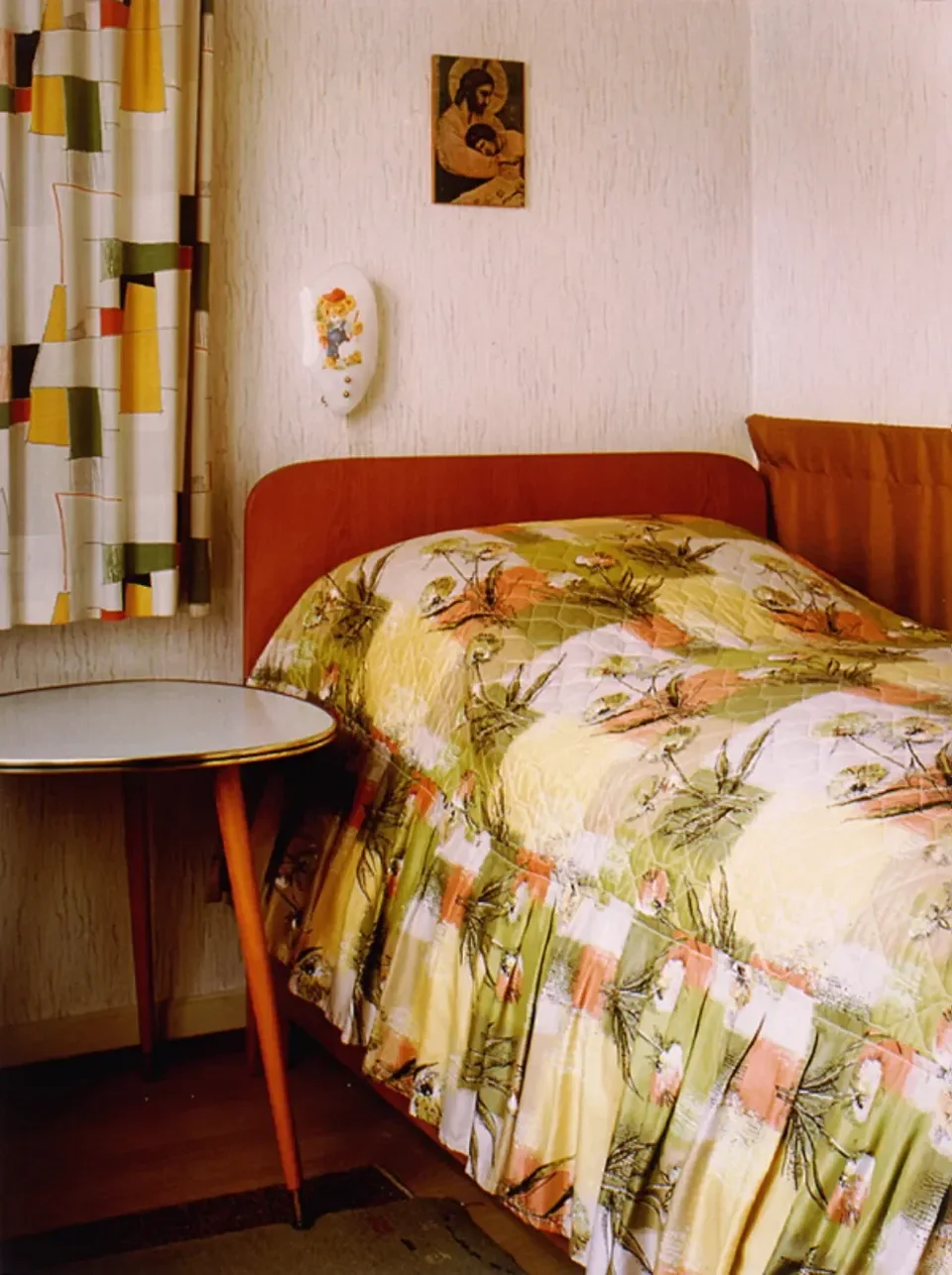
Thomas Ruff
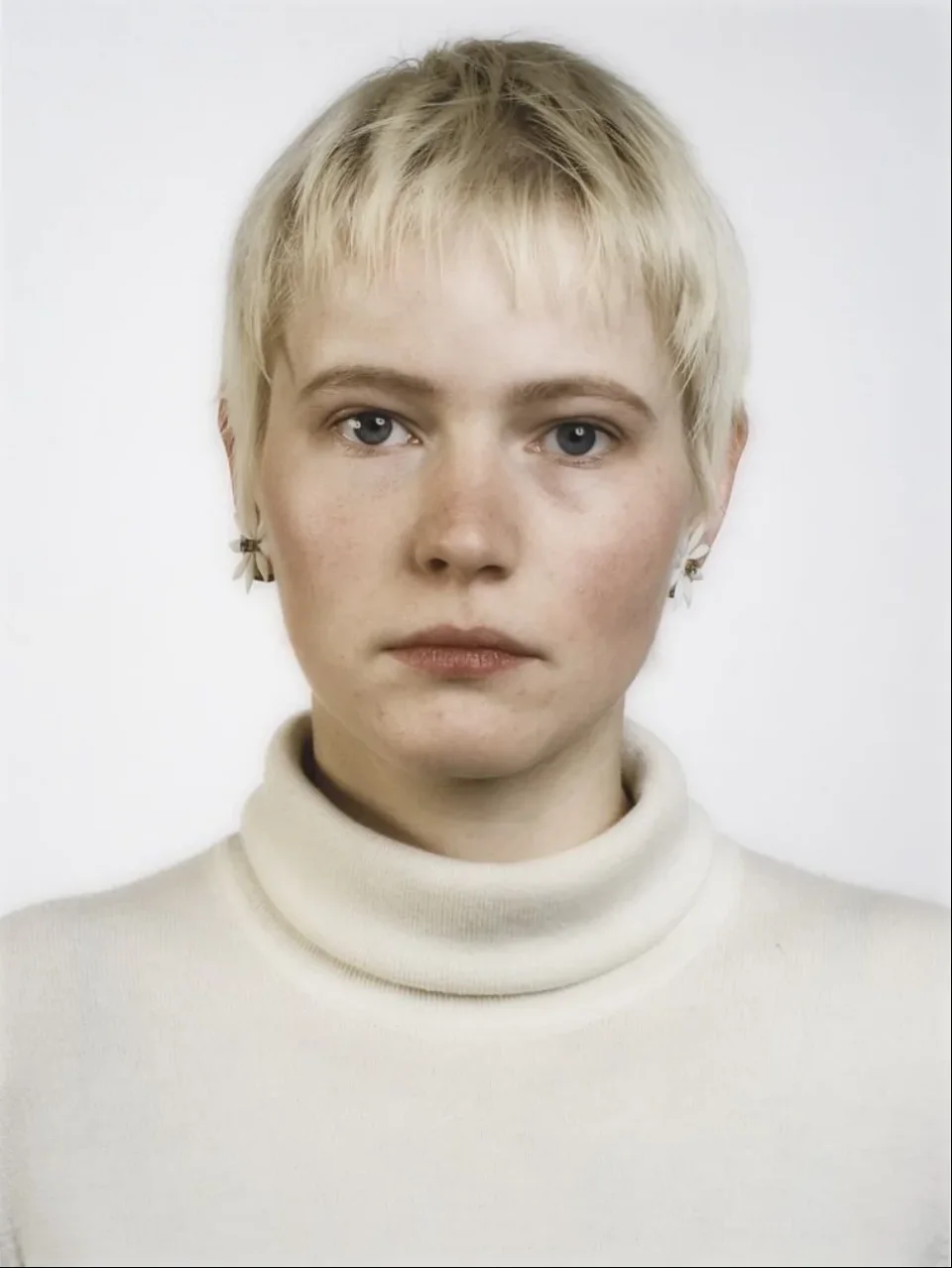
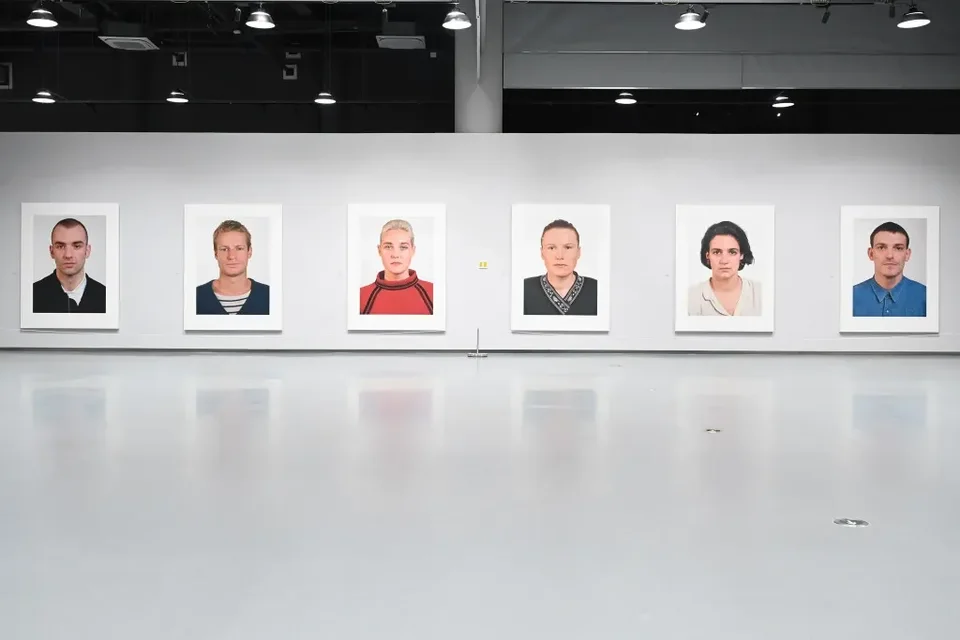
Maybe only when I started taking portraits did the work become more conceptual. At that time I felt that the portrait had disappeared from contemporary art. I wanted to make a really simple, conceptual, minimalist portrait of my friends and colleagues at the academy. I developed a lighting setup and chose a very narrow frame, like a passport photograph. I wanted to remove all the conventions associated with portraiture, to bring the portrait back to, let's say, point zero, leaving out everything disturbing and concentrating on the face. There was no prototype for that very tight crop.
When I started at the academy, I really wanted to photograph. I used a 4-by-5-inch view camera and wanted to make the sharpest photographs possible. I still believed photography could capture the reality in front of the camera. So I made my first series of interiors in the homes of friends, family, relatives and friends' parents. At that time I was simply a student taking photographs. It was only when I began the portrait series that I realized something: the camera does record what is in front of it, but the person behind the camera decides what will appear in the photograph.
With the portraits, I chose the sitters, friends such as Vera, Peter or Johan. Sometimes I would say, “That's a nice shirt. Can you wear it?” I arranged the light and asked them to move a little up or down, left or right. I was in control of the photograph. I realized that what the camera records can be a prearranged reality. That was the first time this doubt about photography appeared in my work.
And then there is working in series. Suppose I wanted to explain human beings to an alien through portraits. One photograph would not be enough; I would need at least two, a man and a woman. But two portraits would still be too few. Ideally, I would photograph every single person on the planet, which I thought was impossible. So I limited it to my friends and colleagues at the academy. At that time there were not yet immigrants in Germany. The academy was fairly homogeneous: mainly German students, with some from Eastern and Western Europe. Today that would perhaps not be adequate, but those were the people I could reach and photograph. The portraits were, let's say, my first more conceptual series. That was between 1986 and 1991, and then I continued with other series. Working in series was probably the essence of Bernd and Hilla Becher's class. You should not take just one photograph, but at least several, so that you can get an impression of the subject you are working with.
I photographed on film until 2000. The Stars and the night photographs were made on film. For some work I also used my own archive of portraits. When I had made four or five series, I thought, “Thomas, what are you doing? There is no consistent flow, no brand or recognizable signature. You jump from portraits to interiors, newspaper photographs, stars…” That made me uncomfortable. Only perhaps 20 years later did I realize that the different series, all that jumping around, might be pieces of a puzzle. Together they make a larger picture, perhaps of photography's techniques, history and questions.
Rong Jiang
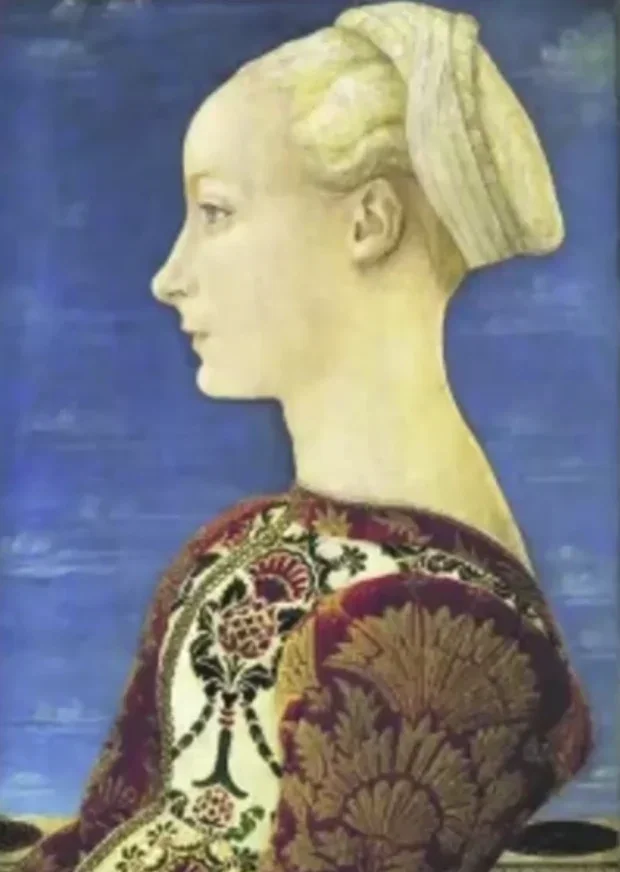
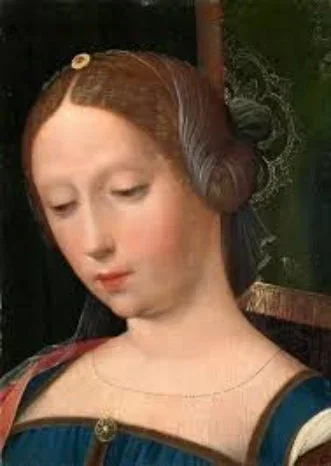
All right, Thomas, you've finished answering the first question, so I'd like to follow with mine. Portrait by Antonio del Pollaiuolo (c. 1431–1498); anonymous portrait, c. 1540. A few years ago, at the special exhibition on portraiture and the Renaissance at the Metropolitan Museum of Art in New York, I noticed that early portraits were predominantly profiles. This was because painters of that period had not yet mastered linear perspective; only once the technique matured did they begin to use linear perspective in their work, so those later works have a stronger sense of three-dimensionality and are no longer confined to the monotonous profile format. So, when you began your portrait series, you likewise used linear perspective, adopting a composition in which the sitter turned sideways. In your subsequent work, you not only chose neutral backgrounds but also printed at large scale, and you began experimenting with frontal portraits.
The curator Valeria has also said that the creative process usually begins with searching for a visual model and then establishing an image prototype. Works by August Sander. From this I surmise that August Sander's portraits may have been an important visual reference for your portrait series. Sander was not only a leading figure of the New Objectivity movement; most of his portraits also adopt a frontal view. At the same time, based on what you said earlier, I think the image prototype of your portrait series may also derive from enlarged ID photos. But I'm curious: what exactly prompted you to decide to turn to frontal portraits?
Thomas Ruff
When I started the portraits, I wanted to make a large number, perhaps a hundred, and hang them in a row. That is a fairly common way to display work in European art. But if I put a hundred next to each other, one background color might be boring. So I put sheets of colored photographic cardboard on a table. Each sitter chose a favorite color, and I attached that sheet to the wall as the background. Maybe that was also a little reference to the Bechers.
I was a student without much money. I took only four photographs of each person because the 4-by-5-inch negatives and their development were expensive, and I had to pay for them myself. I started with a frontal view, then tried left or right, and sometimes asked for a profile. In the display I mixed the colors so, for instance, two red backgrounds would not be next to each other. I also mixed frontal, three-quarter and profile views to make the display more interesting. That was my student work. I made small prints, 18 by 24 centimeters, a standard format in German photography.
The portraits were taken between 1981 and 1986. Even then I wanted to try printing one at the largest possible size. In the early to mid-1980s, large photographs were in the air. German artists such as Katharina Sieverding and Günther Förg were making them, as were Jeff Wall with his big light boxes and Ian Wallace. When I had enough money, I made my first large portrait print. I was surprised: it was not simply a blown-up 8-by-10-inch photograph. It was a completely new image. Its physical presence had changed.
Let me tell you a little story. At an exhibition of my small portraits in Düsseldorf, my friends and the sitters came to the opening. One friend stood next to a portrait, pointed and said, “There's Peter.” I told him, “No, that's his photograph. Peter is over there with Hans.” I realized how people mix photography with reality. Later, at an opening with the large portraits, the same friend stood in front of a large portrait of Peter and said, “This is a big photograph of Peter.” He understood that he was looking at a photograph, not at Peter himself. The large size changed the perception: people looked at photographs as photographs, even though they still represented reality. They became aware of the medium, and that was very important to me.
As I continued with the large portraits, I realized I no longer needed colored backgrounds. At that scale there is already so much color in the face, hair and clothing that a whitish, light gray background is enough. I also realized, perhaps because of the way we perceive other people, that one of the most interesting things for a human being is to look into another human being's face. I think the portraits' success had something to do with that psychological need. So I continued with large-scale frontal portraits against a neutral background.
Rong Jiang
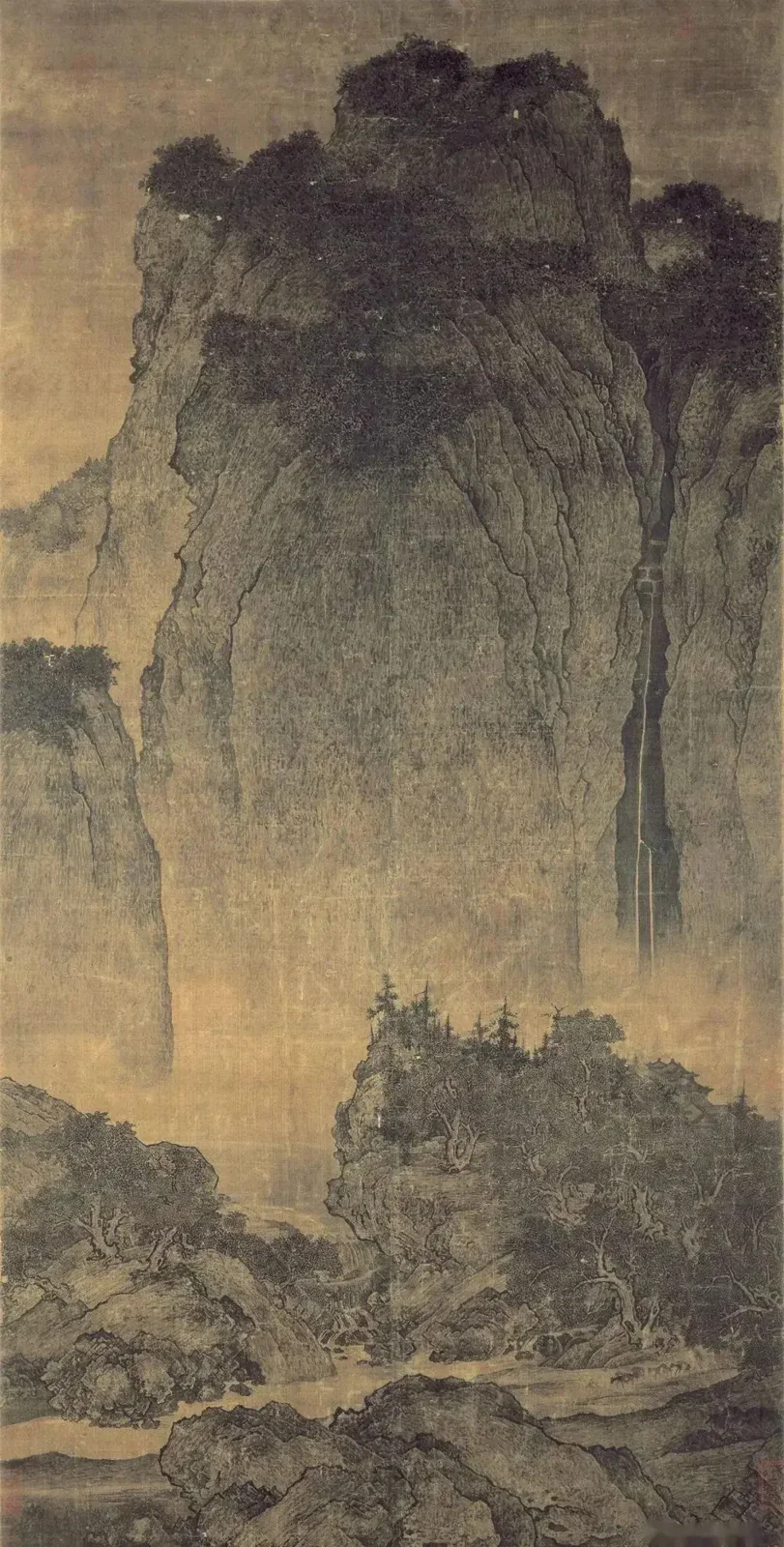
Thank you. Next I'd like to ask a few follow-up questions. I've noticed that many of your series are in vertical format. At the Lishui symposium I asked you why your works are mostly vertical rather than horizontal, and you said at the time that vertical works make up roughly 60%. Take traditional Chinese painting—for example, Fan Kuan's masterpiece Travelers among Mountains and Streams, in which two travelers leading donkeys make their way along a stream at the foot of a towering mountain. Although this work is a landscape, it is also a vertical composition. In traditional Chinese painting, we use a three-tier composition—foreground, middle ground, and background—to convey spatial depth and the height of the mountains. When viewers look at this vertical mountain scene, they not only sense the perspective and height of the mountain but also feel a kind of awe at its loftiness. My question is: did you unconsciously create many vertically composed series? After all, you first became famous for your vertical portraits.
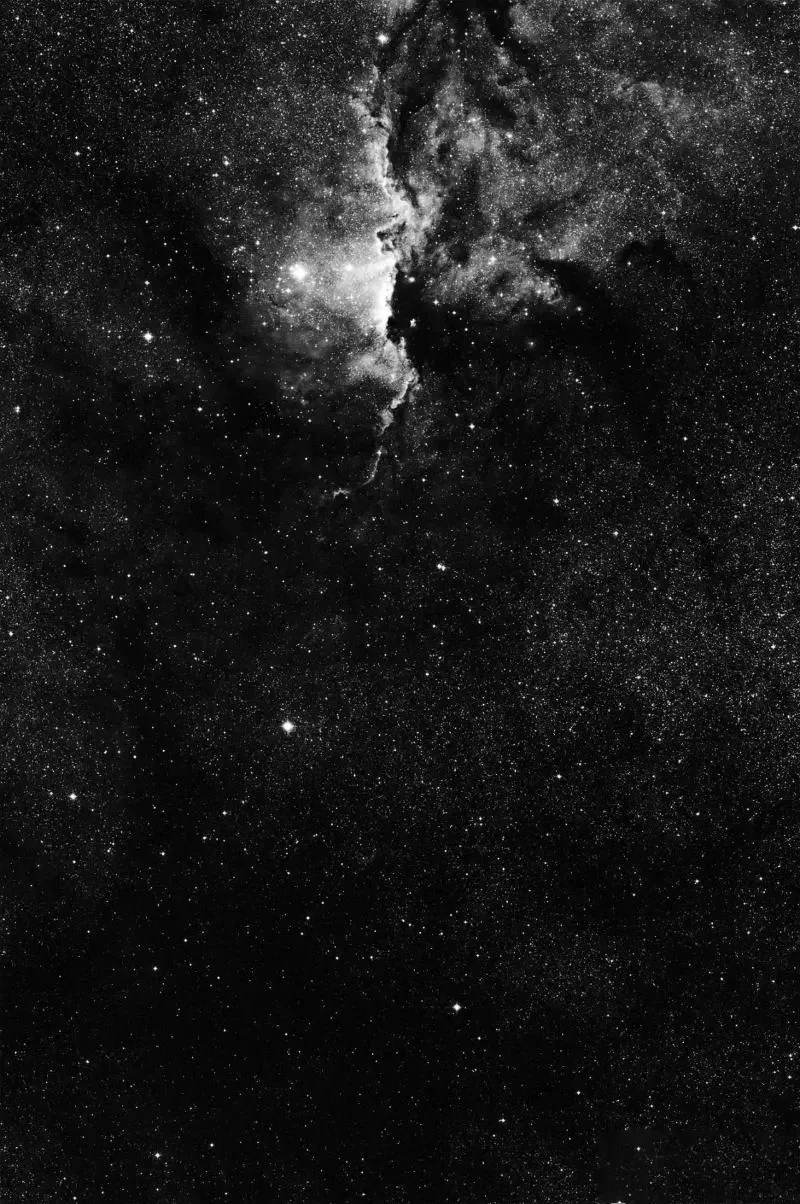
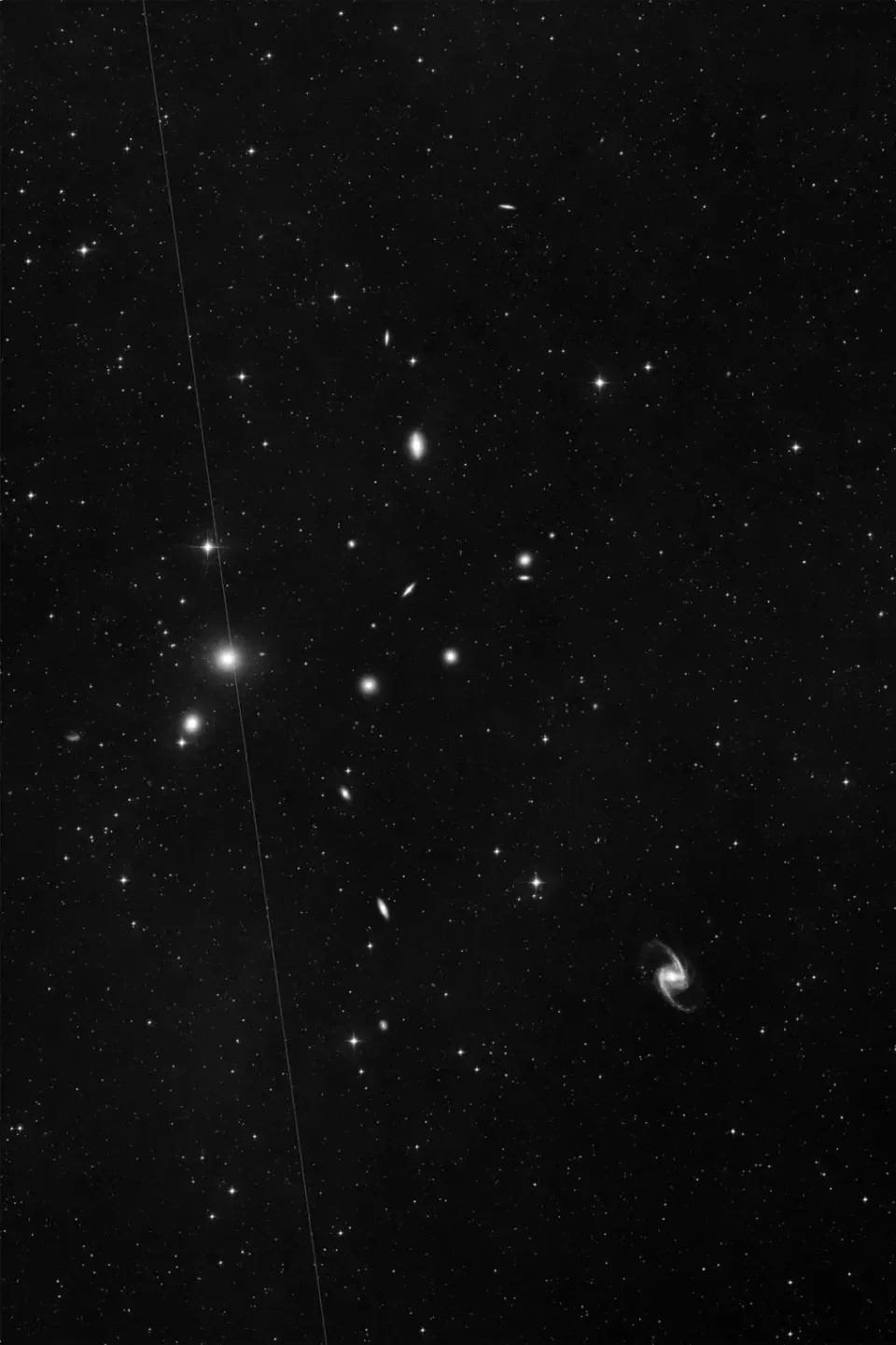
Fan Kuan's Travelers among Mountains and Streams. As you said, 60% of your subsequent series are vertical compositions. For example, the star map from the European Southern Observatory is square, not vertical, yet your Stars series renders it vertically. I'd like to know whether this was done unconsciously or deliberately.
Thomas Ruff
I think it is quite simple. The horizontal or vertical format follows what I am photographing. After the portraits I photographed buildings; I think about 80 percent of those photographs are horizontal, because buildings are built like this. The night photographs are square because the camera produced an image circle; when you put its four corners around it, you get a square. I do not think there is an unconscious factor in choosing the format.
Maybe the only psychological effect was with the Stars. My first idea was a horizontal image. I had a print hanging in my studio, but it looked boring. When I needed space, I turned it 90 degrees. Suddenly it worked: it changed from a window into a door. You felt you could enter the image. You do not normally jump out of a window, but you go through a door. Perhaps that is a psychological reason why the Stars definitely had to be vertical. Statistically, maybe 60 percent of my works are vertical and 40 percent horizontal, but I still think it depends on what I am working with.
Ce Zang
That's a very interesting question. It is also what I often call the crossing of gazes between photographer and viewer. Next, I'll invite Guosen Chen to ask his question.
Guosen Chen
Hello, Mr. Ruff. It's been a while since we met at the Lishui symposium. Coincidentally, a few hours ago Stephen Shore sent an email to Jingyi, to you, and to me with New Year's greetings and some of his photographs, so I'd also like to wish you a happy New Year in advance. I agree with the view Valeria put forward at the Lishui symposium: she said that you and scientists are both inventors. Scientists invent instruments to capture objective data, and such data is often regarded as abstract and impersonal, yet you always manage to endow this cold machine data with human qualities—for instance, by coloring Mars to make it seem more approachable, or to evoke a sense of romance. So I'd like to ask: how do you view the gap between the so-called cold objectivity of machines and the warm ways in which humans perceive? Why is it so important to you to transform distant scientific data into images that feel familiar, even romantic?
Thomas Ruff
You called the camera a cold machine that records what is in front of it. But art photography is only one part of photography. Since its invention, scientists have used it for their own purposes. They photographed stars, microscopic and macroscopic things, all kinds of subjects. They invented high-speed cameras to make visible what the naked eye cannot see. Maybe I could call myself an engineering photographer. I am fascinated by these machines and by the images they produce of things we cannot see with the naked eye. My interest is very broad. I love all kinds of photographs and do not want to confine myself to the narrow field of art photography. Art photography is fine, but I think some of the most important photographs come from other fields. I find them fascinating and cannot stop working with them.
There is also a long history of adding color to black-and-white photographs and retouching photographs. These practices fascinate me too. I combine strange photographs with strange photographic techniques to create a new, strange image. And perhaps, to return to Rong's question, this is not unconscious, but it is somewhere at the back of my mind. Sometimes images that have hidden there for 20 years come to the front, and then I have to work on them.
When people stand before the Stars, many think of a holiday on an island where they saw lots of stars at night. I look at them differently. I have their coordinates and can tell you exactly which star it is. In my books I can find its name and distance, and whether it is moving toward us or away from us. I grew up in Europe with 2,000 years of painting and sculpture; that is my cultural background. I use all kinds of techniques to create images, sometimes just for pleasure, and sometimes with a more or less political intention.
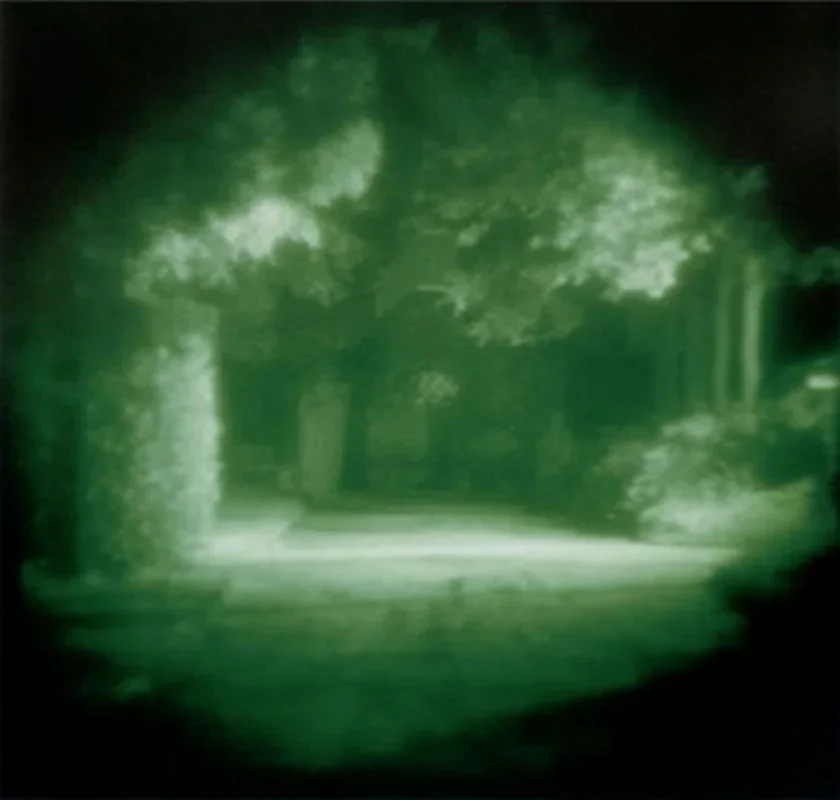
When I started the portraits in 1981, we had all read George Orwell's 1984 and were looking ahead to the state surveillance it described. The night photographs were inspired by the Gulf War. On television you could see those greenish images for the first time, as journalists used a military technology to transmit the war in the Middle East into Western homes. So it is always a mixture of interests, of things that make me sad or things that I love. I cannot tell you exactly how or why I create these works.
Guosen Chen
Thank you for your answer. You have made a large series of machine works that did not appear in the Lishui exhibition; they look like an archive of machinery. Thank you again.
Ce Zang
Thank you, Guosen, and thank you, Thomas Ruff. At the Lishui discussion, Mr. Ruff said that staying curious is the most important thing. I myself am an extremely curious person, and that is precisely why my academic interests have extended from literature to photography, then to contemporary art, then to philosophy, and on to new fields such as neuroscience and neuroaesthetics—all to satisfy my intense curiosity about every kind of knowledge. In Mr. Ruff's exhibition I came across this sentence: "Mr. Ruff believes that images can only be generated in our minds." This sentence interests me greatly, and I fully agree with it. Neuroscience has shown that images are in fact synthesized in the brain rather than being things the eye sees directly. So my question for Mr. Ruff is this: you have carried out a series of explorations of photography's various media, from film to digital imaging, investigating the generative relationships between them and the technical logic behind them, making many important explorations in the understanding of media.
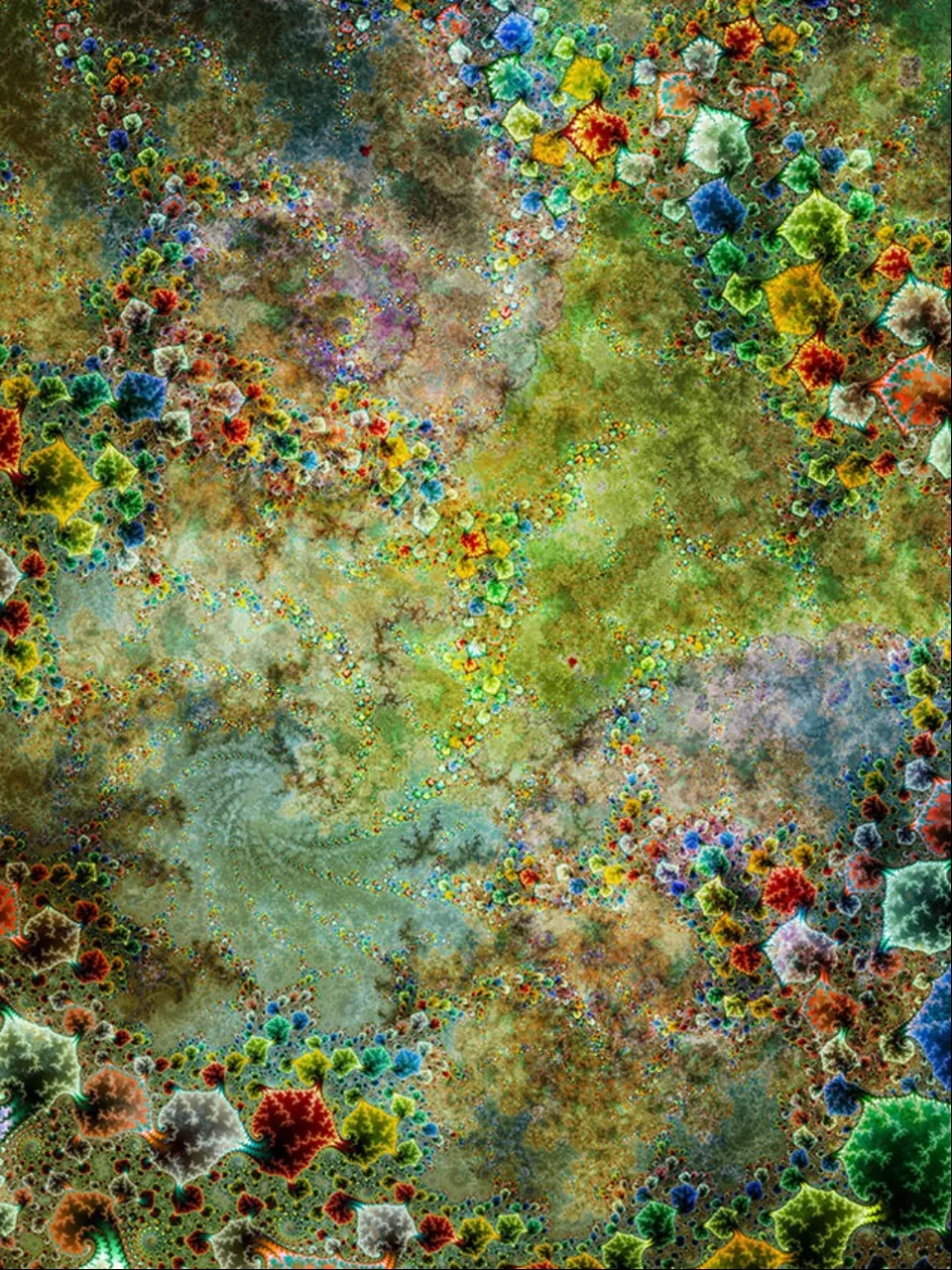
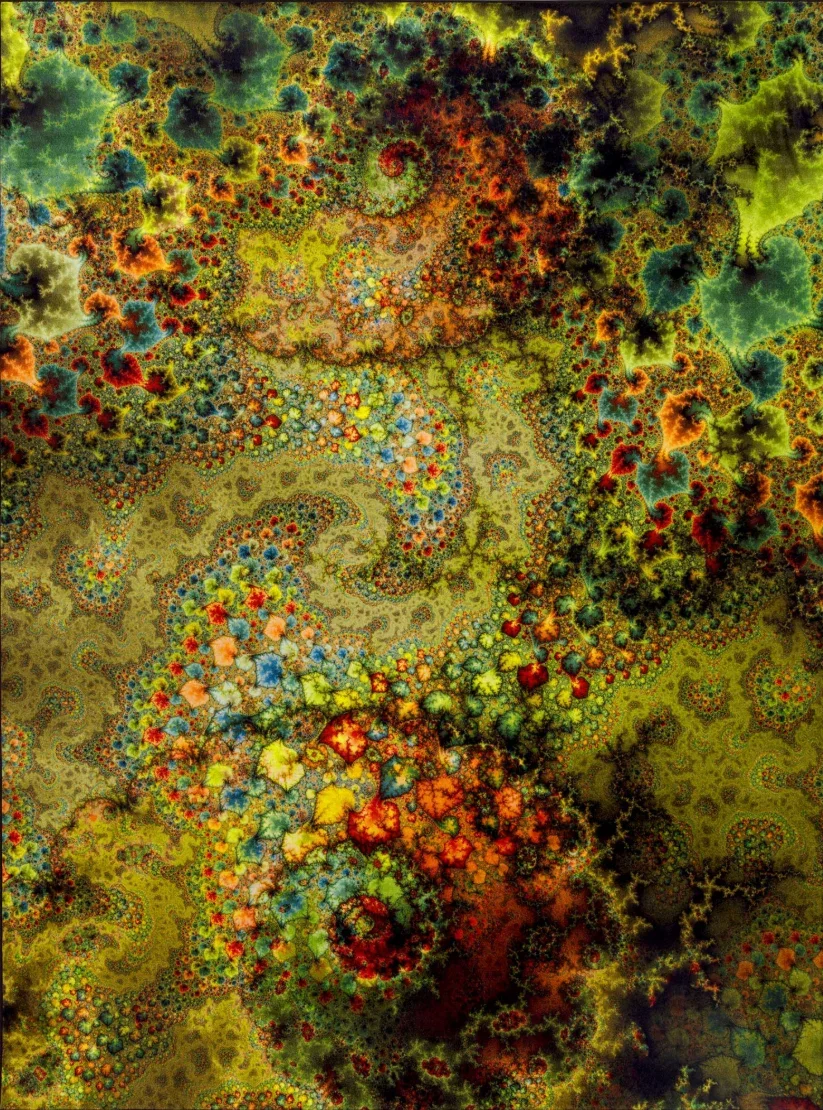
Since you believe that images are generated in the brain, and the human brain is itself an important image medium, have you considered further exploring the brain as a medium? Your work Doors of Perception (d.o.pe) relates to human visual perception and to the brain's generation of images. Does this work mean that you have already begun a new exploration—namely, a visual representation of the brain as a medium?
Thomas Ruff
Whether images are created with the brain is a good question. Maybe you could say yes, but you need the whole body. If you had only a brain, you could not see the images you created. Sorry, how can I explain it? Think of a newborn baby's brain, without experience, and then the brain of a 30-year-old person, full of experiences accumulated through life. Those experiences enable the brain to create images. The brain is important, but it takes the whole human being.
It is not only my body, but the bodies of my friends, society, and human beings as a whole. Images arise from, how can I say, the world and one person's experience of it. We do not see with our eyes alone. The eyes are the optical part; the signals go to the brain, which responds in relation to the life you have led. Your culture matters. I would guess that my perception of an image is different, perhaps not enormously different, from that of someone who grew up in Asia. Then we have to communicate, exchange experiences and learn to understand one another.
Food is a simple example. I love Chinese food and European food, but 40 years ago, growing up in the German countryside, I had no Chinese food. I had to learn what it was later. So that is what I mean: it is the whole human being, not just the brain, that creates images. To look at d.o.pe, you also need some experience of the tradition behind that kind of imagery. Think of a medieval painting by Grünewald, an altarpiece with the ascension of Jesus Christ, hell and other parts of the Catholic world. Those images have always looked psychedelic to me. I sometimes thought he must have taken mushrooms to create such crazy images. Hieronymus Bosch is another example, with his crazy creatures. I would not say there is a direct line from my brain to d.o.pe. It goes through my body, experience, blood and hands.
A friend once attached something to my head for an experiment. By concentrating, I was supposed to move a cursor on a computer and make a dot or a rectangle, or choose green or red. Sometimes it worked and sometimes it did not. I do not think even he knew exactly how it worked. These were simple experiments we tried once. But to perceive an artwork, an image, a photograph, or even to read a newspaper article, you need the whole body, not only the brain.
Ce Zang
I strongly agree with Ruff's view—what I mean is that the brain is itself part of the body. I once wrote an essay titled "The Encounter Between the Brain and the Eyeball." In it I argued that the camera has no consciousness and no algorithm; its optical imaging is similar to the image our eyes see through the retina. But our understanding of images incorporates cultural background, bodily experience, life experience, linguistic concepts, and so on, and this understanding of vision is actually accomplished by the brain. That's why I say photography is an encounter between the brain and the eyeball. In 2012 I proposed a theory of the "meta-image." I argued that photography does not merely project the external world through images; more importantly, it makes people reflect back on themselves. At its core is understanding how human consciousness recognizes images and the figures within them, and how it interprets physical information as information laden with emotion and meaning. Mr. Ruff's exhibition also touched on meta-photography, and I hope to continue discussing this topic with him in the future.
Guosen Chen
Mr. Ruff, in answering Ce Zang's question you mentioned that the formation of images requires the participation of every part of the body. This view closely matches the central argument of a book I've been reading recently—Thomas Fuchs's The Brain: A Relational Organ. Put simply, we cannot think about problems such as phantom limb pain solely from the standpoint of the brain. The brain is a relational organ that must work in concert with the body, and more importantly, this coordination concerns not only one's own body but also the bodies of others.
Thomas Ruff
Maybe we can move from there to robots and AI. People are trying to create a neural network that comes close to our brain, but they have to give it information. It is the same with a human brain: without experience it is empty. They fill this robot brain with experiences and information that come from human beings; humans train it. They want to bring it close to a human being. But can a robot with AI become a unique personality, as a human being can? That is a big question. Some say that within ten years we will be able to create duplicates of Thomas Ruff or Ce Zang. It could be funny, or perhaps dangerous.
Photography is one cultural activity among others. We have language, television, film and other media. Photography is a communication system through which we exchange information. Each person has a different way of accessing it or an idea of how to communicate, and that makes it interesting. Sometimes I wonder what photography's real function is. Is it to capture reality? To show friends how nice last night's party was? Looking back through its history, we see that because photographs look so realistic they have often been used to manipulate people in the interests of those with money or power. I hope there are still many anarchists working against that kind of pressure and manipulation. The more, the better.
I sometimes wonder whether I have lost ground, because although I still practice photography, I do it in a strange way: I analyze photography. But in the exhibitions in Lishui, and I still pronounce it the German way, sorry, I saw many fascinating photographs that deal directly with reality. I am not sure how that relates to our discussion of the human brain, but it is part of it.
Ce Zang
I think the biggest difference between artificial intelligence and real human beings lies precisely in the body: AI does not yet have human bodily perception. Rong Jiang previously shared with me an article in which Sam Altman claimed that artificial general intelligence has arrived, and I replied with an article by scientists and philosophers arguing that the arrival of AGI is still a long way off. I lean toward the latter view. AI lacks human bodily perception; at the very least, it is too early to talk about AGI. Let's move on to the second segment, and I'll invite Rong Jiang to begin.
Appropriation and Meta-Photography
Rong Jiang
I agree with Ce Zang and Guosen: the relationship between body and mind is crucial in artistic creation, especially in photography, where we need to use our hands and also draw on our own experiences. Before we go deeper into this topic, and later into issues related to AI, I'd like to ask about appropriation. Works by Gerhard Richter. Influenced by post-structuralist theory, such as Roland Barthes's "death of the author," in the 1970s we witnessed the birth of the "Pictures Generation." A group of avant-garde photographers emerged in the United States—Cindy Sherman, Richard Prince, Sherrie Levine, and others—who used appropriation to question photography's truthfulness, originality, and authorship. The contemporary German painter Gerhard Richter also appropriated news photographs in his work, exploring photography's truthfulness and the dialectical relationship between painting and photography.
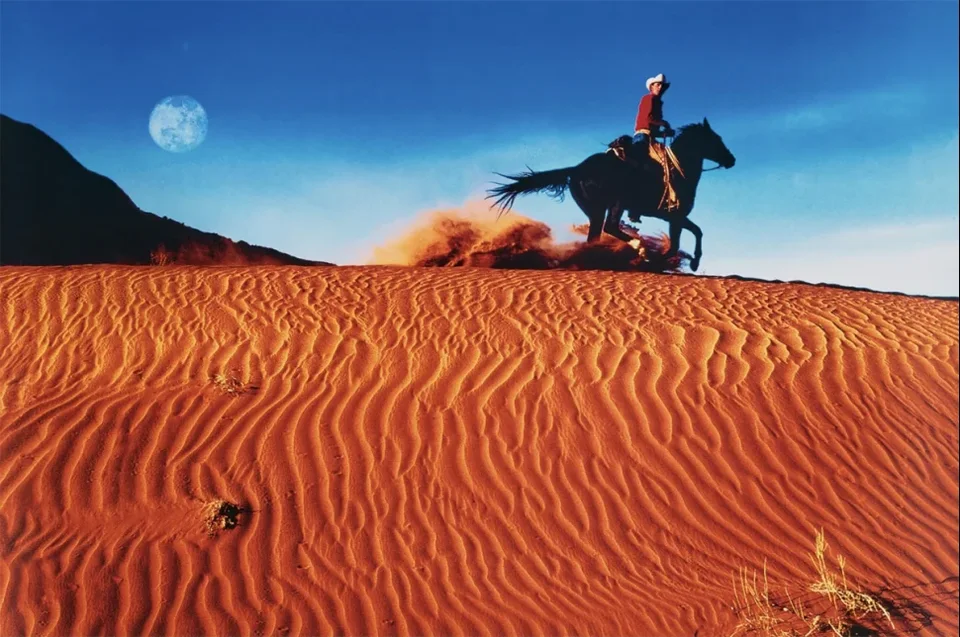
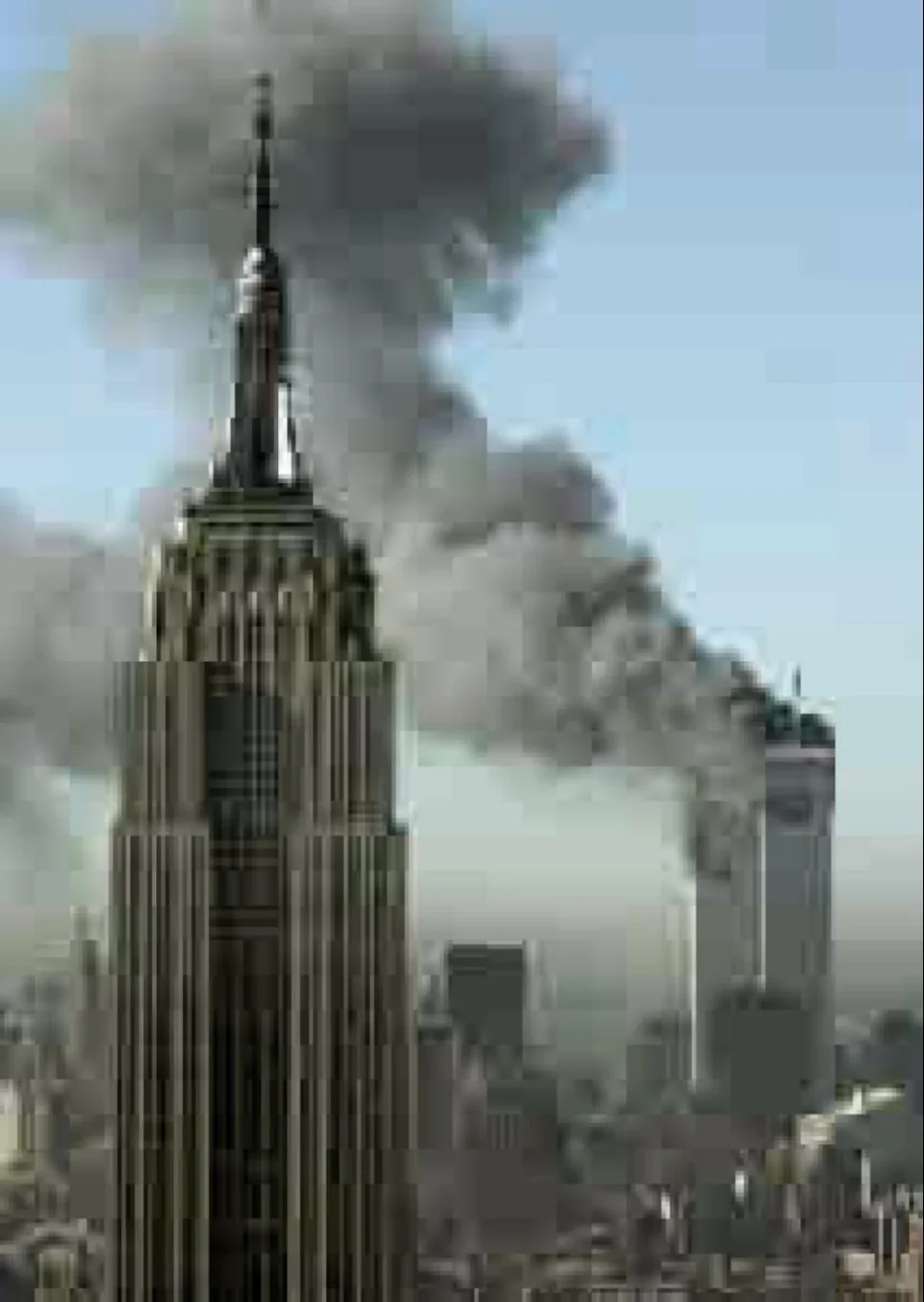
You likewise make extensive use of news photographs and scientific images as source material, yet your works ultimately take on entirely new visual forms. In jpegs, for instance, you chose a news photograph of the 9/11 attacks, enlarged the pixels of the JPEG file, transformed it into a new kind of image, and produced it as a monumental print; the resulting image is completely different from the original.
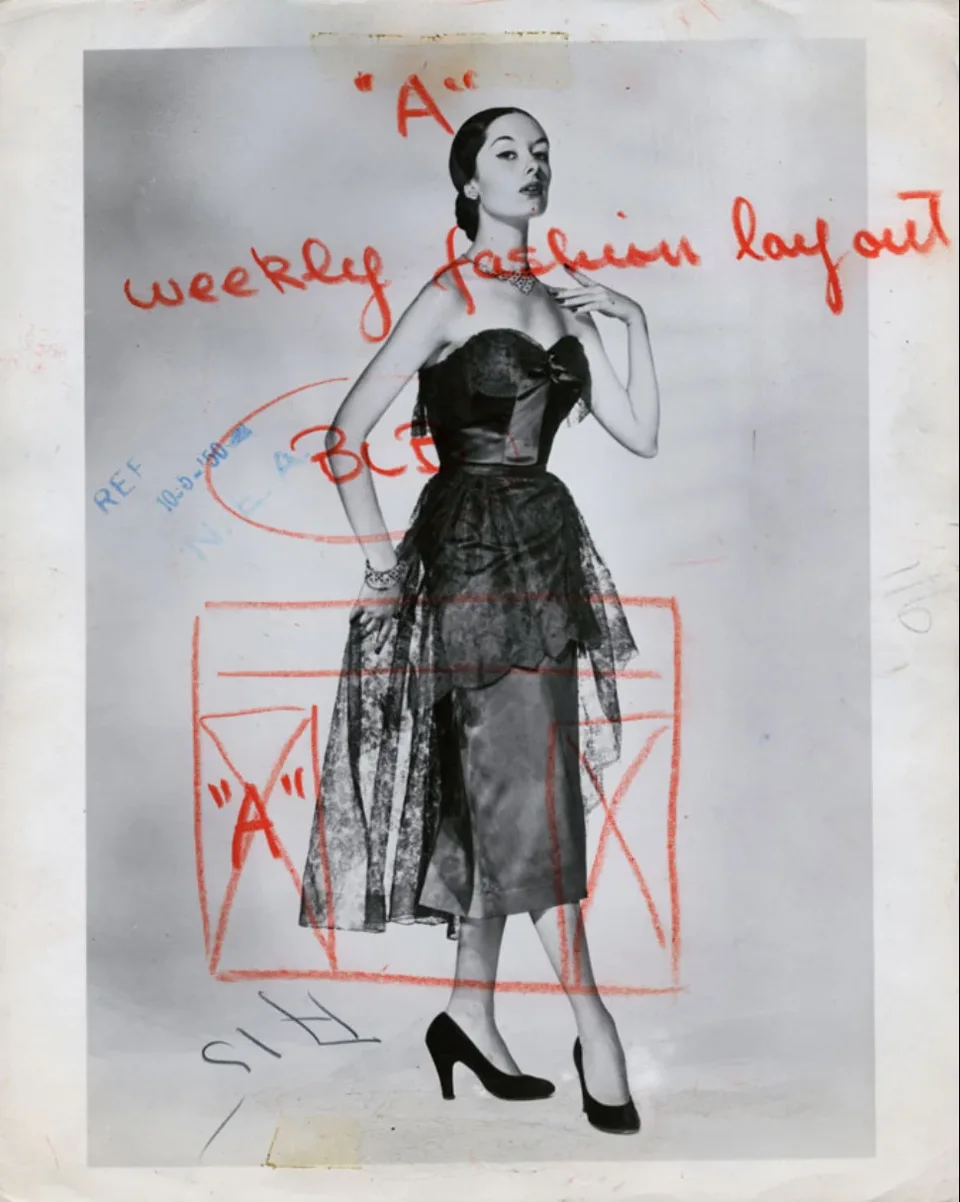
In another series based on press images, you used a large-format camera to scan the backs of photographs, overlaid them as another layer on the fronts, and then produced large-format prints, creating a distinctive way of cropping images.
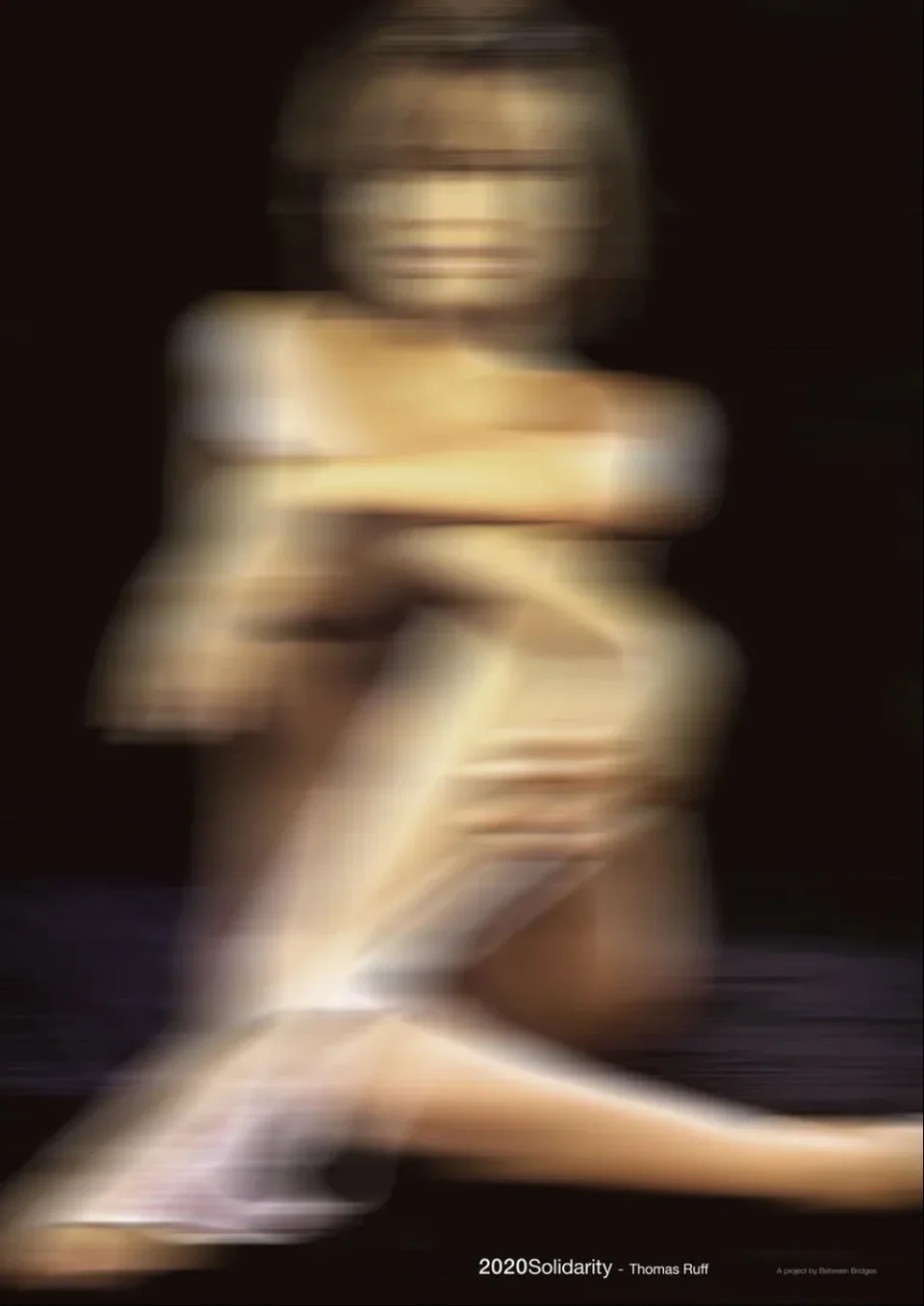
The source material for another of your new series comes from pornographic websites, which was likewise ultimately transformed into an entirely new form of image. I'd like to ask: how does your approach to appropriation differ from that of the Pictures Generation and Gerhard Richter?
Thomas Ruff
Perhaps it is simply the consequence, or the continuation, of my investigation into picture culture. In New York in the 1990s, Richard Prince, Cindy Sherman, Sherrie Levine and others made their work. With Prince and Levine, though less so with Sherman, it often meant taking over another artist's work almost one to one.
My first appropriated works were the Stars. I had to realize that I could not take high-resolution photographs of the starry night myself. Although I was professionally equipped and well trained in photography, I needed help from an observatory. It was hard for me to accept that I was no longer the author of the photograph, because I did not press the shutter. Somebody else did, perhaps a machine or software. I had to choose: accept that help and give up that authorship, or not make the work. In the end I gave it up so I could create the series. That opened the possibility of taking other people's images as a source and making my own image with them. Artists commonly keep sketchbooks, catalogues, postcards and other images they like, and sometimes draw something from those collections.
The next appropriated work was probably jpegs. That came with the shift from analog to digital photography. The structure of the image changed visibly from grain to pixels, but I also found another structure in JPEG files: the traces left by compression. That relates to the early internet, which was very slow. Only small images could travel quickly, and the more compressed they were, the faster they could circulate. JPEG stands for Joint Photographic Experts Group. At high quality you retain a large file that travels slowly. With severe compression the file becomes small and fast, but its quality deteriorates. The compression creates artifacts that were not in the original image. On a computer screen you may not notice them in a small picture, but zoom in and you see an entirely new structure. There is no aesthetic reason for it. It is the technical solution to a technical problem.
That has affected how we look at images. We see so many low-quality pictures because they travel around the world in seconds. I zoomed into them, using either my own digital photographs or found images. I reduced their size and applied the harshest compression, producing these quite painterly images that, in a way, represent the photographic images of our time. I began with 9/11 because I was in New York that day, north of Houston Street, and saw the Twin Towers collapse. It was a very powerful moment in my life.
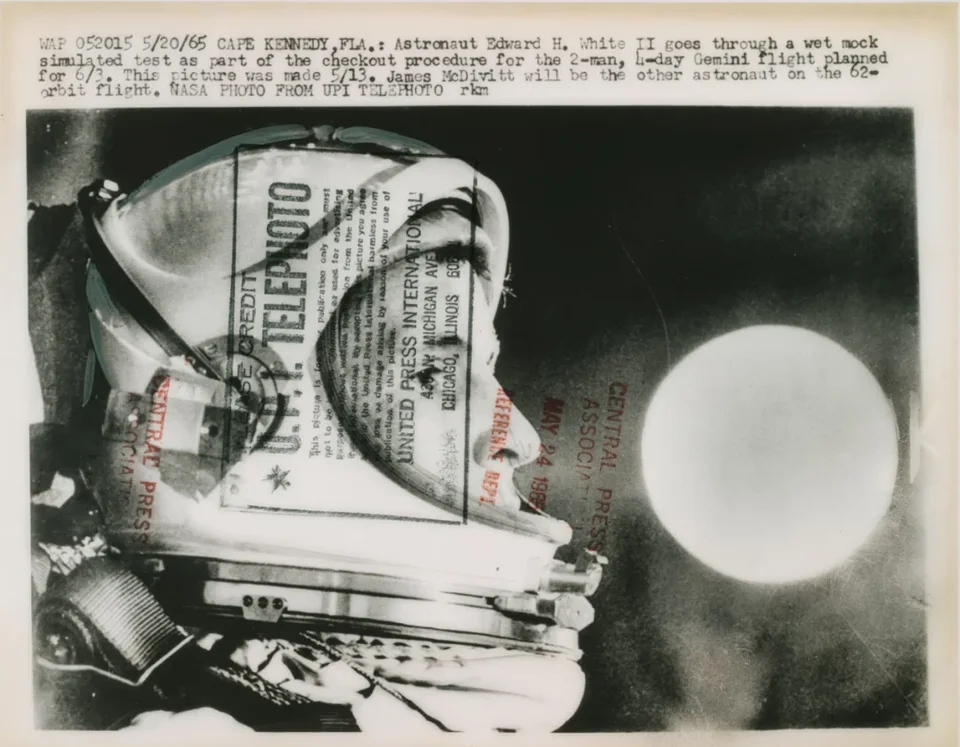
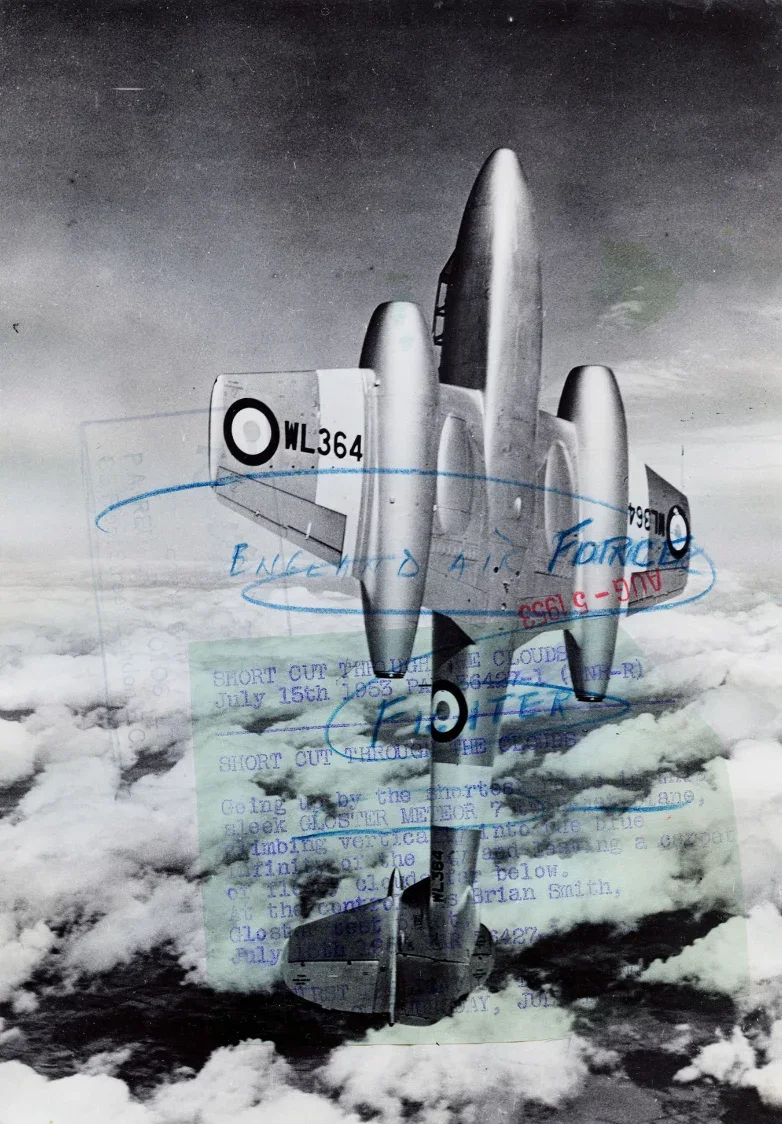
press++ happened more or less by chance. I have a strong interest in space and cosmology, and collect photographs of those subjects. I bought some images of astronauts on eBay. When they arrived, I looked at the photographs and then turned them over. The backs, with all their traces of publication, looked at least as interesting as the fronts. I thought of combining the two, bringing the information from the back to the front. At the same time, that would disrupt the image itself. I decided to do it, and then bought more and more press photographs with information on the back.
The work is also about the distribution of photographs. I would call press photographs the worst-treated genre in photography. A photographer tries to make the best image possible, and then an editor cuts it, paints over it or crops it. I wanted, let's say, to pay tribute to that genre.
Ce Zang
Thank you, Mr. Ruff. This year's (2025) Lishui International Biennale was very interesting. A good friend of mine, who is also a juror at the Lishui International Photography Festival, said to me after seeing Ruff's exhibition: "We never really understood the concept of the 'meta-image' you proposed. After seeing Ruff's exhibition, we realized the concept was quite ahead of its time, and now we finally understand meta-photography, the meta-image, and metacognition—this is a direction for exploring photography at a deeper level." Next, I'll invite Tu Hu to ask Mr. Ruff a question and continue the discussion.
Tu Hu
In 2022, Mr. Ruff had a retrospective in France whose theme was "Thomas Ruff's Meta-Photography." Meta-photography, or the meta-image, concerns reflection on and inquiry into the medium itself. Most of your works relate to this concept. So how did your initial metacognition take shape, how have you thought about this concept in your subsequent work, and will you keep this habit of thinking in your future work?
Thomas Ruff
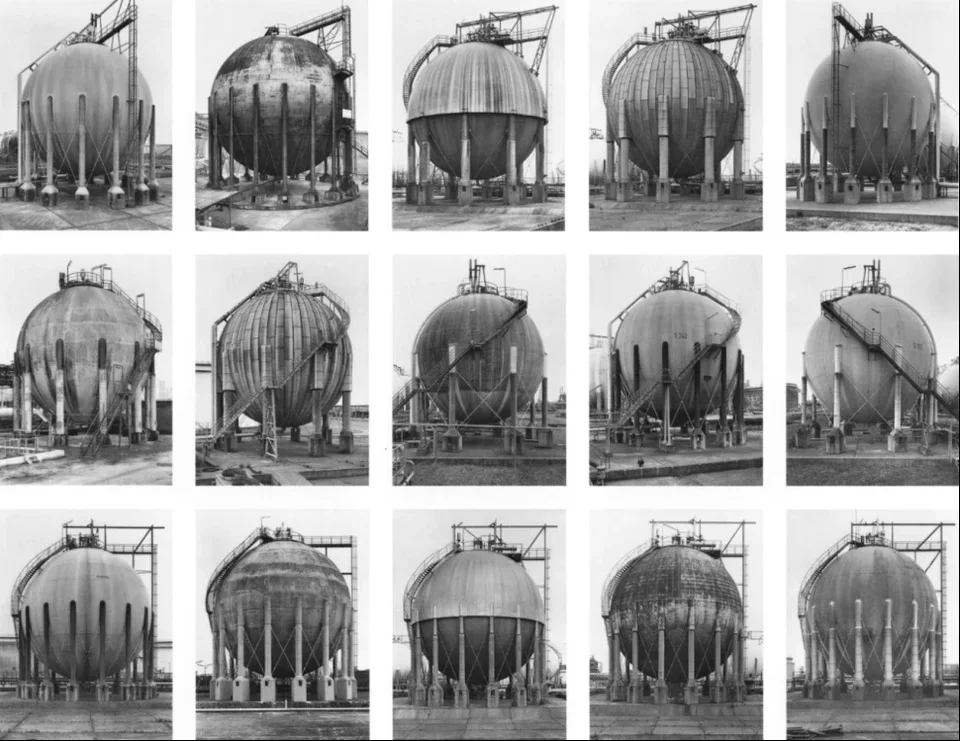
Maybe I can answer this quite simply. Once I was talking with Bernd Becher about his work and mine. He said, “Thomas, what I learned from my friends, the conceptual and minimalist artists, is that when you work with a medium, the image should always contain thought about the medium itself.” I have never forgotten that. I try to include it in every series.
The portraits may have been the first series in which I managed that fully. For the first time, I was thinking about photography while taking a photograph. The strange thing is that it is both a photograph and a thought about photography. Depending on how I feel, I might say a portrait of Pia is 80 percent a straightforward photograph of Pia and 20 percent “meta.” On another day I might say it is 50 percent a portrait of Pia and 50 percent thinking about portraiture in the history of photography. It depends on my mood, on how meta I feel. But I hope that in all my series you can see me thinking about the history and questions of photography.
Ce Zang
Thank you, Mr. Ruff. I proposed the theory of the "meta-image" years ago, and over the years I have kept thinking about it and expanding it; it has now extended into neuroscience and neuroaesthetics. Your response just now was very meaningful as well. We can continue this discussion later and even extend the theory to AI. Next, I'll invite Guosen Chen to continue with his questions.
Guosen Chen
Mr. Ruff, you've just explained in detail the process behind press++. I'm curious: among the thousands of old newspaper and press photographs you've scanned, what is the strangest or most memorable thing you've found on the back of an image? Was there ever a photograph whose back was so striking that it completely overturned your understanding of the image on the front?
Thomas Ruff
No, I must confess, not really. The back was always related to the front. But sometimes the composition that emerged when I superimposed them was a big surprise. I could turn a photograph over in two ways, and chose one or the other according to the composition. Then it was simply an artistic decision: this way looks better than the other. Sorry, it is not a big revelation.
Guosen Chen
Actually, the way these two are combined is itself very interesting.
Thomas Ruff
Yes. I could have used another method, but then everything on the back would be mirrored and you could no longer read it. So I had to flip it one way or the other.
Truth and Fiction in Photography
Ce Zang
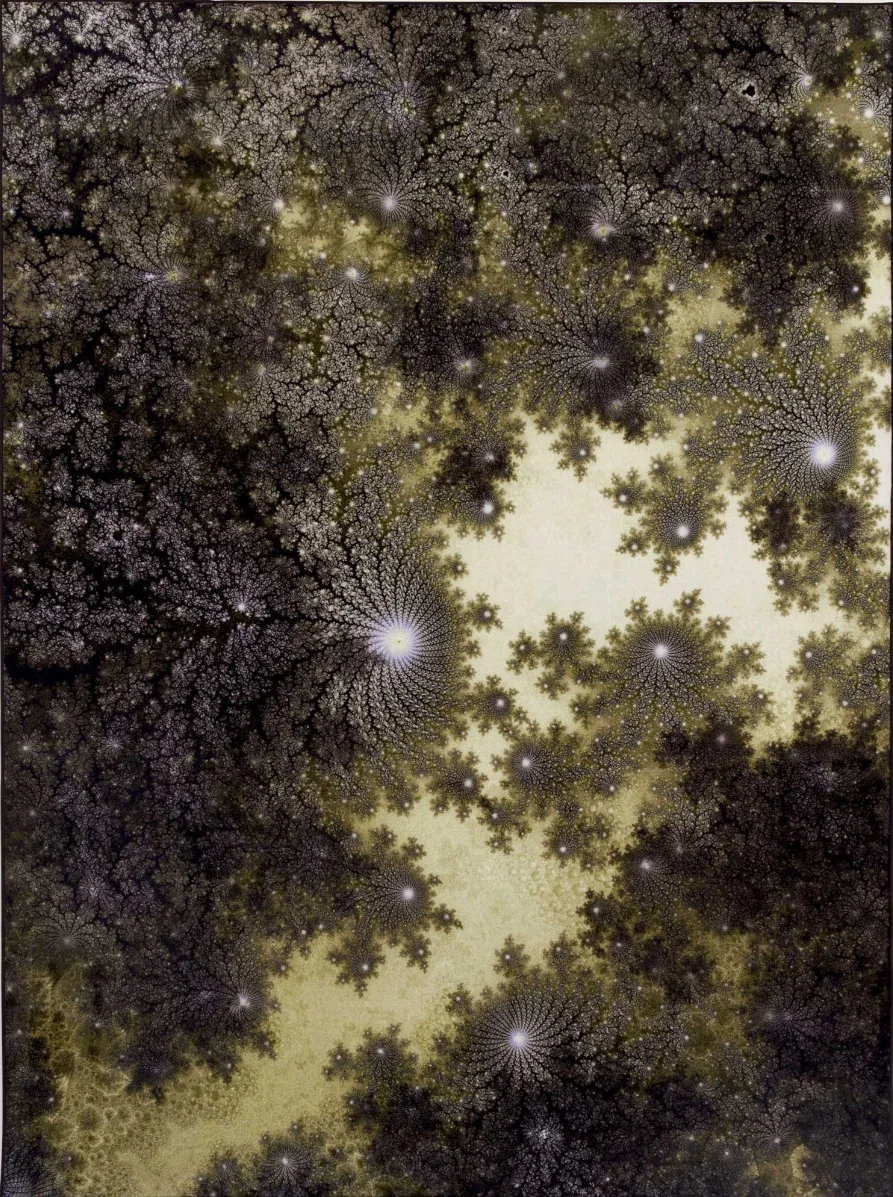
Next, I'd like to talk with Mr. Ruff about the fictionality and truthfulness of photography. I really like Substrate, the work in Ruff's Lishui exhibition. Ruff has stated plainly that after 45 years of experimenting with images, he no longer believes in photography's documentary nature or truthfulness. I deeply agree; I have always believed that photography is less true than fictional.
Recently, however, I've come upon an interesting problem I'd like to explore with Ruff. Photography differs from painting: it is fictional, yet on another level it is also truthful. This truthfulness, as Substrate reveals, lies in the transmission of messages between machines—a transmission that is real and has nothing to do with human consciousness. In other words, photography is truthful at the level of data transmission, or what might be called the transmission of "Shannon information." This truthfulness is like photosynthesis between sunlight and green leaves: it genuinely exists. This kind of information carries no semantics; it is separate from meaning. What is connected to meaning is photography as we understand it, and the various meanings we attribute to images are fictional. Photography's truthfulness has nothing to do with our understanding; it has no meaning and is simply the transmission of messages from thing to thing. Our understanding of images in the brain, on the other hand, projects our own consciousness onto the image and attributes meaning to it, and these meanings are not truthful but fictional.
This is a new idea I've recently put forward, and I'd like to hear Mr. Ruff's thoughts on it.
Thomas Ruff
That is a very difficult question. If machines communicate, the signal they send is understood in the proper way. Between two human beings there is a kind of blurriness. There can be misunderstanding and misinterpretation. Take an extreme example. You photograph somebody sitting in an electric chair because you want to show how cruel the death penalty is. Then you show the photograph to someone who supports the death penalty. They might say, “This is a great photograph. I am 100 percent in favor of this person dying in the electric chair.” Their interpretation is the opposite of your intention.
That is the problem with human beings. It is not just the brain: the whole body, experience, cultural background and political opinions play a role when we communicate. There is no single way to look at an image; there are thousands of possible ways. That blurriness appears quite often. We are not as exact as machines, but we are not as limited as machines either. Our minds have much more to them.
Ce Zang
Take the conversation we are having right now: we can understand one another, while the computers in front of us are also transmitting information. The data transmitted between our computers is real, but the computers cannot understand the meaning of these messages, which is completely different from how we receive information. The information we receive is fictionalized by the brain, while the data transmitted between machines is real—and photography is the same. The data a camera sends to printers, output devices, screens, and so on—that is, machine-to-machine transmission—is truthful. But machines cannot actually understand the "meaning" of this information—its "meaning" for us. This is also the most fundamental difference between photography and painting.
Thomas Ruff
Yes, of course. Every time you take a photograph, the technical apparatus forms a whole system for transferring things. Painting involves a completely different way of handling them. I am glad my iPhone or camera does not interpret the image for me. That could be horrible. The phone might say, “No, I will not transmit this message. I don't like it.”
Ce Zang
AI may seem to understand information, but in fact it cannot. Let's now move to the third segment, beginning with Guosen Chen's question.
Materials, Perception, and the Future of the Image
Guosen Chen
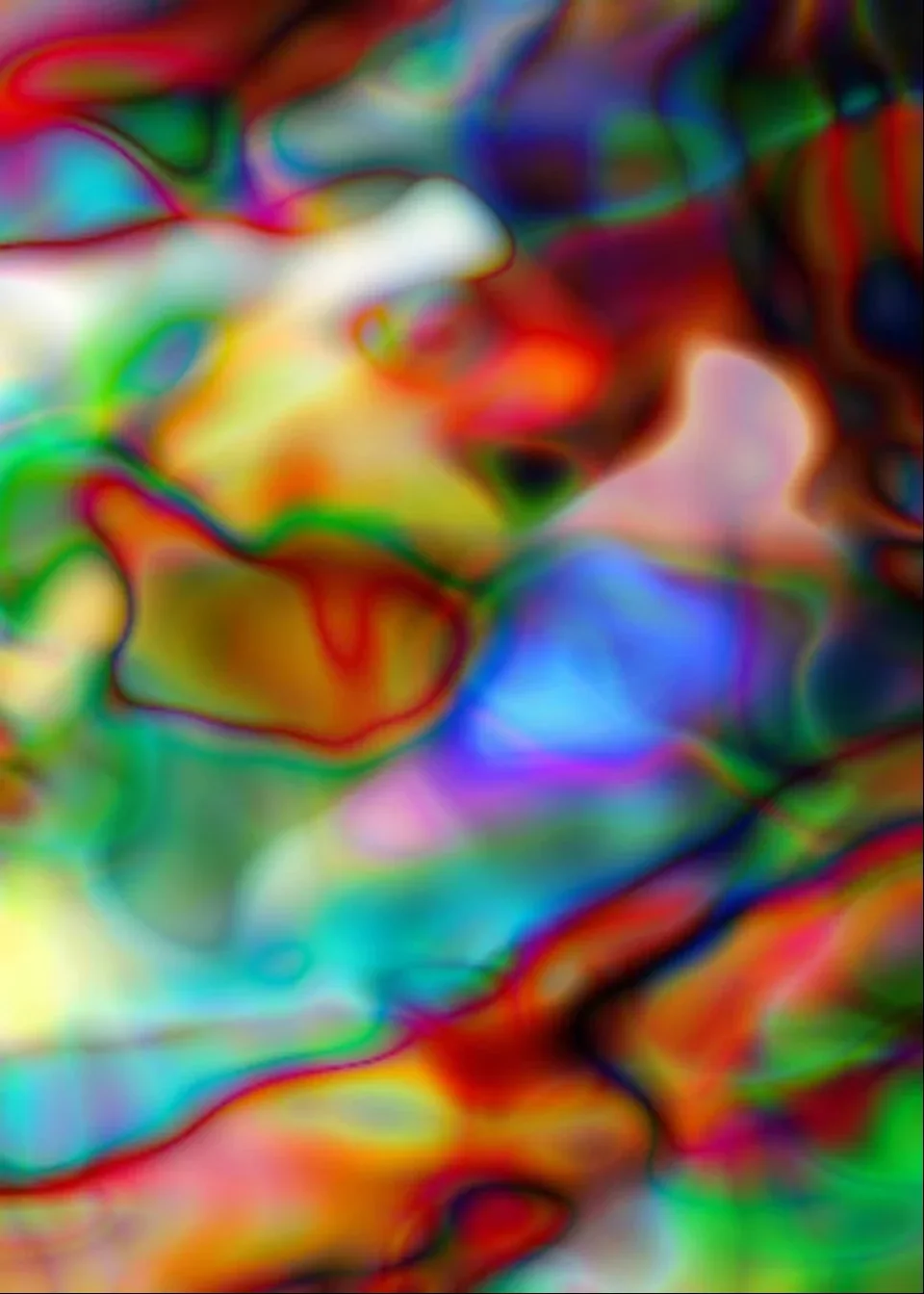
Mr. Ruff, my final question concerns the importance of "material" in photography. I recently translated the Artforum article "The Future of Photography: A Roundtable," which mentions that Thomas Demand has now switched to printing on copper plates because traditional photographic paper is disappearing. He believes the material support is unimportant; it is enough that viewers can recognize a "photographic equation"—that is, the relationship among the world in front of the camera, the scene being photographed, the person behind the lens, and so on. In the Lishui exhibition, however, your d.o.pe series was changed from the originally planned velvet carpet to canvas. You have said that you care more about the image than the material, yet the series' title clearly points to psychedelic experience. A soft carpet could have evoked this psychedelic sensory experience most directly, whereas canvas is firm and flat. If the change of material completely overturns the viewer's sensory experience, why do you still consider material not so important?
In this specific case, wasn't that softness part of the work to begin with? Perhaps Thomas Demand would insist that the photographic equation still holds here, so material is irrelevant. But since you yourself regard this change of material as a regret, I'd like to know: what can carpet achieve that canvas cannot? Do you see material as merely a passive support, or as a decisive factor in whether the photographic equation succeeds or fails?
Thomas Ruff
I first take the photograph, or, in the case of d.o.pe, create the image. Then I think about how to present it. I have been doing this for 40 years. Small works are printed on photographic paper and framed. For large images I use a photographic print, Diasec mounting and a frame. Technically, and in terms of weight, that has been the best solution.
With d.o.pe, I first made a large print and put it on the wall. It looked good, but I was not happy with it. Even though it was an inkjet print rather than a chromogenic print, it still looked too technical, while the image seemed almost the opposite of a technical process. The age of the chromogenic print has ended; Kodak no longer makes that paper. We depend on inkjet now, but that also gives us more freedom to print on different materials. Twenty years ago photography tended to have one surface, the chromogenic print. You could choose glossy or matte, but not a wide range of materials.
I thought of printing d.o.pe on canvas, but that looked too painterly, and I do not want to compete with paintings. I considered other fabrics, such as satin, but their width was limited to about 150 centimeters, as far as I knew. Then I thought, why not try carpet? I looked for a company in Europe that could do it and found one that made a very good test print. I only had to adjust the tonality and contrast for the new material. The result surprised me. The softness of the carpet fit the image perfectly. A photographic print would be more precise in resolution, but in this case the carpet was the perfect choice. In the age of inkjet you can print on sand, aluminum, glass, almost anything. You choose what fits the image best.
Rong Jiang
Thomas, I'd also like to ask you a question about output materials. The rise of AI algorithms and high-speed computing systems has thoroughly reshaped the nature of the photographic image, transforming it from a fixed, retrospective record into something generative and extensible. Larger formats, a stronger sense of scale, and advances in color printing have also posed new challenges for the stability of photographic works. When photographs begin to be appreciated in ways once reserved for painting or sculpture, the question of stability becomes especially critical. Thomas Demand's recent printing of his works on copper plates is, in a sense, a return to the earliest image-fixing techniques from the time photography was invented. In the d.o.pe series, you printed the works on industrial velvet carpet, creating a unique textile quality, but such materials may gradually deteriorate over time. I'd like to ask whether you are also concerned with the durability of your works, and whether you have particular considerations in choosing materials.
Thomas Ruff
Yes, of course. Collectors quite often ask me for a new print because one they bought 30 years ago has become yellowish or has faded a little. I replace it; they pay the production costs and a small fee for my work. The problem may be even worse for early video works from the 1970s: the tapes are failing or are no longer available.
I work in editions, and I think a photograph should always look as good as possible. If an edition has four prints and one has been exposed to too much sunlight, I can replace it and make it look good again. Some conservators say, “No, it is a vintage print from the 1980s; we have to keep it.” That is a real discussion in conservation. But I prefer to make a new print. I say that as long as the artist is alive, it is a vintage print.
Ce Zang
Mr. Ruff emphasizes that his explorations all revolve around the nature of perception. I am very interested in this question too. I believe that the essence of all aesthetics, and the core questions of art, are in fact closely tied to the question of the nature of perception. In all visual arts, including photography, the truthfulness we can feel is always the truth of perception rather than the truth of representation. I would very much like to hear how Mr. Ruff thinks about the nature of perception.
Thomas Ruff
I am not sure I understood the question. Are you saying that perception is always about aesthetics? Perhaps we should step back. Photography has been called “the pencil of nature,” the best machine for recording what we call reality. Yet different interests use photographs to guide us with information and make us think in particular ways. Advertising photography is the worst: it lies like hell. Propaganda photographs lie too. In my different series I try to show that you should look very carefully at an image.
Ideally, you would stand with the photographer when they took the picture. Then you would have all the information about what it shows. That is almost always impossible. So you have to improve your ability to read photographs, so they cannot manipulate you or lead you in the wrong direction. Many people do not realize how much their consciousness can be manipulated by photorealistic images. I say “photorealistic” because many AI-generated images now look like photographs. They are not all necessarily for the worse. It is a question of perception, and I hope to offer a kind of enlightenment about how the photographic medium works.
Ce Zang
Mr. Ruff just made a very important point: perception can be manipulated. This is a very valuable line of thought. Next, I'll invite Tu Hu to continue with questions.
Tu Hu
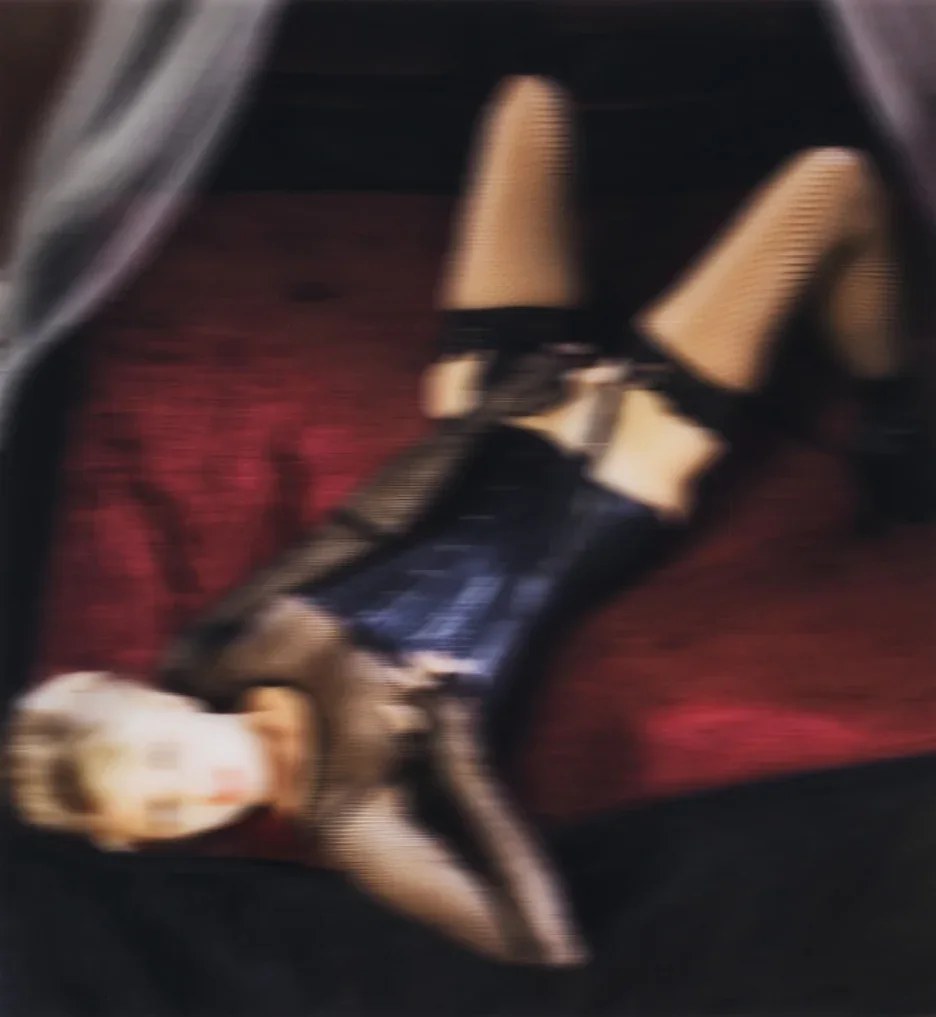
Mr. Ruff, across a range of your works—from Newspaper Photographs and press++ to nudes, jpegs, and Tableaux Chinois—you deliberately make images expose the traces of their function. In press++, for example, the editors' annotations, stamps, captions, and crop marks on the back of the photograph are presented together with the image content; jpegs enlarges the pixel structure and shows it alongside the content of the photograph. As I see it, this reminds viewers that when looking at a photograph, they need to attend at the same time to the mechanisms of image production behind it. The essence of these production mechanisms is a kind of encoding, a process normally invisible to viewers, and you make this invisible process visible. I'd like to ask how you balance image content and the production mechanisms behind the image. In nudes, for instance, the erotic theme is further accentuated by the pixelated blur; in jpegs, the subjects are varied—that is, subject matter is deliberately weakened—while the pixel structure of the digital photograph is emphasized. The titles of the two works also reflect this.
Thomas Ruff
In the Nudes, I chose a pixel size small enough for the image to be legible but still visible as pixels. I wanted people to know they were looking at a digital file, not simply at a photograph. With jpegs, it is more obvious. I wanted to show the artifacts created by compression. The image looks familiar, but its structure has changed a great deal. You have to examine the balance between image and thing in each case. This is not an automatic process. I work from one image to the next. Sorry, that may be a bad explanation. But you have pointed to a very good aspect of my work: how the production of images is encoded. That is a large part of what I do.
Rong Jiang
On behalf of all the guests, I'd like to ask you one final question. Since the rise of digital image editing and the internet in the 1990s, internet users around the world have created an enormous volume of images online, especially on social media; now AI can generate images as well. Do you think photographic art will be weakened by this, or become more powerful? What do you make of the view that "powerful AI image-generation technology will bring the era of photography to an end"? What does the future of photography look like in your eyes?
Thomas Ruff
It is like painting: photography is dead, long live photography! No, I do not think it will disappear. Perhaps it will become less dominant. AI-generated images may fill 80 percent of social media, but perhaps people will tire of them and return to real photographs. Making those is more fun. It requires skills and a unique way of thinking. I do not worry about photography's future. It will continue; many young people still want to practice it. Thank you.
Ce Zang
Today's exchange has been very enjoyable, and we have explored many interesting questions—questions that centered on specific works in Ruff's Lishui exhibition but also extended to many issues beyond photography itself, including AI, the brain, imaging technologies, material media, and physiological media. I also fully agree with Mr. Ruff's answer on AI. The technical images manifested by AI are fictional, but that does not mean they thereby lose the truthfulness of perception itself. As I said earlier, the two must be distinguished. Dreams, for instance, are fictional, but you cannot say that dreams lack the truth of consciousness or the truth of perception. When people dream, they may even experience a sense of reality they cannot experience while awake. Dreams can sometimes reveal truths more penetrating than reality. I also agree with another point Mr. Ruff made.
Once people grow accustomed to overly technologized media, the novelty fades, and they become interested again in traditional things that carry bodily memory. Nowadays people rarely even use fountain pens to write, let alone brushes, yet calligraphy has not disappeared. Many ancient crafts have lost their practical value in everyday life, yet they have been listed as intangible cultural heritage, and more and more people are drawn to them. Of course, photography is unlikely to become intangible cultural heritage; it will continue to realize more of its latent value in the new social conditions of the future. Some of that value we can foresee today, and some we cannot—and that is precisely the surprise the future holds for us, the interesting part that lies beyond our present imagination. Many thanks to Mr. Ruff for coming to Server Art and discussing so many interesting topics with us; many thanks as well to Rong Jiang, Guosen Chen, and Tu Hu, and thanks to our interpreter Jingyi and to Yangkun Shi for technical support behind the scenes.
Finally, thank you once again to everyone who watched today's broadcast. Thank you!