
Chuanduan Chen
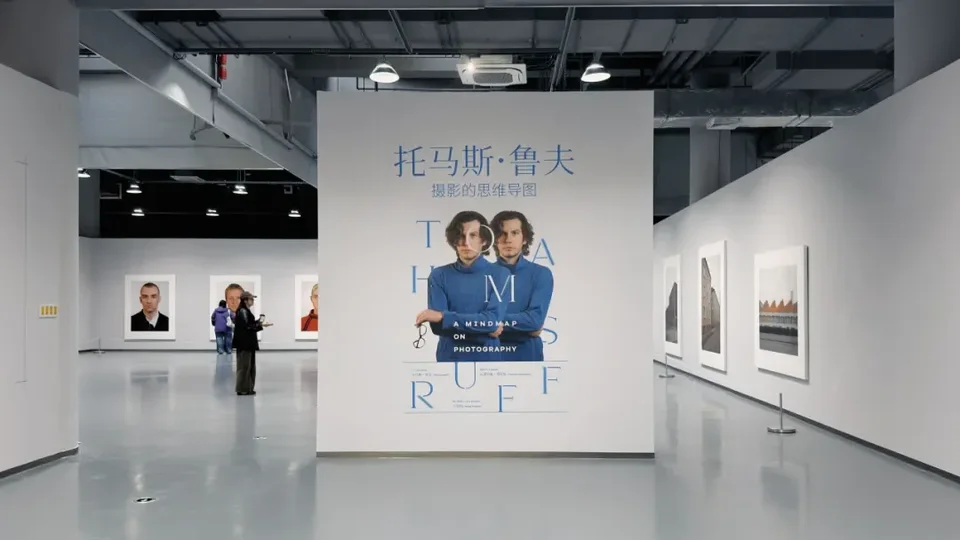
Today I'd like to talk about what struck me most. When you study photography or take an interest in it, you often ask a question, whether of seniors, of teachers, or of yourselves: how do we understand an artist's or photographer's work? People often ask me this about my own work, too. At the Thomas Ruff exhibition, I also overheard visitors asking each other: "How am I supposed to get this? How do I understand it?"
I'd like to offer a view that is purely my own, perhaps even a complaint. In contemporary photography, "getting it" and "understanding it" are sometimes not the first or most important things. When we talk about how to understand a photographer's work or how to interpret a particular image, I feel that question has become less important now that image-based art has grown so rich. Still, I see many viewers interested in photography, especially at a venue like the Ruff exhibition, working hard to understand a specific person or a specific image. When I study and teach photography, I put particular emphasis on personal response, and on how each person can turn other people's images and work into nourishment or information that is useful to them.
As for Ruff's work, I feel a certain resonance when I look at it, because some of his media and themes are close to mine. For example, we both work around astronomy. If you saw his works on site, you'll know he has taken apart many images drawn from observatory data. That is very similar to my own practice. I have previously worked with remote-sensing images of the Moon, Mercury, and even Mars, and his work includes this area as well.
In our context, we no longer simply use a camera to capture images or turn them into visual works. For me, his work represents a breakthrough in the language of photography. In your conversations, whether at a photographers' association or with other photographers, you may have debated questions like "Is non-camera imaging photography?" or "Where exactly are the boundaries of photography?" For practitioners, though, I think dwelling on those questions has limited value. It is better to do what Ruff does and ground things in practice. That means lifting photography up to the level of the "image" and trying to use images to convey what you are focused on and what you care about. In my view, Ruff's greatest radicalism lies in his constant exploration of the medium's possibilities. This includes his work with archives, his secondary reconstruction of already-printed images, and his multidimensional understanding of non-camera and digital imaging. I think that is the most valuable part.
When you try to move beyond direct camera imaging and raise it to the concept of the image, you discover an enormous range of freedom. That freedom means you can do more than create images that correspond to reality. You can project your emotions and concepts, and even take up more abstruse philosophical questions. That, to me, is the greatest value of Ruff's work. But I would still suggest that you not chase a single "correct solution" or "one right answer," as we did in the exam-driven stage of our education. For example, in my view Ruff is someone who engages deeply with photography's original medium. In other contexts, however, he may appear as quite a different kind of artist.
All our views, whether the artists' or those of everyone here, represent different voices. My suggestion is that as you look at the various exhibitions at the Lishui Photography Festival over the next few days, you treat them as voices of different possibilities, not as so many single solutions. That brings me back to how I felt at the Ruff exhibition. I think he is an excellent example of what is possible. You can push past him, or even reject much of his distinctive work, and those would all be interesting things to try. We can come back to these specific questions later.
Guosen Chen
Thank you. Duanduan just touched on some of the topics raised at this morning's symposium. Ms. Valéria Liebermann, Ruff's curator and also his wife, raised a particularly important point. She said that a major part of Thomas Ruff's work has been thinking through the shift from analog to digital. As analog photography gave way to digital, the motivation behind his work also changed: he moved from the "photo" to the "image." From there, Valéria's whole argument was essentially built on an understanding of the image.
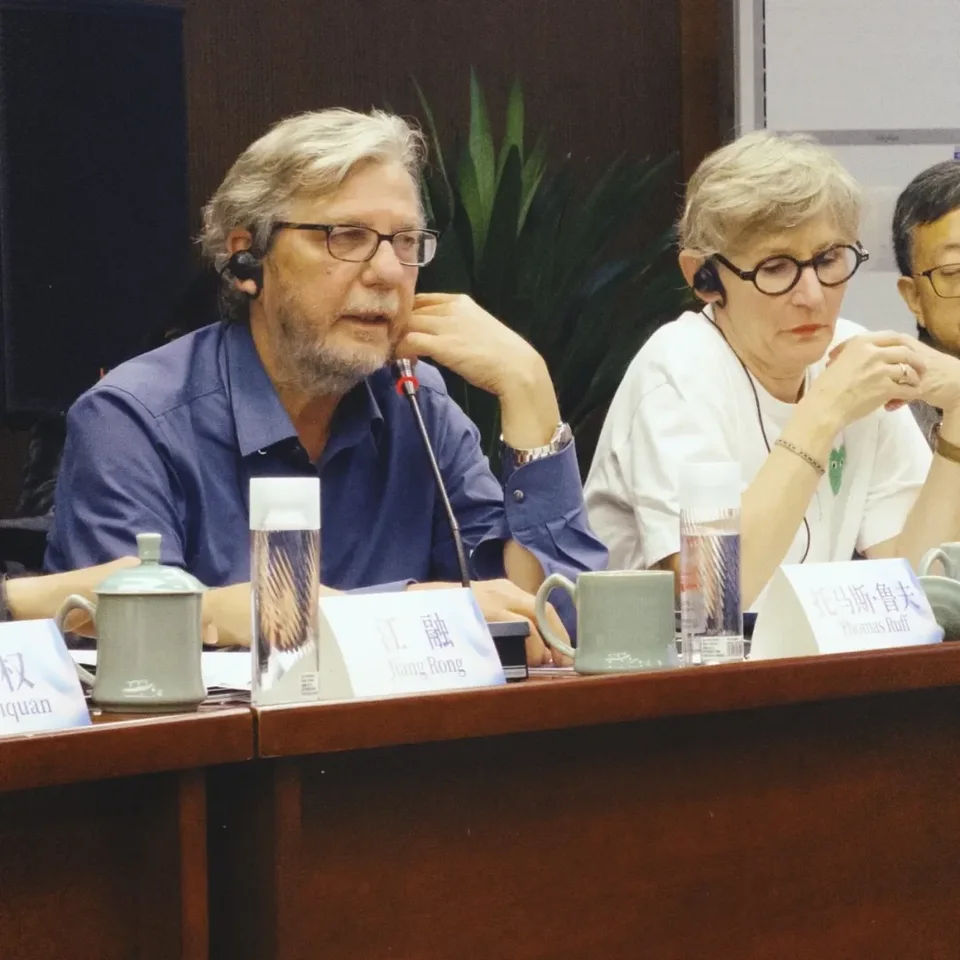
So what exactly is the relationship between Ruff and his images? How does he create them, and what characterizes them? After everyone has looked through the catalogue, I'll share my thoughts.
First, I'd like to ask Mr. Tong Niu. You generally lean toward straight photography, but many of Ruff's works have obvious conceptual elements. How do you respond to his work? You may remember that yesterday afternoon someone asked Ruff, "Do you consider yourself a conceptual artist or a photographer?" Those who attended the talk will remember it. Ruff answered, "I am a conceptual artist who works with a camera." Mr. Niu, what is your general impression of his work?
Tong Niu
Yesterday's question was a clear one, about how he defines his own identity. My girlfriend asked it, because this is an area we both care about. As Ruff himself said, when he studied with Bernd and Hilla Becher, the Bechers were perhaps the only ones at the time who had entered an art academy with photography as their medium. Mainstream opinion then still did not see photography as art. So Ruff's earliest training followed the lineage of straight photography, from Eugène Atget to August Sander and then to the Bechers.
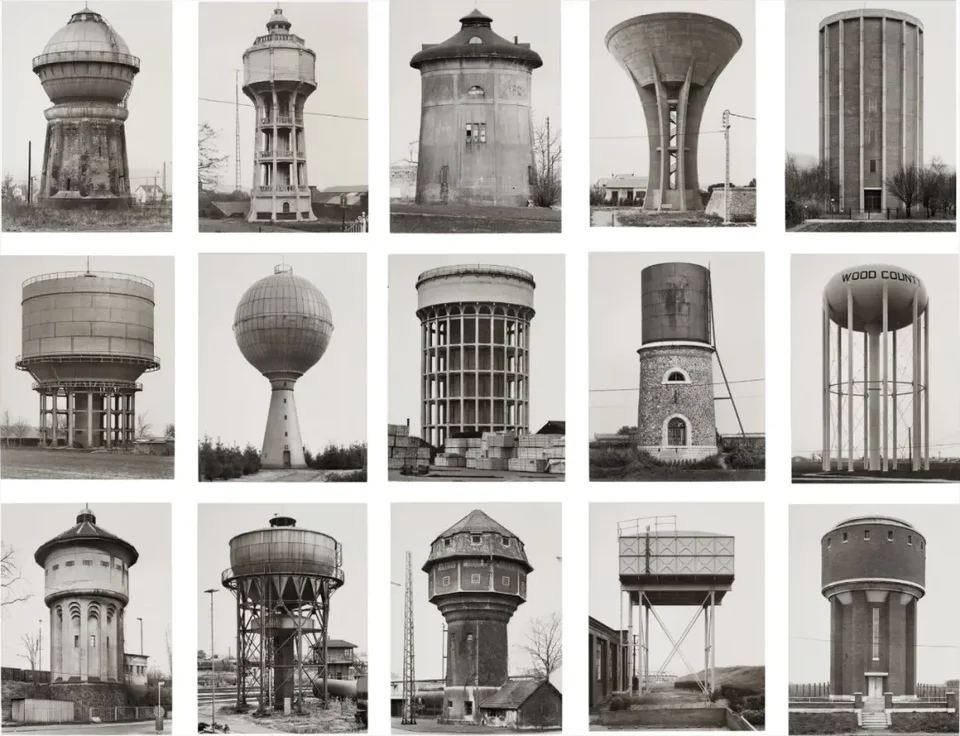
As for Ruff's later education, I think the key was the environment he grew up in. Note that he was at an art academy, not a photography school. So many of the artist friends around him, and the exhibitions he held at galleries, followed the path of fine art. That is why his later work includes so much experimentation. Before I resigned, I was a university teacher. When we taught, we would draw a spectrum. At one end is "photographers' photography," meaning straight photography and so on, which is what most people picture. At the other end is "how artists use photography," such as land art, performance art, and other artists who use the medium to document or to make conceptual statements.
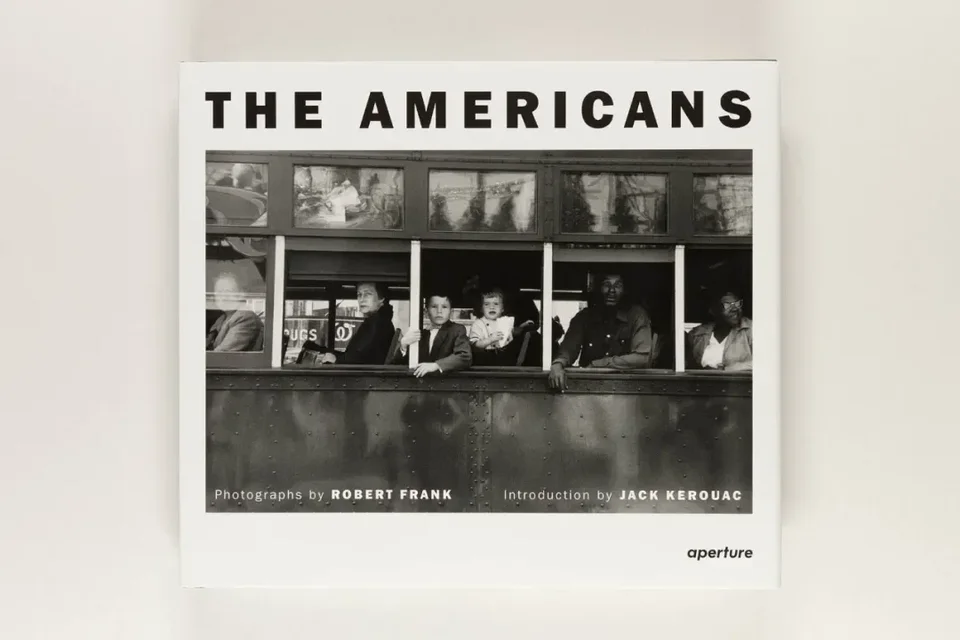
All of our practices find their place somewhere on this spectrum. At the Lishui Photography Festival, including the exhibition we just visited, you can probably feel it too: you can locate where each practitioner lands on the spectrum. Mainstream teaching of photography history has always centered on straight photography, for example the line represented by MoMA in the US. It runs from the first head of its photography department through to the New Documents, New Topographics, and New Color that everyone knows, all presented as straight photography. I think this may belong to the American photographic tradition, from the road-trip photography represented by Robert Frank's The Americans through to those later traditional forms. But Düsseldorf in Germany, as an art academy, gave rise to a path like Ruff's: using all kinds of conceptual or visual forms to accomplish his own expression.
So Ruff's talk yesterday moved me. He said he was grateful to the Bechers for helping him understand what photography is. By that he meant the essential nature of the medium: it is a representation, it shows only the surface of things, and it cannot show more than that. He has kept exploring along this path, so his trajectory is very consistent, and it lets me see something different. But when we study the history of photography, we also pay close attention to the experimental and surrealist images that appeared in Germany in the 1920s and 1930s. I think Ruff may be carrying that path forward in some way.
So I don't think photography history necessarily has straight photography as the main current and experimental photography as a tributary. In my view, both ends of the spectrum are important. Each school, movement, and region simply focuses on and values different things in photography, so each forms its own mainstream voice. That is why my girlfriend and I wanted to ask that question yesterday: how does he actually define himself?
After all, he was first shaped by the Bechers, masters of straight photography. But what he went on to produce changed. I think this is closely tied to his education, the art academy environment, and his later path into the gallery system. To put it in plain terms: the Bechers had twelve disciples, and among those twelve, Ruff was the "traitor." To us, that is the most interesting part, like the traitor among Jesus's disciples. But "traitor" is not pejorative here. It means he was able to look back at details that were more primal, or that had been overlooked in German and mainstream photography history, and push them back to the foreground.
So for any photographer or practitioner, having a very clear sense of your own identity is, I think, quite remarkable. Perhaps after Ruff finished the Portraits series, he built his sense of identity and position through his later shifts and development. His friends, and his exchanges with different friends, also shaped him in new ways, and through that process he kept going further.
Guosen Chen
Thank you, Mr. Niu. Let me add a quick aside. Mr. Niu just outlined the turn in documentary photography, that is, how today's "documentary" evolved step by step from Robert Frank's very direct approach into the form people now find "hard to understand." If that interests you, I brought a book today: Rong Jiang's Beyond Documentary Photography: Ideas and Practices of the World's Leading Contemporary Photographers, launched yesterday. Take a look if you're interested. Very few publications in simplified Chinese currently introduce these contemporary photographers in a way that is both accessible and incisive. After reading it, you should have a deeper understanding of the forms contemporary photography takes and why it takes them.
Mr. Niu just raised the topic of "representation," so let's first discuss the body of work closest to straight photography, which is also where Ruff's career began: Portraits. It is the first group of works you see when you enter the exhibition hall, and they are huge photographs. Ruff talked yesterday about how the series came about and how he made it. But from the standpoint of understanding and concepts, it is important to be clear about what Mr. Niu called "representation."
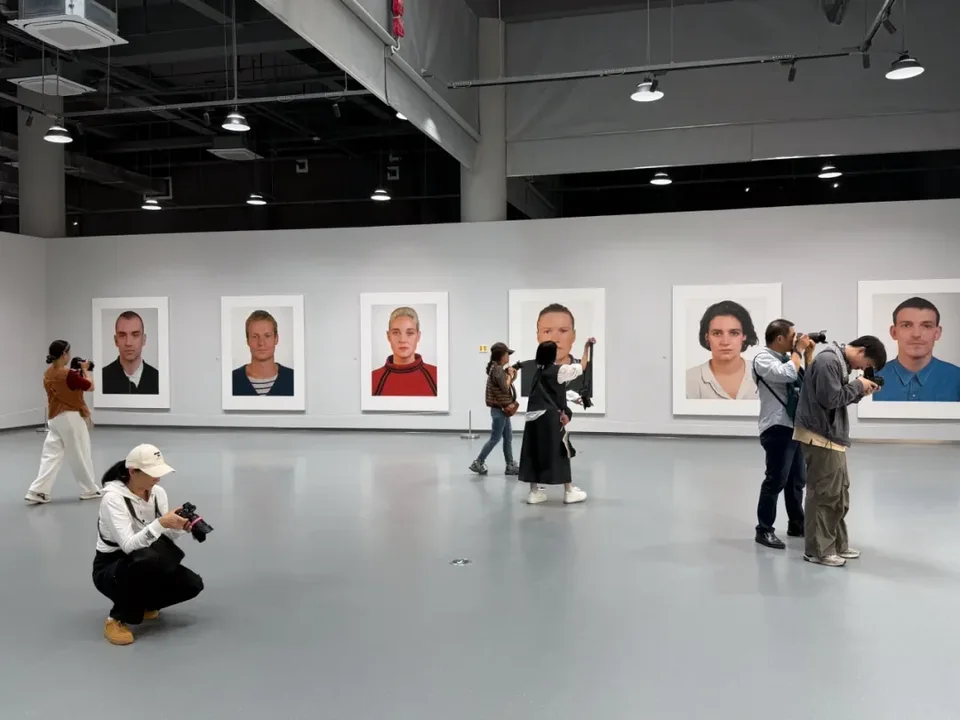
First, we need to recognize something. I believe the core threads running through all of Ruff's work from the 1980s to the present can basically be traced back to Portraits. Ruff's own creative process was fairly accidental, but in retrospect it shows a striking consistency.
What are these three threads? All three are tied to characteristics that photography has had since its invention. That is also why Ruff is considered the member of the Düsseldorf School most concerned with the medium itself.
The first is photography's "democratic" promise. This refers to how photography broke old conventions in portraiture. We know that in the Middle Ages, or in the 18th and 19th centuries, only aristocrats, or people with ample economic and political means, could have their portraits painted. Once photography appeared in Europe, in Britain at the time for example, you could pay as little as a shilling to have a photographer come to your home and take your portrait. In that sense, it showed photography's democratizing tendency: everyone could have their own portrait and the right to be recorded. But let me ask you: are the subjects in the Portraits series really a democratic group?
You'll find that when Ruff takes up photography's democratic character, his choice of subjects already says a lot. He chose his classmates, students at the Düsseldorf Art Academy. They are almost all white, with very few Asian or Black faces. So he touched on this dimension, but I don't think he was deliberately addressing the question of democracy. That's the first point.
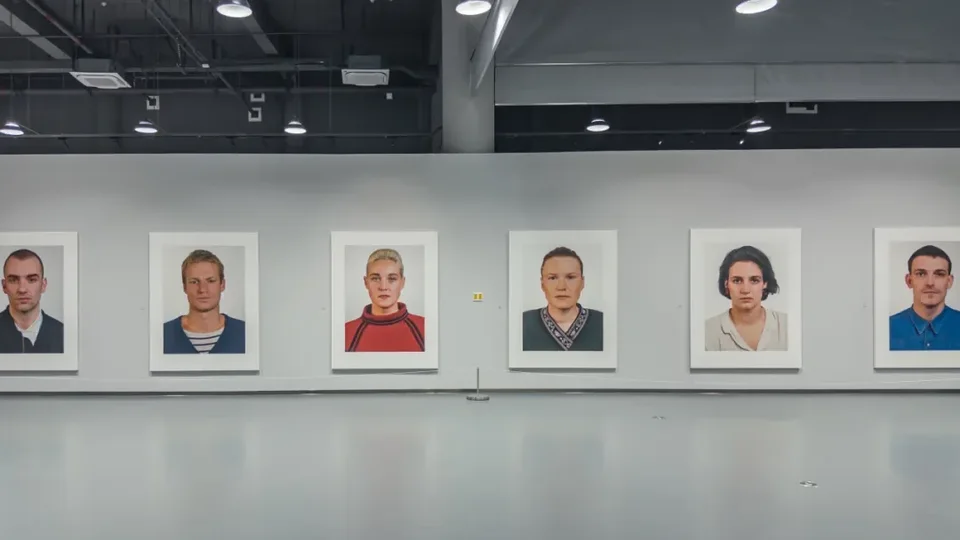
The second point: when we see so many similar, even nearly identical-looking images lined up side by side in the exhibition hall, they call up the most important keyword of Ruff's career, one found in almost all his work: the archive. Why call it an archive? An archive of something usually consists of a collection of many similar, related, or different objects. The basic rule of an archive is classification. This forms a visual archive of Thomas Ruff's classmates at the Düsseldorf Academy. As with the Bechers' typological works, the defining feature of an archive is a great deal of similarity. From this point on, Ruff was already consciously moving his work toward the archive.
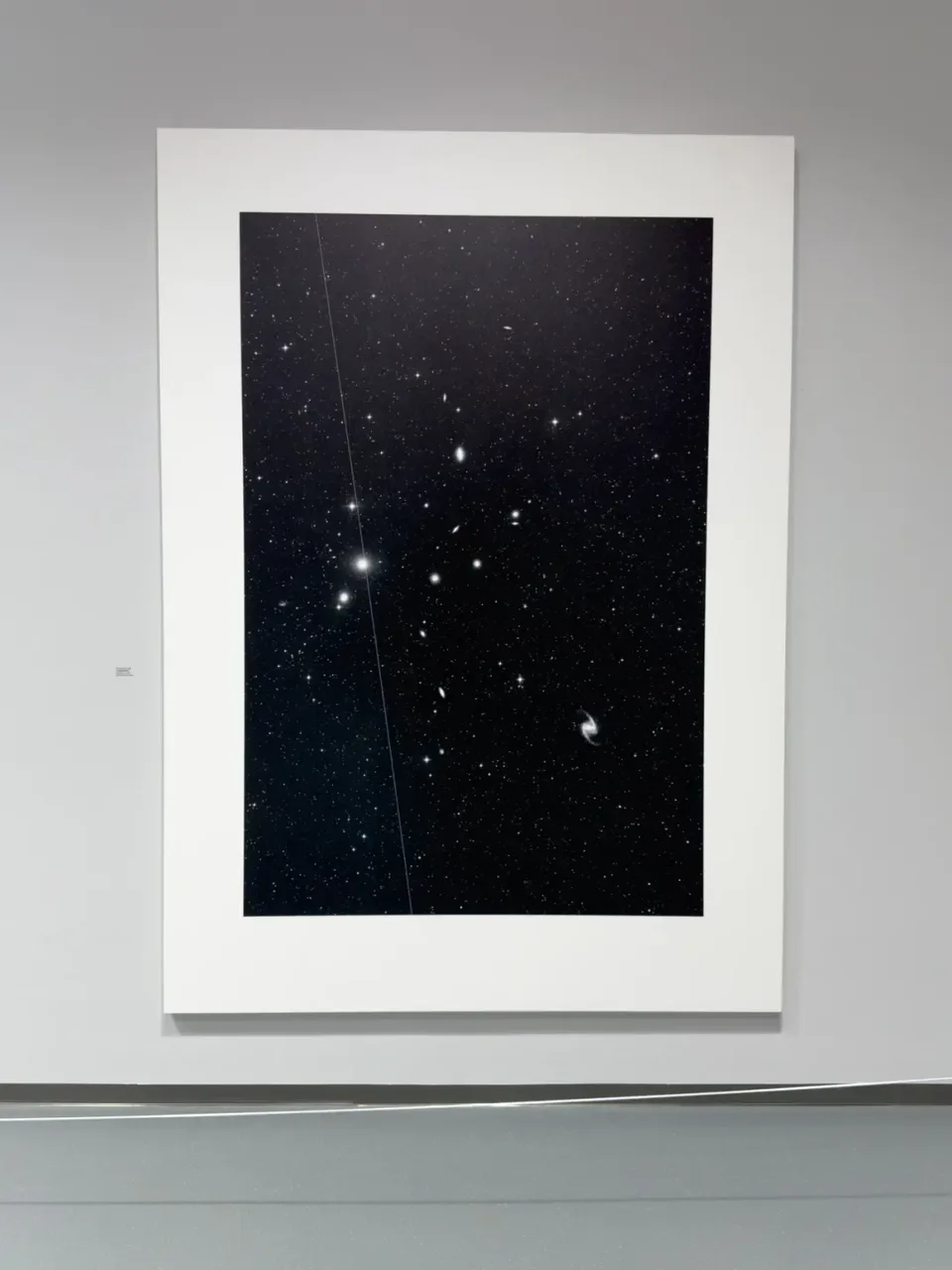
When does this become most obvious? In the third work of the exhibition's first section. The first is Portraits, the second is Houses (Häuser), and the third, as you'll recall, is Stars (Sterne). Stars was appropriated from the archives of NASA and observatories. In other words, he later began taking images directly from other people's archives to make his work. So I say the archive is the second thread into Ruff's work.
What is the third thread? When photography's most basic function, proof or recording, is combined with the archive, a new function appears. In English it's called "mnemonic," meaning an aid to memory. You can think of photographs and the camera as a kind of prosthesis. If we lose a leg, we get an artificial one, and photography is like a prosthesis for our sight and memory. With a 200mm lens you can see what you couldn't otherwise see, and through photographs you can "hold onto" memories or the past. Especially when photographs are combined with archives, they become a way of discussing a person's attributes or image.
I'd like you to consider two questions from the dimension of memory, or of the mnemonic archive, that is, the dimension of the "mnemonic promise."
The first question concerns scale. These works were originally presented quite small and were only later enlarged to the size we see in the exhibition hall today. Their original size should be 2.5 meters tall and 1.6 meters wide. This time, hardware constraints meant they couldn't be printed that large, but at last year's exhibition at the West Bund Museum in Shanghai they were shown at their original size. The prints on canvas we see today are likewise due to limited printing conditions.
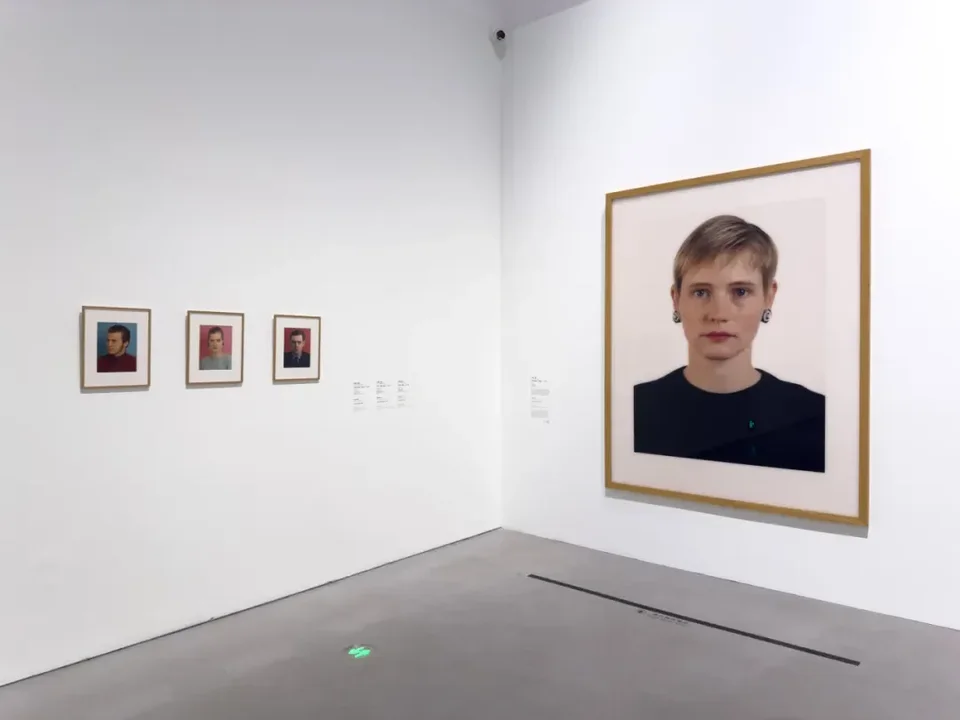
When these originally small images are enlarged to 2.5 by 1.6 meters, you stand before a giant photograph that looks like an ID photo, and you can see every last detail of the person's face. But the more clearly you see, or the more visual information we gain about the person, the more of a stranger they seem. Imagine this: if the sitters stood in front of the photographs Ruff took of them, enlarged to 2.5 by 1.6 meters, would they still recognize themselves? Might they also find this version of themselves strange?
This is why I say it relates to "representation." When Ruff describes his original intentions, he specifically mentions a belief of his: he thinks a photograph cannot represent a person's identity, that is, their so-called "sense of self" or "the quality that makes you you." We sometimes believe photography can capture a person's soul or inner self. In Ruff's work, enlarging the portraits has an effect: it thoroughly dismantles, or debunks, our myth that photographs can reveal a person's inner being or self. He uses extreme visual richness to make you feel the emptiness inside the photograph, because you have no idea who these people are. Apart from their names, the extremely rich visual detail, and the beautiful lighting, we know nothing about them. The richer the facial detail, the emptier their identity becomes. This also hollows out the archive's own function of "letting you know a person."
From another angle, every one of us in China has a file, a dossier, and we usually can't even access our own. But we know the dossier is how the bureaucratic system we live in manages us. Ruff adopts the format of ID card and passport photos. Our own passports and ID cards also exist in the archives of our national bureaucracy. Today's administrative system uses them to locate and manage us when we go through airport security or to a train station. It is the means by which a vast administrative system knows and identifies us. That is the second aspect I mentioned.
Now let's look at Other Portraits (Anderer Porträts). These are black-and-white composite images that Ruff made in the 1990s. How did he make them? He used a machine that German police at the time used to hunt down criminals.
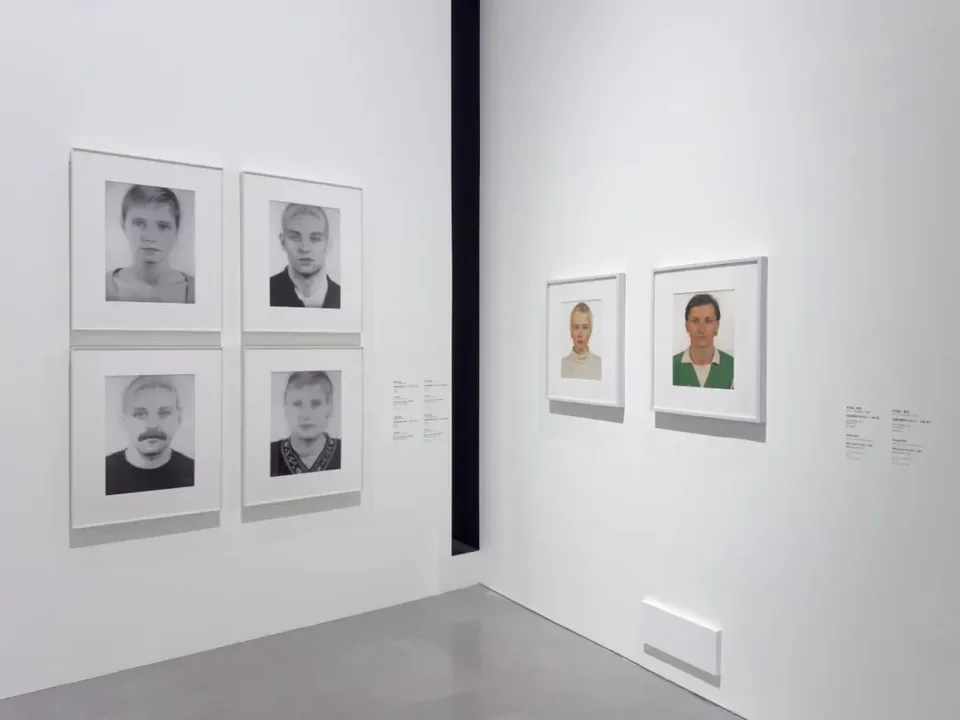
This work brings together the three elements I described above. First, the source material. Ruff said yesterday that the material came from his own archive. He stated clearly that the material for this series came from his own archive, and that he very deliberately built that archive. These materials are the people from the color Portraits we just saw. If you like, you can try to work out which two people he overlaid in each.
So why not use Photoshop? Besides the time involved, he mentioned yesterday that Photoshop makes things too smooth and refined. His intention was for you to recognize that these are composites. These works also have very obvious gender characteristics. In every photograph, even those combining a man and a woman, he deliberately preserved gender characteristics. That was one of his intentions. So look again closely: in this one, for instance, even though a man and a woman are overlaid, you can still make out male features.
The device he used was the Minolta Montage Unit, which German police used to hunt criminals in the 1970s. Today, catching criminals involves "profiling" and "psychological profiles." Back then, they had witnesses describe the criminal's appearance, then picked from existing ID photos in the archive and asked the witness to confirm: "Does this nose look like what you described?" "Do the features match?" Then they combined these ID photos with similar features into a simulated photo of the criminal to use in the manhunt. So you can see that once the camera is combined with the archive, the result is a real-world activity of hunting down, locating, and controlling individuals. The late American photographer Allan Sekula wrote a very famous essay called "The Body and the Archive," published in October in 1986. It runs more than 60 pages, over 40,000 characters in Chinese translation with notes, and it focuses on exactly this issue.
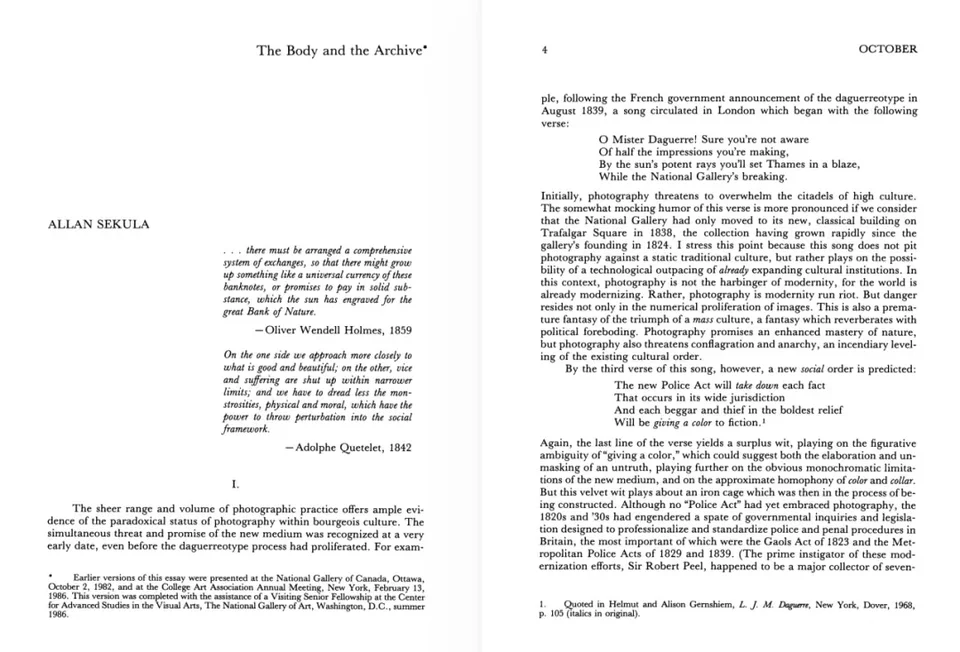
These are the two aspects I just mentioned. On the one hand, at the level of private memory, such an image is mnemonic: it helps us remember a person and learn about their past. But Ruff's work brings not memory but amnesia. On the other hand, within a bureaucratic or administrative control system, it helps you locate a person. Ruff's work clearly invokes this direction, and this is closely bound up with the history of photography.
At Ruff's talk yesterday, you could tell he has an enormous interest in photography history, which began back then. To discuss this topic, you can't avoid mentioning how Europe at the time, especially developed countries like France and Britain, used photography to control what Marx called the "lumpenproletariat." These were people who had drifted into the big cities with urbanization, disturbed public order, and repeatedly committed crimes. Once you've arrested someone, if they reoffend later, how do you catch them quickly? There was an urgent need for a photography-centered archive to help police departments identify criminals quickly. The mug shot format we know today was also established as a fixed format in that era by Alphonse Bertillon, of the Paris police.
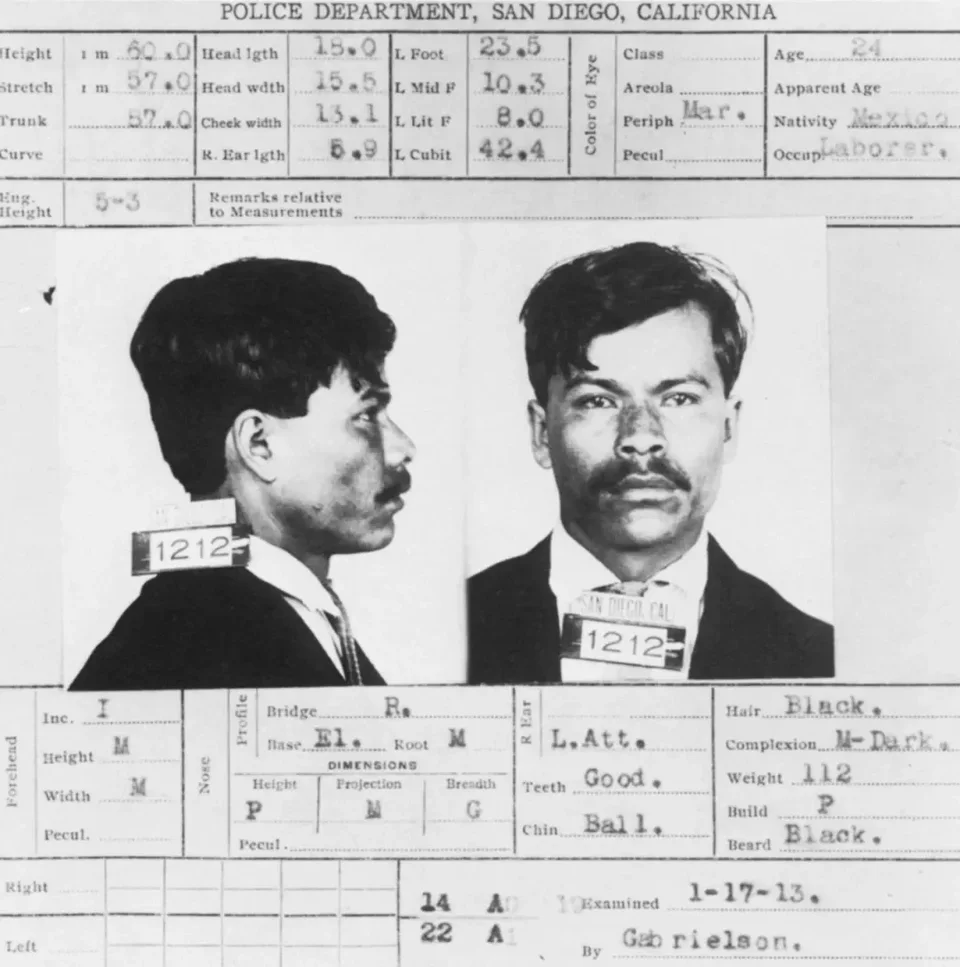
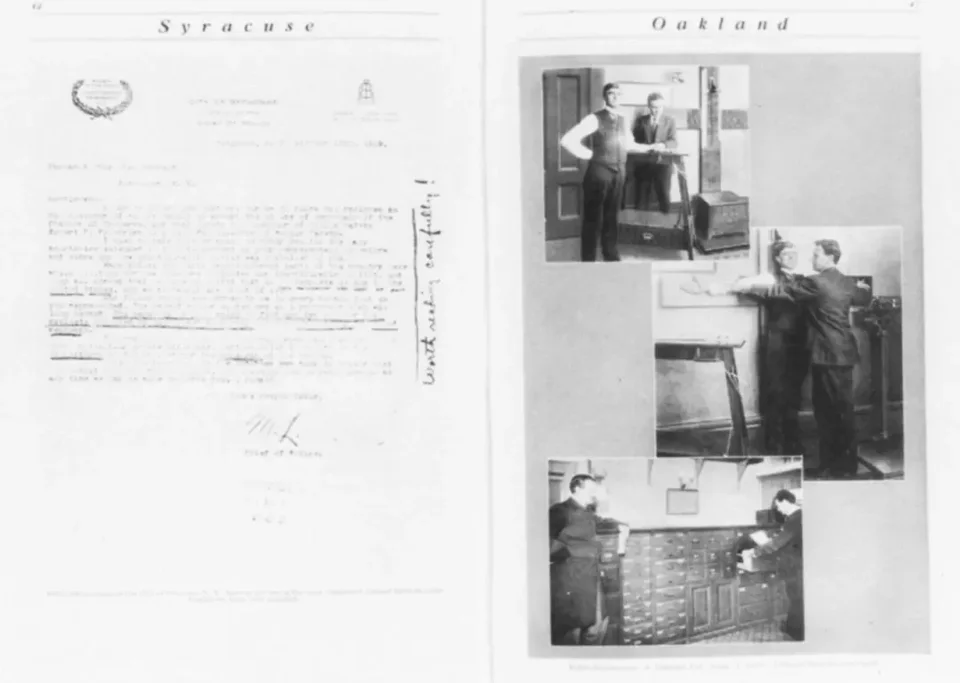
He built that kind of database, pairing these frontal, standardized portraits with various data, so-called "anthropometry," with 11 measurements such as facial distances and bodily features, for quick identification. If a new criminal was brought in, a comparison with the archive would immediately reveal whether they had committed other crimes before, enabling more precise control. The spread of photographic archives, especially criminal archives, turned every city dweller in Europe at the time into a colleague of the police. People would encounter criminals' portraits in daily life, like the wanted posters still in use today, and they would help catch and locate people.
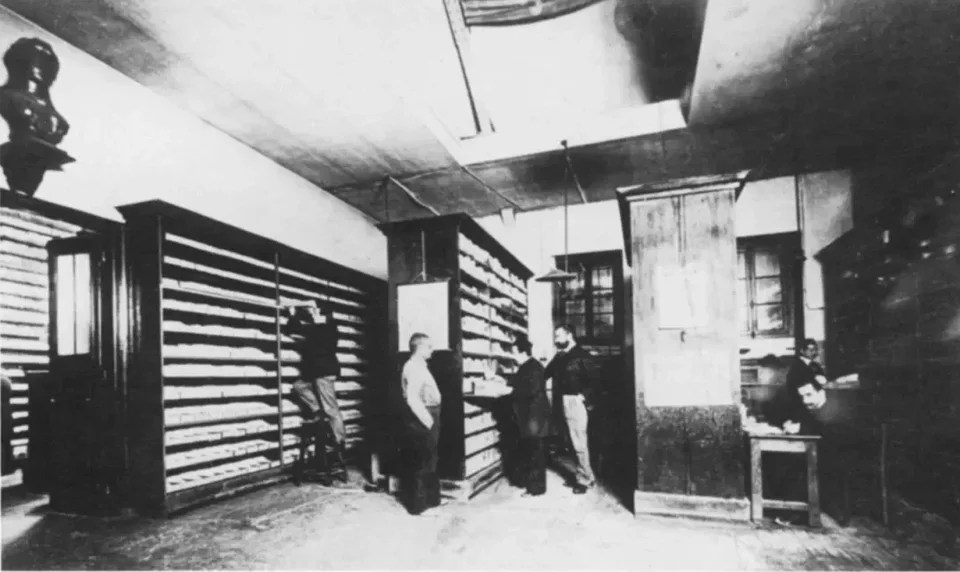
Yet, as you can imagine, if you want to truly understand a person at the level of private memory, such photographs are no help at all.
That is what I wanted to share, starting from his most direct and concrete works. I'll stop there for now. If anyone has questions about anything the three of us have said, feel free to raise your hand at any time and I'll pass you the microphone. I hope this can be a more open conversation, not just the three of us talking to ourselves up here. I have a lot more to say, but I'll leave it here. I wonder whether our two guests have anything to add.
Chuanduan Chen
I have a thought about archives that came to me while listening to Guosen. I'd like to ask whether you've had this experience: when you first picked up a camera or started trying out the medium, did you strongly believe in photographs as a form of evidence? This may be a reflexive move for many beginners, treating the images they get as ready-made evidence.
Many photographers work with the kind of archive Guosen just mentioned. At the festival lately you'll also see many works rooted in particular places: documenting a village, documenting an existing cultural system, or documenting an event the photographer cares about. Photography as evidence: I think this theme was what Ruff pursued in his early work, but many photographers today treat it as the only answer for the medium. This is something I've observed recently, including in Building 4, Building 3, and our art center. You'll notice many photographers still doing this: treating photography as evidence and building their own photographic archives. Of course, the richness of such archives is beyond question. Everyone focuses on different things, which is good, and it is an inexhaustible theme for photography.
Still, I'd like to put forward a view, not exactly a suggestion, but a more open position you might keep in mind. I think the status of "photography as evidence" and "the image as an unquestionable archive" can be challenged. It can be challenged by contemporary photographers, or by each of you as free creators. As you look at the exhibitions at the Lishui Photography Festival, you might ask whether there is a possibility beyond making archives. I don't think making an archive is especially difficult. This is my understanding of photography's development toward "contemporaneity," or of treating the "photograph" as a subset of the "image." I think we can have more possibilities and more openness to break through the idea of "photography as evidence."
Ruff has kept changing throughout his life. He is unlike those highly respected photographers in photography history whom we can't avoid. I won't name names here, but many of them spent their whole careers in a fairly conservative corner of photography. They are very safe in their own fields and occupy a high ecological niche. As a creator, I think you can try to disenchant or question that kind of "safety." That is something I came to realize in my own study of photography. But when we enter a setting like a photography festival where everyone is discussing photography, we often lean conservative too. That conservatism shows in the countless exhibitions I've seen over the past two or three days. There may be exhibitions by several hundred photographers on view here. But when you go into Ruff's hall and keep walking toward the later works, you'll find he keeps breaking through this language, including "photography as evidence." I can't call it the second half of his career, since he's still working.
As I understand it, his later work, including his reworking of printed matter and his use of non-camera media, isn't much concerned with "truth." He doesn't pursue a path in which the image's information, as evidence and as something recognizable, must be taken by viewers as the only information. So I find this very interesting: he was once an artist who firmly believed in photography's truthfulness, political character, and correctness, but in the later part of his career he pursued a great deal of the "new."
I've also heard some discussions recently and noticed that in Lishui, people rely on and believe in photography a great deal. They champion photography's evidentiary quality and a certain innocence of the archive. But I still think Ruff is breaking that. As a creator, I don't care much about it myself, so I hope you'll try to challenge it too, including the possibilities of photography that Guosen just discussed around Ruff's work. I think that's fun.
If you follow contemporary photography closely, you'll see we're still talking about archives, but we are no longer just makers of archives. Recently there's a program called the "Sailor Project"; I don't know if you've heard of it. Every year it invites image-makers to submit project proposals and supports them. Look at the posts announcing the latest cohort and you'll see more than one image-maker taking apart existing archives. The archives can be NASA's astronomical archives, or historical, political, or ethnic archives. People use images to reconstruct, remake, and even respond to them. This is a fascinating possibility for photography: from making archives, to using archives, to reconstructing archives, and even, since "reconstructing" is already a polite word, to destructive work. It represents one of the most fascinating aspects of contemporary photographic language. I'd call it Ruff's lifelong radicalism, though your word "traitor" (Tong Niu) is quite romantic too. I think it's a very interesting point, and I'd actually be glad to see more "traitors."
Photography has been around for one or two hundred years. If we keep making archives, the cost of replicating them is very low. And more and more I feel my threshold for satisfaction from this kind of work keeps rising; it's getting harder for such works to satisfy me. Of course, there's still endless material to mine there. What I mean is that there are many choices, but if you're really interested, I think you can try to push past the limits of the photographic medium.
Of course, it's hard. I think it's much harder than straight photography. It's a different kind of difficulty. It isn't necessarily a matter of technique, personal recognizability, or artistic language. It may be a matter of understanding, of the ability to identify problems. That's an interesting issue I've become aware of over the past two days, both at the Ruff exhibition and at the exhibitions of other Chinese photographers.
To sum up: I'd be glad to see, and I'd encourage you to try, becoming a "traitor," to disenchant and question the idea just mentioned of "photography as evidence, as archive." That's a point I suddenly wanted to make; it's purely my personal view.
Guosen Chen
Thank you. Let me add something along your line of thought. You mentioned a thread I didn't cover, but I don't think it's the case, as you said, that he only came to question the evidentiary function later. He was already doing it with Portraits.
We can treat "evidence" as another thread. Our belief in photographs as evidence rests on a premise. Say a camera takes a photo of Mr. Niu right now. We believe the camera really "captured" Mr. Niu, which means we believe that at a certain time and place he was really present in front of the lens as a physical entity.
This is a question of causality: "because" Mr. Niu really existed in front of the camera, "therefore" I have a photograph. Does painting have this? When you see a portrait painting, can you say for certain that "that person must have been in front of the painter at that time"? Not necessarily, because there are imaginary paintings, and painting also involves a lot of compositing. For example, Manet's portrait of Berthe Morisot blends in a good deal of imagination.
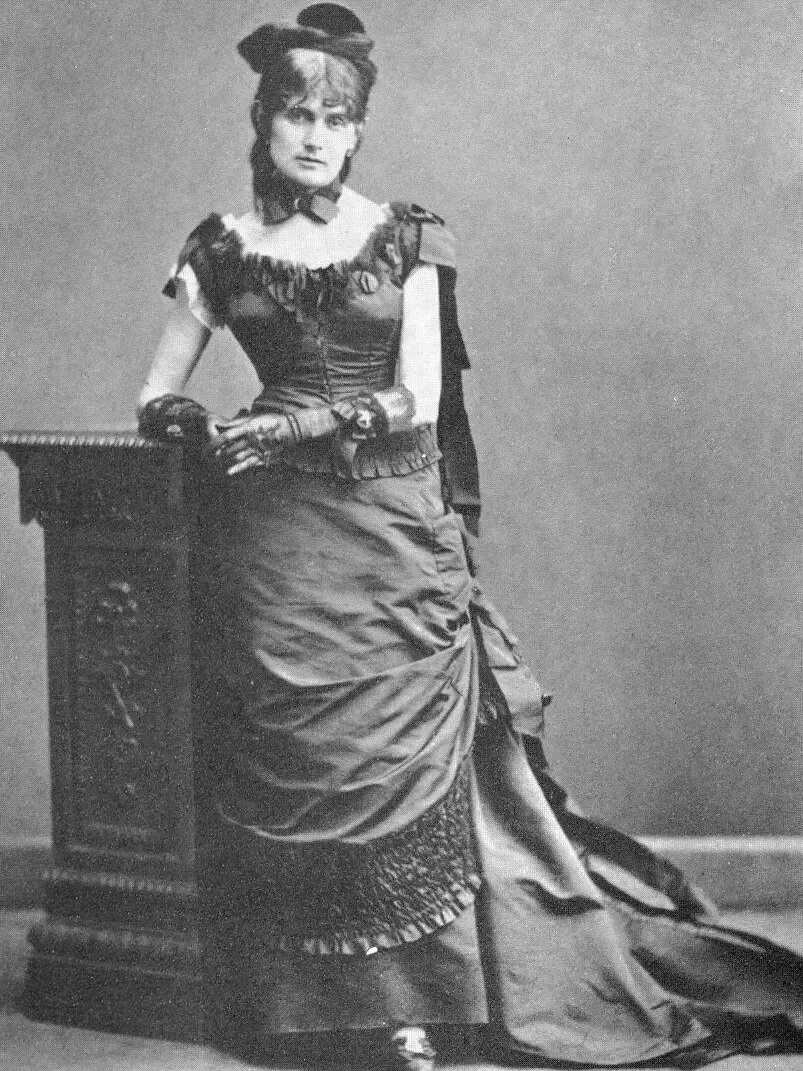
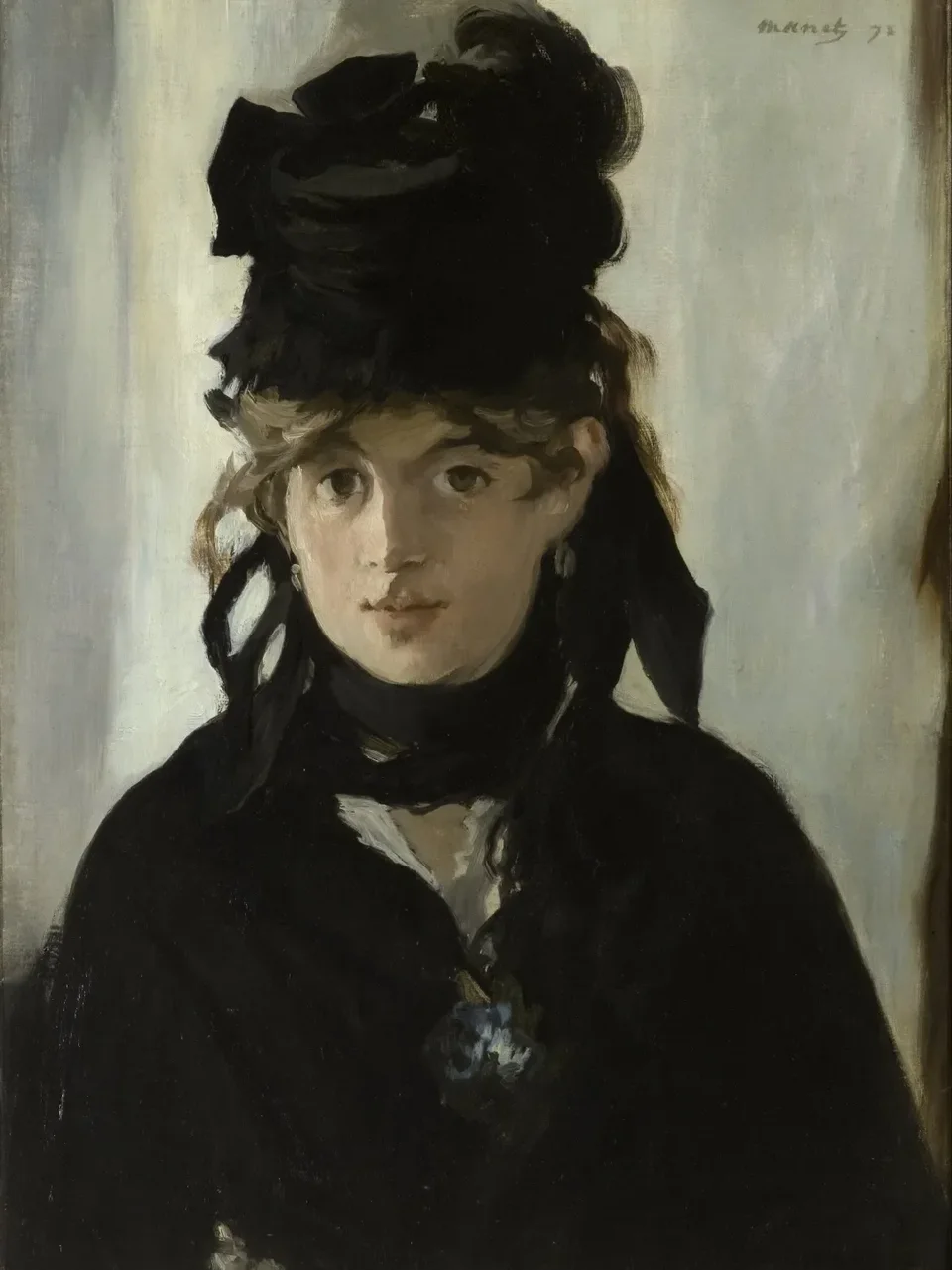
In theory, this causal relationship in photography is called "indexicality." We say a photograph has a very strong link to the thing it points to, its referent. We can think of it this way: the photo is here, the thing it shows is there, and there must be this pointing relationship between them. That is the basis of our belief in photographs as evidence.
But from the start, Ruff was opposing or dismantling this. Later he went so far as to remove the other end of the indexical chain, the "thing photographed." We know that establishing an indexical chain generally requires two things, right? A photograph and a thing photographed. Ruff removed the latter. In other words, he cut the chain from A to B outright. In that sense his later work goes further, but the distrust of the photograph's evidentiary function in his early work, and his questioning of it, already show him thinking about the indexicality inherent in photography since its birth.
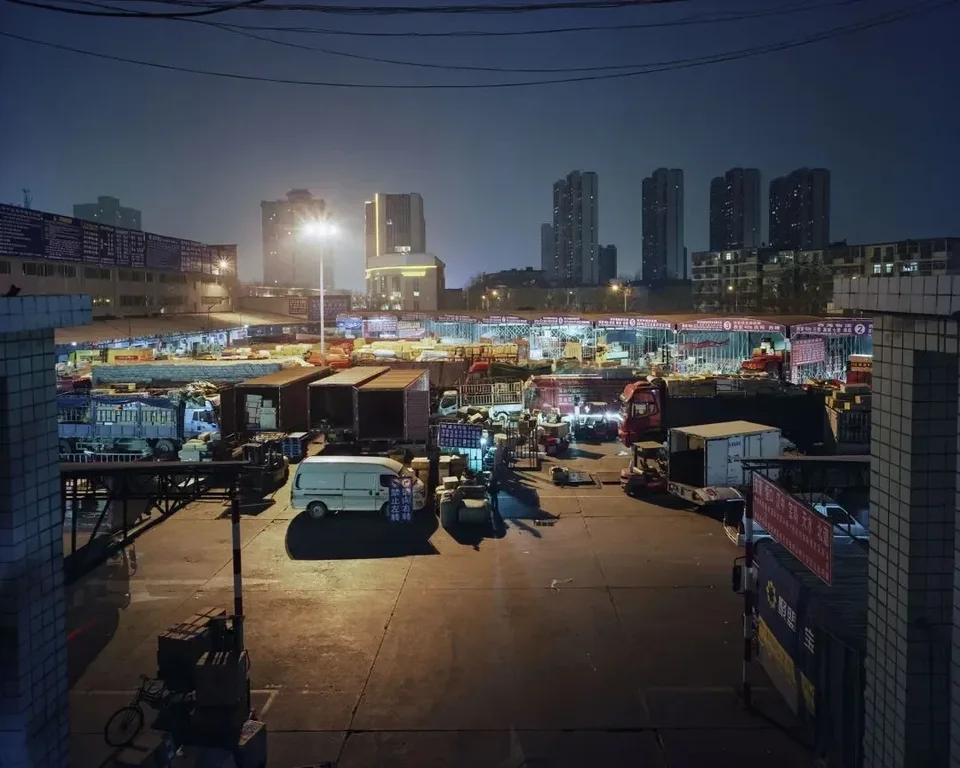
This also relates to Mr. Niu. Mr. Niu, I'd like to ask about your earlier project Express Delivery. That counts as an archive too, doesn't it? It's very clearly an archival work. After seeing the Ruff exhibition, do you have any thoughts on this?
Tong Niu
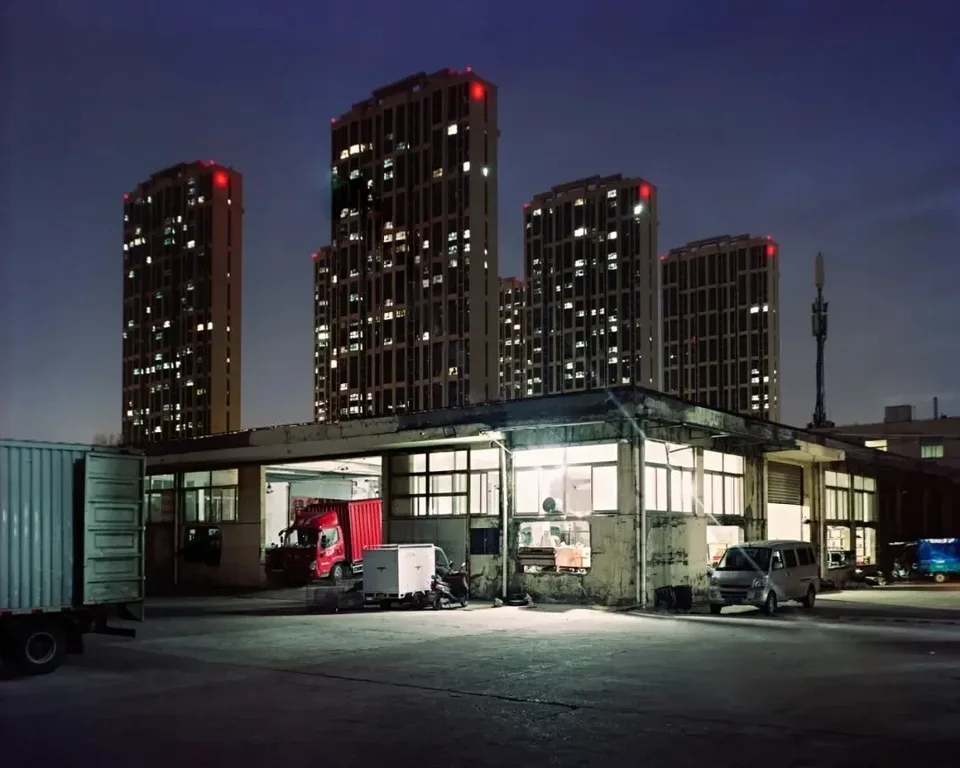
My own work, Express Delivery, was shot on large format. It includes portraits of the workers, their home addresses, their factories, and even the hometowns they travel back to for Spring Festival. It was a shoot spanning more than 1,000 kilometers across China and lasting several years, and it includes all their personal stories. So I definitely consider my work an archive. Yes, it is certainly an archive.
While shooting, I also drew on the approach of Hong Liang's Leaving Liang Village and her Liang Village Trilogy. The approach runs across literature, images, and anthropological documentary. My training, both at university and when I studied in Taiwan, leaned toward documentary about society or particular regions, so this way of working took root in me early on.
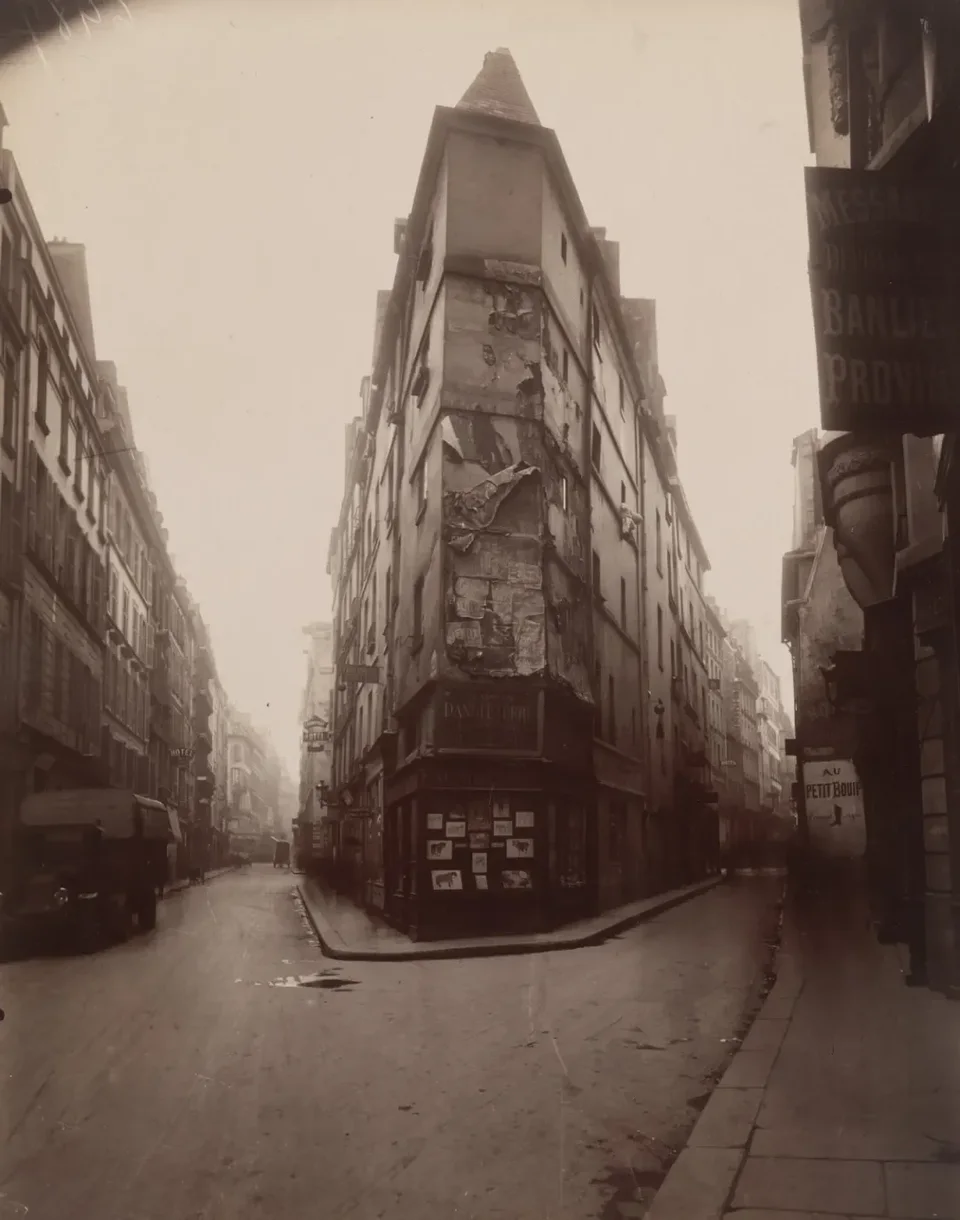
But here's where it differs. We keep discussing the origins of photography and tracing them back to Eugène Atget, for instance. He photographed empty French streets. Man Ray even said, "This is what photography is," and felt that his own staged studio work at the time wasn't photography. But in current research on Atget, we find that first-hand material is missing, and we don't know how he himself viewed photography. Atget also never considered himself an artist.
I've reflected on Atget's work:
First, he sold his work to archives, museums, and libraries, and to the institutions that commissioned him. In that sense, this lineage is seen as a kind of archive.
Second, in terms of how Atget worked (commissions, recording, presentation), he was a photographer.
Third, there are no people in his photographs, because the long exposures of large format erased people's movements. He may also have shot on overcast days, showing the city's empty streets. It is really an archival presentation of architecture, and he inadvertently captured what the streets of France looked like at the time.
As for Atget's personal identity, he never considered himself an artist, right up to his death.
From this I found an opening, or a starting point, for my own work: I consider myself a photographer. People often introduce me as a photographic artist or a young artist, but I always say, "I'm a photographer." That's the reason. I see the work I do as organizing the visual into an archive. Of course, archives inevitably lead to misreadings, or get reconstructed and dismantled in the future, and that process is exactly what interests me.
Second, I'd like to add a response. In his talk yesterday, Ruff shared what he cares about: first, he's very interested in photography; second, he's very interested in the universe and astronomy. His later work reminds me of astronauts. What's the first thing an astronaut looks at in space? The Earth. In that moment, they understand that they are in a vast universe and that everything in the world is tiny. Human archives, borders, wars, and politics all become tiny. Astronauts can become depressed after returning from space because they have gained a higher-dimensional experience of life. This is what we call "embodiment": you can only have that experience when you are actually there. After you return to the ground, that experience stays with you. Ruff is like that too. Other students of the Düsseldorf School, like Andreas Gursky or Thomas Demand, discuss changes in the world from a macro human perspective, such as critiques of consumerism. Ruff, though, has reached the level of the cosmos.
I think Chinese audiences should find Ruff's work relatively easy to understand, because we already have the concept of "asking heaven" (wen tian). The Q&A yesterday was fun in this respect: one audience member brought up Shitao. I think Ruff's opening may come from something like this idea of "asking heaven." Of course I don't know what he actually thinks, but it's one aspect that interests me.
Finally, Ruff now says his photographs are "shapes of light" and "paintings of light," which brings us back to photography's original element: light. It even recalls the consciousness of light in the opening of the Bible: "And God said, Let there be light," and so the world was created. To me, this is an idea of "asking heaven," a wondrous feeling that Ruff conveys.
A little more background for everyone: Ruff really gained wide international exposure through an exhibition at a museum in Amsterdam, titled roughly "Portraits, Houses, Stars." We can see a similar structure in this exhibition in Lishui. So his exploration of photography, the archive, human existence, and even the universe can give us a broader perspective on these things. As for what methods photographers use and how they shoot, that's for each of us to work out through our own life experience. I feel Chuanduan has been criticizing the archive all along, but we can understand it as part of how photography history changes.
Guosen Chen
Thank you, Mr. Niu. You've basically covered both of the topics I was about to talk about. Mr. Niu just raised two points. One is the difference between the artist's identity and the archivist's identity, with Eugène Atget and Ruff as examples. The second concerns the Stars (Sterne) series, in which Ruff explores regions of the universe beyond our human experience.
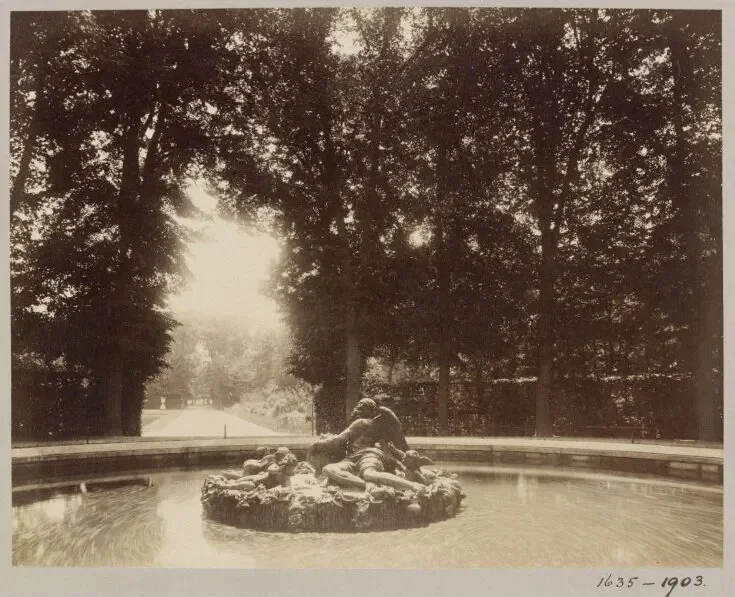
Let me pick up on that and explain why it matters. First, you mentioned Eugène Atget. We know that every one of Atget's photographs has a number in the lower right corner. Many art historians at the time wondered: since Atget was an "artist" with such an accomplished style, surely his numbering followed some meaningful logic? So they tried all kinds of ways to explain why a certain type of work had a certain number. This effort went unfinished for a long time, because they found too many contradictions in the numbers. Some were repeated, some overlapped or had gaps. No one knew how they were assigned; people had assumed they followed some style, typology, or artistic intention. Eventually they discovered that Atget sorted them entirely according to the classification rules required by the archives, libraries, and commissioning institutions, many of them topographical. His numbering was purely a practical index with no artistic purpose.
But Ruff is different. Ruff places particular emphasis on the act of enlarging his Portraits. Enlargement clearly has one effect: it makes the work look more like art. He mentioned that when he started working in the 1970s and 1980s, photography was not yet widely recognized as art. After Ruff enlarged them, they became works made specifically to hang on a wall. You'll find that the work's relationship to you changes. We usually look at photos the way we look at this catalogue, holding them in our hands, as if they were part of us. But in a museum you can't hold a painting in your hands. By making the photos so large, Ruff forces us to keep our distance from the wall and look at them the way we look at paintings, which lets photography stand on equal footing with painting. Ruff himself acknowledges this as an objective effect of the work at the time.
In other words, Thomas Ruff and Eugène Atget both work with archives, but the biggest difference lies in how each understands his own identity and his relationship to art. Atget's motto was "documents for artists," while Ruff believes "I am an artist myself," and he wants photography, in his hands, to become a medium qualified as art. That's the first point I wanted to add.
The second point I'd like to add concerns what Mr. Niu just said about the universe and transcendence. If I were to use another keyword to understand Ruff's work, I'd use a word most people probably wouldn't: "horror," or in English, something close to "uncanny."
Why? Let's first look at the photographs, for example the works from tableaux chinois in the catalogue. Many of his jpeg works, and Stars too, share a visual trait: they're blurry, with a kind of ghostliness. The mosaic-like pixelation, tableaux chinois, the jpeg series all show this blurriness.
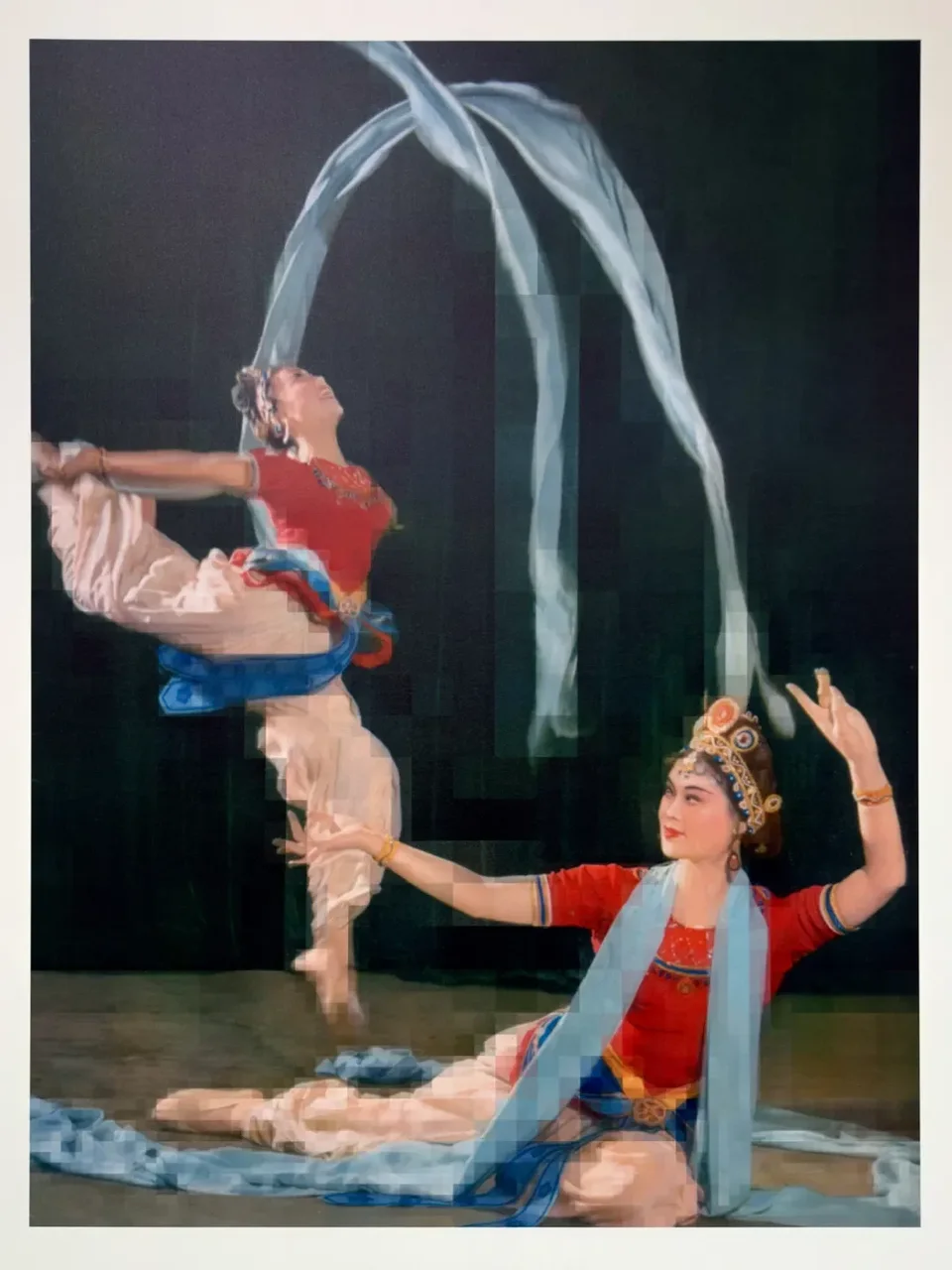
This makes me think of "ghosts." When we talk about ghosts, we usually picture something blurry and indeterminate. But why do ghosts frighten us? Not because they're seeking revenge. Imagine a ghost standing in front of you that has nothing to do with you. Would you be scared? We would. What are we afraid of? We have no idea where the ghost comes from, why it's here, or whether it is alive. Its entire order differs from ours. We also say the order of hell differs from that of the human world. It is this fundamental difference in order that gives us an "uncanny" feeling. Philosophically there's another definition: the uncanny must be the return of something familiar and often repressed. The English noun for this is "revenant," one who returns.
In Ruff's work, you'll see that his black-and-white portraits (Other Portraits) use German police equipment from long ago. His tableaux chinois uses the visual schema of the propaganda posters most popular in China from the 1950s and '60s through the '70s. It is a 2022 work, yet it is deeply historical. His jpeg series uses major events like 9/11 and volcanic eruptions. These are all objects within history, or objects dredged up from history.
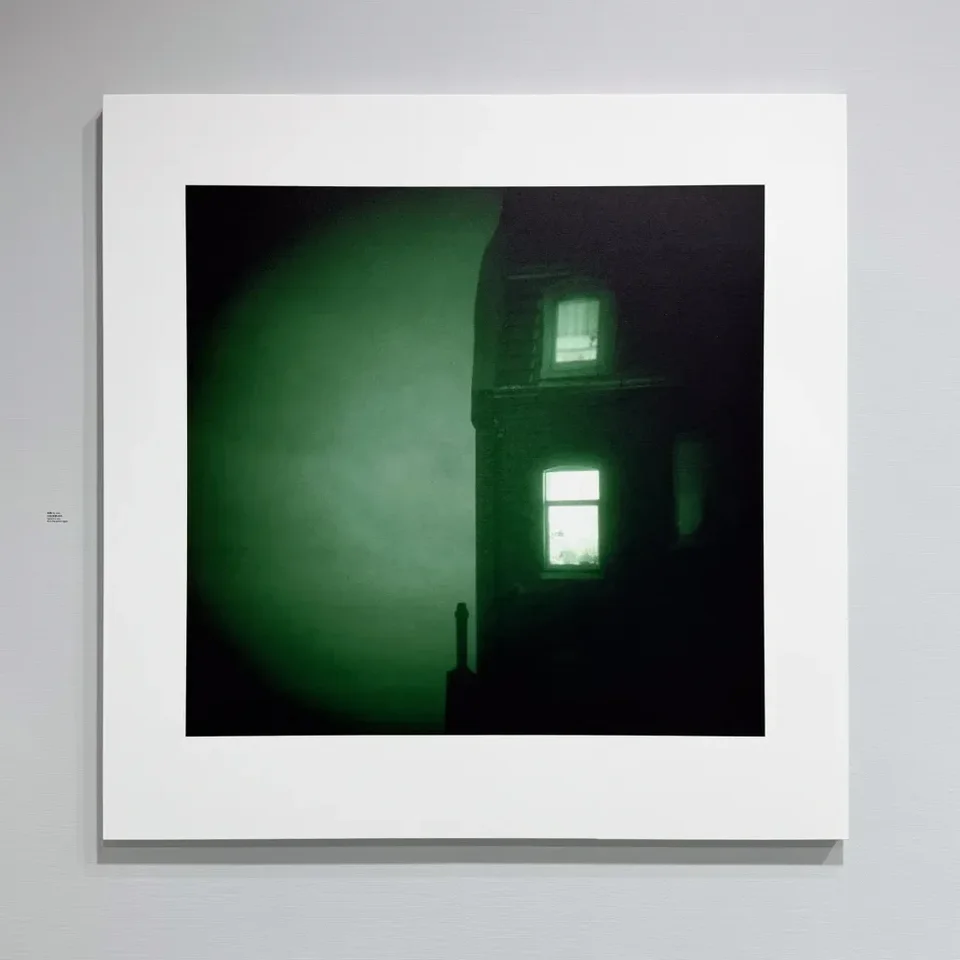
This also shows the fundamental difference between Ruff's archive and the archives of Eugène Atget and Mr. Niu. Ruff is concerned with the "afterlife" of images in the archive. Once an image enters an archive, its life seems to be over and fixed in place. But Thomas Ruff, as if digging up ghosts, unearths them again and makes them into his own work. This relationship between the image's afterlife and the archive is what makes Ruff's archive different. For both Mr. Niu and Eugène Atget, it's "I'm recording now" or "I'm going to make something now." Thomas Ruff instead excavates the images' afterlife. He treats images as dead ghosts, and on a sensory level he also gives you a floating, uncertain feeling you can't pin down.
From another angle, I'd point you to two groups of works. One is the jpeg series I just mentioned; the other is all his works related to NASA, observatories, and galaxies.
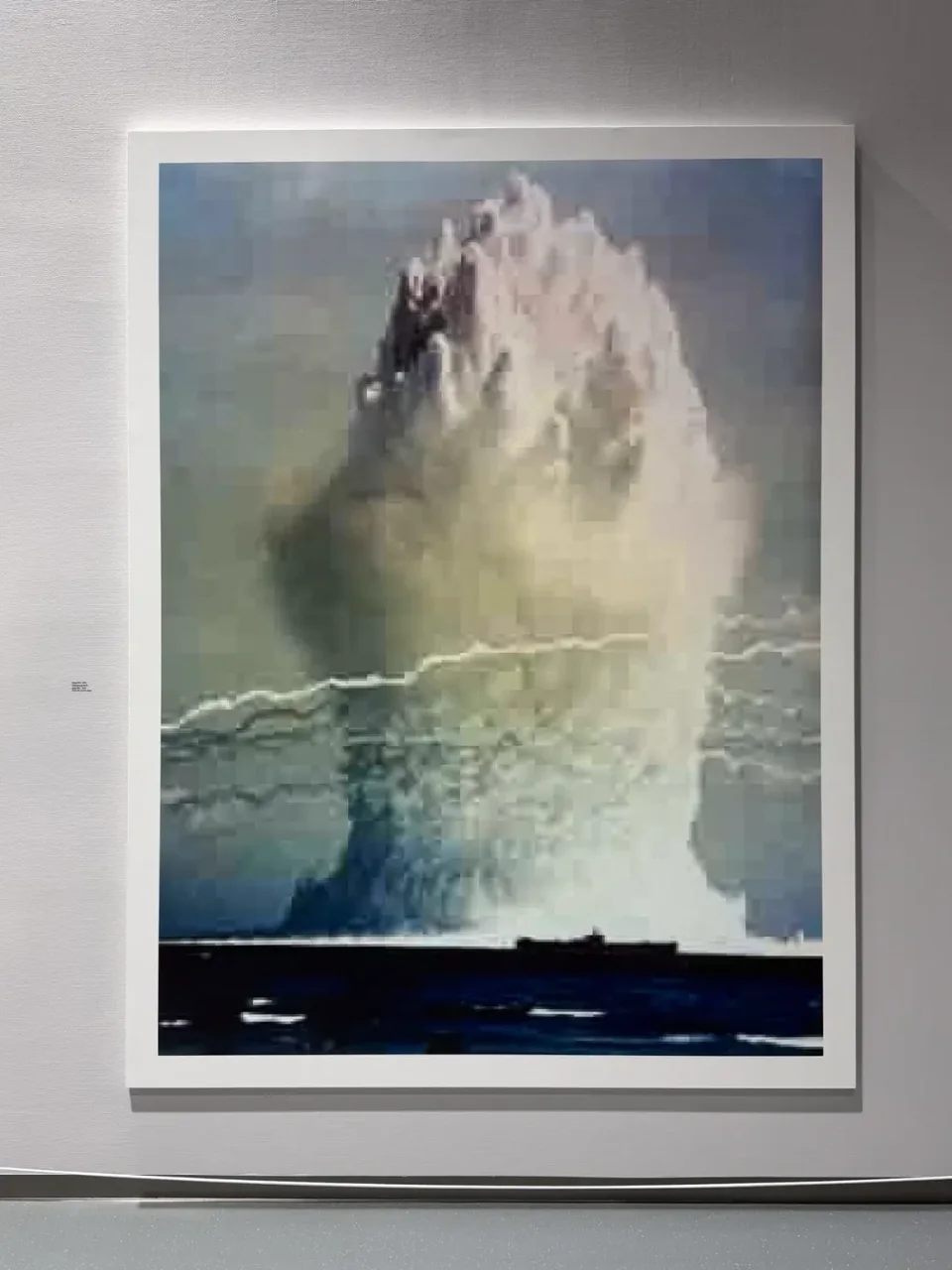
First, the jpeg series. As you heard yesterday, when a jpeg image circulates on the internet, it gradually degrades and blurs the more times it's passed around. Ruff took originally sharp photographs, enlarged them, and let the compression artifacts break them into mosaic-like blocks. Generally, enlarging brings us closer to the subject, but everything he does moves us away from it.
By moving us away from the subject, what does it expose? If we grasp that the jpeg series actually exposes a fundamental property of this medium, namely that it degrades as it circulates, you can understand it as Ruff exploring the infrastructural level of the jpeg. That level can only be exposed through this kind of formal treatment. Otherwise we would just see an ordinary image.
This means there is another world of images that we humans cannot see directly with the naked eye. Suppose jpeg images had lives: they would keep degrading as they circulate and keep losing the right to be recognized. This means there is another, different world of images that we humans cannot understand. The law by which these images degrade is precisely the deepest defining feature of the world those images inhabit. Thomas Ruff exposes this and reveals to you that the world of images is not necessarily all related to people. Images also have a part of their own that has no direct bearing on your life and that you can't understand from your life.
The German artist Harun Farocki used the term "operative images." Operative images are images not produced for people, not made to be seen by people, and not meant to represent people. Examples are machine recognition in factories or surveillance cameras on the street. The images they capture aren't meant for you to look at at all; they are meant to "operate" on you. With images, people become objects to be operated on. Another example: in flower factories, there's a technology that uses photographs to judge whether crops are ripe and harvest them. That isn't meant for people to look at either, but through circulation it produces an effect, an operation, acting on people and on the world.

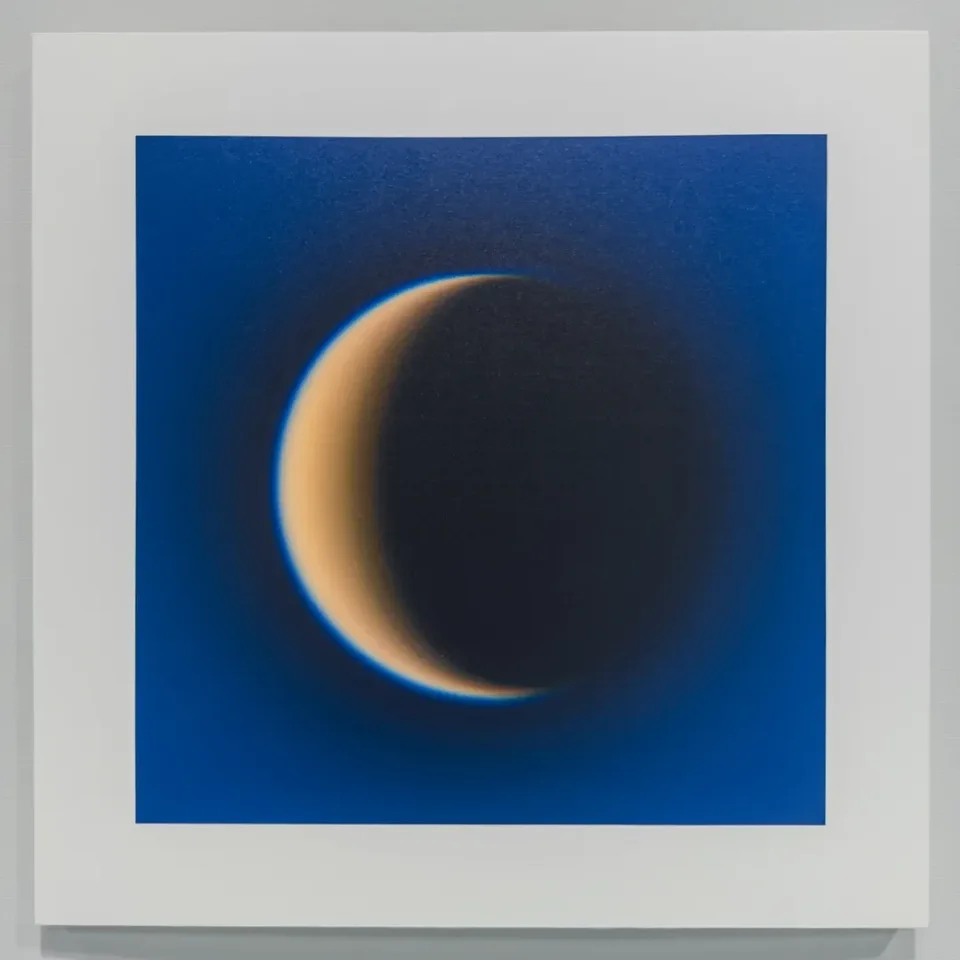
On this level, Ruff is revealing to us the existence of a world beyond our everyday lives. That brings us to the second strategy. Another such transcendent world is the starry cosmos and the stars we cannot comprehend. All of this is, for us humans, something alien, existing in an order entirely different from ours. So it is the other side of this transcendent dimension.
That's roughly what I wanted to add, following on from Mr. Niu. I think we've talked enough. I'd like to hear whether anyone has thoughts after seeing the exhibitions in Lishui, or any questions.
Huapen Yu
Along these lines, we might discuss a topic many people at this event are interested in, which was also where we began: AI. Yesterday Ruff said, "AI is shit." That amounts to his own attitude. I'm inclined to see it as an attitude, not necessarily even a judgment.
There are many ways to understand this attitude. When I saw the related posts yesterday, many possibilities came to mind. The first is a rather crude reading: Ruff, as someone who already holds a high position of power in modern art, instinctively turns conservative when faced with something new and rebellious. That's one angle. The second is that he rejects AI itself as a tool. The third possibility is that he thinks AI, as a tool for generating images, may erase something precious from the past.
So I'm really curious: did he explain himself at this morning's symposium? If not, do you see other possible readings of his judgment yesterday, or of his attitude toward AI photography? We've been saying all along that he's a rebel and an innovator. Yet as an innovator facing an innovative medium and tool, he takes a critical, even conservative stance. There's a deep contradiction here, and I'm curious how you see it.
Guosen Chen
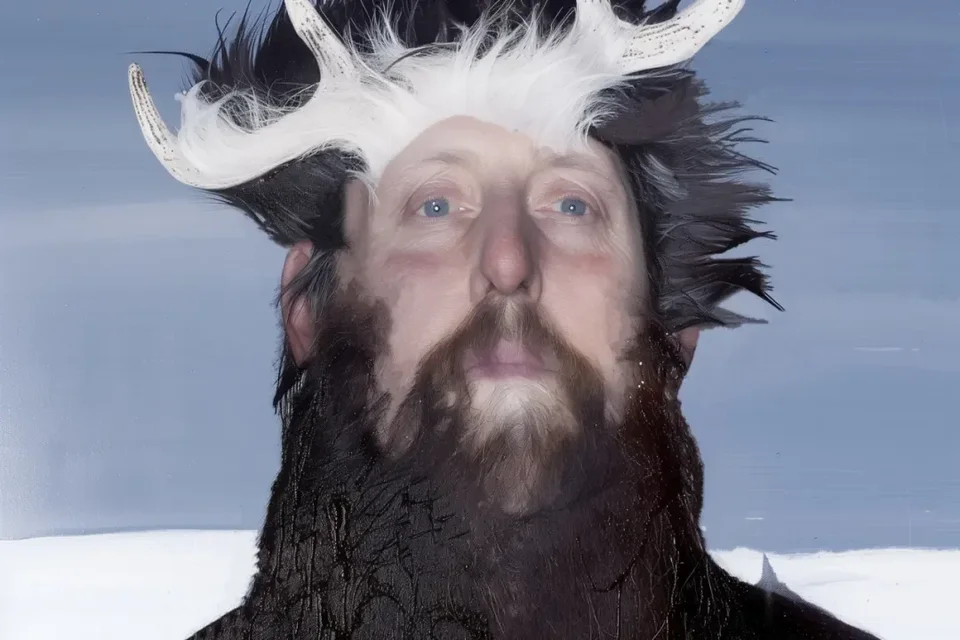
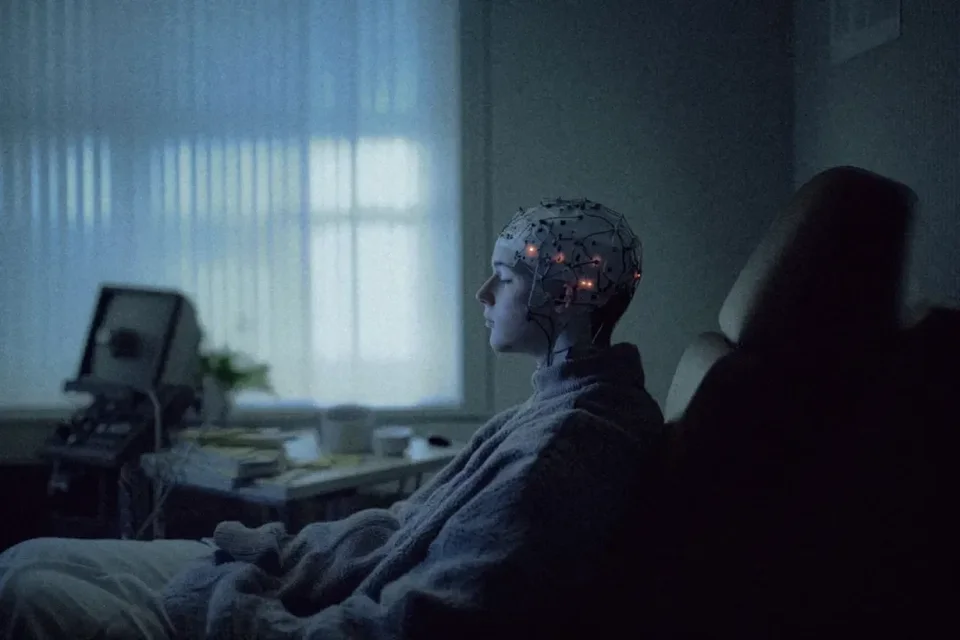
Let me start with a bit of gossip. Ruff opposes AI because he thinks AI can only summarize what already exists. At this morning's symposium, there was an expert who has spent about two years doing AI annotation work for Huawei. He challenged Ruff face to face, saying AI is not what Ruff imagines. He broke down how AI currently works and said he thought Ruff might use AI in his own work someday. Ruff then responded this morning that he might indeed use AI in the future. Although he called AI "shit" yesterday, that doesn't mean he's truly a rigid or old-fashioned artist. We can think of him as a craftsman, an exceptionally skilled one. He has his flexibility, and that doesn't mean he rejects AI entirely. I also think his understanding of AI yesterday was somewhat one-sided, so he still has room to "grow." Once he becomes familiar with it and realizes AI isn't what he thought, he may well produce some new work. Mr. Chuanduan is an AI expert; his The World in the Belly of the Giant Serpent was made with AI. What do you make of Ruff's remarks yesterday?
Chuanduan Chen
I wasn't there yesterday. But given what I know of Ruff's work, I had assumed his attitude toward new technology would differ from the conservatism of those predecessors I mentioned, the ones who occupy high niches in photography history. I agree that before today his understanding of AI may have been rather one-sided. I'll just say it plainly.
But I want to say that AI is different from all the new technologies that came before, whether camera imaging or the path you (Guosen) just described from B (the thing photographed) to A (the camera). AI broke with convention from the start. It differs from everything new before it because AI already has creative capacity. That, I think, is the point where it most needs to be disciplined and regulated.
Before last year, when I discussed AI as a medium with experts, they knew me as a conservative. I would say outright that AI is not photography, that images made by AI can't be called photography, and that AI should be regulated because it's unlike anything before. So I'm conservative at heart. But because my own work uses this tool, people see me as a radical, even as someone with a vested interest in AI technology. That has made my attitude toward AI very conflicted.
But you just mentioned that Ruff showed a more open attitude at this morning's symposium. I think that's a good thing. I also hope people can move past one-sided understandings of AI. Often that one-sidedness is conservatism born of not understanding. But once you start trying it, another kind of conservatism can set in. For example, you draw a firm line between it and photography.
I love Tong Niu's metaphor: when we stand on the Moon, we instinctively look back at the Earth. Once I realized AI could be another image-making tool besides the camera, I used it entirely within the context of photography. If you know my earlier work Giant Serpent and can see the complete piece, you'll find it's actually documentary photography. Just as Tong Niu did with Express Delivery, I used AI to point all the events, portraits, families, and landscapes I care about toward a highly readable, comprehensible archive. I still place it in the context of photography. In fact, that body of work isn't entirely digital images. Perhaps 60% are straight photographic images, and AI is just another camera for me.
In that sense, I thought of myself as conservative. But for audiences, it's a bit like Ruff before today: they place AI in a very radical, destructive, even arrogant position. I strongly encourage you to get to know it. You'll see where its limits are, and that it can never shake photography's position as an artistic medium. I hope you can treat it as another possibility. It really is just another kind of camera.
That said, I think feeling panic or unease about it is also a great way of turning a demand back on your own creative path. If you feel your work is being challenged by AI, well, I genuinely think current AI is still very rudimentary, like a four- or five-year-old child, and can do very little. There's a contradiction here. On one hand, I think its ceiling is underestimated. I've used it to experiment with land art and even image installations, and I realized it poses a clear challenge to my work. That's the general underestimation. On the other hand, there's an overestimation: people think it will disrupt and destroy many photographers' work. I think this should be turned into a demand on your own work. If your work can easily be replaced by this emerging medium, and what you focus on can easily be copied, that should push you to ask whether your photography can have something harder to copy or replace, something more personally distinctive.
Because I imagine that if Ruff faced a new technology like AI, he would certainly think about this too. He would never treat it simply as a substitute for or an intrusion into photography. He'd definitely think further. I don't know if you follow "digital imaging" or "artificial intelligence art." Note that this is not "AI photography." Here's something interesting: I see the phrase "AI photography" almost exclusively on the Chinese internet. It's almost only on the Chinese internet that the two are talked about together. Really. In foreign magazines and art websites, like Aperture or other outlets discussing art, people don't link AI and photography so tightly. So this is an information bubble. I haven't seen, in other discussions, anyone who loves asking about "AI versus photography" or "AI photography" as much as Chinese photographers do. I think there's an information bubble here. If you look into "artificial intelligence art" as a medium, you'll find it was never within the scope of photography discussions to begin with. Given Ruff's working habits and his return in recent years to materiality and physical optics, I suspect that when he faces artificial intelligence, he won't tie AI very closely to photography. I firmly believe he would treat AI technology as an independent artistic medium, not as "AI photography."
But I also want to name a bias. It's the bias people have toward AI, and even toward my work. I'm a conservative when it comes to AI; I placed AI within the context of photography. But if you put my work into the international contemporary art field, I'm very traditional. I'm essentially using AI as the "evidence" I just criticized, so I'm a conservative. The ceiling of AI art is actually very high. You may have seen works using AI images at contemporary art exhibitions or biennials. Look into a curator in China named Long Xingru. The artists she works with understand artificial intelligence in ways that lie outside the language of photography.
So I think people's approach to AI is limited both by an information bubble and by a lack of confidence in their own work and in the photographic medium. That's what needs to be discussed and resolved, rather than crudely asking every art master, "What do you think of AI photography?" From the questioners, and from how fixated many Chinese artists and photographers are on this question, I can sense they already have an answer in mind. They're eager for the masters to reject AI. I don't know if you've sensed this, but I think people who ask this question have an expectation. They want the master's endorsement: "Will you join me in rejecting AI, rejecting artificial intelligence, rejecting new technology?" I think both the questioners and the online discussions carry this expectation. But I've been hearing this one-sided rejection for two or three years now, and I've taken a lot of criticism of this kind. I truly think it's the most boring and meaningless question in the whole discussion of AI. Of course, that's my personal view. But I'd urge you to be wary of two things. First, the information bubble around the term "AI photography" in the Chinese internet and in Chinese-language discussions of photography. Second, this bias against new technology is, at its core, insecurity and fear stemming from a lack of substance in one's own work. I know I'm being rather sharp, but this is only my personal opinion.
Guosen Chen
If you're interested in this topic, last March we held a joint session with the Wuzhi Society, a wonderful global community of young researchers, and I later edited the transcript. It was about the Winter 2024 issue of Aperture, published in December, which was devoted entirely to the relationship between AI and photography. If you're interested, search WeChat for "When the 'Shutter' Becomes the 'Generate Button,' Is Photography Still Photography?" You should find that talk, which runs to ten or twenty thousand characters. In it I survey the Aperture essays on the relationship between AI and photography.
I'll make just one point, because over the past two years I've seen so much discussion of AI and photography that I feel exhausted whenever the topic comes up. But I believe critiques of the relationship between AI and photography urgently need a direction and a path, and that is infrastructural critique, critique in the materialist sense.
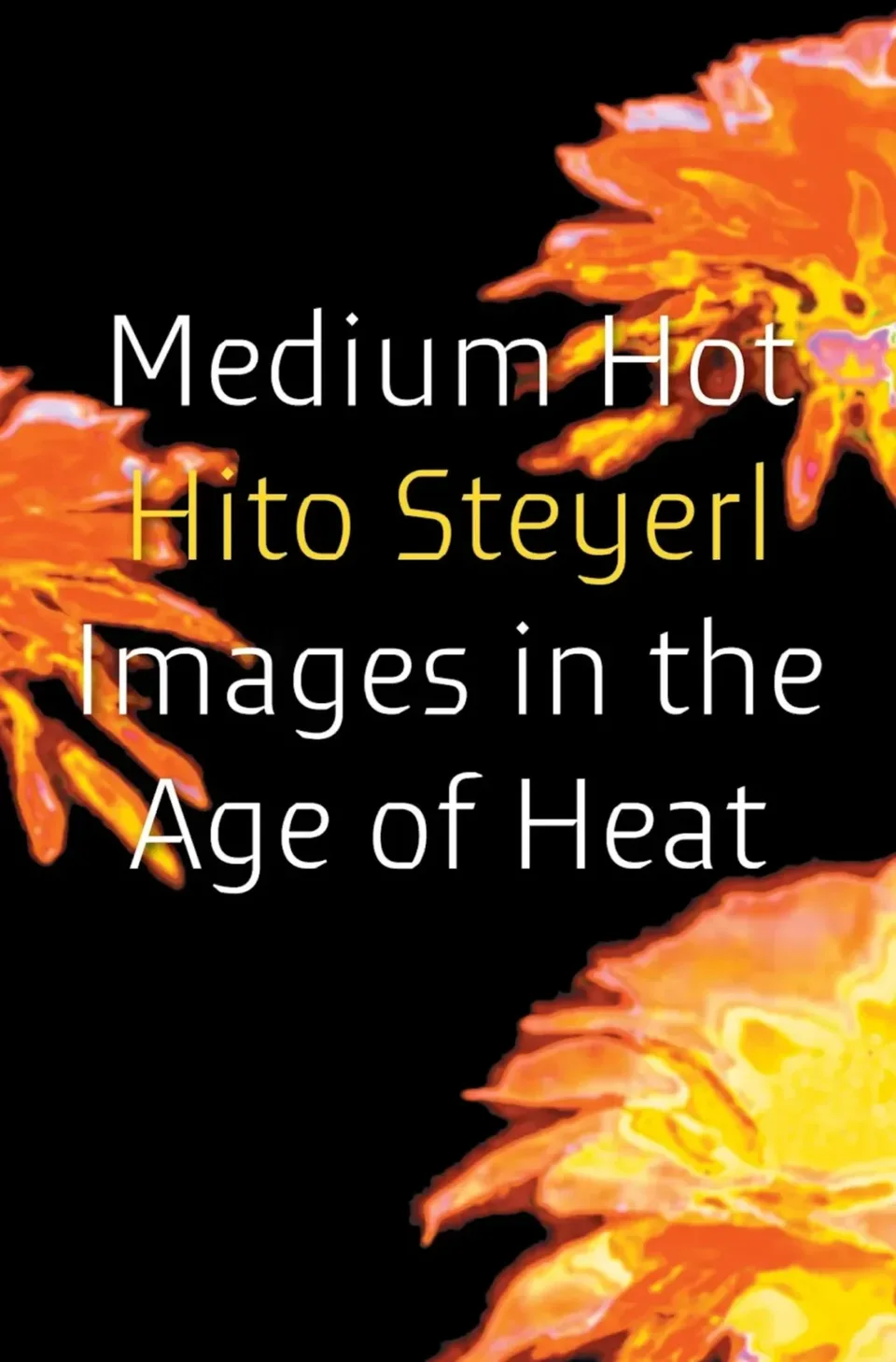
Infrastructural critique means asking: what datasets is AI trained on? What are its alignment strategies? How much energy does it consume? How does it produce images out of nothing in the material world? Only critique on this level can lay the groundwork for later questions like "Does AI have creativity?" If you start by drawing a line of opposition between humans and machines and say "AI isn't human, so it can't do this or that," I think that claim is both crude and ineffective. As for infrastructural critique of AI, there's the post I just mentioned: every relevant article in that issue of Aperture is doing infrastructural critique. There's also the well-known German artist Hito Steyerl's recent book Medium Hot, which likewise addresses how images are changing in the age of AI. She argues that we should now replace the optical paradigm with a thermodynamic one. She sums up her conclusion with a key idea: AI generates "entropy-decreasing" images by increasing entropy in the real world. "Increasing entropy" means it consumes vast amounts of energy and labor, making the physical world more chaotic. Yet what it presents to you is an image that tends toward order, that is, "decreasing entropy." That's her basic idea, and it too is infrastructural critique. Those are some of my thoughts on AI and photography.
Also, at this morning's symposium, Mr. Rong Jiang specifically discussed the difference between "image" and "picture." Like him, I prefer to translate "image" as yingxiang. The "image" has a broader scope and meaning than the "picture" (tuxiang). "Picture" refers more to a static image printed on paper. Cindy Sherman, Sherrie Levine, and others are called "The Pictures Generation," not "the Images Generation." But with the word "image," people like Harun Farocki or Ruff are thinking about images, no longer pictures. So all kinds of AI-generated images, or camera-less images made in laboratories, fall within the category of "image." That's why I keep using the word "image."
Finally, let me ask once more: does anyone have other questions?
Audience Member 2
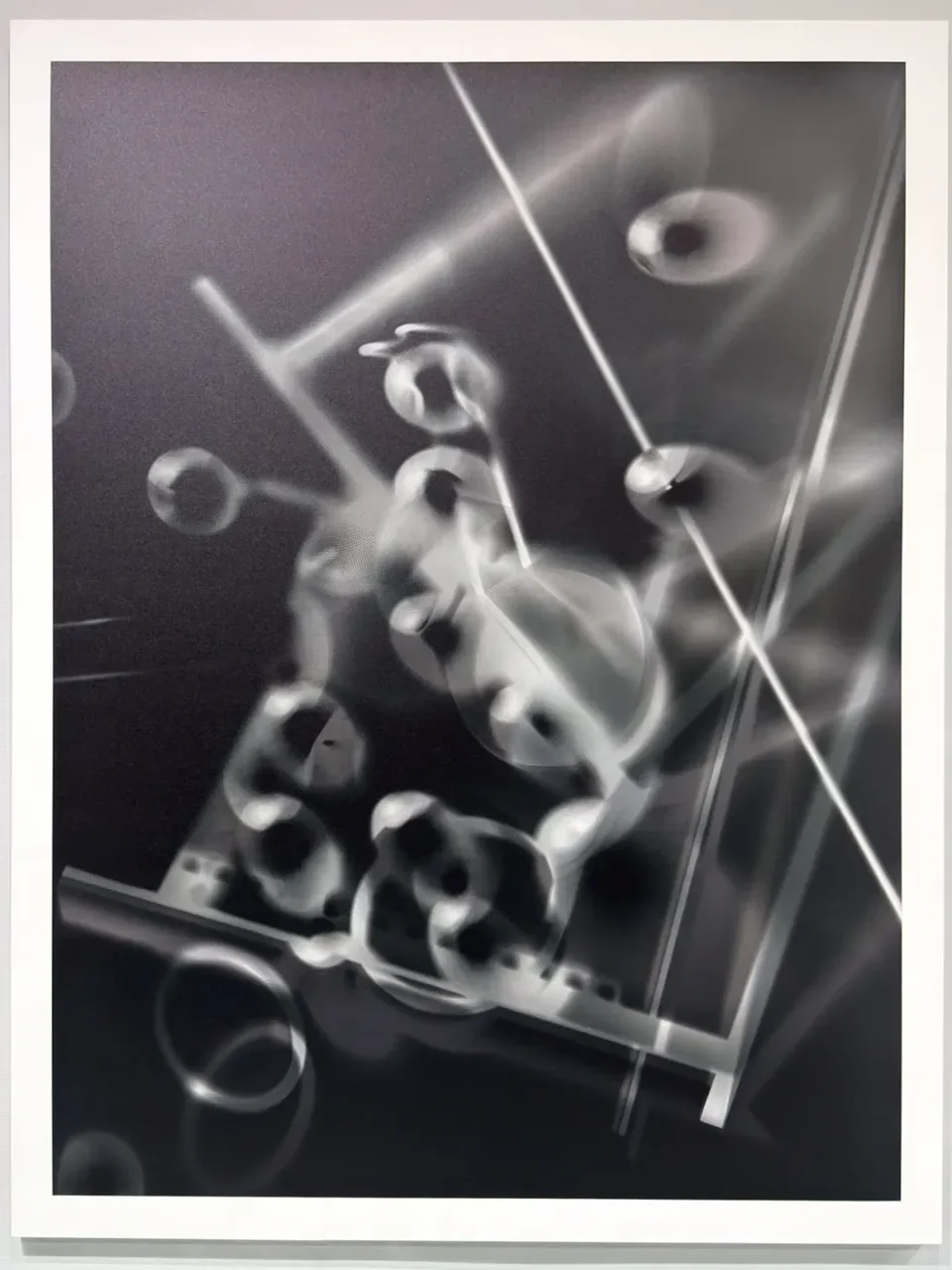
I'd like to ask about context. Take Ruff's recent works in particular, whether the Photograms or those visual works about drug-induced hallucinations. On social platforms like Xiaohongshu and in all kinds of media, there are plenty of people making this sort of visual work. If Ruff hadn't printed his works large and put them in an exhibition hall, but had instead let them blend into the internet; or conversely, if those online artists printed their works large and exhibited them in museums; or if galleries and the related industries were abolished, would his work still be as outstanding as it is now? Would his work still be able to use so-called academic discourse to shelter within this art territory?
Chuanduan Chen
I really like this question, because in my classes I stress the idea of an artist's "ecological niche." First, a hot take, one that comes from advice a close friend gave me. Her point was that as creators we shouldn't blindly chase uniqueness and innovation. She thinks 99.99% of photos have already been taken, so why should the most innovative work necessarily fall to you? I don't think it necessarily will. We might as well let go of that demand on ourselves first.
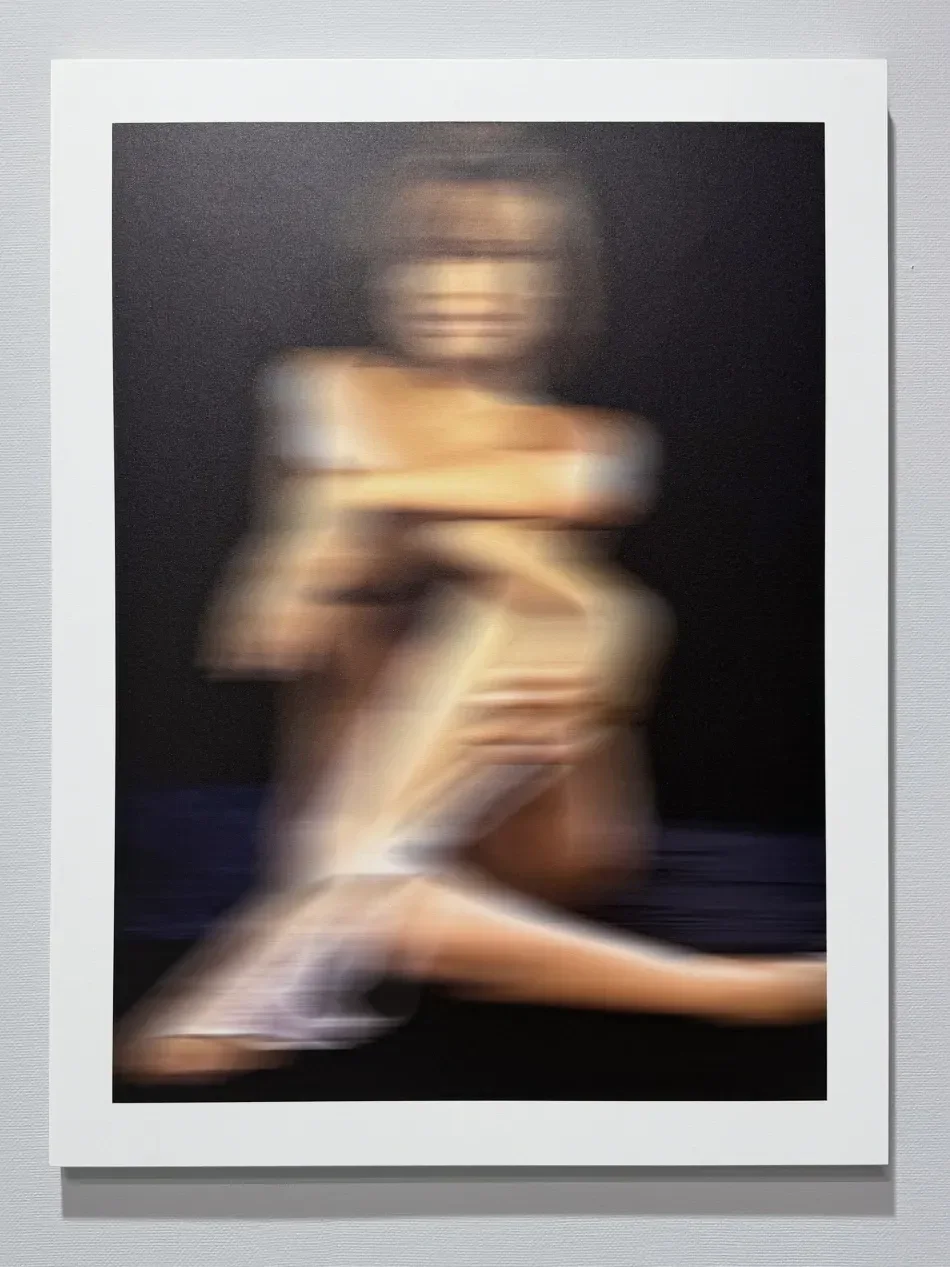
Another point: have you noticed that Ruff made the Nudes series using low-resolution images ten or twenty years ago? On the first floor of the venue, you'll also see similar work by another artist. Why is it Ruff we're discussing as our topic, and not that artist? What I want to say is that the art world, including the photographic medium, has ecological niches.
Sometimes I really dislike this: why is it only their work that gets discussed in such elevated contexts, with its artistic value overemphasized, becoming the benchmark? Why not mine? My attitude is this. I accept that barriers exist. I accept a phenomenon I dislike but that objectively exists: the "Matthew effect," where the winner takes all and the rich get richer while the poor get poorer. Once you reach Ruff's position, every little move you make gets elevated to a very high level of discussion. You'll see this on the art scene both in China and abroad. So art and photography can't deny the existence of a pyramid structure. Some high-niche artists are simply assigned to that position. Take cross-media or archive-based art, for example. Many people have done it, so why do these particular people get exhibitions and invitations and spark heated discussion? I strongly encourage you to disenchant this niche, because I personally really dislike the pyramid structure. I want everyone's work to be seen, anticipated, and respected. But I've realized, with some resignation, that if I want to dismantle the pyramid, I have to work twice as hard to reach the top of it in order to bring it down.
So the point you raise is very interesting. And in most venues and discussions, we're usually not in a position to say this openly. Do you understand? We can't say it publicly. But I very much hope that as creators you can disenchant and dismantle authority. Yet the way to dismantle authority shouldn't be arrogant rejection. Of course I see many voices on the internet, for example about a certain incident involving Stephen Shore in recent years, where you'll find different opinions online. Some defend authority: "Masters should be respected; the people down there playing on their phones don't get it." Others suddenly become very rational, very critical, full of independent spirit: "His work is long outdated. Why should we coddle masters like this?"
I think merely voicing an opinion is the lowest-cost effort; merely expressing an attitude doesn't matter much. You have to speak through your work, your practice, and your language. Take the Aperture issue you (Guosen) just mentioned. Xin Li, who also works in education and makes art, showed me that issue and said, "Chuanduan, you use AI, you should take a look." I went through all the works in that issue, and I had a feeling I didn't dare tell anyone: I felt that my approach and my work, in both completeness and depth, were no worse than those included in Aperture. Why are they the ones being discussed? Why, when people talk about AI images, do they feel this issue is unavoidable?
I felt somewhat indignant at the time, and my strategy was: I must do better than them. This is what I call "imaginary opponent" thinking; I've talked about it in class. If you treat these giants, these unavoidable, high-niche artists, as "imaginary opponents" (in quotation marks), that doesn't mean stepping on them. It means treating their work as a baseline, a passing grade of 60 out of 100, and trying to do better. For example, Ruff is now working on photograms and on how physics intervenes in photography, and he uses night-vision cameras and archives. I use them too. My logic is that the best way to dismantle them is to do better than them, not just to talk.
So I see many voices online trying to dismantle authority. On one hand, I support this critical disposition and capacity for independent thought, because I welcome critique and independence more than the perpetual maintenance of authority. But I want to say that work, one's own practice, really matters. Of course, everyone has their role: critics dismantle through ideas, and we as creators should dismantle through our work. I think this is a really great question.
To all the young people: if you've already become aware of this issue, that's excellent. I'll tell you this: they are not the only answer, they are not absolutely right, and they can be questioned. Of course, respect is one thing and creating is another. This issue should be faced squarely. We can't assume that just because they occupy high niches, they're the best or the only ones in this field or context. That has always been my attitude, and it's what I've been doing these past few years. Honestly, it has gradually put me at odds with a lot of people in the industry. So what I mean is, if you've noticed this issue, that's great. Use your work to make yourself seen. I think that's enormously important. It really is a great question.
Guosen Chen
I have some reservations about Chuanduan's attitude. I tend to reject a mindset of struggle. I've always believed that if we want to build a new ecosystem or system, what we should do is learn to unite and protect one another. Only on the basis of mutual protection and respect can we build an equal and diverse ecosystem. Whether it's "imaginary opponents" or a competitive mindset, these are things I don't want to do in my own practice.
This is also what our photography theory community has always wanted to embody: we don't choose struggle as the way to build connections. We don't need to set up an enemy and say "we must oppose so-and-so," that we must oppose the "old masters," or oppose some kind of hierarchy. When we discuss a question or a person, we just need to discuss that person or that work on its own terms. If we gradually do that well, then even if struggle is truly needed, we first need to unite to have strength; otherwise things might get even worse.
Now let me respond to the question just asked. My view is exactly the opposite. First, nothing can exist apart from context. So for me, the question's premise doesn't hold.
Second, none of Ruff's work could have succeeded without an awareness of context, never mind whether it ultimately depends on that context to circulate. You'll find that all his work is closely in step with his era and his life. The subject of his Nights (Nacht) series came from TV footage of the Gulf War. Yesterday he said he felt "angry." This morning he corrected himself (English isn't his native language) and said his feeling wasn't anger but being "upset," because he saw people consuming war, so he made that series. His whole practice has also changed along with the shift from analog to digital. This morning, both the curator and Ruff himself mentioned that shift explicitly and repeatedly. So from the standpoint of creation, Ruff's work is extremely context-dependent, so much so that random events in life can spark his work. To return to the Gulf War example, as you heard yesterday, he said he was shocked when he saw those images. That too shows context at work.
So don't simply reject a given context. What we should explore is how context and object actually relate to each other, and why they relate in that way. Just like the Portraits I discussed at the start today, only by placing a work back in the setting where it arose can you understand it more deeply. And in your own work and its circulation, you likewise need to stay sensitive to context. Whether you choose to resist it or go along with it, you must always stay aware of what's happening around you. That's also the essence of Stephen Shore's work: at every moment, truly noticing everything happening around him and the state of every person. Without that heightened attention to his surrounding context, his work could not look the way it does. That's all from me.
Tong Niu
I'd like to add one more point. If we go back to when Ruff was a student, the art world had not yet truly accepted photography, and neither had art academies. You may not understand what that means. I came out of an art academy, and in China, photography programs have always been very marginal within art academies, both in institutional standing and in how the discipline is built up. As you all know, photography still doesn't have first-level discipline status, and all of this is disheartening.
But I think Ruff stood in the best possible era, because photography was in the process of becoming art. Such a moment wouldn't have come 50 years earlier or 50 years later. That was also because photography was becoming something artists could use for expression. Gerhard Richter used family photos as an intermediary for expression in his paintings. Even earlier, One and Three Chairs used a photograph, text, and a physical object to make a philosophical argument. Then came Ruff, who stood right where the wind was blowing. It's undeniable that his era shaped him. He pushed forward step by step along the very clear line we've just discussed, up to the present. Yesterday was funny, too: while I was looking at the exhibition, someone next to me said, "I could go home and shoot like this too." Now we can see how absurd that remark is, because we understand how he was shaped by that era and that path.
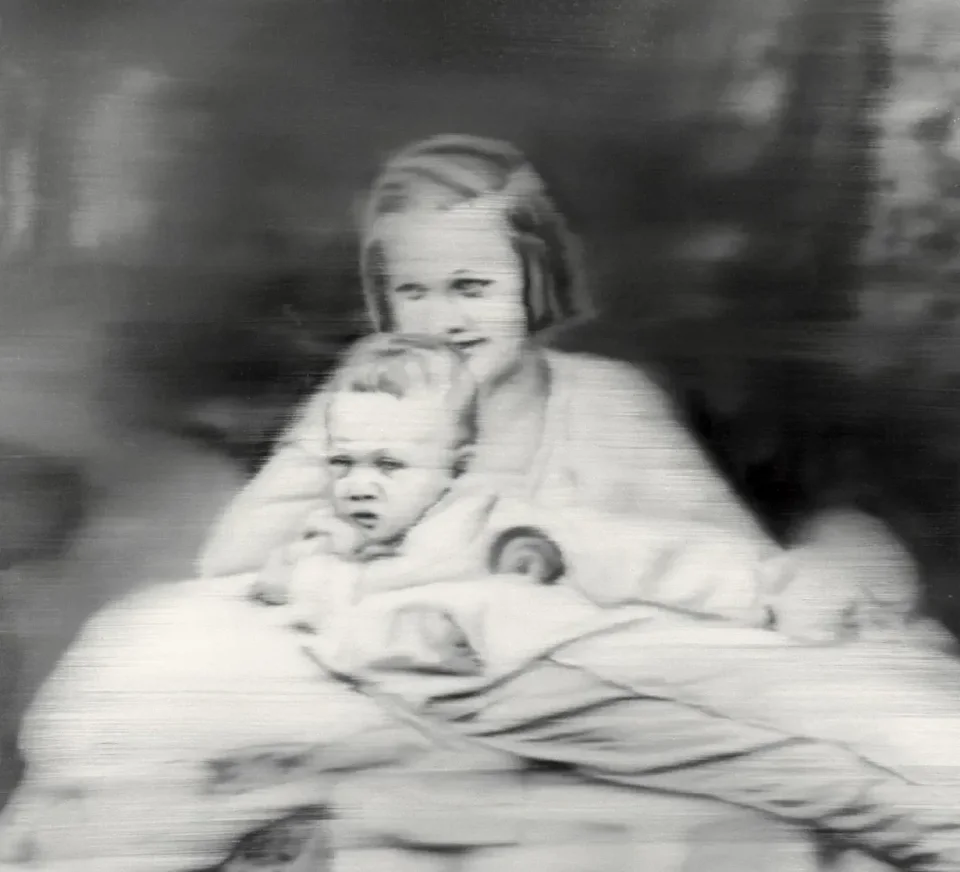
Mr. Fei Dai in Shanghai, who has done a lot of research on Shore, once summed up the idea of the "golden decade": an artist has a ten-year golden period of high productivity. What is this decade, really? I think it's the thinking formed by the era and by the artist's feeling for that era.
Chuanduan and I often discuss a question. We're both young; Chuanduan is a little older than me. I noticed him before I'd even started studying photography at school. We often say we're lucky to have had the chance to be seen in this era. Not being seen is the norm, but we have been seen. So even though our artistic ideas differ and we sit at different points on the spectrum we've been discussing, we've become good friends, and I find that special. What I really want to talk about is a kind of solidarity. What is that solidarity? The Bechers had twelve disciples, all artists, all from the Düsseldorf Academy. But what are we doing now? We're very clearly splitting into cliques, fighting, looking down on each other. Of course, I know Chuanduan's experiences shaped his character this way, and we're all trying to achieve expression through our own efforts. His aim isn't to split the community. Rather, we may need to find a balance and try to build a community, like the Düsseldorf School, like MoMA, like the "New Topographics." These are unavoidable names in photography history. Each was established by a group of artists whose practice defined something important at a particular moment. For the individual artist, that's the "golden decade"; for the era, it becomes a certain topic or module.
Chuanduan Chen
Let me add a final couple of sentences, because what I said earlier may have caused a misunderstanding. The question that friend raised came from a young person noticing inequality in information and power. This year I had a direct clash of views with a highly respected senior figure, Mr. Damen. That was because I want to build connections among "the people who aren't seen."
I've realized that our vision of an ecosystem can sometimes be too idealistic. When you're in such an environment as a creator, you see some very high-handed things. When I spoke about this just now, my empathy went out to young people who, like me, may have experienced a lot of inequality, or seen certain possibilities of unfairness. I want to stress again that "imaginary opponent" is in quotation marks. It doesn't mean making enemies or causing division. Most importantly, it means turning that into a demand on your own work so you become a better creator. It's a strategy for a reflective personality, not a confrontational one.
I stress this repeatedly in class, so my earlier phrasing may have caused some misunderstanding. I still maintain that all this independence of mind and observation of high niches must ultimately come down to your own work. Through my own real efforts, I want to build connections among independent creators. Because of the environment we're in (to put it more bluntly, the Chinese ecosystem), this structural reality is felt very frequently. I believe that young people and independent creators really have to put in a great deal of effort for their work to be treated relatively fairly. That's what I've been experiencing for the ten years since I started taking photographs. This is a very realistic description, not a romantic or idealized fantasy.
So what I said earlier comes from the standpoint of the creator. My ideas may only apply to those who are creators, who want to make their voices heard in this ecosystem and want their work to be seen. Consider that an explanation.
Guosen Chen
Thank you. We're about out of time. Thank you all for coming today. Thanks also to Mr. Xiaolong Wu for bringing the two precious catalogues. If you have further questions, feel free to talk with us afterward. Thank you all.
Chuanduan Chen & Tong Niu:
Thank you. Thank you, everyone.