
Abstract
In the work of Ed Ruscha and Bernd and Hilla Becher, the strategies of "repetition" and "typology" in contemporary photography foreground the ways photographers organize their field of vision. This distinguishes them from the self-enclosed, centripetal quality produced by the self-replicating "grid" of modernist painting. Through their limitless extensibility and endless sense of repetition, these strategies also internalize, visually, the social and spatial abstraction produced by capital accumulation. At a historical moment when "landscape" itself had lost its force as a critical resource, photography thereby regained its potential as a de-neutralizing critical instrument, able to question the production of capitalist representations of space and the abstract space generated by capital's global expansion.
I
If the history of contemporary photography has a turning point, it surely belongs to Bernd and Hilla Becher. Beginning with the Bechers in Düsseldorf, Germany, a cluster of photographers emerged after the 1970s who would later be called "the Düsseldorf School" (The Düsseldorf School of Photography). The Bechers had many students: Andreas Gursky, whose photographs once held the auction price record; Thomas Struth, known for his portraits and his museum photographs; Thomas Ruff, who concentrates on the archival mode of photographic portraiture; and Candida Höfer, who photographs warm, bright interior spaces, among others. It is no exaggeration to say that the Bechers and their students shaped the face of contemporary art photography.
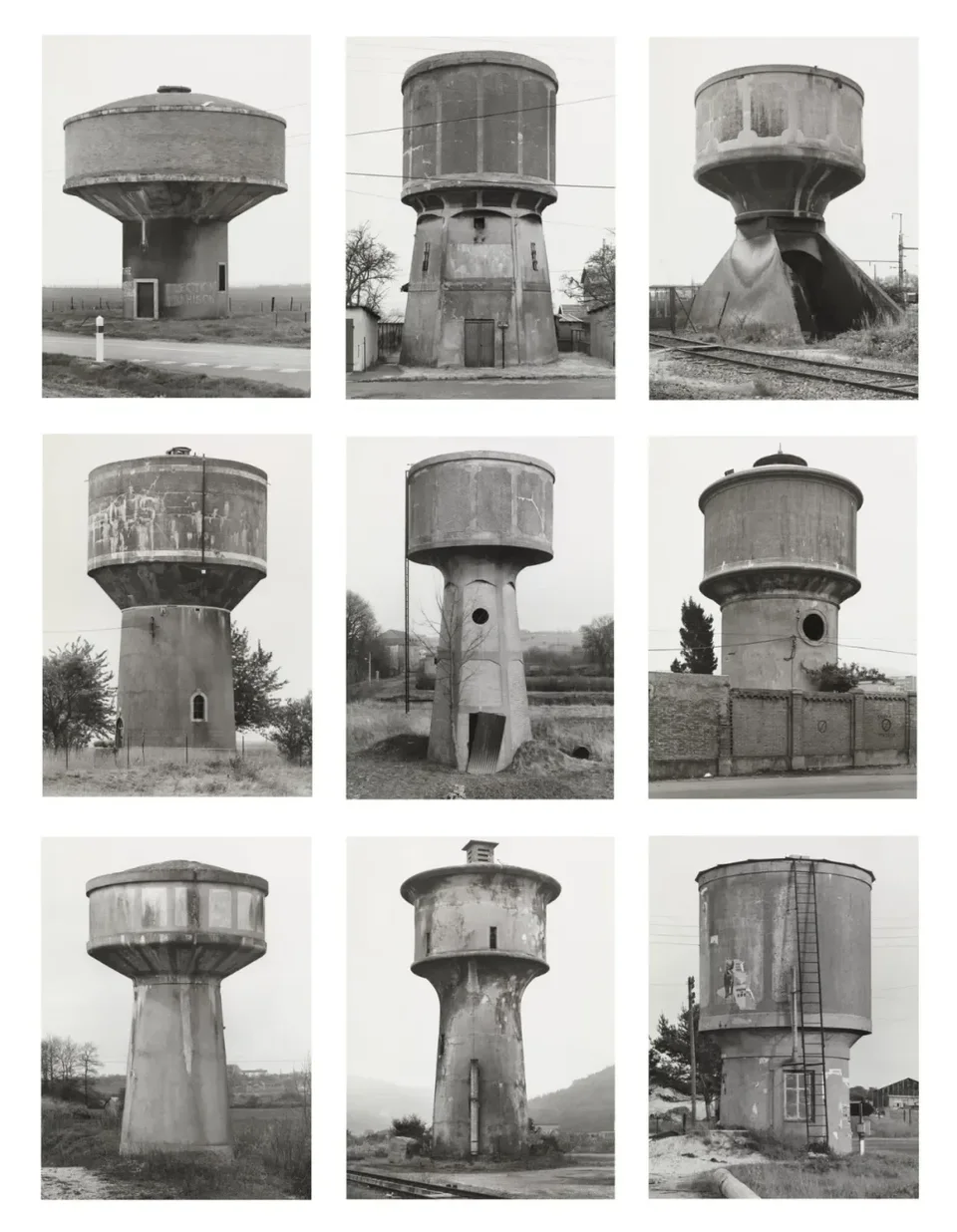
In the 1950s, starting in Germany's Ruhr region, the Bechers began photographing the façades of abandoned local industrial buildings in a neutral, detached style, displaying multiple photographs side by side in a "grid." This visual syntax is the basic meaning of "typology." Yet however much commentators stress that the Bechers' typology does not erase the individual particularity of its subjects, at the level of sensory intuition the syntax of typology is still defined by "repetition." Any set of the Bechers' typological works could be extended indefinitely; it has no definite boundary. The way typology arranges individual photographs becomes what Rosalind Krauss called the "grid": "The grid is not only spatial to start with, it is a visual structure that explicitly rejects a narrative or sequential reading of any kind."

The contradiction arises precisely here. In painting, this modernist visual structure, which appeared in the early twentieth century, became self-enclosed because of its centripetal character, as the range of its subject matter grew ever narrower. This centripetal character in turn led to the ideological neutralization of what was represented. At the same time, the grid's centripetality eventually reduced modernist painting to pure decoration, so that by Mondrian abstraction in painting could go no further. This was one of the great puzzles of Clement Greenberg's late thinking about where modernist painting should go. He once tried to hand the task of succeeding abstract painting over to photography, but the attempt failed.
Krauss treated the self-replicating grid as the mythic spokesman of modernism. If we consider the Bechers' grid photography, however, we find that typology, for all that the "grid" is its defining feature, does not use centripetality to build a self-enclosed, self-sufficient form that reifies the visual surface. On the contrary, it extends the grid's centrifugal character, using a high degree of visual repetition to internalize the abstract relations of real space. This abstraction is inherent in capitalism itself. The Bechers' "typology" should therefore not be seen as nostalgia for a vanished industrial age. Nor is it modernist formalism in Thierry de Duve's sense. Still less is it what Michael Fried takes it to be: an effort to bring out, through comparison among individual cases, the absolutely irreducible individuality of the photographed objects.

"Repetition" and "typology" are clearly not the same thing. The former is the logical starting point and source of the latter, so a discussion of "typology" that skips over the obvious visual feature of "repetition" easily loses sight of one side of the matter. I will show that the path from the boring repetition of Ed Ruscha's photobooks to typological methods like the Bechers', defined by a self-repeating grid, does not produce the various kinds of ideological neutralization and concealment that Krauss attributes to the grid. Instead, it exposes that concealment. It also reminds us that documentary photography has modernist origins in its fusion with the historical avant-garde in the 1920s and 1930s. The modernism in question is not Greenberg's, but modernism as a dynamic mechanism for recalibrating modernity. In photography, this origin came from the theoretical embedding of various forms of social abstraction and social division into practice. This is also the driving force of modernism itself. If we begin with "repetition" and examine it as typology's precursor, we find that such photography is in fact a visual internalization of the spatial abstraction produced by capital's global expansion and self-valorization, one that had already appeared on the eve of neoliberalism's rise. This is why the Bechers' photographs, though visually consistent with Krauss's "grid" structure, produce a critical effect fundamentally opposite to the grid as Krauss defined it.
II
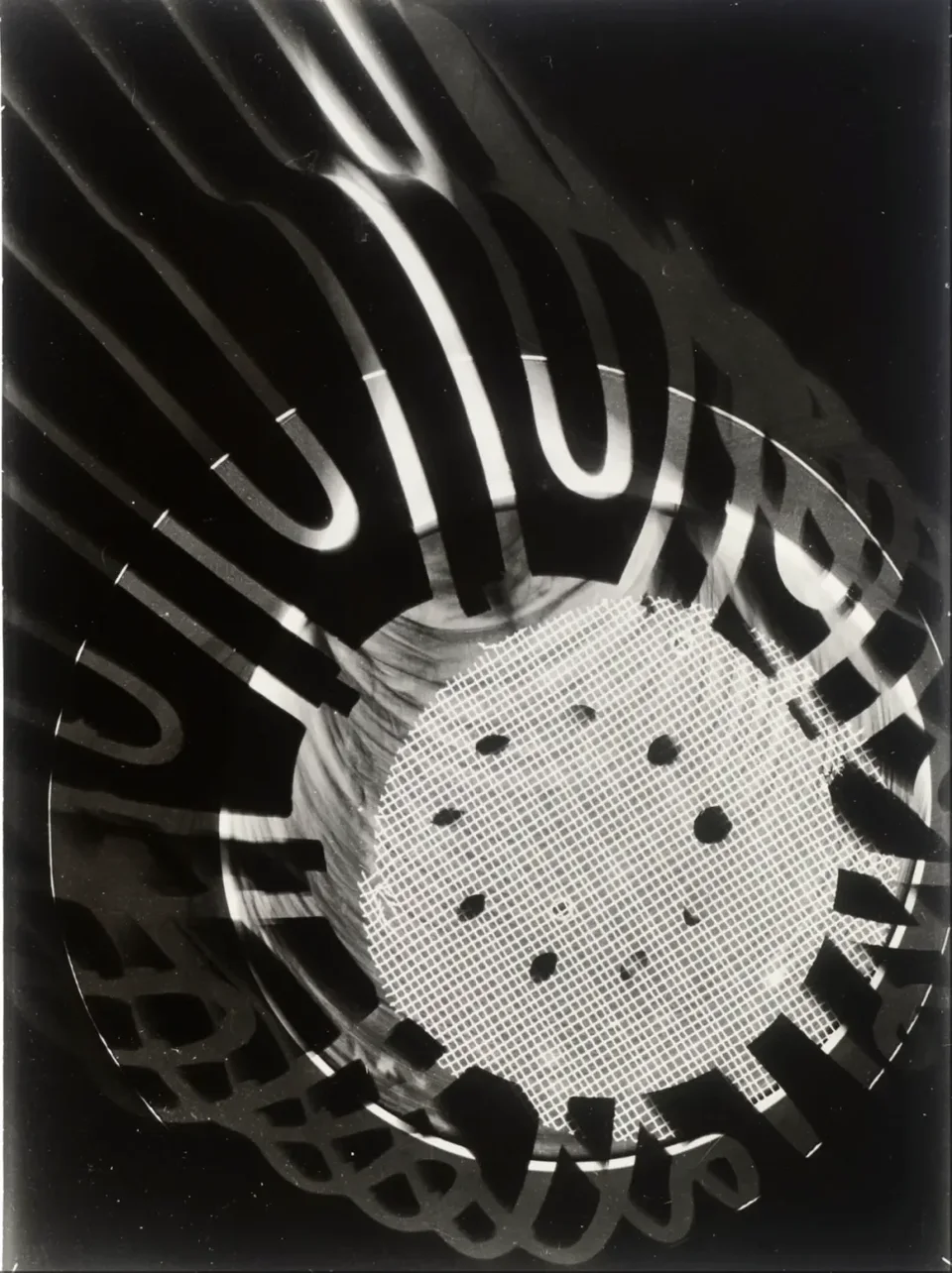
For Allan Sekula, photography had been this way from its invention: "Photography is not a harbinger of modernity, for the world was already modernizing. Rather, photography is modernity's riot." In this process, photography served as a necessary mediating link in the rationalization of society. Following John Roberts, twentieth-century photographic modernism divided according to its relation to social rationalization. One group of photographers sought to bring modernity's upheaval and its technological tendencies into photography; another sought to keep their distance from them. The former is represented by the historical avant-garde practices of László Moholy-Nagy, John Heartfield, and others. The latter revived the representation of landscape in the "picturesque" style dating from the eighteenth century as a force of resistance against the rationalizing torrent of modernity. With Ed Ruscha and the Bechers as the turning point, it ultimately announced that the transcendentalism behind the "picturesque" had failed under the conditions of new capitalism.
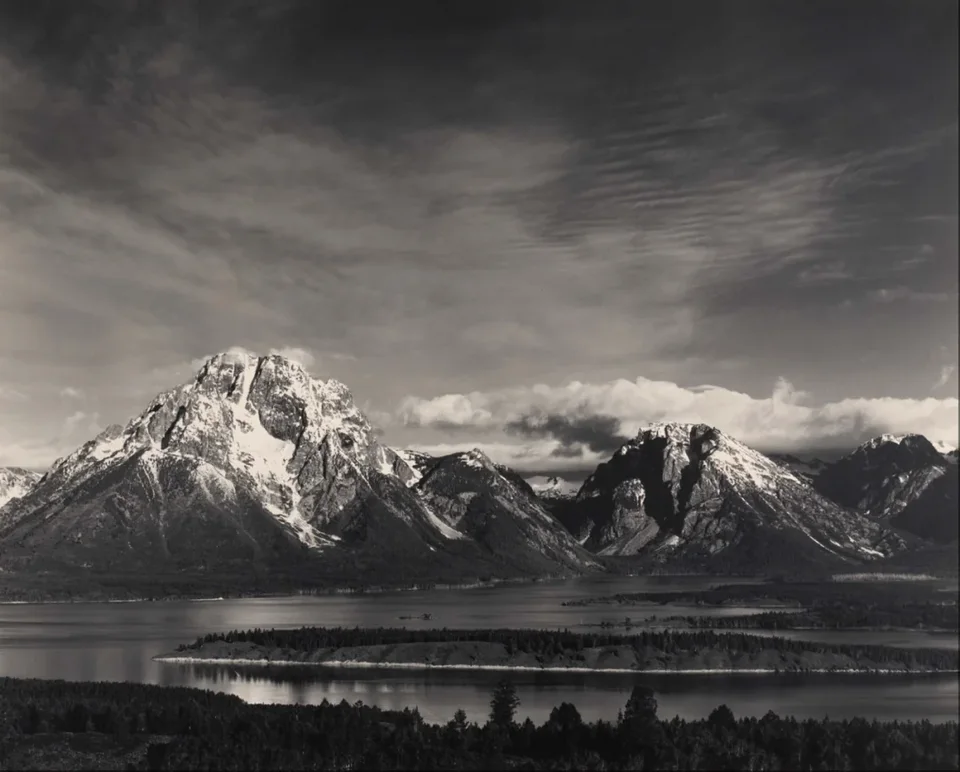
In other words, when Ansel Adams photographed natural landscapes in the national parks, he was seeking an unsullied experience of nature and trying to universalize it as a whole experience accessible to everyone. As he put it: "We must fight for the integrity of experience." For Adams, the experience of such natural landscape could temporarily dispel what Martin Heidegger called the "standing-reserve" (Bestand) produced by technological domination. The "picturesque" landscape could therefore serve as a critical resource for resisting capitalism's abstraction of real space. Yet this experience of "picturesque" landscape (inside a national park) was itself made possible by state intervention and by the growing dominance of urban experience in the structure of mass experience. There could never be the unsullied experience of nature, accessible to all, that Adams hoped for. The demand for equal access and the demand for wholeness of experience contradict each other: the former requires the involvement of state power and finance capital, while the latter rejects their presence. Under these conditions, the "picturesque" landscape could no longer serve as an effective critical resource against spatial abstraction.
At this moment, then, the effectiveness of landscape itself as a critical resource entered a crisis, because real space was undergoing an unprecedented process of abstraction. The result of this process is what Henri Lefebvre called "abstract space." In short, abstract space is the product of "producing" space, through quantification and functionalization, as facilities within the continuum of capital's circulation and valorization, in the service of capital's reproduction. As abstract space increasingly became the main structure of urban spatial production, Roberts argues, the practices that branched off from the second type of modernist photography described above in the 1950s–60s no longer tried to use the otherness of landscape to resist abstraction. Instead, they tried to make photography itself an extension of real abstraction, and through this absorption of abstraction to restore modernism's critical force and its power to reveal the divisions of reality.
Lefebvre's lesson is not only that "space" is not a self-contained, closed, static object. More importantly, he shows that the production of space is always a question of who produces it and why. Thus, in the urban redevelopment of capitalism's golden age, main streets with diverse and sprawling functions were divided into separate zones by function: commerce, housing, industry, and leisure, laid out one after another. Because the city arises from the geographic concentration of the social surplus product, for capitalism the city is less a living space than a geographic node where social wealth is accumulated and redistributed. Its precondition is that the existence of a social surplus product and the mechanisms for concentrating it form the foundational requirements of urbanization. This is what David Harvey means when he says that "agricultural surplus is a necessary condition for the emergence of urban form." The need to concentrate and distribute agricultural surplus, together with the pursuit of efficiency, led to the emergence of hubs of economic and social organization. On the eve of neoliberal economic policy, the steady rise in profit rates during the postwar golden age created a clear need for functional zoning in cities. Only in this way could the efficiency of capital's global circulation be ensured, which in turn pushed profit rates still higher. Under these conditions, urban space had to be standardized and ordered, and urban life itself was reshaped into an object that could be observed, managed, and reproduced in bulk. The logic of capital no longer appeared only in the sphere of factory production; it penetrated the places of everyday dwelling. Hence Lefebvre writes: "When abstract space took shape, the dominant class seized control of it; they then used this abstract space as an instrument of power, without forgetting its other uses: serving the organization of production and the means of production — in short, serving the generation of profit."
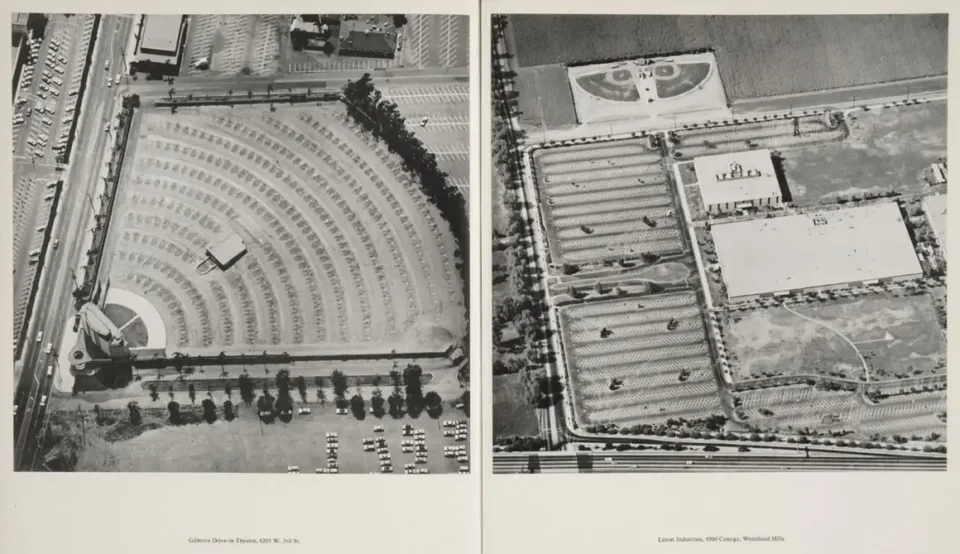
In Ed Ruscha's work, above all photobooks such as Twentysix Gasoline Stations (1963), Some Los Angeles Apartments (1965), Thirtyfour Parking Lots in Los Angeles (1967), and Real Estate Opportunities (1970), the reproducible character behind abstract space is clearly signaled. These works offer almost no possibility of visual pleasure; all the viewer can see is the endless repetition of a photographic method. In these works, the viewer's identification is forced away from the photographed subject, as in the New Objectivity (Neue Sachlichkeit) photography of August Sander and others, and onto the structure that organizes this particular way of looking at the world. In other words, the viewer is now asked to identify with a form of visual abstraction defined by conspicuous "repetition." This form of visual abstraction is less Ruscha's method of taking pictures than his strategy for foregrounding the abstraction produced by repetition as a product of capitalist labor relations, one concealed by the representations of real space.
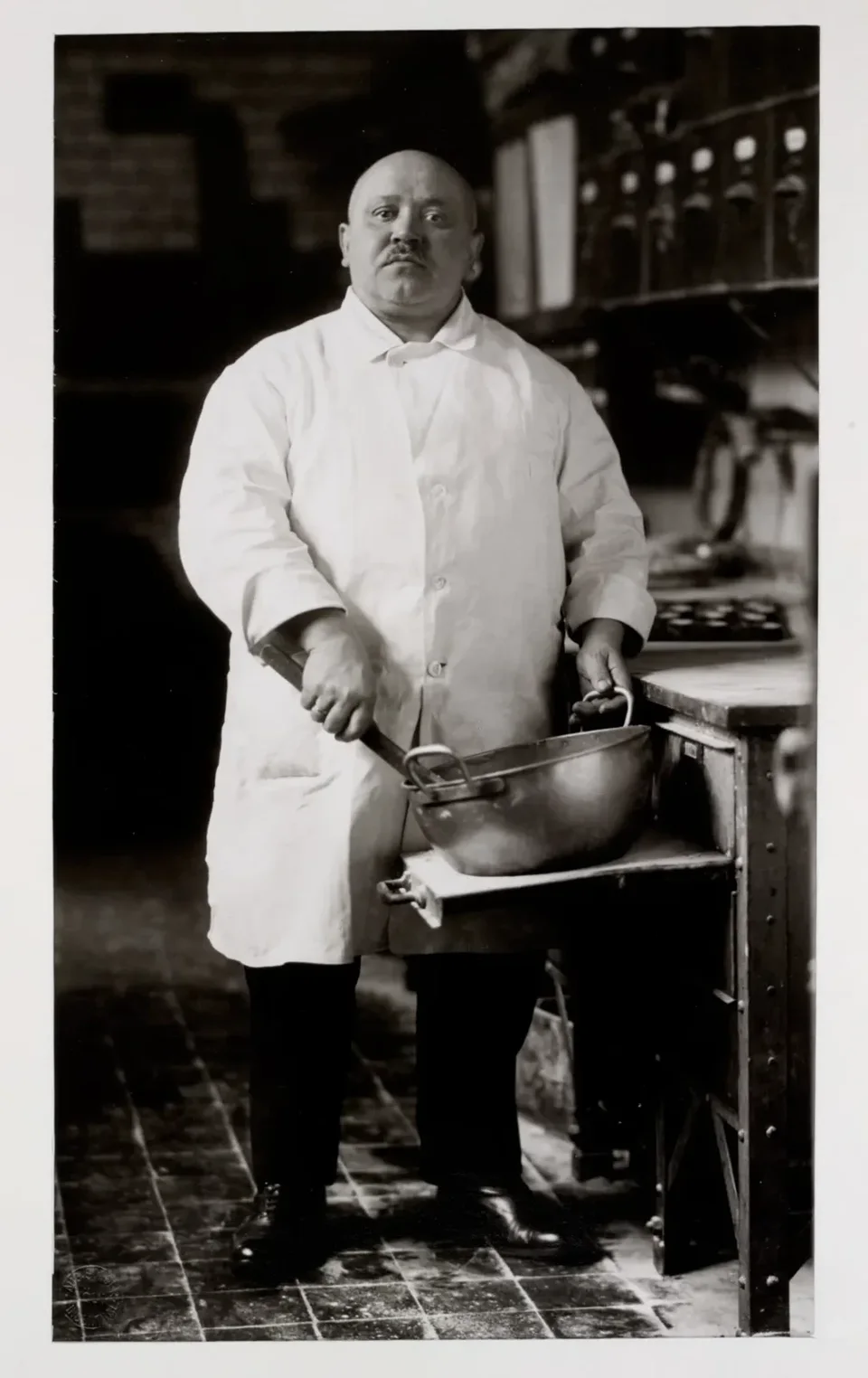
In Twentysix Gasoline Stations, Ruscha's locations are backed by wilderness and desert, yet the lens gives almost no hint of distance between the photographed objects and the natural landscape. The gas stations and parking lots that appear along the road network are typical instances of the transportation system and the urban network. They belong to what Lefebvre described as subsystems within a space at once homogenized and fractured, which fix social relations into a particular order through spatial planning and various hierarchical constructions.
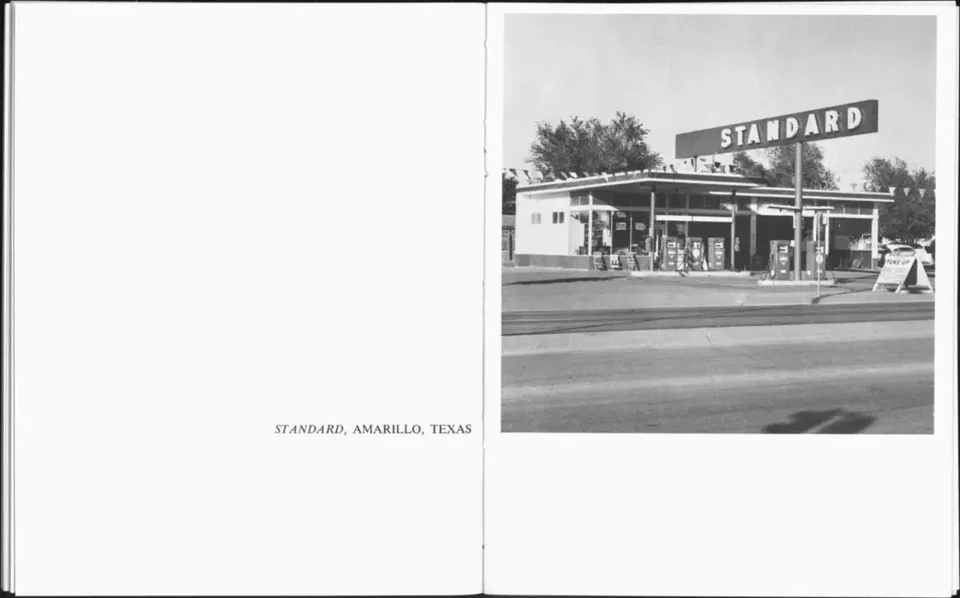
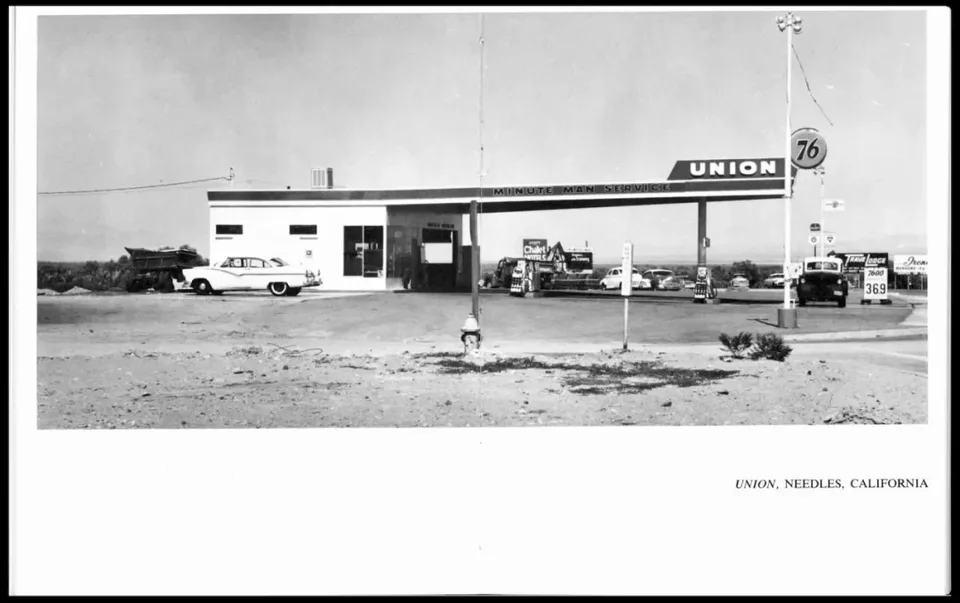
Put this way, it is easy to assume that Ruscha's use of repetition draws its legitimacy entirely from the abstract character of his subjects. But if we attend to how Ruscha's repetition is actually experienced, we find that he is dealing with a different question: in a world where abstract forces are everywhere, what kind of visual representation can undo the neutralization of urban space and make the relations of production behind it visible? Undoing this neutralization must ultimately rely on form rather than interpretation: a desolate, numb, deadpan, inert, boring form. When we notice the form of repetition Ruscha adopts, we notice at the same time the forced assembly of landscape fragments that abstract space brings about. A destabilizing potential therefore erupts from within abstract space. To put it plainly, abstract space is the product of capitalism's homogenization and commodification of space, and this process also requires a knowledge-and-sign discourse to mobilize and support it. In this sense, representations of space are an indispensable mediating and instrumental link in the process, supplying the technical blueprints and guarantees of possibility for abstract space. For Lefebvre, representations of space are the spatial forms constructed within a rationalized framework by scientists, urbanists, technocrats, and the like. Bound by both knowledge and power, they exclude irrational and non-economic possibilities. Yet representations of space are themselves situated by their broken and uncertain connection to "representational spaces": although representations of space try to unify complex space through conceptualization, they can never fully control the lived sensibility that representational spaces carry. In Ruscha's repetitions, the uniformity of abstract space and the sensibility inherent in representational space still coexist. The relationship between the mode of production of straight photography and what Walter Benjamin called the "optical unconscious" is given from the start. However far Ruscha pushes repetition toward uniformity and boredom, nothing can prevent the viewer from being moved by the contingent features of the world presented. As long as the photograph's existence still depends on a direct encounter with the external world, its field of meaning cannot be wholly controlled by a single author. Under these circumstances, the pictorial abstract space seen in Ruscha's photographs and the conceptual abstract space found in Lefebvre's account can never be identical. Although repetition invites identification with the photographer's field of vision, the photographic image itself does not submit to the governing logic of abstract space.
III
When "repetition" expands from the similarity of represented content and an amorphous act of framing into a grid-like visual structure, typology is born. From the late 1950s on, Bernd Becher and Hilla Becher photographed Germany's industrial infrastructure, including water towers, grain elevators, gas tanks, cooling towers, gravel plants, lime kilns, and blast furnaces, and later extended their work to Britain and elsewhere. They usually adopted a fixed, frontal, centered viewpoint so that the position and scale of the subject in the frame remained essentially the same. They always used black-and-white film (or produced final black-and-white prints), and they shot as far as possible on overcast days or in soft light to avoid strong shadows, so that the industrial structures looked uniform on the surface. The Bechers' works also tend to say little about the surroundings of these facilities, and no people appear in the frame. By arranging large numbers of photographs of façades with the same function but slightly different appearances in grids, usually in groups of 9, 12, 15, or more, they created visual rhythm and repetition among the images, and thus a kind of "family resemblance."
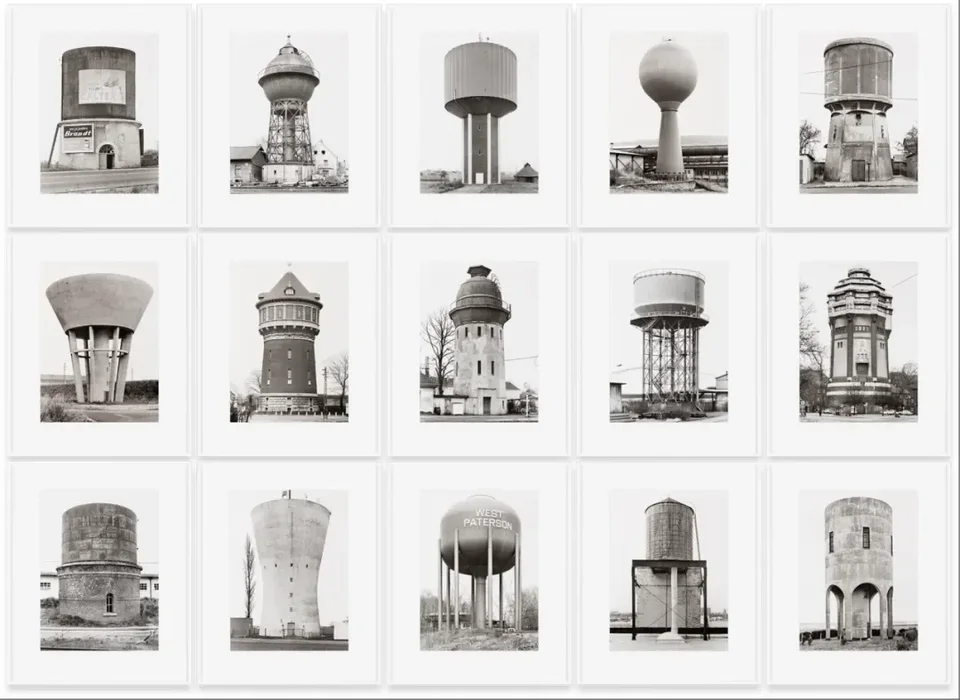
Michael Fried insists on understanding the Bechers' typological practice as one that "gives special visibility to relations of similarity and difference among its instances and between them and the type." He stresses that the individual particularity of these industrial structures emerges through comparative observation of similarity and difference. In my view, however, this judgment does not hold. If we consider how Fried's judgment is produced, his heavy reliance on formal analysis means that he can think about the Bechers' practice only in terms of the relation between the photograph's form and the presence of the photographed object. He therefore ignores entirely the contested factors that made the Bechers' practice possible within its concrete historical reality.
It is worth noting that the Bechers insisted that what they photographed were "objects," not "motifs." In this sense, "the photographs are merely substitutes for the objects, not pictures in the usual sense." We cannot, then, treat the Bechers' photographs as an autonomous world cut off from the real industrial world they belong to. Although a photograph can never substitute for the real thing, this does not prevent the image from in fact forming a continuum with its subject, that is, an index in the semiotic sense. A photograph is the trace of an encounter among camera, photographer, and photographed event under particular conditions of time and space. It is therefore not only a mimetic representation of the event photographed; it also points causally to the event that brought it into being. In this sense, water towers, grain elevators, gas tanks, and the like should not be seen as creative motifs that exist to satisfy some formal need. This is what the Bechers said in a conversation: "These objects are fixed to the ground; they are part of the landscape, and you could almost say they have roots. Other objects, such as a cup or a sewing machine, have no roots, whereas a water tower is, strictly speaking, attached to the ground. It is not an object that can be moved, even though it is an object that exists only for a certain time." Emphasizing this point further corrects Fried's misreading. From the very start of the Bechers' careers, the objects they chose were not standing on the earth for aesthetic purposes. Industrial decline, exemplified by the Ruhr, is in fact the key to understanding the Bechers' typology at its root. Some historical facts need no elaboration. From the 1960s on, owing to changes in the global energy structure, the advance of industrial automation, and the relocation of industry driven by capital's globalization, heavy industry in the Ruhr, which had driven Germany's "economic miracle" during capitalism's golden age, gradually lost its competitiveness. Many coal mines closed, steelworks shut down, and workers lost their jobs. Those immovable industrial facilities, rooted in the earth, were simply left where they stood. We want to ask what seems a simple question: why did this happen? And what does it mean to photograph these abandoned industrial facilities under such circumstances?
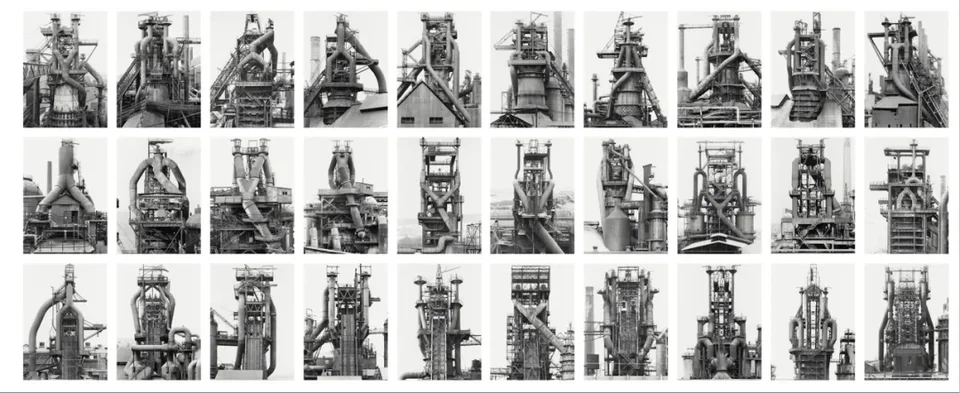
The Bechers noticed this from the beginning: "By the end of the 1950s, in my home region, a mining area, the mines began to close, and then the blast furnaces began to close too. I realized that these buildings were a kind of 'nomadic architecture' with a relatively short life cycle. They existed for about 100 years, or even less, and then disappeared." This touches on a core mechanism of capitalism's operation: "planned obsolescence." Planned obsolescence is inherent in the workings of abstract space. Lefebvre noticed this, but he probably did not grasp it fully. The social abstraction by which representations of space increasingly dominate is rooted directly in the concept of "capital" itself. In other words, although Lefebvre noticed the spread of spatial abstraction, he did not address specific categories such as fixed capital. So although he described the many disembeddings and fragmentations of life, he could not explain how this process of abstraction is generated from within by self-valorizing value. David Harvey repeatedly emphasized the logic of capital's self-valorization in urban space and the accompanying mechanisms of spatial fix centered on ground rent, real estate, and fixed capital. For Harvey, under the logic of capitalism, capital accumulation and the expansion of surplus value are not linear processes; they necessarily require the continual production of space and the transformation of capital's forms. From the standpoint of fixed capital, when capitalism must maintain its profit rate through ever-faster circulation of surplus value, fixed facilities such as buildings and infrastructure, because they are rooted in place, inevitably become obstacles to reducing production costs and freight times. Once fixed capital (ports, factories, and so on) has been invested and embedded in a particular space, it is hard to relocate in the short term. But when capital reaches saturation in a region, it must seek a "fix" for the existing space, drawing more social resources into profit-making circuits in order to keep valorizing. This fix mainly takes the form of relocation and withdrawal. On this premise, if relocating fixed capital is not profitable enough, planned obsolescence becomes inevitable. In other words, when the immobility or rootedness of fixed capital collides directly with capital's imperative of rapid turnover, de-fixing becomes the inevitable outcome. As Harvey puts it: "Whether large corporations like it or not, they are caught up in this process: their aim must be to protect and increase the speed at which they circulate surplus value. There is no other choice."
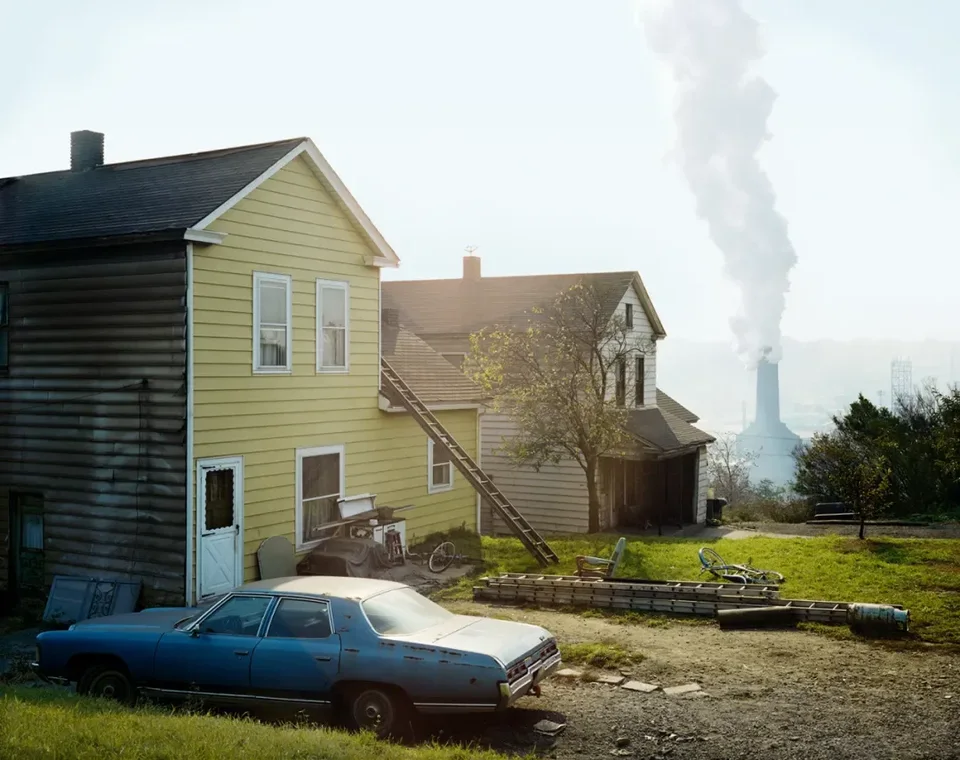
This transfer of capital not only reinforces the uneven distribution of space but also turns fixed capital itself into a tool of redistribution. Through disinvestment or relocation, losses are shifted onto disadvantaged groups or regions. This is the force behind the formation of the Ruhr's industrial decline, America's Rust Belt, and many similar "dead landscapes." Such landscapes, which appeared widely across the globe after the 1970s, are a sign that capitalism had lost its long-term promise of profitability, and they paved the way for the later rise of neoliberal policy (and its failure to restore that promise). Whatever form this "spatial fix" takes, it is part of capital's circulation and part of the continual reconfiguration of space. The value of a building does not depend on its durability but on whether it can provide capital with new space for accumulation and so speed up the circulation of surplus value. As the capitalist economy expands in scale and capital circulates faster, the creation of surplus value depends less on production alone and more on the speed at which capital is continually transferred and reorganized within the economic system. By shortening the economic life cycle of buildings, capital can circulate in less time, which gives capitalist expansion an important impetus.
When we treat the Bechers' act of photographing (rather than their images considered in isolation) as an interrogation of fixed capital, Donald Kuspit's comment becomes easy to understand: "I cannot help feeling that these photographs are veiled monuments to human self-distortion, a distortion carried out in the name of 'social reason,' and that these all-too-human structures reveal an absurd social character." From the standpoint of planned obsolescence and its goal of speeding up the circulation of surplus value, we can see that the boundaries between urban districts are also redistributed as a result. For Harvey, this meant that "old lines of regional differentiation were restored and structurally accentuated." The transformation of cities and towns under these conditions remains an uneven process of social abstraction. Some old industrial areas are abandoned when capital withdraws completely. Low-income residents, unable to bear the high cost of moving, are forced to stay in the city's older central districts, where declining financial value further worsens living conditions. This unequal spatial distribution is in fact social inequality produced by the reallocation of fixed capital. The marginal populations formed in this way constitute "an industrial reserve army (in Marx's phrase), which can serve both as a threat to organized labor in wage disputes and as surplus labor to be used during expansion and discarded during contraction." The segregation and zoning of social relations take material form as the segregation and zoning of spatial forms, and the zoning of spatial forms in turn neutralizes this unevenness. The result is the "representation of space" discussed above: uniform, quantified, look-alike, repetitive spatial forms occupy more and more ground. The shift from multifunctional main streets to suburban housing and shopping malls not only destroyed traditional urban structure but also gave rise to new abstract modes of architecture, such as gas stations, shopping malls, and middle-class apartments. Through the production of space, then, a topological kind of space emerges in the city.
In a sense, Moishe Postone supplies the reason behind the spatial abstraction produced by capital's self-valorization that Harvey identifies. On Postone's account, we can trace the causes of spatial abstraction back to abstract labor. Nearly all of Postone's understanding of Marx rests on one premise: for Marx, "labor" is not a transhistorical concept; labor is specifically capitalist labor. Capital can produce an abstract spatiotemporal order on a global scale because capitalist labor is self-mediating: "The historical specificity of labor as a socially mediating activity allows labor in capitalism to ground its own social character." What fundamentally distinguishes capitalism from all earlier social formations is that capitalist labor itself, rather than some public authority, feudal relation, or personal dependence, becomes the mediation of society. People in society now relate to one another through the seemingly "thing-like" structure of commodity, money, and capital. This makes labor relations and social relations appear as an abstract structure that can, in logic, spread without limit. The "self-mediation" of labor that preoccupies Postone means that capitalist labor treats "itself" and its products as the social mediation, and in this way labor is abstracted. When spatial arrangements based on traditional social relations break down, what Marc Augé called the "non-place" appears. The key point is that once labor becomes a social mediation, it is abstracted from the particularity of its products and becomes abstract labor, the common measure of all forms of labor, appearing as compulsory socially necessary labor time and exchange value. Labor itself thus becomes the mediation of labor relations: workers produce products through labor, and those products return to their lives in commodity form. The individual worker's labor is drawn into an endless cycle of production for production's sake, because otherwise he or she cannot live.
For Postone, the mature Marx defined "value" as a historically specific "form of social wealth." Value is not transhistorical "material wealth," still less a congealment of transhistorical "labor." It is an objectified social mediation created by labor under capitalism, one that in turn dominates the workers themselves. Capital is precisely this "self-valorizing value." It has an inherent logic of endless expansion and movement. For the sake of this directional movement of continual valorization (expressed as ever-rising profit rates), it must take abstract labor as its universal mediation and continually reorganize space on a global scale, thereby subjecting workers to an abstract and impersonal domination. Alienation, in this sense, is "the process of the objectification of abstract labor." By abstracting labor, capitalism makes it appear not as concrete laboring activity but as part of the value of commodities, and human capacities are thereby presented in alienated form. Individuals and their lives are, as a result, likewise abstracted and commodified within representations of space. Thus, "with the development of relative surplus value, the directional movement characteristic of capital as self-valorizing value comes to depend on ongoing changes in productivity. An immanent dynamic of capitalism emerges: the given relation between increases in productivity and the growth of the value form of the surplus gives rise to an endless expansion." Because the products of society's aggregate abstract labor ultimately constitute a total social mediation (that is, "value"), this self-mediating form of social domination continually demands self-valorization and ultimately produces an all-encompassing abstracting force. Capital, as self-valorizing value, inherently contains a tendency toward continual expansion and limitless valorization, and finally forms a global web of abstract social relations.
Under these conditions, the abstract space produced by planned obsolescence is, on the one hand, fixed visually by the Bechers into a repetitive, infinitely extensible typological grid. On the other hand, these spaces are themselves the point of detonation at which social abstraction is most forcefully expressed in spatial form. In the Bechers' typological photographs, the predominance of uniformity over particularity in what they depict is determined from the outset, and this uniformity sometimes takes on the appearance of "equality." Fried does notice that "the project always remained, in principle if not in practice, infinitely open, receptive to new discoveries and new arrangements." But so long as he and like-minded critics hold to a view of form cut off from actual social relations, they cannot bring themselves to accept that the Bechers' photography had in fact broken decisively with the singularity and authenticity emphasized by traditional artworks. On the contrary, the Bechers' typological practice is "equal": just as the logic of commodity exchange requires all commodities to be treated as equivalent, its projection onto social relations produces a formal equality in which everyone is treated as an abstract "laborer." This abstracted equality is an indispensable source of legitimacy for capitalism's global expansion. Typology thus frees contemporary photography from relying on the heterogeneity of its subjects to criticize the abstract relations of reality. Now typology relies on the photographer's own organization of vision. Through a self-return toward social abstraction, it makes the act of photographing an intervention in, or a hedge against, the present production of space, and so recaptures the texture of presence in a thoroughly abstracted world. In this kind of recording, if documentary photography is still to perform modernism's feedback role in relation to modernity when abstraction penetrates everything, space cannot be photographed with formal beauty as the motivating aim. The photographer must first recognize that space is produced, and must also redefine his or her own role within that process of spatial production.
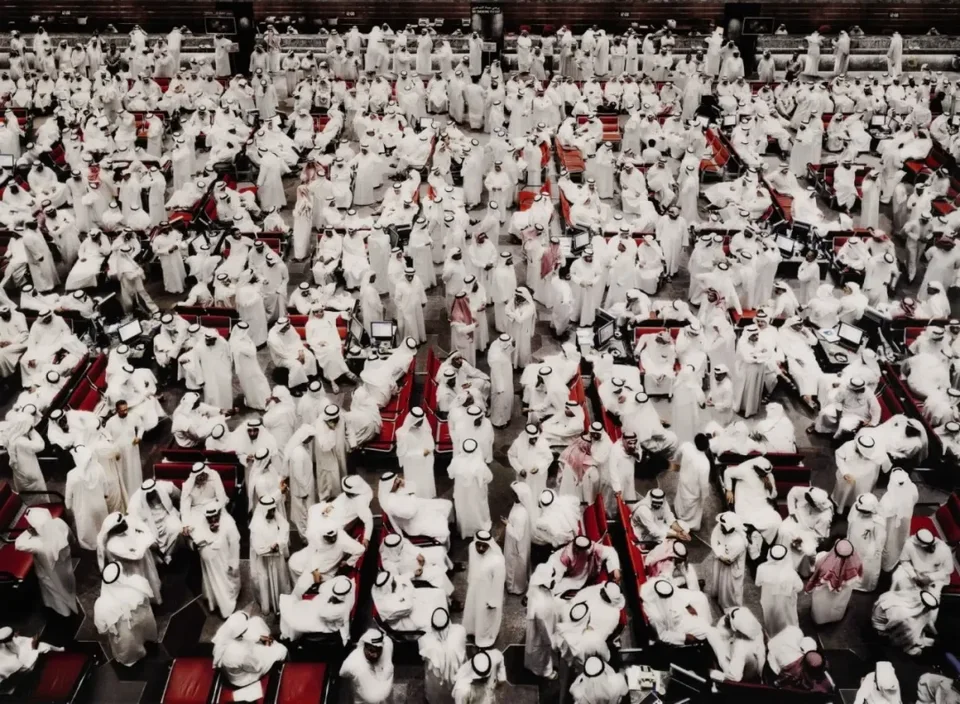
Going further, beginning with the Bechers' typology, Thomas Demand's staged photography and Andreas Gursky's panoramic photographs also gained the possibility of using images to examine critically the abstract relations of reality. This is a form of self-awareness in contemporary photography that critics such as Michael Fried overlook: in the era of capital's global expansion, photography generates its power to reveal capitalist spatial production by internalizing abstraction visually, not by returning to the picturesque era or by staging criticism through formal play in the studio. If we accept that urban and rural space alike have been assimilated by social abstraction, how can photography turn around to reveal this abstracting force and "internalize" it visually, so that viewers can once again glimpse the cracks behind these representations of space? The answer becomes explicit with the Bechers. They no longer regarded abstract landscapes as things to flee from or as impossible to photograph. Instead, they used the continuity between reality and photography, and the indexicality deeply rooted in how photographs come into being, to make the abstract forces inherent in the real spaces they point to expose themselves. Through repetition as a visual structure, they made the effects of spatial abstraction perceptible, rather than treating their relation to the environment with the intimacy of August Sander and others before them. In this sense, repetition is neither a compositional tool nor a formal strategy. It is the visualized result of the social abstraction of the post-1960s period. Before Ed Ruscha, one could say, photography's tendency toward abstraction usually served documentary or aesthetic ends, as in the New Objectivity photography of the Weimar period. From Ruscha on, however, abstraction itself was internalized as an inseparable part of visual experience. The fact that the typological grid can extend indefinitely therefore announces metonymically, in a centrifugal gesture, the uneven process of spatial representation in reality. At the same time, it tries to use the perceptibility of the visual surface to resist the fate of these objects being wholly erased in the process of abstraction.
IV
Once "landscape" itself has been assimilated by social abstraction as a critical resource, photography must find new ways to restore its continuity with social reality if it does not want to become a self-enclosed aesthetic placebo. It is necessary to reaffirm photography's existence as a form of labor. As Jacob Emery puts it: "A photograph in fact involves the sum of human labor, whose subjective and objective aspects meet in the camera's dark box. The resulting image transforms fragments of the world, a world so greatly altered by human industry that sunset hues, sea levels, and bird migration patterns all bear traces of human activity, into things that compete for human attention." By keeping the image recognizable as a picture of reality while making the photographer's strategy for organizing vision plainly visible, an aesthetic distance is created. Photography is thereby transformed into a pure artistic instrument and ultimately arrives at abstraction. The distinctions and selections photography makes are often criticized as neutralizing their subjects, but photography can also de-neutralize. As Kevin Coleman and Daniel James argue, in the era when modernity was unfolding, philosophical-historical narratives of the division of labor, primitive accumulation, and commodity fetishism emerged on one side, while on the other appeared a democratizing technology for fixing images. Under these circumstances, the relationship between photography and capital accumulation is inherently a problem.
For contemporary photography, "repetition" and "typology" use the photographer's organization of vision to make the forces of social abstraction in reality visible, so that processes usually concealed or neutralized become part of perceptible experience. This revelation of social abstraction is less a simple opposition to or exposure of capital than a form of critical production. Within the context of capital's global expansion, contemporary photography has become an important field of practice for examining the production of space. It neither tries to return to the picturesque as a critical resource nor is content to continue formally the autonomous logic of Greenbergian modernism. Instead, it absorbs the internal tensions of abstract labor and capital accumulation and visualizes them as a form that reveals the cracks of reality and the divisions of history. Photography's critique benefits from a new way of seeing. It cannot be reduced to philosophy or writing, nor can it directly replace tools and money. It is a way of seeing that did not exist before photography became a widespread image-making technology. By making visible both the object "pointed to" and the act of "pointing" itself, it plays an important mediating role between production and critique: the unknown in contemporary life is first an image, and only then a reality waiting to be experienced. This ultimately allows visual representation to become a metonym for understanding the mechanisms of capitalist spatial production. And this visual internalization of abstraction is precisely why photography has regained its modernist critical impetus in today's art context.
Notes and references have been omitted; please consult the original source.