
[Abstract] "Electricity," together with related technologies such as image telegraphy and X-ray photography, profoundly shaped Warburg's paradigm of "image science." Warburg's concepts of "polarity" and the "dynamogram" are closely bound up with electromagnetism, and Warburg was well acquainted with the research of Hertz and others. Electric waves revealed invisible relations of energy, and they were also entangled with spiritualist beliefs in ghosts and radiation. On both a media-theoretical and a cosmological level, "electricity" defined the perception of the world and the epistemological strategies of the period around 1900.
[Keywords] Warburg; image science; electric waves; media spiritualism;
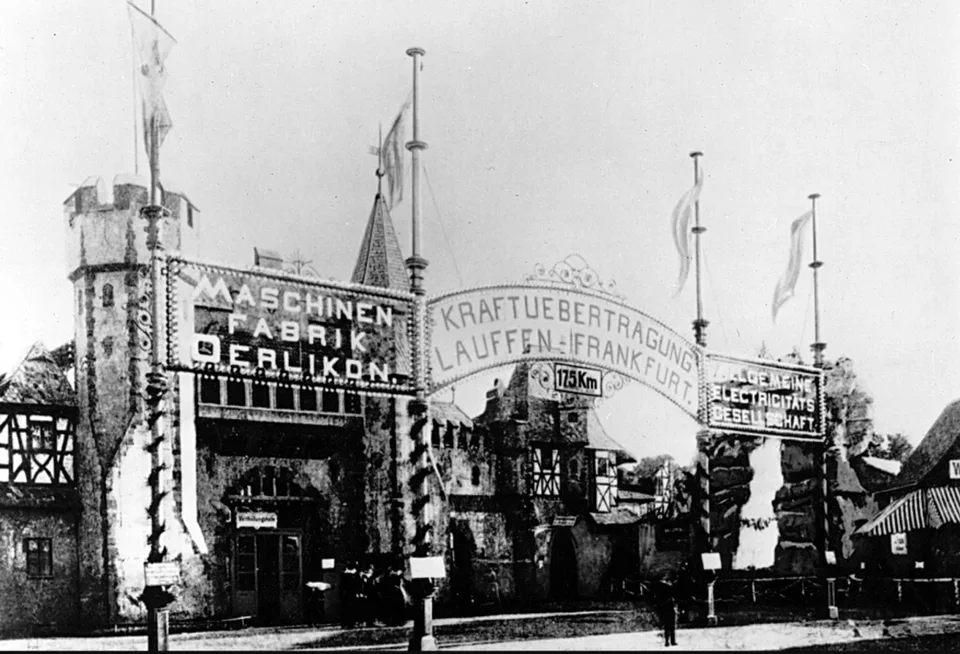
In 1891, the 25-year-old Warburg visited the "International Electrotechnical Exhibition" (Internationale Elektrotechnische Ausstellung, figure), held on the site of Frankfurt's old railway station. The electric lighting equipment, generators, transatlantic telegraph apparatus, and high-voltage transmission technology on display, the image of Prometheus taming lightning on the exhibition poster, and the electric waterfall the organizers had designed for the entrance all made a deep impression on Warburg.[1] In letters from this period, Warburg repeatedly discussed concepts such as "electricity" (Elektrizität), "telegraphy" (Telegraphie), and "lightning" (Blitz), and urged his family not to underestimate the significance of the exhibition. At the same time, Warburg also took note of another exhibition held in Frankfurt, an art show titled "Exhibition of Modern Pictures from Frankfurt Private Collections – Electrically Illuminated" (Ausstellung moderner Bilder aus Frankfurter Privatbesitz – elektrisch beleuchtet); a copy of its catalogue was preserved in the Warburg Library. Like his contemporaries around 1900, Warburg had a particular fascination with electricity. For Warburg, who called himself "a historian of images, not an art historian," electrical technology brought forth entirely new visual media such as "image telegraphy" (Bildtelegraphie) and "radiography" (Röntgenographie). At the same time, electricity itself (the polar movement of electric charges, electromagnetic waves, electric field strength, electrical impulses) supplied, in an ontological sense, an intuitive physical model for Warburg's propositions about "image intensity," "memory waves," and "memory energy." As Ulrich Raulff has observed, Warburg's concept of "polarity" (Polarität) and his concept of the "dynamogram" (Dynamogramm), which stores the energy of memory, are both closely linked to the electrical technology of the time; Warburg's polarity is "a polarity that unites extraordinary radiant power (Strahlkraft) and impressibility (Einprägsamkeit), namely the dynamo or the energy machine (den Dynamo oder die Energiemaschine)."
In his early manuscripts, above all the Grundlegende Bruchstücke zu einer monistischen Kunst-psychologie (Fundamental Fragments toward a Monist Psychology of Art), Warburg first put forward the concept of "image science" (Bildwissenschaft). In these manuscripts Warburg made extensive use of physical terms such as "dynamics" (Dynamik), "statics" (Statik), and "oscillation" (Schwingung), in an attempt to make image science "scientific." "Electricity," as an emerging category of physics at the turn of the century, also appears in Warburg's manuscripts, for example in "the switching of electric, nervous, energetic tension (Umschaltung der Spannung)" and "...the nature of the charge that reaches equilibrium as a Leyden jar (Leydener Flasche)." Warburg also owned a large number of books on electricity and energetics, such as Edmund Hoppe's History of Electricity (Geschichte der Elektrizität, 1884). In the Bilderatlas Mnemosyne (Der Bilderatlas Mnemosyne, hereafter the "Atlas"), Warburg also used fashionable "telegraphed images," and the operating principle of image telegraphy—the conversion between static pixels (a spatial sequence) and dynamic electrical impulses (a temporal sequence)—runs in parallel with Warburg's concept of the "dynamogram" and his theory of image energy. In his research Warburg also practiced a visual method based on the "superimposed projection" of lantern slides, which points toward the form of visual knowledge embodied by radiography. Moreover, Warburg was thoroughly familiar with Heinrich Hertz's research on electromagnetic waves; (electromagnetic) waves are constitutive for Warburg's conceptual system, being both a universal form in which energy expresses itself and a cosmic medium of ontological significance. These materials reveal how "electricity" (and the image media associated with it) shaped the principles of Warburg's "image science," his model of history, and his conceptual system built upon the categories of "waves" and "energy."
John Peters and Jeffrey Sconce have explored the complex connections between the early history of electric media and turn-of-the-century spiritualism. The vitality of electricity suggested analogies between electric power, consciousness, and life force, expressed in concepts such as the "flow of the mind," "electric current," and "stream of consciousness." The telegraph and X-rays (electromagnetic waves) made visible invisible relations of energy and their effects, blurring the boundary between physical transmission (media) and spiritual transmission (mediums)—or between scientific naturalism and spiritualism: "The new inventions of the photograph and the telephone, the advent of the electric light, and the improvements in photography and telegraphy were all signs of the coming wave of 'manifestations'... and evidence of 'spirit visitation.'" At the turn of the century, "the fascination with X-rays, the revival of ether theory, the fin-de-siècle revival of mesmeric fluids, and the belief in networks of telepathic transmission" all emerged simultaneously. Electricity defined the experience of the world and the epistemological strategies of Warburg's era on both a media-theoretical and a cosmological level. As Warburg put it at the end of his lecture on the serpent ritual: "Captured electricity (gefangene Elektrizität)... the telegraph and the telephone destroy the cosmos. Mythical and symbolic thinking... create a space for devotion or thought (Andachtsraum oder Denkraum), which the instantaneous electric connection (elektrische Augenblicksverbindung) destroys."
I. Telegraphed Images: Converting Images into Electric Waves
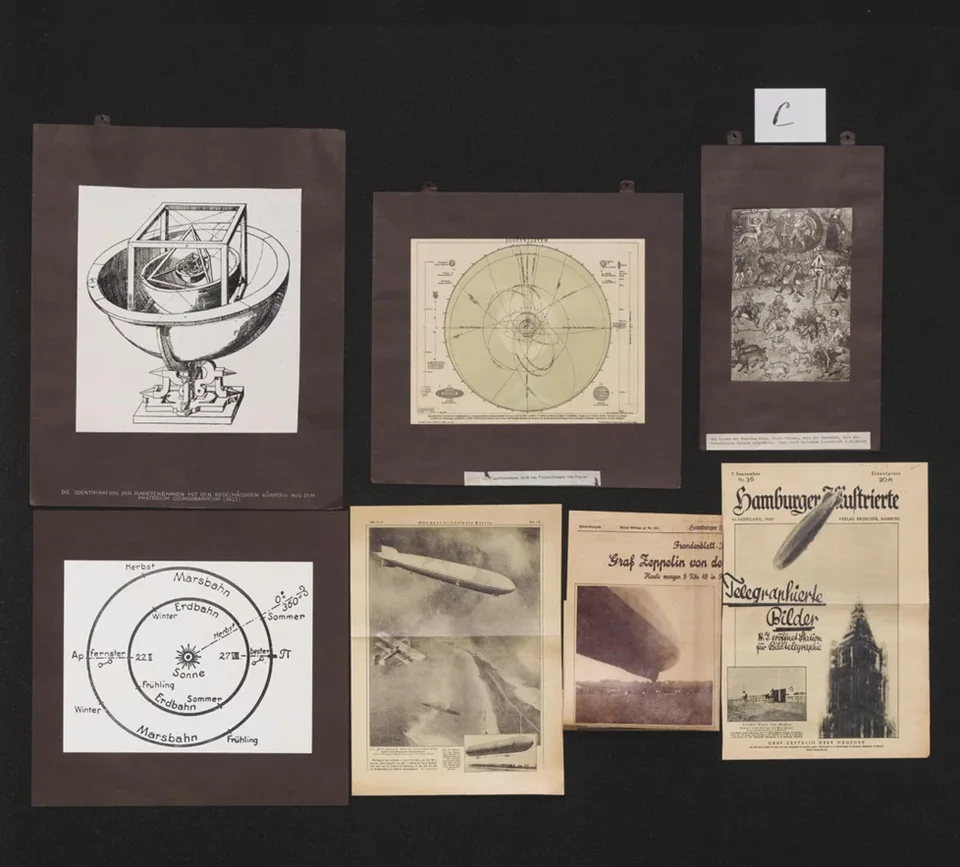
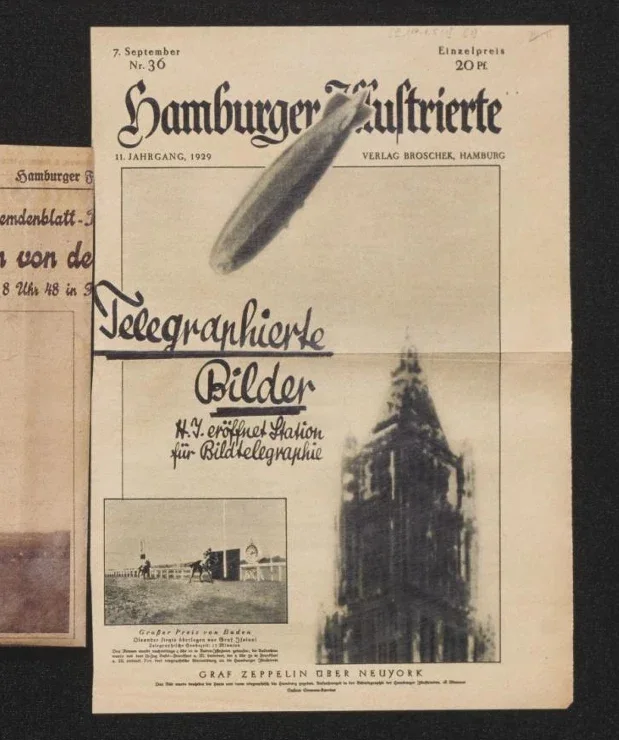
In the well-known Plate C of the Atlas there is a special "telegraphed image" (Bildtelegraphie). In the lower right of this plate, Warburg selected a newspaper clipping of a Zeppelin airship from the Hamburger Illustrierte and juxtaposed it with Kepler's diagrams of planetary orbits and a medieval astrological calendar depicting the "children of Mars," suggesting both the decisive significance of "Mars" for Kepler's system and the new cosmic order of the age of "flying machines." What is easily overlooked, however, is that the airship image in this clipping is in fact a "telegraphed image."[2] In the clipping one can find the words "Telegraphierte Bilder" set in bold and underlined, and the clipping carries a caption: "The airship Graf Zeppelin flying over New York. The image was transmitted by radio to Paris and then to Hamburg." Elsewhere in the same issue of the paper, one can find a further description of "image telegraphy" and an explanation of how the relevant apparatus works:
After long-distance telephone communication came radio, sound film, and, as the ultimate miracle (höchstes Wunder), image telegraphy. It solved the problem of converting the light reflected or transmitted by an image into electric current... The photoelectric cell converts the image into electric waves... The spatial juxtaposition of pixels becomes a temporal sequence of telegraphic characters... Temporal succession becomes spatial juxtaposition.
The "miracle" of the telegraphed image lies in "converting the image into electric waves." Although "miracle" here is merely a figure of speech, the phrasing fits remarkably well with the vitalist energetics popular in the early twentieth century, which regarded the mutual transformation of matter and energy as a kind of "miracle": "Matter is not degraded and inert but alive, and the reorganization and manipulation of matter produce not more inert matter but miracles." It is therefore not surprising that telegraphed images should have caught Warburg's interest. The "miracle" of the telegraphed image implies an "energetic" understanding of the image: converting static pixels into dynamic electrical impulses means that the image must be understood as an unstable energetic structure with latent potential energy. This is almost a tautological restatement of Warburg's concept of the "dynamogram" (Dynamogramm), a concept Warburg derived by reworking Richard Semon's concept of the "engram." Following Ewald Hering and Semon, Warburg "understood as an energetic process (energetischer Prozess)" the mechanism by which memory preserves (in imagistic form) the original stimulus,[3] and he regarded visual symbols as "energy preserves" (Energiekonserve). On this basis Raulff directly interprets Warburg's "dynamogram" as a "dynamo." Elsewhere Warburg also calls the "dynamogram" a "Leyden jar" that stores electric charge: "The nature of the thiasotic engrams (Thiasotischen Engramme) as a charge that reaches equilibrium as a Leyden jar (Leydener Flasche) before contact with the selective will of the age (selektiven Zeitwillens)." The neutral charge stored in the dynamogram becomes polarized in the course of its contact with the will of different ages. The operating mechanism of Warburg's "dynamogram" can essentially be summarized as the mutual conversion of kinetic and potential energy: "The potential energy stored in memory can be reactivated and released under certain conditions." This mechanism can also be understood on the basis of Hermann Helmholtz's law of the conservation of energy.[4] The "telegraphed image" provides a model structurally similar to Warburg's "dynamogram," suggesting a synchronous relationship between Warburg's theory of the image and the image-media technologies of his time.
Early image-telegraphy technology was closely tied to the structure of the "pendulum." As early as 1843, Alexander Bain patented his "pendulum" telegraphic facsimile technology. Its core principle was to use the synchronism of the "pendulum" (converting information into electrical impulses by means of conduction/non-conduction) so that the electric stylus at the receiving end moved in step with the electric stylus at the sending end.[5] Building on this, Giovanni Caselli further refined pendulum telegraphy; in the telegraph Caselli patented in 1855, the pendulum was as long as two meters. In early image telegraphy, the physical principle of the pendulum's isochronism was decisive: the "pendulum" established synchronous motion between sender and receiver. For Warburg, too, the "pendulum" was an extremely important physical model. Warburg was fascinated by the process of energy conversion in the simple pendulum; he even copied into his notes a passage on the energy conversion of the pendulum from Georg Helms's Theory of Energy (Lehre von der Energie):
At its greatest deflection (größten Ausweichung) the pendulum possesses potential energy; at equilibrium it possesses kinetic energy (kinetische Energie). At any other position, both potential and kinetic energy are present, but their sum is always equal to the potential energy at the greatest deflection. In the motion of the pendulum, one form of energy is continually converted into the other.
In his early manuscripts Warburg repeatedly invoked the "pendulum" to depict the "range of oscillation" of the polarity of the human psyche. Warburg "interpreted the pendulum as an ideogram (Ideogramm) of periodic alternation between equilibrium and motion," and the "pendulum" was thereby endowed with an epistemological meaning. In a sketch from 1900, Warburg understood the "range" of the pendulum's swing as an epistemological field of "range determination" (that is, a creative field of force), in which the kinetic energy of the object is converted into the potential energy of a mental image or "range."[6] As Cornelia Zumbusch has put it, the basic proposition of Warburg's thought on symbolism can be expressed as: "converting the kinetic energy of the moving object into the potential energy of symbolic form, while the potential energy of symbolic form can in turn be released and converted into kinetic energy." And in the introduction to the Atlas, Warburg directly uses the pair of words "Einschwingen" (swinging in) and "Ausschwingen" (swinging out)—both built on the root "schwingen," "to swing"—to describe a dynamic consciousness of distance and the process of energy conversion in "range determination." Evidently, Warburg not only held that the essence of the image is a dynamic energetic structure, but was also inclined to generalize this conclusion, describing the essence of the human mind in terms of a universal model of energy conversion.
The theme of Plate C is "the interpretation of Mars." Warburg believed that "Mars" constituted a turning point in Kepler's cosmology and indeed in humanity's entire understanding of the cosmos: in his early years Kepler attempted to explain the geometric relations of the planetary orbits with Plato's theory of the regular polyhedra,[7] but by analyzing Tycho Brahe's astronomical data, Kepler made the revolutionary discovery that the orbit of Mars is not circular but elliptical. Warburg believed that "the interpretation of Mars" was a decisive factor in founding the modern worldview, marking humanity's acceptance of the symbolic form of the ellipse and its overcoming of the harmonious form of the circle. Interestingly, the enthusiasm for radio (image telegraphy) in the early twentieth century rekindled a collective fascination with Mars: Nikola Tesla proposed sending telegraphed images to intelligent beings who might exist on Mars, while David Todd, a professor at Amherst College, suggested using a radio-controlled airship to receive mysterious radio waves from Mars. These endeavors reflect the cosmological significance of electric waves at the turn of the century: after the astronomical revolution of elliptical orbits triggered by Mars, radio once again reshaped humanity's basic perception of time and space. "Radio introduced a vast, anxiety-inducing 'ocean of ether'... a vertiginous sense of the boundless etheric universe through which signals flowed, and a corresponding sense of individual isolation and insignificance." Electric waves became a bridge linking media studies and occultism, cosmology and metaphysics.
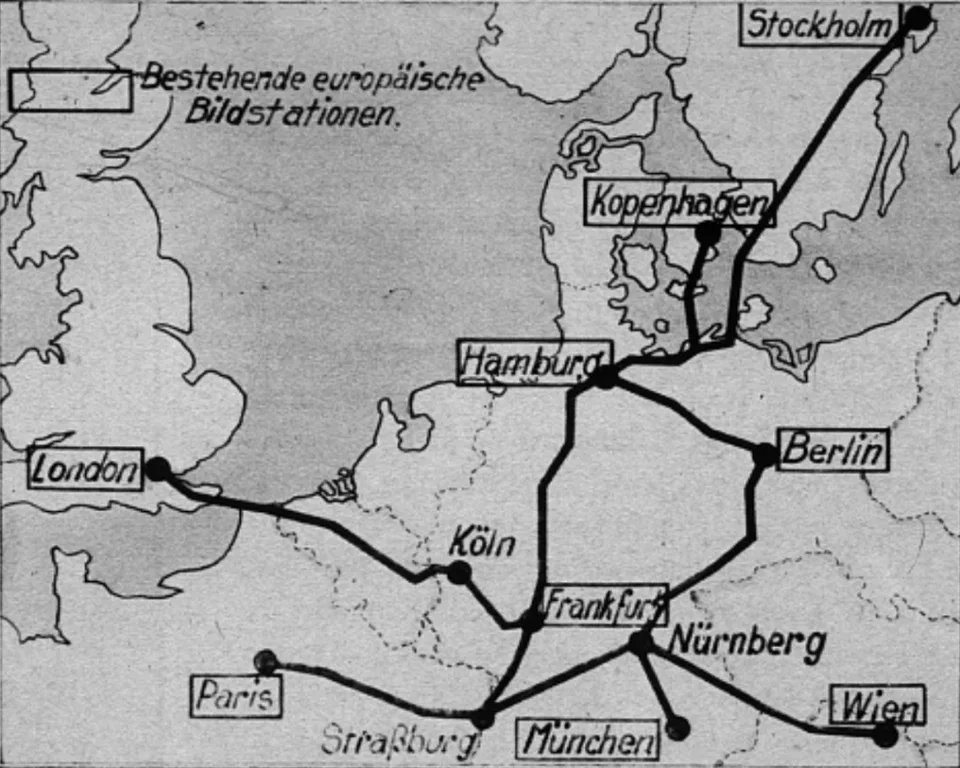
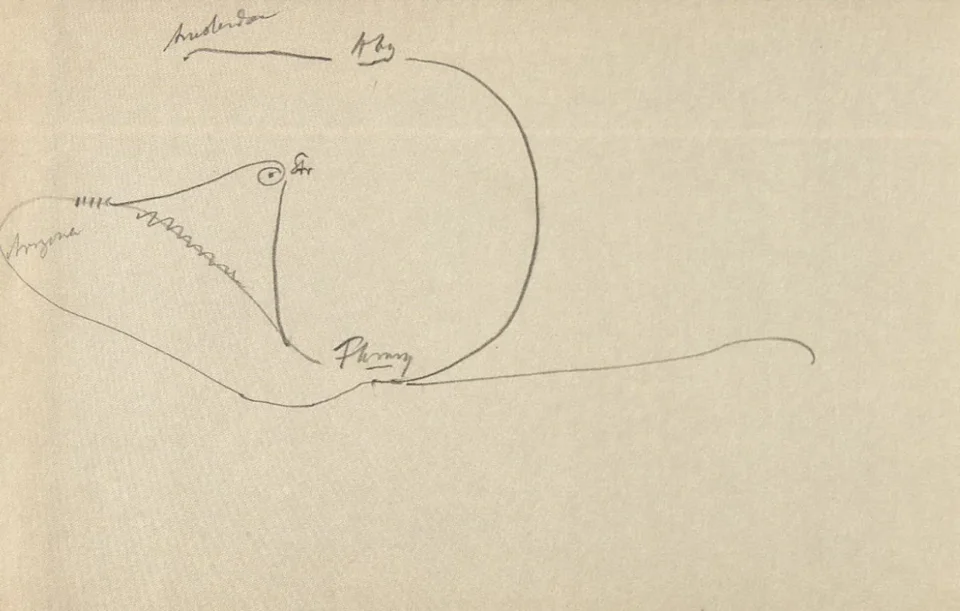
In Plate C, the conquest of the cosmos by flying machines coincides with the conquest of distance by electric waves; radio technology realized a "spatiotemporal equality" between the point of origin and the point of arrival[8]: "Images transmitted by electric waves... abolish the intermediate links of the past, joining real-time immediacy with ubiquity." As Katia Mazzucco has noted, Plate C presents means of disseminating and displaying images based on the "possibilities of reproduction" afforded by technology. Accordingly, the "telegraphed image" truly becomes an "image vehicle" (Bilderfahrzeuge) in Warburg's sense, shuttling between different times and places. Warburg hoped to use images to construct a historical-geographical mapping that is itinerant, grid-like (rather than linear), and heterochronic. In one lecture Warburg declared: "The Warburg Library hopes that many more such milestones can be unearthed along the provisionally traced route: Kyzikos–Alexandria–Oxene–Baghdad–Toledo–Rome–Ferrara–Padua–Augsburg–Erfurt–Wittenberg–Goslar–Lüneburg–Hamburg." This historical "cartography" is also an expression of the idea of the "Atlas" (Atlas, originally meaning a book of maps). At the very center of the first plate of the Atlas (Plate A), Warburg placed a "map of migration routes" (Wanderstrassenkarte) of north–south and east–west cultural exchange, thereby establishing a spatial frame of reference for the entire Atlas. And in the aforementioned Hamburger Illustrierte one finds a "Map of the Network of European Image-Telegraphy Stations" that closely resembles Warburg's "route map" in form—the underlying logic of the mutual conversion between the "temporal sequence" and the "spatial sequence" of telegraphed images can almost be regarded as an explanation of the principle by which Warburg's Atlas was made. In 1928 Warburg also drew a cultural-geographical route map with a personal, biographical character, in which he connected several places that had been decisive for him—Hamburg, Strasbourg, Florence (Firenze), and Arizona—thereby summarizing the trajectory of his own life. Hensel argues that this map was directly inspired by the electrical circuit display board at the aforementioned Frankfurt electrotechnical exhibition: there the organizers had installed a map board indicated by a thousand electric light bulbs, showcasing the world-historic achievement of transmitting electric power over 175 kilometers from Lauffen am Neckar to the Frankfurt exhibition grounds.
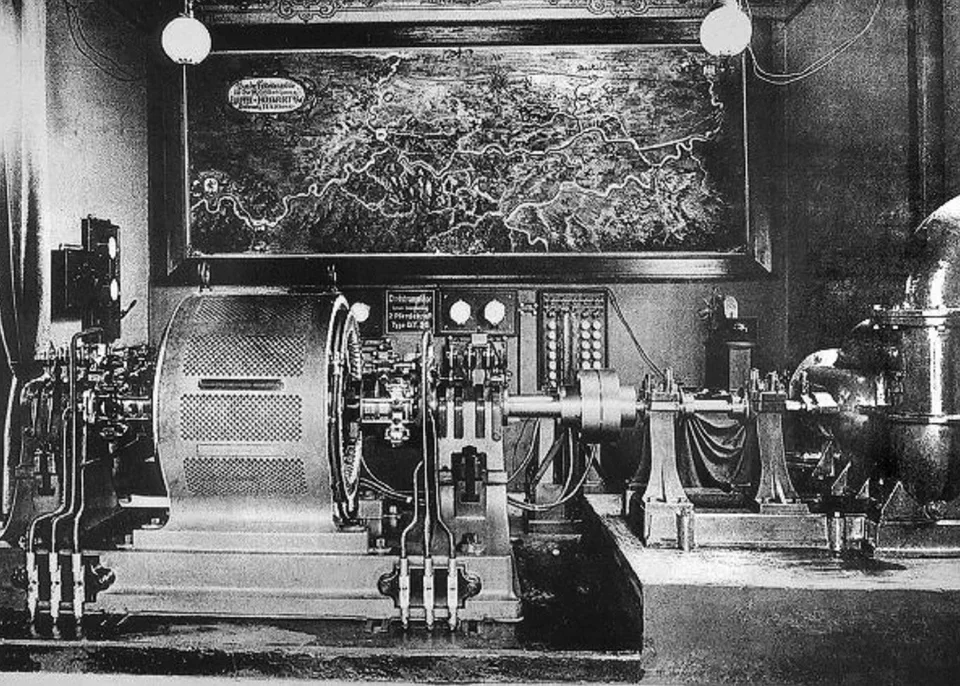
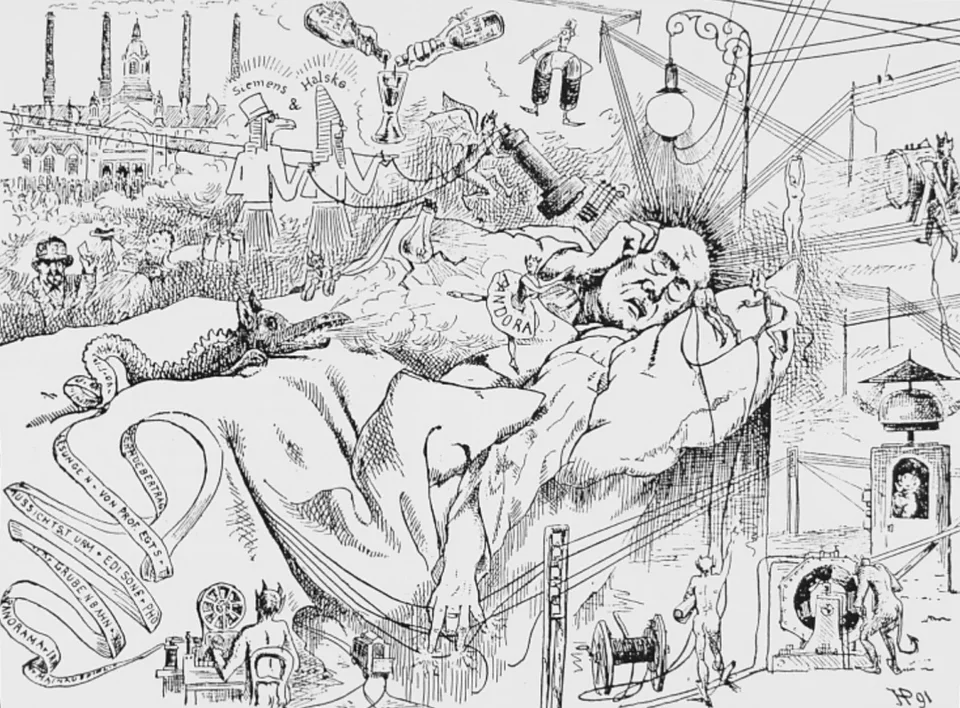
The winding, snake-like circuit on the Frankfurt board recalls Warburg's calling the wires on telegraph poles "copper snakes" (Kupferschlange) in the serpent ritual lecture: "Edison's 'copper snake' has wrested lightning from nature." In a cartoon titled A Dream after Visiting the Frankfurt Electrotechnical Exhibition (Ein Traum nach dem Besuche der Frankfurter Elektrotechnischen Ausstellung, figure), the sleeper, like a marionette, is entangled in all manner of nightmarish "copper snakes." This human being dominated by wires also closely resembles Eduard von Hartmann's description, in his Philosophy of the Unconscious (Philosophie des Unbewußten; Warburg owned a copy of the 11th edition), of the human nervous system in terms of networks of wires and the workings of the telegraph. In the late nineteenth century, the world was for the first time organized by all kinds of lines (railways and conduits carrying water, gas, or electricity). At that time Edwin Chadwick designed a water-supply and drainage system for London and called this pipe system a snake swallowing its own tail—the "Ouroboros" of the ancient alchemical tradition: the circulating network of lines took over the reproduction of life itself and, in a magical way, triumphed over death. Hans Christian Andersen likewise depicted the transatlantic telegraph cable as a "great sea serpent" (die große Seeschlange). The image of the snake appears again and again in the electrical age as a "survival of fear" in Warburg's sense. "Electricity" became the "magic" of modern society, and the "copper snake" brought together the two poles of "magic" and "technology" in Warburg's sense. As Warburg said at the end of the serpent ritual lecture, the "instantaneous electric connection" destroys the "space for thought"—which signifies "an experience of the world (Welterfahrung) that seems to have lost all solidity, in which everything is mixed or connected together, and safe distances and intervening spaces (sichernde Distanzen und Zwischenräume) have vanished."
II. Radiography: Ghosts beneath the Surface of the Image
In 1896, shortly after Röntgen discovered X-rays, Warburg's siblings Charlotte Warburg and Moritz Warburg wrote to him excitedly: "Professor Röntgen's newly discovered 'X-rays' have caused such a sensation!" In March of the same year, Felix Warburg also wrote to Warburg, who was then studying the Native Americans in North America, reporting on several new discoveries in physics, including X-rays. As an entirely new technological image medium (and form of visual knowledge), the X-ray undoubtedly had an impact on Warburg's "image science." In his famous lecture Italian Art and International Astrology in the Palazzo Schifanoia in Ferrara (ltalienische Kunst und internationale Astrologie im Palazzo Schitanoja zu Ferrara), in which Warburg first publicly introduced the concept of "iconology,"[9] he used the phrase "a continual clearing away of unpredictable layers" (ein fortwährendes Wegräumen unberechenbarer Schichten) to describe solving the "riddle of the image" (Bilderrätsels). This recalls Joseph Wilpert, an early practitioner of art-historical research using X-rays, who similarly claimed that X-rays would "uncover the layers of the image's surface," allowing "the painting itself to tell us its history." In fact, the Warburg Library was one of the first institutions to use X-rays for art-historical research[10]: in 1928, Fritz Saxl used X-ray photography in his study of Rembrandt's Sacrifice of Manoah (Sacrifice of Manoah), and in a letter to Warburg Saxl expressed his excitement: "It [the X-ray] really... lets you seize the moment at which a new pictorial idea (Bildgedankens) emerges." Saxl also described to Warburg the difficulties of carrying out X-ray photography and methodologically linked radiography with archaeology: "One must patiently take several X-rays of all the important parts, so that, like an archaeologist, one can strip them away layer by layer (Schicht um Schicht)."
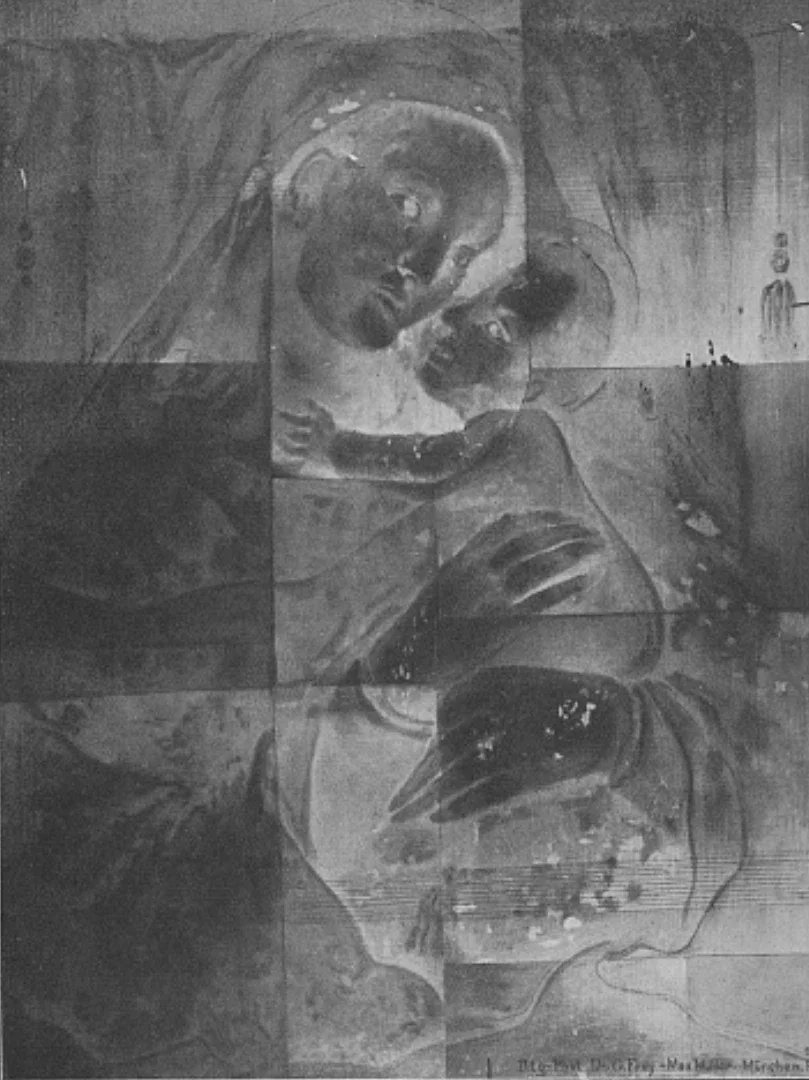
In Saxl's description, the X-ray became a metaphor for a method of the archaeology of knowledge. Georges Didi-Huberman vividly described Warburg's nonlinear model of history as a kind of geological survey that leaps and shuttles between different strata (which is precisely the function of what Warburg called the "seismograph": observing fluctuations of energy in the strata of memory), while the "afterlife" of ancient pathos constitutes a "survival" that appears "untimely" in a given historical stratum. Different historical slices are not presented continuously in a linear fashion but are superimposed on the same plane as different "strata."[11] In his notes Warburg also repeatedly used geologically tinged expressions such as "settling" (absetzen) and "deposition" (Ablagerung) to depict the "stratified superimposition" by which memory operates: "What is possessed by oneself or appropriated by others settles into range-determining memory images (umfangbestimmende Erinnerungsbilder)." Or: "structural dimensions as objective deposit / as a function of memory." It is worth noting that Warburg's contemporary Heinrich Bulle gave a detailed theoretical definition of the method of geological archaeology in his Handbuch der Archäologie (Handbook of Archaeology), and traces of Warburg's reading of this work can be found in his private library. In it Bulle stresses: "The strata often provide astonishing historical criteria (historische Kriterien)." From penetrating the surface of the image to penetrating the surface of the ground and of history—this too can be seen as the expression of an epistemological model matched to the medium of the X-ray.
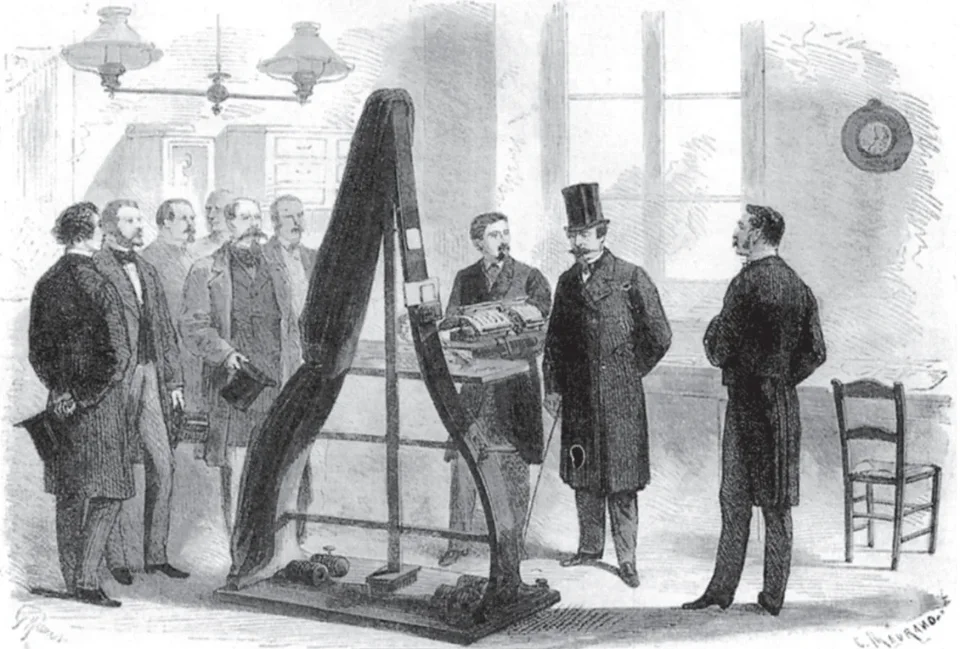
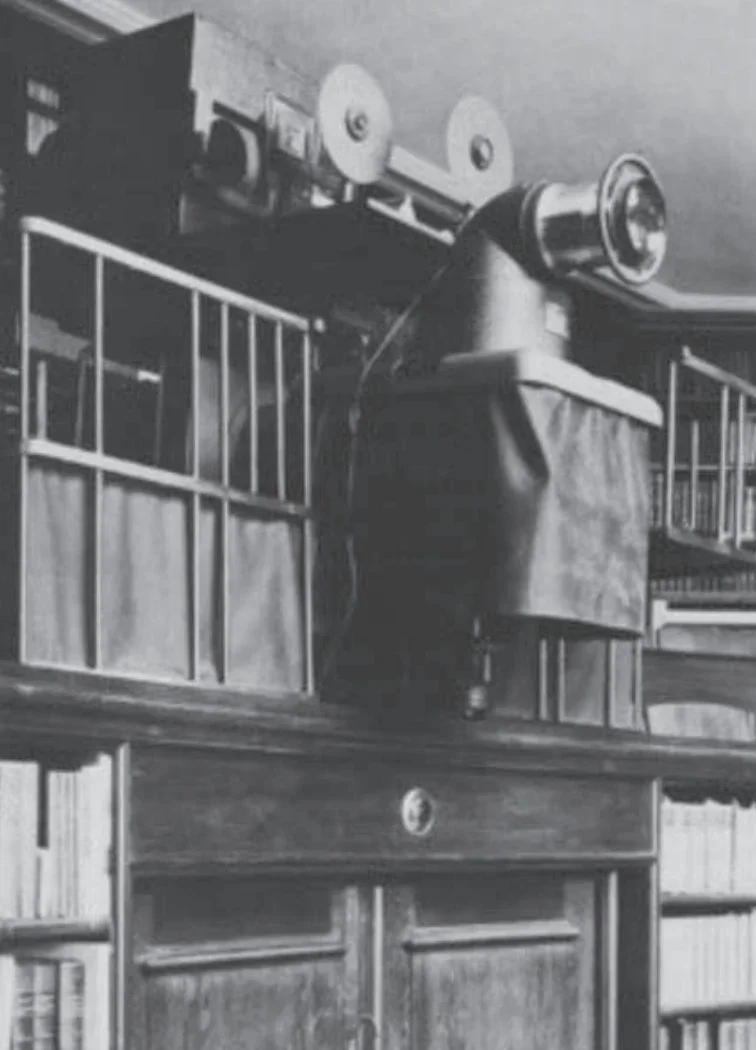
As an entirely new form of visual knowledge, X-ray photography intensified the mediatization of epistemology that had been under way since the invention of photography. The basis of medical diagnosis shifted from clinical "symptoms" to "X-ray films,"[12] while the object of scientific research shifted from natural phenomena to "scientific images" in the sense of Lorraine Daston and Peter Galison. Image technologies removed the objects of research from their "natural" environment; through drawing and image technologies, empirical processes were technologized, standardized, and brought into the laboratory. This development is also evident in the field of art history. In an article titled The Reorganization of University Lectures on Modern Art History... (Die Umgestaltung der Universitätsvorlesungen über Neuere Kunstgeschichte……), Herman Grimm analyzed the necessity of using lantern slides in teaching art history. Through visual media, the study of secondary, mediatized images came to take precedence over traditional art history's study of originals. As Heinrich Dilly has put it, photography fostered the "comparative seeing" (vergleichendem Sehen) of art-historical iconographic research, and "comparison" is itself an important principle of thought in modern experimental science; thus "art history... became a science only after the advent of photography... photography made comparison possible, that is, it created the science." In this sense, when Warburg replaced physical artworks with (reproduced, rescalable) images of them and organized, compared, and reconstructed these images on plates, the Atlas (its plates) itself became a kind of "engineered technique of image manipulation" (an image medium), and the Warburg Library, as the site where the plates were displayed, became a "laboratory." The reading room of the Warburg Library, as an image laboratory, was also equipped with visual apparatus (a large projector, figure). With the help of various visual media, Warburg "transformed" art history as an "observational science" "into a laboratory science of image processing."
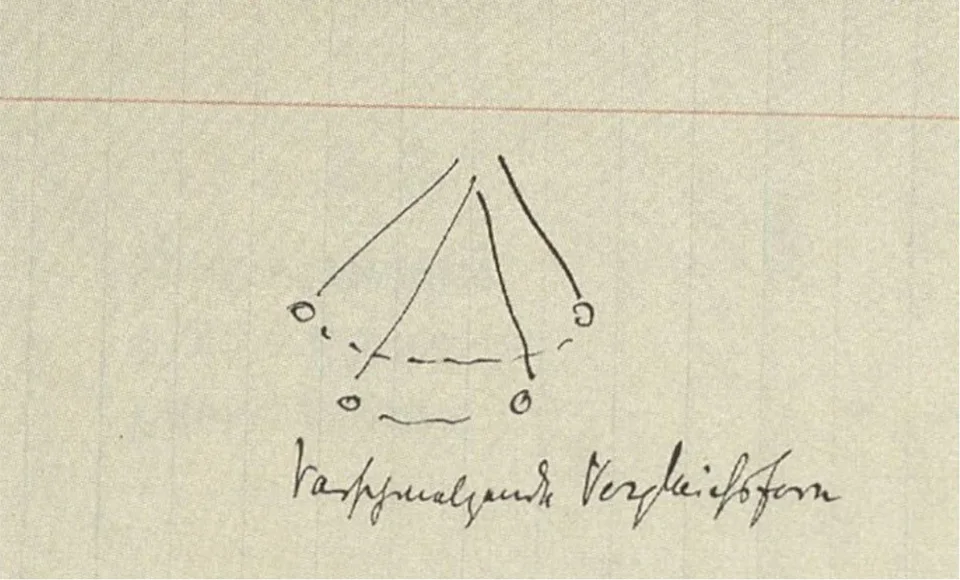
This principle of "comparative seeing" can also be understood through the media epistemology of radiography, namely as a lantern-slide technique based on the "superimposed projection" (rather than "parallel projection") of images. In the late nineteenth century, Bruno Meyer, in an article titled Die Photographie im Dienste der Kunstwissenschaft und des Kunstunterrichte (Photography in the Service of Art Scholarship and Art Instruction), described in detail the handling of lantern slides in art-historical research: "The two images projected by the two apparatuses are made to coincide and fuse into a certain unified effect, until finally the image on one side merges into the new image on the other."* This "layer-superimposing" slide technique is essentially identical to the "layer-by-layer stripping" epistemological model of radiography: both move away from the surface of the image and seek instead a kind of knowledge of the image's depth. Accordingly, the words written beneath the pendulum in Warburg's aforementioned "simple pendulum" manuscript diagram, "fusing comparative form" (Verschmelzende Vergleichsform), can also be seen as an expression of this comparative seeing through superimposed projection. On 22 January 1927, Warburg referred directly to this mode of projection in a letter to the Rembrandt specialist Carl Neumann:
Through double projection onto the same screen (zweifache Projektion auf die selbe Bilderwand), we can simultaneously show the contrast of contours of ancient (mysterious) 'images.'
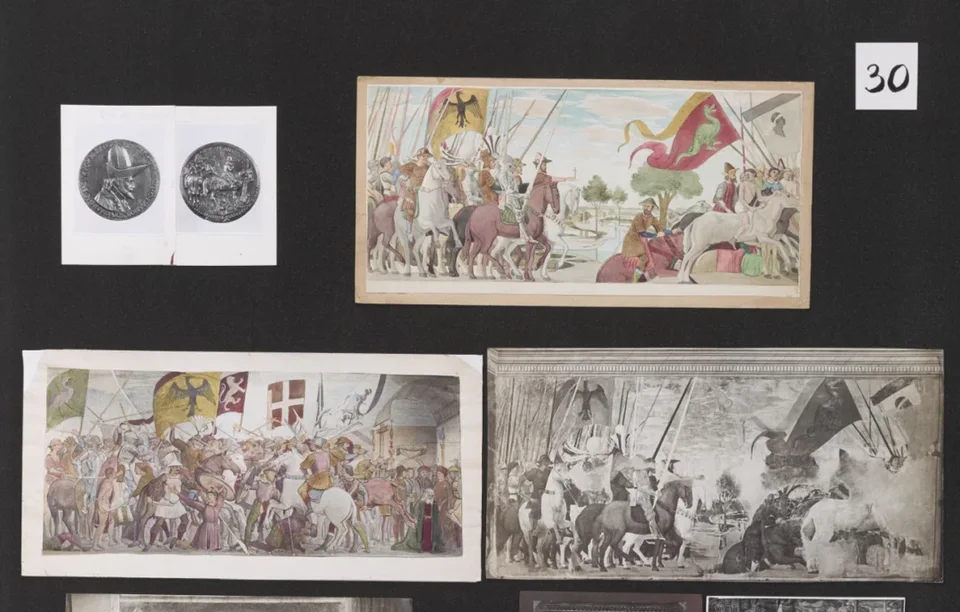
It is worth mentioning that Warburg also reconstructed the original appearance of Piero della Francesca's (partly destroyed) fresco The Battle of Constantine by comparing it with an eighteenth-century watercolor copy by Johann Ramboux (Ramboux),[13] which clearly constitutes a successful application of the "fusing comparative form." Corresponding to the "miracle" of the telegraphed image described above, the illuminating, revelatory function of the "fusing comparative form" is likewise a "miracle": the fusion and juxtaposition of images produces an effect akin to alchemy—activating seemingly inert visual material so that it generates new possibilities within the complex strata of memory and history: "Montage (of images)... reveals the miracle not through the material—but in the material."
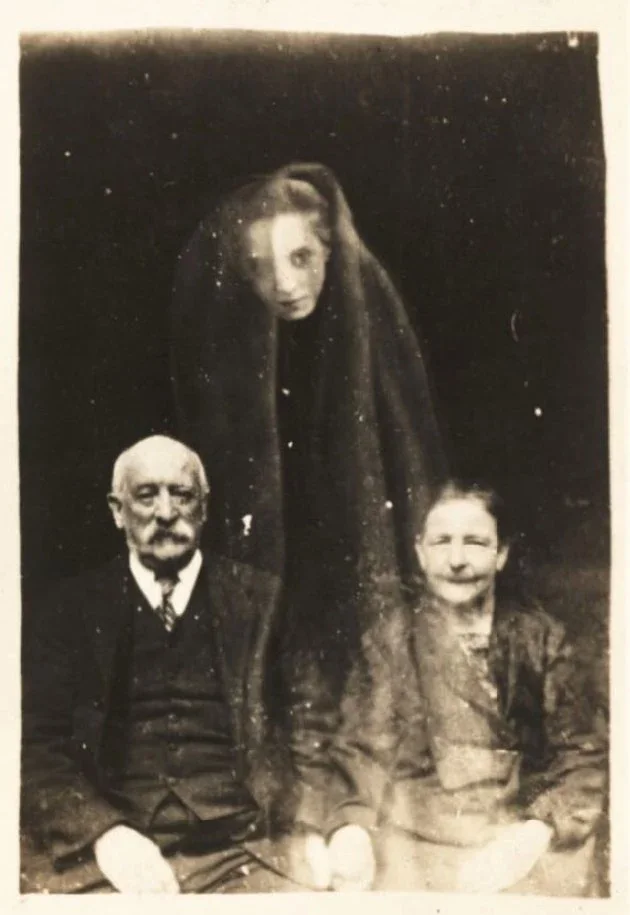
The synchronous relationship between the mediatization and scientization of art history and the widespread use of X-rays is no coincidence: from its very birth, the X-ray was received as an "image medium."[14] An Italian newspaper in 1896 called the X-ray "a wonderful discovery in the world of photography," and the British Journal of Photography published as many as 31 articles on X-rays that same year. The X-ray also caused a sensation in the occult and mesmerist thought of the turn of the century; some writings even recounted, in the tone of a hagiographic legend, how the "inspiration" of the X-ray descended upon Röntgen on a Faustian night. Unlike early photography, which depended on natural (visible) light, the light of radiography (X-rays) is invisible to the subject, and so the X-ray was also regarded as a kind of "dark" photography: if ordinary photography points to the visible world, X-ray photography reveals the ghosts beneath the visible world: "Discoveries such as X-rays or the cathode-ray tube seemed to many to be of a piece with the more mysterious forces investigated in spiritualist research." As early as the eighteenth century, the mesmerist Franz Anton Mesmer claimed that the functioning of the human body had to be regulated through a magnetic fluid pervading the universe,[15] and in the 1860s Karl Reichenbach announced that he had discovered this cosmic fluid, which he named "od." At the time, occultists such as Jules Bernard Luys and Louis Darget believed that radiography could capture the mysterious "od," making the vital fluid of Mesmer's theory appear on the photographic plate.
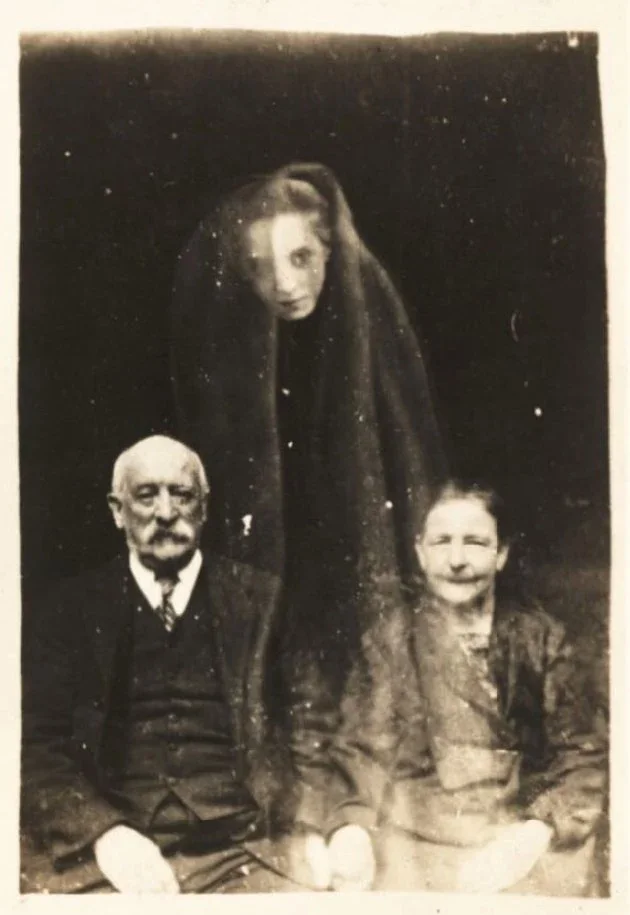
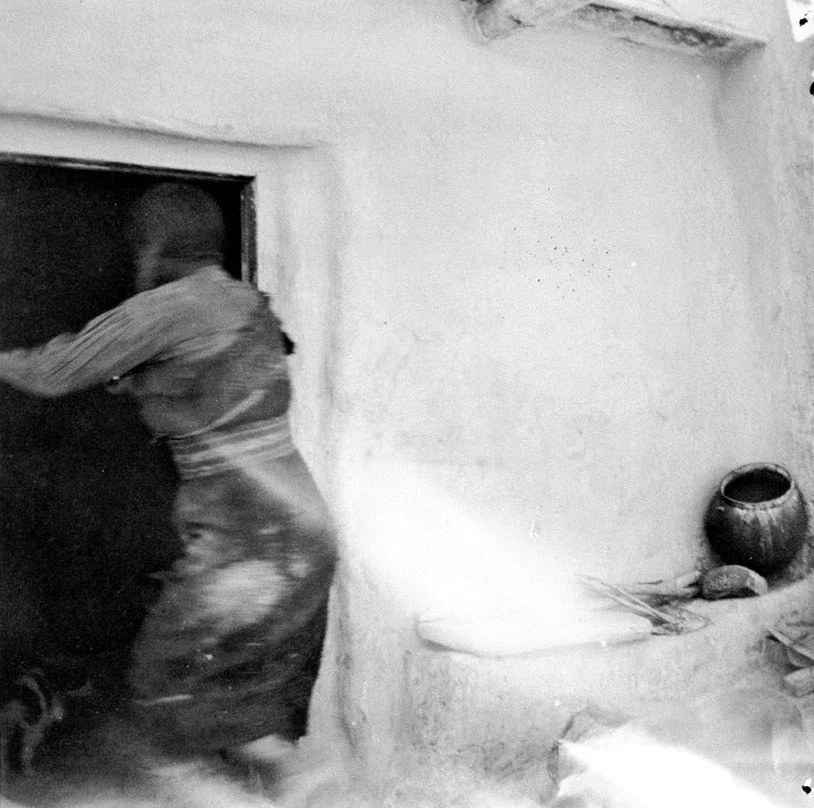
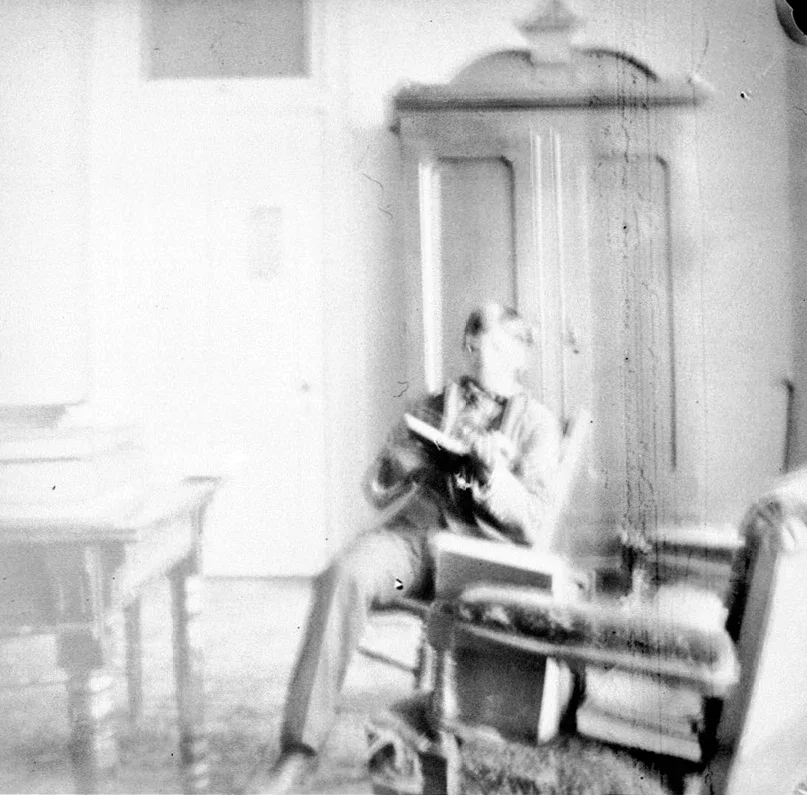
Radiography rekindled interest in "ghost photography" (Ghost photography).[16] "From the outset, these skeletal images and the penetrating power of X-rays were associated with death, the soul, and other mysterious phenomena. X-rays... were compared to spirit photography and linked to occult mediums." In 1903, F. W. H. Myers asserted that "rather than describing a ghost as a dead person who can communicate with the living, it would be better to define it as a persistent manifestation of personal energy, or as an indication that some kind of force is at work after death." This "scientized" concept of the ghost was one of many popular views at the turn of the century that blended late-Victorian occultism with experimentalism, and it also encouraged the view that radiography was analogous to a "spirit medium."[17] The "mystification of the medium" of radiography can also be seen as a continuation of early "photophobia." In many cases early photography was accused of robbing the sitter of part of his or her life (soul); Balzac, for example, claimed that each daguerreotype stripped a layer of specter from the body. Radiography thus also revealed, in the sense of a "spirit medium," what Warburg called "iconophobia," which points to the magical power contained within images (and image media)—what Warburg called "monstra." During his journey in North America, Warburg took a large number of photographs himself with a "Buck-Eye" camera, one of which happens to capture a Native American woman "in the act" of fleeing into a house to avoid being photographed by Warburg.[18] This highly dramatic moment freezes "image-fear" itself. (X-ray) photography, as a medium that penetrates mysteries while being itself mysterious, captured the ghosts beneath the fragile surface of the image.
III. Electromagnetic Waves and the Dynamogram: An Ontology of the Cosmic Medium
Both the telegraph and radiography essentially involve the use of electromagnetic waves (the X-ray is itself an electromagnetic wave of extremely high frequency and extremely short wavelength). Warburg likewise had a keen interest in "waves": in an annotation to a note on Renaissance and Baroque art, he used the concept of "overtone" (Oberton) as an analogy for the overall tonality of an artistic style. In a more general sense, Warburg also understood the "wave" as a medium that links different times and places and transmits the energy of memory. Warburg called Nietzsche, Burckhardt, and himself "very sensitive seismographs" (sehr empfindliche Seismographen): "The seismograph must receive and transmit waves... receive waves from the region of the past (Wellen aus der Region der Vezgangenheit)." Warburg's well-known "seismograph" metaphor is less a literary figure than a physical one. Warburg was well aware of the decisive impact that the discovery of electromagnetic waves had had on turn-of-the-century physics. In a letter to his brother Paul Warburg dated 27 July 1924, Warburg connected Hertz's verification of electromagnetic waves with his own work:
At the Warburg Library we have set up an observatory for observing the vibrations of the human spirit (whose polarity I have just discovered and defined in images and actions)... This is akin to Hertz's attempt to demonstrate the energetic unity (die energetische Einheitlichkeit) of electricity and light.
Five years after this letter, Warburg again mentioned Hertz in a letter, calling Hertz's achievement a "grandiose theoretical unification (grandiosen theoretischen Vereinheitlichung)" of the worldview. In fact, Warburg not only knew Hertz's work very well but was even related to Hertz (through his wife, Mary Hertz). For Warburg, electromagnetic waves signified a form of the expression of energy with a monist tinge, suggesting both the unity of energy and matter and the unity of polar movement. In 1889, Hertz demonstrated through experiments with a spark-discharge apparatus that an oscillating electric dipole can produce electromagnetic waves, confirming the predictions of Maxwell's theory. This phenomenon of dipole oscillation, as a mechanism of periodic polar reversal, may have provided Warburg with a symbolic physical model for his idea of the "polar oscillation of the human spirit."[19]
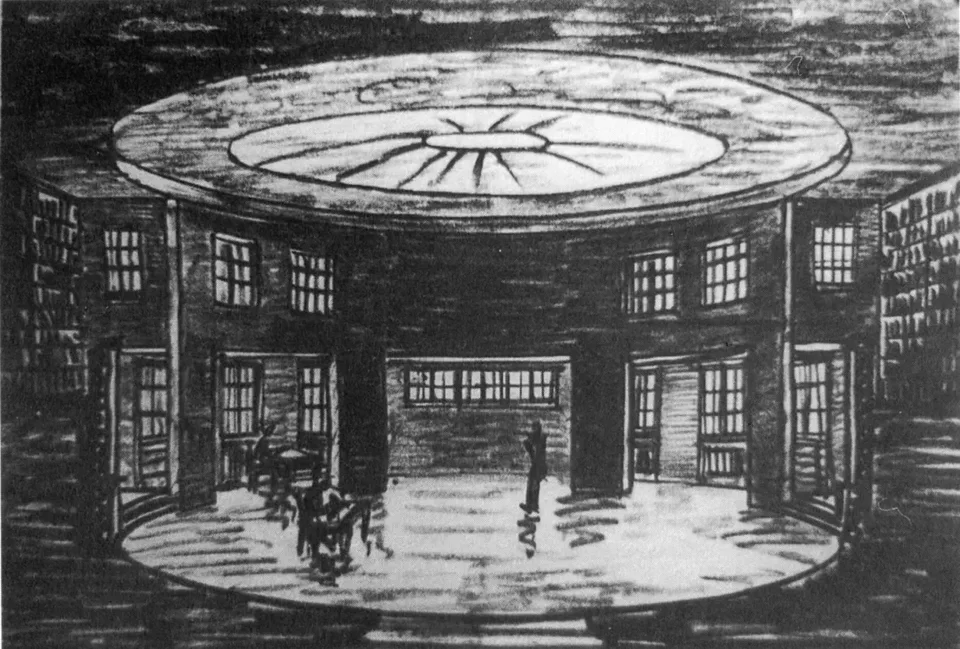
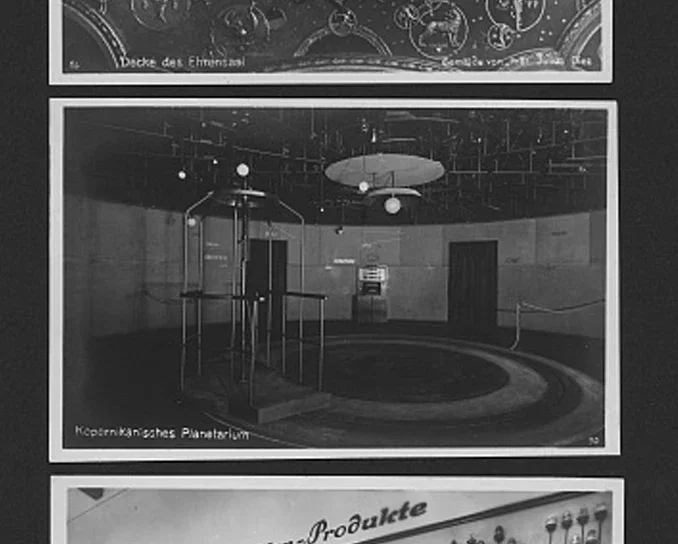
Warburg's preference for the ellipse is also closely related to the dipole model of electromagnetic waves.[20] Warburg believed that the "two poles" (the two foci) of the ellipse—themselves a kind of "dipole"—not only describe the orbits of celestial bodies but also reveal a universal cosmic order. Warburg once explained to Cassirer: "The two poles of this figure (the ellipse) are characteristic of the world as a whole: they govern the movement of the cosmos (Kosmos), and they are also a symbol of the bipolar structure of man and of his spirit and soul (Geist und Seele)... not only of electrical polarity, but also of day and night, summer and winter, male and female." Warburg designed the reading-room hall of the library—at once an "observatory" and a "laboratory"—as an ellipse, both as a homage to Kepler's discovery of elliptical planetary orbits and as a "dipole model" revealing the core of Warburg's idea of polar unity. As Jesinghausen-Lauster has said, Warburg's ellipse is "the expression of a harmony of forces (Kräfteharmonie) that are difficult to reconcile and of a complex unity of form (Formeinheit); it 'conveys something resistant (Widerstrebendes),' embraces what is divided into two poles, and fuses the differences that recur in the eternal cycle of symbols. The ellipse is the figure that constructively contains duality, polarity, and difference." Accordingly, the juxtaposition in Plate C of planetary orbits (ellipses) and image telegraphy (electromagnetic waves) takes on a deeper physical-ontological meaning.[21] Kepler's research on elliptical orbits and Hertz's research on electromagnetic waves both mark the emergence of a new cosmic order; the electromagnetic wave is not only a technological medium of images (or communication) but, even more, a cosmic medium in the ontological sense. Plate C sketches an entirely new picture of the world in the double sense of media theory and cosmology.
For Warburg, the wave is a universal form of expression of (memory) energy, and the medial character of the wave lies in the fact that it does not itself exist in the visible/sensible realm; the wave is an incorporeal "'hidden' force (vis occulta), of which only the effects can be observed, while it itself cannot be explained." The receiving device for waves (the seismograph) implies the mapping of invisible energetic operations beneath the phenomenal world. This resembles the mapping of magnetic field lines in electromagnetism: field lines in a magnetic field are fitted from the distribution of iron filings around a magnet, and neither field lines nor waves are a visible "objective reality"; they are rather a "scientific reality" constructed in the process of mapping.[22] Gottfried Boehm aptly summarizes: "Fields of force (Kraftfeld)... always involve a transition between the invisible and the visible (Übergang zwischen Unsichtbarem und Sichtbarem)... they record kinetic energies, which manifest themselves as orderly field lines." Hertz, too, in his metaphysically tinged work The Principles of Mechanics (Die Prinzipien der Mechanik), emphasized that the forms or symbols we assign to objects are at the same time necessary consequences of the essence of the things depicted. Like the mapping of magnetic field lines and seismic waves, Warburg's dynamogram must also be understood as a modeled "schema of thought" situated between image and language—or as a "diagram" in Wittgenstein's sense (that is, a graphic element that cannot be typed on an ordinary keyboard). The dynamogram is both the epistemological model and the methodological model of Warburg's image science.
In terms of its operating mechanism, Warburg's dynamogram might also be examined as a "circuit diagram" describing the transmission and conversion of invisible energy. The principles of Warburg's "image science" are closely related to the new physics exemplified by electromagnetism. In his notes Warburg called his work a kind of "physics of thought": "Physics of thought = theory of the radiating movement (strahlenden Bewegung) proceeding from a fixed reflex center." The expression "radiating movement" clearly derives from electromagnetism or thermodynamics. Rays and radiation imply the spatial diffusion of energy or matter, unsettling perceptual properties such as the impenetrability of bodies and the constancy of elements, as well as the basic certainties of physics.[23] As Frank Fehrenbach has observed, in the late nineteenth century discoveries in the new fields of physics caused the traditional concept of "force" (Kraft) to be gradually replaced by categories such as "energy" (Energie), "dynamics" (Dynamik), and "intensity" (Intensität). Correspondingly, the concepts used most frequently in Warburg's notes show a certain evolution from "force" toward "energy," "electricity," and "waves." Giovanna Targia rightly points out: "The concept of 'energy' (Energie) appears with increasing frequency in [Warburg's] notes after 1894." In his early notes, Warburg repeatedly attempted to use the principle of universal gravitation to define the principles of his psychology of art (especially the operation of symbolic forms). For example, while reading Karl Stein's History of Aesthetics, Warburg asserted that in aesthetic history (der ästhetischen Geschichte) "there are laws as powerful as gravitation (ebenso mächtig als die Gravitation)." In a note from March 1901, however, Warburg already explicitly called the transformation from stimulus-impression to symbol (from physical experience to image) a "switching of electric, nervous, energetic tension (Umschaltung der Spannung)." Warburg sought to extend the paradigm of energy conversion from electromagnetism to the physiological-psychological domain, seeking a universal energetic form of expression for the human sciences,[24] which in turn ultimately resorted to the concept of the "wave." Warburg's "wave" can also be understood as a "hybrid" in Latour's sense—the product of a complex interweaving of multiple fields, including electromagnetism, spiritualist (energetic) theory, media studies, cosmology, and geological history (the seismograph), and continually redefined in an ongoing process of "translation." The "wave" is at once the form of motion of a physical quantity, a constructed "scientific reality," the ontological medium of the electrical age, and the "schema of thought" of Warburg's "image science." Warburg's thought itself constitutes a resistance to the "purification" of modernity; hence we can discern a subtle correspondence between Latour's declaration that "we have never been modern" and what Warburg in his diary called humanity's "eternally unchanging return of barbarism."
For the subject at the turn of the century, electricity was a pervasive, omnipresent force: "When the senses are confronted with stimuli produced by electrical energy (light, telegraph, telephone), the question of the perceptibility of electricity (Wahrnehmbarkeit von Elektrizität) arises." Electricity gave rise to entirely new sensory strategies and a new media ontology. As Peters has put it: "The spread of wireless telegraphy, or radio, shows that people had long dreamed that 'electricity' could make different souls merge... The telegraph seemed to be the latest in a long tradition of angels and spirits transmitting intelligence over great distances." The telegraph and X-rays (electromagnetic waves) made manifest energetic relations in the invisible realm and their effects, blurring the boundary between physical transmission (media) and spiritual transmission (mediums); in achieving communication at a distance, electric media also evoked the ancient tradition of necromancy (which transcends the distance between life and death).[25] Media produce ghosts (afterlives). As Derrida argued, media (photo-cinematography, tele-perception, tele-production, tele-communication) constitute the field of phantasmatic spectral phenomena, revealing the originary connection between "phainesthai" (appearing) and "technê" (technique). With the mediatization of the world since the electrical age, the concept of "matter" in the traditional ontological framework, and the corresponding concept of "force," were replaced by concepts such as "waves," "oscillation," "radiation," and "energy": "Substantialism (Substantialismus) was replaced by relation, mediation, transmission, and representation." At the turn of the century, "civilization had become a force that constantly overturns things and people, a turbulent upheaval of the elements (Aufruhrder Elemente) that constantly invades the subject and threatens to overwhelm it." Everything flows, flickers, vibrates; everything is shattered, recombined, and connected across time and space.[26]
Conclusion: "I Am Not an Art Historian"
On 12 February 1917, Warburg wrote in his diary that he was "a historian of images, not an art historian (Bildhistoriker, kein Kunsthistoriker)," a statement that can be regarded as Warburg's own definition of his work. Warburg's research is an "image science" grounded in images and their material media—a concept Warburg first proposed in his early manuscript Fundamental Fragments toward a Monist Psychology of Art. And in his famous study Pagan-Antique Prophecy in Words and Images in the Age of Luther (Heidnisch-antike Weissagung in Wort und Bild zu Luthers Zeiten), Warburg went further, declaring that "all image-making (alles Bildschaffen)" should be brought within the scope of its research; this essay was later even called "the beginning of critical media history (Mediengeschichte)." Warburg engaged with almost every type of image of his time, and so in the Atlas we find news photographs from newspaper clippings, postage stamps[27], and even advertising images for modern toilet paper. Warburg expanded art history into a visual science, and this expansion meant not merely broadening the field of research from art-historical images to non-art-historical images, but also emphasizing the materiality of technological image media (and the spectrality that accompanies it). On this basis, by resituating Warburg within the media history and intellectual history of the turn of the century, we can see to what extent electric media and the new epistemological paradigm brought about by the revolution in electromagnetic physics shaped the principles of Warburg's "image science," his model of history, and his conceptual system built upon the categories of "waves" and "energy."[28] Specifically: the operating principle of image telegraphy, namely the mutual conversion between static pixels (a spatial sequence) and dynamic electrical impulses (a temporal sequence), is logically isomorphic with Warburg's concept of the "dynamogram" (an unstable energetic structure with latent potential energy, in which neutral historical charges are stored and continually polarized) and with his theory of memory energy; "the interpretation of Mars" was a decisive factor in founding the modern worldview, and the early-twentieth-century enthusiasm for radio rekindled a fascination with Mars and the cosmos; telegraphed images display the itinerant state of images moving between different times and places, that is, the geographical mapping of "image vehicles" in Warburg's sense; the image of the "snake" was widely used in the late nineteenth century to depict electric wires and cables, and "electricity" brought together the two poles of "magic" and "technology" in Warburg's sense. The X-ray constitutes a metaphor for Warburg's nonlinear model of history; image technologies removed the objects of research from their "natural" environment, creating the possibility of "comparison" (a principle of modern experimental science); by resorting to visual media (lantern slides, photography, and so on), Warburg transformed art history as an "observational science" into a "laboratory science" of image processing; radiography was closely related to spirit photography and spiritualism, and photography as a "spirit medium" pointed to the "demonic" (monstra) contained within images and to "iconophobia." "(Electromagnetic) waves" are constitutive for Warburg's conceptual system: the "wave" is the form of motion of a physical quantity, a constructed "scientific reality," the ontological medium of the electrical age, and the "schema of thought" of Warburg's "image science"; Warburg knew Hertz's work very well, and the dipole and the ellipse constitute models for Warburg's theory of polarity; "electricity" gave rise to the new cosmology of the electrical age, in which the traditional concept of "matter" was replaced by concepts such as "waves," "oscillation," and "energy." At the end of the serpent ritual lecture Warburg proclaimed that the "instantaneous electric connection" would return the cosmos to magical chaos; in this world of "electric connection," everything exists in a fleeting, ghostly state, and everything is suffused with "electricity" and "shadow."
Notes
[1] Prometheus taming lightning on the exhibition poster recalls Warburg's calling Franklin (who "captured" lightning with the lightning rod) the "modern Prometheus" at the end of the serpent ritual lecture. See Aby Warburg, Uwe Fleckner ed. *Aby Warburg.*Bilder aus dem Gebiet der Pueblo-Indianer in Nord-Amerika, Vorträge und Fotografien[M]. Berlin/Boston: Walter de Gruyter GmbH, 2018: 94.
[2] This discovery comes from Thomas Hensel's research on Warburg's "graphies" (Graphien). In addition to image telegraphy, Hensel also discusses the influence on Warburg of various image media such as film and printing. However, Hensel's discussion seems overly confined to the physical properties of these media and does not adequately address the complex relationships between these media and ideas of the electrical age such as vitalism and spiritualism, nor the crucial role the latter played in the formation of the turn-of-the-century worldview. See Thomas Hensel, Wie aus der Kunstgeschichte eine Bildwissenschaft wurde. Aby Warburgs Graphien[M]. Berlin: Akademie Verlag, 2011.
[3] Semon and others held that every chemical change acting on an organic or inorganic body leaves an imprint; memory thus becomes, in essence, a material process of the transmission and preservation of energy. Or, as Christof Asendorf puts it: "For Semon, memory is the property that distinguishes living from dead things—meaning the capacity to respond to an event even after a long period of time, that is, a form of energy storage and transmission (Form der Energiespeicherung und -übertragung)..." Christof Asendorf, Ströme und Strahlen: Das langsame Verschwinden der Materie um 1900[M]. Giessen: Anabas Verlag, 1989: 162.
[4] Warburg may have learned of Helmholtz's work through Tito Vignoli.
[5] Bain's "pendulum" telegraph consisted of two sets of pendulum-and-stylus mechanisms. The letters to be sent had to be made of metal; a stylus attached to the pendulum swept line by line across the metal text frame, and each time the stylus touched a raised letter, a circuit was closed. The motion of the pendulum at the receiving end was synchronized with that of the pendulum at the sending end; the stylus at the receiving end scanned chemically treated paper, which changed color whenever current flowed, thereby displaying the textual information. See Ivan S Ruddock, Alexander Bain: The Real Father of Television[J]. Scottish Local History, 2012(83): 6.
[6] This is a decisive conversion of energy, or, in Warburg's later formulation, a "thought-energetic inversion" (Denkenergetische Inversion).
[7] That is, the Platonic regular polyhedra are nested between spheres, each sphere corresponding to the orbit of a planet. Kepler believed that this model reflected a deep mathematical harmony in the universe and revealed the secret of the cosmos as a whole.
[8] This "spatiotemporal equality" can also be understood in terms of the occultism and spiritualism popular at the time: radio suggested the possibility of communication at a distance and was therefore regarded as related to "telepathy," "spiritualism," and "mind reading." Oliver Lodge, president of the Society for Psychical Research (SPR), the center of spiritualist research at the turn of the century, openly proposed understanding the operation of radio (electromagnetic waves) in terms of the ether (a cosmic medium). Mark Twain also used the phrase "mental telegraphy" to describe telepathy between people. As Peters says: "The early history of radio is inseparable from bold imaginings of soul flight, disembodied voices, and instantaneous presence at a distance... All the real spiritual and material problems of encountering others in the world were displaced by radio tuning... Radio sensing replaced the City of God as the way to communicate like angels." John Durham Peters, Speaking into the Air: A History of the Idea of Communication[M]. Chicago & London: The University of Chicago Press, 1999: 104-106.
[9] Interestingly, in the same lecture Warburg also spoke of illuminating the "riddle of the image" "cinematographically" (kinematographisch). This expression likewise bears the clear stamp of the electrical age. Aby Warburg, Gesammelte Schriften, Band 2[M]. Berlin: B.G.Teubner, 1932: 478.
[10] Not long after the advent of X-rays, Alexander Faber of Weimar obtained a patent in 1914 for using X-rays to analyze the pigments of oil paintings; subsequently, Joseph Wilpert also put this method into practice in his study of a Madonna (Warburg's notes show that he had paid attention to Wilpert's work). In fact, Röntgen may have recognized from the very beginning the possibility of obtaining information about the internal structure or the different layers of paintings and other artworks by irradiating them with X-rays. See Thomas Hensel, Wie aus der Kunstgeschichte eine Bildwissenschaft wurde. Aby Warburgs Graphien[M]. Berlin: Akademie Verlag, 2011: 152. In today's art-historical research, techniques such as X-ray, infrared, and ultraviolet imaging and X-ray fluorescence spectroscopy—non-invasive examinations used to analyze the nature of a work's paper, trace minerals in its pigments, and so on—have become quite common.
[11] This mode of operation also recalls Deleuze's "plane of immanence" and "geophilosophy."
[12] One source accurately reflects this phenomenon: "...patients may have an ambiguous relationship with their own X-rays; a patient may ask 'what is wrong with the X-ray' or 'what does the X-ray show' rather than 'what is wrong with me.'" See Simone Natale, The Invisible made Visible: X-rays as attraction and visual medium at the end of the nineteenth century[J]. Media History, 2011, 17(4): 352.
[13] Warburg presented his reconstruction of Piero della Francesca's fresco in a lecture titled Piero della Francesca's Battle of Constantine in the Watercolor Copy by Johann Anton Ramboux (Piero della Francescas Constantinschiacht in der Aquareilkopie des Johann Anton Ramboux); the content of this lecture corresponds to Plate 30 of the Atlas. This even calls to mind the cryptographic trick of conveying information on multiple sheets: different content is drawn on different sheets, and the hidden message appears only when the sheets are laid on top of one another.
[14] The original meaning of the word "photography" is "drawing with light" (a compound of the Greek "φῶς/phos" [light] and "γραφι /graphis" [drawing]). The most obvious difference between photography and radiography may be that the latter requires no illuminating light, but the medial kinship between the two is also striking: both use photographic plates.
[15] This description recalls both the ancient theory of humors and theories of the ether and electromagnetic waves.
[16] In the late nineteenth century, W. H. Mumler, William Hope, and others fabricated "ghosts" in developed photographs by means such as double exposure; spirit photographers claimed that photography could capture invisible "spirits." The belief of spirit photography in "capturing ghosts" was closely tied to the development of image technologies at the time; radiography fundamentally expanded the possibilities of vision, going beyond what human observers could ordinarily perceive: "Spirit photography exploited the combination of imaginative and scientific possibilities brought about by these developments, as well as the understanding of the medium as capable of producing an objective record of its subjects beyond the usual limits of human vision." James Coates, Photographing the Invisible: Practical Studies in Spirit Photography, Spirit Portraiture and Other Rare But Allied Phenomena[M]. London: L. N. Fowler and Co., 1911: 3.
[17] Correspondingly, some studies have attempted to discuss what electric waves transmitting the voices of the living and mediums transmitting the voices of the dead have in common.
[18] In the same batch of photographs one can also find a photograph of a "faceless person" resulting from improper handling. In a certain sense, it can also be regarded as an inadvertent "spirit photograph" by Warburg, and a superb portrayal of the ghostly "faceless" figures that haunt the subject in memory.
[19] In classical electromagnetic theory, an ideal electric dipole consists of a pair of equal and opposite charges (+q and -q) separated by a small distance d. When the dipole moment p(t) = q·d(t) oscillates harmonically over time, it excites a time-varying electromagnetic field in space. The spatial distribution of this field can be solved rigorously from Maxwell's equations under appropriate boundary conditions.
[20] The polarization state of an electromagnetic wave is determined by the trajectory traced over time by its electric field vector in the plane perpendicular to the direction of propagation. This trajectory is generally elliptical, and the polarization state can be characterized by the geometric parameters of the ellipse. Linear and circular polarization are two special cases of elliptical polarization.
[21] Warburg kept a postcard in a guidebook of the Deutsches Museum showing a motor-driven model of the planetary orbits of the solar system; this curious mechanical device faithfully reproduced the inclinations and eccentricities of the planetary orbits. The motor-driven planets could be set to move forward or backward, individually or in synchrony. In this device, which fascinated Warburg, "electricity" as the primal energy of a miniature model of the cosmos was materially united with the planetary orbits. See Thomas Hensel, Wie aus der Kunstgeschichte eine Bildwissenschaft wurde. Aby Warburgs Graphien[M]. Berlin: Akademie Verlag, 2011: 72-75.
[22] On this point, Cassirer brilliantly summarized that what is given is replaced by "inner images or symbols of external objects," and that these images or symbols, as models of scientific knowledge, derive their meaning no longer from "reflecting a given existence, but from what they achieve as instruments of knowledge, from the unity of phenomena that they themselves create." Ernst Cassirer, Birgit Recki ed. Gesammelte Werke. Hamburger Ausgabe, Band 11[M]. Hamburg: Meiner, 2001: 4.
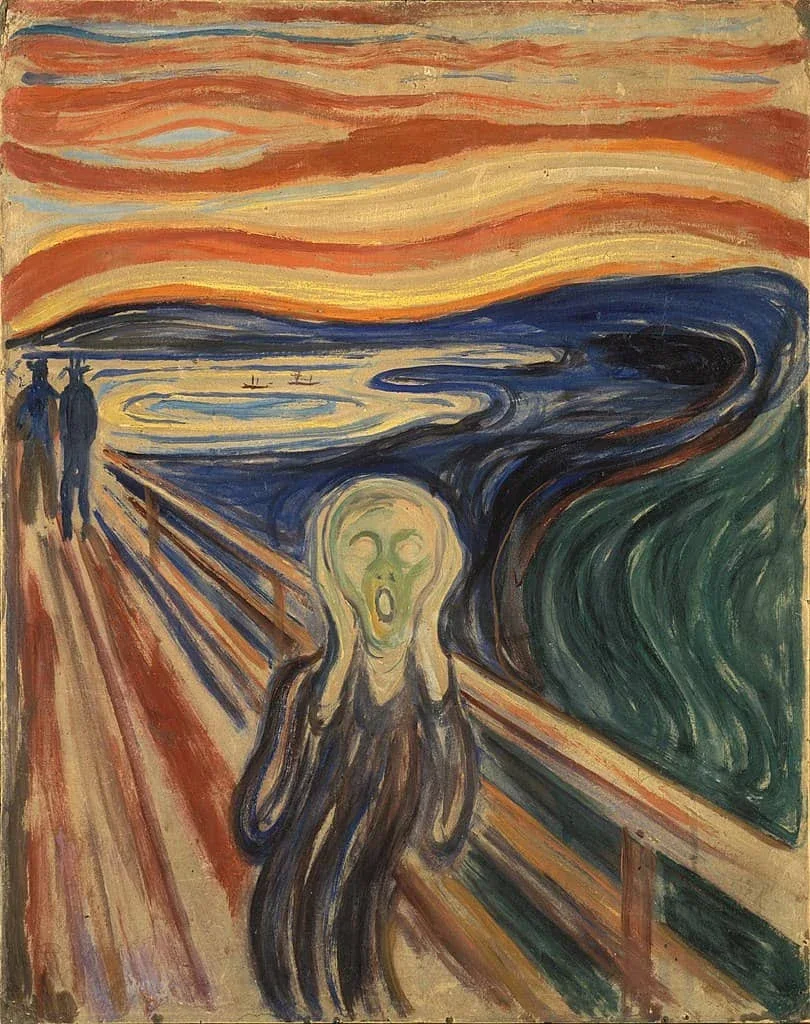
[23] The shock to the worldview brought about by rays and radiation is also reflected in the art around 1900; for example, in Munch's The Scream, matter and space dissolve into energy, radiation, and rays.
[24] Warburg may also have learned, through his teacher at the University of Bonn, Karl Lamprecht, of The Energetic Foundations of Cultural Science (Energetische Grundlagen der Kulturwissenschaft) by Lamprecht's friend Wilhelm Ostwald, winner of the 1909 Nobel Prize. In it Ostwald states: "Mental events can be understood and explained as energetic events, just like all other events." Wilhelm Ostwald, Die Energie (Wissen und Können, Band 1)[M].Leipzig: J. A. Barth. 1912: 144.
[25] For Warburg, the image itself constitutes such a medium between life and death, suffused with survivals of fear and the energy of pathos. Debray interpreted the original meaning of the word "image" (Imago) as "death mask." The image originally referred to a "spirit medium" through which the living communicated with the dead.
[26] As the Futurist Manifesto put it: "Everything moves, everything runs: everything happens at the greatest speed!" [EB/OL]. https://www.societyforasianart.org/sites/default/files/manifesto_futurista.pdf, 2024-10-11
[27] In 1927 Warburg also gave a lecture titled The Function of the Postage-Stamp Image in the Intellectual Commerce of the World (Die Funktion des Briefmarkenbildes im Geistesverkehr der Welt).
[28] It should be pointed out that this is a "media archaeology" rather than a "media determinism." As Hartmut Winkler has noted, media become meaningful only in the tension between two moments: "writing practices into technology, and writing technology back into practices." See Hartmut Winkler, Die prekäre Rolle der Technik. Technikzentrierte versus anthropologische Mediengeschichtsschreibung[A]. Heinz-B Heller et al. ed. Über Bilder Sprechen. Positionen und Perspektiven der Medienwissenschaft[C]. Marburg: Schüren Verlag, 2000: 14.