
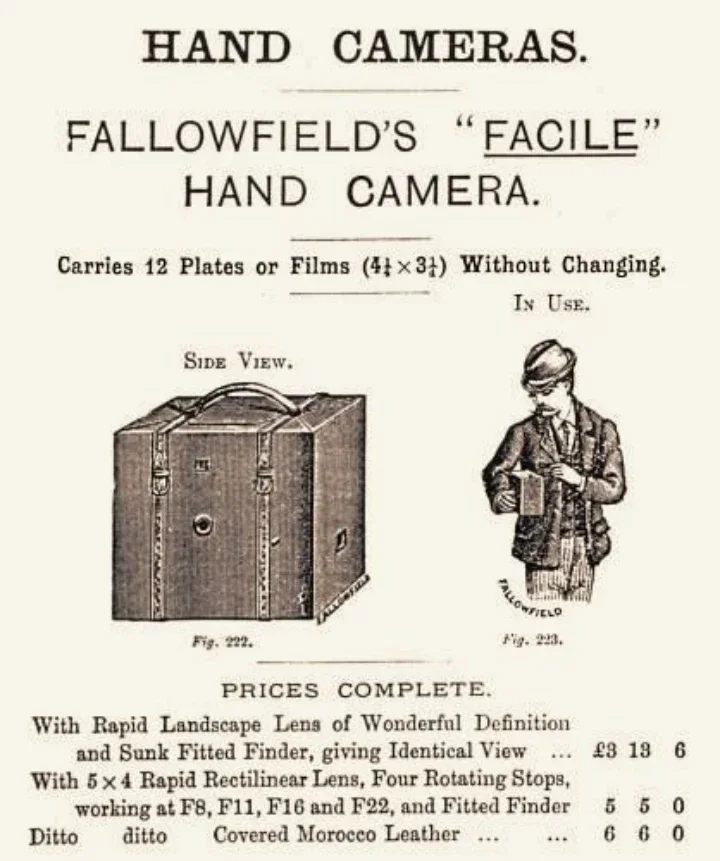
In September 1895, Warburg set out on his legendary journey to America. Throughout the trip a new "Buckeye" camera never left his side, and he used it to photograph the many things he saw along the way. The Eastman Kodak Company had only begun producing this model in 1895, and, like the company's revolutionary "Kodak" camera, the Buckeye was aimed at ordinary amateur photographers. It was almost the most convenient photographic equipment available at the time. Because of the particular design of its viewfinder, the photographer had to hold the camera at chest level and so could not control composition with any precision, yet the camera went a long way toward meeting Warburg's need for "instantaneous" photography. After returning to Europe, Warburg carefully organized the notes and photographs from his American journey and wrote a lecture. Interestingly, the first audiences for his lecture were not art historians or anthropologists but amateur photographers. On 21 January 1897 Warburg lectured in Hamburg to the Society for the Promotion of Amateur Photography (Gesellschaft zur Förderung der Amateur-Photographie), and on 16 March he lectured to the Free Photographic Association (Freien Photographischen Vereinigun) at the Royal Museum of Ethnology in Berlin. These lectures did not strictly follow the sequence of the photographs: "In Warburg's photographic lectures, the relationship between image and text, between lantern slides and spoken lecture, almost reverses the customary mode of the art-historical lecture: the order and rhythm of the photographic material determine the speaker's interpretation." Warburg's "photographic lectures" also supplied the material groundwork for his famous "Serpent Ritual" lecture at Kreuzlingen in 1923, the very lecture meant to prove that he had freed himself from mental illness. So when, at the end of the Serpent Ritual lecture, Warburg observes that Edison captured the Indians' "serpent-shaped lightning" with a "copper serpent" (the electric wire), the photograph of "Uncle Sam" he refers to is not in fact the last in the series from the American journey. Here the potential of the image itself breaks free of the constraints of a linear logic of time and place. Warburg had already granted the photograph something like the position of a Bredekampian "agent," and this practice of organizing history according to the montage structure of images would be developed far more fully in the Bilderatlas Mnemosyne (Der Bilderatlas Mnemosyne).
For Warburg, photography held special significance, and in a series of important historical episodes we can see photography intervening directly in his work. In the Mnemosyne Atlas, Warburg made extensive use of contemporary press and news photographs. During the First World War, he collected more than 5,000 war photographs for La Rivista Illustrata, the periodical he co-founded with Georg Thilenius and others. These formed Warburg's "war atlas," in which war photography was at once a kind of testimonial compendium of catastrophe and a searing zone of memory. Furthermore, Warburg's study of the serpent ritual rested less on fieldwork than on photographs. In 1923, when Warburg began preparing the Serpent Ritual lecture at the Kreuzlingen sanatorium, it was precisely the photographs he had taken that carried him back to that distant time and place. In fact, Warburg never saw with his own eyes the dance that forms the climax of the serpent ritual; during his American trip he left before the ceremony was over. His study of the serpent ritual was therefore based on a virtual, absent presence supplied by archives and photographs. In this sense, the lecture itself was an untimely "photographic event." As the Eastman Kodak slogan put it: "You press the button, we do the rest!" If Eastman's roll film transformed photography from a chemist's laboratory technique into an image industry, then Warburg's peculiar relationship with photography (as a mechanical element) led him away from the domain of traditional art history and turned his "nameless science" into a genuine "evolutionary psychology" and "cultural science" of all human activities of image production and reception.
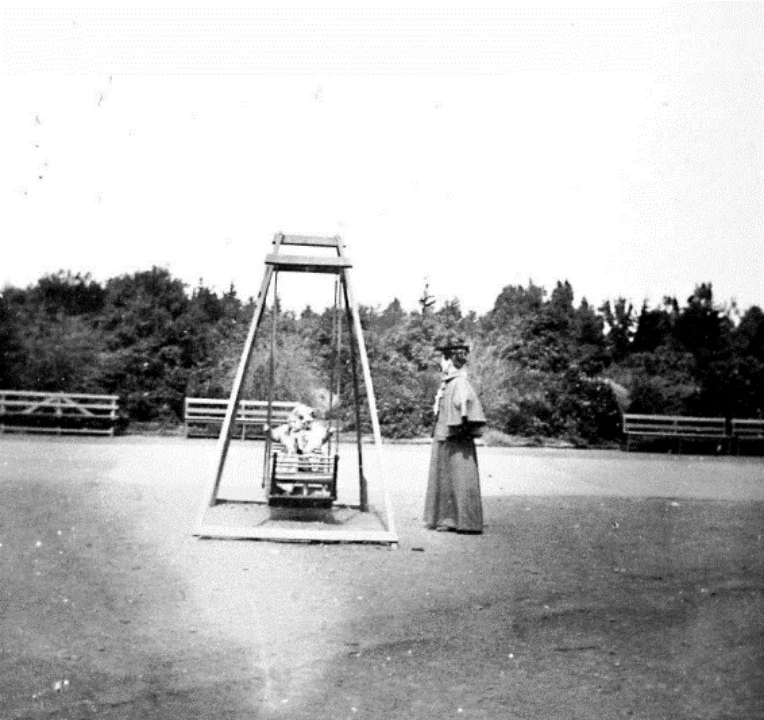
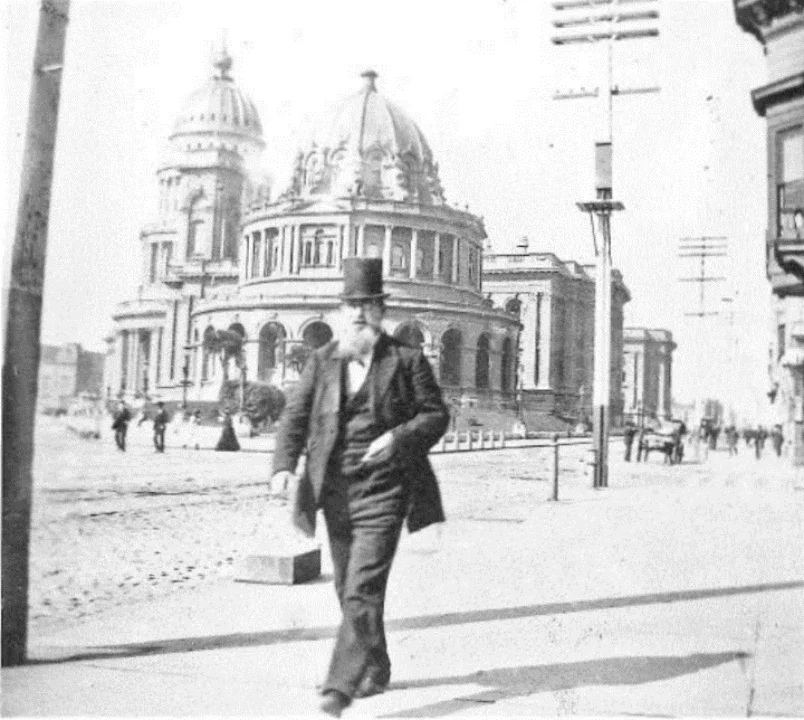
"Warburg the photographer" did not confine himself to the objects of his anthropological inquiry. His pictures mix landscapes, portraits, and documentary scenes from the journey. Contrary to the aims of rigorous scholarly photography, Warburg's shooting was highly casual and improvisational. In the "photographic lectures" he gave after the American trip, Warburg repeatedly stressed that his photographs were "snapshots" (Momentaufnahmen) and "instantaneous images" (Augenblicksbilder): "My photographs are all snapshots taken with a Buckeye camera." This recalls how, in his early manuscripts, notably Fundamental Fragments toward a Monist Psychology of Art (Grundlegende Bruchstücke zu einer monistischen Kunst-psychologie) and Symbolism as a Determination of Scope (Symbolismus als Umfangsbestimmung), Warburg likewise used the word "Augenblicksbild" again and again. In these manuscripts the concept of the "instantaneous image" (Augenblicksbild) has a specific epistemological meaning, roughly close to "state image" and "impression image," and it forms the preliminary stage of the "memory image" (Erinnerungsbild). For Warburg, the "instantaneous image" signified an imagistic memory and preservation, at the level of inner perception, of an original stimulus. In one note, Warburg vividly describes this reaction of the subject to the object as an "elastic reflex movement": "memory of non-empirical state images, elastic reflex movement (elastische Reflex-bewegung)." In another note (one that deserves to be regarded as among the earliest formulations of "image science"), Warburg wrote even more directly: "A science of images (Eine Wissenschaft von den Bildern): I. instantaneous images II. memory images." These early psychological studies shed light on Warburg's attempt to systematize the perceptual experience of the instantaneous and the psychological faculty of imagistic memory. At the same time, "the instant" and "imagistic memory" can also be seen as a summary of the essential features of photographic technology. With the advent of the shutter, a device that slices time, the complex procedure of the daguerreotype was reduced to a movement of the finger, and the instantaneous photograph thereby became able to capture, or hunt down, the flow of experience. As Vilém Flusser put it: "If one observes the movements of someone carrying a camera, one gets the impression of someone lying in wait. This is the ancient act of stalking, which goes back to the Paleolithic hunter on the tundra." Also at the end of the Serpent Ritual lecture, Warburg identified "instantaneous electrical connection" (die elektrische Augenblicksverbindung) as the chief culprit in the destruction of cosmic and intellectual space. This instantaneous "technique of abolishing distance" had effectively become the new magic of the modern world.
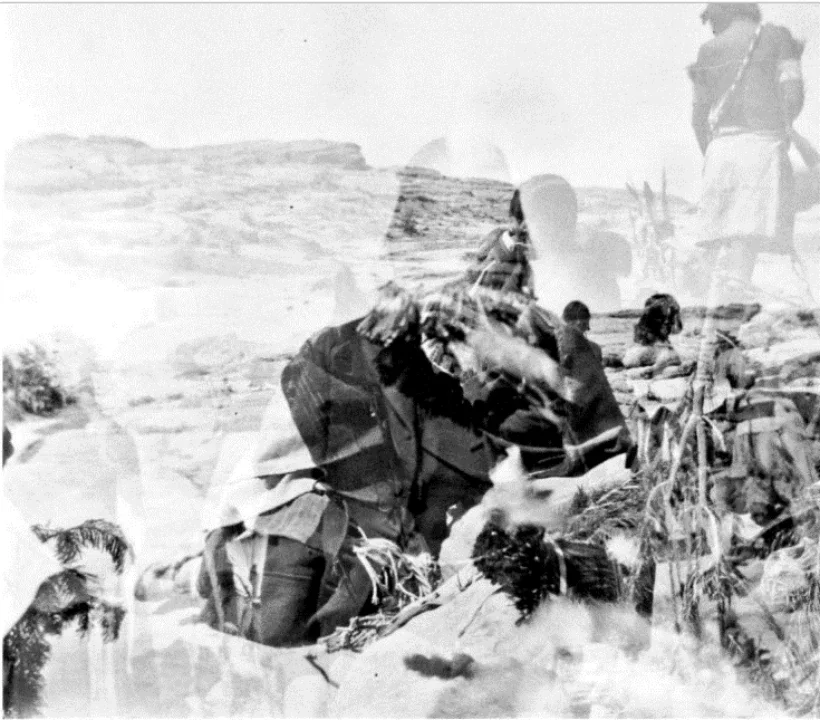
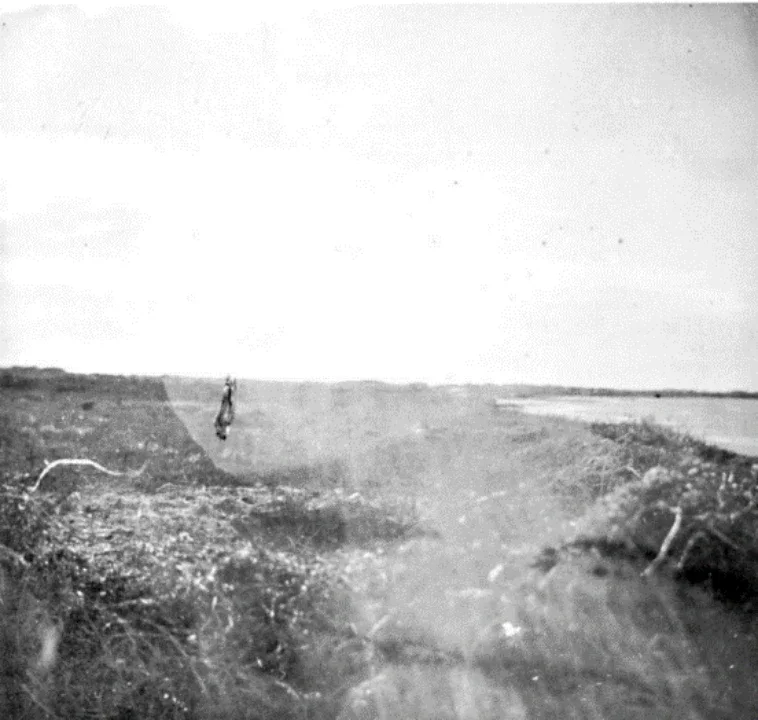
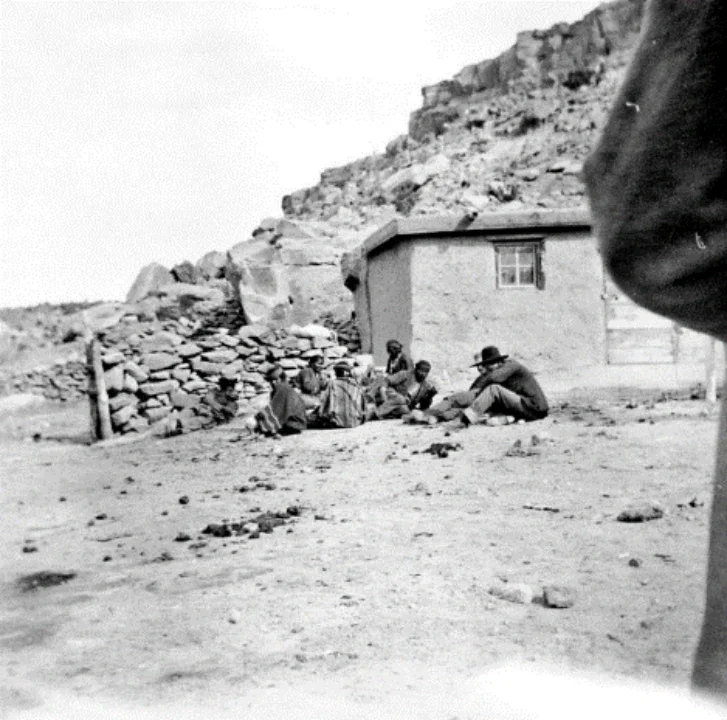
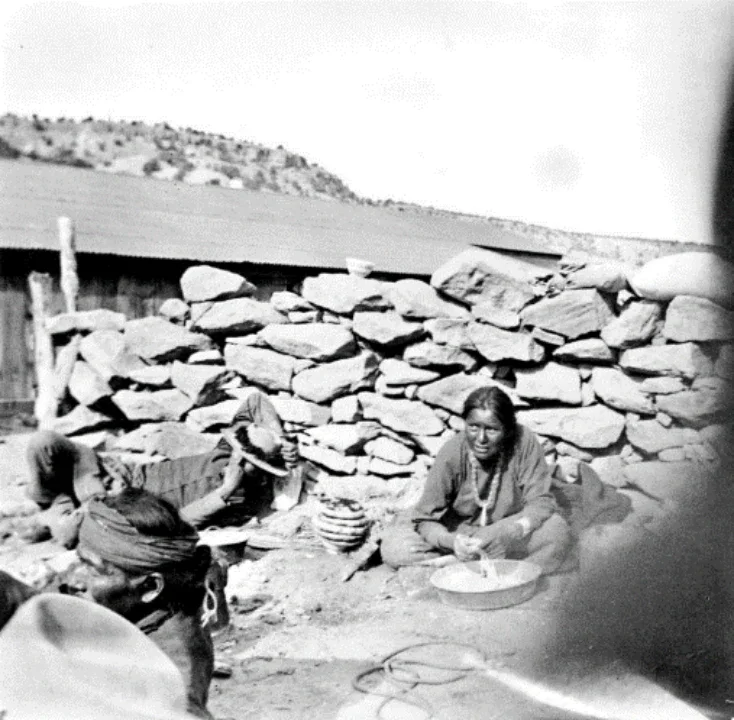
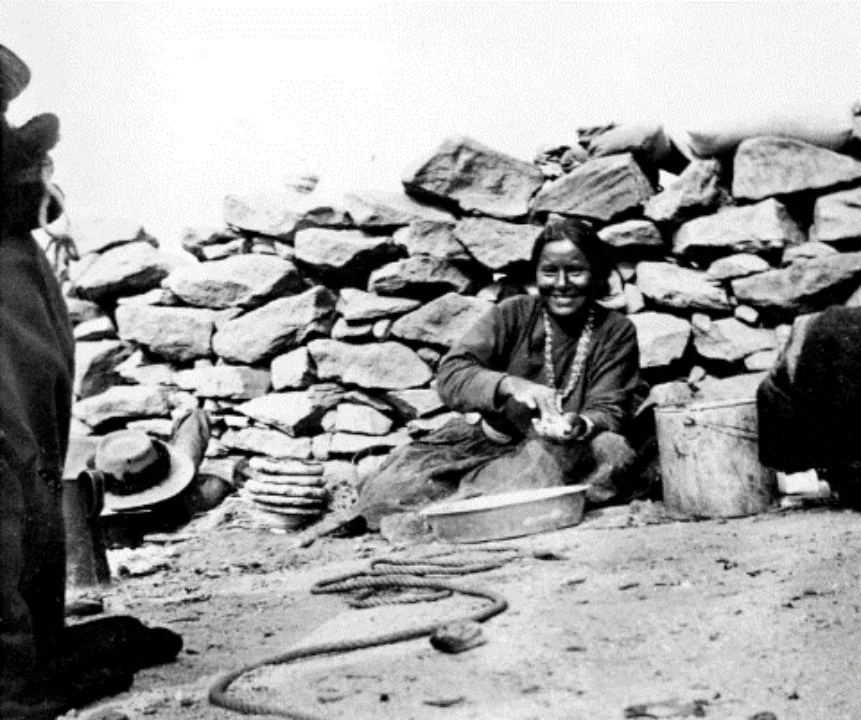
Warburg was not a good photographer. Lacking practiced skill, he generally produced photographs of unsatisfactory quality: poor composition, blurring and overlapping fades, double exposures, even the photographer's own shadow in the frame, all of which undermined the photographs' documentary function. Yet at the same time, Warburg was an avant-garde producer of images. Rather than discarding a good number of these "bad images," he carefully archived them, and the visual effect of these unintended, informationally meager photographs might even lead one to mistake them for the work of a Surrealist photographer. Furthermore, in Warburg's photographs one can clearly sense the direct, undisguised intervention of the photographer's body in the act of photographing. For example, in a sequence of consecutive photographs numbered 108–112, taken in April 1896 (that is, four months after the Lumière brothers' first film screening), Warburg created a clear, montage-like "editing sequence." He first chose a wide shot to show the whole scene: a group of people sitting on the ground in front of a stone wall, with steep rocks in the background. In the next photograph, he used a "medium close-up" to introduce his subject, a serpent-shaped rope laid before the local women. In the photographs that follow, the camera is at roughly the same height as the figures. Through this sequence, arranged like a "film storyboard," we can clearly perceive the changing position of the photographer (Warburg): from far to near, then crouching or lying on the ground to approach his subjects, and finally simply sitting down right among them. The same thing happens in the four consecutive photographs numbered 100–103, in which Warburg the photographer again gradually approaches several women weaving and ultimately takes up a position in direct physical proximity to them. "In this interventionist photography there is an immediate leap from bodily feeling into pictorial feeling (unmittelbarer Übersprung vom Körpergefühl ins Bildgefühl); Warburg affects the images in a directly bodily way and fills them with vitality." Here, however, the photographer's intervention cannot be regarded as anthropological "participant observation." In fact, the "level" height of Warburg's camera hints precisely at a pseudo-scientific neutrality. This was a loose collaboration between photographer and subjects, and Warburg's attitude as a photographer differed little from the prejudiced typological attitudes of late nineteenth-century phrenology, psychiatry, and the like. Hence the series of portraits of Native Americans Warburg took on his American journey inevitably recalls August Sander's project, twenty years later, of photographically "portraying" the German people, and the ambiguous class character concealed behind the "New Objectivity" (Neue Sachlichkeit) it proclaimed. Through his bodily posture, Warburg reinforced the power relations behind the act of photographing. As Sontag said, "Photographing is itself an event, and one with ever more peremptory rights—to interfere with, to invade, or to ignore whatever is going on."
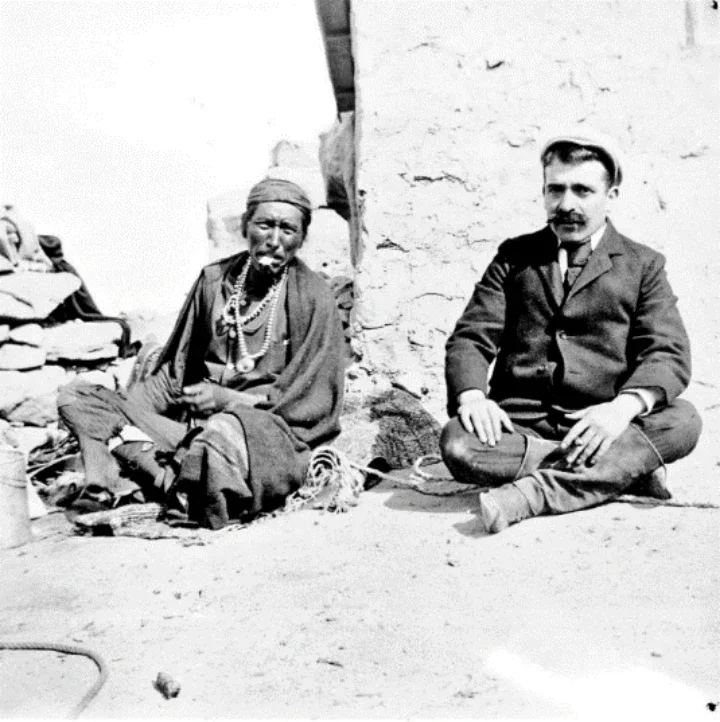
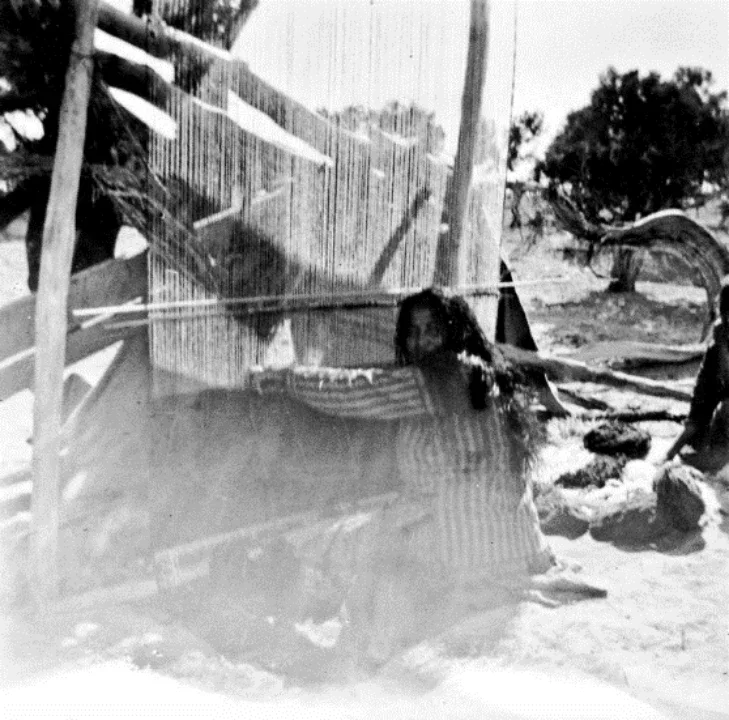
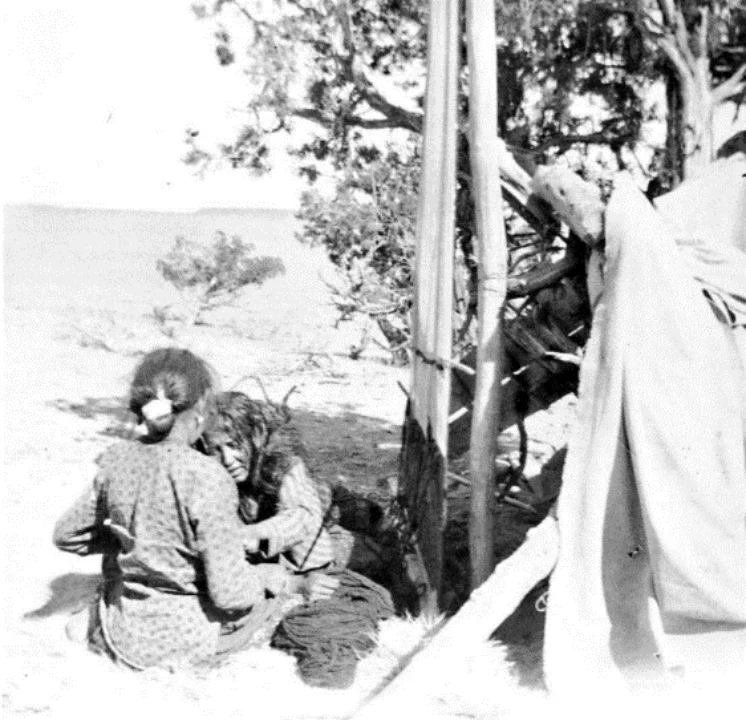
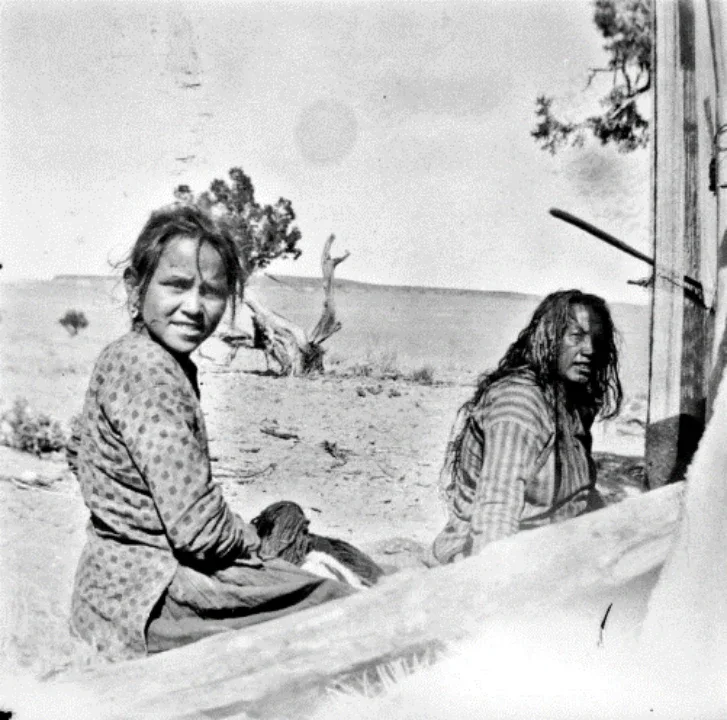
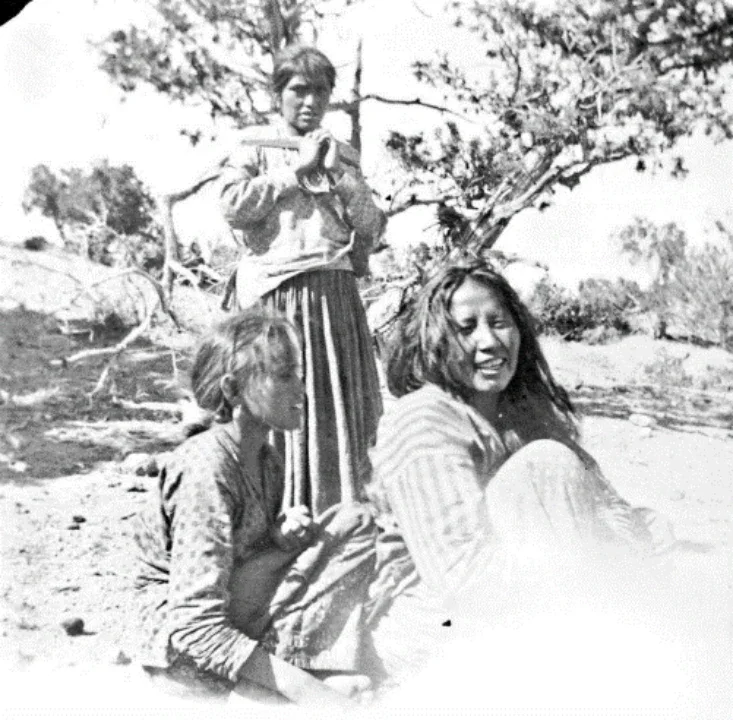
Warburg regarded the Pueblo Indians he studied as people whose thinking was grounded in the "symbol," situated "between people who physically 'grasp' (Greifmenschen) and people who intellectually 'comprehend' (Begriffsmenschen)." The symbol lies between tactile expression identical with the stimulus and abstract structures of meaning, that is, between "dynamics" and "statics" in Warburg's sense. In the "Symbolism" manuscript, Warburg drew a diagram of a conjugate double-branched structure to emphasize the convergent relationship between dynamics and statics inherent in symbolic form. Here symbolic form is understood as a field of energy: "Symbolic form is to be understood as any energy of the spirit through which a spiritual meaning is connected to a concrete sensory sign and is intrinsically given to that sign." And this sign (or field), saturated with potential and awaiting polarization, likewise constitutes the inner essence of photography. Photography, too, arises from the convergence of dynamics and statics: the camera does not simply look at the world but is directly "touched" by it. "Light reflects off objects or bodies into the camera, activating the photosensitive emulsion and creating an image... It is as if those objects reached out and left their own mark on the surface of the photograph, a visual imprint." Warburg also used this material "imprint" to describe how memory operates. He understood memory as the bearing and transmission of the energies of the material world: energy is stored in memory "traces" (Engramm) and forms a "dynamogram" (Dynamogramm) waiting to be reactivated. Similarly, photography implies a peculiar entanglement of touch and sight within itself. As a form that reveals mystery while itself being mysterious, a special energetic sign, a material tactile imprint, it is also a fragile thought-space in Warburg's sense. Photography reveals a spectral presence in time.
![Warburg's "double-branch diagram," with "dynamics" (Dyn[amik]) on the left and "statics" (Stat[ik]) on the right (WIA III.45.1, p.30.)](/optimized/articles/warburg-photographer-035-webp-960.webp)
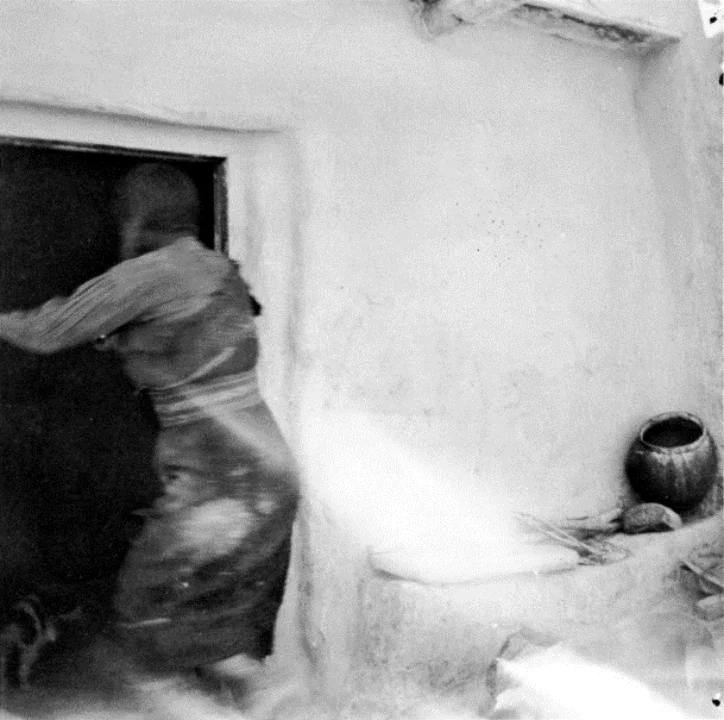
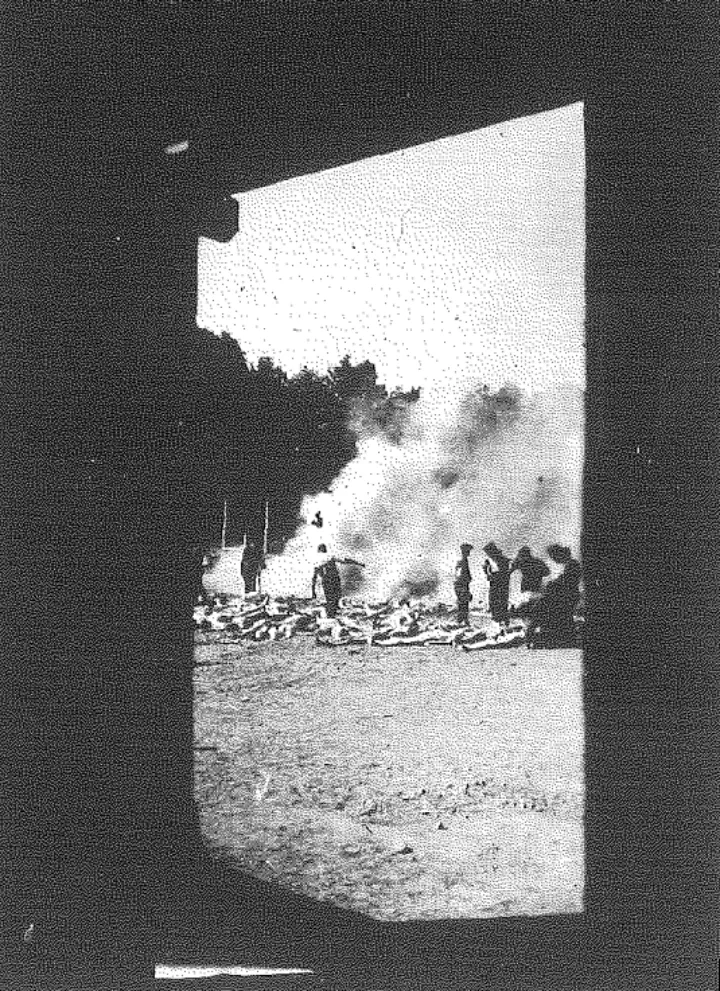
Among the photographs from Warburg's American journey, one strange image has survived. It shows a Native American woman who, when Warburg raised his camera to photograph her, fled into her house; the moment is frozen in the photograph as a ghostly, motion-blurred figure seen from behind. "A hazy, even ghostly depiction... We do not know when or where this photograph was taken, but interestingly, the photographer (Warburg) nonetheless preserved in his archive this completely blurred photograph, which provides almost no objective factual information." The blurred patches of light seem to form a visualization of the traces of the woman's movement; in the next second, it seems, she will vanish into the deep black of the doorway. In this extremely dramatic moment, the woman stands exactly in the grayish-white zone between light and darkness, like a highly fleeting image lingering on the retina (or a nymph-like life). "To set images in motion, one must succeed in capturing the 'afterlife' of the retina... so as to restore to them the energy and temporality they once possessed." This photograph is an "event," arising from a temporally and spatially dislocated encounter between photographer and subject, and its theme comes from the blur, the patches of light, and the unstable composition themselves. These "illegible" elements resist the penetration of the intellectual gaze while at the same time revealing the photograph's true subject: iconophobia, a symptomatic form that also plagued Warburg himself throughout his life. In other words, what this photograph captures is not a person but blur itself, that is, fear itself. As Warburg said: "If you consider that I was often forced to take these photographs under the most unfavorable conditions... and the further fact that nearly all Indians have a superstitious fear of being photographed." Even today, although we no longer believe, as the woman Warburg photographed did, that a photograph becomes part of our body, we are still reluctant to tear up or throw away photographs of our loved ones. On the contrary, we constantly seek material forms, such as lockets and albums, to make photographs tend toward immortality and thereby foster a substitute, compensatory contact and communication with the people in them. In a sense, this photograph is the polar counterpart of the photographs from the Auschwitz concentration camp analyzed by Georges Didi-Huberman in Images in Spite of All (Images in spite of all: four photographs from Auschwitz): the former seeks to escape photography's capture of the soul, while the latter seek to make the soul live forever in the photograph through photography.
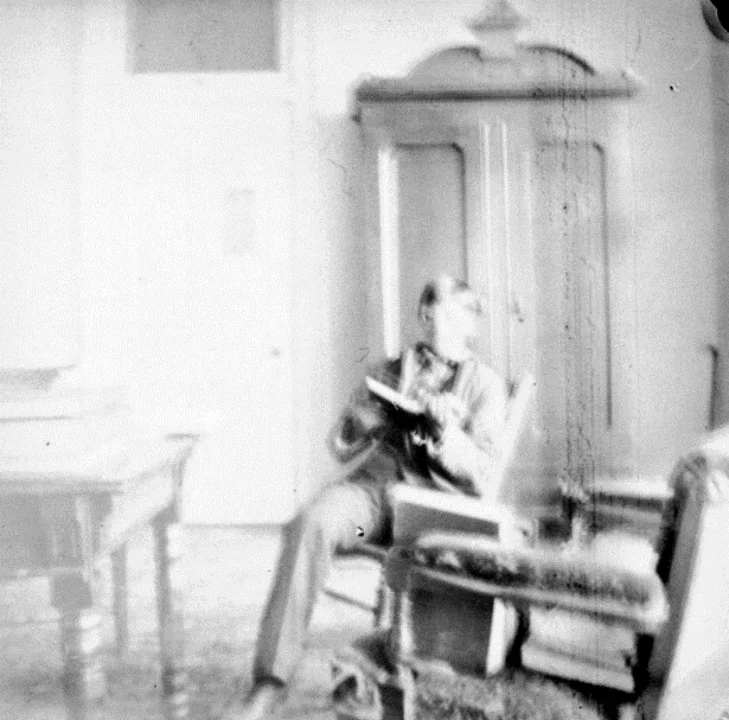
In another photograph from Warburg's series, an unidentified reader sits in a chair reading at leisure. There is no way of knowing who he is. Again because of faulty shooting and exposure, the figure's face dissolves into a strange whiteness, and the rest of the photograph is veiled in an unsettling, hazy halo. This accidental photograph is a marvelous depiction of how images appear in memory: scenes in memory likewise fade gradually, growing dim and blurred. In memory, too, we always find it extremely difficult to outline clearly the face of a particular person. These faceless figures flickering in the dim sea of memory are like ghosts haunting us. They touch us more directly than reality does, yet they vanish suddenly at every moment when consciousness tries to focus on them, just as fireflies become impossible to find under a bright light. Ghosts belong essentially to photography. The photograph is to its object as the death mask is to the face of the dead. The photograph constitutes the true "afterlife" (Nachleben) of the person photographed. Régis Debray, in Life and Death of the Image (Vie et mort de l'image), reminds us that the original meaning of the word "imago" was the death mask. The photograph is a nymph active in the grayish-white zone between life and death, a field of life and death harboring latent, inherent polar forces. The death mask seems to constitute a fundamental metaphor: only mortals need memory. We cannot imagine a more essential memory image than the death mask, a device based on bodily contact with the dead that prolongs the living's memory of the dead person's face. At the same time, (like the photograph) the death mask is also anti-memory: the renewal of our memory of the dead comes to an end with this mask (this photograph), which inadvertently replaces our own memory. Our attempts to remember frustrate us again and again: "Memory is always in a state of ruin; to remember something is already to destroy it, to remove it from the moment of its origin." The passage of time makes memory possible and also implies memory's inevitable demise; this is the antinomy of memory. What photography points to, then, is not memory but rather the vanishing of memory. The impulse to photograph springs not from the fear of death but from the fear of forgetting.
In 1923, while preparing the text of the Serpent Ritual lecture at the Kreuzlingen sanatorium, Warburg also wrote a large number of notes and manuscripts with an autobiographical cast. In them, "there are both psychological retrospections on intimate details of childhood and broad philosophical reflections on the historical construction of collective psychological defenses arising from cross-cultural exchange. Warburg attempted to (self-)analyze the antecedent situated between text and image, the very thing that had led the young European art historian to embark on his North American journey. At the same time, he summoned up a painful childhood memory: in 1875, when he was nine, his mother fell seriously ill, which led him to devour 'piles' of Indian novels..." Memory, a ghost of the past, is continually summoned into the present and becomes a real part of it. Like the protagonist of Nolan's film Memento (Memento, 2000), Warburg used photographs he had taken more than twenty years earlier to re-enter the time and space of his American journey, and as he did so, private recollections long repressed in his unconscious were reactivated too. The strata of his memory were thrown into complete disorder, and individual memories tinged with private emotion became entangled with public, collective historical memory. During his schizophrenic episodes, Warburg imagined himself to be the chief culprit behind Germany's defeat, took the sanatorium garden for a place where corpses were buried, and even believed himself to be a werewolf... In Warburg, multiple temporal structures collapsed, shifted, and recombined, much as happens in complex geological strata. Recollection is itself a form of time-consciousness; by contrast, pure memory is bound up with the timeless unconscious: "It is precisely when memory (mémoire) is at work that recollection (le souvenir) escapes." Memory is at once a moment of unconscious intrusion, a perception of present presence, and a flashback of what is absent, the symptomatic eruption of long-suppressed memories. Warburg's mental crisis also signified a crisis of memory. In Warburg's era, unstable temporal structures, dispersed attention, and modern technological systems produced an unprecedented state of insecurity in the connection between present culture and past history. "Memory was one of the abstract concepts that became increasingly reified in the nineteenth century... The invention and spread of photography was not only a response to the 'crisis of memory' but also a symptom or product of that crisis."
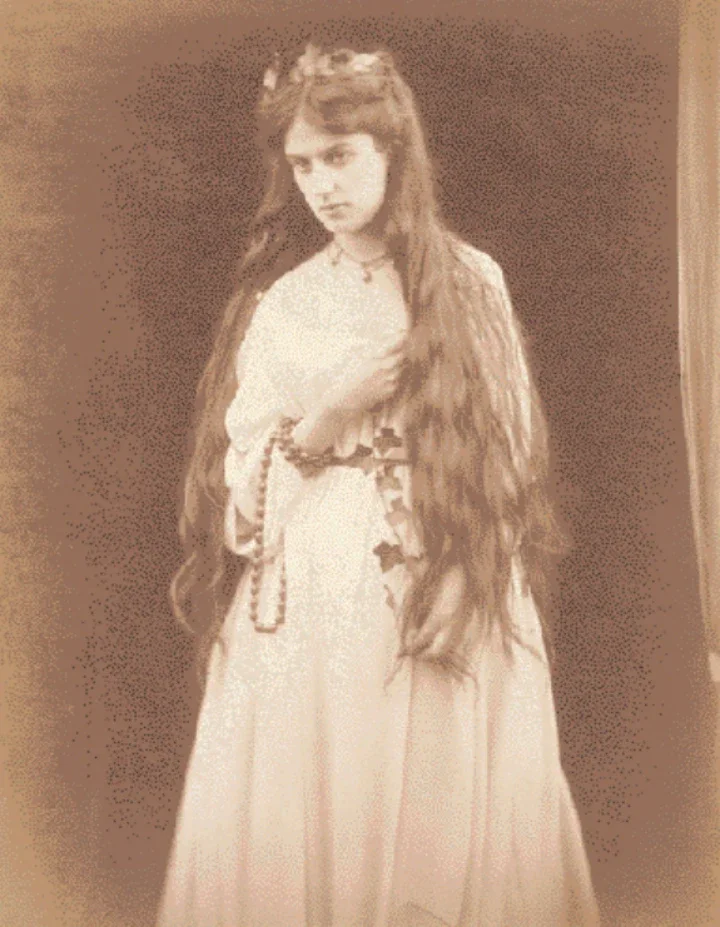
At the very beginning of Forget Me Not (Forget Me Not), Batchen cites a work by the photographer Julia Margaret Cameron entitled "Mnemosyne," and on this basis treats photography as an "art of memory." The impulse to photograph resembles the impulse to make death masks: we try, in the mists of time, to find a solid form that confirms our own existence. Cameron's "Mnemosyne" and Warburg's "Mnemosyne" can therefore both be seen as responses to a crisis of private and collective (cultural) memory. Photography and the "Atlas" express a similar historical anxiety. Both point to a spectral temporal structure, and both attempt to capture invisible spiritual trajectories in visible images. Both are attempts at what Warburg called the "struggle for existence" (Kampf um Dasein), and both are a "thought-space" situated between the poles of life and death. For those trapped in images, looking back at old photographs of themselves always brings a sense of estrangement, even dread. Karl Fortlage once said: "In sleep we live; as soon as we wake, we begin to die." Every encounter with a photograph is an experience of death, and every revisiting and attempt to remember becomes a farewell and a forgetting. The "Atlas" is like an enormous historical album. In a world so thoroughly filled with ghosts, every subject is haunted by its own ghosts and by those of others, driven by the afterlife of distant memories. And in an age when the death mask has been replaced by the digital image, every subject will ultimately become one of history's "faceless."