
Abstract: Globally, the "anthropology of photography" is an emerging, still undefined academic field. A substantial body of research exists, but the field lacks a unified definition. Chinese and Western scholars use several terms for it, including the anthropology of photography, ethnographic photograph, ethnographic photography, and photography and anthropology. How do anthropologists understand photography? How does photography look under anthropological inquiry, as distinct from studies in the history or theory of photography? What different perspectives on today's photography do the knowledge production and theory-building of the anthropology of photography offer? And how does photography, as a mode of knowledge production, keep renewing anthropology's own theories and imagination? These questions lead us to the frontiers of research in the Western anthropology of photography. By exploring and reflecting on this research, we hope to find echoes of it in Chinese studies of the anthropology of photography.
Keywords: photography; anthropology of photography; ethnographic photography; contemporary anthropology; ethnographic theory
In 2018, John Wiley and Sons Inc. published The International Encyclopedia of Anthropology online, compiled under the leadership of Hilary Callan, former Director of the Royal Anthropological Institute. This online encyclopedia is still being updated, and two of its entries deal directly with photography. Both appeared when the encyclopedia was first released. One is "Photo-Ethnography," written by Christopher Wright, who leads the visual anthropology program at Goldsmiths, University of London.[1] The other is "Anthropology of Photography," by Christopher Morton, head of curatorial, research, and teaching at the Pitt Rivers Museum, University of Oxford.[2] Wright's entry leans toward examining how photography, as a medium of visual recording and communication, has been used in the history of anthropology. He pays particular attention to whether photography can become a form of ethnography distinct from written text. Morton's article focuses more on how photography's role has changed within anthropology's own history. He uses this to sketch the academic terrain called the "anthropology of photography" and to answer the question "What is the anthropology of photography?"
These two entries approach the unbroken interaction between anthropology and photography from different angles. They also show that a scholarly community within anthropology has been paying sustained attention to photography, whether its members are concerned with photography's applications in ethnography or with photography as an object of ethnography. As this article will show, these scholars may call their field the "anthropology of photography," as Morton does. They may place more emphasis on photography's function of ethnographic "writing," as Wright does. Or they may simply use the label "photography and anthropology," a juxtaposition that stresses how the two are independent of each other yet entangled. These different terms, together with Wright's and Morton's summaries and interpretations of them, point to different anthropological understandings of photography. They also reveal how open and practice-based the relationship between photography and anthropology is. Given this openness and practical character, perhaps our answer to "what is it" should no longer stop at naming and defining. We should instead ask "how is it done." This means placing photography and anthropology back into key historical moments and present realities, and examining how photography, as a continually generated form of knowledge practice within the history of anthropology, keeps reshaping the "anthropological imagination" itself. This approach points to the fundamental question of this article: "How to anthropologize photography?" (How to understand and approach photography anthropologically?)
I. Anthropologists' Instrumental Understanding of Photography
How to anthropologize photography? In this question, "anthropologize" works as a verb, and it readily calls to mind a series of things anthropologists do. They carry out fieldwork centered on participant observation and interviews, write field notes, and, of course, make visual records of the field, chiefly through photography and video. These associations naturally unfold from the anthropologist's perspective, and all these actions share one purpose: to complete an ethnography in the sense of social and cultural anthropology. For ethnographically oriented social anthropologists, then, the question "how to anthropologize photography" points to a set of concrete visual practices at the level of the research field. What concerns them is what photography can bring to ethnography. Compared with ethnographic film, which contains continuous images and sound, what advantages and shortcomings does photography have in building a holistic ethnographic narrative? In short, when anthropologists think about photography as fieldworkers and producers of ethnography, their understanding of it tends to be instrumental.
This instrumental understanding put many obstacles in the way of the "anthropology of photography" as it took shape and built its theory. The field can be described as a quasi-subdiscipline cutting across several branches of anthropology, including social and cultural anthropology, visual anthropology,[3] and the anthropology of art. Photography entered anthropological research in the 1840s. Visual anthropology was formally recognized as a subdiscipline at the IXth International Congress of Anthropological and Ethnological Sciences in 1973. Throughout that period, photography was equated with anthropologists taking pictures with their cameras and with the ethnographic photographs this produced. Behind these images there was usually a tangle of purposes, ranging from colonial rule and state governance to knowledge production, archiving, and cultural salvage. At the end of the nineteenth century, with the sudden arrival of film, anthropologists found that this continuous technical image medium could record more "scientifically," "objectively," and "comprehensively" than photography. Photography's importance as a recording tool declined accordingly, and it was steadily pushed to the margins of anthropological research.
Principles of Visual Anthropology, edited by Paul Hockings and published in 1975, collected the papers from the conference two years earlier that marked the formal establishment of visual anthropology as a discipline. Of the 26 papers in the volume (not counting the preface, foreword, and introduction), only two concerned photography. One of them was "Ethnographic Photography in Anthropological Research," by Joanna Cohan Scherer, an archivist and cultural anthropologist at the Smithsonian Institution. It was not included in the first edition. It was later placed in the section "Visual Anthropology and the Past," which shows that visual anthropologists of the time, for whom film was the core medium, regarded photography merely as a "prehistoric medium" of visual anthropology. Even Scherer herself took it for granted that when anthropologists talked about photography, they meant historical images from before film, or even from before modern anthropology was established in the 1920s. These were images taken by travelers, colonial officials, missionaries, and early anthropologists, and kept in the archive cabinets of collectors, anthropological and ethnological museums, and libraries. Indeed, the period Scherer repeatedly refers to in her article is limited to "the nineteenth and early twentieth centuries."[4]
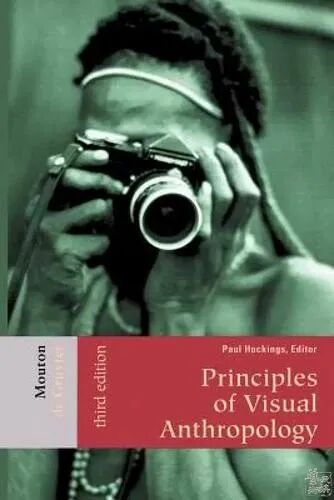
The other article on photography in Principles of Visual Anthropology was John Collier, Jr.'s "Photography and Visual Anthropology." Written almost like an instruction manual, it lists many examples of how anthropological research can use photography. Photography can be used for precise mapping, for recording the spatial layout of a field site, and for providing visual evidence to support social measurement on the scale of a small town. Collier's article belongs to the section "Some Specialized Uses of Film and Videotape." Collier had been a photographer for the Farm Security Administration, an agency with enormous influence in the photographic world, and he was among the first scholars to call for using photography in anthropological research. At the start of the article, he explains the close connection between photography and film and acknowledges that "it would be superficial to review research with the still camera without considering the burgeoning phenomenon of the still image beginning to move." Yet his photography-centered stance remains clear. More than twelve pages of the article discuss specific uses of photography in anthropology and other social sciences, while only a little over three pages address film.[5] Collier did not confine photography in anthropological research to Scherer's nineteenth and early twentieth centuries. However, he stressed photography's instrumental nature even more strongly than she did, and his long discussion of photography is mostly about the question "how to take pictures." In other words, their professional positions led the two to differ in their attitudes toward photography and in how they defined its relationship with anthropology. Even so, both agreed that in anthropological research photography has only a kind of passive medium status, as a supplementary research tool used by anthropologists.
What photography supplemented was textual ethnography. As Christopher Pinney puts it, "Anthropologists wanted photographs merely to illustrate and confirm arguments established in writing."[6] This does not mean that anthropologists were unaware that photographic images have their own logic and ways of thinking. The point is that anthropologists saw photography so strongly as a passive, instrumental medium that in practice they actively suppressed its subjectivity and agency. This comes through quite clearly in Balinese Character (1942), co-authored by Gregory Bateson and Margaret Mead. On the one hand, they stress that photographs in ethnography can build a holistic record different from text. They acknowledge that photographs can do things writing cannot. For example, direct visual presentation replaces the work of translation in textual ethnography, which usually explains local cultural phenomena in Western vocabulary the anthropologist already commands.[7] On the other hand, this acknowledgment did not mean that Bateson and Mead gave up the central place of textual ethnography. Balinese Character still contains a long introduction written by Mead. The classification and arrangement of the photographs is also based on a logic of keywords, and these keywords were largely drawn from that long introduction. This is most evident in the "photographic survey" section, prepared by Bateson, in which 100 pages of plates are matched with 100 pages of captions.[8]
It is worth adding that Bateson, who actually took the pictures, describes how Mead's written notes were tied to his photographic practice so that the notes and the times the film was exposed matched one to one. He also states clearly that, unlike "documentary photography" or "documentary film" with their built-in preconceptions, the images he and Mead made with the camera were taken without preconceptions and were not staged.[9] Bateson named four practices. First, they photographed extensively and continuously over two years. Second, they made photography a daily habit of the anthropologist, part of everyday life in the field. Third, they let Balinese parents believe they were only photographing the babies, so that the parents relaxed their guard. Fourth, in situations where photographing was awkward, they used an angle viewfinder to conceal what they were shooting. Taken together, Bateson believed, these practices made the subjects less aware of the camera and so ensured that their photographs were "recording instruments" rather than "illustrating theses."[10] Here Bateson seems to move beyond the anthropological assumption about photography and text that Pinney describes above. In my view, however, whether as "recording instruments" or as "illustrating theses," photography still did not escape the anthropologist's instrumental imagination, and photographs remained in a state of waiting to be interpreted.
Over more than a century, from early anthropologists' first encounters with photography, through Bateson and Mead's photographic experiment in Bali, to Scherer's and Collier's discussions of "how to anthropologize photography" from the standpoints of anthropology and photography respectively, scholars' view of the relationship between anthropology and photography remained trapped at the level of instrumentalism. This predicament did delay theoretical production in the anthropology of photography, but fortunately delay is not the same as suppression. As the next section will argue, after anthropology went through a tumultuous period of self-reflection in the 1970s, a set of research questions that emerged from these instrumentalist discussions gradually became the starting point for theory in the anthropology of photography.
II. Photography and Anthropology Research beyond Instrumentalism
In 1990, Scherer served as guest editor of a special issue of the American journal Visual Anthropology, spread over two numbers and titled Picturing Cultures: Historical Photographs in Anthropological Inquiry. It included eleven articles, among them the editor's introduction. Under three headings, "finding the image," "finding the image maker," and "the image as anthropological document," it attempted to define systematically the role of photographs in anthropological research, how to use them, and how to study them. Scherer's introduction was a revised and expanded version of her article in the third edition of Principles of Visual Anthropology. Her object of study was still, broadly, old photographs of ethnographic significance, which in different places she calls "ethnohistorical photograph" or "ethnographic photography."[11] Her attitude toward these old photographs, however, had clearly changed. In the article collected in Principles of Visual Anthropology, she opened by proposing five ways anthropological research could use old photographs:
(1) detailed analysis of internal evidence and comparison of photographs with other images; (2) understanding the history of photography, including its technical limitations and conventions; (3) studying the photographer's intentions and purposes, and the circumstances in which the images were used by their makers; (4) studying the ethnographic subjects; (5) reviewing related historical evidence, including examining how others have used these images.[12]
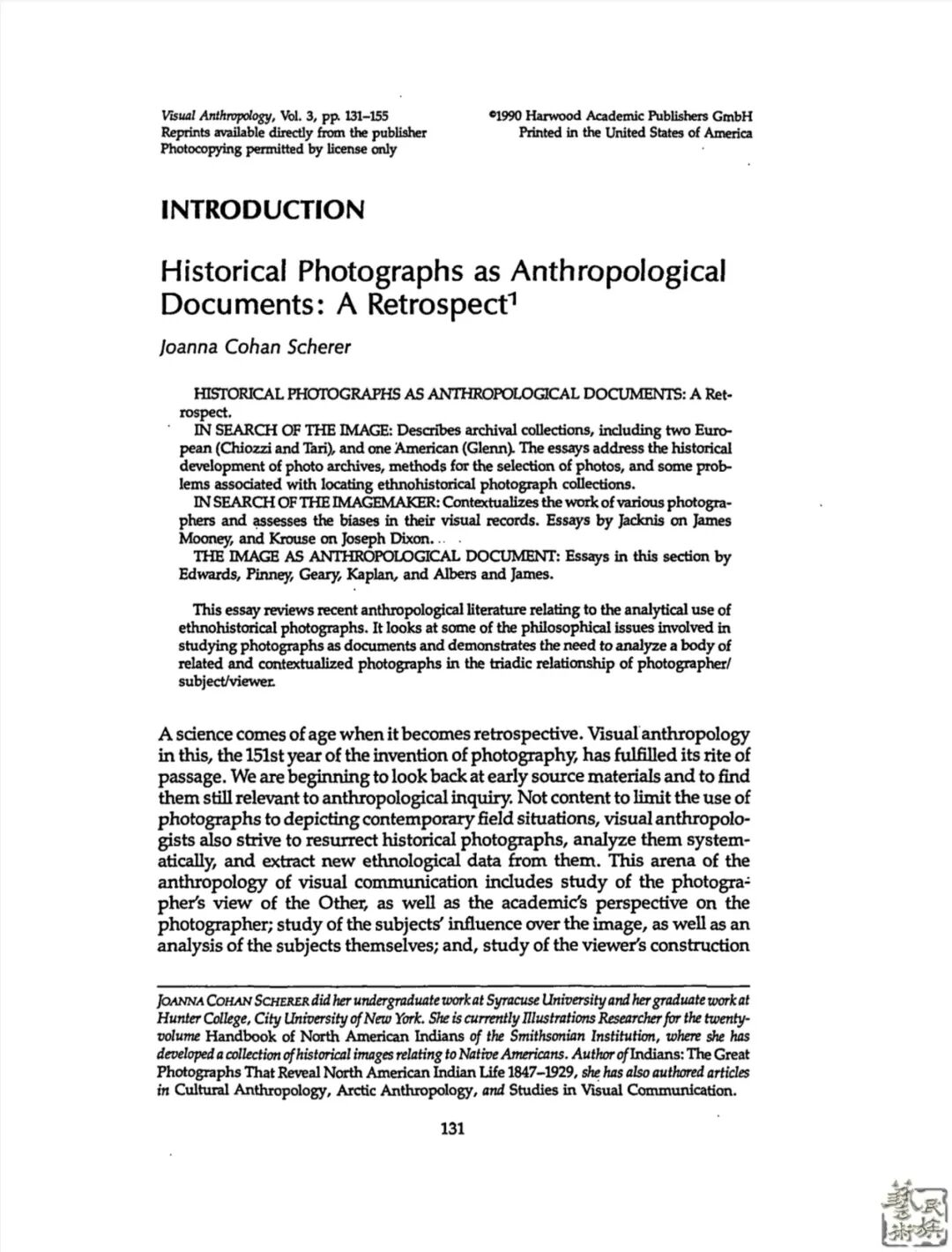
In the 1990 version, these five methods were kept, but they were moved noticeably later in the text, specifically after the author's reflections on the relationship between text and image. Earlier she had simply stressed photography as the prehistoric medium of visual anthropology and a purely historical object of study. Now Scherer concluded: "We must know what can be learned from the image itself and what must be learned from related documentary materials."[13] This pairing of "the image itself" with "documentary materials" came from reflecting on the image's inferior status relative to text in the social sciences. It therefore shows a certain tendency to embrace the subjectivity of photographic images. It must be stressed that Scherer's embrace of the image's subjectivity was only a tendency. It fell far short of the emphasis that cutting-edge anthropological theory places on the agency, and even the ontology, of images and things. For instance, she no longer treated historical images as appendages of text. Yet she still insisted that only related sets of photographs could be classified and thus have value for anthropologists at the level of ethnographic knowledge, which in effect still treats photography as historical evidence and a passive research tool. In the 1990 article she also advocated talking less about the questions of "meaning" and "truth" common in photographic theory.[14] In my view, however, it was precisely the studies that offered anthropological insights into these questions, together with ethnographies of photography itself, that later opened space for theory-building in the anthropology of photography.
Examining what changed and what stayed the same in Scherer's work, we can summarize her basic position, an "anthropology of visual communication," on how anthropology should study photography. It takes sets of historical photographs as its object, returns to the original contexts in which they were made and viewed, and seeks to understand the content they recorded that words could hardly convey. As noted above, her views are suggestive but also clearly limited. Out of this tension, a line of "photography and anthropology," or "anthropology and photography," research began to emerge. Its leading figures were two of the anthropologists who contributed to Scherer's special issue: Elizabeth Edwards and Christopher Pinney. Like Scherer, they began their anthropological exploration of photography with historical ethnographic images. In the special issue, Edwards wrote about British and German racial-type photography of the 1860s and 1870s.[15] Pinney's article continued the geographical focus of his doctoral work, discussing how photographic images from colonial India constructed local imaginaries of caste and tribe.[16] Besides the influence of Scherer's emphasis on photography's instrumental and historical character, Edwards's and Pinney's attention to early anthropological and ethnological photography also came directly from their early careers. At the time, Edwards was archivist and librarian at the Pitt Rivers Museum, University of Oxford, responsible for research on the museum's photographic collections. Pinney had received a postdoctoral research grant at the University of Cambridge to support his research on South Asian photographic images from the 1840s to the mid-twentieth century. Before that, during his doctoral studies, Pinney had worked part-time as archivist of the Royal Anthropological Institute's photographic collection, and this experience gave him a strong interest in ethnohistorical images.
Although Edwards and Pinney both showed an interest in old photographs in the 1990 special issue, the ways they interpreted their objects already reveal a marked difference. Edwards's research leaned toward a history of anthropological photography in the manner of George Stocking Jr.,[17] while Pinney combined the diachronic dimension of photography with the synchronic dimension of ethnography, ultimately grounding his work in ethnography. This difference became more pronounced as the two grew into leading figures in photography-and-anthropology research. In 1992, Yale University Press published Anthropology and Photography, 1860–1920, edited by Edwards. The articles all discussed photographs from the Royal Anthropological Institute's collection, and the period in focus is plainly marked in the book's title.[18] A few years later, Pinney published his major work, Camera Indica: The Social Life of Indian Photographs.[19] The book analyzes both historical images and contemporary local images that the author collected in the field. Its method takes the deconstructionist form then in vogue, centered on Foucault's archaeology of knowledge and critique of power. Through photography and photographs, it builds a dialogue among several discourses: Said's critique of colonialism,[20] the "writing culture" movement in anthropology,[21] and reflections on representation in photographic theory.[22]
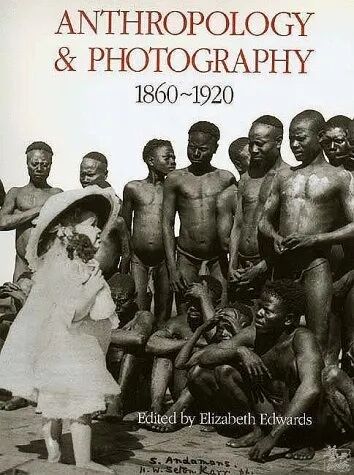
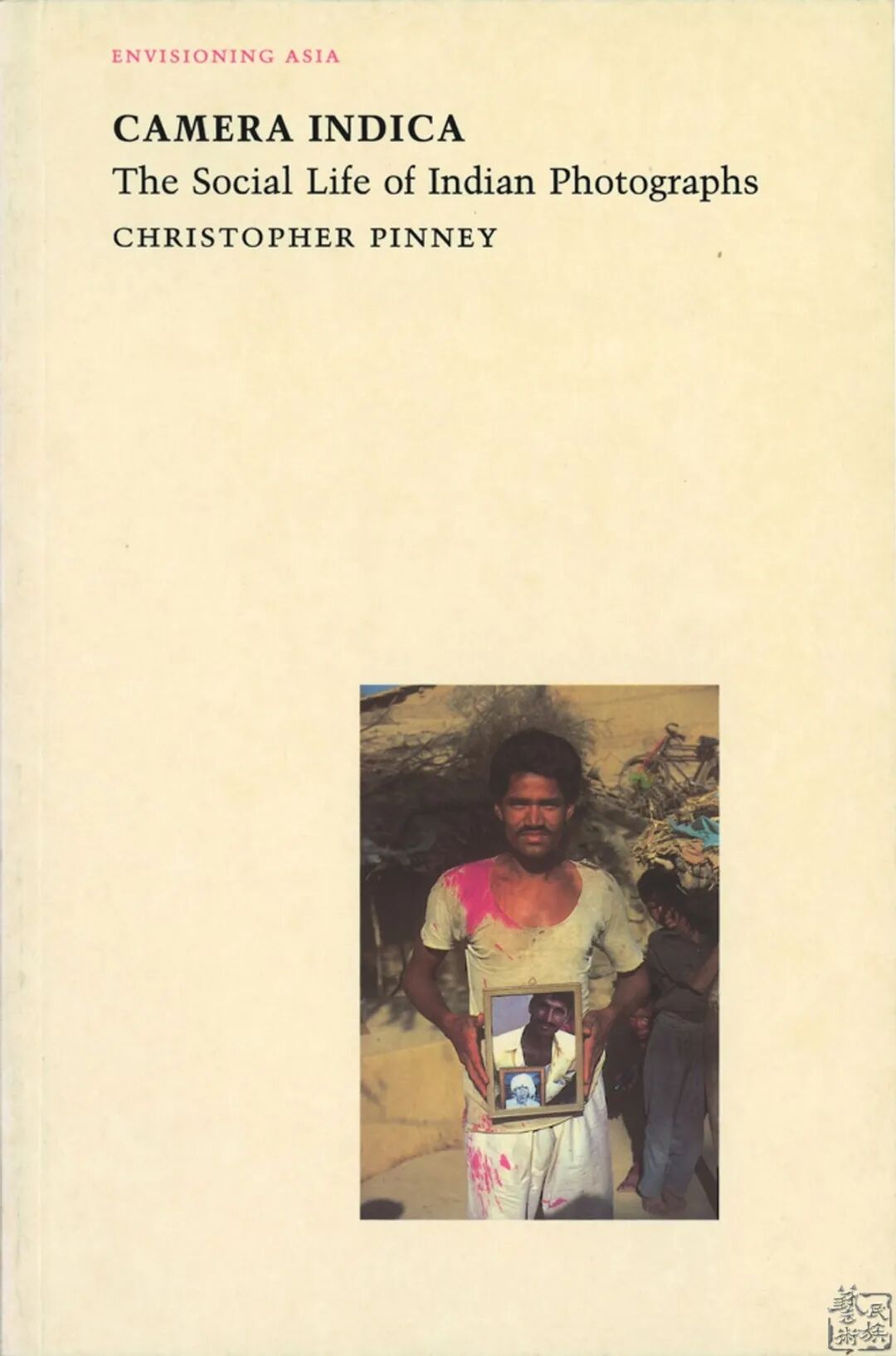
Along these paths, Edwards and Pinney moved beyond photography as a mere recording tool and passive medium, from the perspectives of photographic history and ethnography respectively. Edwards largely mapped how different kinds of photographs in British photographic history interacted with anthropology and ethnology. On that basis, she discussed how early "proto-anthropologists" produced and stored knowledge about others, or about the British nation, through social systems such as museums and learned societies,[23] and how the gazes of imperial colonizers and local indigenous people intertwined.[24] In terms of British photographic history, her research rarely goes beyond the Victorian and Edwardian periods. Yet by examining the role photography played in Britain's modern system of knowledge production, she was able to link several lines of research, including British visual culture, critical museology, and material culture. She put these into dialogue with broader history and more abstract theory, especially the concept of "affect." In 2012, Edwards published an article reviewing more than twenty years of "anthropological research on photography, photographs, and photographic practice." She treated "materiality" and "affect" as the key terms of the field[25] and saw anthropologists' research on photography as a response to "socio-photographic practices."[26] In May 2014, at the "Anthropology and Photography" conference held at the British Museum,[27] she gave a keynote address titled "Anthropology and Photography: A Long History of Knowledge and Affect." In the revised paper she later published, Edwards ultimately defined photography as "evidence of affect," which bears witness to "how people feel, think, and communicate with the world they inhabit."[28] The concept of "evidence of affect" clearly means that photography has left passive instrumentalism behind. A photograph not only proves that its subject was once present. It is also the material manifestation of the desire and impulse to take pictures and to be photographed. In this sense, photography and photographs are agentive things in Alfred Gell's sense.[29] The indexicality of the photographic image no longer points only to inexhaustible "interpretations," each claiming to be the sole truth. It points instead to the "traces" left by love, hate, and passion in human society.
Edwards always kept historical images at the center of her work. Pinney's research on photography and anthropology, by contrast, encompasses both the "double history"[30] of early anthropology and photography and ethnographic writing based on synchronic fieldwork. His lifelong focus on India and the South Asian subcontinent made him especially sensitive to certain questions: how photography was localized by local societies, how it took part in the modern visual construction of non-Western societies, and what its local histories were and how they shaped contemporary local photographic practice. Pinney had already become interested in photography and popular visual culture in central India during his doctoral studies. But Camera Indica's focus on photography also grew out of the local people "looking back" at the anthropologist. As he told me in an interview:
I was often taken for a photographer by local people and "recruited" to their weddings. In the 1980s, photography was still non-digital, it was expensive, and good cameras were rare there. I was lucky: I could move around the field with a camera borrowed from a University of London research center, and I had color film that could be processed to a high standard in Britain. So local people saw me as a representative of a kind of "enchanting technology." I think part of the reason I became interested in photography was that people in central India kept asking me to photograph them.[31]
In this account we can see several facts pulling against one another. First, photography's function of witnessing and preserving important events had already been widely understood and accepted in non-Western societies. Second, within a particular period (here, the 1980s), photography still served as a marker of social distinction in regions where the technology was not yet widespread. Third, the anthropologist's identity was contradictory.
On the one hand, he came from a place "higher" in the economic and world order and enjoyed the privilege of observing local reality and capturing it as images. On the other hand, this privilege did not set him apart from local people; instead, it brought them closer. Beneath these conflicting facts lies a set of ethnographic questions about "how to anthropologize photography." How have "others" understood photography through historical and social change? How has the fusion of and friction between photographic technology and local culture shaped a place's contemporary visual culture? How do photographic images overlap with other media to form a society's network of visual media? These questions have largely laid the foundation for photography-and-anthropology research, especially research that still takes ethnography as its main output and photographic practice itself as its object. Examples include Christopher Wright's research in the Solomon Islands,[32] Karen Strassler's research on photography and modernity in Indonesia,[33] Shireen Walton's research on Iranian photoblogs,[34] Andrea Lathrop Ligueros's research on a transnational community of Polaroid enthusiasts,[35] and my own research on Chinese amateur photographers.[36]
Notably, among the ethnographies listed above, Wright's and Strassler's still concern photography before the digital age, when photographs could still be grasped as objects occupying a place in physical space. In their studies, photography is no longer equated with photographs waiting to be interpreted, but images in physical space often mark the endpoint of photographic practice. Whether in homes, in public squares, in books, or in archives, they always have a "materiality" in the sense of "corporeal" reality. For the studies of Iranian photoblogs, transnational Polaroid communities, and Chinese amateur photographers, by contrast, photographic practice has no endpoint. Physical photographs become digital images, which travel between screens by means of the "non-materialized materiality" of data streams. The "corporeal" reality of the photograph turns either into the "corpovirtual" existence of the image or into the "digit-real." "Corpovirtual" describes how the combination of network technology and photographic images affects people's perception of time and space and the ways they practice photography. The "digit-real" points out that photography's "that-has-been"[37] quality becomes unstable as it is moved and washed along by digital flows. The intervention of digital and internet technologies has undoubtedly added more complex dimensions to the relationship between people and photography. This complexity shows up mainly in three ways: the ubiquity of photography and photographs across interfaces on the internet;[38] the shift in photographic viewing from recalling history to sharing the present;[39] and, in virtual space, photographs acting as a fluid, ethnographic construction of "truth" rather than as a signifying medium that simply represents "truth."[40]
In the current landscape of "photography and anthropology" or "anthropology and photography" research, the most concentrated showcase of scholarly work is undoubtedly the online publication Anthropology and Photography. It takes its name from the 2014 conference organized by the Royal Anthropological Institute. Each issue publishes one medium-length ethnographic study (4,000–6,000 words in English). It encourages authors to include plenty of photographic work and even directly accepts photo-essays or documentary photography projects by photographers that incorporate anthropological thinking.[41] Today, within a single anthropological study, photography has shown its multidimensional potential to serve at once as research material, research object, research method (a means of recording), and ethnographic event. The answer to "how to anthropologize photography" is gradually taking shape. The final section of this article examines the formation of theory in the anthropology of photography and its interaction, and tension, with anthropological photographic practice. In this research, photography's role becomes more flexible, and the intellectual dialogue and reflection it prompts run deeper across anthropological research and the theory and practice of photography. An "anthropology of photography" with contemporary significance is gradually coming into view.
III. Toward an Anthropology of Photography
Toward the end of the previous section, I pointed out some differences between photography-and-anthropology research in the digital age and that of the pre-digital era. At first glance, this might seem to promote a linear evolutionism "from analog to digital photography." However, pointing to photography's media complexity in the digital and internet age does not mean that photography has lost its bodily and social qualities, as "evidence of affect" in Edwards's terms or as "an interactive medium of looking" in Pinney's. On the contrary, the digital brings "affect" and "mutual looking" into a more "contemporary," or "con-temporary," context. It makes photography an object that the "ethnographic present" cannot avoid taking in. And as the following discussion will show, once the ethnographic present takes photography into itself, its negative connotations, and even its theoretical content, will change.
In anthropology's tradition of self-critique, the concept of the "ethnographic present" carries negative connotations. It originally referred to anthropological ethnography's excessive focus on the synchronic at the expense of the diachronic. It reflects the problem of anthropologists viewing others and writing ethnography only from the standpoint of the "present." For instance, others who live in the same "present" as "us" are treated as more backward peoples "without history." Anthropological ethnography is also assumed to be written for readers at the same stage of social development as "us," while peoples who "lag behind" "our" time can only ever be objects of representation.[42] Photography, however, has important theoretical significance here, because it offers a concept and a way of perceiving the "con-temporary." As a referent of time, the photograph leaves material evidence for history and makes the moment permanent. The "past" always coexists with people in the form of images, gaining new interpretations and meanings in different eras and contexts. In other words, the "con-temporary" is a basic property of the photograph. Ethnographic writing centered on photographs will necessarily have historical depth and will even link past and present, turning the "ethnographic present" into the "ethnographic con-temporary." "We" now begin to wonder: Who took that photograph? Where? Why? What did it record? What does it tell, and what does it leave unsaid? Why and how does it appear in, or change, this present moment? All these questions asked from the present toward the past ultimately point to a "present" that has acquired history, and this "present" contains countless "con-temporaries." At different times, different people from different vantage points can make "past" and "present" coexist within countless possible narratives. No wonder Pinney places special weight on Benjamin's remark: "The photographer is in fact a descendant of the 'augurs and haruspices,' and photography opens up an 'optical unconscious' and 'makes the difference between technology and magic visible as a thoroughly historical variable' (Benjamin, 1999: 512)."[43]
Whether analog or digital, photography's anthropological character always lies in the trick of temporality and interpretation formed by "augury and divination" and "historical variables." Marilyn Strathern once described "events and the interpretation of images," which bears useful comparison with anthropological theories of photography. She found that Melanesians met the sudden appearance of Europeans with wonder but not surprise, because Europeans had long existed as a kind of "image" in local mythic narratives. Here "image" means an overall "impression," "figure," or "cognition." In other words, their sudden appearance was merely "recovering the past in the future": "Europeans first presented a particular image. These images contain both past and future time; they do not need to be placed in historical context, because what they embody is history itself." She discussed how Marshall Sahlins treated events as "interpreted action" within an existing cultural system, linked with the other events that follow in different versions of history, "ours" and "theirs." She also discussed Roy Wagner's notion of the event as "performance," which starts from how people understand an event's "effect": "Time is not made up of events that happen to occur along a line; it exists in the capacity of an image to evoke past and future at once."[44]
Although Strathern did not mention photography, it is not hard to find things in photographic practice that correspond to her "image" and "event." Photography even contains both "event" and "image" within itself. It is a practical event concerning time. Viewing and interpreting a photographic image ("image" in the narrow sense, that is, the photograph) is a journey of rediscovering a possible history ("image" in the broad sense, that is, different perceptions of time itself) and how it leads to the present and even the future. In a photographic event, the prophetic and the historical contain each other. The position of each reality and each past is no longer defined by a linear view of time. Instead, they relate to one another and give rise to parallel, diverse, and even conflicting modes of interpretation. The anthropological significance of photography, or the theoretical groundwork of the anthropology of photography, might thus be summed up in two points. The first is achieving the coevalness and coexistence of "us" and "others" that anthropologists have pursued since the 1970s. The second is helping humanity reconsider the relationship between past and present. Both are achieved through the multiple experiences of time, multiple readings of meaning, and ambiguous narratives that photography provides.
If the anthropology of photography is built at the theoretical level from three gateways, time, event, and practice, then those who pass between them can easily lose their way. The most puzzling issue is this. Suppose we define the anthropology of photography purely in terms of photography's anthropological ontology, that is, what photography is within the issues anthropology cares about. We would soon find that modern society's established rules about how photography exists, and how to understand its existence, quickly break down. If the same photograph can evoke "our" time and the "other's" time at once, carrying "us" here while sending the "other" there, do definitions and standards for photography still exist? Can people still judge whether a photograph is good or bad in terms of communicating information, documentary recording, or aesthetic judgment? In modern society these had long ceased to be questions, yet the theory of the anthropology of photography may well unsettle these basic modern assumptions and the everyday practices built upon them. In 2022, an article titled "Why Do 'Good' Pictures Matter in Anthropology?" appeared in the leading anthropology journal Cultural Anthropology, responding to this existential predicament of the anthropology of photography. The article first reviews important texts on photography in the history of anthropology. It then uses the autoethnography of its author, Camilo Leon-Quijano, to discuss what a "good" photograph is, why "good" ethnography is the basis of "good" photographs, and why "good" photographs matter for anthropology. The author is both an anthropologist and a photographer. He has done long-term fieldwork on local rappers, mostly from the Black diaspora, in Sarcelles, a French district populated mainly by immigrants, and he has continuously documented and created work there through photography. He argues:
Good pictures in anthropology are always relational, unfinished, uncertain, and at times incoherent or even conflictual. Good pictures are always pictures that can be experienced (experienced pictures). They depend on the photographic habits already present in the social environment, which in turn nurture them, and on the technical, pictorial, narrative, and material conditions under which they are produced and shared. Good pictures emerge from dialogue. Unlike "decisive moment" photographs (the concept proposed by Cartier-Bresson in 1952), good pictures in anthropology need to take part in "good" ethnographic interaction.[45]
Two points in his case are especially important and highlight what "experienced pictures" are. The first is his attempt to "re-create" an old group photo of rappers from the 1990s. In the new photograph there are fewer people, the old-timers are no longer young, and this remote suburb north of Paris looks run-down and weathered in the afterglow of sunset. The photographer put his own lament for the passing years into the image, but among the veteran rappers he photographed, that feeling was subtly turned into nostalgia for their passionate younger days. Different rappers used the photograph in different places, showing how readily local people accepted the images the anthropologist made. Here the photographer and the photographed (as well as potential viewers) "experienced" the photograph together, and photography became a bond between them. This social experienceability rested both on the author's deep knowledge, as an anthropologist, of local history and culture, and on his aesthetic choices, as a photographer, suited to this "local knowledge." His reflections on how to present the photograph are particularly moving. He chose a wide-angle lens, black and white, and backlit shooting against the setting sun, all so that the photograph would convey a power rooted in the local spirit.[46] In the second example, the author shares how he worked with local people beyond the image itself to build a shared experience of it. Over a year, working collaboratively, he followed and photographed a local high school girls' rugby team made up mostly of students from poor families. He first exhibited the work in a local community space and then took the whole project to audiences across France, observing how different social groups responded to the images. The case matters because it not only shows photography's potential as a tool of social action but also points out that "the 'content' of a photograph is shaped through the experience of its own conception, creation, socialization, and exhibition."[47] "Experienced pictures," therefore, are often also "pictures with their own social lives."
From a practical standpoint, the discussion of what counts as a good photograph in anthropology seems both to give further grounding to theory-building in the anthropology of photography and to fit it with a "safety valve." On the one hand, seen anthropologically, photography's meanings and practical means are indeed enriched. Yet because the anthropologist-photographer shares the same social and cultural environment as local people, they must actually seek a kind of "greatest common denominator" in the emotional and aesthetic choices of their images. This demands more of the photographer's aesthetic judgment and technical skill. Photography thereby becomes a bridge for social participation, a medium through which the effectiveness of ethnographic work is judged by how well local people receive it. It does not fragment without limit and finally vanish into theoretical nothingness. At the very least, if anthropologists want their photographs to connect and mobilize as many social actors as possible, the photographs must stay within certain limits in their experience of time, their description of events, and their modes of practice. This may seem to contradict words such as "multiple," "plural," and "polysemous." At the most fundamental level, however, that of photography as an "event" achieved through the interpretation of "images," it does not deviate in the slightest. For Strathern, an event is the action of an image being interpreted within a given culture, and how images are produced determines how people distinguish "us" from "others": "The question becomes how people can grasp the perspective of others and use it to reflect on themselves."[48] In reflecting on his own anthropological photographic practice, Leon-Quijano likewise notes that good photographs need to be socially anticipated, so that they appear in "spaces that are theoretically, emotionally, and institutionally prepared."[49] In other words, photography can only ever acquire meaning within a social and cultural environment, and a photograph comes to life only through people's expectations of it.
Conclusion
In 2018, when I first introduced the anthropology of photography, a small and marginal subdiscipline, to Chinese scholars, I focused mainly on reviewing the literature and classifying types of research. In this article, I have tried instead to closely read and analyze literature from different periods with different research emphases, and on that basis to present the overall development of the anthropology of photography since the 1970s. This trajectory reflects the subdiscipline's shift from a mechanical, instrumental understanding of photography toward approaches with greater theoretical generativity, research reflexivity, and media agency. Its background is naturally bound up with the several turns anthropology itself has taken since the Second World War. Finally, I would like to borrow and adapt a sentence from Anna Lowenhaupt Tsing's The Mushroom at the End of the World: On the Possibility of Life in Capitalist Ruins, in which she stresses the importance of mushrooms for understanding the contemporary human condition. She writes: "It is time to pay attention to mushrooms. This does not guarantee our salvation, but it may open our imaginations."[50] I would say: It is time to pay attention to photography. This does not guarantee our salvation, but it may open the door to reimagining history and reality.
Notes
[1] Christopher Wright, "Photo-Ethnography," in The International Encyclopedia of Anthropology, ed. Hilary Callan, Wiley, 2018. DOI: 10.1002/9781118924396.wbiea2017.
[2] Christopher Morton, "Photography, Anthropology of," in The International Encyclopedia of Anthropology, ed. Hilary Callan, Wiley, 2018. DOI: 10.1002/9781118924396.wbiea1621.
[3] In China, the term Visual Anthropology has broadly been translated in two ways, as "影视人类学" (film-and-video anthropology) and "视觉人类学" (visual anthropology). The former places more emphasis on the "film ontology" of ethnographic film. The latter advocates the study of "'human visual culture,' rather than merely anthropological research on moving images." For a reconciliation of the two translations, see Jingjiang Zhu and Dongjuan Gao, "The Disciplinary Construction and Academic Practice of Contemporary Chinese Visual Anthropology," Journal of Guangxi Minzu University (Philosophy and Social Sciences Edition), 2023, no. 1, pp. 132–135. The authors reconcile the two by starting from ethnographic film and gradually extending the discussion to other image media of "non-textual knowledge production." They end with a multimodal, multidimensional anthropological vision that links sight with the other senses, forming a three-circle disciplinary system of anthropology: "film—image—vision." I have found this classification inspiring and endorse the path "from film to the visual," so I place photography, as an image medium, within the scope of "visual anthropology" (影视人类学). However, whether "film ontology" should be the core of this discipline, and how its established central position in the discipline's history has suppressed a "photographic ontology," are questions that the article discusses and reflects on at length.
[4] Joanna Cohan Scherer, "Ethnographic Photography in Anthropological Research," in Principles of Visual Anthropology, third edition, ed. Paul Hockings, Mouton de Gruyter, 2003 [1975], pp. 201–207.
[5] John Collier, Jr., "Photography and Visual Anthropology," in Principles of Visual Anthropology, third edition, ed. Paul Hockings, Mouton de Gruyter, 2003 [1975], pp. 235–250.
[6] Christopher Pinney, "Bruises and Blushes: Photography 'Beyond' Anthropology," in Documentary Across Disciplines, eds. Erika Balsom & Hila Peleg, The MIT Press, 2016, p. 22.
[7] Gregory Bateson & Margaret Mead, Balinese Character, New York Academy of Sciences, 1942, p. xii.
[8] Gregory Bateson & Margaret Mead, Balinese Character, New York Academy of Sciences, 1942, pp. 55–255.
[9] Here Bateson may have been distinguishing his and Mead's practice from existing documentary photography and documentary film. For example, Migrant Mother (1936), taken by Dorothea Lange on commission from the U.S. Farm Security Administration, was questioned by scholars and the media as a staged work. Nanook of the North (1922), directed by Robert Flaherty, is hailed as the founding work of ethnographic documentary, but later scholars have questioned and reflected on the staging and set-building the director used on location to obtain the images he wanted.
[10] Gregory Bateson & Margaret Mead, Balinese Character, New York Academy of Sciences, 1942, p. 49.
[11] Joanna Cohan Scherer, "Historical Photographs as Anthropological Documents: A Retrospect," Visual Anthropology 3, no. 2–3, 1990, pp. 134–135.
[12] Joanna Cohan Scherer, "Ethnographic Photography in Anthropological Research," in Principles of Visual Anthropology, third edition, ed. Paul Hockings, Mouton de Gruyter, 2003 [1975], pp. 201–202.
[13] Joanna Cohan Scherer, "Historical Photographs as Anthropological Documents: A Retrospect," Visual Anthropology 3, no. 2–3, 1990, p. 137.
[14] Joanna Cohan Scherer, "Historical Photographs as Anthropological Documents: A Retrospect," Visual Anthropology 3, no. 2–3, 1990, pp. 133–134.
[15] Elizabeth Edwards, "Photographic 'Types': The Pursuit of Method," Visual Anthropology 3, no. 2–3, 1990.
[16] Christopher Pinney, "Classification and Fantasy in the Photographic Construction of Caste and Tribe," Visual Anthropology 3, no. 2–3, 1990.
[17] George Stocking Jr. (1928–2013) was an American historian of German descent who specialized in the history of anthropology. He taught for many years at the University of Chicago (from 1968). His major works include Victorian Anthropology (1987), The Ethnographer's Magic and Other Essays in the History of Anthropology (1992), and After Tylor (1995).
[18] Elizabeth Edwards (ed.), Anthropology and Photography, 1860–1920, Yale University Press, 1992.
[19] Christopher Pinney, Camera Indica: The Social Life of Indian Photographs, Reaktion Books, 1998.
[20] Edward W. Said, Orientalism (Chinese edition), trans. Yugen Wang, SDX Joint Publishing Company, 2022.
[21] James Clifford & George Marcus (eds.), Writing Culture: The Poetics and Politics of Ethnography, University of California Press, 1986.
[22] John Tagg, The Burden of Representation: Essays on Photographies and Histories, University of Minnesota Press, 1993.
[23] Elizabeth Edwards, Raw Histories: Photographs, Anthropology and Museums, Routledge, 2001.
[24] Elizabeth Edwards, Chris Gosden & Ruth B. Phillips (eds.), Sensible Objects: Colonialism, Museums and Material Culture, Berg, 2006.
[25] Elizabeth Edwards, "Objects of Affect: Photography Beyond the Image," Annual Review of Anthropology 41, 2012, p. 222.
[26] Elizabeth Edwards, "Objects of Affect: Photography Beyond the Image," Annual Review of Anthropology 41, 2012, p. 230.
[27] This conference was in fact the Royal Anthropological Institute's biennial conference, each edition of which has a theme. The 2014 theme was "Anthropology and Photography." Keynote speeches are usually given by leading scholars in the theme's field and held in the British Museum's main lecture theatre, while panels are spread across the British Museum's meeting rooms and the campus of SOAS, University of London.
[28] Elizabeth Edwards, "Anthropology and Photography: A Long History of Knowledge and Affect," Photographies 8, no. 3, 2015, p. 248.
[29] Alfred Gell, Art and Agency: An Anthropological Theory, Clarendon Press, 1998.
[30] Christopher Pinney, Photography and Anthropology, Reaktion Books, 2011, p. 17.
[31] Yunchang Yang and Christopher Pinney, "The Anthropology of Photography: Historical Narratives and Future Imaginations," Journal of Guangxi Minzu University (Philosophy and Social Sciences Edition), 2018, no. 5, p. 42.
[32] Christopher Wright, The Echo of Things: The Lives of Photographs in the Solomon Islands, Duke University Press, 2013.
[33] Karen Strassler, Refracted Visions: Popular Photography and National Modernity in Java, Duke University Press, 2010.
[34] Shireen Walton, Camera Iranica: Popular Digital Photography in/of Iran, PhD diss., University of Oxford.
[35] Andrea Lathrop Ligueros, Resisting Obsolescence: Polaroid Practices in the 'Digital Age', PhD diss., University College London.
[36] Yunchang Yang, Photography and Social Life: An Ethnography of Chinese Amateur Photography Online, PhD diss., University College London.
[37] Roland Barthes, Camera Lucida: Reflections on Photography, trans. Richard Howard, Vintage Books, 1993, p. 77.
[38] On how photographic practice differs across interfaces on the internet, see Daniel Miller, "Photography in the Age of Snapchat," Anthropology and Photography 1, 2015, p. 14; Yunchang Yang, "Technical and Aesthetic Logics under 'Image-Based Sociality': The Case of Chinese Photo-Sharing Platforms," Ethnic Arts, 2022, no. 5, p. 139.
[39] Daniel Miller, "Photography in the Age of Snapchat," Anthropology and Photography 1, 2015, pp. 10–12.
[40] Shireen Walton, "Photographic Truth in Motion: The Case of Iranian Photoblogs," Anthropology and Photography 4, 2016, p. 16.
[41] All studies published in the online journal Anthropology and Photography can be browsed at the following website, and all articles are open access: https://therai.org.uk/publications/anthropology-photography/, accessed May 7, 2025.
[42] Johannes Fabian, Time and the Other: How Anthropology Makes Its Object, Columbia University Press, 2014, pp. 74–77, 80–82.
[43] Christopher Pinney, "Anti-Scientific Images: Photography and the Prehistory of Anthropology," trans. Yunchang Yang, Journal of Guangxi Minzu University (Philosophy and Social Sciences Edition), 2018, no. 5, p. 5.
[44] Marilyn Strathern, "Artefacts of History: Events and the Interpretation of Images," in Culture and History in the Pacific, ed. Jukka Siikala, The Finnish Anthropological Society, 1990, pp. 25–29.
[45] Camilo Leon-Quijano, "Why Do 'Good' Pictures Matter in Anthropology?" Cultural Anthropology 37, no. 2, 2022, p. 573.
[46] Camilo Leon-Quijano, "Why Do 'Good' Pictures Matter in Anthropology?" Cultural Anthropology 37, no. 2, 2022, pp. 581–583.
[47] Camilo Leon-Quijano, "Why Do 'Good' Pictures Matter in Anthropology?" Cultural Anthropology 37, no. 2, 2022, pp. 585–588.
[48] Marilyn Strathern, "Artefacts of History: Events and the Interpretation of Images," in Culture and History in the Pacific, ed. Jukka Siikala, The Finnish Anthropological Society, 1990, p. 29.
[49] Camilo Leon-Quijano, "Why Do 'Good' Pictures Matter in Anthropology?" Cultural Anthropology 37, no. 2, 2022, p. 584.
[50] Anna Lowenhaupt Tsing, The Mushroom at the End of the World: On the Possibility of Life in Capitalist Ruins (Chinese edition), trans. Xiaojia Zhang, East China Normal University Press, 2020, p. 12.