From Changing Life to Understanding Life: The Transformation of British Social Documentary Photography
Lesson 01
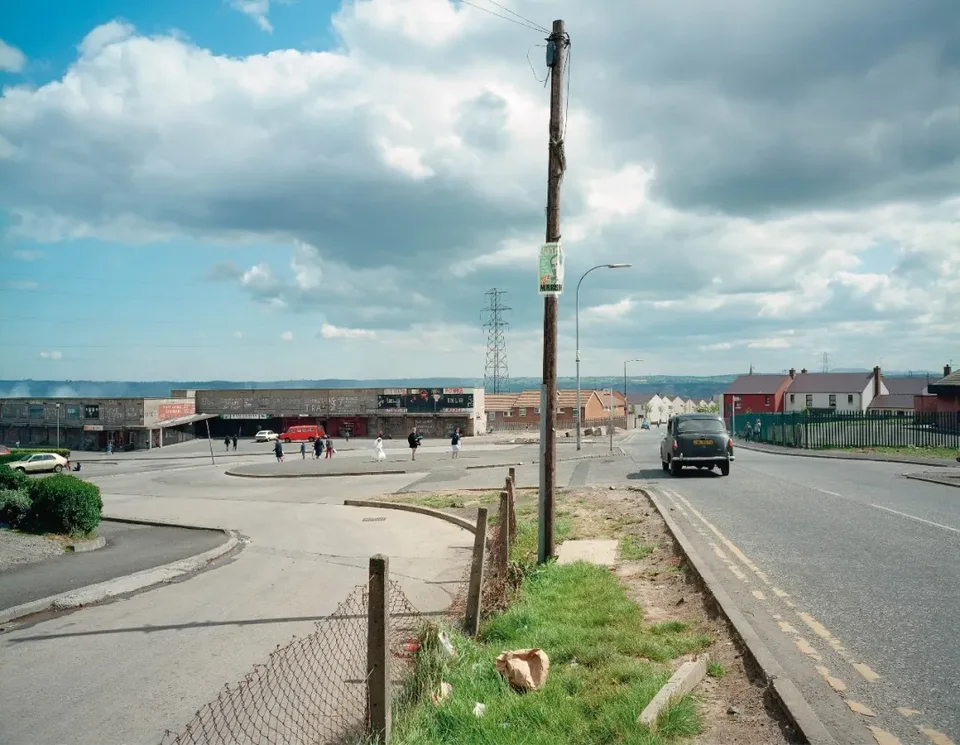
Compared with the American social documentary tradition we know well (represented by Walker Evans, Dorothea Lange, and others), British social documentary photography, which emerged after the 1970s, absorbed the legacy of the former yet took a path completely different from contemporaneous American social documentary. To clarify the forces behind this turn, we need to explore at least three levels: first, the crisis documentary photography faced as a medium in the 1970s; second, the modernist institutionalization and autonomization of American documentary photography; and third, the new form of social subject shaped by British neoliberal governmentality (what I have previously called the duality of "the victim is also the perpetrator"). Rather than simply introducing what British documentary photography "is," I am more concerned with "why" it became this way—that is, how British social documentary photography accomplished a sociological transformation of its modernist form. On this basis, I will lead you into Paul Graham's color documentary practice. I will also discuss the work of the recently deceased Martin Parr, in his memory.
The Tradition of Landscape Photography: The Indifference and Emptiness of Visual Language
Lesson 02
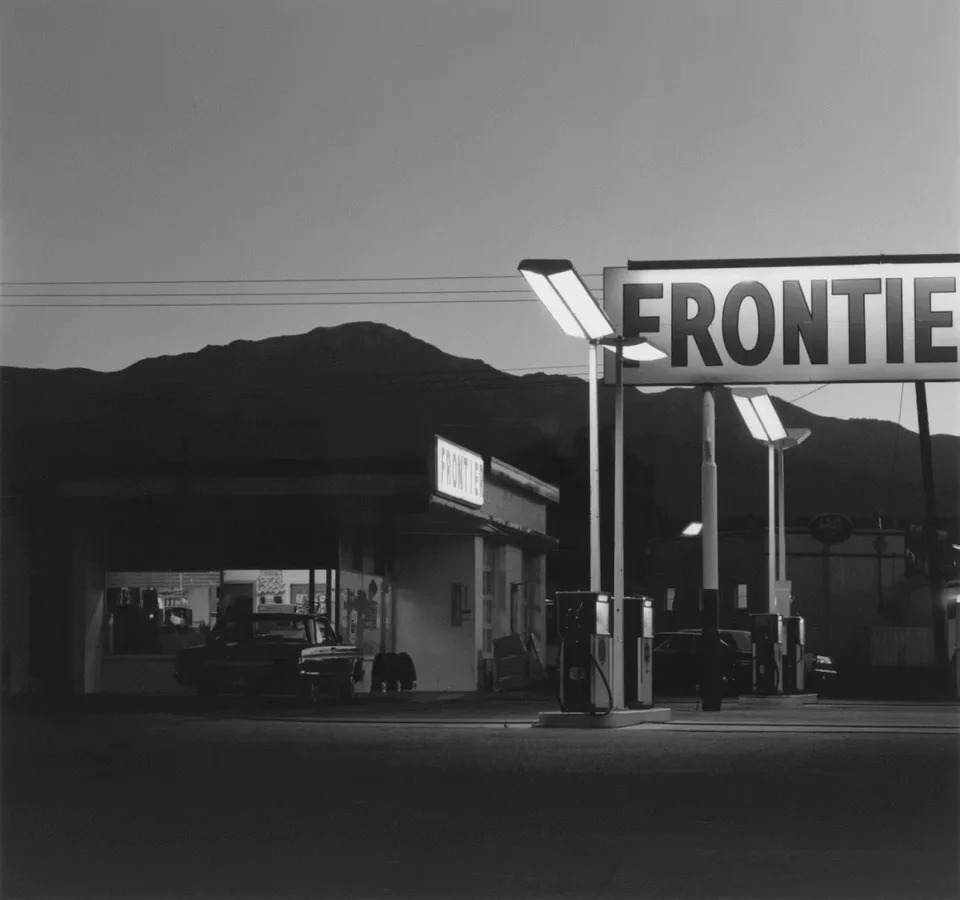
I thought about this topic for a long time. My original intention was to address a few questions: Why has the visual language of contemporary landscape photography become ever cooler and more detached? How did this seemingly desolate, indifferent landscape photography become the mainstream of contemporary landscape photography? What role does it actually play in helping us understand the world we live in today? By now I have worked out a preliminary answer. Rosalind Krauss long ago discussed O'Sullivan's photography, and landscape photography from that time already displayed its indifferent visual appearance. The culmination of this indifferent appearance is undoubtedly wilderness photography. And "wilderness" is in fact a visual category that connects back to the European tradition of landscape painting, and even to "landscape" itself. Therefore, this lesson will start from the origins of landscape photography, analyzing its medium-specific characteristics as a particular genre, and then use the works of Carleton Watkins, Timothy O'Sullivan, Ansel Adams, Robert Adams, Ed Ruscha, and Andreas Gursky to explain the causes, evolution, and efficacy of this rather detached visual form in contemporary landscape photography.
Thomas Ruff: The Hauntology of the Photographic Archive and the Afterlife of Images
Lesson 03
My systematic thinking about Ruff grew out of conversations with him at this year's Lishui Photography Festival. Ruff is often defined as an explorer of the photographic medium, and this is of course the mainstream approach. Yet this approach still cannot settle a question for me: what makes Ruff's images "worth looking at"? In other words, a photographer's contribution to the evolution of the medium cannot explain the unique power of his work to move us: there are so many photographers devoted to interrogating the boundaries of the photographic medium—why Ruff in particular? How does Ruff differ from other artists equally concerned with questions of the medium? What I try to do is to begin from his archival method, analyzing how the sensible qualities of his images are constituted, and thereby explain the source of the distinctive power of Ruff's work. I will place Ruff's images within the lineage of "afterlife" (Nachleben) associated with Walter Benjamin, Aby Warburg, and Jacques Derrida, and use the "archive" as another axis to locate and interpret Thomas Ruff's practice. In an earlier course I interpreted his signature Portraits series mainly from the perspective of the "archive," focusing on how Ruff addressed the question of the archive through concrete practice; this time I want to offer a more holistic interpretation of Ruff's method and its results, to explain our experience of viewing his work. Specifically, I will start from the Stars series of his early career and focus on the jpegs, tableaux chinois, and other portraits series, to explain why Ruff's images are distinctive and what kind of distinctiveness they have.
Jeff Wall: Writing and Depiction
Lesson 04
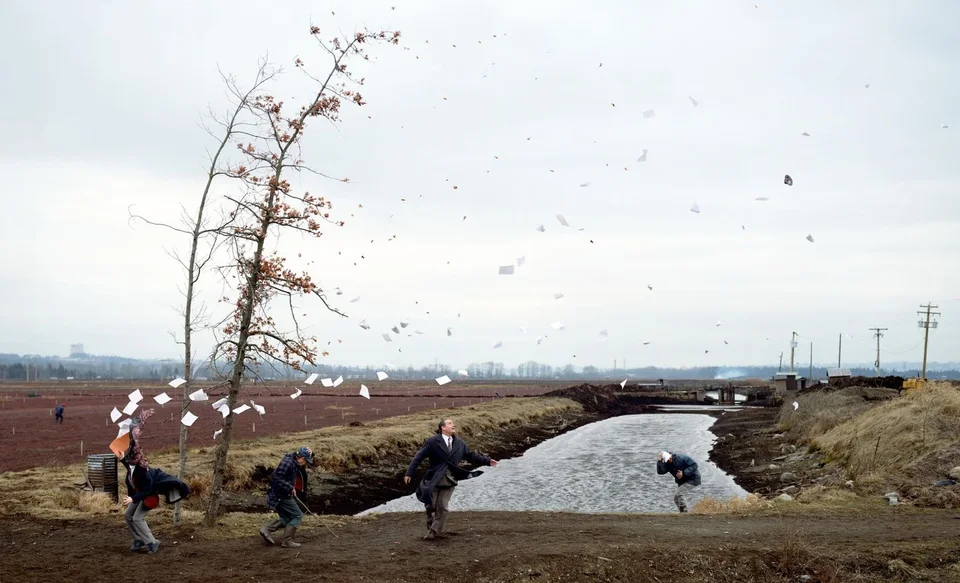
Can photography depict modern life as painting does?
This lesson begins with Wall's relationship to conceptual art, distinguishing between organizing works through words and ideas and unfolding them through depiction in the picture, and discusses the path by which photography re-entered the tradition of art history. Drawing on Wall's response to Manet and the painting of modern life, the course examines how the postures, actions, and settings of figures in the picture constitute the experience of looking, and how large-scale photography gives this experience concrete form.
Jeff Wall: Cinematographic Photography and Near Documentary
Lesson 05
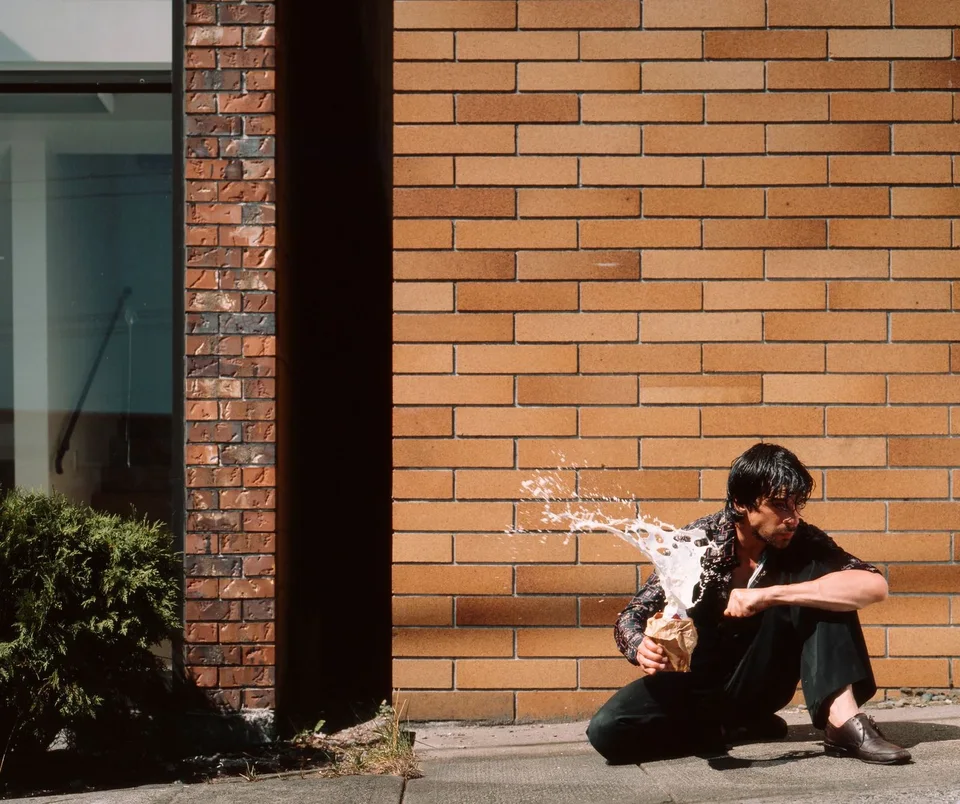
Centering on works such as Milk, this lesson discusses how the chance moment of the snapshot reappears through staging, performance, and production.
Wall's cinematographic photography brings together photography's instantaneity and cinema's mode of production, making seemingly spontaneous actions the result of repeated work. The course further analyzes liquid intelligence, intervals, and near documentary, and through montage and reenactment, seeks to understand how these works both retain traces of everyday reality and change the way we recognize reality.
Tillmans: Fragile, Precarious Life
Lesson 06
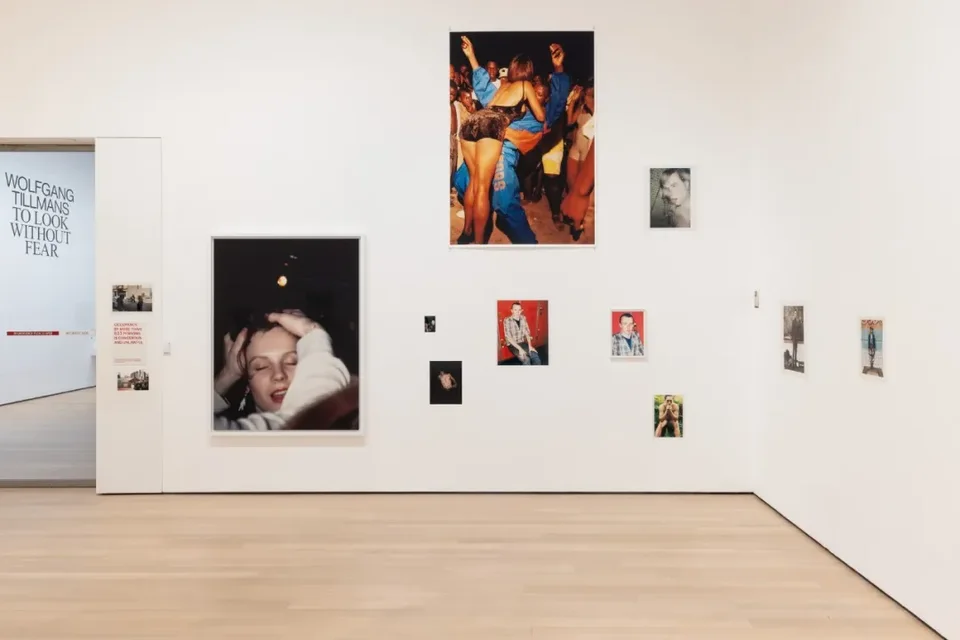
I used to understand Wolfgang Tillmans in very stereotyped terms, seeing him as merely a photographer who made it his mission to capture fragments of subcultural youth life. Yet this understanding cannot explain a core contradiction: why do his seemingly casual, even "anti-technical" images produce in the museum a sense of pressure that is both highly engaging and rigorous? More importantly, Tillmans's photographs change the way we perceive the world: after viewing his images, we start to recognize Tillmans-like moments in real life too. That is also why his photography has become so popular around the world. He is the kind of artist whose work makes you want to pick up a camera yourself. Later I realized that for Tillmans, there is no meaning of the single photograph, or rather the meaning of a single work cannot be self-sufficient. The only work is "the exhibition as medium" itself. So in this lesson I try to argue that Tillmans's real contribution lies in breaking photographic modernism's binary oppositions between abstract and figurative, high and low. I will analyze how he breaks the museum's traditional linear narrative and aesthetic hierarchy through means such as taping prints directly to the wall and mixing huge inkjet prints with postcard-sized images. The gaps between images, their placement higher or lower, their size—none of these is trivial. Together they form a dynamic semantic network that compels viewers to draw on their own pre-understanding, wander through it, and produce meaning.
Forensic Architecture: Investigative Aesthetics and the Politics of Truth
Lesson 07
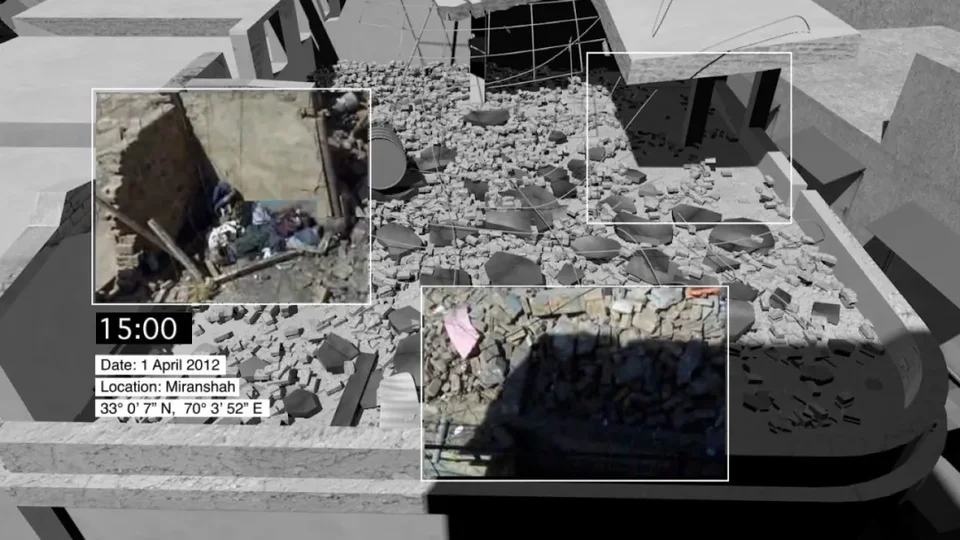
If we accept that since the advent of digital photography (to say nothing of AI today), photography has been moving toward a "post-truth" era, we have to face the question: does the traditional logic of documentary photography based on "bearing witness in person" still hold full efficacy in this era? As the truth of events increasingly depends on what Hito Steyerl calls the "politics of truth," how should those who use photography dig up, once again through photography, truths buried by various means? As the finale of the whole season, I will focus on the artistic practice of Forensic Architecture, a group much in demand in visual culture studies and contemporary art, and analyze their concrete practice from the perspective of "counter-forensics" (proposed by our bootcamp's "old acquaintance" Allan Sekula, referring to a political practice of evidence-gathering). For example, how did they analyze the pixels of smoke spreading at an explosion site to infer the specific type of bomb and its trajectory, thereby exposing an official denial of an attack as a lie? And this new paradigm of evidence, grounded in the constructive nature of forensics (the Latin root of "forensic" originally referred to "the public forum"), has in turn promoted a forensic aesthetics—a gloomier humanism: going deep into concrete traces of bones, fragments, and images for careful excavation and identification. And this is where photography is irreplaceable: photography has political efficacy here precisely because of its weakness in the capacity for abstraction.