Postwar Japanese Photography and the Crisis of Subjectivity
Lesson 01
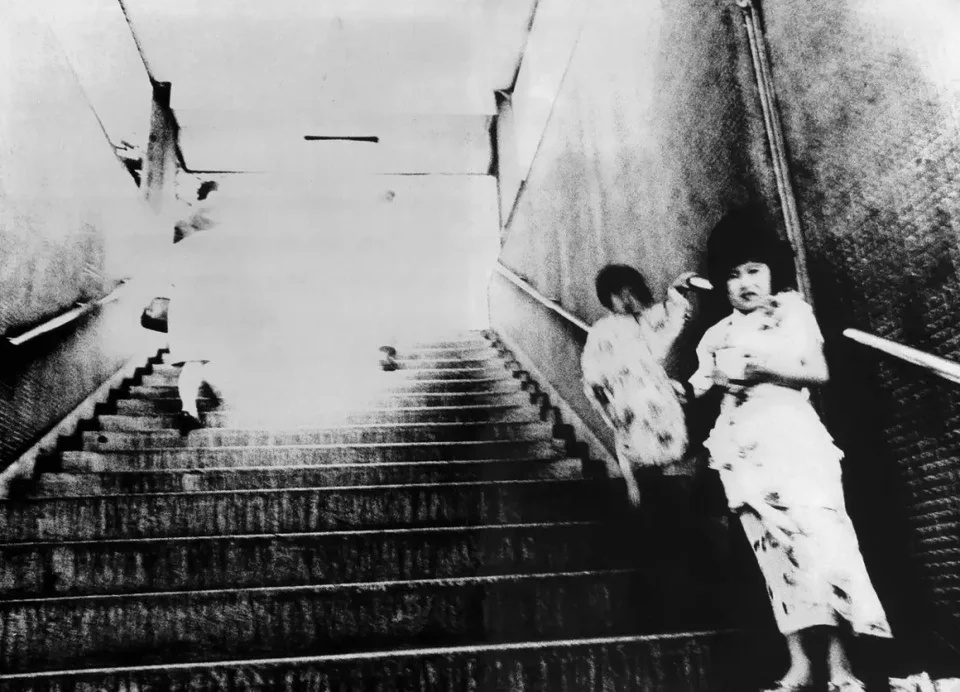
The influence of Japanese photography on China's new generation of photographers is probably no less than the influence European and American photographers had on the previous generation. In Japan's own tradition of photography theory, one book is especially important: Takuma Nakahira's Why an Illustrated Botanical Dictionary? Its place in the history of Japanese photography theory is equivalent to that of Barthes's Camera Lucida in the West. On the surface, Nakahira's view of photography resembles the Bechers' "typology": both reject expressive subjectivity and the artist's self-projection, and advocate recording the world in a scientific manner. But their philosophical foundations are entirely different. The Bechers come from the German tradition of New Objectivity, whereas Nakahira's concerns come from postwar Japanese intellectuals' reflection on the problem of subjectivity: after the atomic bombings and the American occupation, could the Japanese still claim to have an autonomous subject capable of "expressing" the world? At the same time, I believe this development of Japanese photography, represented by Daido Moriyama, Takuma Nakahira, and others, is also strongly connected to the diagnoses of Japan's modernization offered in the same period by Masao Maruyama, Yoshimi Takeuchi, and others. I will try to explain how Japanese photography responded to the postwar problem of subjectivity, and in so doing help you grasp some of the constitutive features that distinguish Japanese photography from the West.
Ruin Photography and the Politics of Time
Lesson 02
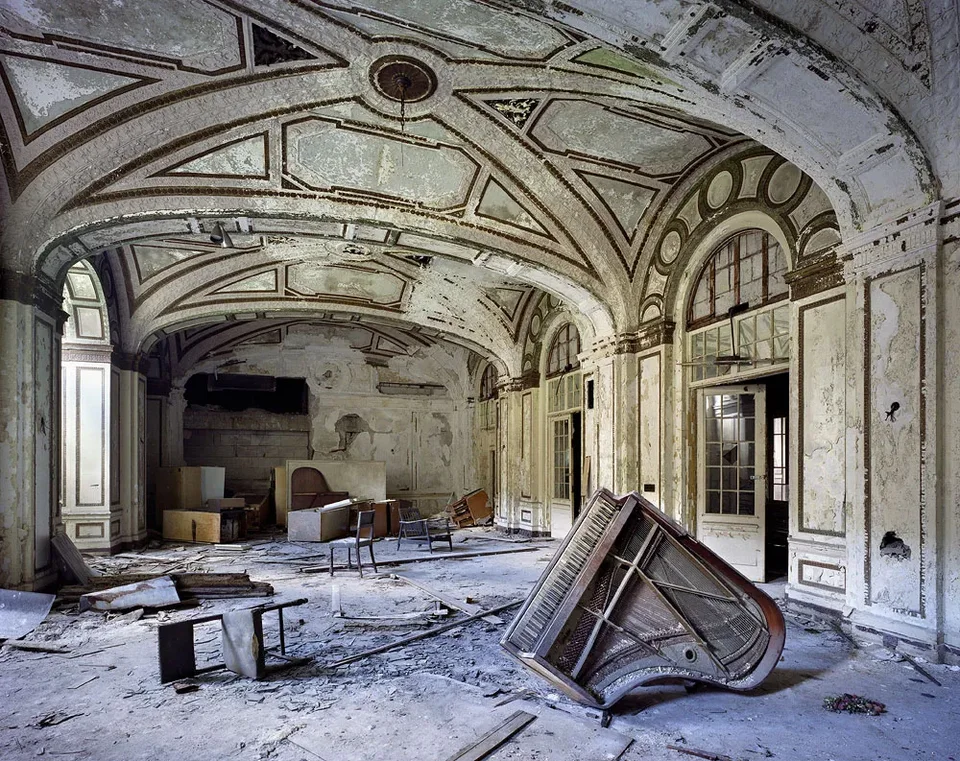
"Ruin photography" has always drawn plenty of traffic on Xiaohongshu. I have a question of my own: why are we so fascinated by images of ruins? We need to notice that ruins are not a natural, neutral object but an aesthetic category with a deep cultural history. The eighteenth-century European aesthetic of the "picturesque" established ruins (especially classical ruins) as objects worthy of contemplation, and this aestheticization of ruins brought with it an important ideological function: transforming decay and destruction into aesthetic objects available for interpretation. Over the past fifteen years, photography criticism has likewise seen accusations against photographers such as Andrew Moore who have documented urban decay, charging that they aestheticize ruins and ignore the people who still live in these spaces. So who has the right to name a space a ruin? Who has the power to enter them and photograph them? What links photography and ruins so particularly is their temporality. A ruin is at once the past (it was once whole), the present (it is now dilapidated), and points toward the future (it will continue to decay until it disappears); photography, as Roland Barthes thought, captures a moment of the past, is viewed in the present, and points to a future of "this will die." This temporality is also something I want to explore.
The Photobook as Mediation: From Narrative to Materiality
Lesson 03
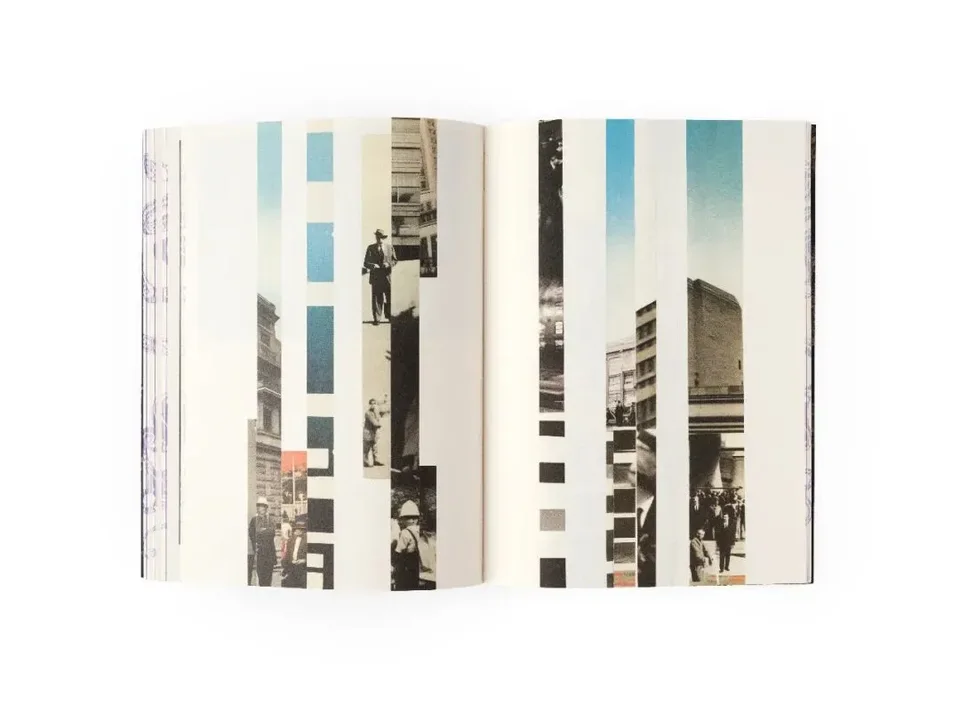
Ed Ruscha's Twentysix Gasoline Stations and related series can be said to be the works that brought the "photobook" as a genre into its own. Why do we need to study the "photobook" as an independent object? Photography theory has long held an implicit assumption: analyzing photography means analyzing single photographs. Even when multiple photographs are involved, they are usually treated as independent samples rather than as units constituting some whole.
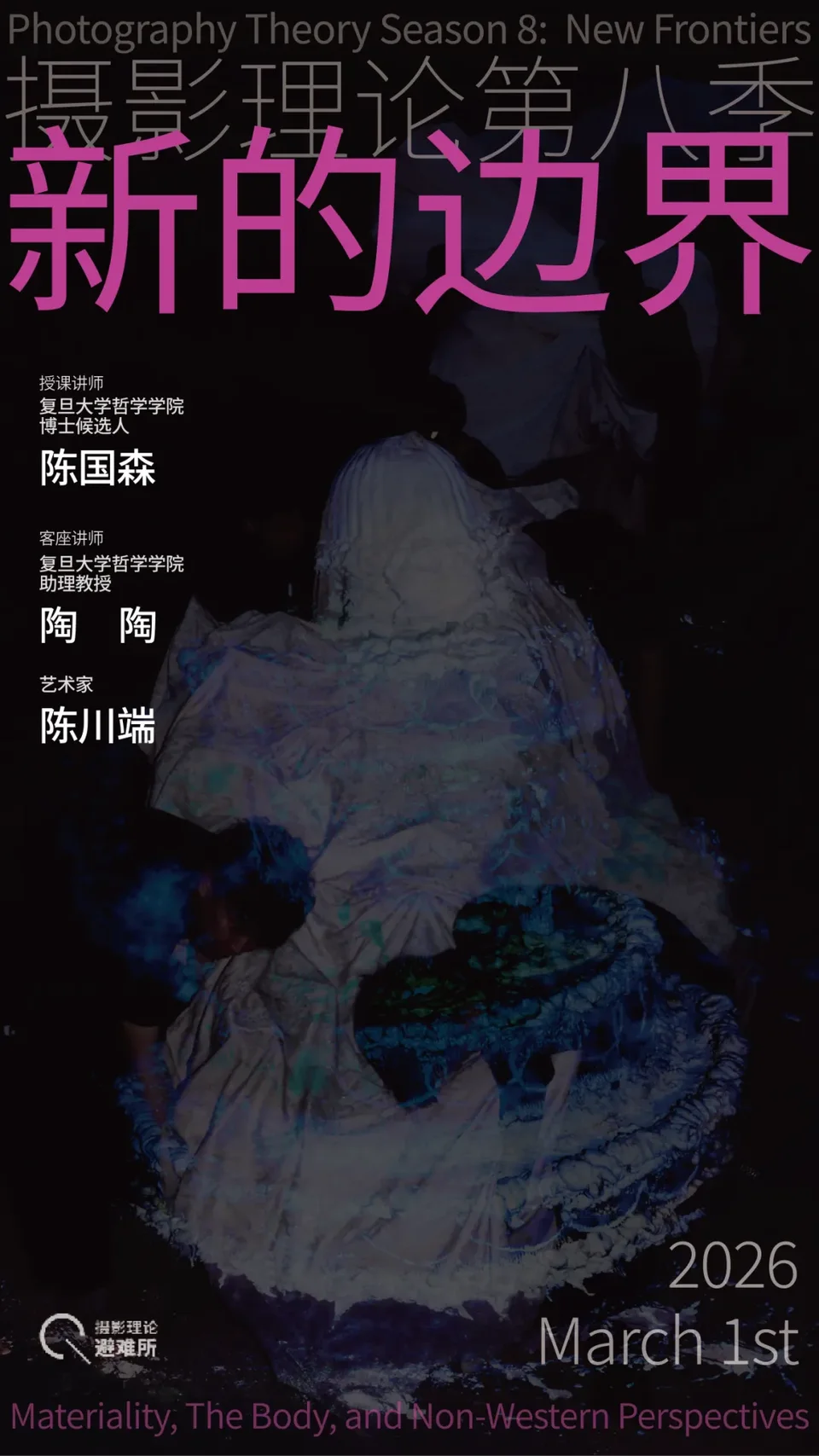
Yet this assumption obscures an extremely important fact of photographic practice: the vast majority of photographs never exist in isolation; they are always arranged into some sequence and structure. And the way we are used to today, of hanging single photographs in isolation on a wall, is actually a relatively recent and artificial mode of display compared with vehicles such as private albums and news reports. So in this lesson I will discuss with you three dimensions of the photobook—"sequence," "editing," and "materiality"—and use them to investigate how photobooks shape the experience of looking. In the first session of this lesson, guest lecturer and artist Chuanduan Chen will use his photobooks such as Belly of the Giant Serpent: Prophecy as case studies to teach and share his experience and theory of photobook design and production.
Latin American Photography and the Redefinition of "Documentary"
Lesson 04
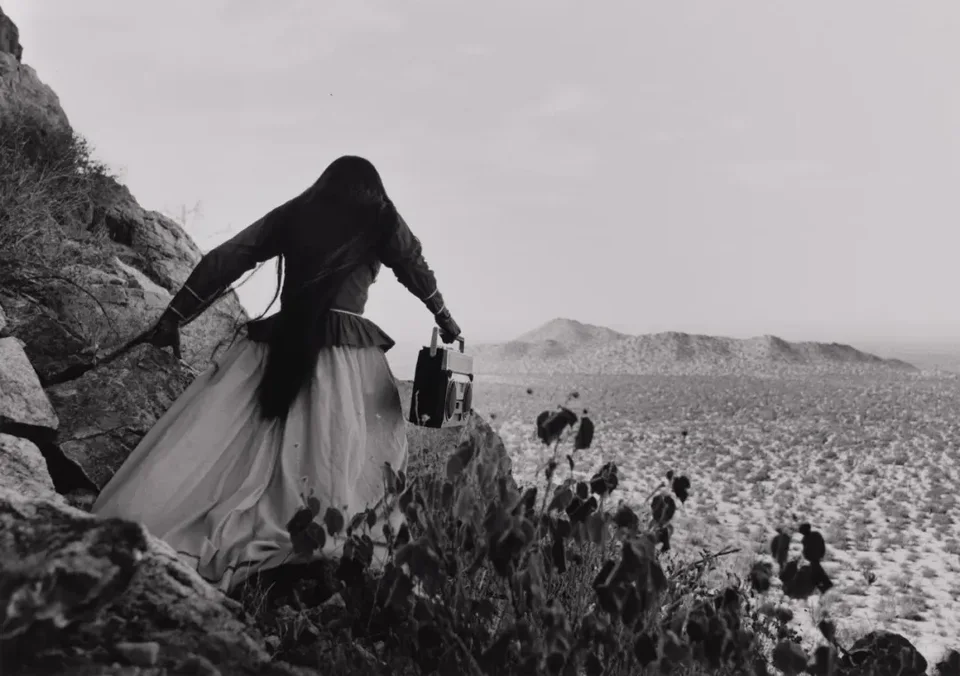
What is distinctive about Latin American photography is perhaps its relationship with the tradition of magical realist literature we know so well. Manuel Álvarez Bravo's surrealist photography, Graciela Iturbide's photographs of Mexico's Indigenous peoples, Sebastião Salgado's epic documentary work, and so on cannot simply be understood through European or American frameworks of modernism or documentary photography. The question here is: is there a "Latin American way of seeing"? If so, what are its characteristics? In an earlier course we discussed Indian photography, which likewise opposes the Western modernist notion of medium specificity and whose practice is highly hybrid. Latin American photography also appears hybrid on the surface, but its sources and workings are entirely different from those of Indian photography: in the former, the hybridity is in the content of representation; in the latter, it is in the very boundaries of the medium. For Latin American photography, this hybridity stems on the one hand from the layering, interpenetration, and conflict of multiple cultural traditions, and on the other from the political violence and historical trauma that began in the second half of the twentieth century and continue to this day. In this lesson, through case studies of Latin American photographers, I will try to explain how they sought to develop documentary strategies different from the Euro-American model.
Photography and Affect, and the Politics of Intimacy
Lesson 05

Simply put, affect differs from emotion in that emotions are feeling-states that have already been named, recognized, and socialized (such as "sadness," "anger," "happiness"), whereas affect is a pre-cognitive, pre-linguistic, bodily intensity. When affect meets photography, the question becomes: how do the discomfort, intimacy, and vulnerability we feel when viewing certain photographs work? A photograph can affect us on a bodily level before we have "understood" it. This is a question about "how we are moved." Going further, I am concerned with the political dimension of this affect. For example, Nan Goldin's intimate photography exposes what should be hidden—but why can this exposure become a political act?
Contemporary power increasingly operates on the level of affect, not only on the level of ideology; and affect is also a site of resistance, because no situation is ever entirely predetermined. In this sense, Cindy Sherman's Centerfolds is a particularly meaningful case. Traditional Sherman scholarship—especially feminist readings—tends to focus on the "constructedness" of her work and the resulting deconstruction of femininity. But from the perspective of affect theory, Sherman uses the form of pornographic imagery while attuning (Massumi's term) the viewer to an entirely different affective environment—from desire to unease, from possession to vulnerability. This misalignment is itself political, because it makes us feel on a bodily level what the "normal" attunement of pornographic imagery suppresses. In the first session of this lesson, Tao Tao, Assistant Professor at the Institute of Arts, Fudan University, will lecture on "the body and affect."
Walker Evans: Equipment, Attention, and the Polaroid
Lesson 06
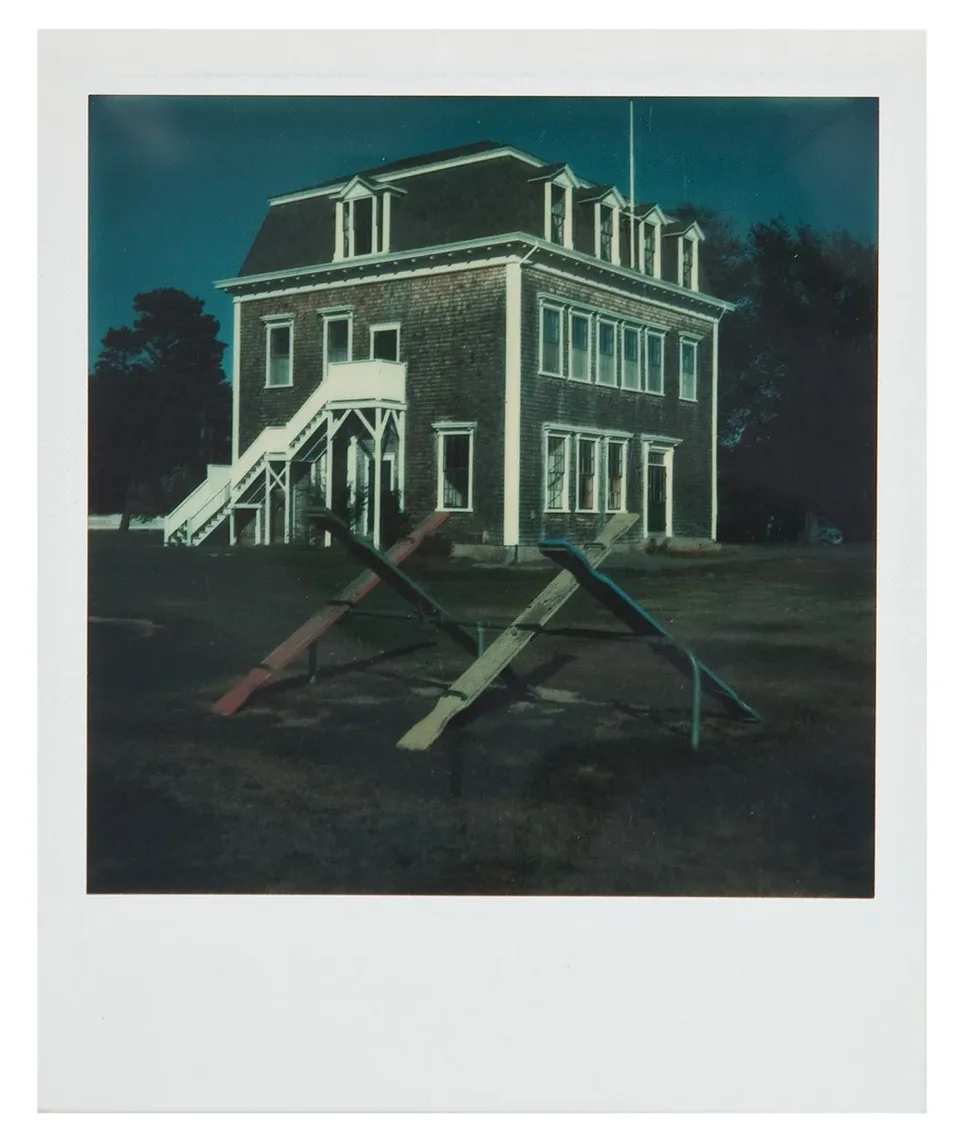
When we think of Walker Evans, we usually think of those calm, meticulous black-and-white photographs. But in the last few years of his life, he greatly enjoyed using a Polaroid camera, photographing road signs, letters, small objects at hand, and also the friends around him. These photographs sometimes look casual, quite different from the Evans we know. How should we view this change? Was it simply that he had grown old and wanted a more relaxed way of shooting? This lecture begins with his physical condition and shooting experiences in his later years. For someone whose body was growing ever weaker yet who still wanted to keep looking at the world and photographing it, how might these changes affect his relationship with the things around him? From here I will discuss a subtler question: when we take photographs, sometimes we already know clearly what we want and work hard to find and arrange order in the frame; at other times, without any prior plan, we are drawn in the moment by what is before us. Evans's late work gives us a chance to understand the latter kind of experience, and why some seemingly unremarkable photographs still deserve serious attention.