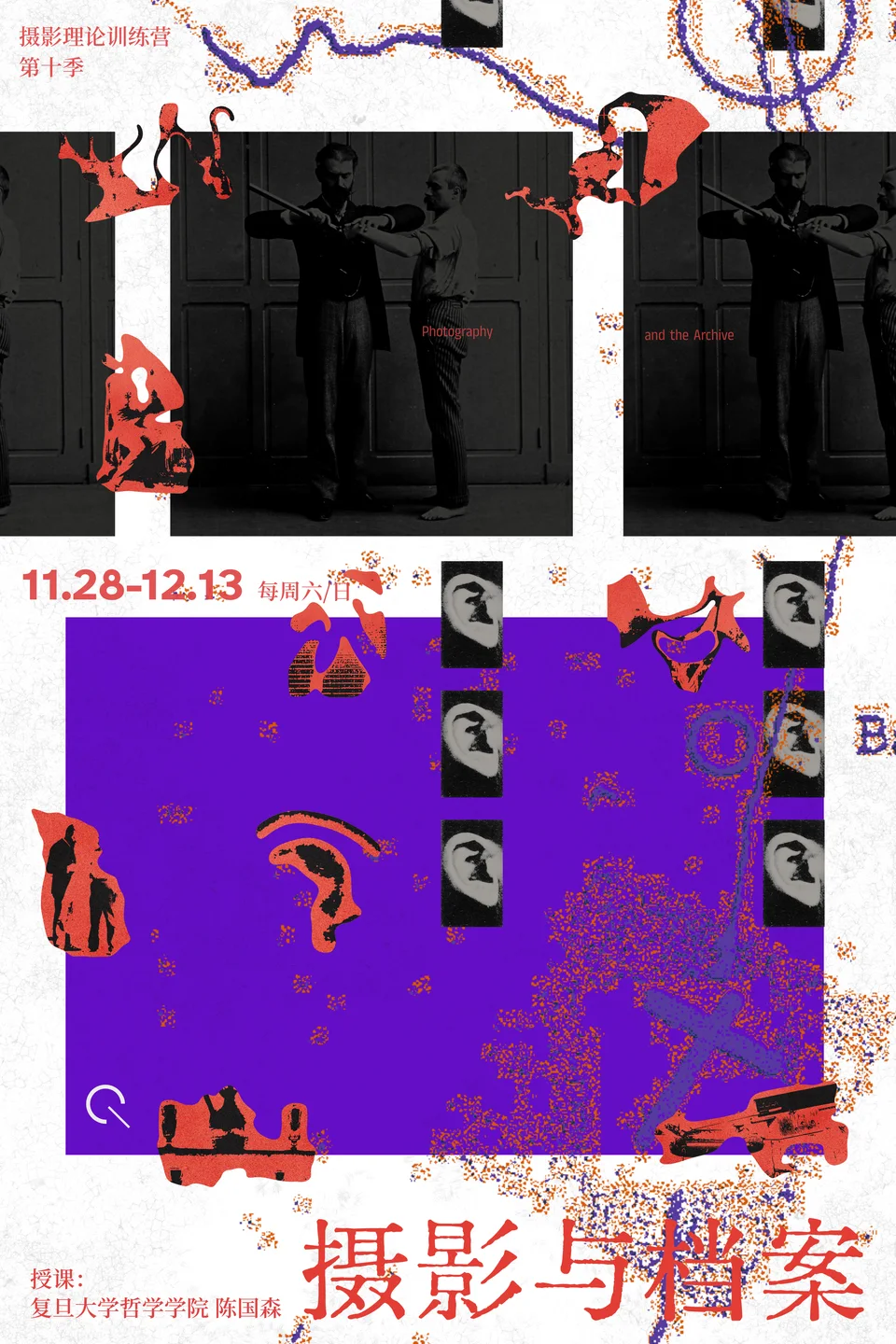
Lesson 01
The Genealogy of the “Photographic Archive”
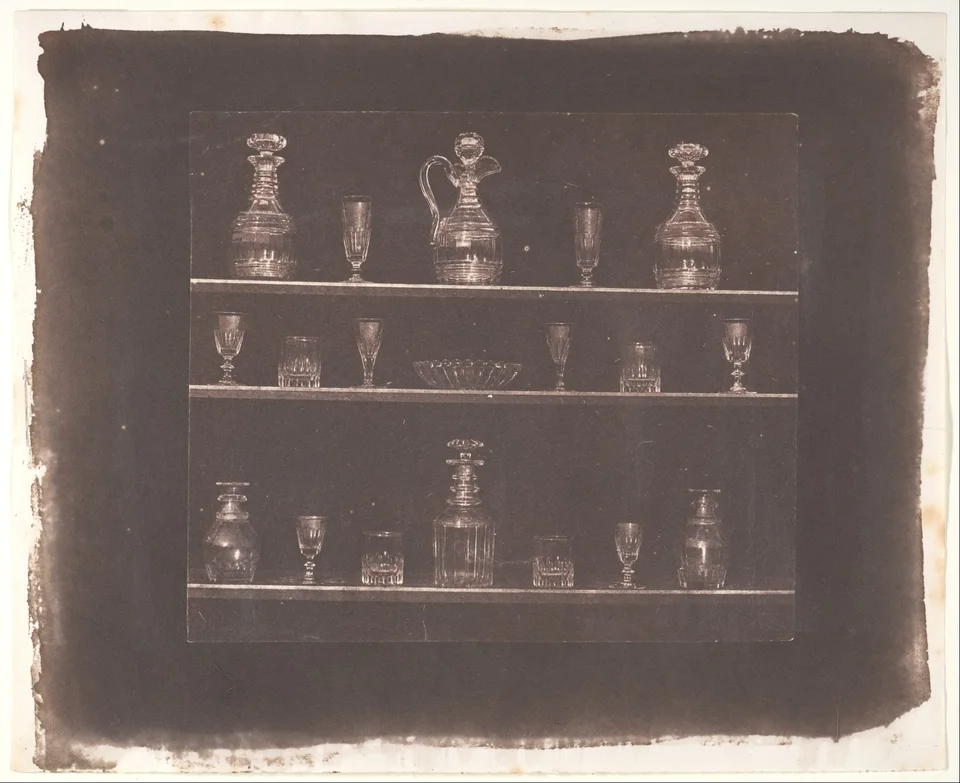
William Henry Fox Talbot, Articles of Glass, before June 1844. The Metropolitan Museum of Art.
“Photography” and “the archive” have been intertwined throughout their histories, but at a certain point people came to see photography as archive, and archive as photography. In The Pencil of Nature, published in 1844, Talbot located photography’s value in recording and preserving. Meanwhile, the popularity of cartes de visite in the 1860s brought the first large-scale wave of private image archiving. In that same decade, the state began adopting photography as a tool of administration from above. This is the problem Allan Sekula examines in “The Body and the Archive”: who controls the archive? In 1995, Derrida’s celebrated discussion of Archive Fever took the question deeper: archiving preserves and destroys; the archive is structurally paradoxical. An “archival turn” emerged in contemporary art around this period, exemplified by the artists’ extensive appropriation of archival forms described in Hal Foster’s “An Archival Impulse” (2004), and by Okwui Enwezor’s 2008 exhibition Archive Fever at ICP. Contemporary artists have worked, and will continue to work, within the paradox Derrida identified. This session traces several major moments in the photographic archive from Talbot to the present, offering a clear account of its development.
Lesson 02
The Birth of Clinical Images
 Instructions signalétiques: album. Wellcome Collection, CC BY 4.0." loading="lazy" decoding="async">
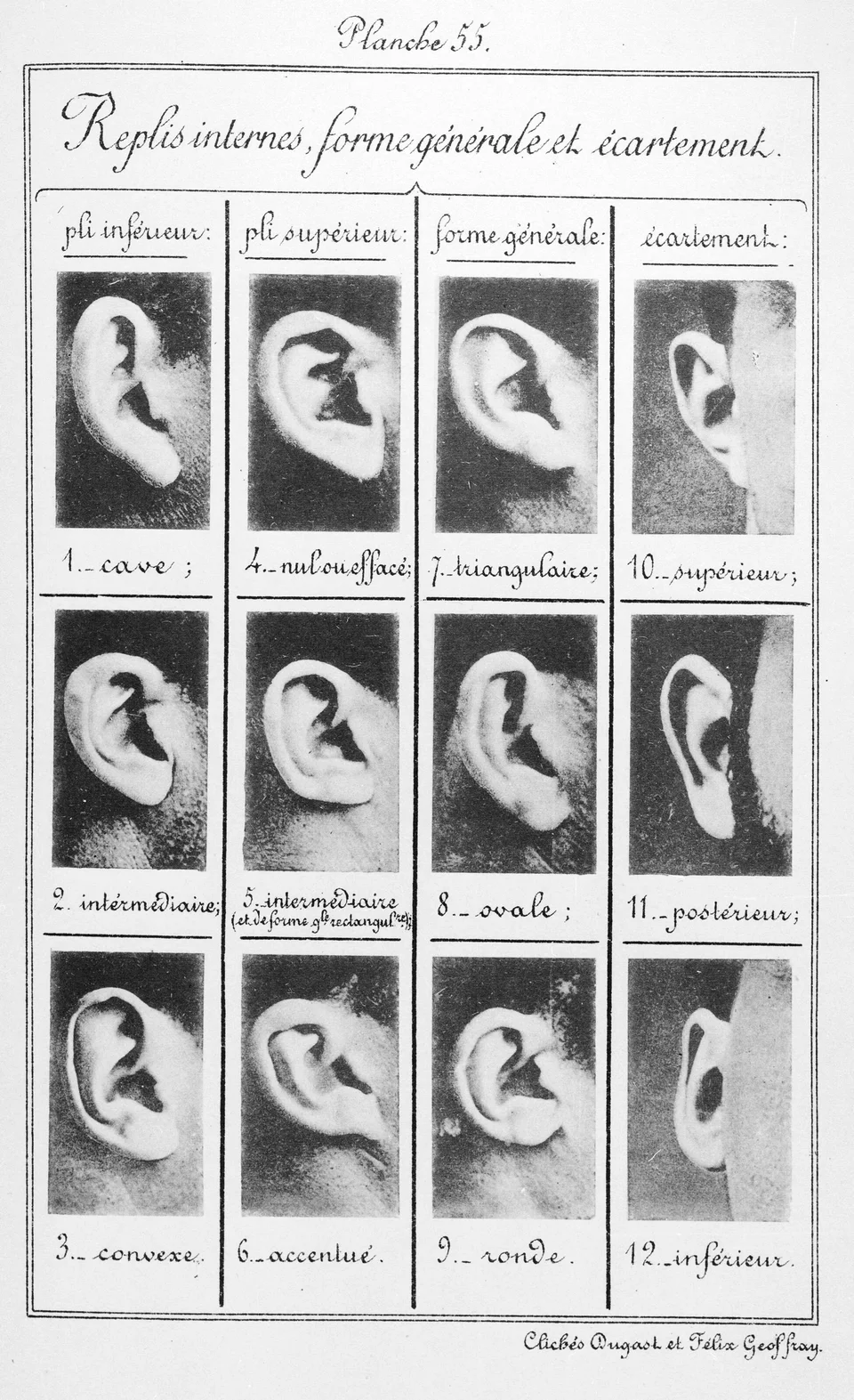
Alphonse Bertillon, ear classification plate from Instructions signalétiques: album. Wellcome Collection, CC BY 4.0.
Clinical images have long been a difficult area to disentangle within photographic archives. This is partly because patients’ bodies may be unsuitable for direct display, but also because displaying a “disease” can itself reshape the social discourse surrounding it. In Invention of Hysteria (1982), George Didi-Huberman examined a body of clinical photographs of patients with hysteria taken under Jean-Martin Charcot at Paris’s Salpêtrière hospital from the 1870s onward. Didi-Huberman’s judgment is pointed: in a certain sense, hysteria was “invented” by its images. Photographs recorded the “appearance” of a disease, and as they circulated in medical diagnosis, this fixed appearance became a diagnostic standard. Foucault makes a related argument in The Birth of the Clinic: clinical medicine constituted “disease” as an object through particular ways of observing. From this perspective, once a photographic archive begins to operate, it does more than “archive”: it produces the very thing it claims merely to be recording. How did this happen? Is this really what happened?
Lesson 03
UFO Photography and Mysterious Archives
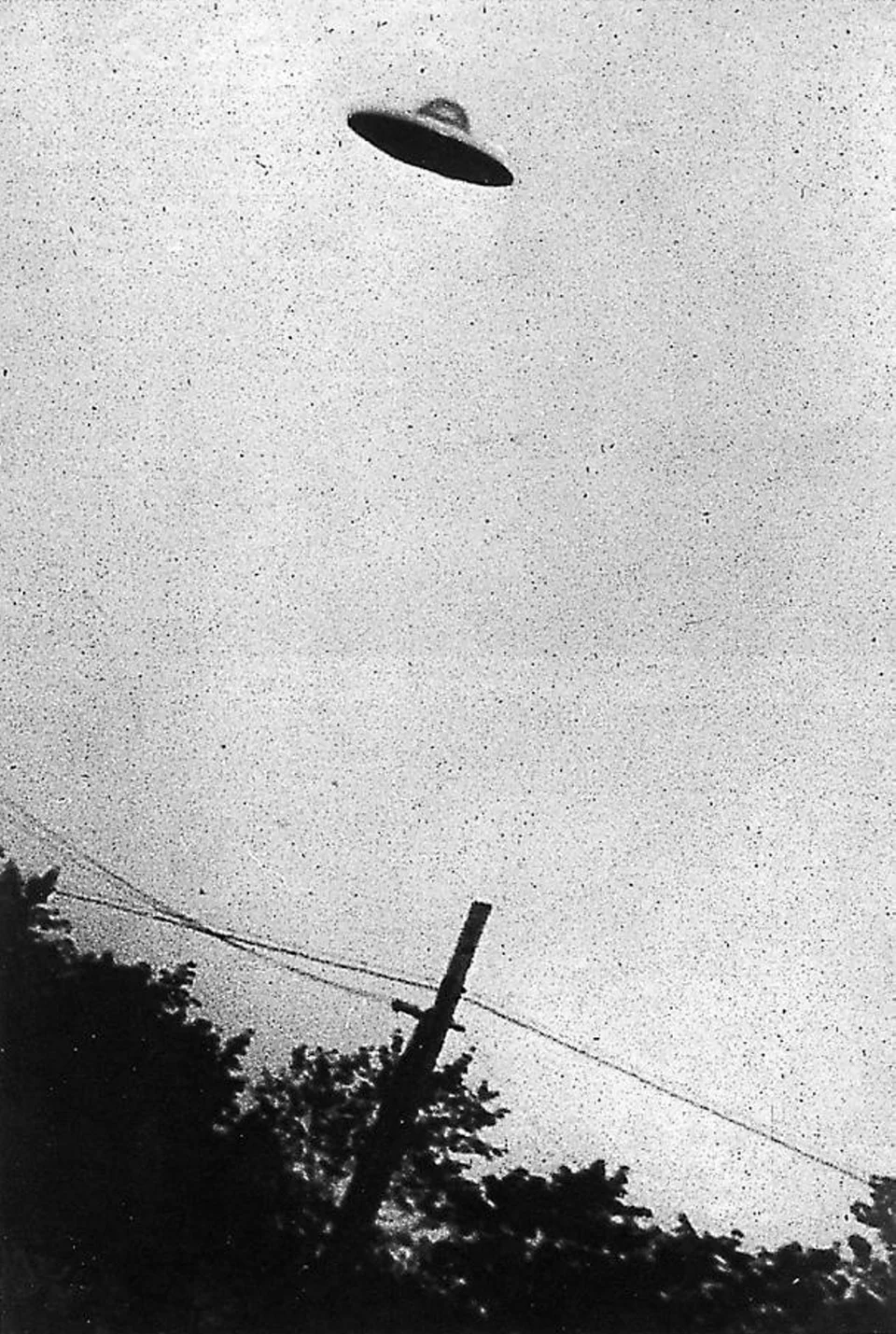
George Stock, supposed UFO, Passaic, New Jersey, July 1952.
Spirit photography is a familiar subject in photographic history. There is an internal continuity between spirit photographs and UFO photographs: both claim that the camera has captured something the human eye cannot directly see, or cannot be certain it has seen. But there is also an important difference. Spirit photographs depict the dead, people known to have existed; UFO photographs depict things whose existence has never been confirmed. Studies of both tend to begin with “indexicality” and proceed to questions of evidence and truth. What interests me is why UFO images attract us, and what role photography plays in that attraction. My eventual claim is that UFO photographs reveal a structure of desire embedded throughout photographic culture. Our trust in photography rests, ultimately, on a promise: “There is something you cannot see; the photograph can show it to you.” That promise is fulfilled so often in everyday photography, through which we do indeed see many things absent from us, that we forget it can also fail.
Lesson 04
Photography and the Novel: How Does Fiction Produce an Experience of Reality?
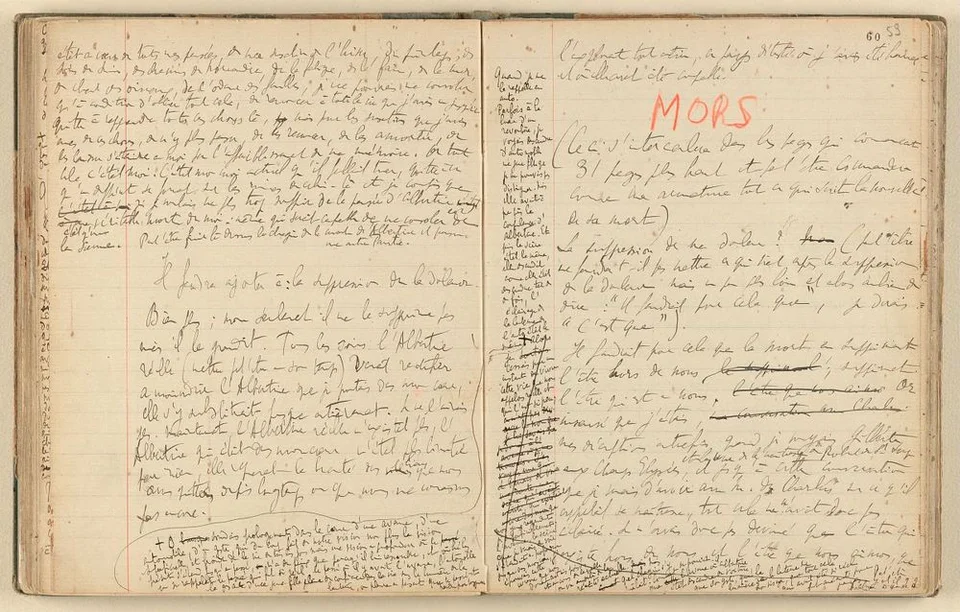 In Search of Lost Time. Bibliothèque nationale de France." loading="lazy" decoding="async">
Marcel Proust, corrected manuscript of In Search of Lost Time. Bibliothèque nationale de France.
Comparisons between photography and painting are commonplace, but photography’s relationship with the novel is equally intriguing. After photography’s invention, the novel faced an unprecedented question: why does something fictional feel “real”? Painting did not provoke this question precisely because, like the novel, it was evidently made by human hands. Photography, however, offered a sense of reality through its boundless naturalism and mechanical character. The way novels produce that sense of reality therefore demanded explanation as never before, forcing the novel to confront the source of its artistic power: how does fiction produce an experience of reality? The self-awareness of the modern novel can be understood as a response to this question. Photography changed the meaning of the “real” and of “realism.” What did they become? At a more radical level, I will attempt to explain how, after photography appeared, the logic of images fundamentally displaced the logic of words as the basis on which novels establish their credibility.
Lesson 05
Trophy Photographs: Why Are People Fascinated by the Cruelty They Inflict?
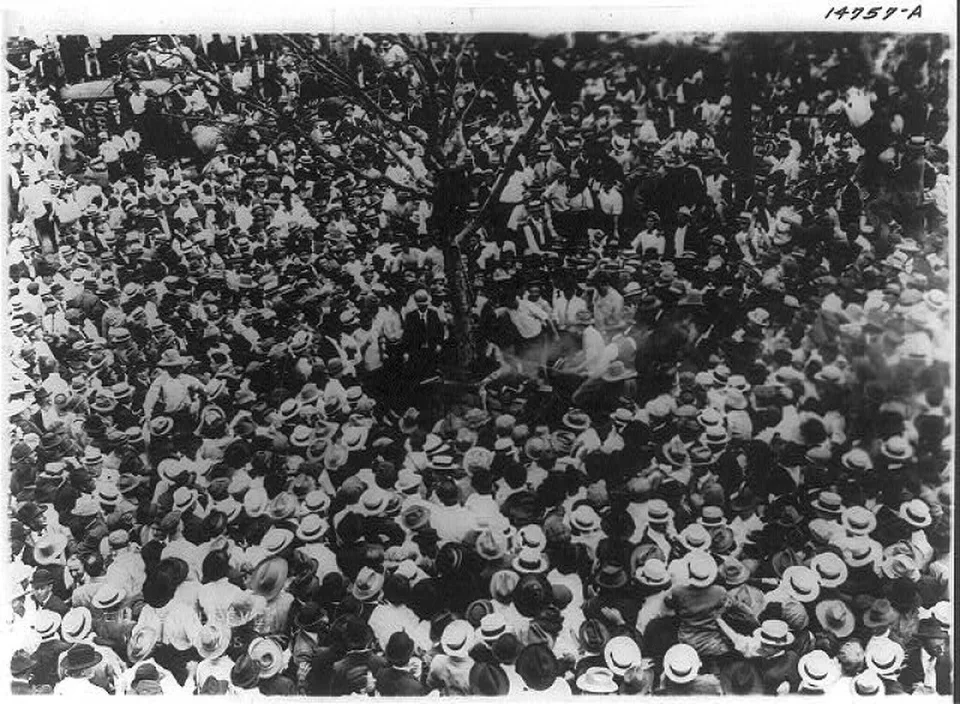
Fred Gildersleeve, crowd at the lynching of Jesse Washington, Waco, Texas, May 15, 1916.
Photographic archives contain a particular kind of collection: archives of atrocity, such as the frequently discussed photographs of prisoner abuse at Abu Ghraib. The archives of Tuol Sleng prison and of atrocities during Sierra Leone’s civil war offer further examples. These photographs are distinctive because the perpetrators are also the photographers. This is far removed from the figure of the “documentary photographer.” Someone not only commits actual violence against another person, but pauses to take a photograph. At that moment the perpetrator becomes a spectator of their own violence: doing it is insufficient; they also need to look. Why? Pursuing this question leads somewhere uncomfortable. In On the Genealogy of Morality, Nietzsche argued that punishment in earlier times was a festival and public execution a form of entertainment. Watching cruelty was once part of the infrastructure of our civilization. Has the development of modern civilization really extinguished that impulse? Probably not. What place does photography occupy within this desire to watch?
Lesson 06
Invisible Labor
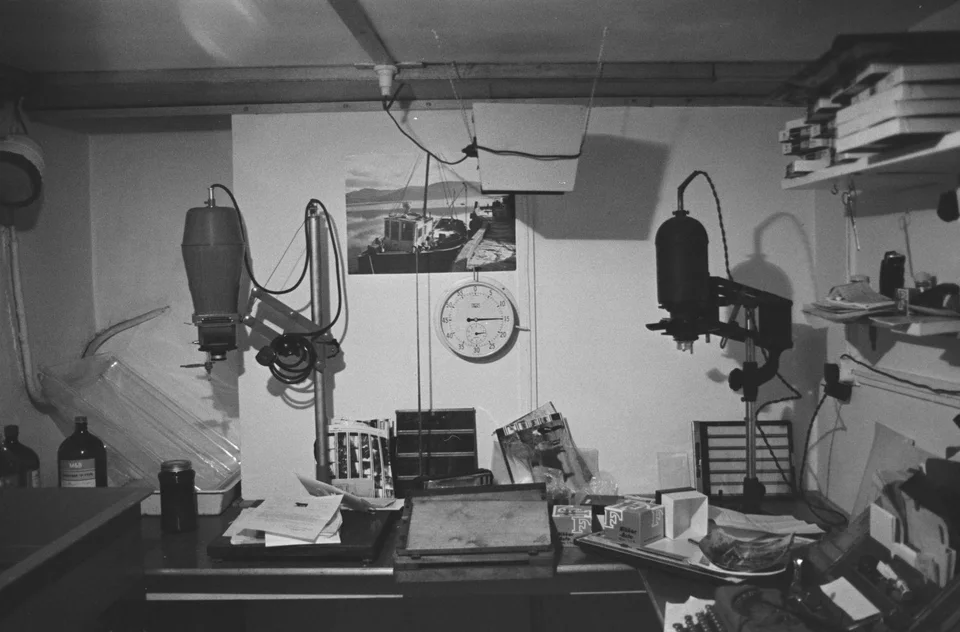
Geoff Charles, photographic darkroom, probably his darkroom in Bangor, December 1, 1969. National Library of Wales, CC BY-SA 4.0.
When photographic theory discusses artworks, authorship is generally anchored in two moments: the instant of pressing the shutter, and the intellectual labor of conception beforehand and editing afterward. Yet between the shutter and the finished work lies a long material process: developing, enlarging, color correction, cropping, mounting, scanning, and printing. In the film era these tasks were often performed by someone other than the photographer. In contemporary art photography, more and more photographers work through staged photography, sometimes on the scale of a film crew, while retaining painting’s model of attribution to a single author. I am not simply calling for gratitude toward photographic printers, which would turn into a curatorial narrative of appreciation. My question is how far printers’ labor participates in a work’s aesthetic decisions. Artforum’s well-known conversation “The Future of Photography” touches on this issue: when Thomas Demand’s printer Guy Stricherz died, the dye-transfer expertise he possessed died with him. To what extent does what we call “photographic art” conceal other people’s labor? I will attempt to explain how this concealment may even be a structural condition of the field’s existence as “art.”